Minimalist Home Decor on a Budget is proof that creating a beautiful, sophisticated home does not require expensive furniture, designer accessories, or a complete renovation. Some of the most impressive interiors achieve their elegance through thoughtful choices, clever spending, and a surprisingly simple approach to decorating. When every purchase has a purpose and every detail feels intentional, even an ordinary home can develop the refined atmosphere of a high-end designer residence.

The secret is not finding the cheapest decorations available. It is understanding how to create the greatest visual improvement with the smallest reasonable investment. A carefully planned $100 makeover can sometimes feel more impressive than a $1,000 shopping spree filled with mismatched furniture and unnecessary accessories.
Minimalist decorating also offers an advantage that many homeowners overlook. Because the style celebrates simplicity, you can achieve impressive results without constantly purchasing new things. Existing furniture can be rearranged, overlooked pieces can be restored, and inexpensive materials can create beautiful finishes when used strategically.
Whether you live in a small apartment, a modest family house, or a rental property with decorating restrictions, these three approaches offer practical ways to create a more expensive-looking home while keeping spending under control.
The most beautiful results come from combining financial discipline with visual creativity.
And sometimes, the most dramatic transformation begins without spending anything at all.
✨ Why Minimalist Home Decor on a Budget Can Look More Expensive Than Luxury Decorating
Expensive interiors do not automatically look sophisticated.
A room filled with designer furniture can still appear chaotic when the proportions are wrong, the colors compete, or too many decorative elements demand attention.
Meanwhile, a modest home with simple furniture can feel remarkably refined when its visual elements work together.
This contrast reveals an important principle of interior design: perceived elegance depends heavily on consistency, proportion, condition, and intentional arrangement.
A polished home does not need an impressive number of objects. It needs carefully selected elements that support a cohesive visual atmosphere.
Minimalist design naturally encourages this approach.
Instead of filling every available corner, it emphasizes thoughtful furniture placement, coordinated finishes, balanced proportions, and surfaces that remain easy to maintain.
These characteristics are particularly valuable when decorating with limited money.
💰 The Hidden Financial Advantage of Decorating With Less
Traditional decorating often encourages homeowners to purchase additional accessories whenever something feels incomplete.
An empty corner seems to need a table.
A plain surface appears to require ornaments.
A slightly outdated piece of furniture becomes an excuse to replace an entire matching set.
These purchases accumulate quickly.
Minimalist decorating encourages a different question: Does this addition genuinely improve the room?
If the answer is uncertain, postponing the purchase may be the smartest decision.
A restrained approach can reduce spending on unnecessary accessories, duplicate furniture, short-lived trends, and impulse purchases.
It also allows homeowners to reserve more money for items that genuinely improve daily comfort.
A comfortable mattress, reliable seating, practical storage, or durable flooring may provide greater long-term value than dozens of fashionable decorations.
🎨 What Actually Makes an Affordable Home Look High End
The most convincing budget transformations tend to share several characteristics.
Their finishes appear coordinated rather than randomly collected.
Their furniture looks properly sized for the available space.
Their visible surfaces are clean and maintained.
Their decorative elements feel connected through color, shape, or material.
Most importantly, the home looks complete without appearing overcrowded.
These qualities do not necessarily require expensive products.
They require planning.
A simple wooden cabinet with updated hardware can look more attractive than a new but poorly constructed replacement.
A carefully repaired chair can contribute more character than an inexpensive imitation of a fashionable designer piece.
The objective is to make affordable decisions appear deliberate rather than temporary.
🥇 Best 1 Minimalist Home Decor on a Budget With a Zero Spend Reset and Smart Furniture Makeovers
The first and most financially effective approach begins with what you already own.
Before visiting a furniture store, browsing online marketplaces, or purchasing decorative accessories, examine your existing home.
Many rooms contain everything necessary for a successful makeover, but those elements are arranged inefficiently, visually disconnected, or hidden beneath unnecessary clutter.
A zero-spend reset focuses on improving the appearance of existing possessions before introducing anything new.
This approach works particularly well for homeowners who want immediate improvements but cannot justify a decorating budget.
It also helps prevent a common mistake: buying new furniture to solve problems that could be corrected through better organization.
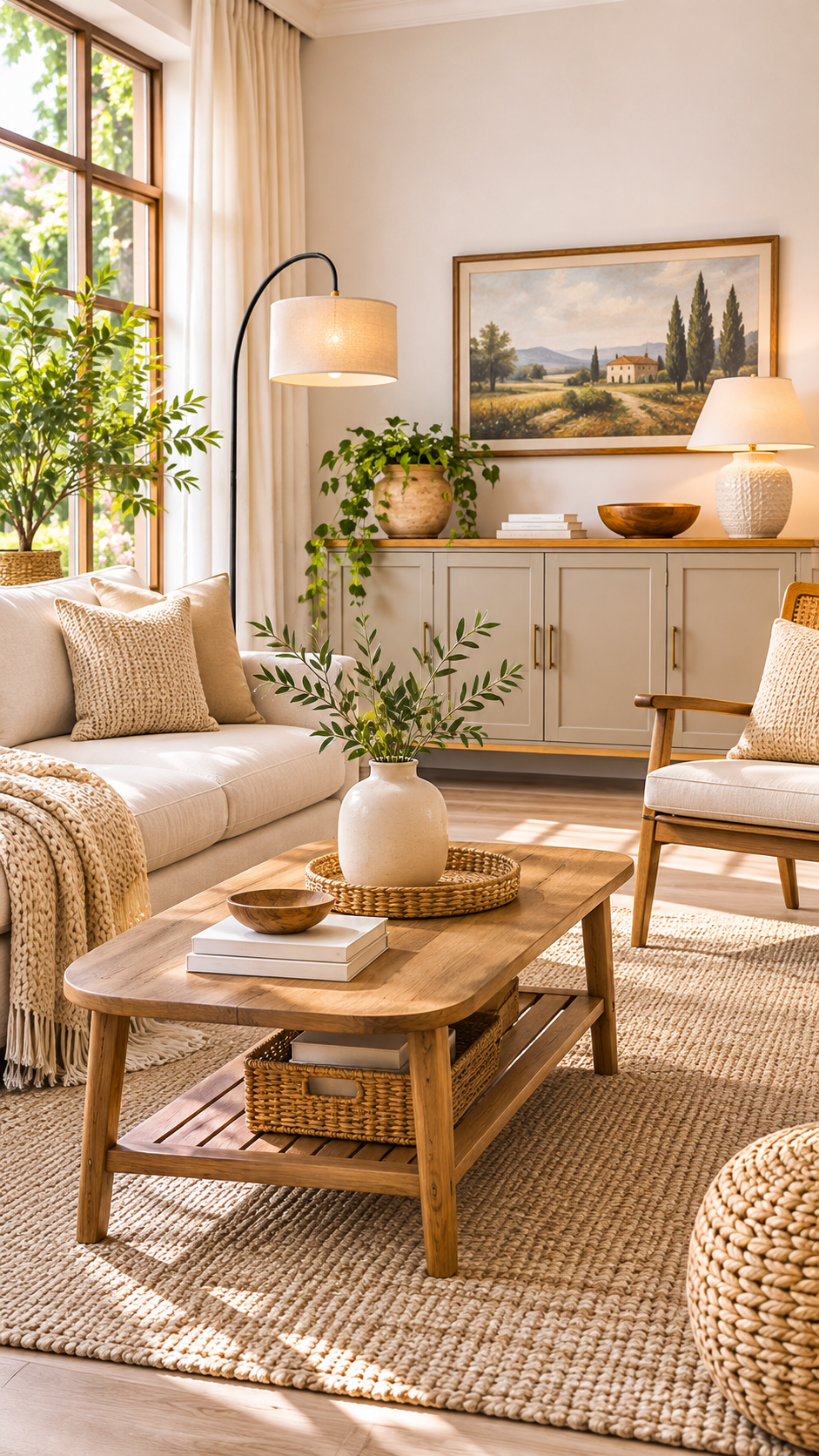
🧹 Start With a Visual Inventory Instead of a Shopping List
Walk through your home and identify the objects that contribute most strongly to its overall appearance.
Pay particular attention to large furniture, visible storage, window coverings, and frequently used surfaces.
Ask whether each object is functional, visually suitable, and still worth keeping.
Do not automatically discard something simply because it looks outdated.
A piece may only need cleaning, adjustment, repair, or a different location.
Create three practical categories:
- ✅ Keep — useful pieces that already support the desired appearance.
- 🔧 Improve — furniture that could benefit from cleaning, repair, or refinishing.
- ♻️ Rehome — unnecessary items that can be sold, donated, or responsibly recycled.
This process creates a clearer picture of what your home actually needs.
It also reveals opportunities to recover money from possessions that are no longer useful.
Selling an unused chair, duplicate cabinet, or decorative collection could help finance a more meaningful improvement.
Rather than viewing decluttering as simply removing possessions, treat it as an opportunity to redistribute your decorating resources.
🛋️ Rearrange Furniture Before Replacing It
Furniture placement strongly influences how expensive a room feels.
Even well-made furniture can look awkward when everything is pushed against walls, circulation paths are blocked, or the arrangement lacks a clear purpose.
Begin by identifying the primary function of each space.
A room intended for relaxation should prioritize comfortable seating and easy movement.
A multifunctional area may require a more flexible arrangement.
The goal is to make the furniture support daily activities without making the room feel crowded.
Try relocating pieces from one area to another before buying replacements.
A narrow cabinet that feels awkward in one location may become extremely useful elsewhere.
An overlooked upholstered chair might create a comfortable seating arrangement when paired with furniture already in the home.
The greatest advantage is flexibility.
You can experiment with several arrangements without spending anything.
Take photographs of the room from the same angle after each change.
Comparing those photographs often reveals improvements that are difficult to notice while standing inside the space.
🔧 Restore Existing Furniture for a Custom Designer Appearance
One of the most effective budget decorating strategies involves improving furniture that is structurally sound but visually tired.
A scratched wooden cabinet, faded side table, or dated storage unit may have more potential than its current appearance suggests.
Small repairs can dramatically change how the furniture is perceived.
For example, tightening loose hardware, replacing damaged feet, cleaning upholstery, or repairing chipped finishes can make a piece feel significantly more polished.
Painting suitable furniture is another possibility.
A simple cabinet finished in a muted charcoal, warm white, or soft greige can acquire a more contemporary appearance.
However, preparation matters.
Different surfaces require different cleaning methods, primers, and finishes. Laminated furniture, solid wood, and veneered pieces should not all be treated identically.
A poorly prepared makeover can look worse than the original furniture and may require additional money to correct.
When possible, test materials on a small, inconspicuous section before completing the project.
✨ Use Small Hardware Changes for a Noticeable Upgrade
Cabinet handles, drawer pulls, and furniture knobs occupy very little visual space, yet they can strongly influence the overall character of furniture.
Outdated hardware may make an otherwise attractive cabinet feel older than it is.
Replacing it with simple, well-proportioned alternatives can create a more refined appearance.
Consider finishes such as brushed nickel, matte black, antique brass, or understated stainless steel.
The best choice depends on existing fixtures and the overall color scheme.
Consistency is more important than selecting the most fashionable finish.
If your home already contains brushed silver hardware, introducing numerous unrelated metallic finishes may create unnecessary visual confusion.
Measure existing hole spacing before purchasing replacements.
Choosing hardware that fits the original mounting holes avoids additional drilling and reduces the risk of damaging the furniture.
For renters, retain the original hardware so it can be reinstalled later.
🪄 Create a More Finished Appearance Through Maintenance
Sometimes the strongest improvement comes from correcting small imperfections that have gradually become invisible to the people living in the home.
Scuffed baseboards, loose cabinet doors, stained switch plates, damaged furniture feet, and poorly fitted curtains can make an otherwise attractive interior feel neglected.
Addressing these details creates a more cohesive appearance.
A home does not need to look brand new.
It should look cared for.
Clean visible surfaces, straighten furniture, repair minor damage, and remove objects that no longer serve a purpose.
These improvements can make inexpensive interiors appear more intentional because the viewer notices the overall atmosphere rather than a collection of distracting imperfections.
💵 Example Budget for a Furniture Refresh
| Improvement | Estimated Cost |
|---|---|
| Rearranging existing furniture | $0 |
| Cleaning and basic maintenance supplies | $10 |
| Replacement drawer handles | $15 |
| Touch-up materials and small repairs | $15 |
| Furniture refinishing supplies | $35 |
| Estimated total | $75 |
These figures are illustrative planning estimates, not guaranteed retail prices. Costs vary by location, furniture condition, and materials.
A complete furniture replacement could easily cost much more.
The lesson is simple: improving what you already own is often the most financially efficient starting point.
🥈 Best 2 Minimalist Home Decor on a Budget With Secondhand Designer Finds and Smart Shopping
The second approach focuses on purchasing better pieces for less money.
Instead of filling a home with inexpensive new products, use secondhand shopping, careful comparisons, and patient purchasing to find furniture with stronger materials and more character.
This approach is especially effective when existing furniture is damaged beyond practical repair or an important functional item is missing.
The goal is not to buy as many secondhand pieces as possible.
It is to find a small number of useful objects that offer exceptional value.
A well-constructed vintage cabinet purchased for a modest amount can sometimes outperform a similarly priced new cabinet made from lightweight materials.
However, successful secondhand decorating requires patience, inspection, and an understanding of what makes furniture worth purchasing.
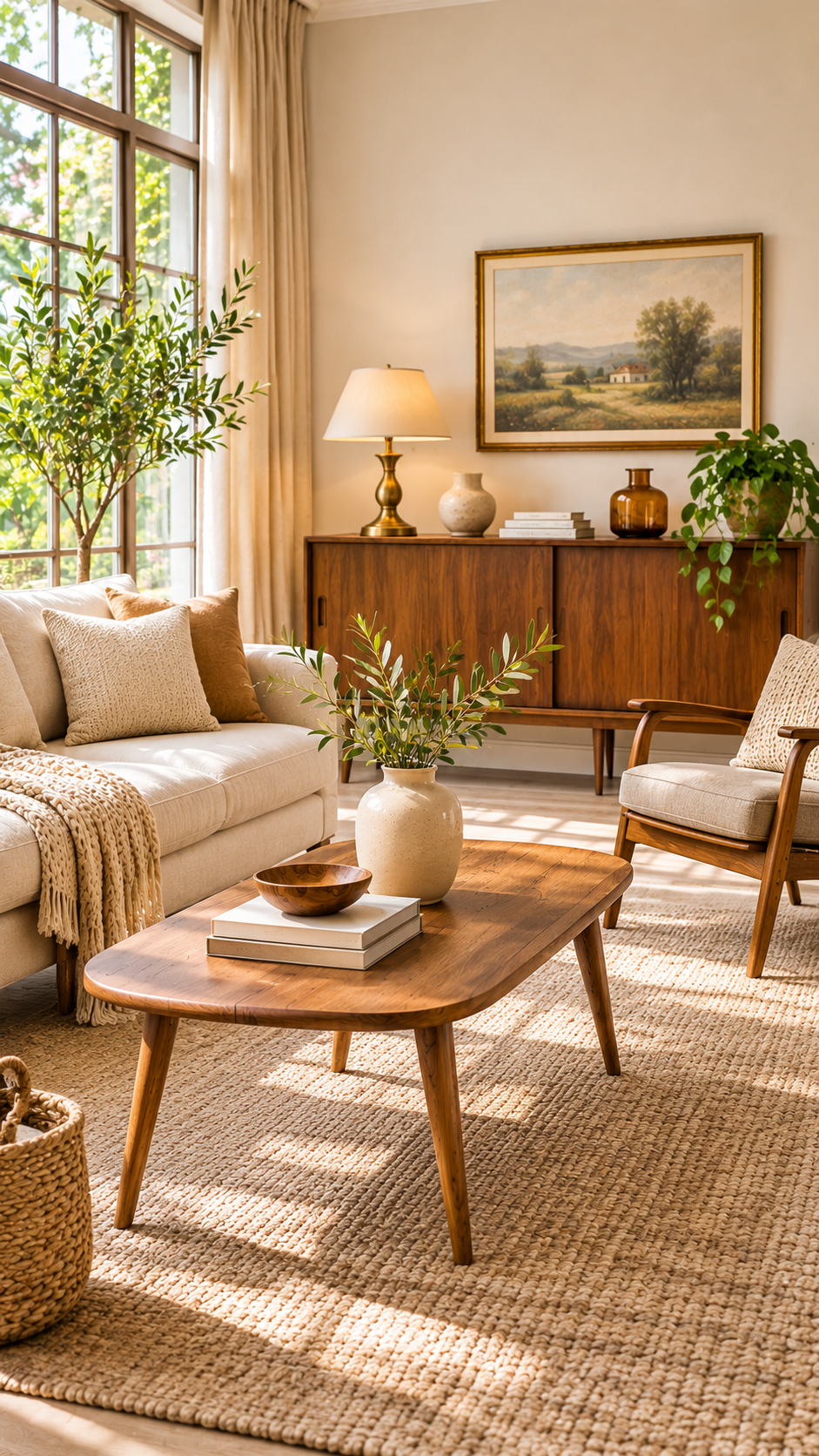
🪑 Search for Quality Construction Rather Than Famous Labels
Designer furniture is appealing because of its proportions, materials, and craftsmanship.
Fortunately, those characteristics are not exclusive to expensive brands.
Secondhand stores, estate sales, community marketplaces, and local furniture resellers often contain well-made pieces without recognizable designer labels.
Focus on construction quality.
A stable frame, properly functioning drawers, reliable joints, and repairable surfaces are generally more important than fashionable branding.
Look closely at the materials.
Solid wood can be refinished repeatedly when its condition allows.
Good-quality wood veneer can also be attractive and durable, although it requires appropriate care.
Particleboard furniture may be useful in certain applications, but moisture damage and weakened joints can be difficult to repair economically.
Inspect the entire piece rather than judging it only from promotional photographs.
Open drawers, examine corners, check legs, and look for evidence of instability.
A bargain is only valuable if the furniture remains safe and functional after purchase.
🛍️ Build a Shopping Shortlist Before Visiting Stores
Secondhand shopping can easily become another form of impulse purchasing.
Unusual furniture, attractive prices, and the fear of missing a bargain may encourage people to buy things they do not actually need.
Avoid this by creating a shortlist.
Identify the precise furniture category, maximum dimensions, preferred materials, and spending limit before beginning the search.
For example, instead of searching for attractive furniture generally, look for a compact solid-wood storage cabinet with clean lines and a specific maximum width.
This makes purchasing decisions faster and more rational.
It also protects the home from becoming overcrowded with attractive but unnecessary objects.
Keep measurements on your phone so promising finds can be evaluated immediately.
Remember to include transportation costs.
A large secondhand cabinet might be inexpensive at the point of purchase but costly to move.
🏷️ Know When a Secondhand Purchase Is Actually Worth It
Not every used item represents good value.
Some secondhand furniture requires cleaning, new hardware, refinishing, upholstery work, or professional repair.
These additional expenses should be included when evaluating the asking price.
Consider the following formula:
Real Purchase Cost = Asking Price + Transportation + Repairs + Necessary Materials
A $45 chair that needs $80 in upholstery work is effectively a $125 purchase before accounting for your time.
That may still be worthwhile if the chair is exceptionally comfortable, well constructed, and likely to remain useful for years.
But it should be compared with realistic alternatives.
Furniture with structural damage, strong persistent odors, or possible pest infestation deserves particular caution.
Inspect upholstered furniture carefully and follow reliable local guidance on avoiding bedbugs and other household pests.
The cheapest option is not automatically the smartest purchase.
💎 Choose Timeless Shapes Instead of Fast Decorating Trends
Budget decorating becomes more expensive when furniture is replaced every time a new trend appears.
Timeless pieces help prevent that cycle.
Simple silhouettes, balanced proportions, and adaptable finishes are generally easier to incorporate into changing interiors.
Consider straightforward furniture profiles such as rectangular wooden cabinets, uncomplicated upholstered chairs, and practical storage pieces with minimal ornamentation.
These shapes can complement several decorating styles.
A clean-lined oak cabinet may work beautifully with Scandinavian, modern organic, contemporary, or transitional furnishings.
Its versatility increases its long-term value.
That does not mean every purchase must be neutral or completely plain.
A distinctive vintage piece can introduce character.
The important question is whether it will still feel appropriate when the surrounding decor changes.
📦 Buy Less but Prioritize Pieces You Will Use Daily
A limited budget creates an opportunity to distinguish essential purchases from optional accessories.
Functional items deserve priority.
A supportive chair used every day is usually a more meaningful investment than decorative objects that serve no practical purpose.
Likewise, effective storage can improve the appearance and usability of several areas throughout the home.
Concentrate spending on pieces that solve real problems.
Ask yourself:
- Will this item improve everyday comfort?
- Does it replace something that no longer works?
- Can it serve more than one purpose?
- Is its construction appropriate for regular use?
- Will it remain useful if the room changes?
When a purchase meets several of these conditions, it may offer much better value than a cheaper decorative alternative.
This is how minimalist shopping gradually creates a home that feels more complete.
♻️ Explore Furniture Swaps and Community Reuse
One of the most overlooked decorating resources is the local community.
Neighborhood groups, furniture exchange communities, family networks, and reuse programs sometimes provide useful pieces at little or no cost.
A table that is unnecessary in one household may be exactly what another household needs.
Furniture swaps can also help people replace items that no longer fit their home without making additional purchases.
For example, exchanging an oversized cabinet for a smaller storage unit may improve both function and appearance.
Before accepting any used item, inspect its condition and confirm that it can be transported safely.
Free furniture is not automatically suitable furniture.
The objective remains selective, intentional decorating.
💰 Example Budget for a Carefully Curated Secondhand Upgrade
| Purchase or Improvement | Estimated Cost |
|---|---|
| Secondhand wooden cabinet | $65 |
| Used accent chair in good condition | $45 |
| Cleaning and minor repairs | $15 |
| Hardware updates | $15 |
| Transportation allowance | $20 |
| Estimated total | $160 |
A $160 budget can produce a meaningful improvement when purchases are selected carefully.
The same amount could disappear quickly through multiple small impulse purchases.
Secondhand decorating offers its greatest advantage when quality, practicality, and restraint guide every decision.
🥉 Best 3 Minimalist Home Decor on a Budget With Affordable Material Upgrades and High Impact Finishing Details
The third approach focuses on the finishing details that make a home feel cohesive.
Rather than replacing major furniture, use modest investments to improve the visual relationship between existing elements.
Small material changes can have a surprisingly strong effect when they appear consistently throughout the home.
This does not mean covering every surface with imitation marble, installing decorative panels everywhere, or adding fashionable finishes without a plan.
The objective is to create a polished appearance through a limited number of appropriate upgrades.
Careful material selection matters more than decorative quantity.
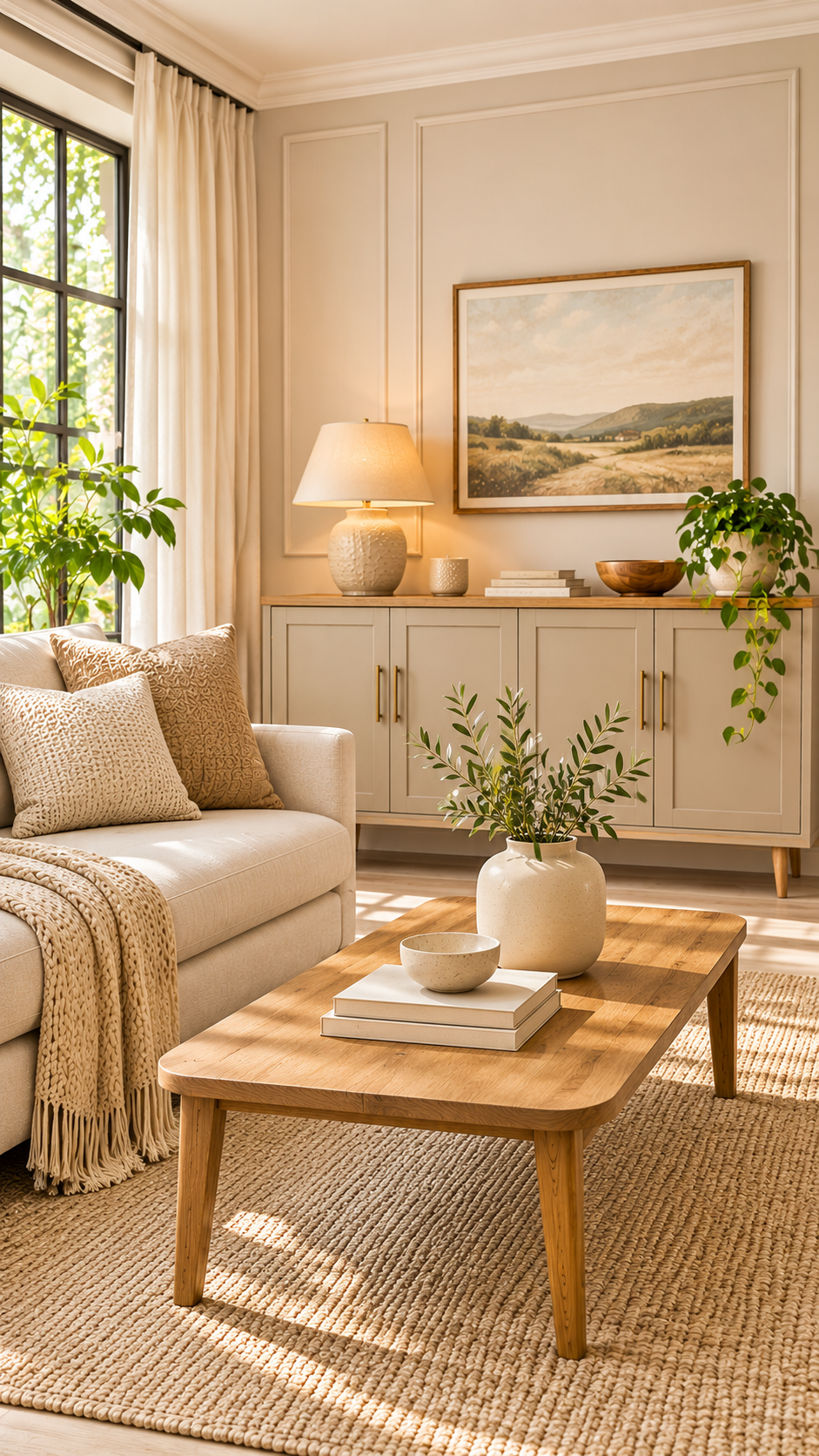
🎨 Create a Unified Color Direction Without Repainting Everything
Color coordination is one of the least expensive ways to make a home feel more refined.
When furniture and finishes share a recognizable color direction, even inexpensive pieces can look as though they were selected as a collection.
Begin with the colors that already exist in your home.
Examine flooring, major furniture, fixed cabinetry, and permanent architectural features.
These elements often determine which additional colors will work naturally.
Choose a restrained direction rather than trying to introduce an entirely new palette.
For example, a home containing medium-toned wood might benefit from warm white, muted taupe, and subtle charcoal accents.
A home with cooler gray finishes may look more coherent with soft white, pale gray, and carefully chosen darker details.
You do not necessarily need to repaint walls or replace furnishings.
Small changes can make existing colors feel more connected.
The key is repetition.
Using related tones across different areas helps the entire interior appear visually organized.
🪣 Use Paint Strategically Rather Than Starting a Major Renovation
Paint can be an affordable decorating tool, but purchasing large quantities and repainting entire rooms is not always necessary.
Sometimes one carefully selected surface offers enough improvement.
A worn interior door, mismatched furniture finish, or damaged trim may be more distracting than the surrounding walls.
Correcting that specific problem can produce better value than repainting an otherwise acceptable room.
When choosing a finish, consider how frequently the surface will be touched or cleaned.
Durability matters.
A beautiful paint color applied with the wrong product can quickly become a maintenance problem.
Prepare surfaces correctly and follow manufacturer instructions for cleaning, priming, drying, and curing.
For older homes, especially those with potentially hazardous existing paint, check applicable safety guidance before sanding or disturbing painted surfaces.
Always obtain permission before making permanent changes to rented property.
🧵 Use Existing Textiles Before Purchasing New Ones
Fabric can change the perceived quality of an interior, but replacing curtains, rugs, and upholstery can consume a decorating budget quickly.
Start by evaluating what you already own.
Cleaning curtains, removing wrinkles, correcting uneven hems, and repairing minor damage can make existing textiles look significantly better.
A rug that feels visually distracting may work more effectively elsewhere in the home.
A fabric item that is no longer appropriate for its original purpose might be reusable for a small sewing project.
The important principle is to improve the appearance of existing materials before buying replacements.
When purchases become necessary, prioritize simple construction, easy maintenance, and fabrics appropriate for regular use.
Avoid selecting products only because they resemble expensive designer materials in photographs.
A practical, durable cotton fabric may offer better long-term value than a delicate synthetic product marketed as luxurious.
🪵 Introduce Material Consistency Through Small Repairs
Different furniture pieces can sometimes appear disconnected because their finishes vary dramatically.
Instead of replacing them, identify whether a limited number of repairs could create better visual harmony.
Refinishing one visibly damaged surface may be enough.
Updating mismatched handles or repairing chipped edges can also make separate pieces feel more coordinated.
Avoid trying to make every wooden object exactly the same shade.
Natural variation can look attractive.
The objective is not perfect uniformity but a sense that the materials belong together.
Repeating one or two finish characteristics usually creates stronger visual consistency than introducing many unrelated textures.
🧰 Choose Reversible Improvements for Rental Homes
Renters often face additional restrictions.
Painting, drilling, changing fixtures, or modifying built-in furniture may require approval.
Fortunately, minimalist decorating works well with reversible improvements.
Removable furniture covers, freestanding storage, appropriately rated temporary organizers, and replaceable hardware can improve everyday function without permanent renovation.
Peel-and-stick materials may also be useful in some situations, but their removability varies.
Certain adhesives can damage paint, wallpaper, veneer, or delicate finishes.
Test products in an inconspicuous area and follow the manufacturer’s instructions.
Avoid applying decorative films near heat sources or in locations where they could create safety problems.
The most successful rental makeover should look attractive while preserving the original property.
✨ Focus on Finishes That Will Remain Attractive
Budget improvements should be evaluated by how they age, not just how they appear immediately after installation.
A cheap adhesive finish that peels after several weeks may cost more in the long run than a modestly priced, durable alternative.
Likewise, an inexpensive furniture coating can become frustrating if it chips during everyday use.
Select upgrades based on their expected conditions.
Moisture resistance matters in damp environments.
Washability matters on frequently touched surfaces.
Scratch resistance matters on furniture used daily.
A product that performs well in a decorative photograph may not be suitable for an active household.
Long-term practicality is part of good minimalist design.
💵 Example Budget for High Impact Finishing Details
| Upgrade | Estimated Cost |
|---|---|
| Paint and preparation supplies for a small project | $35 |
| Furniture touch-up materials | $15 |
| Hardware replacements | $20 |
| Basic textile repair or alterations | $15 |
| Reversible organization accessories | $20 |
| Estimated total | $105 |
This example demonstrates how a modest budget can be distributed across several targeted improvements.
There is no need to complete every upgrade at once.
Choose the changes that address the most noticeable problems first.
📊 Minimalist Home Decor on a Budget Comparison of the Best 3 Strategies
Each approach serves a slightly different purpose.
The most appropriate choice depends on the condition of your existing furniture, the amount of money available, and the problems you want to solve.
| Strategy | Example Budget | Main Advantage | Best For |
|---|---|---|---|
| 🥇 Zero Spend Reset and Furniture Makeovers | $0–$75 | Improves existing possessions | Homes with usable but tired furniture |
| 🥈 Secondhand Designer Finds | $50–$160 | Better furniture value through selective shopping | Homes missing essential pieces |
| 🥉 Affordable Material and Finishing Upgrades | $25–$105 | Creates a more cohesive appearance | Homes with mismatched or worn finishes |
The budget ranges are examples rather than fixed requirements.
A successful makeover may cost less, especially when you already own useful materials.
It may also require more money when structural repairs, professional services, or specialized products are necessary.
The strongest approach is often a combination of all three.
Begin by improving what is already available.
Purchase secondhand furniture only when a real need remains.
Finish with a small number of targeted upgrades that connect everything visually.
This sequence helps prevent unnecessary spending.
💡 Important Note: Never sacrifice safety, furniture stability, or essential maintenance to achieve a minimalist appearance. A low-cost makeover is only successful when the home remains comfortable, functional, and safe. Prioritize necessary repairs and durable purchases before cosmetic improvements.
💸 How to Plan a Complete Minimalist Home Decor on a Budget Makeover for Under 300 Dollars
A spending limit becomes much easier to manage when it is divided into clear categories.
Without a plan, small purchases often accumulate until the original budget disappears.
A $300 example budget provides enough flexibility for meaningful changes while encouraging careful prioritization.
The exact amount is not important.
The same planning principles can be applied to a smaller or larger budget.
📋 Divide Your Budget Before You Shop
Instead of purchasing whatever looks attractive, allocate money according to the problems identified during your home audit.
Here is one possible distribution.
| Spending Category | Example Allocation |
|---|---|
| Existing furniture repairs and restoration | $60 |
| One essential secondhand furniture purchase | $90 |
| Paint and finishing materials | $45 |
| Hardware and practical organization | $35 |
| Basic textile improvements | $30 |
| Contingency reserve | $40 |
| Total Budget | $300 |
The contingency reserve is especially important.
Secondhand purchases and DIY projects sometimes reveal unexpected costs.
Keeping money available for additional materials or repairs makes the project more manageable.
If the reserve is not needed, there is no obligation to spend it.
Unused money represents a successful budgeting decision.
🎯 Prioritize by Visual Impact and Daily Use
Not every improvement deserves equal attention.
Some problems are noticeable immediately, while others are relatively minor.
Identify changes that improve both appearance and function.
A damaged cabinet that occupies a prominent location may deserve attention before decorative accessories.
A chair that is uncomfortable or unstable should take priority over cosmetic upgrades.
A frequently used storage unit may provide more value than several small pieces of decor.
Consider assigning each potential project a score based on visual impact, usefulness, cost, and urgency.
Projects that are inexpensive, highly visible, and genuinely useful should generally receive higher priority.
This prevents the makeover from becoming a collection of unrelated purchases.
🛑 Establish a Waiting Period for Nonessential Purchases
Impulse buying is one of the biggest threats to budget decorating.
Online marketplaces and home decor stores frequently encourage urgency through limited-time discounts and promotional offers.
A beautiful object may seem essential in the moment but feel unnecessary a few days later.
Introduce a waiting period for optional purchases.
For example, postpone nonessential purchases for 48 hours.
During that period, compare alternatives, check measurements, and consider whether an existing item could perform the same function.
If the purchase still makes sense afterward, it is more likely to be a thoughtful addition.
If the desire disappears, the waiting period has protected your budget.
🏡 How to Make Affordable Minimalist Decorating Feel Cohesive Throughout Your Home
A beautiful home is not simply a collection of attractive individual areas.
The overall atmosphere becomes more convincing when materials, colors, and practical decisions relate to one another.
A consistent decorating philosophy can make modest purchases feel more valuable.
This is particularly important when furnishings have been collected gradually from different sources.
🎨 Create a Simple Whole Home Design Rule
Before making additional purchases, establish a few design rules.
These should be broad enough to allow personality while preventing visually conflicting decisions.
For example, you might decide to prioritize clean furniture silhouettes, warm neutral backgrounds, restrained metal finishes, and natural-looking materials.
These rules help evaluate future purchases.
A piece of furniture does not need to match everything else exactly.
It simply needs to make sense within the existing visual direction.
This approach is more flexible than purchasing matching furniture sets.
It also supports gradual decorating because each new item can be evaluated against a consistent standard.
📐 Respect Furniture Scale and Proportion
One of the most common reasons affordable interiors look awkward is incorrect furniture sizing.
Oversized pieces can overwhelm small rooms.
Furniture that is too small may appear disconnected from the surrounding architecture.
Before buying anything, measure the available space.
Check width, depth, and height.
Consider doorways, walking paths, cabinet access, and how furniture will be used.
Use painter’s tape or paper templates to visualize an item’s footprint before purchasing.
This inexpensive planning step can prevent costly mistakes.
A well-proportioned secondhand cabinet will generally look more intentional than an expensive cabinet that does not fit properly.
🧼 Keep Everyday Maintenance Part of the Design
Minimalist interiors depend heavily on visible condition.
Because there are fewer decorative distractions, damaged finishes and disorganized surfaces may become more noticeable.
Regular maintenance supports the desired appearance.
Establish practical places for frequently used belongings.
Return items to their intended locations.
Clean furniture using suitable products.
Address minor repairs before they become larger problems.
These habits help preserve the results of a budget makeover.
They also reduce the temptation to purchase new objects whenever a space begins to feel untidy.
❤️ Allow Meaningful Possessions to Remain
Minimalism does not require removing every sentimental object or making the home feel impersonal.
A carefully chosen family heirloom, handmade piece, or meaningful souvenir can add authenticity.
The important consideration is whether the object has a place and purpose in the home.
Avoid discarding meaningful possessions simply to imitate a photograph.
Personal character often makes a home more memorable than perfect uniformity.
A modest interior with genuine history can feel more sophisticated than a room filled with newly purchased imitation luxury objects.
⚠️ Common Budget Decorating Mistakes That Make Minimalist Homes Look Cheap
Affordable decorating becomes unsuccessful when the desire to save money overwhelms considerations of quality, function, and visual consistency.
Avoiding a few common mistakes can protect both your budget and your home’s appearance.
❌ Buying Cheap Items Without Considering Longevity
Low prices are attractive, but price alone does not determine value.
An inexpensive item that breaks quickly may require replacement.
A slightly more expensive piece with stronger construction may ultimately cost less.
Evaluate expected use, maintenance requirements, and repairability before purchasing.
For heavily used furniture, durability deserves special attention.
❌ Copying Expensive Interiors Too Literally
Designer photographs can provide useful inspiration, but recreating every element is rarely necessary.
Expensive interiors may include custom furniture, architectural modifications, and specialized finishes that do not translate well into a modest budget.
Instead of reproducing individual products, identify the broader characteristics that make the space attractive.
Look at proportion, consistency, and simplicity.
Then adapt those principles using the furniture and materials available to you.
The result should suit your actual home rather than imitate a showroom.
❌ Starting Too Many DIY Projects at Once
DIY work can save money, but unfinished projects can quickly become frustrating.
Multiple projects also create overlapping expenses for supplies and tools.
Complete one manageable improvement before beginning another.
Choose projects that match your skill level and available equipment.
When professional expertise is required, especially for electrical, structural, or other safety-critical work, seek qualified assistance rather than attempting an unsafe shortcut.
❌ Replacing Furniture That Only Needs Cleaning or Repair
A tired appearance does not always justify replacement.
Furniture may look significantly better after proper cleaning, tightening, refinishing, or minor restoration.
Before buying something new, estimate the reasonable cost of improving the existing piece.
Compare that amount with the total cost of replacement.
This simple habit can preserve a substantial portion of the decorating budget.
❌ Ignoring Hidden Costs
The advertised price is rarely the only expense.
Delivery fees, assembly materials, additional tools, cleaning products, and disposal costs can increase the final amount.
Secondhand furniture may require transportation.
DIY projects may need specialized supplies.
Calculate the complete expected cost before committing to a purchase.
A realistic estimate helps prevent a supposedly inexpensive makeover from becoming unexpectedly expensive.
📅 A Practical 30 Day Plan for Minimalist Home Decor on a Budget
A gradual makeover reduces financial pressure and allows time to evaluate each decision.
Instead of trying to transform the entire home in a weekend, divide the work into manageable stages.
This approach also makes it easier to see whether early improvements have already solved the problems you originally identified.
🗓️ Week 1 Audit and Reset
Begin by reviewing existing furniture and possessions.
Identify damaged items, unnecessary duplicates, and objects that could work better in a different location.
Clean visible surfaces and complete simple maintenance tasks.
Experiment with furniture placement.
Take photographs to document the starting condition and the results of each change.
At the end of the week, create a short list of problems that genuinely remain unresolved.
Do not purchase decorative accessories yet.
🗓️ Week 2 Repair and Restore
Focus on furniture that can be improved economically.
Tighten hardware, repair minor damage, and clean appropriate surfaces.
Complete one small restoration project if needed.
Allow sufficient drying or curing time when using finishing products.
Review the visual results before planning additional purchases.
You may discover that restoring a single prominent piece has already made a substantial difference.
🗓️ Week 3 Shop Selectively
Use the needs identified during the first two weeks to guide purchasing.
Search secondhand marketplaces, local resale stores, and community exchange opportunities.
Measure carefully.
Inspect condition.
Calculate transportation and repair costs.
Avoid buying unrelated decorative items simply because they are discounted.
If no suitable purchase appears within the budget, continue using the existing furniture.
Waiting is often better than settling for the wrong piece.
🗓️ Week 4 Complete the Finishing Details
Use the final week to address small inconsistencies.
Correct minor finish problems.
Replace outdated hardware where appropriate.
Complete necessary textile repairs.
Organize frequently used possessions in practical locations.
Evaluate the completed home under normal daily conditions rather than judging it only from carefully staged photographs.
Ask whether the space feels comfortable, useful, and easier to maintain.
The goal is not perfection.
It is a visible improvement achieved through deliberate spending.
❓ Frequently Asked Questions About Minimalist Home Decor on a Budget
Can a Minimalist Home Look Expensive Without Buying New Furniture?
Absolutely.
Existing furniture can become more attractive through better placement, maintenance, restoration, and improved coordination.
A cohesive interior does not depend on purchasing new products.
In many cases, changing the relationship between existing pieces offers greater visual improvement than adding more decorations.
What Is the Cheapest Way to Start Minimalist Decorating?
Begin with a zero-spend assessment.
Remove unnecessary visual distractions, clean existing furniture, and experiment with different arrangements.
Identify what already works before deciding what needs to change.
This reduces unnecessary purchases and helps establish a clearer decorating direction.
Is Secondhand Furniture Good for Minimalist Interiors?
Yes, provided the furniture is appropriate in size, condition, and function.
Secondhand shopping can provide access to durable materials and attractive construction at lower prices.
Focus on quality rather than brand names.
Inspect carefully and account for transportation and repair costs.
How Much Money Do You Need for a Minimalist Home Makeover?
There is no universal minimum.
A room may improve significantly without spending anything.
Small targeted projects may require $25 to $100, while larger improvements involving furniture purchases may cost several hundred dollars or more.
The appropriate budget depends on the home’s condition, local prices, and the changes required.
How Do You Avoid Making Budget Decor Look Cheap?
Prioritize consistency, proper proportions, maintenance, and functional quality.
Avoid purchasing unnecessary accessories to fill empty spaces.
Choose durable materials where possible, repair visible damage, and make sure every purchase contributes to the home’s overall appearance or usefulness.
Should You Decorate Everything at Once?
A gradual approach is usually more financially manageable.
Completing one project at a time allows you to evaluate results and adjust future spending.
It also reduces the risk of purchasing furniture or materials that become unnecessary after earlier improvements.
What Should You Spend More Money On?
Prioritize essential furnishings that affect everyday comfort, function, and safety.
Frequently used seating, mattresses, practical storage, and necessary repairs may deserve a larger share of the budget.
Decorative accessories should generally come after those needs are addressed.
🌟 Final Thoughts on the Best 3 Minimalist Home Decor on a Budget Ideas
Creating a beautiful home does not require an unlimited decorating budget.
The most impressive transformations often happen when homeowners stop treating decorating as a shopping exercise and begin approaching it as a series of thoughtful design decisions.
🥇 Best 1 Zero Spend Reset and Smart Furniture Makeovers is the ideal starting point for anyone who wants meaningful improvements without replacing existing possessions. Rearranging furniture, completing simple repairs, and restoring worn finishes can make a home feel dramatically more polished.
🥈 Best 2 Secondhand Designer Finds and Smart Shopping offers an effective way to acquire useful furniture without paying premium retail prices. By focusing on construction quality, timeless proportions, and realistic total costs, homeowners can build an attractive interior gradually.
🥉 Best 3 Affordable Material Upgrades and High Impact Finishing Details brings the entire makeover together. Carefully selected finishes, coordinated hardware, practical repairs, and thoughtful material choices can create a more consistent appearance without major renovation expenses.
The most effective results combine these three strategies.
Start by working with what you already have. Improve the pieces worth keeping. Purchase only what is genuinely missing. Then complete a few affordable finishing details that make the entire home feel more connected.
There is no need to rush.
A carefully planned home develops character over time, and each thoughtful purchase should make the next decorating decision easier.
Minimalist Home Decor on a Budget ultimately succeeds because it changes the meaning of affordable decorating.
Instead of trying to make inexpensive purchases look luxurious, it focuses on creating genuine value through simplicity, quality, and intention.
A home with fewer unnecessary possessions, reliable furniture, practical organization, and well-maintained finishes can feel far more sophisticated than one filled with expensive but poorly coordinated objects.
The real luxury is not how much money was spent.
It is living in a space where everything feels purposeful, comfortable, and beautifully considered.
Related posts:

Best 3 Minimalist Home Decor With Plants Ideas That Make Any Room Look Stunningly Expensive
Best 3 Minimalist Wall Decor Ideas That Make Empty Walls Look Surprisingly Expensive
Best 3 Indoor Olive Tree Decor Ideas That Make Any Home Look Like a Luxury Mediterranean Villa
Best 3 Minimalist Console Table Decor Ideas That Make Any Space Look Effortlessly Expensive
Best 3 Minimalist Entryway Decor Ideas That Make Your Home Look Instantly Expensive
Best 3 Minimalist Shelf Decor Ideas That Make Any Shelf Look Effortlessly Expensive