Christmas Window Lights can transform even the simplest home into a breathtaking winter wonderland filled with warmth, elegance, and unforgettable holiday charm. Imagine walking through a quiet neighborhood on a December evening, where beautifully illuminated windows glow like miniature Christmas scenes, delicate stars sparkle against the darkness, and soft golden lights create the irresistible feeling of a cozy festive retreat.
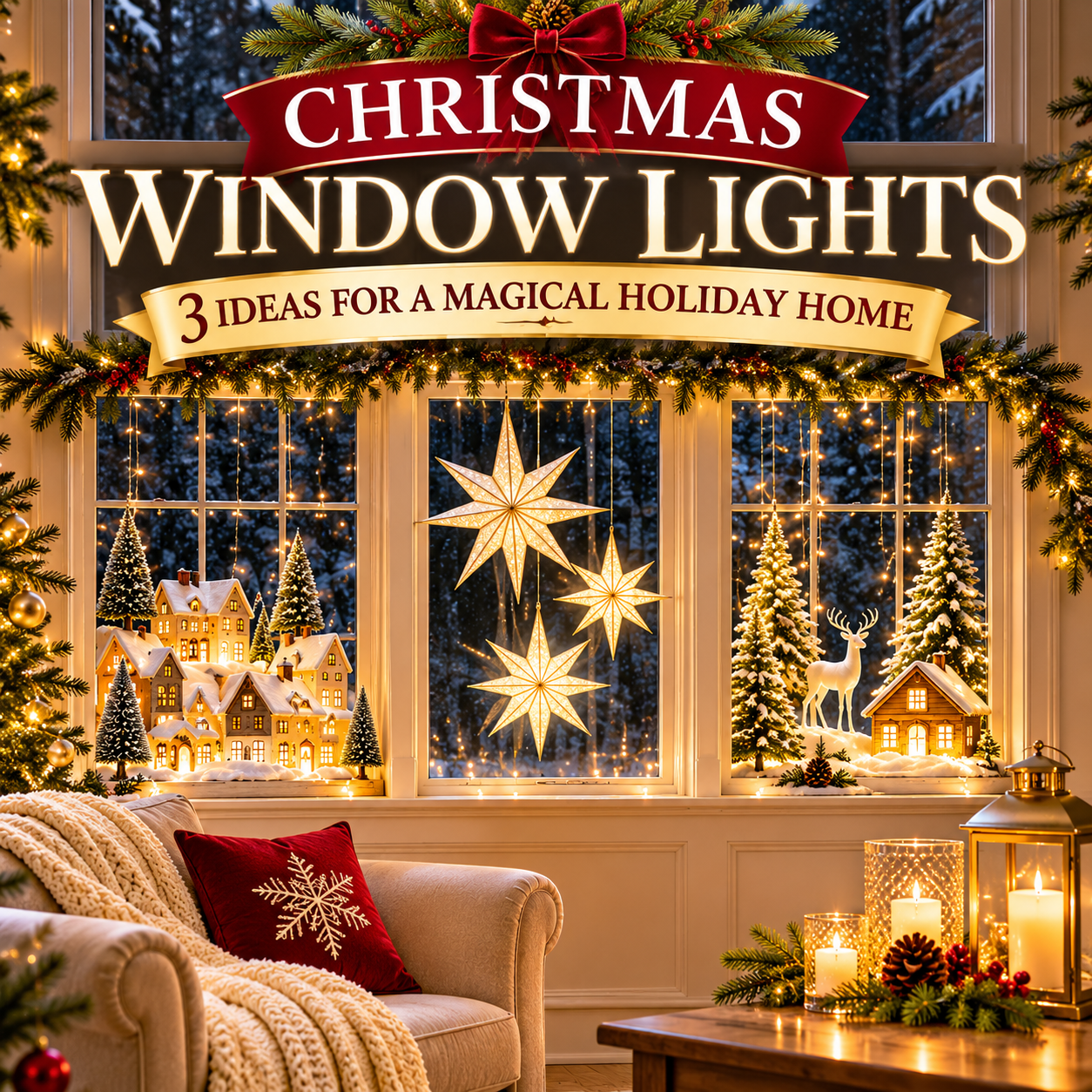
The most beautiful Christmas windows are not necessarily the brightest or most expensive. Their magic comes from thoughtful lighting arrangements, carefully chosen colors, beautiful silhouettes, and the subtle interaction between glowing decorations and the architecture of a home. A simple window can become a captivating holiday focal point when every light has a purpose and every decorative detail contributes to a harmonious atmosphere.
🎄 The secret to extraordinary Christmas Window Lights is creating a complete visual experience rather than simply hanging decorative lights around the glass.
From romantic European Christmas villages to sophisticated contemporary illumination and enchanting winter forest scenes, the possibilities extend far beyond traditional string lights. Thoughtfully designed window lighting can make an ordinary living room feel like an elegant winter chalet, transform a small apartment into a festive sanctuary, or give a beautiful family home the appearance of a luxurious Christmas boutique.
These three Christmas Window Lights ideas explore distinctive approaches to holiday illumination, combining professional-inspired styling, creative lighting techniques, practical installation strategies, and stunning seasonal details that look beautiful from both inside and outside the home.
Why Christmas Window Lights Can Completely Transform Your Home
Windows are among the most visually expressive architectural features of a house. During daylight hours, they connect indoor spaces with the surrounding landscape, introducing natural light and creating openness. At night, however, windows become illuminated frames that reveal the atmosphere and personality of the rooms behind them.
Christmas lighting makes this transformation especially dramatic.
A carefully arranged display can create a beautiful visual connection between interior holiday decorations and the exterior appearance of a house. Instead of concentrating all festive lighting on a Christmas tree or outdoor roofline, illuminated windows distribute seasonal warmth throughout the entire building.
This technique is especially effective in homes with large picture windows, traditional divided-pane windows, elegant bay windows, or symmetrical architectural facades.
✨ Beautiful window illumination creates three important decorative effects:
- Architectural definition: Glowing lines and carefully positioned lights emphasize window shapes and architectural proportions.
- Atmospheric depth: Layered illumination creates beautiful contrasts between the glass, window frame, and surrounding interior.
- Emotional warmth: Soft, welcoming lighting makes a home feel comfortable, intimate, and festive.
The most successful designs also consider how a window looks from two different perspectives.
From inside, the lights should complement the living space without creating uncomfortable glare. From outside, the decorations should form a recognizable composition rather than appearing as a random arrangement of glowing objects.
Achieving this balance is what separates ordinary Christmas lighting from truly memorable holiday window displays.
🥇 Best 1 Christmas Window Lights With a Romantic European Christmas Village and Golden Holiday Glow
There is something irresistibly magical about a traditional European Christmas village illuminated against a dark winter evening.
Picture a charming window transformed into a miniature festive streetscape, with tiny illuminated houses, delicate glowing windows, softly sparkling streetlights, and beautiful golden reflections across the glass. The arrangement feels like a scene from a nostalgic Christmas story, filled with the romance of historic European towns and the comforting atmosphere of a traditional holiday market.
This Christmas Window Lights concept creates a miniature architectural landscape rather than relying on decorative light strings alone.
Its beauty comes from combining illuminated structures at different heights with subtle background lighting, establishing a sense of perspective that makes the display feel surprisingly realistic.


Create a Miniature Christmas Village Across the Windowsill
The foundation of this design is a carefully arranged collection of miniature Christmas buildings.
Choose small ceramic houses, wooden village structures, or elegant porcelain cottages with built-in LED illumination. Buildings featuring tiny windows and detailed rooflines work particularly well because their glowing openings create the impression of a real town illuminated after sunset.
Rather than placing every building in a perfectly straight line, arrange the village in gentle layers.
Position one or two taller buildings near the back of the display, place smaller cottages toward the front, and introduce subtle variations in height to create the impression of a miniature street.
A small church silhouette, narrow townhouse, or traditional alpine chalet can become an attractive architectural centerpiece.
For an especially sophisticated composition, keep the buildings within a consistent design family. Cream-colored ceramic houses produce an elegant snowy village, while natural wooden structures suggest a rustic Nordic settlement.
Combining too many unrelated colors and architectural styles can weaken the overall effect.
The goal is to create a miniature world that looks coherent and believable.
Add Warm Golden Lights That Resemble Tiny Village Streetlamps
Lighting is the detail that brings the entire village to life.
Begin with the internal illumination of the miniature houses. Warm white LEDs are particularly effective because they resemble the gentle glow of welcoming windows during a winter evening.
Next, introduce a discreet strand of micro LED lights behind the buildings.
Instead of spreading the lights evenly across the windowsill, arrange them in a loose pattern that creates small pockets of illumination between the structures.
These tiny points of light can suggest miniature streetlamps, glowing pathways, or distant lights from buildings deeper within the village.
For a more atmospheric result, consider placing a softly illuminated background panel behind the scene. A translucent frosted acrylic panel, positioned securely and illuminated by a suitable low-heat LED product, can create the impression of a luminous winter sky.
The contrast between the tiny house windows and the gentle background glow produces a beautiful sense of depth.
Avoid using excessively bright lighting.
The most captivating Christmas villages often appear softly illuminated, allowing the viewer to discover individual details rather than seeing one overwhelming burst of light.
Introduce a Snowy Winter Landscape Without Overcrowding the Window
The next step is creating a believable winter environment around the illuminated buildings.
A simple white display base can establish the appearance of snow-covered ground. Choose a stable, nonflammable material suited to the lighting arrangement, and keep it clear of electrical connections.
Small decorative trees can be positioned between the buildings to create the suggestion of a village square or winter forest.
Select trees in different heights, including a few narrow evergreens and smaller frosted varieties.
Natural-looking textures are particularly important.
A combination of matte ceramic buildings, understated white surfaces, and muted evergreen accents creates a more sophisticated effect than excessive glitter or brightly colored artificial snow.
Consider introducing one distinctive visual feature, such as a miniature bridge, a tiny town square, or a beautifully illuminated clock tower.
This centerpiece gives the eye somewhere to rest and makes the composition feel intentionally designed.
❄️ A beautiful miniature Christmas village should feel like a little world waiting to be explored.
Make the Village Look Beautiful From the Street
A common problem with decorative windowsill arrangements is that they look attractive from inside but become almost invisible from outdoors.
This happens when the buildings face the wrong direction or when strong interior lighting overwhelms the small decorative lights.
To avoid this problem, position the most distinctive facades toward the exterior viewing angle.
If the window is visible from a sidewalk or driveway, evaluate the display from that perspective after sunset.
The miniature houses should form an interesting silhouette against the glass, while their illuminated windows remain clearly visible.
Avoid positioning large furniture immediately behind the display if it blocks the light.
A darker interior background can actually enhance the village because it allows the warm LEDs to stand out.
For additional visual impact, frame the upper portion of the window with a very delicate line of warm white lights, keeping the village itself as the primary attraction.
This creates a subtle architectural boundary without competing with the miniature scene.
Choose Elegant Colors for a Luxurious European Holiday Atmosphere
The color palette determines whether the display feels traditional, rustic, or sophisticated.
For a romantic European Christmas village, the most beautiful combination often includes ivory, antique gold, natural wood, frosted white, and muted evergreen.
These colors create warmth without making the arrangement appear overly colorful.
Ivory ceramic buildings look especially beautiful against antique brass accents. Soft gold lighting introduces warmth, while dark evergreen details provide contrast.
For a slightly more nostalgic appearance, introduce restrained burgundy accents through tiny decorative details.
However, keep the illuminated elements consistent in color temperature.
Mixing warm golden LEDs with harsh blue-white lights can make the scene appear disconnected.
The final effect should resemble a charming European Christmas village glowing peacefully through the winter darkness.
🥈 Best 2 Christmas Window Lights With Modern Floating Light Sculptures and Architectural Elegance
For homes with contemporary architecture, large windows, high ceilings, or refined modern interiors, Christmas lighting can become an extraordinary form of temporary illuminated art.
Instead of creating a traditional festive arrangement, this concept transforms a window into a sculptural installation featuring suspended luminous shapes, striking negative space, and beautifully controlled light.
Imagine several oversized glowing stars floating at different heights in front of a floor-to-ceiling window.
Their delicate outlines appear almost weightless, while the surrounding darkness emphasizes their sculptural forms. A restrained combination of champagne-white illumination and subtle metallic details creates a sophisticated display that feels closer to a luxury winter exhibition than conventional Christmas decoration.

This approach is particularly effective when the architectural shape of the window becomes an essential part of the design.
Use Oversized Illuminated Stars as Floating Sculptures
The defining feature of this concept is a small collection of large, elegant illuminated stars.
Choose three-dimensional star decorations, slim LED outline stars, or sculptural geometric ornaments designed specifically for illuminated display.
Oversized shapes work best because they create strong visual impact without requiring numerous decorations.
A single large star can look impressive in a narrow window, while two or three stars of different sizes can create a dramatic composition in a wide picture window.
Rather than arranging the stars at identical heights, position them asymmetrically.
For example, suspend the largest star slightly above the center of the window, place a smaller star to one side, and introduce a third shape lower in the composition.
This creates movement and helps the display appear naturally balanced.
The empty space surrounding the stars is equally important.
A sophisticated sculptural display depends on allowing each illuminated form enough room to stand out.
When too many stars compete for attention, the installation loses its architectural elegance.
Experiment With Suspended Light Orbs and Celestial Shapes
Although illuminated stars are a classic Christmas symbol, they are not the only shapes capable of creating a breathtaking display.
Spherical LED ornaments, delicate illuminated moons, and geometric light frames can introduce variety without overwhelming the design.
For a contemporary interpretation, combine one large luminous star with two smaller glowing orbs.
The spherical forms provide a beautiful contrast to the angular geometry of the star.
Alternatively, create a celestial composition using a slim crescent moon surrounded by several tiny suspended points of light.
This arrangement can make the window resemble a peaceful winter night sky.
When hanging illuminated decorations, use appropriate supports rated for their weight and compatible with the window frame or mounting surface.
Keep cables discreetly routed along the frame rather than hanging loosely across the glass.
A clean installation is essential because visible, tangled wiring can undermine the sculptural effect.
The decorations should appear to float effortlessly, even though the arrangement has been carefully secured.
Create a Luxury Champagne White Lighting Palette
One of the most distinctive features of high-end contemporary Christmas styling is its restrained use of color.
Instead of combining multiple bright festive shades, select a carefully coordinated lighting palette.
Champagne white is particularly attractive because it offers a soft, elegant glow that feels warmer than icy white but more understated than strongly yellow lighting.
For an especially luxurious look, combine champagne-toned LEDs with decorative finishes such as brushed brass, satin silver, matte ivory, or translucent acrylic.
These materials reflect light gently rather than producing harsh glare.
Consider the surrounding interior colors as well.
A modern living room with cream upholstery, natural stone surfaces, and pale wooden furniture pairs beautifully with warm white sculptural lighting.
A darker interior featuring charcoal walls or black-framed windows can support a more dramatic arrangement with luminous white shapes.
The contrast makes the decorative forms appear exceptionally crisp.
💫 The key is to let the illuminated shapes become the statement rather than surrounding them with excessive decorative accessories.
Use Negative Space to Make the Window Look More Expensive
In contemporary visual design, empty space is not wasted space.
It allows important elements to become more noticeable.
This principle is especially useful when designing Christmas Window Lights for modern homes.
Instead of filling every corner with fairy lights, keep large areas of glass free from decoration.
For example, a large picture window might contain one oversized illuminated star positioned slightly off center, accompanied by two smaller suspended ornaments.
The remaining glass stays completely clear.
During daylight hours, the arrangement appears delicate and architectural.
At night, the illuminated forms become dramatic silhouettes against the darkness.
This technique also preserves outdoor views and prevents the window from feeling visually crowded.
For homes with beautiful gardens, snowy landscapes, or city views, maintaining visibility can be particularly valuable.
The decoration complements the view rather than completely covering it.
Add a Soft Architectural Glow Around the Window Recess
Floating light sculptures become even more dramatic when combined with subtle background illumination.
One effective approach is to introduce a concealed LED lighting system along the interior edge of a deep window recess.
Rather than pointing the LEDs directly toward the viewer, position them according to the product’s mounting instructions so the light gently washes an adjacent wall or suitable surface.
This creates a soft luminous outline that emphasizes the window’s architectural depth.
The resulting glow can make the decorative stars appear suspended within a larger illuminated frame.
For windows without deep recesses, a slim decorative light fixture placed near the window can create a similar layered effect.
The goal is not to make the entire window brighter.
Instead, create a subtle difference between the foreground sculptures and the background surfaces.
This controlled contrast gives the display a professional, gallery-inspired appearance.
Coordinate Multiple Windows for a Cohesive Exterior
When a home has several street-facing windows, repeating the same sculptural lighting concept can create impressive architectural harmony.
However, every window does not need to feature an identical arrangement.
A more sophisticated approach involves repeating the same visual language while introducing small variations.
For example, the largest living room window might feature three suspended illuminated stars.
A smaller dining room window could display one oversized star, while an upstairs bedroom window features a pair of delicate glowing orbs.
All windows use the same warm white lighting color and similar metallic finishes.
From outside, the house appears coordinated without becoming repetitive.
This approach is particularly beautiful for modern townhouses, minimalist residences, and homes with strong geometric architecture.
It proves that Christmas lighting can feel festive while remaining sophisticated and visually restrained.
🥉 Best 3 Christmas Window Lights With an Enchanted Winter Forest and Magical Woodland Atmosphere
A Christmas window can become something far more imaginative than a decorative arrangement.
It can tell a story.
The enchanted winter forest concept transforms ordinary window glass into a magical woodland scene filled with glowing trees, delicate woodland silhouettes, softly illuminated branches, and atmospheric layers of winter light.
Imagine looking through a window and discovering a peaceful forest landscape where tiny golden lights sparkle between evergreen silhouettes, a distant woodland cabin glows beneath the trees, and delicate illuminated stars suggest a clear December sky.
The effect is romantic, immersive, and wonderfully atmospheric.
Unlike a traditional Christmas village, this concept emphasizes organic forest shapes, natural textures, and the mysterious beauty of a winter woodland.


Build a Layered Forest Silhouette Across the Window
The foundation of this design is a collection of evergreen tree silhouettes arranged at different depths.
Begin by choosing a few decorative tree forms in varying heights.
These can be lightweight freestanding wooden silhouettes, suitable translucent window decorations, or dimensional artificial evergreen shapes positioned securely on the interior windowsill.
For a dramatic composition, place taller trees toward the sides of the window and smaller shapes toward the center.
This creates the impression of looking through a forest clearing.
Avoid arranging every tree in a perfectly symmetrical pattern.
Natural woodland landscapes are visually interesting because their shapes and spacing vary.
A slightly irregular composition produces a more believable scene.
Consider introducing different tree silhouettes, including narrow fir trees, full spruce shapes, and delicate bare winter branches.
The variation creates a richer landscape without requiring additional colors.
During daylight hours, the trees provide beautiful decorative shapes.
At night, carefully positioned lights transform them into an enchanting illuminated forest.
Weave Tiny Fairy Lights Between Woodland Layers
Lighting should resemble little pockets of magical illumination scattered throughout the forest.
Choose warm white micro LED lights with small bulbs that produce delicate points of light.
Rather than outlining every tree, place the lights selectively behind and between the decorative silhouettes.
This creates the impression that the glow originates from deeper within the woodland.
A few illuminated branches can provide additional texture.
Place them toward one side of the window, allowing their delicate shapes to rise naturally above the miniature forest.
The tiny bulbs should look like sparkling frost or distant stars caught among winter branches.
For a more dramatic effect, position the primary light source behind the middle layer of the forest display.
This helps separate the silhouettes visually.
The closest trees remain darker, while the shapes behind them appear softly illuminated.
The resulting arrangement can make even a relatively shallow windowsill seem surprisingly deep.
Introduce a Secret Woodland Cabin as the Focal Point
Every memorable decorative scene benefits from one carefully chosen focal point.
For an enchanted winter forest, a small illuminated cabin can become the magical heart of the display.
Choose a miniature wooden cottage, rustic ceramic cabin, or simple chalet-shaped decorative structure with warm internal LED lighting.
Position the cabin slightly off center, partially surrounded by small evergreen silhouettes.
Its glowing windows should appear as though someone is enjoying a peaceful Christmas evening deep inside the forest.
This little architectural detail introduces narrative and emotional warmth.
The scene no longer appears to be merely a collection of trees and lights.
Instead, it suggests a hidden retreat waiting to be discovered.
To emphasize the cabin, use slightly brighter illumination inside the structure while keeping the surrounding forest lights softer.
The contrast naturally draws attention toward the tiny building.
A small pathway suggested by simple light-colored decorative shapes can complete the scene.
Keep the effect understated.
The beauty lies in allowing the viewer’s imagination to complete the woodland story.
Create Atmospheric Depth With Frosted Translucent Details
A truly enchanting winter forest needs a sense of atmosphere.
The most effective way to create this is by introducing translucent decorative elements that soften selected areas of the window.
Removable frosted window film can create the appearance of winter mist when used sparingly.
Apply it to a small portion of the glass according to the manufacturer’s instructions, leaving the main viewing area clear.
A narrow frosted section near the lower edge can suggest snow-covered ground, while a few delicate patterns near the corners can resemble frost developing on cold glass.
Alternatively, translucent acrylic tree silhouettes can be positioned within the display to catch the light.
When illuminated from behind, these materials create gentle glowing edges.
Layering opaque and translucent shapes introduces visual depth without requiring a large number of objects.
For the most convincing atmosphere, avoid covering the entire window with frosted material.
The remaining clear glass allows the dark evening outside to function as part of the composition.
🌲 The finished scene should feel like a mysterious winter forest softly glowing beneath the stars.
Bring Woodland Magic Into Different Rooms
The enchanted forest concept can be adapted beautifully to several areas of the home.
In a living room, a wide window offers enough space for a detailed woodland composition with multiple trees, an illuminated cabin, and atmospheric background lighting.
In a bedroom, a simpler arrangement featuring two or three evergreen silhouettes and warm fairy lights can create a peaceful nighttime atmosphere.
For a child’s room, introduce playful woodland elements such as deer silhouettes, small rabbits, or a whimsical moon, while keeping all electrical decorations and detachable pieces safely out of reach.
A kitchen window can feature a miniature forest along the sill, using narrow decorative trees that do not interfere with ventilation or window operation.
The concept is also particularly attractive in homes surrounded by real trees or gardens.
During the day, the decorations echo the natural landscape outside.
After dark, the illuminated woodland becomes a magical indoor scene.
Christmas Window Lights Style Comparison for Different Homes
Each of the three lighting concepts offers a distinctive atmosphere.
Choosing the right design depends on the architecture of the house, the size of the window, the existing interior style, and the emotional effect you want to create.
| Design feature | Romantic Christmas Village | Modern Floating Sculptures | Enchanted Winter Forest |
|---|---|---|---|
| Primary atmosphere | Nostalgic and romantic | Elegant and architectural | Magical and natural |
| Main decorations | Illuminated miniature houses | Floating stars and glowing orbs | Evergreen silhouettes and woodland accents |
| Best light color | Warm golden white | Champagne white | Soft warm white |
| Ideal window type | Deep windowsill or bay window | Tall or large picture window | Wide windows or layered sills |
| Interior compatibility | Cottage, classic, traditional | Contemporary, luxury, modern | Rustic, organic, cozy |
| Main visual feature | Miniature illuminated streetscape | Suspended light sculpture | Glowing woodland landscape |
| Installation complexity | Moderate | Moderate | Moderate to detailed |
| Small-space adaptation | Compact illuminated village | Single statement star | Mini forest silhouettes |
| Overall impression | Charming European holiday town | Luxury Christmas gallery | Enchanted winter sanctuary |
The most important consideration is visual compatibility.
A contemporary house with enormous black-framed windows might look especially impressive with suspended illuminated sculptures.
A charming cottage could benefit from the nostalgic atmosphere of a Christmas village.
Meanwhile, a home decorated with organic materials, warm wood, and nature-inspired details may look particularly beautiful with an enchanted winter forest.
There is no universal design that works perfectly for every property.
The best Christmas lighting enhances the character that already makes the home special.
How to Choose the Perfect Christmas Window Lights for Your Space
Beautiful holiday illumination begins with understanding how your windows function.
A window is not simply an empty rectangle waiting to be decorated.
Its dimensions, framing, available sill space, surrounding furniture, and relationship with exterior views all influence the success of the finished arrangement.
Before choosing decorative lights, observe the window during daylight and after dark.
Notice which parts are visible from outdoors and whether the room behind it appears brightly illuminated.
Large windows may require only one or two statement decorations, while smaller windows often benefit from compact arrangements with carefully controlled lighting.
Select Lighting That Complements Your Window Proportions
Tall, narrow windows naturally suit vertically oriented decorations.
Suspended stars, elongated illuminated ornaments, or a single decorative light sculpture can emphasize their proportions.
Wide picture windows offer greater flexibility.
They can accommodate a miniature Christmas village, a layered woodland scene, or multiple floating ornaments arranged across the glass.
Bay windows are particularly suitable for dimensional displays because their deeper sills provide space for miniature buildings and decorative landscapes.
However, the composition should never interfere with window handles, ventilation openings, emergency escape access, or normal window operation.
A thoughtful design respects the function of the architecture as well as its appearance.
Understand the Difference Between Warm White and Cool White
Light color dramatically influences the mood of Christmas decorations.
Warm white lighting tends to produce a welcoming, intimate atmosphere reminiscent of candlelight.
It complements wood, brass, cream-colored ceramics, and traditional holiday materials.
Cool white lighting creates a crisper appearance that can suit frosted decorations, contemporary architecture, and winter-inspired designs.
However, excessive cool white illumination may appear harsh in a cozy interior.
Champagne white offers an attractive middle ground for sophisticated displays, although actual product colors vary by manufacturer.
For a coordinated appearance, purchase lights with comparable color temperatures rather than assuming that every product labeled warm white will look identical.
If a color temperature is specified, products in approximately the 2200–3000 K range generally produce warm-toned light, with lower values appearing more amber.
Test the lights together before installation.
The final color relationship is easier to judge after sunset.
Balance Decorative Brightness With Everyday Comfort
A beautiful Christmas window should enhance the living environment rather than become a source of discomfort.
Very bright LEDs positioned directly at eye level can create distracting glare, particularly in bedrooms and living rooms.
Choose lighting products that provide appropriate brightness for decorative use.
Where supported by the manufacturer, dimming or adjustable lighting modes can help create a softer atmosphere.
Avoid fast flashing effects in areas intended for relaxation.
A steady warm glow or gentle lighting effect often produces a more sophisticated appearance.
Remember that windows naturally reflect interior light at night.
An overly bright decorative arrangement may create competing reflections that make individual elements difficult to appreciate.
Testing the display from multiple viewing angles helps reveal these problems before the installation is finalized.
How to Make Christmas Window Lights Look Professionally Designed
Professional-looking holiday windows usually share several important characteristics.
They feature a recognizable focal point, a harmonious color palette, intentional lighting layers, and a balanced relationship between decoration and negative space.
Most importantly, they avoid trying to include every possible Christmas ornament in a single window.
Build a Clear Foreground Middle Ground and Background
Layering is one of the most effective methods for creating visual depth.
The foreground contains the objects closest to the viewer, such as miniature houses, trees, or sculptural decorations.
The middle ground introduces supporting shapes and smaller lighting accents.
The background provides atmospheric illumination, darker silhouettes, or the natural evening view through the glass.
When these three layers are visually distinct, the display feels more dimensional.
For example, a Christmas village might feature small houses in the foreground, taller illuminated buildings behind them, and subtle ambient lighting near the rear of the arrangement.
A winter forest can use dark tree silhouettes in front, softly illuminated branches in the middle, and a simple translucent detail toward the glass.
Layering is especially powerful when decorating at night because different light intensities naturally create the impression of distance.
Keep Decorative Materials Consistent
An attractive lighting concept can lose its elegance when too many unrelated materials are introduced.
Choose a limited collection of finishes that complement the primary theme.
For a European village, this might include matte ceramic, natural wood, and antique brass.
For modern floating sculptures, choose sleek metal, translucent acrylic, and smooth white surfaces.
For a woodland display, emphasize natural-looking wood, subdued evergreen tones, and soft frosted textures.
Material consistency makes even inexpensive decorations appear more intentionally curated.
A collection of affordable objects with matching finishes often looks more refined than a collection of expensive decorations that do not belong together visually.
Test the Display From Both Sides of the Window
The most important final styling step is evaluating the display after dark.
Stand inside the room and observe the decoration from the main seating area.
Check whether any lights create uncomfortable glare or reflections.
Next, view the window from outside at the normal viewing distance.
Notice whether the composition is clearly recognizable.
Small details that look charming from a few inches away may disappear when viewed from the sidewalk.
If the display looks too busy, remove one or two elements rather than adding more lighting.
If it looks flat, adjust the position of existing lights to create stronger depth.
Sometimes a minor change in spacing can improve the appearance dramatically.
Beautiful Christmas Window Lights Without Expensive Decorations
A luxurious Christmas window does not require an unlimited decorating budget.
The most effective way to control costs is to invest in one strong focal point and build the remaining arrangement around affordable supporting details.
For a Christmas village, begin with three illuminated houses rather than purchasing an entire miniature town.
For a sculptural window, choose one oversized LED star and let its shape become the centerpiece.
For an enchanted forest, create a simple layered display using a few reusable tree silhouettes and a carefully positioned LED light strand.
The following table illustrates practical starting points.
| Budget approach | Recommended design | Main investment | Affordable supporting details |
|---|---|---|---|
| Simple | Single floating star | One illuminated statement decoration | Removable mounting accessories |
| Budget friendly | Mini woodland scene | One suitable micro LED strand | Reusable tree silhouettes |
| Moderate | Romantic Christmas village | Three illuminated miniature buildings | Small decorative trees |
| Flexible upgrade | Architectural light composition | Additional coordinated LED shapes | Existing neutral accessories |
| Reusable seasonal collection | Layered Christmas display | Durable lighting and focal decorations | Rearrangeable seasonal accents |
Reusing existing decorations is another effective way to create a sophisticated display.
Small Christmas trees, ceramic ornaments, and decorative houses can often be incorporated into window compositions without requiring additional purchases.
A thoughtful arrangement matters far more than the number of objects.
It is also worth selecting versatile decorations that can be used in different locations over several holiday seasons.
A beautiful illuminated star might decorate a living room window one year and a hallway window the next.
Miniature ceramic houses can move between a Christmas windowsill and a festive console display.
This flexibility makes seasonal decorating more practical and enjoyable.
Important Christmas Window Lights Safety and Installation Tips
Christmas lighting should be beautiful, but electrical safety must always remain the priority.
Window installations require particular care because decorative lights are often positioned near curtains, window frames, moving sashes, and other household materials.
⚠️ Important Note: Use certified decorative lights suitable for their intended indoor or outdoor location, inspect all cables before installation, and follow the manufacturer’s instructions. Never pinch electrical cords between closing windows or place lights against flammable decorations. Switch off holiday lighting before going to bed or leaving home, and keep electrical equipment away from moisture and accessible to children or pets.
LED decorations are generally preferable to traditional incandescent Christmas lighting because they consume less electricity and typically operate at lower temperatures. Nevertheless, LED products still require appropriate installation and safe electrical connections. electricalsafetyfirst.org.uk+1
Choose removable mounting accessories that are compatible with the relevant surfaces.
Suction-mounted decorations should only be used within the manufacturer’s stated weight limits.
Adhesive hooks should be suitable for the frame material and applied according to the instructions.
Avoid using staples, nails, or other sharp fasteners that could damage lighting wires.
For outdoor installations, select products specifically rated for outdoor exposure and ensure all connections are protected as required by the manufacturer. Electrical Safety Office+1
Where practical, use lighting products with built-in timers or compatible approved controls.
Timers make it easier to maintain consistent evening illumination while switching decorations off automatically at the desired time.
Always ensure that the control arrangement follows the electrical product’s instructions.
How to Create a Magical Christmas Window Lighting Experience Throughout Your Home
The most impressive Christmas lighting arrangements do not always focus on one elaborate window.
Sometimes the entire home becomes more enchanting when several windows contribute to a coordinated seasonal atmosphere.
This does not mean decorating every window identically.
Instead, establish a consistent lighting color and allow different rooms to express complementary interpretations of the same holiday theme.
A living room might feature a grand illuminated Christmas village.
An adjacent dining room could display a simple glowing star.
An upstairs bedroom might contain a delicate arrangement of fairy lights and miniature evergreens.
From the street, the house feels warm and cohesive.
From inside, every room retains its individual character.
Create a Welcoming View From the Front of the House
Street-facing windows offer a wonderful opportunity to establish a distinctive holiday atmosphere.
Begin with the window that has the greatest visual prominence.
This might be a large living room window, a beautiful bay window, or a central architectural feature above the entrance.
Give this window the strongest decorative composition.
Smaller neighboring windows can feature simplified versions of the same lighting palette.
For example, if the main window contains an illuminated Christmas village, surrounding windows might display a single miniature house or understated warm white decoration.
The repetition creates harmony without making the exterior appear excessively decorated.
Use Evening Lighting to Create a Warm Interior Atmosphere
Beautiful window decorations become even more effective when the surrounding room lighting supports their appearance.
During the evening, consider reducing overly bright ceiling lighting while using suitable lamps to create a comfortable ambient glow.
This allows the Christmas window display to become more noticeable without making the room feel dark.
Warm interior lighting also helps integrate decorative LEDs with nearby furniture and materials.
For example, an illuminated Christmas village can look particularly beautiful in a room featuring natural wood furniture, comfortable upholstery, and gentle table-lamp lighting.
A modern sculptural arrangement may benefit from a cleaner background with subtle indirect illumination.
A woodland display can create a peaceful atmosphere when paired with warm-toned interior lighting and natural decorative textures.
The goal is to create one harmonious environment rather than allowing the window decorations to feel visually disconnected from the room.
Let the Decorations Look Beautiful During Daylight Too
Christmas windows should ideally offer visual appeal even when the lights are switched off.
Choose decorative shapes and materials that remain attractive during daylight hours.
Ceramic Christmas houses provide architectural interest.
Sculptural stars offer elegant geometry.
Woodland silhouettes introduce natural visual texture.
This dual-purpose approach makes the decorations feel like part of the overall interior design rather than electrical ornaments that only become attractive at night.
It is especially useful in rooms with large windows that receive significant natural daylight.
Christmas Window Lights Questions and Decorating Solutions
What Are the Best Christmas Window Lights for Small Windows
Small windows look beautiful with compact arrangements that preserve some open glass.
A single illuminated star, a miniature Christmas house, or a group of two or three tiny evergreen silhouettes can provide enough festive character without overwhelming the space.
Choose appropriately scaled decorations and avoid using excessively bright lighting.
For narrow windows, vertical compositions often look more elegant than wide, crowded arrangements.
Are Warm White Christmas Window Lights Better Than Multicolored Lights
Neither option is universally better, but warm white lighting is particularly versatile for romantic, sophisticated, and nature-inspired designs.
It coordinates beautifully with traditional materials and produces a welcoming nighttime atmosphere.
Multicolored lighting can be effective for playful and nostalgic holiday themes.
However, for the three design concepts explored here, a carefully controlled warm white or champagne-toned palette generally provides the most cohesive appearance.
How Can Christmas Window Lights Look Beautiful From Outside
Position the main decorative forms so they are clearly visible from the exterior.
Choose recognizable silhouettes, maintain sufficient spacing between elements, and evaluate the display from the street after dark.
Avoid placing bright interior lamps directly behind the decorations when they reduce contrast.
The most effective displays create a clear focal point that remains visible at a distance.
How Do You Hang Christmas Window Lights Without Damaging the Frame
Use removable accessories approved for the relevant surface and the weight of the decoration.
Suitable options may include manufacturer-approved adhesive hooks, suction accessories designed for glass, and removable decorative mounting systems.
Avoid piercing frames or damaging electrical wiring.
Always keep window handles, closing mechanisms, and emergency escape routes unobstructed.
Can Christmas Window Lights Be Left On All Night
It is safer to switch decorative Christmas lighting off before sleeping or leaving the home, following the manufacturer’s instructions and recognized electrical safety recommendations.
Timer-equipped products can make this easier.
Inspect decorations regularly and replace any set showing damaged wires, loose connections, or other signs of deterioration.
How Many Christmas Lights Should Be Used in One Window
There is no universal number because the ideal arrangement depends on window dimensions, light intensity, and the chosen decorative concept.
A minimalist sculptural installation may require only one or two illuminated objects.
A Christmas village might incorporate several small internally illuminated buildings.
An enchanted woodland scene may benefit from a subtle micro LED strand distributed across multiple decorative layers.
Focus on visual balance rather than maximizing the number of bulbs.
Final Thoughts on Creating Unforgettable Christmas Window Lights
The magic of Christmas Window Lights comes from their remarkable ability to transform ordinary architecture into something emotional, atmospheric, and memorable.
A beautiful illuminated window is more than a seasonal decoration.
It becomes a welcoming symbol of the holidays, a source of warmth during long winter evenings, and a small celebration of the creativity that makes Christmas decorating so special.
The romantic European Christmas village brings nostalgic charm through miniature illuminated buildings, delicate golden lighting, and enchanting architectural details.
The modern floating light sculpture offers a sophisticated alternative, using luminous geometric forms, graceful asymmetry, and carefully controlled lighting to create extraordinary architectural elegance.
The enchanted winter forest introduces natural beauty and storytelling, combining layered evergreen silhouettes, tiny sparkling lights, and a hidden woodland cabin to evoke the atmosphere of a magical Christmas retreat.
Each concept offers a different visual experience, yet all three share the same essential principle: the most beautiful Christmas windows are thoughtfully composed rather than excessively decorated.
Whether the home features a small apartment window, a charming countryside bay window, or an enormous contemporary glass facade, the right combination of light, shape, color, and atmosphere can create something truly extraordinary.
✨ This Christmas, transform your windows into glowing holiday masterpieces that make every evening feel a little more magical.