
Minimalist Dining Room Decor has become one of the most beautiful ways to transform an ordinary dining space into a sophisticated, welcoming, and effortlessly elegant part of the home. Instead of filling the room with elaborate furniture, oversized decorations, and unnecessary accessories, this approach celebrates simplicity, carefully chosen materials, architectural balance, and thoughtful styling. The result is a dining room that feels remarkably luxurious without appearing excessive, making everyday meals and special gatherings equally enjoyable.
A beautifully decorated dining room should offer more than visual appeal. It should encourage meaningful conversations, comfortable family dinners, peaceful morning breakfasts, and memorable celebrations. Minimalist design makes these experiences more enjoyable by eliminating visual distractions and creating an atmosphere that feels calm, organized, and inviting.
✨ The secret to creating an extraordinary dining space is not purchasing more decorations. It is choosing fewer pieces that work beautifully together.
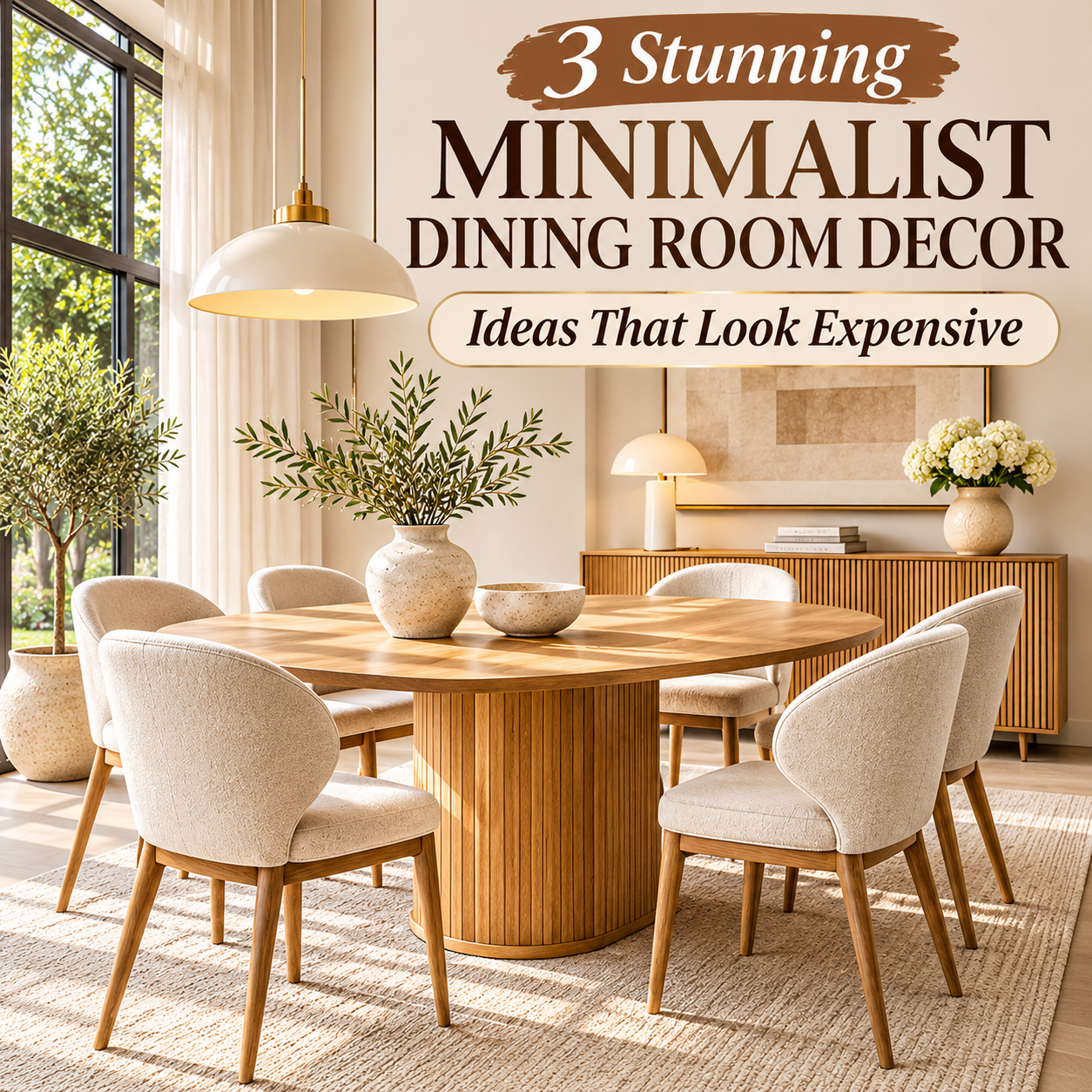
Imagine a stunning natural oak dining table surrounded by elegant upholstered chairs, an exquisite sculptural pendant light hanging gracefully overhead, and a single handcrafted ceramic centerpiece. Warm sunlight filters through sheer linen curtains, highlighting the natural wood grain and creating delicate shadows across the room.
Nothing feels excessive, yet every detail contributes to an incredibly refined atmosphere.
That is the beauty of minimalist dining room decorating.
Whether the home features a spacious formal dining room, a compact apartment dining corner, or an open-concept kitchen and dining area, the following three approaches offer distinct ways to create a sophisticated space.
From romantic Japandi warmth to architectural modern elegance and clever small-space dining solutions, these Best 3 Minimalist Dining Room Decor ideas demonstrate how thoughtful design can make even simple interiors look exceptionally beautiful.
✨ Why Minimalist Dining Room Decor Creates Such a Luxurious Atmosphere
A dining room can easily become visually overwhelming when too many decorative elements compete for attention. Elaborate chandeliers, heavily patterned rugs, oversized furniture, colorful table arrangements, and crowded storage units may each be attractive individually, but combining them without a clear design direction often produces an unbalanced result.
Minimalism solves this problem by establishing a strong visual hierarchy.
Instead of allowing every object to become a focal point, a successful minimalist dining room typically features one dominant furniture piece, one carefully selected lighting element, and a limited number of complementary decorations.
The dining table becomes the foundation of the space.
Dining chairs introduce comfort, repetition, and subtle texture.
Lighting defines the atmosphere.
Finally, carefully chosen accessories provide personality without overwhelming the composition.
This deliberate arrangement creates visual harmony that makes the room appear more considered and sophisticated.
🌿 Natural Materials Make Simplicity Feel Beautiful
One of the most important characteristics of elegant minimalist dining rooms is the use of authentic-looking materials with interesting natural textures.
Wood, stone, linen, cotton, ceramic, and woven fibers create a sense of warmth that perfectly balances simple furniture silhouettes.
A solid oak dining table, for example, offers beautiful grain patterns that provide visual interest without requiring elaborate decorative details.
Similarly, linen dining chairs introduce softness through their natural fabric texture, while handcrafted ceramics contribute subtle artistic character.
The relationship between these materials makes a room feel visually rich even when the color palette remains restrained.
Rather than relying on numerous accessories, minimalist dining design allows the beauty of the materials themselves to become the decoration.
🎨 A Restrained Color Palette Makes Everything Feel Connected
Color consistency is another defining feature of sophisticated minimalist dining interiors.
Warm ivory, soft cream, natural beige, greige, muted taupe, and gentle earth tones create a peaceful foundation.
Deeper shades such as walnut brown, charcoal, espresso, and matte black can provide elegant contrast without overwhelming the room.
The objective is not to eliminate color entirely.
Instead, each shade should contribute to a cohesive visual composition.
A room with warm white walls, a medium oak dining table, ivory upholstered chairs, and muted bronze lighting can feel dramatically more sophisticated than a room containing numerous unrelated colors and finishes.
When the color palette remains harmonious, the architectural proportions and furniture craftsmanship become far more noticeable.
🥇 Best 1 Minimalist Dining Room Decor With Romantic Japandi Warmth and Natural Oak Elegance
Japandi-inspired dining rooms offer a particularly beautiful interpretation of minimalist design because they combine the warmth of Scandinavian interiors with the quiet refinement of Japanese aesthetics.
The result feels organic, peaceful, comfortable, and exceptionally sophisticated.
Rather than relying on dramatic ornamentation, this approach emphasizes beautiful natural materials, handcrafted details, soft proportions, and a strong relationship with daylight.
Imagine a breathtaking dining room featuring a long natural oak table with gently rounded corners, elegant cream upholstered dining chairs, softly textured ivory walls, and an oversized linen pendant light suspended above the center of the table.
A sculptural ceramic vase containing a few carefully arranged branches completes the composition.
The room feels luxurious, but nothing appears unnecessarily elaborate.
This is especially appealing for homeowners who want their dining area to remain timeless rather than constantly changing with decorating trends.


🌾 Choose a Natural Oak Dining Table With Soft Organic Lines
The dining table should establish the character of the entire room.
For a Japandi-inspired space, natural oak is particularly beautiful because its warm grain introduces visual depth while maintaining a light, peaceful appearance.
Choose a table with simple proportions and subtle organic details.
Rounded rectangular tables work beautifully in longer dining rooms, while oval tables introduce an even softer silhouette that encourages movement around the space.
A thick wooden tabletop can create a strong architectural statement, but the legs should remain visually balanced.
For a more delicate aesthetic, consider a gently tapered base or a simple trestle construction.
The wood finish should highlight natural grain rather than conceal it beneath an excessively glossy coating.
Matte and low-sheen finishes generally complement this style because they create a soft, understated appearance.
A beautifully proportioned dining table can become the primary decorative feature, reducing the need for elaborate centerpieces.
🪑 Introduce Comfortable Upholstered Dining Chairs
Dining chairs are essential to both the appearance and usability of the room.
Japandi dining spaces frequently combine natural wood structures with soft neutral upholstery, creating a beautiful contrast between architectural form and everyday comfort.
Cream linen-look upholstery, warm beige woven fabrics, and textured oatmeal materials work particularly well with natural oak.
Curved backrests introduce a gentle sense of movement, while simple wooden legs maintain visual consistency with the table.
For a particularly sophisticated arrangement, choose chairs with subtle rounded corners rather than excessive decorative stitching or complicated silhouettes.
Comfort should remain a priority.
Dining rooms are not only used for short meals. They often become gathering places where family members and guests spend extended periods talking, working, or celebrating.
Well-proportioned chairs with supportive backrests make these experiences much more enjoyable.
If the room accommodates six chairs, repeating one consistent design usually creates a calmer visual rhythm than combining several unrelated seating styles.
🏺 Create a Refined Ceramic Dining Table Centerpiece
A beautiful centerpiece can transform the entire dining table without requiring numerous decorative accessories.
For this aesthetic, choose a single handcrafted ceramic vase, a low stone bowl, or an understated sculptural vessel.
Soft ivory, chalk white, sand beige, and natural clay finishes complement the warmth of the furniture.
A few delicate branches can introduce height and organic movement, but they should not obstruct sightlines between people seated across the table.
For everyday use, a low arrangement is often more practical than a tall floral display.
Consider a shallow ceramic bowl containing a small collection of seasonal fruit or a simple arrangement of natural greenery.
The goal is to create visual interest while preserving the table’s generous open surface.
This restrained approach makes the room feel beautifully styled without looking overly arranged.
☀️ Use Linen Curtains to Create Soft Natural Light
Natural daylight plays an important role in Japandi-inspired dining interiors.
Large windows, unobstructed views, and softly filtered sunlight help natural textures appear especially beautiful.
Sheer linen curtains introduce elegance without making the room feel heavy.
Choose warm white, ivory, or pale oatmeal fabrics that harmonize with the surrounding walls.
Full-length curtains can create a graceful vertical effect, making the room appear taller and more architectural.
When sunlight passes through the fabric, it produces delicate shadows that add depth to the neutral palette.
Avoid heavy decorative curtain hardware or excessive layering.
Simple curtain rods and relaxed fabric folds maintain the quiet sophistication of the space.
During the evening, warm pendant lighting can recreate the same intimate atmosphere.
🌿 Finish the Room With One Meaningful Natural Accent
Japandi interiors benefit from a connection with nature, but excessive indoor greenery can distract from the minimalist composition.
Instead of placing numerous plants throughout the dining area, select one beautifully shaped botanical element.
A small indoor tree positioned near a window, a single branch arrangement, or a carefully chosen potted plant can introduce organic character.
The planter should complement the room rather than become a competing focal point.
Natural stone, matte ceramic, and understated clay finishes are especially suitable.
The final composition should feel balanced, breathable, and effortless.
Every object deserves enough surrounding space to reveal its texture, shape, and craftsmanship.
🥈 Best 2 Minimalist Dining Room Decor With Sculptural Lighting and Modern Architectural Elegance
For homeowners who prefer a more contemporary atmosphere, modern architectural minimalism offers an exceptionally striking dining room aesthetic.
This approach emphasizes strong geometry, dramatic furniture silhouettes, carefully controlled contrast, and statement lighting.
The room remains uncluttered, but its visual character becomes more dramatic.
Imagine a spectacular contemporary dining room featuring a luxurious oval walnut dining table with an architectural pedestal base, elegant taupe dining chairs, a large sculptural pendant light, and beautiful warm white walls.
A single oversized abstract artwork adds sophistication without overwhelming the space.
The color palette remains restrained, allowing furniture shapes and architectural proportions to create the visual interest.
This decorating direction is particularly suitable for modern residences, contemporary apartments, and open-plan interiors where the dining area needs to establish a distinct identity.


💡 Make Sculptural Pendant Lighting the Main Statement
Lighting is one of the most influential design elements in a minimalist dining room.
A beautifully chosen pendant light can transform a simple table and chairs into a dramatic architectural composition.
Instead of selecting a traditional chandelier with numerous decorative details, consider a contemporary fixture featuring elegant geometric forms.
Popular choices include elongated linear pendants, sculptural metal compositions, softly curved glass fixtures, and modern circular designs.
An elongated pendant works particularly well above a rectangular table because it follows the table’s proportions.
A circular pendant can complement a round table, creating pleasing visual repetition.
For an oval table, either a softly curved fixture or a carefully proportioned linear design can create a refined effect.
The finish should coordinate with the rest of the room.
Matte black introduces strong contemporary contrast, while brushed brass, aged bronze, and champagne metal create a softer luxury aesthetic.
For comfortable dining, the fixture should direct sufficient light onto the table without creating harsh glare.
A dimmable light is particularly useful because it allows the dining room to transition from bright daytime functionality to a softer evening atmosphere.
🖤 Create Sophisticated Contrast With Walnut and Matte Black
Modern minimalist dining rooms become especially striking when warm natural materials are combined with darker architectural accents.
Walnut is a beautiful choice for homeowners seeking a richer aesthetic than light oak.
Its deep brown tones create a sense of visual warmth, while the natural grain keeps the furniture from appearing overly polished or artificial.
Pairing walnut with matte black furniture details can produce a sophisticated contemporary composition.
For example, an oval walnut table with a dark pedestal base can look stunning beside taupe upholstered dining chairs and a matte black pendant fixture.
Warm white walls prevent the darker elements from making the room feel too heavy.
This creates a balanced relationship between light and dark.
The darker finishes anchor the room, while the neutral background maintains openness.
For smaller dining spaces, use dark colors selectively rather than applying them to every large surface.
The objective is contrast, not visual heaviness.
🏛️ Select a Dining Table With a Beautiful Architectural Base
In a modern minimalist dining room, the table’s structure can become an artistic feature.
Rather than using elaborate tabletop decorations, choose a table featuring an interesting pedestal, sculptural legs, or beautifully balanced geometric support.
A central pedestal base can make seating more flexible by reducing interference from legs positioned near the table corners.
Oval and rounded rectangular tabletops are especially appealing because they soften the architectural character of the room.
Stone-inspired surfaces also work beautifully in this setting.
Travertine, marble, limestone, and high-quality stone-effect finishes introduce subtle veining and organic texture.
However, practical considerations should influence the final choice.
Natural stone may require more careful maintenance, while engineered or protected surfaces can offer easier daily cleaning depending on their construction.
The most successful choice balances beauty, durability, comfort, and everyday usability.
🎨 Use Oversized Artwork Instead of Numerous Wall Decorations
Minimalist dining room walls often look more sophisticated when decorated with one thoughtfully selected artwork rather than multiple small accessories.
An oversized abstract painting can create a strong visual anchor above a sideboard or along the primary dining wall.
Choose artwork that complements the existing color palette.
Soft charcoal, warm beige, muted brown, ivory, and restrained earthy tones work beautifully in sophisticated contemporary interiors.
Textured canvas artwork is particularly effective because it introduces tactile interest without requiring bold colors.
A simple black, oak, or natural wood frame can provide structure.
When selecting artwork, consider its proportions relative to the furniture beneath it.
A large dining room wall may benefit from one substantial piece, while a compact room can feel more balanced with a medium-sized artwork surrounded by generous negative space.
The wall should feel intentionally composed rather than completely filled.
🕯️ Introduce Subtle Evening Ambiance Without Visual Clutter
Modern minimalist dining rooms should feel inviting after sunset.
A dramatic pendant light establishes the central lighting composition, but softer supporting illumination can make the room more comfortable.
If the dining area includes a sideboard, a compact sculptural table lamp can provide a gentle secondary glow.
A pair of understated candleholders may also introduce intimacy during special meals.
Choose simple forms that complement the pendant fixture rather than competing with it.
Warm light is usually more flattering for relaxed dining than harsh, cool illumination.
The combination of sculptural lighting, rich natural materials, comfortable seating, and thoughtfully controlled contrast creates a dining area that feels remarkably luxurious.
Important Note: The most successful minimalist dining room is not necessarily the one with the fewest objects. Every piece should support comfortable dining, safe movement, and visual harmony. Maintain practical chair clearance, avoid centerpieces that block conversation, and choose lighting that enhances the dining experience rather than distracting from it.
🥉 Best 3 Minimalist Dining Room Decor With Space Saving Banquette Seating and Boutique Cafe Charm
A small dining room does not need to sacrifice elegance or comfort.
In fact, compact dining areas often become exceptionally charming when furniture is selected specifically for the available space.
One of the most beautiful ways to decorate a smaller dining room is to introduce a thoughtfully designed banquette seating arrangement inspired by sophisticated European cafes and contemporary boutique restaurants.
This approach combines efficient furniture placement with soft upholstery, elegant lighting, and understated decorative details.
Imagine a cozy apartment dining corner featuring an upholstered built-in bench positioned against a warm ivory wall, a compact oval dining table, two beautifully shaped wooden chairs, and a delicate pendant light overhead.
A single framed artwork completes the atmosphere.
The arrangement feels intimate, polished, and extraordinarily welcoming.
Unlike large formal dining rooms, which require substantial floor space, a carefully designed banquette can transform an overlooked corner into a stylish everyday dining destination.

🪑 Choose an Upholstered Banquette That Maximizes Available Space
Banquette seating is particularly effective when a dining area sits against a wall or occupies a corner.
Instead of arranging chairs on every side of the table, a fixed or carefully positioned bench reduces the amount of clearance required behind some seats.
This can create a more efficient layout in compact rooms.
For a sophisticated minimalist appearance, choose upholstery in warm beige, oatmeal, ivory, or muted taupe.
Simple channel detailing can introduce subtle texture, while completely smooth upholstery creates a cleaner contemporary look.
The seat should feel comfortable enough for everyday meals.
A supportive backrest and appropriate seat depth are more important than purely decorative features.
For homes where practical storage is essential, a purpose-built bench with accessible compartments beneath the seat can provide additional organization.
However, storage should not interfere with the bench’s strength, seating comfort, or accessibility.
The final arrangement should feel integrated into the room rather than squeezed into an awkward corner.
🍽️ Pair the Banquette With a Compact Oval or Round Table
Table shape becomes especially important in small dining rooms.
A round table can encourage conversation and simplify movement in certain compact layouts because it has no projecting corners.
An oval table offers a similarly soft appearance while providing additional surface length.
For a narrow dining nook, a compact rectangular table with rounded edges may fit more efficiently than a circular design.
The best choice depends on the dimensions and traffic patterns of the room.
Natural oak, walnut, and warm wood finishes create a welcoming atmosphere.
A slender pedestal base can help reduce interference with seating, although the base must remain stable and appropriately proportioned.
Avoid choosing an oversized table simply because the room can technically accommodate it.
Comfortable access matters just as much as tabletop size.
When a table feels correctly scaled, the entire space looks more intentional and visually balanced.
🌼 Add Boutique Cafe Character With Thoughtful Wall Styling
A minimalist dining nook can feel particularly charming when decorated with subtle elements inspired by elegant boutique cafes.
Consider one framed botanical print, a softly textured abstract artwork, or a simple architectural wall sconce.
The objective is to establish a beautiful atmosphere without making the small space feel crowded.
Warm plaster-look walls can add softness, while a delicate picture frame introduces a refined finishing detail.
If the room features a window, consider a simple Roman shade or sheer curtain that allows daylight to enter freely.
A small ceramic vessel containing fresh greenery can complete the table.
Because the dining nook is compact, decorative proportions should remain modest.
One carefully chosen artwork often provides enough personality.
The result feels intimate and inviting rather than overly styled.
✨ Use a Pendant Light to Visually Define the Dining Nook
Lighting can help establish a distinct dining area even when the surrounding home has an open layout.
A pendant fixture suspended above the table creates a natural focal point.
For a compact banquette arrangement, consider a small opal glass globe, a simple linen shade, or a refined metal pendant with a soft silhouette.
The fixture should feel proportionate to the tabletop and surrounding architecture.
Oversized lighting can become overwhelming in a narrow space, while a fixture that is too small may lack visual presence.
Select a design that provides comfortable illumination and avoids obstructing sightlines.
When positioned correctly, the pendant creates a sense of intimacy that makes the dining nook feel like a carefully designed destination within the home.
🧺 Keep Everyday Dining Essentials Beautifully Organized
Small dining rooms look more luxurious when everyday items have designated storage locations.
Clutter becomes especially noticeable in compact spaces because there is less visual distance between furniture, decorative objects, and functional accessories.
Keep the tabletop mostly clear between meals.
Store placemats, napkins, extra candles, serving utensils, and seasonal accessories in nearby cabinetry or integrated bench storage.
If space permits, a narrow cabinet may provide useful additional storage.
However, avoid adding furniture that restricts circulation simply to create more storage.
When each item has a practical location, the dining area remains beautiful without requiring constant rearrangement.
This is what makes minimalist dining design especially appealing for everyday living.
📊 Best 3 Minimalist Dining Room Decor Styles Compared
Each of these three decorating approaches creates a different visual atmosphere.
The ideal choice depends on the size of the dining area, the home’s architecture, everyday dining habits, and personal design preferences.
| Design Element | 🥇 Romantic Japandi | 🥈 Modern Architectural | 🥉 Boutique Cafe Banquette |
|---|---|---|---|
| Main aesthetic | Warm and organic | Sculptural and sophisticated | Cozy and space-conscious |
| Ideal dining table | Natural oak oval or rectangular table | Walnut or stone table with architectural base | Compact round or oval table |
| Seating | Cream upholstered wooden chairs | Elegant contemporary dining chairs | Upholstered banquette with complementary chairs |
| Color palette | Ivory, oatmeal, oak, sand | Warm white, walnut, taupe, black | Cream, beige, honey oak, muted brown |
| Statement feature | Natural materials and soft proportions | Sculptural pendant lighting | Integrated seating arrangement |
| Decorative accent | Handcrafted ceramic centerpiece | Oversized abstract artwork | Simple framed art and delicate greenery |
| Best suited for | Calm family dining rooms | Contemporary and open-concept homes | Apartments and smaller dining areas |
| Overall atmosphere | Peaceful and timeless | Refined and dramatic | Intimate and welcoming |
Although these three concepts have different characteristics, they share an important design philosophy.
Each creates beauty through thoughtful proportions, coordinated materials, carefully selected furniture, and meaningful decorative choices.
The best minimalist dining room is ultimately the one that supports the way the household actually uses the space.
📐 How to Choose the Right Dining Table Size and Layout
Even the most beautiful furniture can make a dining room uncomfortable when its proportions are inappropriate.
Before purchasing a new dining table, evaluate the actual dimensions of the room and identify the paths people use to move around it.
Consider nearby doorways, kitchen entrances, storage cabinets, and adjoining living areas.
A dining arrangement should provide enough space for chairs to be pulled out comfortably without repeatedly colliding with walls or furniture.
As a useful starting point, approximately 36 inches of clearance around a dining table often allows chairs to be used in ordinary residential settings.
Around 42 to 48 inches may be more comfortable in frequently used circulation areas, depending on the layout.
These measurements are planning guidelines rather than universal requirements.
Banquette arrangements, wall-adjacent tables, and specialized layouts may need different allowances.
🍽️ Practical Dining Table Dimensions
| Dining Arrangement | Approximate Table Size | Typical Seating | Design Consideration |
|---|---|---|---|
| Compact round table | 36–42 inches in diameter | 2–4 people | Suitable for many small dining corners |
| Medium round table | 48 inches in diameter | 4 people | Encourages conversation |
| Small rectangular table | 48–60 inches long | 4 people | Works well in narrower rooms |
| Medium rectangular table | 72 inches long | 6 people | Appropriate for many family dining rooms |
| Larger rectangular table | 84–96 inches long | 6–8 people | Requires generous circulation space |
| Oval dining table | Approximately 72–84 inches long | Often 6 people | Softens corners while maintaining seating capacity |
Actual seating capacity varies according to chair width, table-leg placement, tabletop shape, and the amount of elbow room desired.
For comfortable dining, allow approximately 24 inches of table-edge space per person as a general planning reference.
Generous arrangements may require additional space.
A well-planned table should look beautiful while remaining practical for everyday use.
🎨 The Most Beautiful Color Combinations for Minimalist Dining Rooms
A sophisticated color palette can make even modest furniture appear more intentional.
The key is to select colors that complement the surrounding architecture, floor finish, and amount of natural light.
Warm neutrals remain particularly versatile because they provide a calm foundation for wood, stone, metal, and upholstery.
However, there is no need to limit every minimalist dining room to pale beige.
Deeper colors can create beautiful contrast when used strategically.
🤍 Warm Ivory and Natural Oak
This combination creates an airy, timeless atmosphere.
Warm ivory walls allow natural oak furniture to stand out without creating harsh contrast.
Cream dining chairs, ceramic accessories, and linen curtains complete the look.
It is particularly effective for Scandinavian and Japandi-inspired dining spaces.
🤎 Taupe and Rich Walnut
Taupe walls and walnut dining furniture create a more intimate luxury aesthetic.
The subtle warmth of taupe complements the rich brown tones of walnut, producing a sophisticated composition.
Introduce pale upholstery or a softly colored area rug to prevent the room from feeling excessively dark.
This combination works beautifully in contemporary dining rooms.
🖤 Soft White and Matte Black
For a more architectural appearance, combine warm white walls with carefully selected matte black accents.
A black pendant fixture, slim chair frames, or a dark table base can provide elegant definition.
Introduce natural wood or warm fabric upholstery to maintain comfort.
The effect feels modern without becoming cold.
🌿 Muted Sage and Honey Oak
Muted sage green can bring gentle botanical character into a minimalist dining room.
When paired with honey oak, linen upholstery, and pale ceramic accessories, the color produces a calm, organic atmosphere.
This palette is especially attractive in dining rooms with garden views or generous daylight.
The green should remain subtle enough to function as a quiet background rather than a dominant decorative feature.
🏡 How to Make Minimalist Dining Room Decor Look More Expensive Without Major Renovations
Creating an elegant dining room does not necessarily require replacing every piece of furniture.
Several carefully chosen improvements can dramatically change the appearance of the space.
Often, the most effective upgrades involve correcting proportions, simplifying existing arrangements, and improving lighting.
✨ Replace Busy Table Decorations With One Statement Piece
One of the easiest improvements is to remove excessive accessories from the dining table.
Multiple trays, candles, vases, bowls, decorative books, and seasonal ornaments can make a beautiful table feel crowded.
Instead, choose one centerpiece with a clear visual identity.
A wide handcrafted ceramic bowl, sculptural vase, or simple botanical arrangement can create a more sophisticated composition.
Allow the natural tabletop material to remain visible.
The empty surface helps the centerpiece feel more important.
💡 Upgrade the Lighting Before Replacing Furniture
A poorly illuminated dining room can look flat even when it contains beautiful furniture.
Replacing an outdated light fixture with a well-proportioned pendant can significantly improve the room’s appearance.
Look for a fixture that complements the dining table’s shape, width, and overall style.
Choose a suitable light output and comfortable color temperature.
Where practical, install dimmable lighting to accommodate different activities.
The right illumination makes wooden surfaces appear warmer, upholstery textures more visible, and dining arrangements more inviting.
🪑 Refresh Dining Chairs With Coordinated Upholstery
Dining chairs have a substantial influence on the visual appearance of the room because they repeat around the table.
If the existing chair frames are attractive and structurally sound, refreshing worn upholstery can be an effective alternative to purchasing replacements.
Choose a fabric that complements the table finish and wall color.
Warm oatmeal, cream, taupe, and textured beige are versatile options.
For households that use the dining room frequently, prioritize durable and easy-to-clean upholstery.
A cohesive chair arrangement can make the entire room feel more polished.
🖼️ Introduce One Beautiful Piece of Art
A carefully chosen artwork can create a sense of completion without requiring an elaborate decorative arrangement.
Select an appropriate size for the wall and surrounding furniture.
Abstract landscapes, subtle textural paintings, and restrained botanical compositions work particularly well.
The artwork should complement the dining area’s materials rather than introduce unrelated colors.
A simple frame often creates the most elegant result.
🌾 Let Texture Replace Excessive Decoration
A minimalist room becomes visually interesting when different materials are layered thoughtfully.
Consider pairing smooth wooden furniture with softly woven upholstery.
Natural ceramic accessories can contrast beautifully with refined metal lighting.
A simple linen table runner may introduce softness for special occasions, while the tabletop can remain uncovered during everyday use.
These combinations create depth through texture rather than decorative quantity.
The result feels sophisticated, natural, and timeless.
🌟 Common Minimalist Dining Room Decorating Mistakes to Avoid
Minimalist dining room decorating is relatively straightforward, but several common mistakes can reduce the comfort and visual appeal of the space.
One of the biggest problems is choosing furniture based entirely on appearance without considering daily function.
A beautiful dining chair may look impressive in photographs but become uncomfortable during longer meals.
Similarly, an oversized table can dominate a small room and restrict circulation.
Furniture should always suit the size and purpose of the space.
Another common mistake is creating a room that feels too empty.
Minimalism does not require removing every decorative object.
Without enough texture, comfortable seating, or appropriate lighting, a dining area can appear unfinished rather than sophisticated.
The solution is to introduce meaningful elements gradually.
A beautiful pendant light, coordinated chairs, subtle artwork, and one centerpiece are often sufficient.
Poor lighting can also undermine a carefully designed room.
Harsh overhead lighting may create an uninviting atmosphere, while insufficient light can make everyday dining impractical.
Balanced illumination is essential.
Finally, avoid following decorative trends so closely that the room loses its individual character.
Minimalist design should provide a flexible foundation for personal taste.
A meaningful inherited table, favorite artwork, handcrafted ceramic vessel, or treasured family object can belong in a minimalist dining room when it is thoughtfully integrated into the overall composition.
❓ Frequently Asked Questions About Minimalist Dining Room Decor
What Is the Best Way to Decorate a Minimalist Dining Room?
Begin with a well-proportioned dining table and comfortable chairs that suit the room’s dimensions.
Choose a coordinated color palette and introduce natural materials such as wood, linen, stone, or ceramic.
Add a carefully selected lighting fixture and one or two decorative accents.
Avoid excessive tabletop accessories and prioritize comfortable circulation.
The goal is to create a beautiful room that remains practical for daily meals.
How Can a Small Dining Room Look Luxurious?
Small dining rooms often benefit from compact furniture with thoughtful proportions.
Round and oval tables can work particularly well in certain layouts, while banquette seating may reduce the clearance needed behind some seats.
Choose coordinated finishes, comfortable upholstery, and a pendant fixture that establishes a clear focal point.
Keeping nearby surfaces organized also helps the room appear more spacious and refined.
What Colors Work Best for Minimalist Dining Room Decor?
Warm white, ivory, beige, greige, taupe, natural oak, walnut brown, muted sage, and carefully placed black accents are excellent choices.
The best combination depends on the room’s natural lighting and architectural character.
Rather than using numerous unrelated colors, select a limited palette with complementary undertones.
Should a Minimalist Dining Room Have a Rug?
A rug is optional.
A properly sized area rug can soften acoustics, add comfort, and visually define the dining space.
However, it should extend far enough beyond the table to accommodate chairs as they move.
Low-pile, durable, easy-to-clean materials are generally more practical than thick rugs beneath dining furniture.
For smaller spaces, leaving beautiful flooring exposed may create a cleaner appearance and simplify maintenance.
How Do You Decorate a Dining Table Without Making It Look Cluttered?
Choose one primary decorative element rather than several competing arrangements.
A low ceramic bowl, small vase with greenery, or understated candle arrangement can provide sufficient visual interest.
Keep enough surface space available for everyday dining.
For larger celebrations, temporary table settings can introduce more decorative layers without permanently cluttering the room.
Can Minimalist Dining Room Decor Still Feel Cozy?
Absolutely.
Comfortable upholstered chairs, warm wooden furniture, natural textures, soft lighting, and carefully selected personal objects can create a welcoming atmosphere.
The most successful minimalist dining rooms balance simplicity with warmth.
They feel intentional rather than empty and sophisticated without appearing formal or unapproachable.
🌸 Final Thoughts on the Best 3 Minimalist Dining Room Decor Ideas
Minimalist Dining Room Decor offers a beautiful opportunity to create a space that feels elegant, comfortable, and genuinely welcoming.
Rather than relying on expensive renovations or an abundance of decorative accessories, the most successful dining rooms celebrate carefully selected furniture, balanced proportions, coordinated materials, and thoughtful lighting.
🥇 Romantic Japandi Warmth and Natural Oak Elegance creates a peaceful dining environment defined by beautiful wood grain, soft upholstery, handcrafted ceramics, and abundant natural daylight. It is a wonderful choice for homeowners who appreciate timeless interiors and organic sophistication.
🥈 Sculptural Lighting and Modern Architectural Elegance introduces a more dramatic aesthetic through statement pendant fixtures, rich walnut furniture, elegant contrasts, and beautifully proportioned contemporary design. This approach transforms a simple dining room into a sophisticated architectural centerpiece.
🥉 Space Saving Banquette Seating and Boutique Cafe Charm demonstrates that smaller dining areas can be just as beautiful as spacious formal rooms. Comfortable integrated seating, compact tables, understated artwork, and carefully chosen lighting create intimate dining spaces filled with personality.
Although each concept offers a different visual identity, the underlying philosophy remains consistent.
Choose furniture that fits the room beautifully.
Invest in comfortable seating.
Create harmony through materials and colors.
Use lighting to establish atmosphere.
Allow carefully selected decorative pieces to stand out.
Most importantly, design the dining area around the experiences that make it meaningful.
A dining room should be a place where everyday breakfasts feel peaceful, family dinners become memorable, and gatherings with friends unfold naturally.
When simplicity, beauty, and functionality work together, even the most ordinary dining area can become one of the most extraordinary spaces in the home.
And that is the real appeal of minimalist dining room decorating: a room does not need more decoration to feel luxurious.
Sometimes, the most breathtaking transformation comes from giving beautiful things enough space to shine.
