Monochrome Kitchen Ideas have become one of the most stylish ways to create a kitchen that feels calm, cohesive, sophisticated, and surprisingly luxurious. Instead of filling the room with many competing colors, a monochrome kitchen focuses on one dominant color family and explores its lighter, darker, warmer, and cooler variations. The result can feel far richer than a simple single-color room because texture, material, lighting, shape, and contrast become much more noticeable.
A monochromatic kitchen does not necessarily mean covering every wall, cabinet, countertop, and chair in exactly the same shade. In fact, the most beautiful monochrome kitchens usually combine several closely related tones. Warm ivory can sit beside creamy beige, charcoal can fade into graphite and soft black, while pale oak and mushroom gray can add depth without breaking the overall color story.
This approach works especially well in modern homes because it creates visual order. The eye moves naturally through the room without being distracted by too many unrelated finishes. It can also make a small kitchen feel more spacious, help an open-plan kitchen blend smoothly into the living area, and turn an ordinary cooking space into something that feels professionally designed.
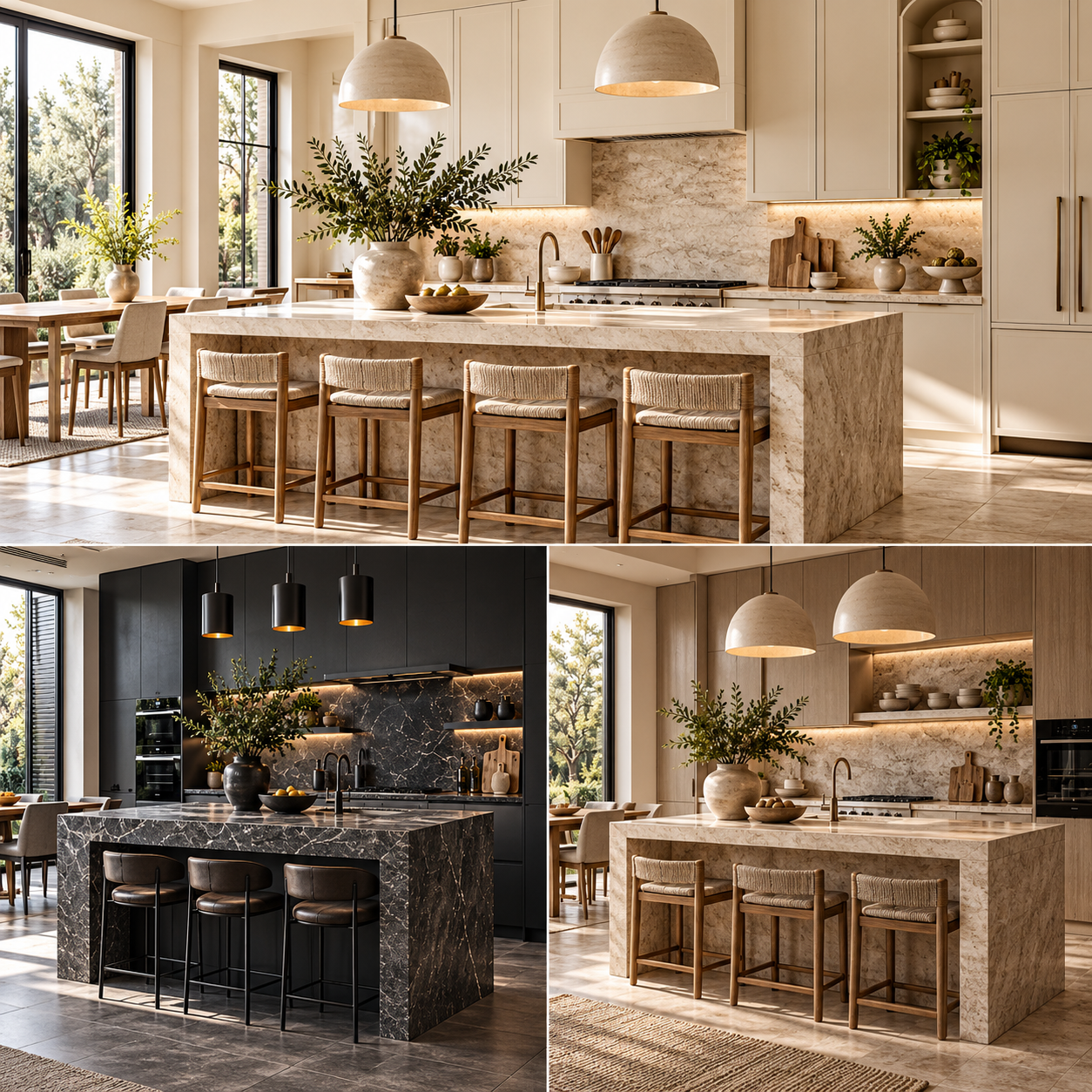
The three ideas below explore very different interpretations of monochrome kitchen design. One is soft and luminous, one is dramatic and architectural, and one is warm, earthy, and quietly luxurious. Each can be adapted to different budgets, layouts, and home styles.
Why Monochrome Kitchen Ideas Feel So Luxurious
Before choosing colors or cabinetry, it helps to understand why monochrome interiors often look more expensive than highly colorful rooms.
A restricted palette creates discipline. Because there are fewer colors competing for attention, every material becomes more important. The grain of timber, the veining of stone, the texture of plaster, the softness of linen, and even the reflection of light on cabinet hardware become part of the decoration.
This is why a successful monochrome kitchen usually depends more on variation in texture than variation in color.
For example, an all-white kitchen can look sterile when every surface is glossy white. But the same kitchen can feel sophisticated when matte cream cabinetry is paired with pale limestone, handmade ceramic tiles, brushed metal, natural linen, and lightly textured plaster walls.
Monochrome design also creates strong architectural clarity. Cabinet lines feel cleaner, islands look more sculptural, and storage can visually disappear into the room.
✨ The goal is not to eliminate contrast. The goal is to create contrast using tone, shadow, texture, shape, and material rather than unrelated colors.
Best 3 Monochrome Kitchen Ideas at a Glance
| Monochrome Kitchen Style | Main Color Palette | Best Materials | Overall Mood | Best For |
|---|---|---|---|---|
| 🥇 Warm Ivory Layered Kitchen | Ivory cream oatmeal soft beige | Limestone oak plaster ceramic | Bright calm luxurious | Small kitchens modern homes |
| 🥈 Charcoal Architectural Kitchen | Charcoal graphite black smoke gray | Stone steel dark wood microcement | Dramatic sophisticated modern | Large kitchens open-plan spaces |
| 🥉 Mushroom Taupe Natural Kitchen | Mushroom taupe greige clay brown | Oak travertine linen textured plaster | Warm organic timeless | Cozy homes transitional interiors |
These three approaches demonstrate an important principle: monochrome kitchens can feel completely different depending on the tone selected.
A pale monochrome palette emphasizes lightness and openness. A dark palette creates drama and architectural definition. A warm neutral palette introduces softness and a connection to natural materials.
🥇 Best 1 Monochrome Kitchen Ideas With Warm Ivory Layers
One of the most versatile Monochrome Kitchen Ideas is a warm ivory kitchen built from several soft neutral shades rather than stark white.
The foundation can begin with creamy ivory cabinetry. Instead of using pure brilliant white, select tones with subtle beige, almond, or warm gray undertones. These warmer shades reflect light beautifully without creating the clinical feeling sometimes associated with bright white kitchens.
The cabinetry can be kept extremely simple. Flat-panel doors create a contemporary appearance, while narrow shaker-style doors can introduce a softer transitional character.
A large kitchen island can become the visual anchor of the room. Using a slightly deeper cream or pale beige on the island adds subtle separation without breaking the monochrome palette.
The countertop might feature pale limestone, warm quartzite, or a creamy engineered stone with delicate veining. Rather than choosing dramatic black or gray patterns, keep the stone within the same warm tonal family.
This creates a continuous visual flow from cabinetry to worktop.


Use Several Shades Instead of One Flat White
The biggest mistake in a monochrome ivory kitchen is using exactly the same shade everywhere.
When walls, cabinets, ceilings, counters, and floors are identical, the room can lose dimension.
Instead, create layers.
Cabinetry could be soft ivory. Walls might be a slightly warmer cream. Upholstery can lean toward oatmeal. The floor may introduce pale beige stone or washed oak.
These changes can be extremely subtle.
A guest might describe the kitchen simply as cream or white, but the eye will still notice the depth created by those tonal transitions.
This layered approach makes the room feel carefully designed rather than uniformly painted.
Add Natural Wood Without Breaking the Monochrome Effect
Natural timber can work beautifully inside a warm monochrome kitchen.
The key is choosing wood that remains close to the dominant palette.
Pale white oak, lightly washed ash, and soft natural maple are excellent examples. They introduce grain and warmth without creating strong visual contrast.
Wood can appear on bar stools, open shelves, a dining table, interior cabinet compartments, or ceiling beams.
A particularly elegant option is to combine creamy cabinetry with a light oak island base.
The difference between the two materials is noticeable, but because both remain warm and pale, the kitchen still feels monochromatic.
Choose Stone With Gentle Movement
Stone plays an important role because it introduces natural pattern without adding another strong color.
Pale limestone creates a quiet Mediterranean quality. Travertine introduces warm linear movement. Cream quartzite can provide more luxury while remaining understated.
Veining should ideally stay soft.
Highly dramatic black veining can turn the stone into the dominant visual feature, which may reduce the calm monochrome effect.
For a seamless look, the same stone can be used across the countertop and backsplash.
Extending the material vertically behind the cooking area creates a sophisticated architectural surface with very few visual interruptions.
Introduce Texture Through Handmade Materials
Soft monochrome rooms benefit enormously from tactile surfaces.
Consider a backsplash made from handmade ivory ceramic tiles. Slight differences between the tiles catch natural light throughout the day.
Textured plaster can also transform a plain wall.
Instead of appearing completely smooth, the wall develops tiny variations in shadow that make the kitchen feel warmer and more organic.
Woven stools, linen Roman blinds, ceramic bowls, and subtle ribbed glass can continue the same idea.
Nothing needs to be overly decorative.
The materials themselves become the decoration.
Important Note: A monochrome kitchen should never depend on one identical finish everywhere. Combine matte, textured, polished, woven, natural, and softly reflective surfaces so the room retains depth even when the colors are closely related.
Create Soft Contrast With Metal Finishes
Metal hardware can still appear in a monochromatic ivory kitchen without disrupting the palette.
Brushed nickel works particularly well because it reflects surrounding colors subtly.
Champagne bronze can add warmth, especially when paired with cream cabinetry.
Another option is using extremely minimal hardware or handleless cabinetry so the furniture almost disappears into the architecture.
Pendant lights above the island can become one of the few decorative accents.
Choose simple shapes in plaster, frosted glass, brushed metal, or pale ceramic.
The lighting should support the palette rather than introduce an entirely different visual theme.
Why This Monochrome Kitchen Idea Works
The warm ivory approach works because it provides the visual simplicity of white while avoiding coldness.
It can make small kitchens feel larger because pale surfaces distribute daylight throughout the room.
At the same time, warmer undertones create a relaxed residential atmosphere.
This style also adapts easily to different design directions. Add rustic pottery for a Mediterranean influence, clean architectural lighting for modern minimalism, or natural wood furniture for Scandinavian warmth.
The result remains timeless because the palette is quiet enough to survive changing trends.
🥈 Best 2 Monochrome Kitchen Ideas With Charcoal Architectural Depth
For homeowners who prefer something more dramatic, dark Monochrome Kitchen Ideas can create an unforgettable interior.
Charcoal kitchens have a completely different personality from pale neutral kitchens.
Instead of reflecting large amounts of light, darker surfaces absorb it. This creates strong shadows, architectural definition, and a feeling of intimacy.
The effect can be particularly impressive in large kitchens with generous windows.
Start with cabinetry in charcoal, graphite, or soft black.
Pure jet black can sometimes appear extremely harsh, especially under bright artificial lighting. A slightly softened charcoal usually provides more depth.
Matte finishes are especially effective because they prevent large cabinets from becoming overly reflective.

Mix Charcoal Graphite and Soft Black
A sophisticated dark monochrome kitchen usually contains several black-adjacent shades rather than one flat black.
Cabinetry could be deep charcoal.
The island might use graphite stone.
Walls could be painted in a softer smoke gray.
Metal details may appear almost black but catch subtle highlights.
These tonal differences become more noticeable as daylight moves through the room.
Morning light may reveal gray undertones while evening lighting deepens the kitchen toward near-black.
This constantly changing appearance gives dark monochrome spaces tremendous atmosphere.
Make the Kitchen Island Sculptural
A dark monochrome kitchen can support a powerful kitchen island.
Large waterfall stone slabs can turn the island into something that looks almost carved from one block.
Dark soapstone, charcoal quartzite, black granite, or deep gray sintered stone can all work well.
Instead of covering the island with decorative accessories, allow the material itself to become the focal point.
A simple vase, sculptural bowl, or small arrangement of branches may be enough.
Negative space is particularly important in darker kitchens because clutter can quickly make the room feel visually heavy.
Use Dark Wood for Warmth
A charcoal kitchen does not have to feel industrial.
Dark stained oak or walnut-toned wood can add warmth while remaining within the overall low-contrast palette.
For example, charcoal cabinetry can be paired with a dark smoked-oak breakfast bar.
Open shelving in dark timber can soften a wall of black cabinetry.
Dining chairs with deep brown leather seats can also work beautifully because brown and charcoal share similar visual weight.
The goal is to introduce warmth without suddenly inserting pale or brightly colored materials.
Let Lighting Become Part of the Architecture
Lighting is especially important in dark monochrome kitchens.
Rather than relying on one strong ceiling light, use several layers.
Recessed ceiling lighting can provide general illumination. Under-cabinet lighting helps work surfaces remain practical. Pendant lights introduce decorative focus. Integrated shelf lighting can create subtle atmospheric highlights.
Warm lighting is often more flattering than very cool white light in charcoal kitchens.
It can reveal undertones in stone and timber while preventing dark surfaces from looking flat.
Hidden LED strips beneath floating shelves or inside glass cabinets can create an elegant evening atmosphere.
🖤 In a dark kitchen, light should feel intentionally placed rather than simply bright.
Consider Dark Metal Details
Dark kitchens work naturally with blackened steel, bronze, or gunmetal.
A large black faucet can blend almost seamlessly into a charcoal countertop.
Thin metal shelving can disappear visually against a dark backsplash.
Even appliances can become part of the monochrome scheme.
Instead of using highly reflective stainless steel everywhere, integrated appliances can hide behind matching cabinet fronts.
This creates uninterrupted surfaces and strengthens the architectural appearance.
Balance Darkness With Natural Daylight
Dark kitchens are most successful when there is enough natural light to reveal material details during the day.
Large windows, skylights, glazed doors, or open-plan layouts can prevent the room from feeling enclosed.
However, a dark kitchen does not always require enormous windows.
Strategically placed pale flooring or slightly lighter ceilings can help maintain balance.
For example, graphite cabinetry can be paired with medium gray stone flooring instead of black flooring.
The room still reads as monochrome, but the floor reflects more light.
Why This Monochrome Kitchen Idea Works
Dark monochrome kitchens feel luxurious because they allow architecture to take center stage.
Clean cabinet lines become more dramatic. Stone surfaces appear more sculptural. Lighting feels cinematic.
This approach suits modern homes particularly well, but it can also work in renovated historic properties when dark cabinetry is paired with traditional moldings or aged timber.
The important principle is restraint.
Instead of filling the kitchen with many decorative accessories, focus on proportion, material, and lighting.
The result can feel sophisticated without looking overly styled.
🥉 Best 3 Monochrome Kitchen Ideas With Mushroom Taupe and Natural Texture
The third approach sits between bright ivory and dramatic charcoal.
Mushroom, taupe, greige, and clay-inspired tones create some of the most comfortable Monochrome Kitchen Ideas because they combine the softness of beige with the sophistication of gray.
These colors have become increasingly popular in interior design because they work beautifully with natural stone and wood.
A mushroom-toned kitchen can feel modern while still appearing warm.
It is also extremely versatile.
Depending on the materials used, it can lean toward minimalism, rustic elegance, Scandinavian design, organic modern interiors, or contemporary Mediterranean style.

Begin With Mushroom or Greige Cabinetry
Cabinet color sets the mood.
Look for shades that sit between warm gray and muted beige.
The exact appearance will change depending on the light.
In bright daylight, some mushroom cabinets look softly gray. Under warm evening lighting, beige and brown undertones become more visible.
This changing quality makes the palette feel richer than ordinary beige.
Flat-panel cabinets can create a modern result.
For a softer kitchen, use narrow shaker detailing or subtly framed cabinet fronts.
Either option works because the understated color keeps the cabinetry sophisticated.
Pair Taupe With Travertine or Limestone
Natural stone is almost perfect for this palette.
Travertine contains creamy beige, sand, taupe, and soft brown variation within one material.
That makes it ideal for monochrome design.
A travertine backsplash can provide texture while staying closely connected to mushroom cabinetry.
Limestone offers an even calmer appearance.
For a more dramatic result, use stone with broader tonal movement but avoid extremely high-contrast veining.
Stone can appear on countertops, backsplash panels, flooring, or the kitchen island.
Using the same stone in several locations creates continuity.
Bring in Light to Medium Oak
Oak works exceptionally well with mushroom tones.
Unlike very pale ivory kitchens, this palette can support slightly deeper timber shades.
Medium natural oak creates warmth and provides subtle separation from cabinetry.
The wood can be introduced through tall storage cabinets, drawer fronts, open shelves, stools, or a connected dining area.
A beautiful combination is mushroom cabinetry with an oak pantry wall.
Because both colors are muted and natural, they blend rather than compete.
The kitchen begins to feel more like a complete living space instead of a purely functional room.
Use Plaster and Clay Inspired Wall Finishes
Standard painted drywall works perfectly well, but textured wall finishes can elevate this monochrome palette.
Limewash, Roman clay, or fine plaster creates gentle variation.
These finishes react beautifully to sunlight.
Small imperfections and tonal changes create visual movement, helping the room feel handcrafted.
This is especially effective in kitchens with large blank walls.
Instead of covering every wall with cabinetry, leave one area relatively simple and allow the textured surface to become part of the design.
Add Soft Textiles to Open Plan Kitchens
If the kitchen connects directly to a dining or living area, textiles can help extend the monochrome palette across the entire space.
Dining chairs might use oatmeal linen.
A nearby bench could feature taupe upholstery.
Curtains may be made from soft natural flax.
Even a kitchen rug can stay within the same tonal family.
These soft materials create contrast against stone and cabinetry.
The room remains monochromatic but feels much more comfortable.
Keep Decorative Objects Quiet and Intentional
Styling matters.
A monochrome kitchen can easily lose its visual simplicity when countertops are filled with brightly colored packaging, appliances, and miscellaneous accessories.
Instead, create small intentional groupings.
Use ceramic containers in cream, clay, or taupe.
Display wooden cutting boards with similar warm undertones.
Choose stone or ceramic fruit bowls rather than brightly colored plastic accessories.
Fresh greenery can still be included.
A small branch arrangement, olive stems, or herbs introduce life without overwhelming the palette.
🌿 Natural greenery often works like a neutral in earthy monochrome interiors.
Why This Monochrome Kitchen Idea Works
The mushroom and taupe approach combines elegance with comfort.
It feels less bright than an ivory kitchen and less dramatic than a charcoal one.
This makes it particularly suitable for homes where the kitchen is used as a central gathering space.
Natural materials prevent the palette from becoming repetitive.
Wood provides grain. Stone introduces variation. Plaster creates subtle shadow. Linen adds softness.
All of those textures work together while remaining within one harmonious color family.
How to Choose the Right Monochrome Kitchen Palette
Selecting the dominant color should begin with the existing architecture rather than current trends.
Consider how much natural light enters the kitchen.
Rooms with limited daylight often benefit from pale or medium tones because they reflect more available light.
Large bright kitchens can support deeper colors more easily.
Also consider flooring.
Replacing a kitchen floor can be expensive, so an existing floor may influence the best monochrome palette.
Warm oak flooring naturally supports ivory, beige, mushroom, olive-gray, or taupe cabinetry.
Cool gray flooring may work better with charcoal, stone gray, or cooler greige.
The surrounding rooms matter too.
In an open-plan home, the kitchen should connect naturally with the living and dining areas.
A kitchen that looks stunning in isolation may feel disconnected if the surrounding rooms use completely different undertones.
Monochrome Kitchen Ideas for Small Kitchens
Small kitchens can benefit enormously from monochrome design.
When cabinetry, walls, backsplash, and countertops use similar colors, visual boundaries become less obvious.
This can make the room feel larger.
Pale palettes are particularly effective.
Cream cabinets paired with a similar backsplash reduce visual fragmentation.
Handleless cabinet doors can make the effect even stronger.
However, darker monochrome kitchens can still work in small rooms.
The key is maintaining excellent lighting and minimizing clutter.
A small charcoal kitchen with integrated appliances and carefully positioned lighting can feel like an elegant jewel box rather than a dark enclosed space.
Vertical storage is also helpful.
Taking cabinetry all the way to the ceiling removes awkward visual gaps and makes the architecture feel taller.
Monochrome Kitchen Ideas for Open Plan Homes
Open-plan kitchens require careful visual coordination.
Because the kitchen can be seen from the dining and living areas, strong cabinet colors often influence the mood of the entire space.
Monochrome palettes help create continuity.
For example, a mushroom kitchen can connect to a living room containing taupe upholstery, beige rugs, natural oak, and cream walls.
The colors do not need to match exactly.
They simply need to belong to the same visual family.
Lighting fixtures can help connect the spaces as well.
If the kitchen uses bronze pendants, a similar metal might appear on a living-room floor lamp or dining chandelier.
Repeating materials creates cohesion without making the house feel overly coordinated.
How to Add Personality to a Monochrome Kitchen
Some homeowners worry that a monochrome kitchen will look boring.
That usually happens when the design depends only on color.
Personality can come from shape.
An oversized curved island immediately adds character even if everything is beige.
Personality can come from craftsmanship.
Handmade tiles, custom cabinetry, fluted timber, or textured plaster create visual interest.
It can also come from styling.
Vintage pottery, sculptural lighting, framed artwork, wooden stools, or unusual pendant lights can introduce individuality while respecting the restricted palette.
Plants are another easy addition.
Green herbs or small indoor trees create fresh natural contrast without disrupting the overall composition.
The goal is not to remove personality.
It is to make each chosen object more meaningful.
Materials That Work Best in Monochrome Kitchens
Monochrome design becomes especially successful when several natural or tactile materials are combined.
Stone provides irregular pattern.
Wood introduces grain.
Metal reflects light.
Ceramic offers handcrafted texture.
Fabric adds softness.
Plaster creates subtle shadow.
Glass adds transparency.
Together, these materials prevent the kitchen from feeling one-dimensional.
A kitchen may technically contain only cream, beige, and pale brown, yet still feel incredibly rich because every surface responds differently to light.
This is the secret behind many high-end monochrome interiors.
Color becomes quieter so materials can become louder.
Common Monochrome Kitchen Mistakes to Avoid
One common mistake is choosing every surface from exactly the same color sample.
Instead of looking cohesive, the kitchen can appear flat.
Use nearby tones.
Another mistake is ignoring undertones.
A blue-gray countertop beside warm yellow-beige cabinets may clash even though both colors appear neutral.
Always compare samples together under the actual kitchen lighting.
Too many glossy surfaces can also create problems.
Glossy cabinetry, polished stone, reflective metal, and shiny tiles used together may feel visually overwhelming.
Balance reflective finishes with matte materials.
Clutter is another consideration.
Because monochrome interiors emphasize form, random objects become more noticeable.
Thoughtful storage helps maintain the clean visual effect.
Simple Ways to Create a Monochrome Kitchen on a Smaller Budget
A complete renovation is not always necessary.
Painting cabinetry can dramatically change the dominant color.
Changing wall color to closely coordinate with existing cabinets can also create a stronger monochrome effect.
Replacing a backsplash is another high-impact update.
Even inexpensive simple tiles can look sophisticated when chosen in the same tonal family as the cabinetry.
Hardware can be updated as well.
Matching handles, faucets, and lighting finishes creates visual consistency.
Decorative accessories can then reinforce the palette.
Storage jars, dishware, textiles, stools, and small appliances can all follow similar tones.
The transformation comes from coordination rather than expensive materials.
Final Thoughts on the Best 3 Monochrome Kitchen Ideas
The strongest Monochrome Kitchen Ideas prove that a limited color palette does not have to limit creativity.
🥇 A warm ivory layered kitchen creates brightness, softness, and timeless elegance through subtle cream shades, pale stone, and natural wood.
🥈 A charcoal architectural kitchen delivers drama through graphite cabinetry, dark stone, integrated lighting, and sculptural forms.
🥉 A mushroom taupe natural kitchen offers warmth and comfort through greige cabinets, travertine, oak, plaster, and soft textiles.
What connects all three styles is the use of depth rather than excessive color.
Successful monochrome kitchens rely on tonal layering, natural materials, controlled lighting, strong proportions, and thoughtful texture.
Instead of asking how many colors can be added to the room, the better question is how much variety can be created within one harmonious color family.
That shift can transform even a relatively simple kitchen into a space that feels intentional, calm, modern, and significantly more luxurious.