
There is something irresistibly comforting about 90s fall decor. Long before perfectly coordinated neutral interiors took over social media, autumn homes were filled with warm wood, deep earthy colors, patterned textiles, brass accents, baskets, candles, dried flowers, and decorative pieces that looked as though they had been collected over time. The result was cozy without trying too hard and layered without feeling staged.
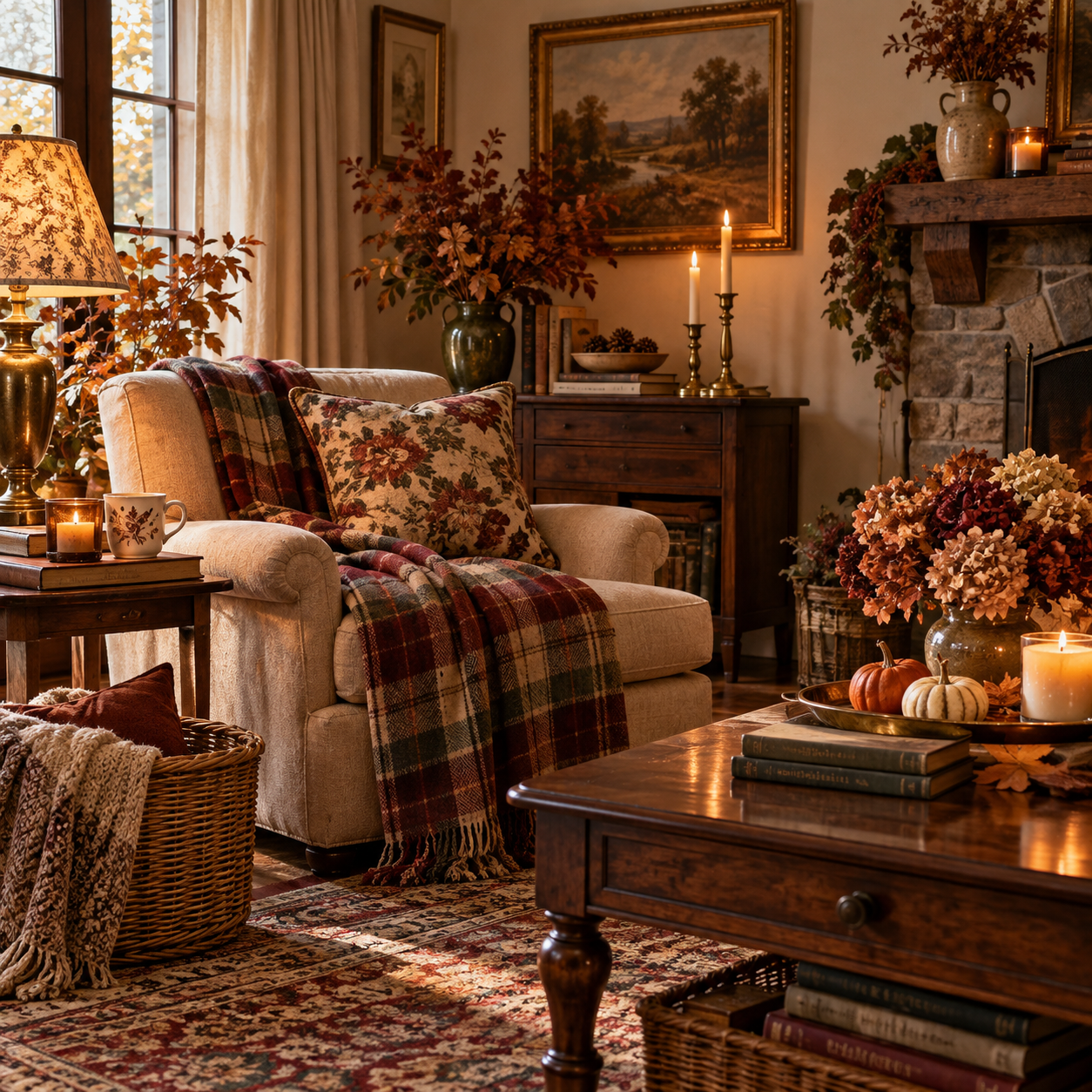
Now that nostalgic interiors are returning, the best elements of the 1990s are finding their way back into modern homes. Instead of recreating an entire room exactly as it might have looked three decades ago, the most stylish approach is to borrow the warmth, texture, and personality of the era while refining the details for today.
🍂 The secret is balance. A room should feel nostalgic enough to spark a memory but polished enough to belong in a contemporary home.
These Top 3 90s fall decor ideas focus on the elements that made autumn decorating during the decade so memorable: rich harvest color palettes, cozy textile layering, and collected vintage-inspired accents. Each idea can work in a living room, entryway, dining area, bedroom, reading corner, or even a small apartment.
If modern fall decorating sometimes feels too clean, too beige, or too predictable, this nostalgic revival may be exactly what your home needs.
Why 90s Fall Decor Feels So Cozy Again
The appeal of 90s fall decor is not simply about nostalgia. It reflects a broader desire for interiors that feel personal, lived-in, warm, and emotionally comforting.
During the 1990s, decorating was rarely about making every object match perfectly. A patterned sofa could sit beside a dark wooden side table. Brass candlesticks could share space with pottery, baskets, dried flowers, family photographs, and stacks of books. Fall decorations were layered into these existing rooms rather than completely replacing the normal decor.
That approach created depth.
Instead of a room looking as if every accessory came from the same seasonal collection, it looked as though the homeowner had gradually built the space over many years.
🍁 That collected feeling is one of the biggest reasons the style works so well today.
Modern homes often benefit from a little visual history. A vintage-inspired brass lamp, an old wooden frame, a patterned pillow, or a ceramic vase can instantly soften sleek furniture and minimalist architecture.
Autumn makes this combination even more appealing because the season naturally encourages deeper colors and heavier textures.
Colors such as burgundy, forest green, pumpkin orange, mustard, brown, cream, plum, and antique gold were especially compatible with 1990s interiors. When used thoughtfully today, they can create rooms that feel sophisticated rather than dated.
The Essential 90s Fall Decor Formula
The easiest way to understand the look is to think in layers.
Start with a warm foundational element such as wood furniture, a cream wall, a traditional rug, or a deep upholstered chair. Add one strong seasonal color. Then introduce texture through fabric, ceramics, woven baskets, or dried botanicals.
Finally, include something slightly nostalgic.
That nostalgic object might be a brass candlestick, a floral cushion, a vintage landscape print, a dark wooden picture frame, or an old-fashioned ceramic vessel.
The goal is not to recreate a television sitcom living room from 1994.
The goal is to capture its warmth.
| 90s Fall Decor Element | Classic 1990s Look | Updated Modern Approach |
|---|---|---|
| Color | Burgundy orange forest green mustard | Use two or three rich colors against warm neutrals |
| Wood | Cherry mahogany oak walnut | Mix one darker wood with lighter contemporary finishes |
| Textiles | Florals plaids heavy upholstery | Use patterns on pillows throws or one accent chair |
| Metals | Shiny brass | Choose aged antique or brushed brass |
| Seasonal Decor | Pumpkins leaves dried flowers | Use fewer pieces with more natural texture |
| Wall Art | Landscapes florals framed prints | Mix vintage-inspired art with simple modern framing |
| Accessories | Baskets ceramics candlesticks | Create intentional collected vignettes |
This combination allows the nostalgic elements to remain recognizable without making the house feel like a preserved 1990s interior.
Top 1 90s Fall Decor With Warm Wood Plaid and Harvest Colors
The first and perhaps most recognizable approach to 90s fall decor is built around warm wood furniture, classic plaid, and deep harvest shades.
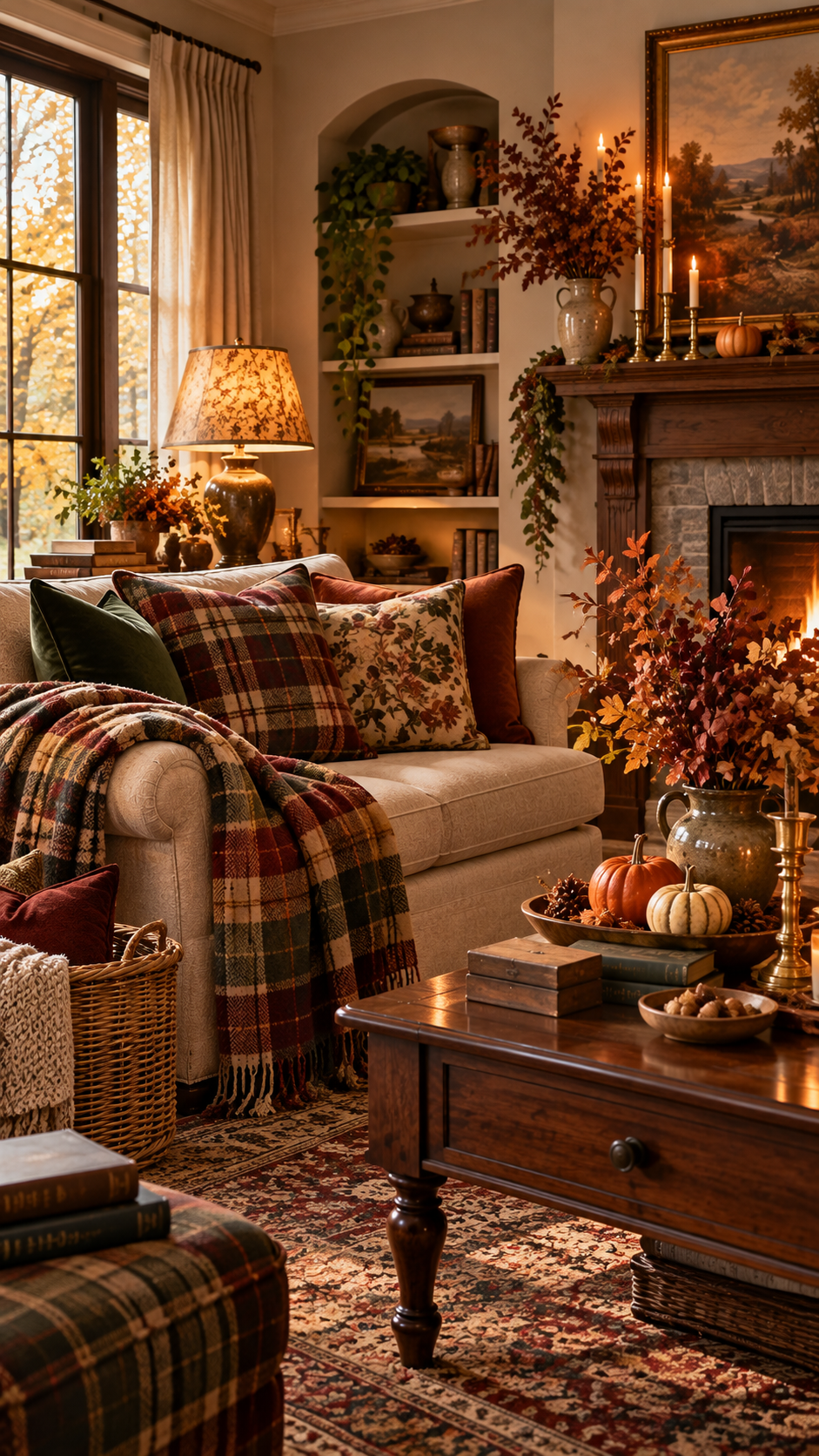
Picture a living room with a dark walnut or cherry wood coffee table, a comfortable cream or camel sofa, a rust-colored throw, forest green pillows, and one beautifully patterned plaid textile. Add amber glass, brass candleholders, a basket filled with blankets, and a simple bowl of miniature pumpkins.
Immediately, the room begins to feel warmer.
This style works because the 1990s were comfortable with color. Autumn decorating did not depend on making every pumpkin white or every accessory beige. Burnt orange could sit beside dark green. Burgundy could appear next to golden brown. Cream and warm wood helped connect everything visually.

Start With Rich Natural Wood
Wood is arguably the foundation of this look.
Dark cherry furniture was especially popular during the 1990s, but walnut, oak, pine, and mahogany-inspired finishes also contributed to the decade’s familiar warmth.
For a contemporary interpretation, avoid filling the entire room with matching dark furniture.
Instead, choose one or two strong wooden pieces.
A walnut console table in an entryway could become the backdrop for an autumn vignette. A traditional wooden coffee table could ground a modern cream sofa. A darker side table beside a linen chair could make a simple reading corner feel much more established.
🌰 Natural wood grain is particularly important because it introduces the variation and visual texture that overly polished modern rooms sometimes lack.
Small imperfections are welcome.
A piece that looks slightly aged often works better than something that appears completely new.
Bring Back Plaid in a More Refined Way
Plaid belongs naturally in a nostalgic fall interior.
During the 1990s it could appear on sofas, curtains, bedding, armchairs, table linens, and decorative pillows. Recreating all of those patterns at once would probably feel overwhelming today, but one or two carefully placed plaid accents can be extremely effective.
Try a wool plaid throw folded over an armchair.
Choose colors such as olive, burgundy, tan, charcoal, cream, or muted rust rather than bright primary tones.
A single plaid cushion can also add a subtle nostalgic note to an otherwise contemporary sofa.
For bedrooms, a folded plaid blanket across the bottom of the bed can transform the entire atmosphere without requiring new furniture.
The key is allowing the pattern to feel intentional rather than themed.
Use Harvest Colors Without Making the Room Too Orange
Autumn decorating often becomes predictable because orange is used everywhere.
A more convincing 1990s-inspired palette is broader.
Consider combinations such as burgundy and olive green, rust and cream, mustard and dark brown, or plum and antique gold.
🍂 Pumpkin orange can certainly appear, but it works best as one part of the palette rather than the entire palette.
Imagine a cream sofa with two olive velvet pillows, one rust plaid pillow, and a burgundy throw. Place several amber glass candleholders on a dark wooden coffee table and add a shallow ceramic bowl containing small natural pumpkins.
The room clearly feels autumnal without depending on obvious seasonal signs.
Add Classic Fall Lighting
Lighting plays a major role in creating this aesthetic.
Table lamps with warm shades, candles, small lanterns, and soft ambient lighting help recreate the welcoming atmosphere associated with traditional 1990s homes.
Instead of relying entirely on ceiling lights, use multiple low lighting sources throughout the room.
A brass lamp on a wooden side table can immediately create a nostalgic feeling, especially when paired with a stack of books or a framed photograph.
Candles can reinforce the mood.
Look for creamy pillar candles, amber glass holders, aged brass candlesticks, or simple taper candles.
🕯️ Warm light makes wood grain richer, autumn colors deeper, and patterned fabrics softer.
That is exactly the atmosphere this style needs.
Important Note: The strongest 90s fall decor does not come from filling a room with nostalgic objects. Choose a few recognizable elements and surround them with simpler modern pieces so the space feels warm and collected rather than outdated.
Top 2 90s Fall Decor With Cozy Textiles Layered Patterns and Cottage Warmth
The second approach embraces the softer side of the decade.
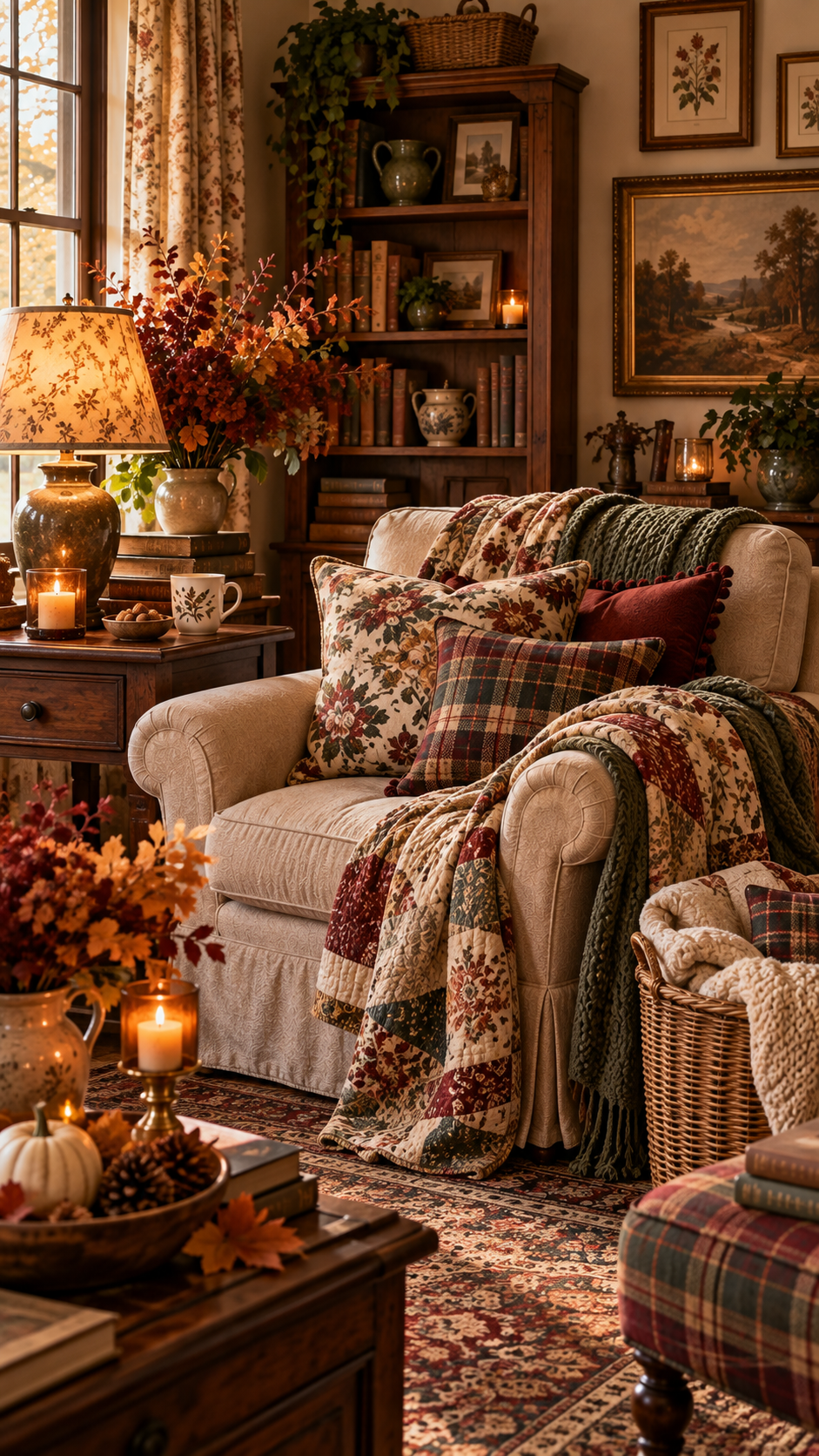
Think floral fabrics, embroidered details, quilts, heavy throws, woven baskets, warm lamps, comfortable chairs, and rooms designed for lingering rather than simply being photographed.
This style is ideal for anyone who loves cottage interiors, traditional design, grandmillennial touches, or the kind of fall room that seems to invite you to sit down with coffee and a book.
🍁 Texture matters more than perfection here.
The room should look comfortable.
A blanket can be slightly rumpled. Books can remain stacked on a table. A basket can hold extra pillows. Autumn branches can look natural rather than meticulously arranged.
That relaxed quality is what makes the room believable.
Mix Florals With Autumn Colors
Floral prints were everywhere during the 1990s.
Some were bold and romantic, while others featured smaller cottage-style patterns. Instead of covering an entire room with flowers today, use floral fabric as a strategic accent.
An upholstered armchair can become the star of a reading corner.
A pair of floral pillows can soften a plain sofa.
A small floral tablecloth could bring vintage personality to a breakfast nook.
For autumn, choose patterns containing shades such as faded burgundy, dusty rose, olive green, mustard, cream, brown, or muted blue.
Avoid overly bright flowers if your goal is a sophisticated seasonal look.
The print should feel slightly faded, almost as though it has been part of the house for years.
Layer Throws Quilts and Cushions
Few things create an autumn atmosphere faster than textiles.
A 1990s-inspired room should not feel flat.
Layer different materials such as cotton, wool, velvet, linen, chenille, or quilted fabric. A plain sofa can suddenly feel much richer when combined with a patterned pillow, a deep velvet cushion, and a textured blanket.
The trick is to vary the fabrics while repeating colors.
For example, if a floral pillow contains dark red and olive green, repeat one of those colors in a throw or nearby accessory.
That repetition keeps the layers connected.
🧶 Quilts are especially effective for this style.
A folded quilt draped over the back of a bench or stored inside a visible basket instantly introduces nostalgia.
Even in a contemporary room, one traditional quilt can create a striking seasonal contrast.
Use Woven Baskets for Practical Autumn Styling
Woven baskets were a major decorative feature of casual 1990s interiors, and they remain useful today.
Large baskets can store blankets beside a sofa.
Smaller baskets can hold magazines, pinecones, dried flowers, or extra towels.
In an entryway, a basket can provide storage while also adding texture next to smooth painted walls and hard flooring.
Natural materials such as rattan, wicker, cane, and seagrass work particularly well with fall colors.
Their honey-brown tones naturally complement pumpkins, dried leaves, dark wood, and warm textiles.
A slightly aged basket often looks even better than a pristine one.
The entire idea is to make the room feel collected.
Create a Nostalgic Fall Reading Corner
One of the best places to experiment with this look is a small reading area.
Start with a comfortable armchair.
It could be floral, plaid, velvet, leather, or simply a warm neutral.
Place a dark wooden side table nearby and add a traditional table lamp with a cream fabric shade.
Include a stack of books, a ceramic mug, one brass object, and perhaps a small bowl or vase filled with dried autumn foliage.
Drape a textured throw over the chair.
Place a basket underneath or beside the table.
📚 The result feels intimate rather than decorative.
That distinction is important.
The most memorable interiors often suggest activity. A room feels inviting when it looks as though someone might actually sit there, open a book, drink tea, and stay for an hour.
Bring Back Traditional Rugs
Traditional rugs are another excellent way to create a nostalgic foundation.
Look for Persian-inspired patterns or faded vintage designs containing rust, navy, brown, burgundy, cream, or olive.
A rug can connect modern furniture with traditional autumn accessories surprisingly well.
For example, a contemporary beige sofa may feel too minimal for the look on its own. Place it over a richly patterned vintage-style rug, add two autumn pillows and a wooden coffee table, and the entire room changes.
The rug becomes the bridge between decades.
This is particularly useful if you want nostalgic fall character without replacing large pieces of furniture.
Top 3 90s Fall Decor With Floral Patterns Brass and Collected Vintage Accents
The third idea is the most decorative and romantic.
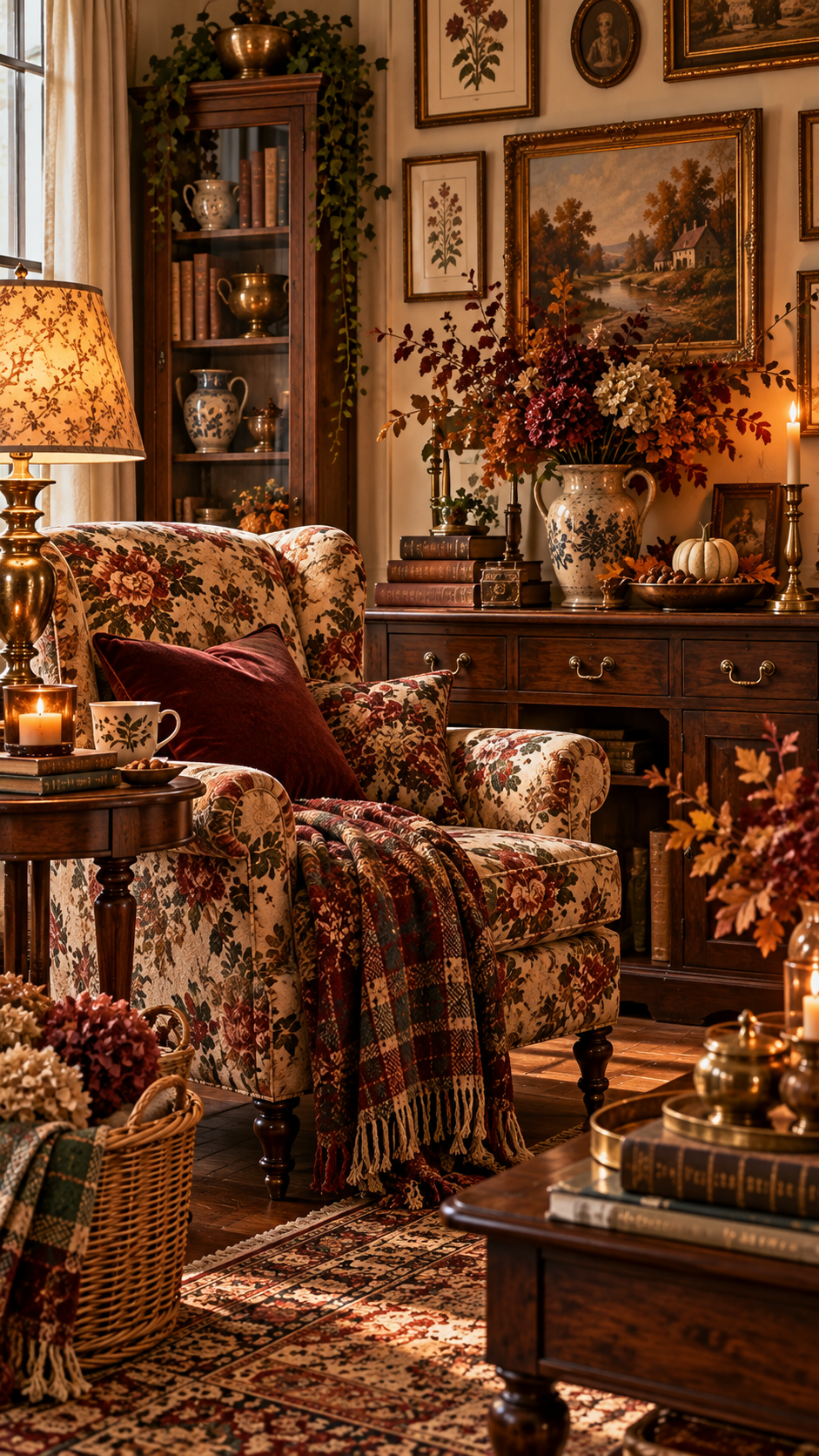
It takes inspiration from those wonderfully layered 1990s homes where framed pictures, brass objects, ceramic vessels, books, lamps, dried flowers, and personal treasures shared the same room.
The modern version should still feel collected, but the styling can be more edited.
Rather than covering every surface, create one or two concentrated vignettes.
An entryway console is perfect.
So is a fireplace mantel, sideboard, bookshelf, dining room cabinet, or small table beside an armchair.
✨ This approach works beautifully for fall because autumn itself is a season of rich materials and meaningful objects.
Make Aged Brass the Metallic Accent
Brass has moved through many design cycles, but it feels particularly appropriate for nostalgic interiors.
During the 1990s, shiny brass was common.
For a more sophisticated version today, use aged brass, antique brass, or slightly tarnished finishes.
Candlesticks are an obvious starting point.
A pair of traditional brass candlesticks on a wooden console immediately introduces vintage character.
Brass picture frames, lamp bases, small trays, bowls, or decorative boxes can create the same effect.
Avoid using too much.
One or two brass elements usually provide enough warmth.
The metal looks especially beautiful beside dark wood, burgundy fabrics, cream walls, and dried autumn foliage.
Display Art Like a Collected Home
Wall decor is an easy way to strengthen the nostalgic feeling.
Traditional landscapes, botanical illustrations, still-life paintings, floral prints, and small framed sketches all suit the aesthetic.
Instead of using a single oversized modern canvas, try a smaller arrangement of pieces that look collected over time.
Mix frame materials carefully.
Dark wood and antique brass are especially effective.
You might hang a landscape painting over an entryway table and place two smaller framed botanical prints nearby.
🍂 During fall, artworks containing fields, forests, flowers, mountains, or muted natural colors feel particularly appropriate.
The art does not need to feature pumpkins or leaves.
In fact, subtle seasonal connections usually age better.
Style Ceramic and Pottery Pieces
Ceramics can make a room feel handmade and grounded.
Look for stoneware jugs, cream pottery, glazed bowls, small crocks, patterned vases, or slightly rustic vessels.
Fill one with dried hydrangeas, branches, rose hips, eucalyptus, wheat, or autumn leaves.
Another could remain empty.
Not every vessel needs flowers.
Grouping different heights together can create a collected still life on a console or cabinet.
For the strongest 1990s influence, combine pottery with something polished.
A matte ceramic vase next to a brass candlestick creates a beautiful contrast between earthy and elegant surfaces.
Include Personal Objects
This is where nostalgic decorating becomes more meaningful.
Homes during the 1990s often displayed objects that revealed something about the people living there.
Photographs were visible.
Books were not hidden.
Souvenirs, small collections, decorative boxes, handmade pieces, and inherited furniture were part of the room.
Modern seasonal decorating can sometimes remove too much personality in pursuit of a perfect look.
This style does the opposite.
Place a framed family photograph beside a candle.
Leave favorite books stacked beneath a lamp.
Display a ceramic piece that feels slightly imperfect.
Use a vintage object that already belongs to your home.
❤️ Personal history is one of the most convincing decorative elements available.
When seasonal decorations are mixed with objects that remain throughout the year, the room feels authentic.
How to Make 90s Fall Decor Look Modern Rather Than Dated
Nostalgic decorating becomes most successful when there is contrast between old and new.
If every object in a room looks vintage, the space can begin to feel like a historical recreation.
Instead, preserve clean contemporary elements.
Warm white walls, simple curtains, modern lighting, streamlined furniture, and uncluttered surfaces can provide breathing room around nostalgic accents.
For example, pair a modern linen sofa with a floral cushion.
Use a vintage-style brass lamp on a simple oak console.
Place a traditional rug under a contemporary coffee table.
Add dark wooden frames to an otherwise minimal wall.
This contrast keeps the room visually interesting.
Edit the Number of Decorative Objects
The original 1990s approach often embraced many decorative accessories.
Today, fewer objects usually create a stronger result.
Instead of filling an entire mantel with pumpkins, garlands, candleholders, leaves, signs, baskets, and figurines, choose three or four meaningful elements.
Perhaps use a large ceramic vase filled with autumn branches, two brass candlesticks, and one small pumpkin.
That is enough to communicate the season.
🍁 Nostalgia works best when the eye has space to appreciate individual details.
Choose Slightly Muted Colors
Rich color is essential, but saturation can be softened.
Instead of bright orange, choose rust or terracotta.
Instead of vivid green, choose olive or moss.
Instead of strong yellow, choose mustard or ochre.
Instead of bright red, use burgundy or oxblood.
These shades preserve the warmth of 1990s interiors while feeling more contemporary.
Warm neutrals such as cream, oatmeal, mushroom, beige, and taupe can keep the palette balanced.
Avoid Matching Furniture Sets
One reason certain older interiors can feel dated is excessive matching.
A bedroom might once have included the same wood finish on the bed, dresser, nightstands, mirror, and wardrobe.
A modern nostalgic room should look more relaxed.
Mix wood tones.
Combine painted pieces with natural wood.
Pair older furniture with newer upholstery.
This gives the space the collected character that makes nostalgic decorating so appealing.
Easy 90s Fall Decor Ideas for an Entryway
An entryway offers a perfect opportunity to experiment because even a small amount of decor can make an impact.
Start with a wooden console table or bench.
Place a ceramic lamp on one side and a vase of tall autumn branches on the other.
Add a shallow bowl containing natural pumpkins, acorns, or pinecones.
Hang a traditional landscape above the table.
A woven basket underneath can hold a plaid blanket.
For a richer 1990s touch, add one small brass frame or candlestick.
The effect can be nostalgic without becoming busy.
🚪 Entryways are especially good locations for deeper fall colors because they create an immediate feeling of warmth when someone enters the home.
Easy 90s Fall Decor Ideas for the Living Room
The living room benefits from textiles more than almost any other space.
Replace two or three lightweight summer pillows with autumn versions.
Use plaid, floral, velvet, or woven fabrics.
Add a rust, olive, burgundy, or mustard throw.
Place a basket nearby for extra blankets.
On the coffee table, use a ceramic bowl, one candle, and a small stack of books.
A wooden tray can organize the arrangement.
If the room needs additional nostalgic personality, introduce a brass table lamp or framed landscape.
You do not need a complete redesign.
A few carefully chosen textures can create the atmosphere.
Easy 90s Fall Decor Ideas for the Dining Room
The dining room allows the palette to become slightly richer and more dramatic.
Use a dark wooden dining table or emphasize the wood if one is already present.
A linen runner in cream, muted olive, plaid, or rust can establish the seasonal base.
Create a centerpiece using dried branches, hydrangeas, berries, wheat, or leaves in a ceramic vessel.
Add brass candlesticks for evening warmth.
🍷 Amber or smoke-colored glassware can introduce another subtle nostalgic element.
If the dining room includes a cabinet or sideboard, style it with framed art, pottery, books, and a small arrangement of seasonal botanicals.
Avoid filling every surface.
Leave enough empty space for the darker colors and richer textures to stand out.
The Best 90s Fall Decor Color Combinations
Choosing the right palette can immediately make the theme feel intentional.
One elegant option combines burgundy, olive green, cream, and walnut brown.
This palette feels traditional without appearing excessively rustic.
Another beautiful combination uses rust, mustard, oatmeal, and antique brass.
It works particularly well in living rooms with warm wooden floors.
For a moodier style, try plum, forest green, espresso brown, and aged gold.
This combination can make a reading room or dining space feel especially atmospheric.
For a softer cottage interpretation, use faded terracotta, dusty rose, sage green, and warm cream.
🌾 Whatever palette you choose, repeat the main colors in small amounts around the room.
Repetition creates cohesion even when the objects themselves do not match.
What to Look for When Shopping for 90s Inspired Fall Decor
Secondhand shops, antique stores, flea markets, estate sales, and online vintage marketplaces can be especially useful for this aesthetic.
Look for objects with texture and character rather than items labeled specifically as fall decor.
Good finds might include wooden frames, brass candlesticks, ceramic pitchers, vintage baskets, traditional table lamps, embroidered pillows, quilts, landscape prints, floral textiles, wooden side tables, and small decorative boxes.
Even one authentic older piece can make newer seasonal decor feel more convincing.
You can also recreate the look with contemporary products.
Choose items with slightly aged finishes and traditional shapes.
The goal is visual character, not historical accuracy.
🛍️ Avoid purchasing every piece from the same collection.
A room becomes more interesting when some objects are smooth, some are worn, some are handmade, and others are polished.
Final Thoughts on Bringing 90s Fall Decor Back Home
The return of 90s fall decor proves that comfort never truly goes out of style.
What people remember most about homes from the decade is not necessarily a particular sofa or wallpaper pattern. It is the feeling created by layered fabrics, warm lighting, wood furniture, meaningful accessories, deep seasonal colors, and rooms that looked genuinely lived in.
The Top 3 90s fall decor ideas offer three different ways to capture that feeling.
🥇 Warm wood plaid and harvest colors create the most classic interpretation, combining traditional materials with rich autumn shades.
🥈 Cozy textiles layered patterns and cottage warmth make the home feel softer, more relaxed, and perfect for reading, gathering, and slowing down during colder months.
🥉 Floral patterns brass and collected vintage accents bring a more romantic decorative character through art, pottery, metal details, and objects with personal history.
The most successful home does not need to choose only one approach.
A wooden console can support brass candlesticks. A modern sofa can hold a floral pillow. A plaid blanket can sit beside a ceramic vase filled with dried branches.
These combinations are what give nostalgic decorating its charm.
Instead of creating a perfectly coordinated seasonal room, allow the home to feel layered.
Use objects you already love.
Add warmer colors.
Bring out the blankets.
Light the lamps earlier in the evening.
Display books instead of hiding them.
Introduce one piece that looks as though it could have been sitting in the same room thirty years ago.
🍂 The result is a version of autumn decorating that feels richer than a passing trend.
It feels familiar.
It feels collected.
And most importantly, it feels like home.
Related posts:
Top 3 Dollar Tree Stacking Pumpkins Ideas That Look Shockingly Expensive
Top 3 Fall Bathroom Decor Ideas That Make Your Space Look Expensive
Top 3 Fall Dough Bowl Ideas That Make Your Home Look Effortlessly Cozy
Top 3 Fall Office Decor Ideas That Make Your Workspace Look Instantly More Expensive
Top 3 Fall Bedding Combo Ideas That Make Any Bedroom Look Expensive
Top 3 Fall Fireplace Mantel Decorating Ideas That Make Your Living Room Look Expensive

