
Creating a beautiful bedroom becomes much easier when you start with the right Cozy Bedroom Aesthetic Moodboards. Instead of randomly choosing furniture, bedding, lighting, and decorative accessories, a thoughtfully curated moodboard brings every design element together into one harmonious visual story. ✨ From dreamy twilight-inspired color combinations to sophisticated vintage textures and artistic botanical details, the right moodboard can transform an ordinary bedroom into a stunning personal sanctuary.
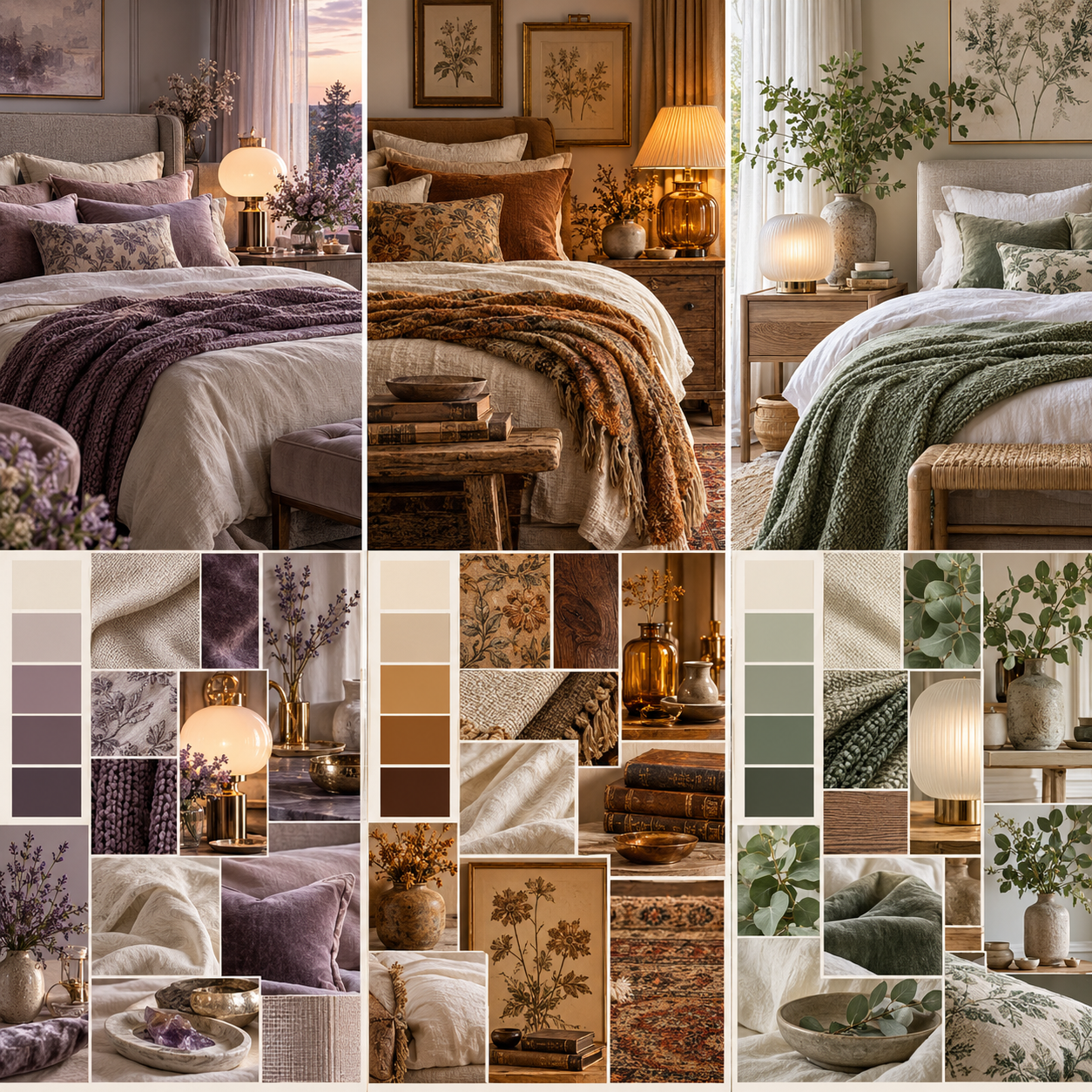
A cozy bedroom aesthetic is not simply about adding fluffy blankets or choosing neutral colors. It is about building an atmosphere that feels emotionally comforting, visually cohesive, and beautifully personal. The most captivating bedrooms often begin with an unexpected combination of colors, textures, materials, and decorative details that complement one another without looking overly coordinated.
The beauty of bedroom moodboards lies in their flexibility. They allow you to explore different styles, compare design possibilities, and discover which visual combinations truly reflect your personality before making expensive decorating decisions.
Whether you’re creating a Pinterest inspiration board, planning a bedroom makeover, or searching for an aesthetic that feels both cozy and sophisticated, these Top 3 Cozy Bedroom Aesthetic Moodboards offer three distinctive design directions worth exploring.
Each concept focuses on a complete visual identity rather than a conventional bedroom decorating style, making it easier to create an interior that feels intentional, original, and beautifully curated.
Why Cozy Bedroom Aesthetic Moodboards Are the Secret to a Beautifully Coordinated Bedroom
A bedroom may contain individually beautiful pieces of furniture and decor yet still feel visually disconnected. The wall color might clash with the bedding, the wooden furniture may introduce conflicting undertones, or the decorative accessories might create an atmosphere that feels different from the original inspiration.
This is exactly where a moodboard becomes valuable.
A bedroom moodboard acts as a visual blueprint, helping you evaluate the relationship between colors, fabrics, lighting, furniture finishes, artwork, and small decorative details before introducing them into the actual room.
Rather than purchasing items simply because they look attractive individually, you can begin asking whether each piece contributes to the desired atmosphere.
For example, a bedroom moodboard inspired by a quiet autumn afternoon might include faded ochre, walnut wood, aged parchment, soft wool, and amber-colored glass. Each material tells part of the same visual story.
Another moodboard inspired by a peaceful evening sky could feature muted blue-gray, dusty mauve, deep plum, brushed silver, and softly illuminated translucent fabrics.
Both bedrooms can feel incredibly cozy, but their visual personalities are completely different.
How a Moodboard Creates a Stronger Bedroom Aesthetic
An effective bedroom moodboard provides more than a selection of matching colors.
It establishes visual relationships between materials, shapes, finishes, and decorative accents.
A successful moodboard usually includes:
- 🎨 A signature color palette that establishes the overall atmosphere.
- 🧵 Textile samples that communicate warmth, softness, and tactile comfort.
- 🪵 Furniture material references that connect major bedroom pieces.
- 💡 Lighting inspiration that determines how the room feels throughout the day.
- 🖼️ Artwork and decorative details that add personality.
- ✨ A distinctive focal element that makes the aesthetic memorable.
The relationship between these components matters more than the number of items included.
A carefully edited moodboard containing eight complementary references can communicate a clearer design direction than a crowded collection of fifty unrelated inspiration photos.
Why Bedroom Moodboards Should Begin With a Feeling
One of the most effective approaches to bedroom design is choosing an emotional atmosphere before selecting a decorating style.
Instead of beginning with a broad description such as modern, vintage, or minimalist, consider the feeling the room should communicate.
Should the bedroom resemble a quiet evening filled with soft shadows? A nostalgic artist’s retreat? A peaceful greenhouse after rainfall?
These emotional references immediately suggest more specific materials, color relationships, and lighting conditions.
They also make a moodboard visually distinctive, which is especially useful when collecting bedroom aesthetic inspiration on Pinterest.
Top 3 Cozy Bedroom Aesthetic Moodboards Compared
The following three moodboards explore dramatically different interpretations of bedroom coziness while maintaining a sophisticated, coordinated aesthetic.
| Moodboard Concept | Signature Colors | Key Materials | Overall Atmosphere | Best For |
|---|---|---|---|---|
| 🥇 Twilight Linen and Muted Amethyst | Heather gray, dusty lilac, oat milk, smoky plum | Washed linen, brushed metal, sheer voile | Dreamy, intimate, quietly luxurious | Relaxing bedrooms with subtle color |
| 🥈 Vintage Parchment and Amber Atelier | Parchment cream, tobacco brown, faded ochre, antique bronze | Aged oak, leather, woven wool, amber glass | Nostalgic, artistic, deeply inviting | Character-filled bedrooms and vintage lovers |
| 🥉 Rainwashed Botanical and Misty Glass | Eucalyptus gray, muted celadon, fog white, blue-green | Frosted glass, cotton gauze, pale ash wood, ceramic | Fresh, tranquil, softly atmospheric | Nature-inspired bedrooms with an artistic identity |
Although every concept creates a comfortable bedroom environment, each moodboard achieves that result through a different combination of visual elements.
The goal is not to reproduce an entire room exactly as shown in an inspiration photograph. Instead, each moodboard provides a visual language that can be adapted to different bedroom sizes, furniture layouts, budgets, and personal preferences.
🥇 Top 1 Cozy Bedroom Aesthetic Moodboards With Twilight Linen and Muted Amethyst
Imagine a bedroom inspired by the magical transition between sunset and evening, when natural daylight begins to fade and every surface takes on a soft, atmospheric glow.
The Twilight Linen and Muted Amethyst moodboard captures this peaceful moment through an unexpected combination of dusty violet undertones, pale oat-colored textiles, delicate metallic details, and subtle shadow effects.
Rather than following a traditional purple bedroom aesthetic, this moodboard approaches color with restraint.
Muted amethyst appears as a sophisticated accent instead of dominating the room. Warm linen shades provide softness, while smoky gray tones introduce depth.
The result is a bedroom aesthetic that feels dreamy, elegant, and exceptionally comforting without becoming overly feminine or excessively decorative.


Building the Twilight Linen Color Palette
The foundation of this cozy bedroom moodboard is a carefully balanced relationship between warm neutrals and atmospheric violet-gray shades.
A beautiful starting palette includes:
- 🤍 Oat milk cream for the largest surfaces.
- 🩶 Soft heather gray for grounding elements.
- 💜 Muted amethyst for signature accents.
- 🌫️ Dusty lavender-gray for subtle transitions.
- 🍇 Smoky plum for concentrated visual depth.
The key is choosing colors with slightly desaturated undertones.
Bright purple, saturated lavender, and strongly contrasting white would change the aesthetic into something more energetic. This moodboard instead emphasizes colors that appear softened by evening light.
One practical approach is to use warm cream as the dominant background, heather gray as the secondary tone, and muted amethyst as a restrained accent.
For a balanced composition, approximately 60 percent of the visible palette can remain light and neutral, 30 percent can introduce the secondary gray tones, and 10 percent can provide the distinctive purple accents.
This proportion is a flexible starting point rather than a strict design rule.
Choosing Textures That Feel Like an Evening Retreat
Texture is especially important in a bedroom where the colors are subtle.
Without tactile contrast, a muted palette can appear flat or overly simplified.
For the Twilight Linen moodboard, imagine layering softly crumpled linen, lightweight wool, delicate cotton voile, and a small amount of velvet.
Washed linen offers a relaxed, natural appearance. Its subtle wrinkles make the bedroom feel lived-in rather than artificially perfect.
A thin wool throw introduces warmth without adding unnecessary visual weight.
Cotton voile provides a translucent quality that reflects the theme of disappearing daylight, while a small velvet accent can introduce a luxurious touch.
The materials should feel soft but visually varied.
An oversized textured blanket, smooth pillowcases, and a single velvet lumbar cushion can communicate the entire aesthetic without requiring excessive accessories.
Creating the Signature Twilight Lighting Effect
Lighting is the element that makes this moodboard particularly memorable.
During the day, pale curtains can gently diffuse natural sunlight, allowing the amethyst accents to appear soft and understated.
As evening approaches, warm bedside lamps create an intimate atmosphere while darker textiles develop richer color depth.
A sculptural lamp with an opal-glass shade makes an excellent focal point for this concept.
Its milky surface echoes the lighter colors of the moodboard while introducing a delicate luminous effect.
For general evening ambiance, warm-white bulbs around 2700K can help create a comfortable glow.
A dimmable lamp is especially useful because it allows the bedroom to transition between reading, relaxing, and preparing for sleep.
Avoid relying entirely on purple LED lighting. Although colorful illumination may appear dramatic in photographs, it can overwhelm the subtle material relationships that make this aesthetic sophisticated.
Furniture and Decorative Elements for a Cohesive Moodboard
Furniture within this aesthetic should have graceful proportions and quiet visual details.
An upholstered headboard in warm gray, mushroom beige, or muted lavender-gray would work beautifully.
A slim bedside table with brushed pewter hardware can introduce a subtle metallic contrast.
Instead of highly polished mirrored furniture, choose surfaces with soft reflections or understated matte finishes.
Decorative accents might include an abstract watercolor painting, a pale ceramic vase, a small sculptural object, or a delicate glass tray.
The artwork should incorporate colors already present in the palette.
A painting featuring overlapping washes of lavender-gray, charcoal, and cream can visually connect the bedding, furniture, and lighting without appearing too coordinated.
How to Arrange the Twilight Linen Moodboard
When creating a digital or physical inspiration board, place one atmospheric reference image near the center.
This could be an evening sky photograph, a close-up of crumpled linen in soft light, or an abstract artwork featuring smoky violet tones.
Surround the central reference with smaller visual samples.
Position the color swatches together, allowing the gradual transition between cream, gray, and amethyst to become visible.
Place fabric samples beside the colors to demonstrate how the palette changes across different textures.
Finally, add a small number of lighting and furniture references.
A particularly attractive layout uses approximately nine visual elements with generous negative space between them.
The final composition should communicate quiet luxury, emotional softness, and twilight-inspired calm.
Why This Cozy Bedroom Aesthetic Moodboard Works
The Twilight Linen concept is ideal for anyone who wants a cozy bedroom that feels sophisticated without relying entirely on beige or brown.
Its muted violet undertones create personality, while the warm neutrals prevent the atmosphere from becoming cold.
The aesthetic is also adaptable.
A small bedroom can use pale backgrounds with amethyst accents concentrated in bedding and artwork.
A larger bedroom can introduce a deeper plum upholstered chair or a more substantial textured rug.
Because the concept is based on subtle color relationships rather than trendy furniture pieces, it can remain visually appealing as decorative preferences evolve.
🥈 Top 2 Cozy Bedroom Aesthetic Moodboards With Vintage Parchment and Amber Atelier
The second moodboard draws inspiration from an intimate European artist’s studio, where treasured books, aged wooden surfaces, handwritten notes, and amber-colored objects create a feeling of warmth and nostalgia.

The Vintage Parchment and Amber Atelier aesthetic combines historical charm with carefully edited contemporary styling.
It is neither a conventional farmhouse bedroom nor a fully antique interior.
Instead, it creates the impression of a thoughtfully collected space where every decorative element has a story.
The atmosphere feels intellectual, romantic, artistic, and wonderfully inviting.
Imagine soft morning sunlight falling across parchment-colored bedding, an aged oak nightstand, a framed charcoal sketch, and a small amber-glass lamp.
Nothing needs to be excessively polished.
The beauty comes from authentic-looking textures, warm tonal variation, and the subtle contrast between old and new.
Creating an Antique Inspired Color Story
The palette begins with colors associated with vintage paper, archival photographs, antique furniture, and softly aged textiles.
Rather than selecting several unrelated shades of brown, the moodboard should include specific tonal relationships.
A beautiful combination includes:
- 📜 Parchment cream as the main background.
- 🤎 Tobacco brown for deeper warmth.
- 🧡 Faded ochre for expressive accents.
- 🪙 Antique bronze for metallic details.
- ☕ Soft espresso for definition and contrast.
These colors are especially effective when they appear slightly irregular or weathered.
For example, an aged oak surface may contain several naturally occurring brown tones, while woven wool can introduce subtle variations of cream and ochre.
Those variations add visual richness without creating a busy or chaotic bedroom.
A parchment-colored backdrop also allows darker objects to stand out gently.
Framed artwork, bronze hardware, and small leather accessories become meaningful details rather than competing focal points.
The Art of Mixing Vintage Textures
This moodboard depends on materials that communicate history and character.
Aged wood, woven wool, natural linen, muted leather, handmade paper, and amber glass create a particularly harmonious combination.
The secret is balancing textured and smooth surfaces.
If every element is heavily distressed, the bedroom can feel cluttered or overly rustic.
Instead, introduce a few carefully selected pieces with visible patina and combine them with simple contemporary textiles.
For example, a vintage wooden nightstand can sit beside a bed with clean-lined linen bedding.
A small leather-bound journal might rest on a smooth ceramic tray.
An antique-style brass picture frame can contrast with a minimal upholstered headboard.
This tension between refined simplicity and historical detail makes the aesthetic more sophisticated.
Selecting Artwork That Defines the Moodboard
Artwork plays a central role in the Vintage Parchment concept.
Instead of generic decorative prints, choose references that resemble collected treasures from an artist’s studio.
Potential visual directions include botanical engravings, charcoal figure studies, architectural sketches, antique map fragments, and muted landscape drawings.
The artwork does not need to be genuinely antique.
High-quality reproductions, original sketches, or locally created pieces can provide the same visual atmosphere.
The most important consideration is consistency.
A collection of prints with similar paper tones and restrained colors will feel more coherent than a random combination of unrelated images.
One larger framed sketch can serve as the primary artistic reference, while two or three smaller pieces introduce visual rhythm.
Natural oak, walnut, or antique-bronze frames complement the aesthetic beautifully.
Developing an Amber Lighting Atmosphere
The name Amber Atelier reflects the warm, almost honey-colored light associated with this moodboard.
Lighting should feel intimate and artistic rather than overly bright or theatrical.
An amber-glass table lamp can become the central decorative feature.
When illuminated, the glass introduces a warm glow that enhances wood grain, parchment tones, and bronze details.
A fabric-shaded reading lamp can provide more functional illumination beside the bed.
Using multiple light sources allows the room to feel comfortable during different activities without sacrificing the overall aesthetic.
The important detail is maintaining a visually warm relationship between the fixtures.
A highly reflective chrome lamp, for example, might feel disconnected from the antique bronze and aged wood elsewhere in the moodboard.
Matte finishes, warm metals, and softly translucent glass are generally more harmonious choices.
Styling the Bedroom Like a Curated Creative Retreat
A successful Vintage Parchment bedroom should look collected over time rather than purchased as a matching furniture set.
Consider combining an old wooden stool as a bedside accent with a simple upholstered bed.
Add a small stack of favorite books, a ceramic vessel, and a carefully framed sketch.
A textured wool blanket in faded ochre can introduce a signature color without dominating the room.
A narrow vintage-inspired rug might provide another subtle layer of pattern.
However, the styling should remain selective.
Too many antique objects can turn the room into a display area rather than a comfortable living space.
Every decorative element should either contribute to the visual narrative or serve a practical function.
A beautifully designed bedroom should still provide clear bedside surfaces, easy access to lighting, and enough space to move comfortably.
How to Build the Vintage Parchment Moodboard
Begin with a central reference that communicates the atmosphere of an artistic interior.
This might be a detail photograph of an antique writing desk, a close-up of aged paper beside an amber lamp, or an intimate vintage-inspired room.
Place the parchment and tobacco-brown color swatches near the main photograph.
Next, add samples of worn oak, woven wool, and dark leather.
These materials create the tactile foundation of the concept.
Introduce one or two vintage artwork references and a single statement lighting piece.
Avoid filling every available section of the board.
A curated moodboard should communicate a clear aesthetic rather than function as an inventory of every possible decorative object.
One particularly effective presentation uses a slightly asymmetrical collage with overlapping paper textures and neatly arranged material samples.
This layout reinforces the artist’s studio inspiration while still looking organized.
Why This Cozy Bedroom Aesthetic Moodboard Feels So Personal
The Vintage Parchment moodboard is especially appealing because it encourages meaningful decoration.
Old books, inherited furniture, travel sketches, handwritten postcards, and secondhand discoveries can become part of the aesthetic.
Unlike a room built entirely around matching purchases, this bedroom can develop gradually.
Each carefully chosen object adds another layer of personality.
The combination of artistic references and warm materials also creates a memorable visual identity that feels different from standard neutral bedroom inspiration.
It is an excellent choice for readers who appreciate nostalgic interiors but still want their bedroom to feel comfortable, practical, and sophisticated.
🥉 Top 3 Cozy Bedroom Aesthetic Moodboards With Rainwashed Botanical and Misty Glass
The third concept takes inspiration from the quiet atmosphere of a garden immediately after rainfall.
Imagine droplets resting on leaves, pale morning light passing through misted glass, and soft green-gray colors appearing against naturally textured surfaces.
The Rainwashed Botanical and Misty Glass moodboard transforms these subtle outdoor details into a refined bedroom aesthetic.
Unlike a conventional plant-filled bedroom, this concept does not depend on large quantities of indoor greenery.
Instead, it captures the visual character of nature through color, translucency, organic shapes, and carefully selected materials.
The result is a refreshing interpretation of coziness.
It feels peaceful and light, yet still warm enough to create an inviting personal retreat.

Designing a Rainwashed Botanical Color Palette
The central palette combines delicate green-gray shades with pale neutrals and subtle blue-green accents.
Instead of bright botanical greens, the aesthetic emphasizes colors that appear softened by mist and atmospheric light.
A beautiful selection includes:
- 🌿 Muted celadon for the signature botanical color.
- 🌫️ Fog white for openness and softness.
- 🩶 Eucalyptus gray for understated depth.
- 🩵 Pale blue-green for subtle atmospheric variation.
- 🪵 Soft ash wood for natural warmth.
The balance between warm and cool undertones is particularly important.
If every surface appears blue or gray, the room may feel visually cold.
Natural wood, warm-white textiles, and handcrafted ceramics prevent that problem.
A pale ash wood bedside table can introduce gentle warmth without disrupting the misty aesthetic.
Similarly, off-white cotton bedding creates a softer appearance than stark optical white.
Using Translucent Materials to Create Atmospheric Depth
One of the defining features of this moodboard is its emphasis on translucent and light-diffusing materials.
Frosted glass, cotton gauze, thin woven curtains, and softly glazed ceramics contribute to the impression of rain and mist.
These elements create a visual effect that is delicate rather than dramatic.
A bedside lamp with a frosted-glass shade can become a particularly beautiful detail.
During the day, the shade looks sculptural and understated.
At night, it transforms into a softly glowing element that reinforces the calm atmosphere.
Lightweight curtains can also contribute to the aesthetic by diffusing daylight across surrounding surfaces.
The goal is not to make the room appear completely transparent or overly bright.
Instead, the moodboard should balance translucent materials with more substantial elements such as upholstered bedding, wood furniture, and textured rugs.
Botanical Details Without an Overcrowded Jungle Look
Nature-inspired bedrooms often rely heavily on indoor plants.
However, the Rainwashed Botanical concept achieves its identity through subtler visual references.
A single elegant branch in a ceramic vessel may communicate the theme more effectively than numerous unrelated plants.
Botanical artwork can introduce leaf forms without requiring additional floor space.
A textured ceramic vase may reference natural stone, while a softly patterned textile can evoke the organic shapes of foliage.
If living plants are included, choose species appropriate for the room’s actual daylight and maintenance conditions.
The aesthetic does not require plants in every corner.
In fact, keeping some surfaces empty allows the botanical references to feel more intentional.
A simple arrangement featuring one potted plant, one botanical print, and one sculptural vase can be enough to establish the concept.
Introducing Organic Shapes and Soft Architectural Lines
The shapes included in this moodboard should reinforce the idea of natural movement.
Rounded bedside lamps, curved ceramic vessels, gently irregular mirrors, and softly draped fabrics create visual harmony.
Avoid excessive sharp contrasts or numerous highly geometric patterns.
Instead, choose a small number of organic shapes that resemble river stones, softened leaves, or water-worn surfaces.
An oval mirror with a slim frame can complement the concept beautifully.
A sculptural ceramic bowl with a slightly irregular edge provides another understated detail.
The furniture itself can remain relatively simple.
Clean-lined pale wood furniture creates a neutral foundation, allowing the distinctive shapes and materials to receive more attention.
This combination makes the moodboard suitable for both contemporary and transitional bedrooms.
Creating a Soft Rainy Morning Lighting Mood
The ideal lighting reference for this aesthetic is a peaceful bedroom on an overcast morning.
Rather than intense golden sunlight, imagine diffused daylight gently revealing the textures of bedding and furniture.
Sheer curtains can soften direct sunlight during the day.
In the evening, warm-white lamps can maintain comfort without losing the freshness of the palette.
A frosted-glass lamp paired with a light wood nightstand creates a particularly harmonious combination.
It is important to remember that the room should still provide functional illumination for reading, dressing, and everyday activities.
The misty aesthetic is a visual inspiration, not a reason to keep the bedroom excessively dark.
Adjustable lighting helps preserve both atmosphere and practicality.
How to Assemble the Rainwashed Botanical Moodboard
Start with a beautiful photograph of rain-covered foliage, misted glass, or a softly illuminated garden.
Choose one image that captures the atmosphere rather than selecting several competing nature photographs.
Add small color swatches in celadon, eucalyptus gray, fog white, and pale blue-green.
Next, introduce samples of frosted glass, pale wood, cotton gauze, and softly textured ceramics.
These references should communicate the aesthetic even before any bedroom furniture appears on the board.
Then add two or three interior details that demonstrate how the materials might work in a real room.
A frosted-glass lamp, an ash wood nightstand, and a softly layered bed can provide enough context.
Arrange the references with generous spacing and a light neutral background.
The completed moodboard should feel fresh, balanced, atmospheric, and quietly inviting.
Why This Moodboard Creates a Different Kind of Coziness
The Rainwashed Botanical aesthetic proves that a cozy bedroom does not always need dark colors, thick blankets, or strongly warm palettes.
Comfort can also come from visual softness, gentle daylight, natural materials, and a restrained relationship between colors.
This approach works particularly well in bedrooms that receive good natural light.
It can also suit compact rooms because the lighter palette and translucent references help maintain a sense of openness.
Most importantly, the concept creates a distinctive visual identity.
Rather than simply decorating with plants, it translates the feeling of a rainy garden into an entire bedroom moodboard.
How to Create Your Own Cozy Bedroom Aesthetic Moodboards From Scratch
The three concepts provide inspiration, but the most effective moodboard is one that responds to your actual bedroom and personal preferences.
Creating a cohesive design board requires a clear sequence of decisions.
The process should begin with atmosphere and end with practical product choices.
Step 1 Choose One Emotional Reference
Begin by selecting a feeling, memory, location, or natural phenomenon that represents your ideal bedroom.
This could be the peaceful atmosphere of twilight, the nostalgia of an old library, or the freshness of a garden after rainfall.
Write down three words that describe the experience.
For example, the Twilight Linen concept might be described as dreamy, softened, and intimate.
These words will help you evaluate every image added to the board.
If a reference looks beautiful but communicates a completely different atmosphere, it may not belong in the final composition.
Step 2 Collect a Small Number of Strong References
Start with approximately 12 to 20 inspiration images.
Choose references showing colors, fabric details, lighting effects, materials, and furniture shapes.
Do not limit yourself to photographs of completed bedrooms.
An abstract painting, textile close-up, natural landscape, or architectural detail may communicate a stronger aesthetic direction than a fully furnished interior photograph.
After collecting the references, reduce the selection to the most consistent images.
The editing stage is essential.
A small collection of connected visuals creates a more memorable moodboard than an enormous collection of unrelated inspiration.
Step 3 Identify the Dominant Colors
Select three to five core colors from the strongest references.
These colors should work together under the lighting conditions of the actual bedroom.
Consider the existing flooring, wall color, and furniture before finalizing the palette.
A shade that looks warm and beautiful in a digital photograph may appear different beside cool-toned flooring or under artificial lighting.
When possible, test real paint and fabric samples inside the room.
Observe them during morning, afternoon, and evening light.
This helps prevent expensive decorating mistakes.
Step 4 Add Material and Texture Samples
Colors communicate atmosphere, but textures determine how the bedroom feels physically and visually.
Choose materials that complement the emotional direction.
For example, brushed metal and washed linen can reinforce a twilight-inspired aesthetic.
Aged oak and leather suit a nostalgic artistic moodboard.
Frosted glass and lightweight cotton complement a misty botanical concept.
Avoid choosing too many unrelated materials.
A thoughtful combination of three or four dominant textures usually provides enough variety for a cohesive visual composition.
Step 5 Introduce a Distinctive Focal Element
Every beautiful bedroom moodboard benefits from one memorable feature.
This may be an unusual lamp, a statement piece of artwork, a distinctive fabric, or an elegant furniture silhouette.
The focal element should represent the main aesthetic.
In the Twilight Linen moodboard, a softly glowing opal-glass lamp might become the signature detail.
For Vintage Parchment, a large archival-style sketch could establish the artistic personality.
For Rainwashed Botanical, a sculptural frosted-glass light might become the defining feature.
The remaining decorative elements should support rather than compete with this focal point.
Step 6 Translate the Moodboard Into Practical Bedroom Choices
A moodboard becomes most useful when every visual reference connects to a realistic decorating decision.
Look at the existing room and determine which elements can remain.
Perhaps the bed frame already works with the proposed design.
Maybe the flooring can become a natural part of the new palette.
Instead of replacing everything, focus on the pieces that will create the greatest visual transformation.
Bedding, curtains, lighting, and artwork often have a substantial influence on the overall appearance.
Furniture replacement may be unnecessary if the existing pieces can work with the new moodboard.
Important Note: A moodboard is a design direction, not a shopping checklist. Before buying furniture, paint, or textiles, compare physical samples in the actual bedroom and consider its dimensions, lighting, ventilation, maintenance needs, and available budget. Colors and materials can appear dramatically different in photographs than they do in real spaces.
Best Digital Tools and Creative Methods for Bedroom Moodboard Planning
Creating a bedroom aesthetic moodboard does not require professional design software.
Several accessible approaches can help organize inspiration and compare visual combinations.
The best method depends on whether the goal is collecting ideas, presenting a polished aesthetic collage, or planning a detailed decorating project.
Pinterest Boards for Collecting Inspiration
Pinterest is particularly useful during the initial exploration stage.
It allows you to collect visual references across multiple design categories.
Instead of saving only complete bedroom photographs, consider creating separate sections for textiles, lighting, color palettes, furniture details, and artwork.
This makes it easier to identify repeated colors and materials.
Once patterns become visible, remove references that no longer fit the developing aesthetic.
A focused collection is more useful than a board containing hundreds of loosely related images.
Canva for Creating a Finished Aesthetic Collage
Canva can be useful for arranging visual references into a polished moodboard.
A simple grid layout allows you to combine inspiration photographs, material samples, color swatches, and short design labels.
Try using one large atmospheric reference supported by several smaller detail images.
Keep the margins consistent and avoid excessive decorative graphics.
The moodboard should allow the materials and colors to communicate the design.
For a Pinterest-oriented visual composition, a vertical layout can be effective because it accommodates multiple stacked references.
Physical Moodboards for Testing Real Materials
A physical moodboard offers a valuable advantage: actual material texture.
Fabric samples, printed photographs, paint cards, and wood finish samples can be arranged on a neutral board.
This is especially useful when comparing undertones.
Two beige fabrics may look identical on a screen but appear noticeably different in natural daylight.
Likewise, a wood finish that seems warm in a product photograph may look gray beside existing furniture.
A physical board allows materials to be evaluated together before making permanent design decisions.
Common Mistakes That Make Cozy Bedroom Aesthetic Moodboards Look Unbalanced
Even beautiful inspiration images can produce an unsuccessful moodboard when the relationships between elements are poorly considered.
A few common mistakes are worth avoiding.
Mixing Too Many Aesthetic Directions
One of the easiest mistakes is combining every attractive bedroom trend into a single board.
Vintage artwork, futuristic lighting, rustic furniture, bold patterns, and minimalist textiles may each look beautiful individually.
However, they need a strong connecting concept to work together successfully.
Choose one main visual direction and allow secondary influences only when they complement it.
Ignoring Color Undertones
Not all neutral colors belong together automatically.
Some creams have yellow undertones, while others appear pink or gray.
Wood finishes can also vary from orange-brown to cool ash tones.
When these undertones conflict, the moodboard may feel disconnected even if every individual item is attractive.
Comparing samples under consistent lighting helps identify these differences.
Selecting Beautiful Objects Without Considering Scale
A decorative lamp may look elegant in a close-up photograph but be too large for an actual bedside table.
An oversized headboard may dominate a compact bedroom.
A heavy patterned rug could overwhelm a small space.
Moodboards should therefore include a practical scale check before purchases begin.
Measure the room, furniture clearances, and usable surfaces instead of relying only on visual inspiration.
Forgetting the Importance of Empty Space
Cozy does not have to mean crowded.
An effective bedroom moodboard needs visual breathing room, just as a comfortable bedroom benefits from uncluttered surfaces and practical circulation.
Leave space around important objects.
Allow one decorative piece to stand out rather than surrounding it with numerous competing accessories.
The final aesthetic will often feel more sophisticated because of what has been intentionally excluded.
How to Choose the Best Cozy Bedroom Aesthetic Moodboard for Your Personality
The ideal moodboard depends on the emotional atmosphere you want to experience every day.
While all three concepts are cozy, they express comfort in different ways.
The Twilight Linen and Muted Amethyst concept suits people who appreciate dreamy interiors, subtle color, and peaceful evening atmospheres.
Its visual identity is gentle but distinctive.
The Vintage Parchment and Amber Atelier concept is ideal for those who appreciate artwork, old books, meaningful decorative objects, and spaces that feel collected over time.
It offers warmth through nostalgia and personal character.
The Rainwashed Botanical and Misty Glass concept is especially suitable for those who prefer fresh, airy surroundings and subtle references to nature.
Its comfort comes from quiet colors, organic forms, and delicate lighting.
Choosing Based on Your Existing Bedroom
Consider the features that are difficult or expensive to change.
Warm wooden floors may naturally complement Vintage Parchment.
Cool gray flooring could work beautifully with Twilight Linen when balanced with warmer textiles.
A bedroom with pale walls and ample daylight may provide an excellent foundation for Rainwashed Botanical.
However, none of these combinations is mandatory.
The right colors and materials can adapt each concept to different architectural conditions.
The objective is to create visual harmony between the inspiration and the room that already exists.
Choosing Based on Your Decorating Budget
Budget also influences the most practical moodboard.
A room with good furniture may need only new bedding, artwork, and lighting to establish a completely different atmosphere.
A vintage-inspired concept may benefit from secondhand objects and refurbished furniture.
A botanical moodboard can use affordable ceramic accessories and thoughtfully selected textiles instead of expensive designer pieces.
The focus should remain on achieving a coherent aesthetic rather than accumulating decorative products.
Final Thoughts on the Top 3 Cozy Bedroom Aesthetic Moodboards
The most beautiful Cozy Bedroom Aesthetic Moodboards are not simply collections of attractive bedroom photographs. They are thoughtfully developed visual stories that bring together emotion, color, texture, light, and personal expression.
🥇 Twilight Linen and Muted Amethyst offers an elegant interpretation of comfort through atmospheric violet-gray colors, relaxed linen textures, and softly glowing lighting.
🥈 Vintage Parchment and Amber Atelier transforms nostalgic materials, artistic references, and warm amber details into a character-filled bedroom aesthetic.
🥉 Rainwashed Botanical and Misty Glass creates a refreshing sanctuary inspired by misty gardens, translucent surfaces, and delicate green-gray tones.
Each moodboard demonstrates that bedroom coziness can take many forms.
It can be dreamy and intimate, nostalgic and artistic, or fresh and quietly atmospheric.
The most important principle is maintaining a consistent visual identity while allowing room for meaningful personal details.
By beginning with a clear emotional concept, selecting a controlled color palette, balancing complementary materials, and carefully editing decorative references, even a simple bedroom can develop a distinctive and beautifully coordinated aesthetic.
A truly memorable bedroom does not need to follow every interior design trend. It needs a thoughtful visual story that makes the space feel comfortable, expressive, and unmistakably personal. ✨
Related posts:
Best 3 Couples’ Bedroom Ideas That Turn an Ordinary Space Into a Romantic Luxury Retreat
Best 3 Bedding Set Ideas That Will Make Your Bedroom Look Like a Luxury Designer Retreat
Top 3 Small Closet Inspo Ideas That Make a Beautiful Organized Bedroom Feel Twice as Big
Top 3 Fall Bedding Combo Ideas That Make Any Bedroom Look Expensive
Top 3 Dreamy Bedroom Ideas That Make Every Night Feel Like a Luxury Escape
The 3 Best Toddler Bedroom Ideas That Make a Small Room Feel Magical and Beautiful

