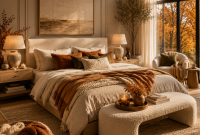
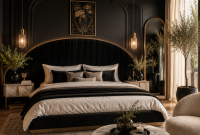
Finding the best room ideas for teens is about much more than choosing trendy furniture or painting the walls a new color. A teenager’s bedroom has to work as a sleeping space, study zone, social corner, storage area, and personal retreat—all while reflecting a style that feels genuinely individual. The most successful teen rooms combine personality with practical design so the bedroom can evolve naturally as tastes, hobbies, and daily routines change.
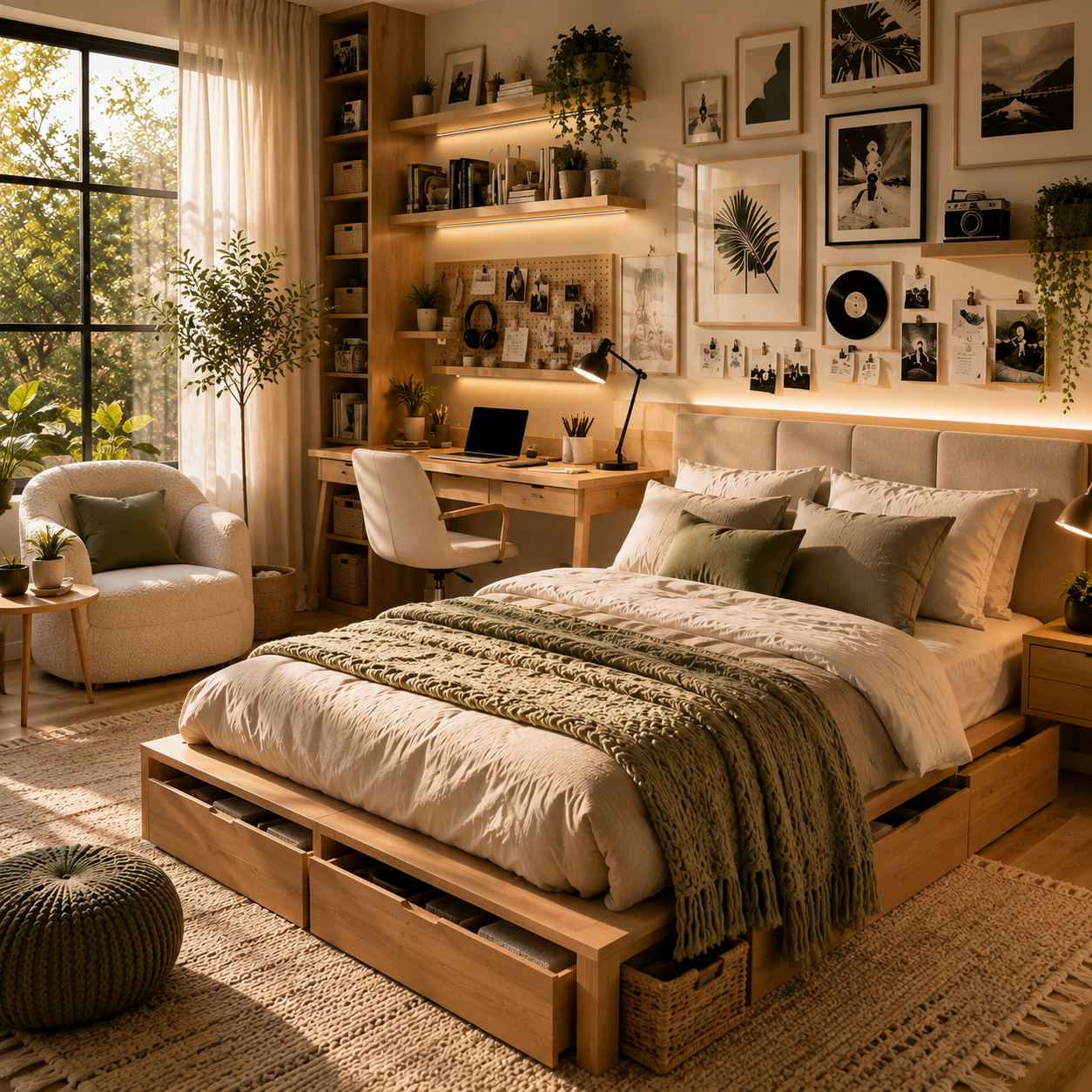
Teen bedrooms are especially interesting because they sit somewhere between childhood spaces and adult interiors. They can still feel playful and expressive, but they often benefit from a more sophisticated foundation. Instead of filling the room with decorations that may quickly feel outdated, a better approach is to create a flexible base using timeless furniture, functional storage, comfortable textiles, and carefully selected decorative elements.
The three ideas below explore very different approaches. 🥇 The first creates a warm modern aesthetic inspired by sophisticated Pinterest interiors. 🥈 The second focuses on creativity, personality, and self-expression. 🥉 The third transforms a compact bedroom into a highly functional space through clever furniture and vertical organization.
Whether the bedroom is spacious or tiny, these Top 3 room ideas for teens can provide inspiration for creating a room that looks stylish while still working beautifully for everyday life.
What Makes Great Room Ideas for Teens Work
Before choosing a specific style, it helps to understand what separates an attractive teen bedroom from one that is genuinely comfortable and functional.
A teenager typically uses one bedroom for several completely different activities. The bed is obviously important, but the room may also need to accommodate homework, gaming, reading, getting ready, listening to music, creating content, practicing hobbies, relaxing with friends, and storing an increasingly large collection of clothes and personal belongings.
That means zoning becomes extremely useful.
The sleeping zone should feel calm and comfortable. A study area needs appropriate lighting and enough surface space for schoolwork. Storage should be accessible without dominating the room. Finally, there should ideally be at least one area dedicated purely to personality and relaxation.
🎨 Personal expression matters too. Teenagers are developing their own aesthetic preferences, and their bedrooms are often one of the first places where they can make meaningful design decisions. Posters, photographs, artwork, collections, books, music, plants, textiles, and lighting can all help make the space feel personal.
The secret is giving those elements a structured background.
A neutral wall, for example, can support a colorful gallery arrangement without making the entire room feel chaotic. Simple furniture can be paired with expressive bedding. Natural wood can soften bold accessories. Good storage can keep collections visible while hiding everyday clutter.
This balance between structure and personality appears throughout the best teen bedroom designs.
Quick Comparison of the Top 3 Room Ideas for Teens
Each design direction has different strengths. Choosing the right one depends on personality, available space, storage requirements, and how the bedroom is used.
| Rank | Teen Room Idea | Best For | Key Features | Overall Mood |
|---|---|---|---|---|
| 🥇 Best 1 | Modern Cozy Teen Retreat | Teens wanting a stylish timeless bedroom | Warm neutrals, wood, layered textiles, ambient lighting | Calm, sophisticated, cozy |
| 🥈 Best 2 | Creative Personality Filled Bedroom | Artistic and expressive teens | Gallery walls, color, display shelves, personalized décor | Energetic, unique, inspiring |
| 🥉 Best 3 | Smart Multifunctional Small Teen Room | Small bedrooms and busy students | Vertical storage, multifunctional furniture, organized study zone | Practical, modern, uncluttered |
There is no requirement to follow one aesthetic completely. In fact, some of the strongest bedrooms combine elements from all three.
A cozy neutral foundation could be paired with the creative wall from Best 2 and the clever vertical storage techniques from Best 3. The objective is not to reproduce a showroom exactly—it is to create a bedroom that works for the teenager who actually lives there.
🥇 Best 1 Modern Cozy Room Ideas for Teens with a Stylish Pinterest Inspired Look
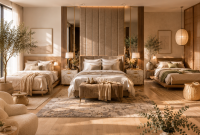
One of the strongest room ideas for teens is a warm contemporary bedroom that feels sophisticated without becoming too formal. This approach works especially well because it can survive changing trends.
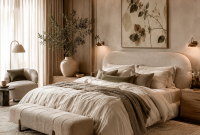
Instead of building the entire room around one fashionable color or theme, start with a calm foundation. Warm white, creamy ivory, soft beige, greige, muted taupe, and natural wood tones create an adaptable backdrop.
The result can feel modern while remaining inviting.
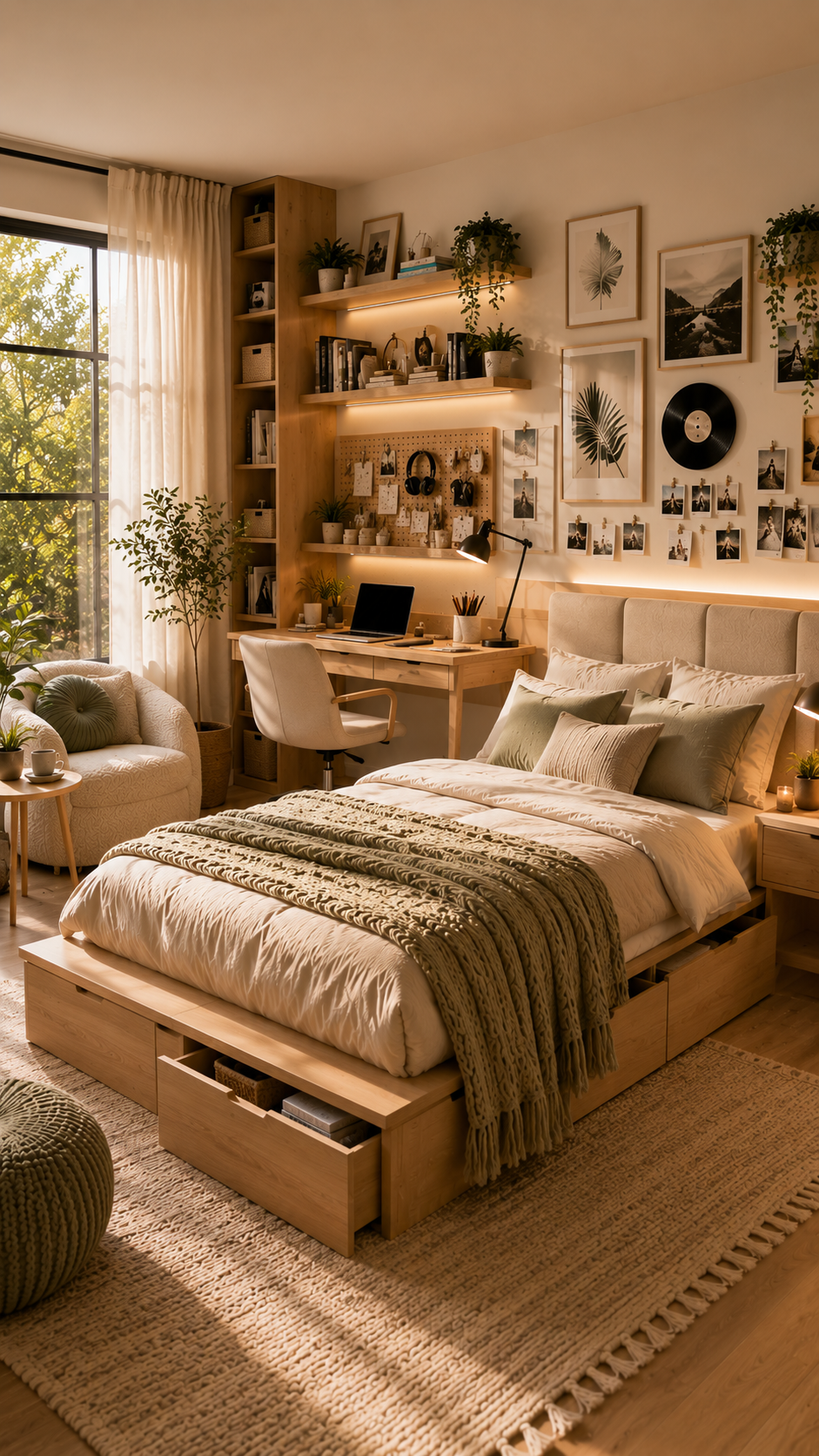
Natural white oak or light wood furniture is particularly effective because wood introduces warmth without visually overwhelming the room. A simple bed frame, streamlined desk, floating shelves, and compact bedside table can establish the basic architecture.
Then personality can be added through elements that are easier to replace.
Think bedding, cushions, artwork, lamps, small accessories, plants, photographs, and decorative objects. If personal taste changes a year later, these elements can be updated without replacing expensive furniture.
Create a Comfortable Layered Bed
The bed is usually the largest object in a teenager’s bedroom, which makes it a natural visual focal point.
Rather than treating it as purely functional, style it as a comfortable retreat.
Start with breathable bedding in a versatile base color. White, oatmeal, beige, muted sage, dusty blue, charcoal, or soft terracotta can all work depending on the preferred aesthetic.
Add texture through layering.
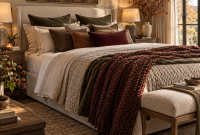
A quilt or duvet can form the foundation, while a lightweight throw blanket adds depth near the foot of the bed. Two or three decorative cushions can introduce subtle color without making the bed unnecessarily complicated.
🛏️ Texture often creates more visual sophistication than excessive decoration.
Linen-look fabrics, cotton, knitted throws, subtle checks, boucle cushions, and washed textiles can make even a simple room feel much more considered.
An upholstered or wooden headboard can further define the sleeping zone. In very small rooms, a wall-mounted headboard or painted accent section can create a similar effect without consuming valuable floor space.
Use Warm Ambient Lighting Instead of One Harsh Ceiling Light
Lighting can completely change how a teen bedroom feels.
A single bright ceiling fixture may provide general illumination, but it rarely creates the comfortable atmosphere associated with well-designed bedrooms.
Layered lighting works better.
💡 Combine overhead lighting with a desk lamp, bedside lamp, wall light, or discreet LED illumination. Warm ambient lighting around shelves or behind a headboard can create a softer evening atmosphere while allowing brighter task lighting to remain available for homework.
String lights can still work in teen bedrooms, but they look more sophisticated when intentionally positioned rather than randomly covering every wall.
For example, delicate warm lights can frame a photo display, highlight a shelf, or follow the edge of a headboard.
Lighting should ultimately support different activities. Homework requires clarity. Reading requires focused illumination. Relaxing before sleep benefits from softer light.
Providing multiple sources allows the atmosphere to change without redesigning the room.
Add a Compact but Beautiful Study Zone
A teenager’s study area deserves thoughtful attention because schoolwork can occupy a significant part of everyday life.
The desk does not necessarily need to be large.
A relatively narrow desk with organized storage can work beautifully if unnecessary objects are removed from the work surface. Positioning the desk close to a window can also provide natural daylight and make the workspace feel more open.
Keep frequently used supplies within easy reach.
A small drawer unit, pegboard, floating shelf, pencil holder, or wall organizer can prevent notebooks and stationery from spreading across the entire room.
An ergonomic chair is worth prioritizing over a purely decorative one.
✨ A beautiful study area should encourage focus rather than simply looking attractive in photographs.
A corkboard or magnetic board above the desk can provide space for schedules, reminders, photographs, inspiring images, and school materials. This introduces personality without sacrificing function.
Introduce Plants and Natural Details
Plants can instantly soften modern bedrooms.
A small trailing plant on a shelf, compact plant near the desk, or taller floor plant in an empty corner introduces organic shapes that contrast beautifully with straight furniture lines.
Artificial plants can also work where natural light is limited or maintenance is undesirable.
Natural materials provide similar benefits.
Woven baskets, wooden trays, linen curtains, cotton bedding, ceramic planters, and textured rugs can make a modern teen room feel warmer and less generic.
The key is moderation.
A few intentional natural elements usually create a stronger impression than filling every surface with accessories.
Important Note: Avoid designing a teen bedroom so permanently around one current trend that changing personal taste becomes expensive. Keep large furniture and major surfaces relatively versatile, then express personality through artwork, bedding, lighting, photographs, accessories, and other elements that are easy to update.
🥈 Best 2 Creative Room Ideas for Teens Filled with Personality and Self Expression
Not every teenager wants a calm minimalist bedroom.
For creative personalities, the bedroom can become a visual expression of interests, memories, music, art, fashion, photography, sports, travel, gaming, books, or other passions.
These room ideas for teens embrace individuality while still maintaining enough visual structure to prevent the room from feeling messy.
The main difference between intentional maximalism and clutter is organization.
A wall covered with photographs can look incredible when arranged thoughtfully. Shelves filled with collectibles can feel stylish when objects are grouped intentionally. Bright colors can work beautifully when repeated strategically throughout the room.
The objective is controlled creativity.
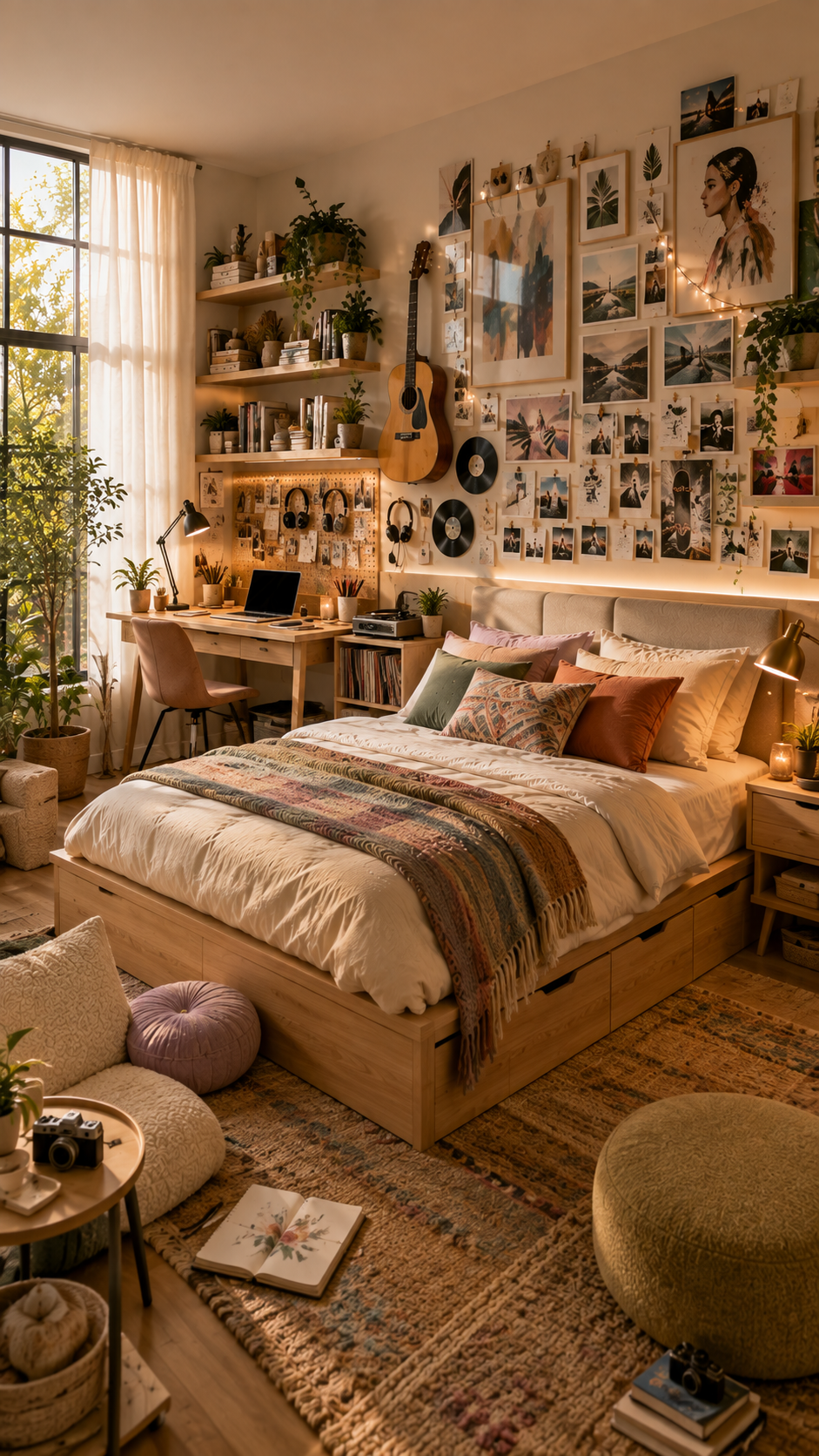
Build an Eye Catching Gallery Wall
A gallery wall is one of the easiest ways to personalize a teen bedroom without consuming valuable floor space.
It can contain framed artwork, personal photographs, postcards, illustrations, album-inspired artwork, typography prints, travel memories, small mirrors, or handmade pieces.
There are two main ways to approach the arrangement.
The first is structured. Matching frames are placed in a clean grid, creating a polished and organized appearance.
The second is more organic. Different sizes, shapes, and formats are mixed together to create an eclectic collage.
Both can work.
🖼️ The surrounding room should determine which approach feels appropriate. If bedding and furniture already contain many colors and patterns, a structured gallery can provide balance. If the room itself is simple, a more expressive wall can become the main statement.
Removable adhesive systems can make changing the display easier, especially when interests evolve frequently.
Create a Dedicated Display Area for Hobbies
Teen bedrooms become more meaningful when hobbies are treated as part of the design rather than something that needs to be hidden.
A music lover might display vinyl records or instruments. A reader might create an attractive bookshelf. An artist could incorporate a pegboard for supplies and sketches. A sports enthusiast might dedicate shelving to trophies, equipment, or memorabilia.
The display should still feel curated.
Instead of scattering objects across multiple unrelated surfaces, group similar items together.
This gives collections visual importance while making the bedroom easier to maintain.
🎸 A guitar displayed on a wall, for instance, can become functional artwork.
Likewise, a collection of cameras, books, figurines, sneakers, or handmade objects can become an intentional design feature when placed on clean floating shelves.
Leaving some empty space between objects is important. Negative space allows individual items to stand out.
Experiment with Color Without Overwhelming the Room
Teen bedrooms provide an excellent opportunity to explore color.
However, painting every surface in a different saturated shade can make a relatively small bedroom feel visually crowded.
A more flexible approach is to establish a base color and add one or two accent families.
For example, warm white walls might be paired with muted green, terracotta, and natural wood. Pale gray could work with navy and rust. Cream might support lavender and dusty pink. Soft beige could be combined with forest green and black.
There are countless possibilities.
🎨 Color does not need to come exclusively from paint.
Bedding, artwork, rugs, desk accessories, lamps, storage boxes, cushions, and curtains can introduce color more flexibly.
For teens who love bold interiors, an accent wall can provide stronger visual impact. Deep blue, muted burgundy, dark green, warm clay, or even charcoal can create an impressive background behind a bed or desk.
The surrounding surfaces can remain lighter to maintain balance.
Make Photographs Part of the Decoration
Personal photographs are particularly appropriate for teen rooms because they transform a generic bedroom into a space filled with memories.
Instead of randomly taping photographs across the walls, create an intentional presentation.
A metal grid can hold photographs with clips. A corkboard can mix pictures with tickets, postcards, and notes. Small prints can be arranged around a mirror. Another option is creating a horizontal photo line above the desk.
📸 This style can evolve continuously.
New memories can replace older photographs without requiring a major decorating project.
It also provides something that mass-produced décor cannot: a completely unique visual story.
Add a Cozy Social Corner
When space permits, a teen bedroom can benefit enormously from a secondary seating area.
It does not need to be elaborate.
A compact lounge chair, floor cushion, bean bag, upholstered bench, or small loveseat can create a place for reading, using a phone, gaming, or spending time with friends without turning the bed into the only available seating.
A soft rug helps define the zone.
Add a small side table for drinks, books, headphones, or other essentials. A floor lamp can transform the corner into a comfortable reading area.
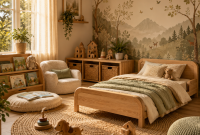
In a tiny room, an oversized floor cushion can perform the same function and be stored away when additional floor space is needed.
This flexibility is especially valuable in multipurpose bedrooms.
🥉 Best 3 Smart Small Room Ideas for Teens with Multifunctional Furniture and Vertical Storage
Small bedrooms require a different design strategy.
When every square meter matters, the goal is not simply fitting smaller furniture into the room. Instead, the bedroom should use its available volume more intelligently.
That makes vertical organization one of the most effective room ideas for teens living in compact spaces.
Walls provide valuable storage opportunities without occupying additional floor area. Furniture can perform multiple jobs. Previously ignored areas—under the bed, above the desk, behind doors, and in corners—can become useful.
The result can actually feel more organized than a larger bedroom.
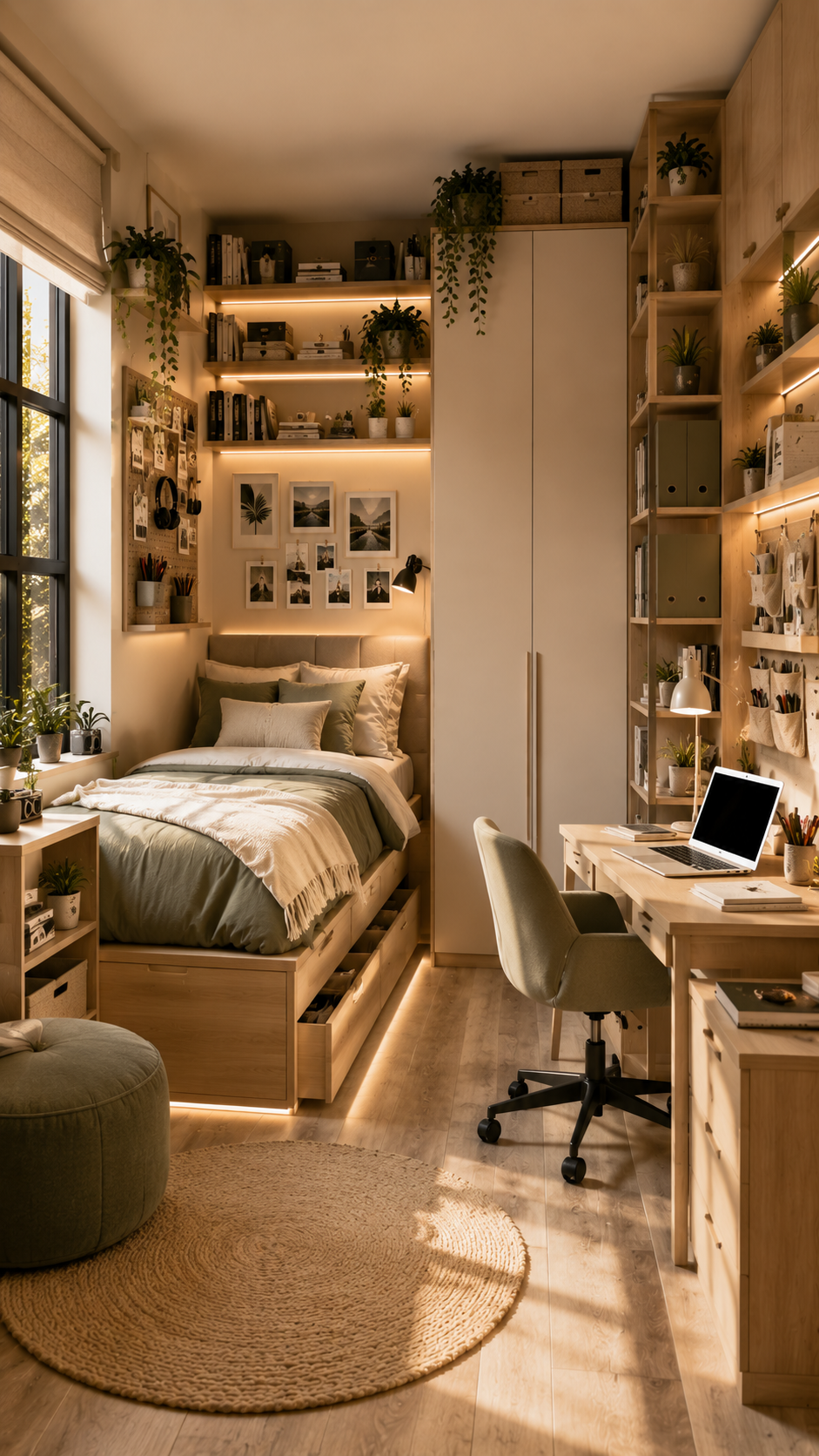
Use the Walls from Floor to Ceiling
Most bedrooms use only a fraction of their vertical space.
A low desk might have an entirely empty wall above it. The area above a dresser may be unused. Corners often contain nothing.
Vertical storage solves this.
Floating shelves can hold books, decorative objects, plants, storage boxes, and hobby collections. A pegboard above the desk can organize stationery, headphones, notes, and small accessories.
Tall narrow bookcases are another strong solution.
📚 Because they extend upward rather than outward, they provide substantial storage while consuming relatively little floor area.
Frequently used items should remain at comfortable heights. Less frequently used belongings can occupy upper shelves.
Decorative storage boxes can keep those higher areas visually tidy.
Choose Multifunctional Furniture
Furniture that performs more than one function can dramatically improve a small teen room.
A bed with drawers underneath eliminates the need for additional storage furniture. An ottoman with internal storage can function as both seating and organization. A desk with integrated shelving combines two zones into one footprint.
Another excellent option is a daybed.
During the day, cushions can transform it into a sofa-like seating area. At night, it functions as a normal sleeping space.
🛋️ Multifunctional design is especially valuable when friends frequently visit.
A storage bench at the end of the bed can provide seating while hiding blankets, bags, sports equipment, or seasonal items.
Before buying any new furniture, ask a simple question: can this item solve more than one problem?
If the answer is yes, it is usually better suited to a compact bedroom.
Maximize Under Bed Storage
The space underneath a bed can represent a surprisingly large storage area.
Beds with integrated drawers provide the cleanest solution, but simple containers can also work.
Use under-bed storage for items that do not need to remain visible every day.
Seasonal clothing, spare bedding, shoes, sports equipment, bags, sentimental items, or school materials from previous semesters can all be stored here.
Labeling containers makes retrieval much easier.
The important point is avoiding uncontrolled storage.
Pushing random objects underneath the bed may hide clutter temporarily, but organized containers turn the same area into genuine functional storage.
Create a Vertical Study Station
A small room may not have enough space for a large traditional desk setup.
Instead, build upward.
Start with a compact desk or wall-mounted work surface. Install shelves above it for books and supplies. Add a wall organizer or pegboard between the desk and shelves.
This concentrates the entire study zone into one vertical section.
💻 Technology can be organized here too.
Cable clips and under-desk cable management can prevent chargers from creating visual clutter. Headphones can hang from a hook. A laptop stand can improve ergonomics while keeping the work surface organized.
A focused task light is essential.
If possible, position the workspace so natural daylight comes from the side rather than directly behind the screen.
Use Mirrors to Make the Room Feel More Spacious
Mirrors cannot physically increase the dimensions of a bedroom, but they can influence how spacious it feels.
A full-length mirror is particularly useful because it combines function with visual expansion.
Positioning a mirror where it can reflect natural daylight often makes the room feel brighter.
Mirrored wardrobe doors can also be effective in extremely compact bedrooms because they eliminate the need for a separate floor mirror.
However, too many reflective surfaces can make a bedroom feel busy.
One thoughtfully positioned large mirror is usually enough.
Keep the Floor Visually Open
Visible floor space has a major psychological effect on how large a room feels.
The more uninterrupted flooring that can be seen, the less cramped the bedroom tends to appear.
Wall-mounted shelves help. Furniture with raised legs can also create a sense of openness because the flooring continues visually underneath it.
Avoid placing small storage units in every available corner.
It may technically provide additional storage, but the room can start to feel fragmented.
Instead, concentrate storage into fewer, more efficient areas.
This creates cleaner sightlines and a calmer overall composition.
How to Choose the Right Color Palette for Room Ideas for Teens
Color should support the desired atmosphere rather than simply following whatever shade is currently popular.
For a calm bedroom, warm neutrals provide an excellent starting point.
Cream, ivory, greige, soft taupe, pale gray, and natural wood can create a relaxing background. Muted green, dusty blue, terracotta, or lavender can then introduce personality.
For something more dramatic, darker colors can be extremely effective.
Forest green, navy, burgundy, charcoal, and chocolate brown can make a teen room feel sophisticated when balanced with lighter bedding, wood, or warm lighting.
🌈 More expressive bedrooms can use brighter combinations, but repetition creates cohesion.
If orange appears in artwork, for example, repeating a similar tone in a cushion or desk accessory can make the color feel intentional.
Try to avoid introducing too many unrelated colors in equal amounts.
A dominant base, secondary shade, and smaller accent color usually create a more harmonious result.
Storage Ideas That Keep Teen Bedrooms Organized
Storage is often the difference between a bedroom that looks beautiful for one day and one that remains functional for months.
Teenagers may need space for clothing, shoes, books, school materials, electronics, hobby equipment, cosmetics, accessories, sports gear, collections, and sentimental belongings.
One storage type rarely handles everything effectively.
Closed storage is useful for visually messy items.
Drawers, wardrobes, baskets, boxes, and cabinets can hide everyday necessities and maintain a calmer appearance.
Open storage works better for attractive objects that contribute to the room’s personality.
Books, plants, photographs, collectibles, artwork, and carefully arranged accessories can remain visible.
🧺 The strongest approach combines both.
A shelf might display books and a plant while decorative boxes on the same shelf hide cables, documents, or small objects.
Baskets can also make quick tidying easier. Rather than requiring every item to have a complicated storage system, categories can be grouped together.
Simple organization is usually easier to maintain.
How to Make Room Ideas for Teens Feel More Expensive
A stylish teen bedroom does not necessarily require luxury furniture.
Several relatively simple design decisions can create a much more polished appearance.
Start with consistency.
Repeating materials or colors across the room creates visual cohesion. If the desk has light wood tones, repeating similar wood on shelves can make the interior feel intentional.
Upgrade textiles where possible.
Curtains that extend close to the ceiling can make windows appear taller. Bedding with multiple textures can make the sleeping area feel more inviting. A sufficiently large rug can visually anchor the room.
Lighting is equally important.
Warm lamps positioned at different heights often create more atmosphere than expensive decorative objects.
✨ Decluttering also has enormous impact.
Leaving some surfaces partially empty makes carefully selected décor stand out. A room filled completely with accessories can hide even beautiful furniture.
Small hardware upgrades can help too.
Replacing basic drawer handles, adding attractive storage baskets, or introducing matching organizers can make inexpensive furniture feel more customized.
Budget Friendly Room Ideas for Teens
A bedroom makeover does not have to involve replacing everything.
Paint is one of the most powerful affordable transformations.
Changing one wall—or even simply repainting the room in a cleaner neutral shade—can completely alter the atmosphere.
Existing furniture can often be reused.
A basic desk might only need better organization and a new lamp. An older dresser could be updated with new handles. A plain bed can be transformed through bedding, cushions, and a DIY headboard.
Secondhand furniture can also provide excellent value.
Solid wood desks, bookcases, mirrors, and bedside tables are often available at relatively low prices and can be refreshed with simple cosmetic updates.
DIY artwork is another budget-friendly option.
Print personal photography, frame postcards, create abstract artwork, or arrange favorite images into a gallery.
🌿 Even rearranging the existing furniture can make a bedroom feel dramatically different without costing anything.
Before purchasing new items, experiment with layout.
Moving the bed, relocating the desk closer to natural light, or consolidating storage into one wall may reveal opportunities that were previously overlooked.
Decorating Room Ideas for Teens Without Creating Clutter
Decorating is often the most enjoyable stage, but it is also where rooms can quickly become overcrowded.
The solution is editing.
Choose a few areas where personality will be concentrated.
The wall above the bed might hold artwork. Shelves can display collections. The desk area can contain photographs and accessories. Other surfaces can remain relatively simple.
This creates visual rhythm.
Not every wall needs decoration.
Not every shelf needs to be full.
Not every corner needs furniture.
Empty space is part of the design.
💫 Rotating decorations can also help.
Instead of displaying every favorite object simultaneously, keep some items stored and change them periodically. The bedroom can feel refreshed without buying anything new.
This works particularly well with artwork, photographs, collectibles, and seasonal decorations.
How to Design Room Ideas for Teens That Can Grow with Them
Teenage preferences can change rapidly.
A room designed at thirteen may feel completely different by sixteen or eighteen.
That makes flexibility one of the smartest long-term design priorities.
Choose adaptable foundational furniture.
A simple wooden desk, neutral bed frame, practical wardrobe, and clean shelving system can work with many different aesthetics.
Then use replaceable elements to express the current style.
Bedding can change.
Posters can change.
Photographs can change.
Lighting can change.
Cushions and rugs can change.
Furniture does not necessarily need to.
This approach saves money while allowing the bedroom to mature naturally.
A colorful creative bedroom can gradually become more minimal. A gaming-focused room can later become a study-focused space. A soft pastel aesthetic can transition into darker contemporary tones.
The foundation remains useful throughout those changes.
Final Thoughts on the Best Room Ideas for Teens
The best room ideas for teens successfully combine three essential qualities: personality, comfort, and function.
🥇 Best 1 Modern Cozy Teen Retreat is ideal for anyone who wants a stylish bedroom with warm neutrals, natural materials, layered textiles, atmospheric lighting, and a timeless contemporary aesthetic.
🥈 Best 2 Creative Personality Filled Bedroom is perfect for teens who want their room to communicate their interests through gallery walls, photographs, collections, artwork, hobbies, expressive colors, and personalized displays.
🥉 Best 3 Smart Multifunctional Small Teen Room proves that limited square footage does not have to limit style. Vertical storage, multifunctional furniture, under-bed organization, compact study stations, and carefully planned layouts can transform even a very small bedroom.
The strongest teen bedroom may ultimately borrow something from all three approaches.
A warm neutral foundation can create calm. A personalized gallery wall can introduce identity. Smart vertical storage can improve functionality. Layered lighting can change the mood, while flexible furniture allows the room to evolve over time.
Most importantly, a teen bedroom should not look like a generic showroom.
It should feel lived in.
There should be room for favorite photographs, changing interests, schoolwork, hobbies, books, technology, friends, relaxation, and future changes. A few imperfect personal details can actually make the space more memorable than a perfectly coordinated interior.
Great teen bedroom design is therefore less about following one specific aesthetic and more about creating a flexible environment that supports everyday life.
With thoughtful furniture, intelligent storage, comfortable textures, expressive details, and adaptable decorating choices, these Top 3 room ideas for teens can transform an ordinary bedroom into a stylish personal retreat that feels exciting today while remaining practical for years to come.
Related posts:

Top 3 Fall Bedding Combo Ideas That Make Any Bedroom Look Expensive
Top 3 Dreamy Bedroom Ideas That Make Every Night Feel Like a Luxury Escape
The 3 Best Toddler Bedroom Ideas That Make a Small Room Feel Magical and Beautiful
Best 3 Bedroom Aesthetic Styles & Color Themes That Will Completely Transform Your Space
Best 3 Fall Bedroom Ideas That Make Every Night Feel Like a Luxury Retreat
Best 3 Black Nouveau Bedroom Ideas That Instantly Make Any Space Look Ultra Luxurious