A beautiful bedroom should be more than a place to sleep. It should be a private sanctuary where two people can relax, reconnect, and enjoy meaningful moments together. The best Couples’ Bedroom Ideas combine romantic atmosphere, sophisticated interior design, luxurious comfort, and thoughtful details that reflect both partners’ personalities. Whether you are decorating a master bedroom, renovating a small apartment, or refreshing a shared sleeping space, the right design can transform an ordinary bedroom into an inviting retreat that feels like a five-star boutique hotel.
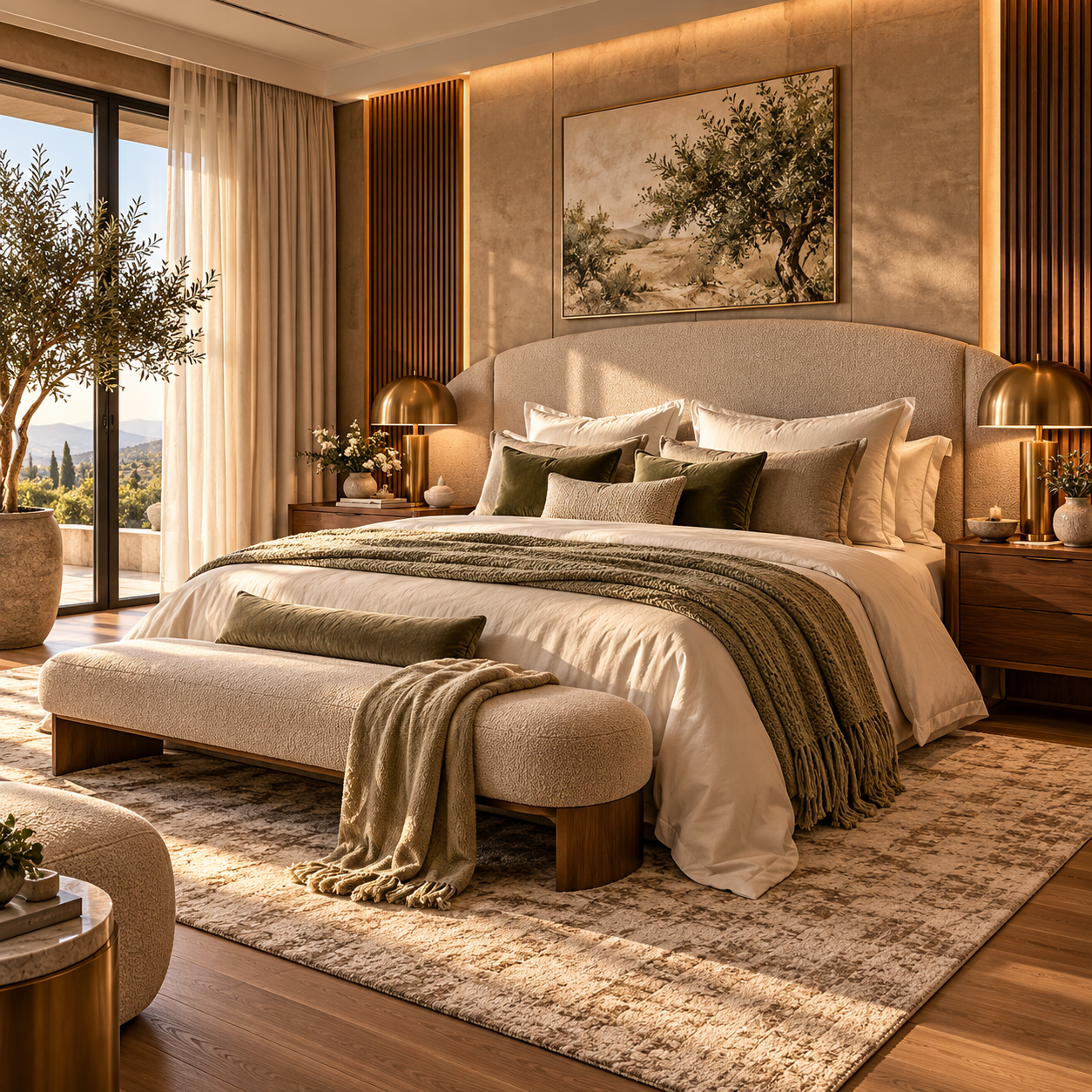
Creating a romantic bedroom does not necessarily mean covering the bed with rose petals, painting the walls pink, or filling the room with traditional decorations. Modern romantic interiors embrace natural textures, elegant lighting, comfortable bedding, sophisticated color palettes, and carefully selected furniture. These elements create intimacy without sacrificing functionality or timeless style.
✨ The secret to an exceptional couples’ bedroom is finding the perfect balance between emotional warmth and visual sophistication. A space should feel romantic without becoming overly decorative, luxurious without feeling cold, and stylish without compromising everyday comfort.
Among countless decorating approaches, three particularly beautiful design concepts stand out for their ability to transform shared bedrooms into extraordinary spaces.
The following Best 3 Couples’ Bedroom Ideas explore three distinctive interior design directions: a warm neutral romantic retreat, a sophisticated modern luxury suite, and an enchanting nature-inspired sanctuary. Each offers a unique combination of atmosphere, comfort, and practical styling possibilities.
Why Thoughtful Couples’ Bedroom Ideas Create a More Romantic Home
A shared bedroom serves several purposes. It is a place for rest, personal relaxation, quiet conversations, and spending time together away from the demands of everyday life. Because of these overlapping functions, its interior design deserves careful consideration.
A bedroom that feels visually balanced and comfortable can create a more relaxing environment. Soft surfaces, warm lighting, organized storage, and a harmonious color palette help reduce unnecessary visual distractions. While decoration alone cannot determine relationship happiness or sleep quality, a comfortable environment can support enjoyable daily routines.
For couples, successful decorating also involves considering two individual preferences. One person might prefer minimalist furniture and neutral colors, while the other enjoys soft fabrics, warm lighting, and decorative accessories. The most successful designs create a shared aesthetic rather than allowing one style to dominate.
A beautiful couples’ bedroom should also accommodate practical needs. Comfortable movement around the bed, accessible bedside storage, convenient charging areas, adequate ventilation, and flexible lighting can make everyday life easier.
These practical details become especially important when creating an elegant bedroom that is intended to remain beautiful and functional for many years.
🥇 Best 1 Couples’ Bedroom Ideas With Romantic Warm Neutrals and Soft Luxury Layers
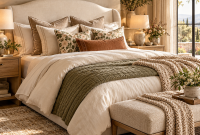
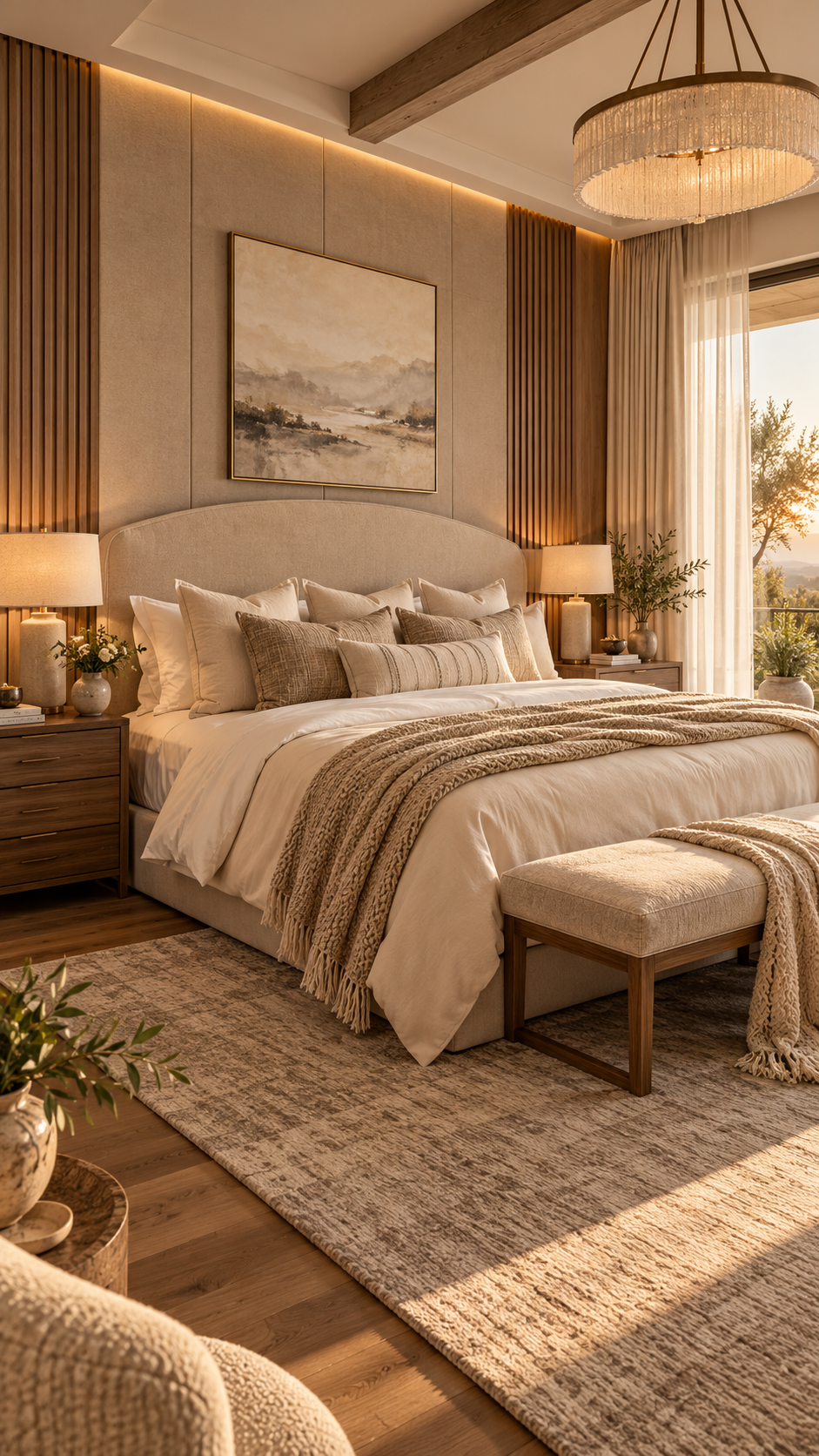
The first design concept embraces understated romance through warm neutral colors, exceptionally soft fabrics, natural materials, and intimate lighting. Instead of relying on dramatic contrasts or extravagant decorative accessories, this approach creates an atmosphere of gentle elegance.
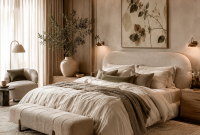
Imagine entering a peaceful bedroom where creamy white bedding rests against an upholstered oatmeal headboard. Layered linen pillows introduce subtle variations of beige, while a beautifully textured throw lies casually across the foot of the bed. Warm wooden furniture, delicate bronze accents, and soft golden bedside lighting complete the composition.
The entire room feels calm, inviting, romantic, and effortlessly sophisticated.
This approach is particularly suitable for couples who appreciate contemporary interiors, elegant simplicity, and the relaxing atmosphere of a luxury boutique hotel.
Couples’ Bedroom Ideas With a Creamy Beige and Champagne Color Palette
Color establishes the emotional character of a bedroom before any decorative accessories are introduced. For a romantic neutral retreat, the ideal palette combines soft ivory, warm beige, subtle greige, champagne, and muted taupe.
These shades create a harmonious background that feels gentle rather than visually overwhelming. Unlike stark white interiors, warm neutrals introduce an inviting softness that is especially appealing in bedrooms.
Consider painting the walls a delicate warm ivory or pale greige. This establishes a clean architectural foundation while allowing textured bedding and furniture to become the main visual attractions.
An oversized upholstered headboard in oatmeal linen or soft beige velvet provides an elegant focal point. Its gently cushioned surface also makes the bed more comfortable for reading, relaxing, or enjoying quiet conversations.
Champagne metallic accents can introduce a subtle sense of luxury. Small details such as brushed brass lamp bases, decorative trays, or furniture handles add visual richness without dominating the overall composition.
For greater depth, introduce slightly darker shades through pillows, curtains, or a textured rug. Mushroom taupe and warm cocoa work particularly well because they complement lighter neutral surfaces.
The resulting bedroom feels cohesive, sophisticated, and naturally romantic.
Layer Luxurious Bedding for an Intimate Boutique Hotel Atmosphere
🛏️ The bed should become the unmistakable centerpiece of a romantic neutral bedroom.
Begin with comfortable, breathable sheets that suit the room’s temperature and both partners’ preferences. Cotton percale offers a crisp, cool feeling, while cotton sateen provides a smoother surface with a subtle sheen. Washed linen introduces a relaxed texture that becomes softer with use.
Choose an elegant duvet cover in warm ivory, cream, or light beige. These colors create a visually spacious sleeping area while blending beautifully with natural wood and upholstered furniture.
Next, incorporate decorative layering.
Two supportive sleeping pillows form the practical foundation. Larger decorative pillows can create visual height against the headboard, while one or two smaller accent cushions add color and texture.
A soft knit blanket or lightweight quilt placed across the lower portion of the bed creates the casually luxurious appearance often seen in boutique hotel bedrooms.
The goal is to make the bedding feel abundant without becoming inconvenient. Decorative pillows should be easy to remove, and enough storage should be available to prevent them from becoming clutter.
Subtle textile variations make a greater impression than unnecessary decoration. Combining smooth cotton, softly woven linen, bouclé, and fine knit fabrics creates a rich visual experience while maintaining a quiet palette.
Add Romantic Bedside Lighting Without Overwhelming the Room
Lighting can completely transform the atmosphere of a bedroom.
Bright overhead illumination is useful for cleaning, organizing wardrobes, and other practical activities. However, it is rarely the most flattering option for creating an intimate evening environment.
For romantic warmth, introduce multiple lighting sources.
Matching bedside lamps can establish balance and symmetry. Choose elegant ceramic bases, brushed bronze finishes, or slender metal designs with soft fabric shades.
Warm white light, approximately 2700K, is often a comfortable starting point for evening relaxation. Adjustable dimmers provide greater flexibility, allowing each partner to choose a suitable brightness.
Wall-mounted sconces are another sophisticated alternative, particularly for smaller rooms where nightstand space is limited.
A discreet LED strip behind the headboard can provide soft indirect illumination, creating a gentle architectural glow. Select warm, diffused light rather than exposed bright strips to maintain an elegant appearance.
Candles may provide additional ambiance, but flameless LED candles offer a practical option near bedding and curtains.
The ideal result is a bedroom that can transition effortlessly from functional daytime lighting to a softer evening atmosphere.
Complete the Design With Natural Wood and Elegant Textures
Natural materials contribute warmth and visual authenticity to neutral interiors.
A walnut or light oak bedside table creates beautiful contrast against creamy walls and upholstered furniture. Its visible wood grain introduces organic character without requiring additional patterns.
A large wool or wool-blend area rug can soften the floor and provide a comfortable surface beside the bed. Choose a warm neutral shade with a low-contrast pattern or subtle woven texture.
Floor-length curtains also contribute to the luxurious appearance of the space. Soft linen-look panels add vertical elegance and help frame the windows.
For couples who prefer better light control while sleeping, combine decorative curtains with practical blackout linings or shades.
Decorative accessories should remain carefully curated. A ceramic vase, a modest botanical arrangement, a framed photograph, or a small sculptural object can add personality.
Avoid filling every surface. Negative space allows beautiful furnishings and materials to receive the attention they deserve.
The finished bedroom becomes a romantic retreat defined by comfort, softness, and timeless beauty.
🥈 Best 2 Couples’ Bedroom Ideas With Modern Luxury and Dramatic Boutique Hotel Elegance
The second design takes romance in a more dramatic direction.
Rather than emphasizing airy neutrals and delicate natural textures, this concept combines deep sophisticated colors, architectural lighting, luxurious fabrics, and carefully balanced statement features.
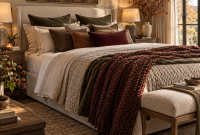
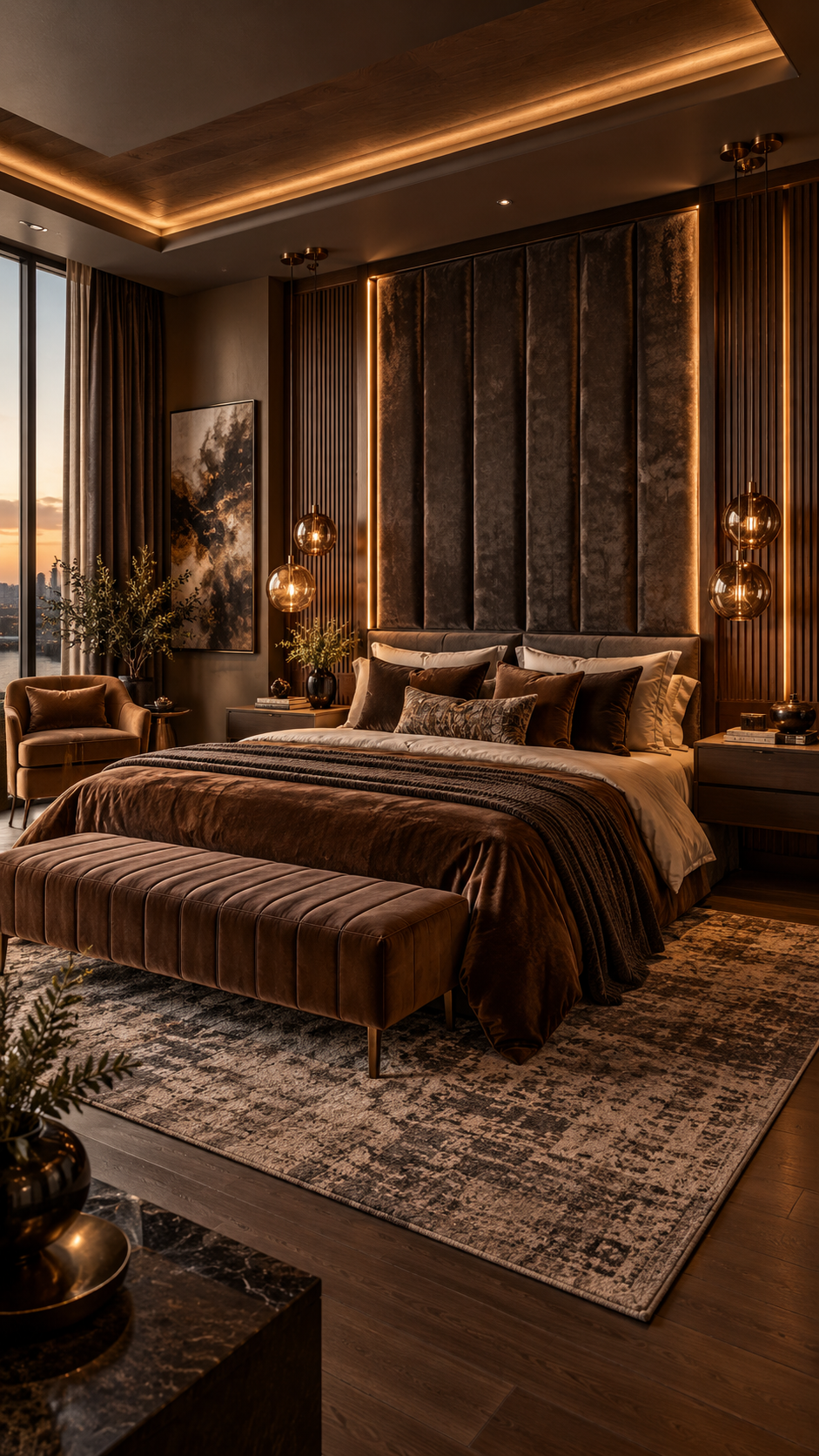
Imagine a beautifully designed bedroom featuring a tall charcoal upholstered headboard, warm walnut wall panels, rich chocolate bedding, and elegant bronze lighting. Soft indirect illumination reveals the natural textures of the materials, while a sculptural pendant adds a contemporary designer touch.
The atmosphere feels intimate, confident, polished, and exceptionally luxurious.
This style is ideal for couples who appreciate modern architecture, upscale hotel interiors, and a slightly dramatic aesthetic that remains comfortable and welcoming.
Couples’ Bedroom Ideas With Chocolate Brown and Charcoal Elegance
Dark colors can create a remarkable sense of intimacy when used thoughtfully.
Chocolate brown, charcoal gray, espresso, deep taupe, and muted bronze form a sophisticated palette that gives the bedroom visual depth.
However, successful dark interiors depend on balance.
Painting every surface in a very dark color can feel atmospheric, but it may also reduce the sense of openness in a room with limited natural light. An alternative is to concentrate deeper shades around the bed while keeping surrounding walls in softer warm gray or muted taupe.
A dramatic chocolate or charcoal feature wall immediately establishes a focal point.
For additional architectural interest, introduce vertical walnut panels behind the bed. Their natural wood grain softens the darker palette and creates a refined connection between modern design and organic materials.
A generously proportioned upholstered headboard in charcoal velvet or dark mocha fabric can add elegance while providing a comfortable surface for sitting upright.
Warm metallic finishes complete the palette. Brushed bronze, antique brass, and champagne gold introduce subtle highlights that prevent the room from feeling flat.
Use these finishes sparingly through lighting, furniture hardware, and decorative accessories.
The resulting space feels dramatic without becoming harsh or uninviting.
Create a Statement Headboard That Defines the Entire Bedroom
In sophisticated contemporary bedrooms, the headboard often functions as the primary architectural feature.
Instead of choosing a small traditional headboard, consider an oversized upholstered design that extends beyond the width of the mattress.
This creates a striking horizontal composition and visually anchors the entire sleeping area.
Alternatively, a floor-to-ceiling upholstered panel can emphasize height and introduce a luxurious hotel-inspired appearance.
Vertical padded sections add rhythm and texture. Their subtle shadows become particularly attractive when illuminated by soft bedside lighting.
For a more architectural design, combine an upholstered center panel with wood or textured wall sections on either side.
This creates a layered focal wall without requiring excessive decoration.
A floating bedside table can reinforce the modern aesthetic. When aligned with the headboard and accompanied by wall-mounted lighting, it gives the bedroom a clean, integrated appearance.
The important principle is visual unity. Rather than treating the headboard, wall treatments, and bedside furniture as unrelated elements, design them as a coordinated composition.
This approach gives the bedroom a custom-built appearance that feels sophisticated and intentional.
Introduce Sculptural Lighting for a Five Star Hotel Feeling
💡 Luxury hotel interiors frequently use lighting as a central architectural design feature.
The most effective approach combines ambient lighting, task lighting, and decorative accent lighting.
Ambient lighting provides general illumination. Recessed ceiling fixtures or a discreet central ceiling light can satisfy everyday needs without drawing unnecessary attention.
Task lighting serves practical activities such as reading. Adjustable wall sconces or bedside lamps allow each partner to control light independently.
Accent lighting highlights design details. A concealed strip beneath a floating bedside unit, behind a headboard, or along a ceiling recess can add subtle dimension.
Sculptural pendants beside the bed offer another striking option.
Slim bronze cylinders, smoked-glass globes, or softly illuminated alabaster-style fixtures can create a distinctive contemporary atmosphere.
However, pendant placement requires careful planning. Fixtures should not obstruct movement or interfere with getting into and out of bed.
Dimmable lighting systems provide additional flexibility. A brighter setting works for everyday activities, while a lower setting creates the soft atmosphere associated with luxury hotel suites.
The greatest visual impact comes from layering light rather than relying on a single dramatic fixture.
Combine Rich Textiles With Clean Contemporary Furniture
A dark luxury bedroom should feel inviting rather than overly formal.
Rich textiles provide this essential softness.
Consider bedding in warm espresso, deep taupe, or muted charcoal. Instead of choosing heavy, overly decorative patterns, focus on tactile contrasts.
Smooth sateen sheets, soft velvet cushions, fine woven throws, and an upholstered bench can introduce richness without making the room visually busy.
A generous area rug in warm gray or muted brown also helps balance polished furniture surfaces.
Contemporary bedside tables with clean lines maintain the architectural character of the room. Walnut, matte lacquer, and subtly textured wood veneers are all suitable choices.
For larger bedrooms, a streamlined bench at the foot of the bed adds both function and sophistication. Upholstery in cognac leather or deep beige fabric can provide an appealing contrast to darker bedding.
A single oversized artwork above a dresser may be more effective than several small decorative pieces.
Abstract compositions in warm neutrals, charcoal, and bronze can complement the existing palette while reinforcing the sophisticated atmosphere.
This design succeeds when each object feels carefully selected rather than merely expensive.
Keep the Romantic Atmosphere Comfortable and Personal
Dramatic interior design does not have to feel impersonal.
Couples can introduce meaningful details without compromising a refined contemporary aesthetic.
For example, a favorite photograph displayed in a simple bronze frame adds emotional significance. A beautifully bound book or a shared travel souvenir can also introduce personal character.
Subtle room fragrances may contribute to the atmosphere, provided both partners enjoy them. Fragrance-free environments should remain an equally valid choice, particularly when either person is sensitive to scent.
Temperature and bedding preferences deserve similar attention.
A luxurious bedroom becomes genuinely comfortable only when its practical arrangements work for both people.
Individual reading lights, accessible storage, and flexible bedding layers make the space easier to share.
The finished result should feel like a private luxury suite designed for real daily life rather than an interior that exists only for photographs.
🥉 Best 3 Couples’ Bedroom Ideas With a Nature Inspired Romantic Sanctuary
The third concept celebrates a gentle connection with nature.
This design embraces earthy colors, organic shapes, natural materials, soft botanical details, and the relaxed atmosphere of an intimate garden retreat.
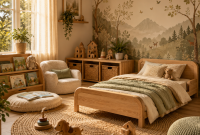
Imagine waking up in a beautiful bedroom where muted sage walls meet warm oak furniture. Airy linen curtains filter the morning sunlight, while a generous bed dressed in cream and soft olive fabrics creates a peaceful centerpiece.
A woven rug introduces texture, a sculptural ceramic lamp adds artistic detail, and an elegant potted plant brings a refreshing botanical presence.
The room feels serene, romantic, grounded, and naturally luxurious.
This style is especially appealing for couples who appreciate wellness-inspired interiors, organic modern design, cottage-inspired warmth, and the quiet beauty of natural materials.
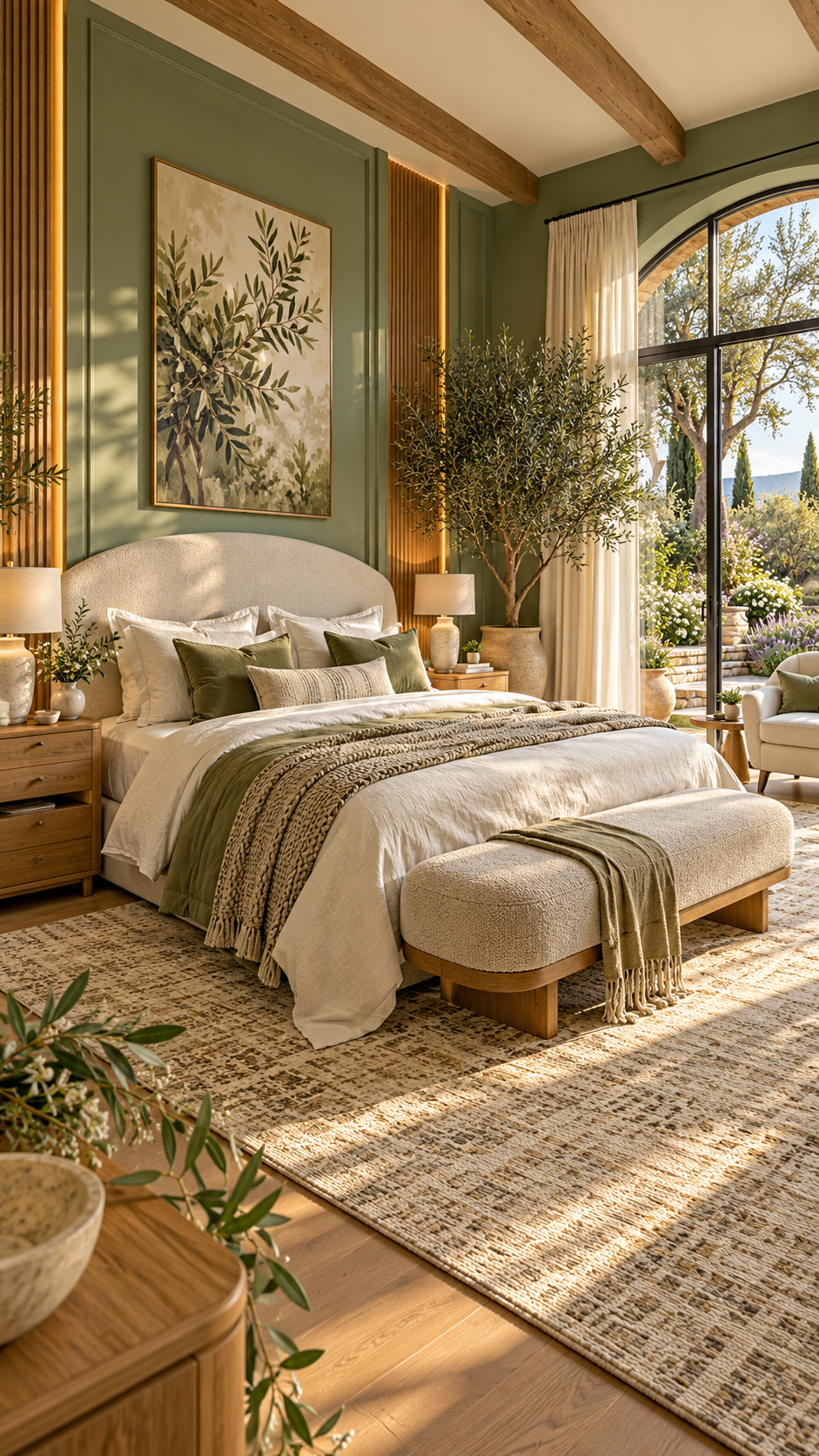
Couples’ Bedroom Ideas With Sage Green and Earthy Botanical Colors
🌿 Sage green is an excellent choice for a bedroom because its muted tone works beautifully with warm neutrals and natural wood.
Unlike bright emerald or vivid lime, sage has a subdued, gray-green character that feels gentle and adaptable.
For this concept, combine sage green with cream, warm ivory, soft olive, clay beige, and light oak.
A muted sage feature wall can establish the design’s botanical identity without overwhelming the bedroom.
Alternatively, use a warm off-white wall color and introduce green through bedding, cushions, curtains, or upholstered furniture.
This second approach offers greater flexibility for couples who enjoy refreshing their bedroom decor seasonally.
Soft olive bedding adds depth, while warm beige accessories prevent the green palette from feeling too cool.
Small amounts of muted terracotta can introduce warmth and visual variation. A terracotta ceramic vase or clay-colored cushion provides a subtle earthy contrast.
Natural wood finishes are especially important. Light oak, ash, or medium walnut can connect the various colors into a cohesive design.
The goal is to suggest the peaceful atmosphere of nature through an elegant interior palette rather than creating a literal garden theme.
Design a Romantic Bed With Organic Shapes and Relaxed Linen
The bed should reflect the natural character of the room.
A gently curved upholstered headboard introduces softness and makes the design feel welcoming.
Alternatively, a beautifully crafted wooden bed with a softly rounded profile can provide a more organic architectural statement.
Avoid unnecessarily sharp contrasts and excessive decorative detailing.
Simple forms allow the natural beauty of materials to take center stage.
For bedding, choose washed linen or breathable cotton in warm cream, ivory, or muted sage.
A slightly relaxed arrangement often works better than perfectly rigid bedding in this style. Soft folds and casually layered blankets reinforce the peaceful aesthetic.
Add a textured throw in oatmeal or olive, accompanied by a limited selection of cushions in complementary natural fabrics.
A lightweight quilt with subtle botanical stitching can provide another elegant detail.
When styling the bed, remember that comfort should remain the priority. Decorative layers should not make the sleeping area difficult to maintain.
The finished arrangement should invite relaxation and feel naturally beautiful rather than overly formal.
Bring the Garden Feeling Indoors Through Carefully Selected Plants
Indoor plants can make a bedroom feel more connected with nature, especially when they complement its existing proportions and lighting conditions.
A tall indoor plant positioned near a suitable window can add a beautiful vertical element.
Popular choices include a rubber plant, a parlor palm, or a pothos displayed on a shelf, depending on available light and care requirements.
However, plant selection should be based on actual room conditions rather than appearance alone.
A bedroom with limited daylight requires different plant choices from a room with large windows and generous indirect sunlight.
Planters also play an important decorative role.
Textured ceramic pots in sand, stone, warm white, or muted clay tones work particularly well with sage green walls and natural wood furniture.
A single well-positioned plant can create a stronger design statement than several small plants scattered across every surface.
For couples who prefer low-maintenance interiors, dried botanical arrangements or high-quality artificial foliage may offer a practical alternative.
Natural elements can also appear through landscape photography, botanical artwork, woven materials, or furniture with visible wood grain.
The objective is to create a subtle relationship with nature while preserving the bedroom’s calm and uncluttered character.
Add Woven Textures and Soft Curtains for Cozy Natural Elegance
Texture gives a nature-inspired bedroom its distinctive charm.
A woven wool rug, linen curtains, oak furniture, and ceramic accessories introduce subtle variations that make the room feel layered and welcoming.
Choose curtains that fall gracefully toward the floor.
Sheer linen-look panels can soften daylight and create an airy atmosphere. If privacy or darkness is required, pair them with blackout shades or lined curtains.
A substantial rug beside and beneath the bed adds comfort, particularly on hard flooring.
For a queen-size or king-size bed, choose a rug large enough to extend visibly beyond both sides so that the arrangement feels balanced.
Handcrafted decorative pieces are especially appropriate for this style.
A ceramic lamp with an irregular organic silhouette, a wooden tray, or a woven basket can introduce artisanal character.
However, avoid relying too heavily on rustic accessories if the goal is modern elegance.
Pair textured handmade elements with refined furniture forms to maintain a sophisticated balance.
The room should feel like an exclusive nature-inspired boutique retreat rather than a heavily themed rustic cottage.
Create a Quiet Romantic Corner for Two
If the bedroom provides sufficient space, a small seating area can make the room feel especially personal.
A softly upholstered lounge chair beside a window creates a comfortable place for reading, relaxing, or enjoying the morning light.
For larger bedrooms, two compact chairs with a small round side table can establish a private conversation corner.
Choose furniture that coordinates with the bedroom’s materials.
A beige bouclé chair, an oak side table, and a soft linen cushion would complement the botanical palette beautifully.
A simple reading lamp provides additional functionality.
The seating area should remain visually connected to the bed while having its own subtle identity.
A small rug or a nearby wall-mounted artwork can define the corner without adding unnecessary furniture.
In smaller bedrooms, this concept can be adapted with a compact upholstered bench or a comfortable window seat, provided it does not obstruct essential movement.
The result is a romantic bedroom that offers more than one way to relax together.
Comparing the Best 3 Couples’ Bedroom Ideas for Style Comfort and Atmosphere
Although all three designs create beautiful romantic bedrooms, each offers a different aesthetic experience.
The following comparison highlights their defining characteristics and helps determine which concept best suits a particular room.
| Design feature | 🥇 Warm Neutral Retreat | 🥈 Modern Luxury Suite | 🥉 Nature Inspired Sanctuary |
|---|---|---|---|
| Primary atmosphere | Soft, romantic, intimate | Dramatic, refined, luxurious | Peaceful, organic, refreshing |
| Main color palette | Ivory, beige, champagne | Chocolate, charcoal, bronze | Sage, cream, olive |
| Ideal bed design | Upholstered soft headboard | Oversized statement headboard | Curved fabric or wooden bed |
| Signature materials | Linen, bouclé, light wood | Velvet, walnut, bronze | Linen, oak, woven textures |
| Lighting approach | Warm bedside lamps | Layered architectural lighting | Soft daylight and warm lamps |
| Decorative emphasis | Textured bedding | Elegant focal wall | Botanical and organic details |
| Best suited for | Timeless romantic interiors | Contemporary designer bedrooms | Natural and relaxed interiors |
| Relative styling complexity | Low to moderate | Moderate to high | Low to moderate |
These differences demonstrate that romantic bedroom design is not limited to one particular appearance.
A warm neutral room creates intimacy through softness. A dramatic contemporary suite introduces romance through rich materials and controlled lighting. A nature-inspired sanctuary supports relaxation through earthy colors and organic textures.
The best choice depends on the available space, natural lighting, budget, and preferences of both partners.
It is also possible to combine selected elements from different concepts.
For example, champagne bedside lighting can complement sage green walls, while walnut furniture may look equally beautiful in both a neutral retreat and a modern luxury bedroom.
Maintaining a consistent primary design direction helps ensure these combinations remain cohesive.
How to Choose Couples’ Bedroom Ideas That Both Partners Will Love
Decorating a shared bedroom requires more than selecting attractive furniture.
The design should accommodate the preferences, daily routines, and practical needs of two people.
An effective starting point is identifying the elements both partners genuinely appreciate.
Some couples share a preference for minimalist interiors, while others enjoy layered fabrics and dramatic colors. When preferences differ, establish a neutral foundation and introduce individual styles through smaller accessories.
For example, one partner might prefer simple contemporary furniture, while the other values romantic softness.
These preferences can coexist through a clean-lined bed frame, comfortable upholstered headboard, layered neutral bedding, and warm accent lighting.
This approach allows both individuals to feel represented without producing a visually inconsistent bedroom.
Establish a Shared Color Palette Before Buying Furniture
A consistent color palette simplifies furniture selection and prevents unnecessary purchases.
Begin with three main categories: a dominant background color, a secondary supporting shade, and an accent color.
For example, a romantic bedroom could feature warm ivory walls, taupe upholstery, and muted bronze accessories.
Another combination might include sage green walls, cream bedding, and natural oak furniture.
A useful interior design guideline is the 60 30 10 color ratio.
Approximately 60 percent of the visual palette comes from the dominant color, 30 percent from a supporting shade, and 10 percent from accents.
This is a flexible styling principle rather than a strict mathematical requirement, but it can help maintain visual harmony.
Before purchasing major furniture, compare material samples under the room’s actual lighting.
Colors can appear different in morning sunlight, afternoon shade, and artificial evening illumination.
Balance Symmetry With Individual Comfort
Symmetry often creates a calm and sophisticated bedroom appearance.
Matching nightstands, coordinated lighting fixtures, and a centered bed can make a shared room feel visually balanced.
However, perfect symmetry is not always practical.
One partner may prefer a larger nightstand with drawers, while the other needs a compact surface and an adjustable reading lamp.
These differences can be incorporated without making the room appear mismatched.
Choose nightstands with similar heights or complementary finishes, even if their exact designs differ.
Individual bedside lighting controls are particularly valuable because they allow each partner to read or relax independently.
Accessible charging points, organized storage, and comfortable pathways also contribute to a functional shared bedroom.
Beautiful design should adapt to daily life rather than requiring daily life to adapt to the furniture.
Consider Room Size and Natural Light
The proportions of a bedroom influence which design elements will work best.
Large rooms can accommodate dramatic headboards, generous rugs, upholstered benches, and additional seating.
Smaller rooms benefit from streamlined furniture, efficient storage, and carefully selected focal points.
Natural light also affects color selection.
A bedroom with large windows may accommodate darker tones without feeling visually oppressive.
In a dimmer room, warm ivory, soft beige, and muted sage can help create a lighter overall appearance, though these shades cannot replace adequate illumination.
Mirrors can reflect available light and add visual depth when placed thoughtfully.
Avoid positioning large reflective surfaces where they create uncomfortable glare.
The objective is to work with the bedroom’s architecture rather than forcing a design concept that contradicts the available space.
Romantic Couples’ Bedroom Ideas for Small Bedrooms
Small bedrooms can be exceptionally romantic when their dimensions are used intentionally.
A compact room often creates a naturally intimate atmosphere, but it can also feel crowded if the furniture is oversized or storage is poorly organized.
The solution is to emphasize visual simplicity, practical furnishings, and comfortable circulation.
A well-designed small bedroom can incorporate elements from all three featured styles without sacrificing elegance.
Choose Space Saving Furniture With a Luxurious Appearance
Select a bed frame that provides the desired comfort without occupying unnecessary floor space.
A slim upholstered headboard offers softness while maintaining a clean silhouette.
Beds with integrated storage can be useful when wardrobe space is limited. Drawers or lift-up storage compartments may provide additional room for spare bedding and seasonal accessories.
However, ensure that storage mechanisms are practical for the room’s layout.
Wall-mounted nightstands are another elegant option.
They reduce the visual weight of furniture and leave the floor more exposed, making the bedroom feel less crowded.
Compact wall sconces can replace tabletop lamps and preserve valuable nightstand space.
Choose furniture in coordinated finishes to maintain a calm appearance.
The room should feel carefully edited rather than filled with miniature versions of every furniture piece found in a larger bedroom.
Use Vertical Design to Create a More Spacious Feeling
Vertical design details can visually emphasize room height.
Floor-length curtains installed close to the ceiling create long uninterrupted lines.
Tall upholstered headboards and subtle vertical wall panels can produce a similar effect.
However, these features should remain proportionate to the room.
An overly bulky headboard or aggressively patterned wall treatment may make a small bedroom feel more crowded.
Consider a narrow upholstered panel that extends upward without projecting far into the room.
Subtle wall molding or vertical wood detailing can also introduce architectural elegance.
A carefully positioned mirror may enhance the perception of depth, especially when it reflects daylight or an attractive decorative feature.
Keep wall decorations limited so the bedroom maintains its restful character.
Make Lighting Work Harder in a Compact Room
Small bedrooms particularly benefit from layered lighting.
A discreet ceiling fixture provides general illumination, while wall-mounted bedside lights support reading and relaxation.
Indirect lighting can add atmosphere without introducing additional furniture.
For example, an LED strip concealed behind a headboard creates a soft glow while maintaining valuable floor and tabletop space.
Choose warm, dimmable lighting to support a comfortable transition between daily activities and evening relaxation.
Avoid placing very bright exposed fixtures near eye level.
In a smaller room, harsh lighting can become especially noticeable.
The ideal lighting arrangement should make the bedroom feel welcoming, flexible, and visually comfortable.
Affordable Couples’ Bedroom Ideas That Look More Expensive
Creating a sophisticated couples’ bedroom does not always require expensive furniture or a complete renovation.
Several relatively accessible decorating changes can produce a significant visual improvement.
The most effective strategy is to prioritize elements that influence the room’s appearance and everyday comfort.
Bedding, lighting, wall color, curtains, and organization often make a greater difference than numerous small decorative purchases.
Upgrade Bedding Before Replacing Major Furniture
Fresh bedding can dramatically change the appearance of a bedroom.
Choose coordinated sheets, duvet covers, and pillows in a consistent palette.
Instead of purchasing many decorative cushions, select a limited number with attractive materials and complementary colors.
A textured throw placed across the end of the bed adds an inviting finishing touch.
Proper bedding proportions are also important.
A duvet that drapes generously over the mattress can create a luxurious appearance, provided it remains practical and comfortable for both sleepers.
When choosing bedding, prioritize fabric quality, ease of care, and suitable warmth.
The most attractive arrangement is one that remains comfortable during everyday use.
Refresh Existing Furniture With Coordinated Details
Replacing every piece of furniture can be expensive and unnecessary.
Existing nightstands or dressers may be refreshed through suitable paint, replacement hardware, or careful refinishing.
Warm metallic handles can provide a subtle contemporary accent.
Wooden furniture can often be integrated into a new color palette through coordinated bedding and accessories.
Matching the visual tone of furniture pieces can be more important than purchasing an identical set.
For example, two different wooden nightstands may work together if their finishes, proportions, and styling are complementary.
This approach supports a more personal interior while reducing unnecessary replacement.
Invest in Lighting and Curtains for Maximum Visual Impact
Lighting and window treatments can transform a bedroom’s atmosphere without requiring major construction.
Replacing an outdated bedside lamp with a sculptural ceramic fixture adds immediate style.
Warm bulbs and dimmer-compatible fixtures help create flexibility.
Floor-length curtains can make windows look more elegant and introduce softness to otherwise plain walls.
Choose fabric with an attractive drape rather than focusing exclusively on decorative patterns.
For a romantic hotel-inspired appearance, simple curtains in cream, oatmeal, taupe, or warm white often work particularly well.
These changes can establish a sophisticated visual foundation even when the rest of the room remains relatively simple.
Important Considerations Before Decorating a Shared Bedroom
💡 Important Note: A romantic bedroom should never prioritize appearance over comfort, safety, or the preferences of either partner. Keep exits and walking routes clear, use electrical lighting and charging equipment safely, secure heavy wall-mounted furniture correctly, and choose bedding, fragrances, plants, and room temperatures that suit both people. A beautifully decorated bedroom is most successful when it is also practical, relaxing, and comfortable to share.
Couples’ Bedroom Ideas With the Right Lighting for Every Mood
Lighting deserves special attention because it influences how a bedroom functions throughout the day.
A room may look beautiful in natural daylight but feel uncomfortable at night if the lighting is overly harsh or poorly positioned.
For couples, flexibility becomes especially valuable.
Different activities require different light levels, and individual preferences may vary.
Create a Soft Evening Ambiance
Warm lighting is frequently associated with an inviting evening atmosphere.
Table lamps with fabric shades, concealed wall lighting, and softly illuminated decorative fixtures can establish gentle layers of light.
Position light sources so they create a comfortable glow rather than shining directly into the eyes.
Consider using dimmers where compatible with the chosen lamps and electrical installations.
Soft illumination around a headboard can highlight beautiful textures while creating an intimate atmosphere.
Avoid excessive colored lighting if the intended design is timeless and elegant.
A subtle warm glow often coordinates more easily with natural fabrics, wood, and sophisticated neutral palettes.
Combine Daytime Freshness With Evening Warmth
A romantic bedroom should also feel pleasant during the day.
Natural daylight helps reveal the beauty of fabrics, furniture materials, and wall colors.
Light-filtering curtains allow a gentle daytime atmosphere while offering some visual privacy.
For bedrooms receiving strong direct sunlight, adjustable shades can provide better glare control.
At night, layered artificial lighting allows the room to shift into a calmer setting.
A practical arrangement might include general ceiling lighting, individual bedside reading lights, and one subtle decorative light source.
These layers provide flexibility without making the bedroom unnecessarily complicated.
Choosing the Best Bedding Materials for a Comfortable Couples’ Bedroom
Bedding influences both the appearance and practicality of a shared bedroom.
Two people may have different preferences for warmth, fabric texture, and blanket weight.
Rather than assuming one bedding arrangement suits everyone, consider how different materials feel throughout the year.
| Bedding material | Main characteristics | Particularly suitable for |
|---|---|---|
| Cotton percale | Crisp, breathable, matte finish | Couples who prefer a fresh, cool feel |
| Cotton sateen | Smooth texture and subtle sheen | Soft, polished hotel-inspired bedding |
| Washed linen | Relaxed appearance and breathable texture | Organic, natural, casual luxury |
| Cotton flannel | Brushed, cozy surface | Cooler sleeping environments |
| Tencel lyocell | Smooth drape and moisture management | Soft contemporary bedding |
Bedding temperature also depends on the mattress, duvet filling, room conditions, and personal preferences.
For couples with different warmth requirements, separate duvets can be a practical solution.
This arrangement allows each person to select a suitable covering without sacrificing the visual appeal of a shared bed.
Coordinated duvet covers can maintain a harmonious appearance.
In warmer climates, lightweight blankets or breathable sheets may be more appropriate than thick layered comforters.
The key is to create a bed that looks beautiful while meeting both partners’ comfort needs.
How to Make Couples’ Bedroom Ideas Feel Personal Without Creating Clutter
Romantic bedrooms become more meaningful when their decoration reflects the people who use them.
However, personalizing a room does not require displaying every photograph, souvenir, or sentimental object.
Careful selection creates a stronger impression.
Choose a few meaningful details and integrate them into the overall design.
A beautifully framed photograph from a memorable trip, an artwork selected together, or a special decorative item can introduce emotional character.
The placement of these objects matters.
A framed photograph on a nightstand may feel more intimate than an oversized gallery wall.
A shared travel souvenir displayed beside a sculptural lamp can become part of a refined decorative composition.
Personal details should enhance the bedroom’s calm atmosphere rather than compete with its major design features.
Introduce Art That Reflects Shared Taste
Artwork provides an opportunity to express personality.
For warm neutral bedrooms, abstract paintings in cream, beige, and muted brown complement the soft palette.
Modern luxury bedrooms can accommodate dramatic large-scale artwork with deep tones and subtle metallic accents.
Nature-inspired bedrooms look beautiful with botanical prints, landscape photography, or organic abstract compositions.
Choose images both partners genuinely enjoy.
A single large artwork may create a more sophisticated focal point than many small unrelated pieces.
Ensure that artwork is securely mounted, especially when positioned above sleeping areas.
Organize Personal Items With Attractive Storage
Clutter can disrupt even the most beautiful bedroom.
Nightstands covered with cables, bottles, accessories, and miscellaneous objects reduce the impact of carefully selected furniture.
Choose storage solutions that suit everyday routines.
Nightstands with drawers can conceal chargers, reading accessories, and smaller personal belongings.
Decorative trays help group frequently used objects.
Baskets, upholstered storage benches, and wardrobe organizers can accommodate additional items without sacrificing the interior design.
Effective storage should be accessible rather than purely decorative.
When everything has a convenient place, maintaining a peaceful room becomes much easier.
Common Mistakes to Avoid When Designing a Romantic Bedroom for Couples
Even beautiful design concepts can lose their impact when certain practical details are overlooked.
One common mistake is concentrating exclusively on visual appearance while ignoring the needs of both partners.
For example, a dramatic pendant may look attractive but become inconvenient if positioned too close to the bed.
Similarly, an abundance of decorative pillows can create unnecessary daily work.
Another mistake is relying on only one lighting source. A bright central ceiling fixture may provide adequate visibility, but it rarely creates the layered atmosphere associated with romantic interiors.
Poor furniture proportions can also undermine the design.
An oversized bed may dominate a small room and restrict circulation. Conversely, undersized furniture may appear visually disconnected in a spacious bedroom.
Color inconsistency is another potential issue.
Introducing too many unrelated shades can make the bedroom feel fragmented, particularly when several statement furniture pieces compete for attention.
Finally, a bedroom should not become so carefully styled that it feels uncomfortable to use.
A romantic retreat should invite relaxation, not require constant rearranging to preserve its appearance.
Beautiful interiors balance visual discipline with the flexibility of everyday living.
Seasonal Couples’ Bedroom Ideas for Year Round Romance
A thoughtfully designed bedroom can remain attractive throughout the year while adapting to seasonal changes.
Rather than repeatedly replacing furniture or repainting walls, use smaller elements to refresh the atmosphere.
In spring, lightweight bedding, fresh botanical accents, and airy curtains can create a brighter feeling.
Soft sage, ivory, and muted floral details work particularly well during this season.
For summer, breathable cotton or linen bedding helps maintain a lighter appearance. Reducing heavy decorative layers can make the bedroom feel more open and comfortable.
Autumn offers an opportunity to introduce richer textures.
Warm taupe throws, cinnamon-colored accents, and deeper earth tones can make a neutral bedroom feel especially inviting.
In winter, additional blankets, textured cushions, and warm accent lighting can create a cozy atmosphere where the climate calls for them.
The key is restraint.
Maintain the bedroom’s primary color palette and major furniture arrangements while changing only selected details.
This approach preserves a coherent design and makes seasonal decorating easier and more economical.
Final Thoughts on the Best 3 Couples’ Bedroom Ideas
The most beautiful couples’ bedrooms are not necessarily the most expensive or elaborately decorated. Their appeal comes from thoughtful design decisions that combine romance, comfort, personal character, and practical functionality.
The first concept, Romantic Warm Neutrals and Soft Luxury Layers, creates an intimate atmosphere through creamy colors, beautiful bedding, gentle lighting, and natural materials. It is an excellent choice for couples who appreciate timeless elegance and a peaceful hotel-inspired retreat.
The second concept, Modern Luxury and Dramatic Boutique Hotel Elegance, offers a more architectural approach. Rich chocolate and charcoal tones, oversized upholstered headboards, sophisticated lighting, and refined finishes establish a luxurious private suite with contemporary appeal.
The third concept, Nature Inspired Romantic Sanctuary, embraces sage green, soft botanical details, organic furniture shapes, and relaxed linen textures. It creates a beautiful connection with nature while maintaining the comfort and sophistication of a modern bedroom.
❤️ Ultimately, the best Couples’ Bedroom Ideas are those that make both people feel comfortable, represented, and happy to spend time in their shared space.
Whether the preferred atmosphere is softly romantic, dramatically luxurious, or naturally peaceful, a carefully selected palette, comfortable bedding, layered lighting, and meaningful personal touches can transform an ordinary bedroom into an extraordinary retreat.
A truly romantic bedroom is more than a beautiful interior. It is a shared sanctuary designed for peaceful mornings, relaxing evenings, and everyday moments together.
Related posts:

Best 3 Bedding Set Ideas That Will Make Your Bedroom Look Like a Luxury Designer Retreat
Top 3 Small Closet Inspo Ideas That Make a Beautiful Organized Bedroom Feel Twice as Big
Top 3 Fall Bedding Combo Ideas That Make Any Bedroom Look Expensive
Top 3 Dreamy Bedroom Ideas That Make Every Night Feel Like a Luxury Escape
The 3 Best Toddler Bedroom Ideas That Make a Small Room Feel Magical and Beautiful
Top 3 Room Ideas for Teens That Make Any Bedroom Look Incredible