A fabric ceiling can completely transform an ordinary room into a breathtaking interior filled with softness, elegance, texture, and personality. While most homeowners focus on wall colors, furniture, lighting, and flooring, the ceiling often remains a forgotten design opportunity. Introducing beautiful fabric overhead changes that instantly, creating a captivating visual feature that can make a room feel more luxurious, romantic, cozy, or architecturally interesting.
✨ The beauty of fabric ceiling ideas lies in their incredible versatility. Flowing fabric panels can bring the elegance of a luxury resort into a bedroom, while carefully stretched textiles can transform a contemporary living room into a sophisticated architectural masterpiece. Softly draped materials can even recreate the magical atmosphere of a Mediterranean villa, a romantic wedding venue, or a dreamy boutique hotel.
Unlike conventional ceiling decoration, fabric introduces natural movement, beautiful folds, subtle shadows, and inviting tactile qualities. Depending on the material, color, and installation technique, fabric can soften the appearance of a large room, create an intimate atmosphere, or establish a dramatic focal point above an otherwise simple interior.
The most captivating fabric ceiling designs combine thoughtful proportions, refined materials, and carefully planned lighting. Rather than simply hanging fabric overhead, successful installations treat the ceiling as an essential part of the room’s overall composition.
Among the many possibilities, three distinctive approaches stand out for their visual impact and design versatility:
🥇 Romantic Flowing Fabric Ceiling — A dreamy canopy of graceful folds and elegant drapery.
🥈 Modern Stretch Fabric Ceiling — A sleek, architectural design with beautifully controlled textile surfaces.
🥉 Cozy Layered Fabric Ceiling — A warm, intimate retreat created with layered natural textiles.
Each concept offers a different way to create an unforgettable interior, from ethereal bedroom decoration to sophisticated contemporary living spaces.
Why Fabric Ceiling Ideas Are Becoming an Irresistible Interior Design Choice
Contemporary interior design increasingly celebrates texture, softness, natural materials, and spaces that feel emotionally inviting. A beautifully designed fabric ceiling fits naturally into this philosophy because it adds decorative richness without requiring elaborate wall treatments or excessive furniture.
Traditional painted ceilings often function as neutral architectural backgrounds. Fabric-covered ceilings, by contrast, can become a defining design element. Their flowing lines and varied surfaces create visual interest that changes throughout the day as natural and artificial light interacts with the textiles.
🌿 Texture is one of the most compelling reasons to explore fabric ceiling decoration. Cotton, linen, velvet, and sheer woven fabrics each communicate a completely different atmosphere. Lightweight textiles feel delicate and airy, while heavier fabrics can create a more structured, intimate aesthetic when supported by an appropriately engineered installation.
Fabric also offers opportunities to soften the visual appearance of hard architectural elements. Rooms dominated by stone flooring, exposed concrete, metal furnishings, or large glass windows can feel more balanced when gentle textile surfaces are introduced overhead.
Another appealing quality is its adaptability. A fabric ceiling does not have to cover an entire room. A carefully positioned canopy above a bed, a fabric feature over a dining table, or a partial installation inside a reading corner can become a strong focal point while preserving much of the original ceiling.
For homeowners searching for unique interior inspiration, fabric ceiling ideas open the door to creative combinations of architecture, textiles, lighting, and decorative styling.
Best 3 Fabric Ceiling Ideas for Beautiful and Memorable Interiors
The most successful ceiling designs are not necessarily the most elaborate. What matters is the relationship between fabric, room size, architectural features, lighting, and furniture.
The following three concepts explore distinctly different design directions, making them suitable for everything from romantic bedrooms to modern living rooms and cozy personal retreats.
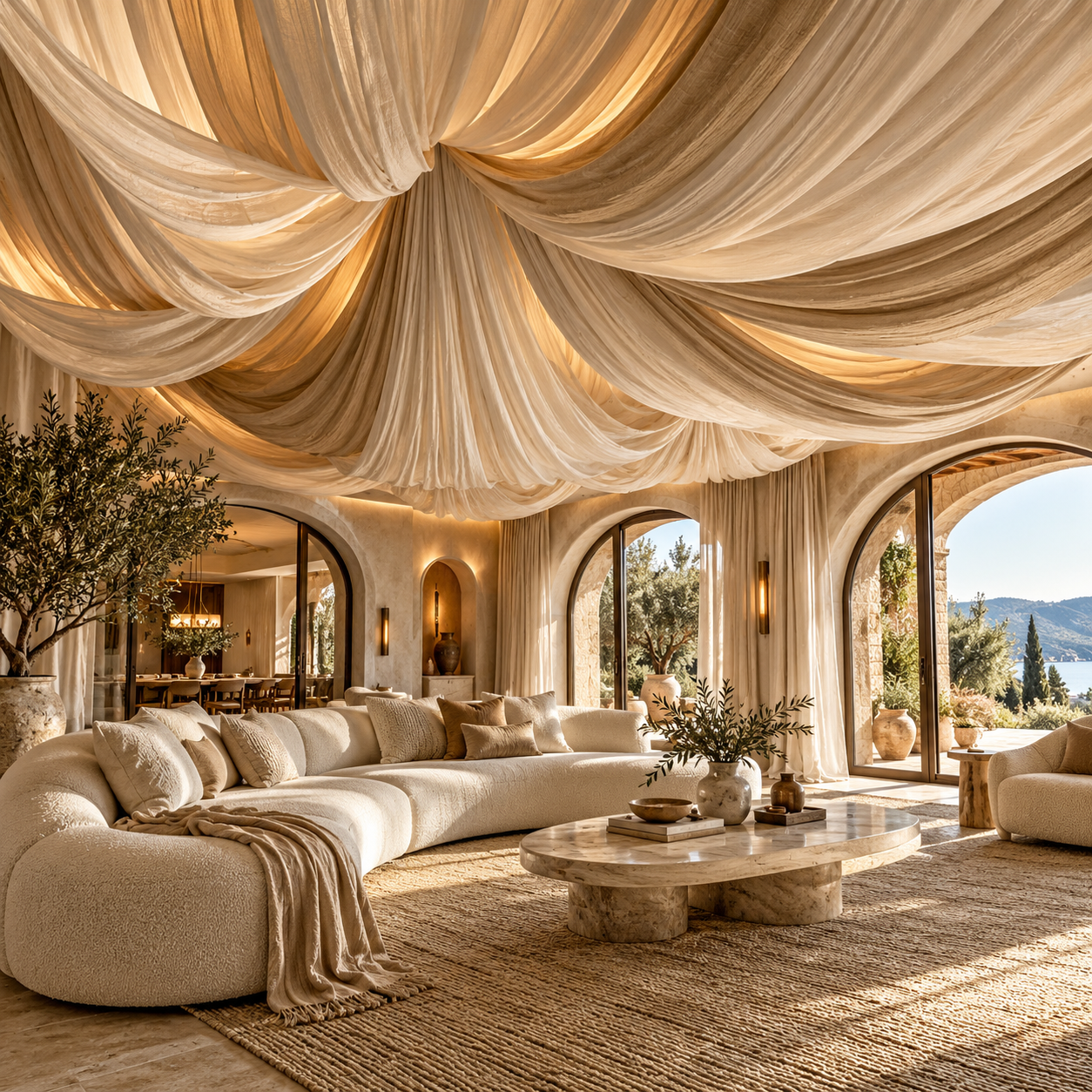
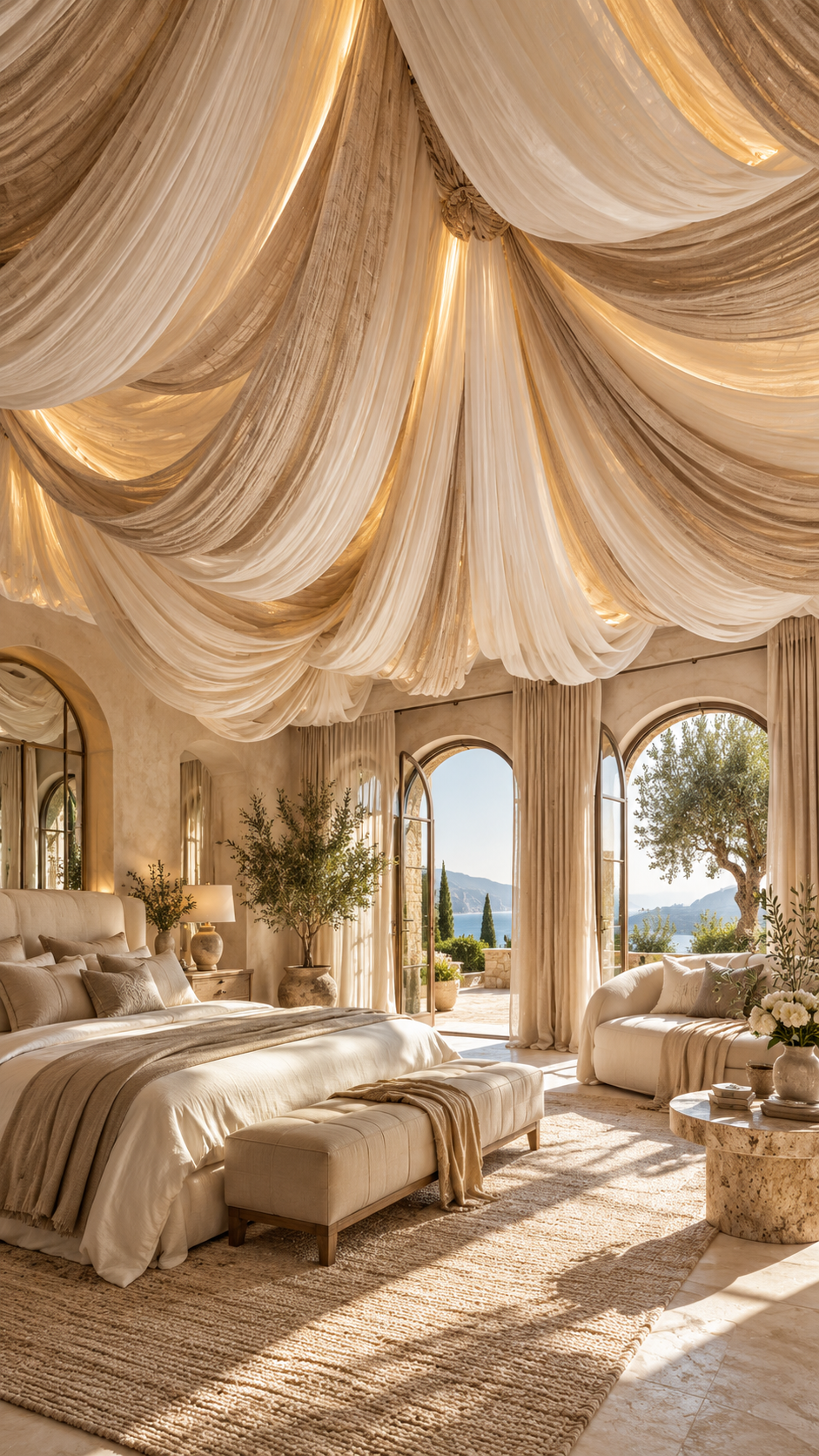
A romantic flowing fabric ceiling transforms the space above into a beautiful landscape of gentle waves, cascading folds, and delicate textile layers. Inspired by luxurious resort bedrooms, elegant event interiors, and timeless European decorating traditions, this design creates an atmosphere that feels exceptionally graceful and inviting.
The defining characteristic is the softness of the drapery. Rather than stretching fabric into a completely flat surface, the material is arranged into carefully controlled curves that create a floating canopy effect.
Imagine entering a serene bedroom where beautifully gathered ivory fabric extends from a central ceiling feature toward the surrounding edges. Gentle folds catch the daylight, creating subtle shadows and a delicate sense of movement. Below the canopy, a plush upholstered bed, natural wood furniture, and warm neutral decorations complete the romantic setting.
🤍 This design is especially appealing for anyone who wants a bedroom that feels peaceful, luxurious, and visually distinctive without relying on bold colors or extravagant furniture.
Creating a Romantic Fabric Ceiling With Elegant Flowing Folds
The beauty of a romantic fabric ceiling comes from the balance between generous textile folds and an organized overall arrangement.
One approach involves gathering several lightweight fabric panels around a central decorative point. The panels then extend outward toward secure perimeter supports, producing an elegant radial canopy. When the fabric is arranged symmetrically, the ceiling can resemble an open flower, with soft folds spreading across the room.
Another option is to create long, parallel fabric swags that extend from one side of the ceiling to the other. This arrangement works beautifully in rectangular bedrooms, particularly when the direction of the fabric visually follows the shape of the bed or the room itself.
For a subtler effect, fabric can be concentrated above the sleeping area rather than covering the entire ceiling. The result is a romantic bed canopy that creates a feeling of enclosure while allowing the surrounding architecture to remain visible.
The folds should appear relaxed but intentional. Excessively dense gathering may overwhelm a small bedroom, whereas carefully spaced curves preserve the elegant, airy character of the composition.
Choosing the Best Fabric Ceiling Materials for a Romantic Bedroom
Lightweight materials are particularly attractive for romantic ceiling treatments because they allow graceful draping without creating an unnecessarily heavy visual appearance.
Voile is a popular aesthetic choice because of its delicate transparency and ability to form gentle folds. Sheer polyester fabrics can achieve a similar appearance while offering a variety of finishes and textures. Soft cotton blends may create a slightly more substantial canopy, particularly when a relaxed rather than ethereal look is desired.
The material should be selected not only for appearance but also for documented flame performance, installation suitability, maintenance, and compatibility with the intended support system.
For a luxurious romantic effect, choose a restrained palette of ivory, champagne, warm white, pale beige, and soft blush.
These colors create a harmonious atmosphere that pairs beautifully with upholstered furniture, natural oak, antique brass accents, and soft linen bedding.
✨ Combining subtle texture with a monochromatic palette often feels more sophisticated than introducing too many decorative colors.
Enhancing Romantic Fabric Ceiling Decor With Beautiful Lighting
Lighting plays a central role in making flowing fabric visually captivating.
Soft wall sconces, dimmable bedside lamps, and carefully positioned architectural lighting can reveal the texture of the ceiling without making it excessively bright. Warm illumination creates gentle shadows between the folds, adding depth and making the fabric appear almost sculptural.
A statement pendant may also become an elegant centerpiece, provided it is installed with appropriate clearances and independent structural support. Lighting fixtures must never rely on the fabric or its decorative suspension components for support.
For an especially beautiful effect, combine warm ambient lighting with subtle indirect illumination directed toward the canopy from a safe distance.
The result is a bedroom that feels romantic during the day and wonderfully atmospheric in the evening.
Styling a Romantic Fabric Ceiling Bedroom
Furniture and accessories should complement the delicate ceiling rather than compete with it.
An upholstered bed with a softly curved headboard provides a natural focal point beneath the canopy. Layered ivory bedding, textured cushions, and a neutral area rug reinforce the graceful atmosphere.
Natural materials such as light oak, limestone, handmade ceramics, and woven accessories introduce warmth without making the space feel overly decorated.
Small decorative details can enhance the luxurious mood. A slender brass floor lamp, vintage-inspired bedside tables, or a simple vase filled with delicate flowers may be enough.
The most important principle is restraint. Because the ceiling already provides exceptional visual interest, the rest of the bedroom can remain peaceful and understated.
Best for: Romantic bedrooms, luxurious guest suites, boutique hotel-inspired interiors, and elegant relaxation spaces.
🥈 2 Modern Stretch Fabric Ceiling With Minimalist Architectural Sophistication
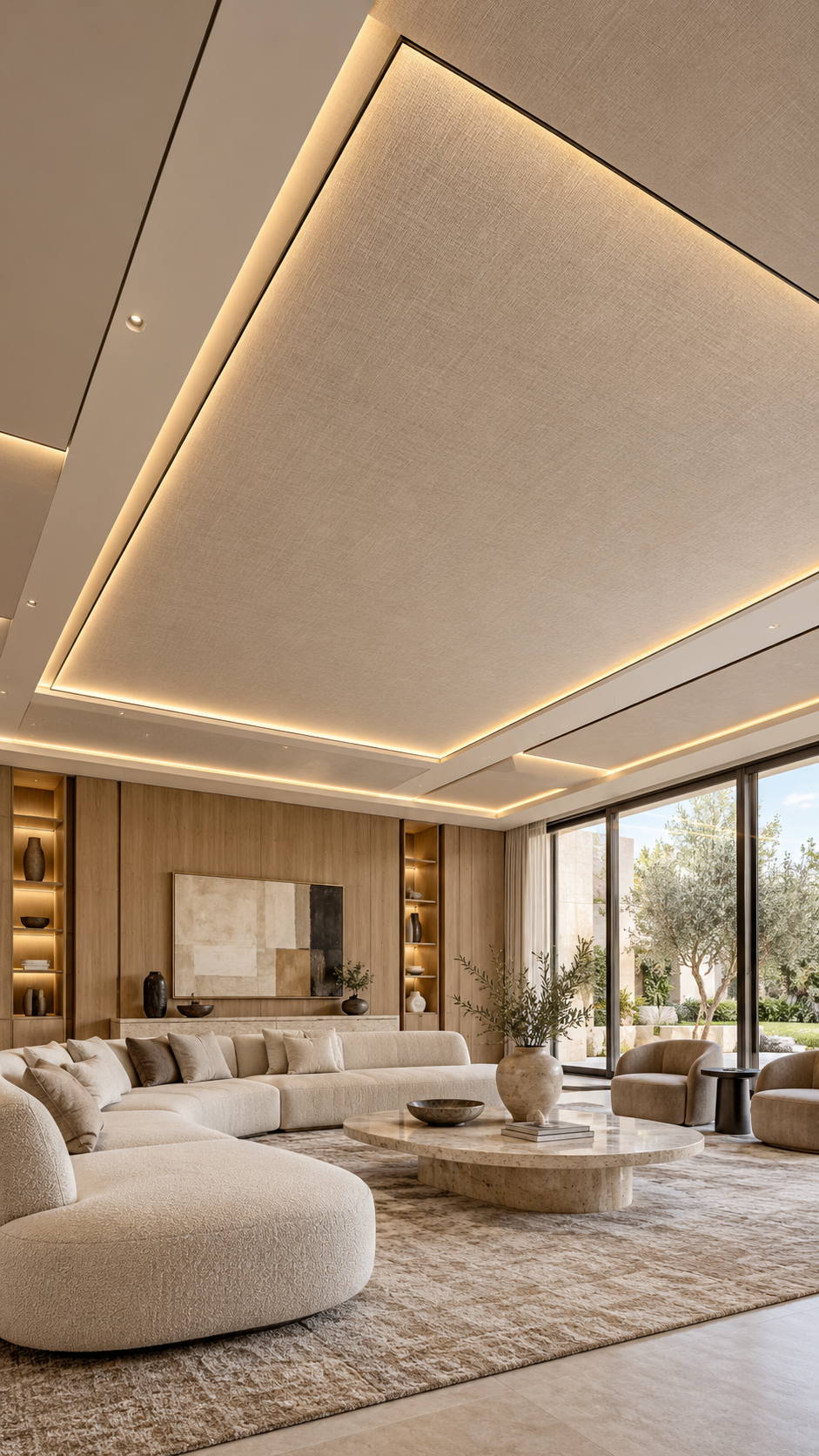
A modern stretch fabric ceiling offers a dramatically different interpretation of textile decoration. Instead of emphasizing flowing folds and romantic softness, this concept celebrates smooth surfaces, precise geometry, and contemporary architectural elegance.
The result can resemble a perfectly finished ceiling plane with a sophisticated textile character. When integrated with carefully designed lighting and modern furnishings, it creates an interior that feels polished, serene, and remarkably refined.
🏡 This approach works especially well in modern living rooms, minimalist bedrooms, stylish home offices, and contemporary apartments where clean lines are essential.
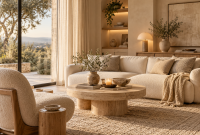
Picture a luxurious living room with a smooth cream-colored fabric ceiling framed by slim architectural edges. Recessed perimeter lighting casts a gentle glow across the surface, while natural wood paneling, a sculptural sofa, and understated furniture create a beautiful modern composition.
The room feels elegant not because it contains excessive decoration, but because every detail appears deliberate.
How a Modern Stretch Fabric Ceiling Creates a Seamless Look
The defining feature of this design is a taut surface held within a purpose-designed perimeter or panel system.
Unlike loosely draped textiles, stretched ceiling materials are installed under controlled tension to achieve a smooth and consistent appearance. Depending on the selected system, the fabric may cover most of the ceiling or be divided into architectural panels.
Large uninterrupted surfaces create a sense of calm and simplicity. Smaller framed panels can introduce subtle geometric rhythm, particularly in rooms with distinctive architectural proportions.
A rectangular fabric ceiling feature placed above a seating arrangement can visually organize an open-plan living room. Similarly, a recessed textile panel above a dining table can establish an elegant focal point without requiring a dramatic suspended installation.
The most sophisticated designs use clean intersections between textile surfaces, walls, lighting, and trim.
Precision matters because uneven tension, poorly designed edges, or inappropriate materials can undermine the intended seamless effect.
Selecting Fabric Ceiling Textures for Contemporary Interiors
Modern fabric ceilings look particularly striking when the surface texture is subtle rather than excessively decorative.
Finely woven textile materials can create a sophisticated architectural finish, especially in cream, warm gray, greige, or muted taupe. Certain manufactured textile ceiling systems are designed specifically for taut installation and may incorporate acoustic or other performance features.
These engineered systems differ from ordinary decorative fabric. A professional-grade textile ceiling should be selected according to the manufacturer’s specifications, including the intended mounting method, available dimensions, cleaning requirements, and documented fire classification.
For a contemporary luxury appearance, matte finishes often work exceptionally well. They minimize unwanted reflections and allow the ceiling to blend naturally with warm neutral wall finishes.
Softly textured materials can also help prevent the interior from feeling excessively clinical.
The key is choosing a surface that adds quiet richness rather than obvious ornamentation.
Integrating Architectural Lighting Into a Stretch Fabric Ceiling
One of the most attractive possibilities is the integration of lighting with the ceiling’s geometric design.
Perimeter LED lighting, concealed cove lighting, and carefully planned linear fixtures can emphasize the crisp edges of a textile feature. Depending on the certified ceiling system, specialized backlit assemblies may also create an even, luminous surface.
These effects require careful technical planning. Fabric should not be placed over ordinary recessed fixtures or enclosed around electrical equipment unless the entire assembly is specifically designed and approved for that use.
For living rooms, warm-white indirect lighting produces a comfortable and sophisticated atmosphere. Combining it with separately controlled task lighting allows the room to support relaxation, conversation, and everyday activities.
💡 The most impressive modern ceilings often use lighting to reveal their architectural proportions rather than relying on a highly decorative fixture.
A narrow band of illumination around the fabric surface may be enough to transform a simple room into a luxurious contemporary environment.
Styling a Modern Fabric Ceiling Living Room
A modern textile ceiling works best when paired with furniture that emphasizes proportion, shape, and material quality.
A sculptural modular sofa in oatmeal or warm ivory can anchor the seating area. A low-profile coffee table in natural stone or dark wood introduces contrast, while a generously sized rug adds comfort.
Decorative accessories should be selective. One oversized ceramic vessel, an abstract artwork, or a carefully shaped indoor plant can provide enough personality without disrupting the minimalist composition.
Natural wood is especially effective because it creates warmth against the smooth overhead surface. Oak wall panels, walnut cabinetry, and pale timber furniture can all complement a restrained textile ceiling.
For additional visual sophistication, introduce gentle contrasts between matte surfaces and subtle metallic accents.
The result is a living room that feels luxurious, contemporary, and carefully curated.
Best for: Modern living rooms, minimalist apartments, contemporary bedrooms, refined home offices, and architecturally focused interiors.
🥉 3 Cozy Layered Fabric Ceiling With Warm Natural Textures
A cozy layered fabric ceiling creates a completely different emotional atmosphere from the previous two concepts. Rather than focusing on romantic elegance or minimalist precision, this design celebrates warmth, softness, relaxed texture, and inviting comfort.
Inspired by organic modern interiors, Mediterranean retreats, rustic cottages, and contemporary bohemian spaces, this approach combines beautiful textile layers with natural materials and soft lighting.
The result is a room that feels intimate, personal, and wonderfully welcoming.
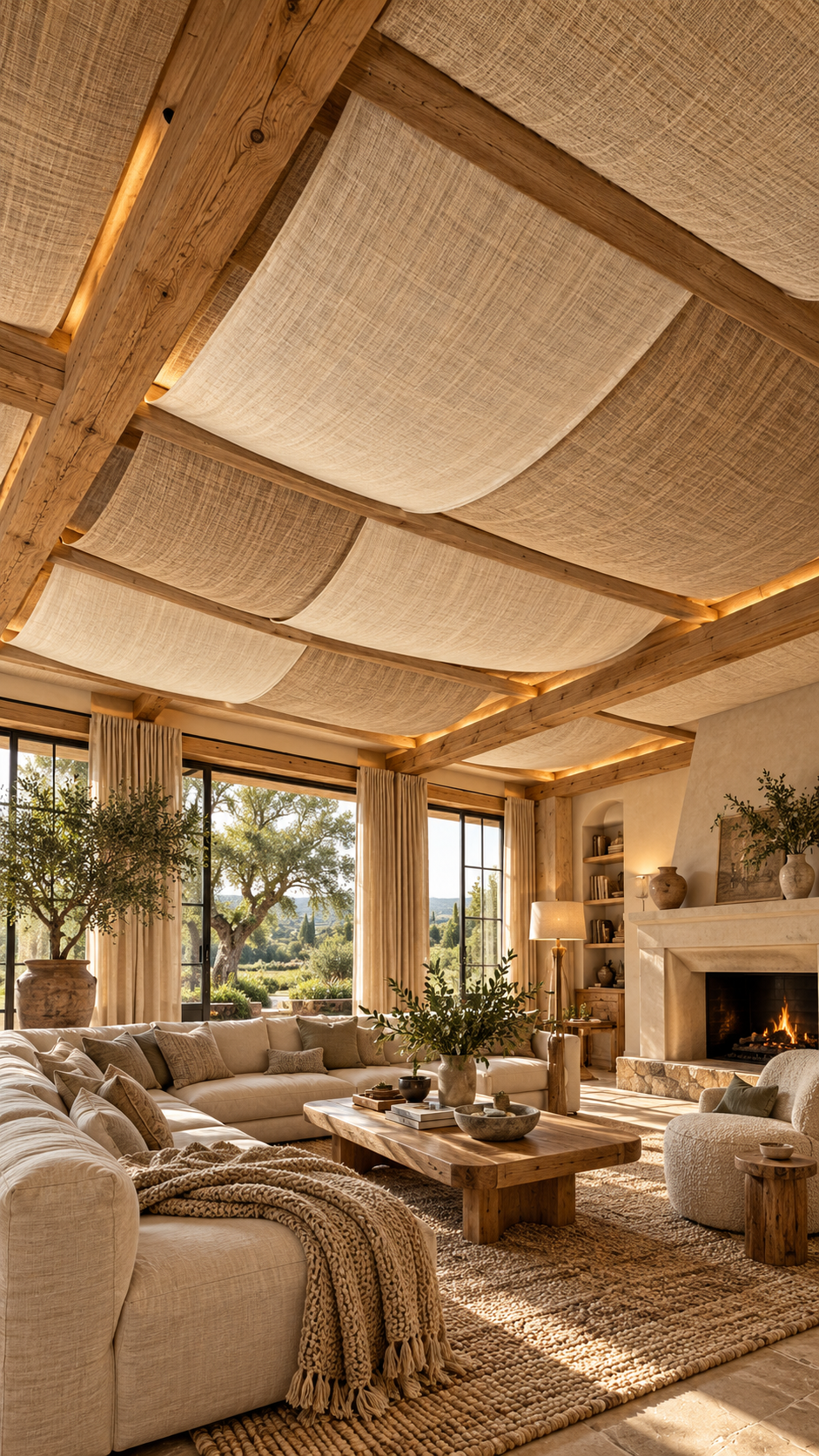
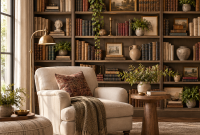
🌿 Imagine a cozy reading lounge featuring warm beige textile panels arranged in gentle overlapping sections across the ceiling. The fabric has a soft linen-like appearance, complemented by natural wood beams, an oversized cream armchair, woven rugs, handmade pottery, and warm indirect lighting.
Every element contributes to an atmosphere of quiet comfort.
This design is particularly appealing for homeowners who want to make an interior feel softer, warmer, and less formal.
Designing a Cozy Fabric Ceiling With Beautiful Layered Panels
The defining feature of a layered fabric ceiling is its carefully arranged combination of textile surfaces.
Instead of creating one continuous canopy, separate fabric panels can form an overlapping composition. Some panels may be relatively flat, while others introduce gentle curves or shallow suspended folds.
This variation creates a beautiful sense of depth without requiring excessive decoration.
For a narrow room, elongated panels arranged lengthwise can visually emphasize the space’s proportions. In a cozy lounge or reading area, shorter fabric sections may establish an intimate overhead feature.
An especially attractive approach involves combining the fabric with exposed decorative wooden beams. The beams create a strong architectural rhythm, while the textile softens the visual transitions between them.
The fabric can also be limited to a particular zone, such as a window-side reading corner, dining nook, or comfortable seating arrangement.
By concentrating the treatment in one area, the design feels intentional and prevents the entire room from becoming visually crowded.
Choosing Natural Looking Fabric Ceiling Materials
Texture is the central character of this design.
Linen-inspired woven fabrics, soft cotton textures, and subtly slubbed textiles are particularly beautiful when working with a relaxed, organic aesthetic. Their visible fibers and gentle irregularities make the ceiling feel tactile and inviting.
However, ordinary household linen and cotton should not automatically be treated as suitable overhead installation materials. For a permanent ceiling, choose purpose-made products with the appropriate documented flame performance and mounting specifications, or consult a qualified professional about a compliant treatment and installation.
Colors inspired by nature work especially well.
Oatmeal, sand, warm ivory, mushroom beige, muted olive, and soft terracotta create a beautifully grounded palette. These colors complement natural wood, stone, ceramics, and woven decorative accessories.
For a balanced composition, use no more than two or three closely related textile shades.
A mixture of oatmeal and warm ivory, for example, creates subtle contrast while preserving the room’s calm appearance.
Combining Fabric Ceiling Decor With Natural Wood and Earthy Materials
The layered fabric ceiling becomes particularly beautiful when surrounded by complementary natural materials.
Exposed wooden beams can provide an architectural framework, while pale timber floors and natural fiber rugs reinforce the warm atmosphere.
Stone also contributes a valuable contrast. A limestone coffee table, travertine side table, or handmade ceramic accessories can balance the softness of the textile.
Indoor plants add freshness and subtle color, especially when the main palette consists of beige, cream, and warm brown.
🪴 In a relaxed living space, one large leafy plant may create a stronger design statement than numerous small decorative objects.
For an inviting cottage-inspired look, combine linen-like ceiling textures with antique wood furniture, woven baskets, and layered cushions.
For a more contemporary interpretation, use simplified furniture shapes, sculptural pottery, and restrained accessories.
Both versions celebrate the comfort of natural materials while allowing the ceiling to remain the most distinctive decorative feature.
Creating Warm and Cozy Fabric Ceiling Lighting
Lighting determines whether a layered textile ceiling feels beautifully intimate or excessively dark.
Warm indirect lighting is particularly suitable because it highlights texture and creates soft transitions between the fabric panels.
Wall sconces, table lamps, and discreet architectural fixtures can provide layered illumination while avoiding harsh overhead glare.
When the room includes decorative wood beams, properly positioned lighting may emphasize their natural grain and create attractive shadows around the textile sections.
For a cozy evening atmosphere, use dimmable lighting so the brightness can be adjusted according to the activity.
A comfortable reading chair may require a focused task lamp, while surrounding ambient lights provide the gentle atmosphere that makes the space feel relaxing.
Keep every lighting component appropriately separated from the textile treatment and follow the requirements of the specified fixtures and ceiling assembly.
Best for: Cozy living rooms, reading nooks, organic modern interiors, rustic bedrooms, Mediterranean-inspired spaces, and warm contemporary lounges.
Fabric Ceiling Ideas Comparison for Choosing the Perfect Style
Although all three concepts use fabric as a central design element, their visual effects, ideal applications, and installation requirements are quite different.
Understanding these differences makes it easier to select a design that complements the room rather than simply following a decorative trend.
Design Feature
🥇 Romantic Flowing Canopy
🥈 Modern Stretch Ceiling
🥉 Cozy Layered Ceiling
Overall style
Dreamy and romantic
Sleek and minimalist
Warm and organic
Main visual feature
Flowing fabric folds
Smooth, taut surface
Overlapping textured panels
Preferred appearance
Sheer and lightweight
Fine matte textile
Linen-like woven texture
Ideal colors
Ivory, champagne, blush
Greige, cream, warm gray
Oatmeal, sand, taupe
Best room
Bedroom
Living room
Reading nook or cozy lounge
Lighting style
Soft ambient lighting
Integrated architectural lighting
Warm indirect lighting
Installation approach
Suspended drapery system
Professional tensioned system
Supported decorative panels
Maintenance considerations
Dust in folds
System-specific cleaning
Dust on layered surfaces
Each design can create a remarkable interior when the material choice, installation, and decorative styling are carefully coordinated.
For bedrooms that need a romantic transformation, flowing fabric offers an enchanting appearance. For contemporary interiors that emphasize architectural precision, stretched fabric provides a more controlled finish. For rooms that celebrate natural materials and relaxed comfort, layered fabric can introduce beautiful warmth.
How to Choose the Right Fabric Ceiling for Your Room
Choosing a beautiful fabric ceiling involves more than selecting a favorite textile.
Room proportions, ceiling height, existing lighting, decorative style, and long-term maintenance all influence the final result.
A dramatic canopy that looks magnificent in a large bedroom may feel overwhelming in a compact apartment. Similarly, a smooth contemporary stretch ceiling may feel out of place in a rustic room filled with antique furnishings and exposed timber.
The most successful design is one that enhances the natural characteristics of the space.
Consider the Ceiling Height Before Choosing Fabric Draping
Ceiling height is one of the most important considerations because suspended fabric occupies vertical space.
In rooms with generous ceiling heights, dramatic draped canopies can look spectacular. Flowing fabric introduces softness while making the height feel more intimate and welcoming.
For rooms with lower ceilings, restrained treatments are usually more suitable. A shallow fabric canopy, closely mounted textile panels, or an appropriately designed stretch fabric system may create a beautiful decorative effect without making the room feel crowded.
The lowest part of the installation must preserve suitable headroom and required clearances.
This is particularly important above circulation paths, doors, tall furniture, and ceiling-mounted equipment.
✨ A carefully proportioned fabric feature should make a room feel more inviting, not visually compressed.
Match Fabric Ceiling Colors With Existing Furniture
Color coordination is essential for creating a cohesive interior.
A warm ivory ceiling works beautifully with beige upholstery, light oak furnishings, and cream-colored curtains. A mushroom-taupe textile treatment may complement walnut furniture and darker neutral accessories.
For romantic interiors, subtle variations of white, champagne, and blush can create a soft and sophisticated palette.
Contemporary interiors often benefit from quieter colors such as greige, warm gray, or pale sand.
Cozy organic spaces can incorporate more earthy tones, including muted olive, terracotta, and natural oatmeal.
Rather than matching every surface exactly, introduce gentle variations in tone and texture. This makes the room feel thoughtfully layered and visually interesting.
Select Fabric Ceiling Materials With Long Term Maintenance in Mind
A beautiful fabric ceiling should remain attractive beyond its initial installation.
Textile surfaces can collect dust, particularly when the design includes numerous folds or overlapping layers. Some materials may also absorb odors or be difficult to clean.
Before choosing a fabric, consider how accessible the installed surface will be and whether the manufacturer recommends vacuuming, wiping, professional cleaning, or replacement.
Removable textile panels may offer practical advantages in certain decorative applications, while professionally installed stretch fabric systems may provide a smooth surface with system-specific maintenance instructions.
Moisture is another important consideration. Kitchens, bathrooms, and rooms with high humidity require materials and assemblies designed for the environment.
Avoid using ordinary decorative fabric where repeated condensation, cooking grease, or persistent dampness could create hygiene and maintenance problems.
Important Note About Fabric Ceiling Safety and Installation
⚠️ Important Note: Fabric ceilings must be planned with fire safety, ventilation, structural support, and electrical clearances in mind. Decorative hanging fabrics and materials used as permanent ceiling finishes may be subject to different fire-performance requirements. For example, NFPA 701 addresses certain hanging textile applications, while surface-applied ceiling finishes may require other testing and classifications. Always check local building and fire codes, select materials certified for their intended use, and use qualified installers where appropriate. Never drape fabric over light fixtures, sprinklers, smoke detectors, ventilation openings, or electrical equipment.
Doc Info Files
+1
Fabric Ceiling Lighting Ideas That Create a Luxurious Atmosphere
Beautiful lighting can elevate almost any textile ceiling installation.
Fabric interacts with light differently from painted drywall because its surface contains fibers, folds, and subtle changes in texture. These details can produce appealing variations in brightness that make the entire ceiling feel more dimensional.
However, lighting should always be planned as part of a suitable ceiling system rather than added casually after the fabric is installed.
Use Soft Warm Lighting for a Romantic Fabric Ceiling
Romantic fabric installations look particularly beautiful when paired with gentle illumination.
Warm bedside lamps and wall sconces create an intimate atmosphere, while carefully positioned indirect lighting can reveal the ceiling’s flowing shapes.
The most attractive effect often comes from avoiding harsh illumination. Rather than brightly lighting every fold, gentle variations of shadow and light produce a softer, more luxurious appearance.
A decorative chandelier may provide a beautiful centerpiece in a high-ceilinged bedroom, provided the fixture and fabric system are independently supported and maintain their required clearances.
This approach creates an elegant atmosphere that feels particularly inviting during the evening.
Combine Architectural Lighting With Modern Stretch Fabric
Modern stretch fabric ceilings are especially compatible with architectural lighting concepts.
Some purpose-made systems allow designers to incorporate illuminated perimeter details, linear lighting, or engineered backlit features.
Specialized translucent textile membranes can also produce softly illuminated surfaces when combined with compatible lighting assemblies.
The result can be remarkably elegant, especially in minimalist living rooms where a traditional decorative chandelier might distract from the architectural composition.
Lighting integration should follow the ceiling system manufacturer’s specifications. Not all stretched textiles are suitable for backlighting, and ordinary LED strips should not be enclosed behind fabric without an appropriately designed assembly.
Create Cozy Layers of Light With Natural Textiles
A layered fabric ceiling benefits from a lighting scheme that creates warmth throughout the room.
Instead of relying on one large overhead light, combine multiple lighting sources positioned at different heights.
A floor lamp beside an armchair, a ceramic table lamp on a sideboard, and indirect wall lighting can create a comfortable balance.
Warm lighting also complements the earthy colors often used in cozy textile interiors.
Beige fabric, natural timber, and textured accessories become especially inviting when illuminated gently rather than with overly cool or intense lighting.
Fabric Ceiling Ideas for Small Rooms and Apartments
A fabric ceiling does not require a large house or an expansive interior.
Small bedrooms, compact living rooms, and apartment reading corners can also benefit from carefully designed textile features.
The secret is using fabric to enhance a specific area rather than overwhelming the entire space.
Small Bedroom Fabric Ceiling With a Partial Canopy
For a compact bedroom, a partial fabric canopy positioned above the bed can create a romantic focal point without covering the entire ceiling.
Choose lightweight-looking fabric in a pale neutral color to maintain an airy appearance.
A shallow, professionally supported canopy aligned with the bed’s proportions can help define the sleeping area.
Keep surrounding wall decorations relatively simple so the design feels peaceful and uncluttered.
Soft bedding, slender bedside tables, and a minimal decorative palette will further enhance the spacious impression.
Compact Living Room Fabric Ceiling With Clean Lines
In a small living room, smooth textile panels may be more visually effective than dramatic hanging folds.
A restrained rectangular ceiling feature positioned above the main seating arrangement can introduce texture without dominating the room.
Choose a shade close to the existing ceiling color for a subtle effect.
This approach works especially well in contemporary apartments where clean lines and visual continuity help maintain an open atmosphere.
Cozy Reading Corner With a Layered Fabric Feature
An intimate reading corner provides an excellent opportunity to experiment with ceiling decoration on a smaller scale.
A limited textile feature above a comfortable armchair can define the space as a special retreat.
Combine it with a warm floor lamp, a small wooden side table, a textured cushion, and a soft rug.
The result is an inviting personal sanctuary that feels separate from the surrounding room without requiring permanent partitions or elaborate construction.
Can a Fabric Ceiling Improve Room Acoustics
One often-overlooked advantage of certain textile ceiling systems is their potential contribution to acoustic comfort.
Rooms with hard floors, large windows, and minimal soft furnishings can experience noticeable reverberation. Sound reflects from hard surfaces, sometimes making conversation or everyday activities feel louder than expected.
Purpose-designed acoustic fabric ceilings may help control these reflections.
However, the effectiveness depends on the complete assembly, including the fabric’s acoustic transparency, the absorptive material behind it, the mounting depth, and the tested installation configuration.
A decorative piece of sheer fabric suspended overhead should not be expected to provide the same performance as an engineered acoustic system.
Some commercial stretched-fabric assemblies combine acoustically transparent textile surfaces with absorptive backing materials. These systems can achieve meaningful sound absorption when installed according to their tested specifications.
Oeler Industries, Inc.
+1
For home offices, media rooms, and living spaces where sound comfort matters, an acoustic textile ceiling can be worth exploring.
The combination of visual softness and documented acoustic performance can provide both decorative and functional benefits.
Common Fabric Ceiling Decorating Mistakes to Avoid
Even beautiful materials can create disappointing results when the installation is poorly planned.
One common mistake is using excessive fabric. Although dramatic folds can be attractive, too much material may make a modest room feel crowded.
Another problem is selecting a fabric solely because it looks beautiful in photographs. Decorative textiles vary considerably in their suitability for permanent overhead use.
Poorly coordinated colors can also undermine the overall design. A visually busy ceiling combined with patterned walls, elaborate curtains, and numerous accessories may create an overwhelming interior.
Lighting mistakes are particularly important to avoid. Fabric installed too close to electrical equipment, heat-producing fixtures, or ventilation openings may introduce serious safety concerns.
Finally, insufficient attention to maintenance can cause problems over time. Deep fabric folds and inaccessible layers may collect dust and become difficult to clean.
A successful installation balances beauty, material performance, proper support, and practical care.
Frequently Asked Questions About Fabric Ceiling Design
What Is the Best Fabric Ceiling Design for a Bedroom
A romantic flowing canopy is an attractive choice for bedrooms because its gentle folds can create an intimate and restful atmosphere.
Soft ivory, champagne, and beige tones work particularly well with upholstered beds and layered neutral bedding.
For smaller bedrooms, a partial canopy above the bed may be more practical than a room-wide installation.
The design should preserve comfortable headroom and use properly supported materials suitable for overhead applications.
Can a Fabric Ceiling Make a Living Room Look More Expensive
Yes, a carefully designed textile ceiling can give a living room a more refined and distinctive appearance.
The effect comes from thoughtful proportions, controlled texture, compatible lighting, and a cohesive color palette rather than the amount of fabric used.
A smooth matte stretch ceiling can produce a sophisticated architectural finish, while a restrained layered fabric feature may introduce the warmth associated with carefully designed boutique interiors.
Quality installation and a harmonious relationship with the room’s furniture are essential.
Are Fabric Ceilings Suitable for Modern Homes
Fabric ceilings can work beautifully in modern homes, particularly when the design emphasizes clean lines and understated materials.
Stretch fabric systems are especially suitable for contemporary interiors because they can create smooth surfaces with controlled geometric proportions.
Neutral colors, subtle textures, natural wood, and well-planned architectural lighting help maintain a modern appearance.
Decorative draped ceilings can also suit contemporary spaces when their folds are restrained and their arrangement feels intentional.
Can Fabric Ceilings Be Installed Without Professional Help
Some small decorative textile features may be suitable for carefully planned DIY projects, but only when the mounting method, fabric classification, and applicable safety requirements are fully understood.
Large canopies, permanent fabric ceiling finishes, acoustically engineered assemblies, and installations involving integrated lighting are better handled by qualified professionals.
Improvised fastening systems, untreated household fabrics, and unsupported overhead materials should be avoided.
How Do You Keep a Fabric Ceiling Clean
Cleaning depends on the type of fabric and installation system.
Some specialized stretch fabric ceilings have surfaces that can be cleaned using manufacturer-approved methods, while other textile systems require professional maintenance.
Draped fabrics with multiple folds may collect more dust and need additional attention.
Always review the manufacturer’s care instructions before attempting to clean the material. Avoid soaking fabric, using aggressive chemicals, or pulling on tensioned surfaces.
Will a Fabric Ceiling Make a Small Room Feel Smaller
It can, particularly if the fabric hangs too low or creates excessive visual weight.
However, a shallow, carefully proportioned installation can add beauty without overwhelming the room.
Pale colors, controlled folds, and limited coverage tend to work best in compact interiors.
For low ceilings, a smooth or closely mounted textile feature may be preferable to a deeply draped canopy.
Final Thoughts on the Best 3 Fabric Ceiling Ideas
A beautifully designed fabric ceiling has the power to transform an overlooked architectural surface into one of the most memorable features of a room.
The secret is not simply adding fabric overhead, but choosing a design that complements the surrounding interior while creating a distinctive atmosphere.
🥇 Romantic Flowing Fabric Ceiling creates a dreamy, graceful environment filled with soft folds and timeless elegance. It is particularly enchanting in bedrooms where comfort, relaxation, and romantic details are essential.
🥈 Modern Stretch Fabric Ceiling introduces refined architectural simplicity through smooth surfaces, precise proportions, and carefully planned lighting. It is an excellent design direction for contemporary living rooms and minimalist interiors.
🥉 Cozy Layered Fabric Ceiling celebrates organic textures, earthy colors, and the relaxed beauty of natural materials. It transforms reading corners, lounges, and comfortable living spaces into inviting retreats.
Whichever direction suits the room, the most impressive results come from balancing beautiful textile surfaces with thoughtful lighting, suitable materials, secure installation, and harmonious decorative styling.
✨ The ultimate fabric ceiling is one that makes an ordinary room feel extraordinary while remaining comfortable, practical, and beautifully cohesive for years to come.