Beautiful Wedding Photo Displays can turn ordinary photographs into meaningful parts of the wedding experience. Instead of leaving engagement pictures, childhood memories, family portraits, and favorite couple photos hidden inside albums or phones, a thoughtfully designed display allows those images to become part of the celebration itself. Guests can see the story behind the couple, discover special memories, and feel more emotionally connected to the day.
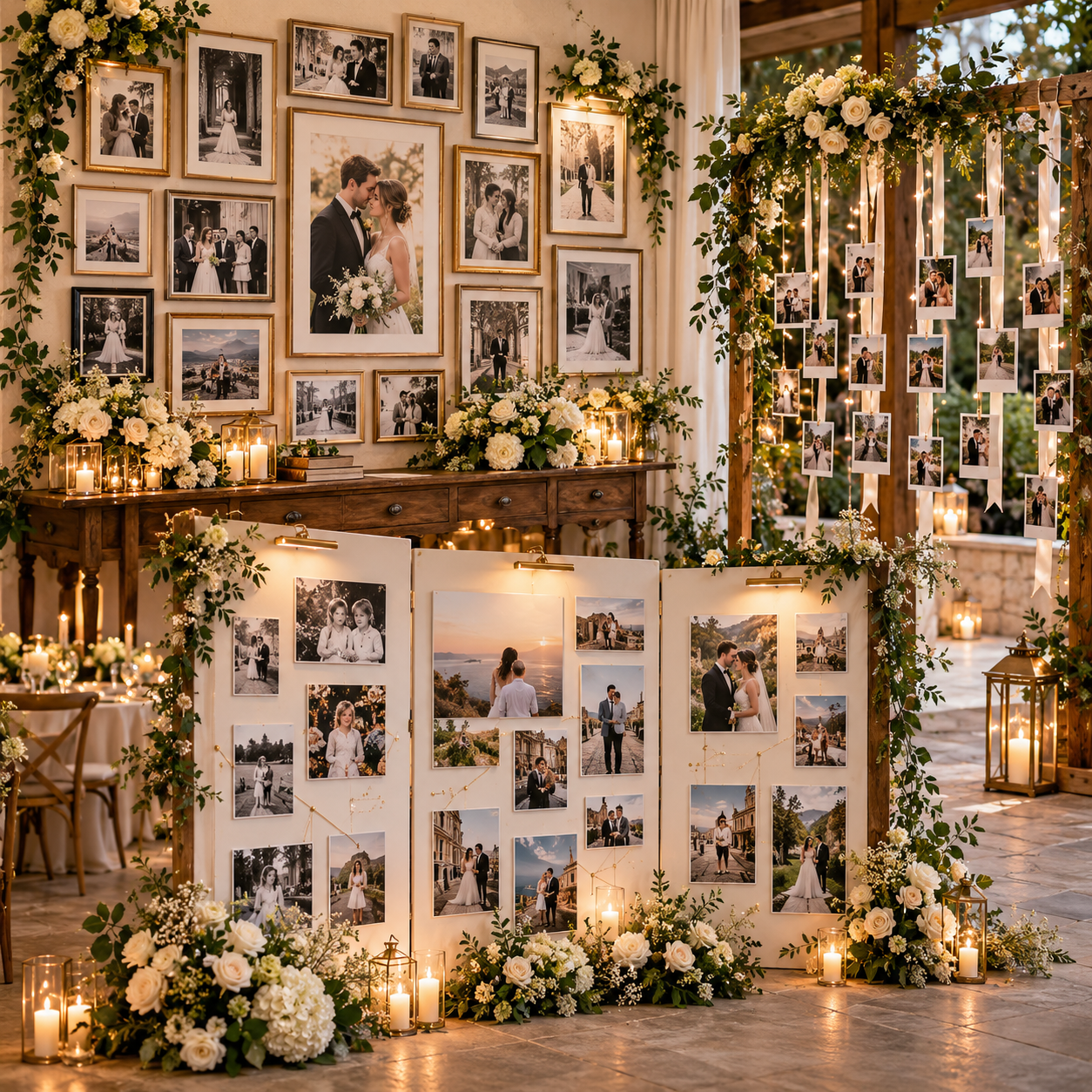
Wedding photo displays are also incredibly versatile. They can decorate a ceremony entrance, reception welcome area, cocktail-hour corner, guest book station, staircase, dessert table, or even an outdoor garden space. Depending on the wedding style, photographs can be arranged in elegant frames, suspended from structures, displayed on large architectural panels, or incorporated into floral installations.
The best displays do more than simply show photographs. They help establish atmosphere. A minimalist frame wall can feel polished and contemporary, while hanging photographs surrounded by greenery can create a romantic garden mood. A large storytelling installation can become one of the most memorable decorative features of the reception.
For couples looking for photo display ideas that feel intentional rather than random, the following Best 3 Wedding Photo Displays offer three distinctly different approaches. Each concept can be adapted to elegant weddings, rustic celebrations, outdoor ceremonies, modern receptions, and intimate gatherings. 💍📸
Why Wedding Photo Displays Have Become Such a Meaningful Wedding Detail
Wedding decorations often focus on flowers, lighting, table arrangements, signage, and furniture. Photographs bring something different to the celebration because they add a deeply personal layer that decorative objects cannot easily reproduce.
A photograph from an early date can instantly communicate history. Childhood photographs can show guests where each person came from. Family wedding portraits can connect generations. Travel photographs can remind everyone of experiences that shaped the relationship.
Because of this, Wedding Photo Displays often become natural conversation starters during cocktail hour or the reception. Guests may recognize old friends, relatives, destinations, or memorable moments.
There is also an emotional benefit. Weddings can sometimes feel highly styled and formal. Adding real photographs softens the environment and reminds everyone that the event is ultimately about two people and the lives they have built together.
The key is creating a display that looks deliberate. Too many photographs without organization can feel cluttered. Too few photographs may look unfinished. The strongest displays balance storytelling, visual order, and decoration.
How to Choose the Right Wedding Photo Displays for Your Venue
Before selecting frames or printing dozens of photographs, it helps to consider where the display will appear.
A large ballroom can support dramatic installations with oversized frames or architectural structures. Smaller venues may benefit from vertical displays that use wall space rather than valuable floor space. Outdoor weddings can take advantage of trees, pergolas, garden walls, or freestanding wooden structures.
Lighting also matters. Photographs placed in dark reception corners may disappear visually unless there is dedicated illumination. Displays located near windows or under soft string lights naturally attract more attention.
Wedding style should also influence the materials. Polished brass frames work beautifully for elegant celebrations, while warm wood suits garden, rustic, and countryside weddings. Acrylic panels can look especially sophisticated in modern venues.
The following table offers a quick comparison of the three main concepts explored in this article.
| Wedding Photo Display Idea | Best Wedding Style | Visual Impact | Space Needed | Difficulty |
|---|---|---|---|---|
| 🥇 Curated Gallery Wall | Elegant modern romantic | Very High | Medium | Moderate |
| 🥈 Hanging Memory Installation | Garden outdoor bohemian | High | Medium to Large | Moderate |
| 🥉 Wedding Story Display | Personal classic contemporary | Very High | Medium to Large | Moderate |
Each option offers a different atmosphere, but all three can become memorable focal points when planned carefully.
🥇 Best 1 Wedding Photo Displays With a Curated Gallery Wall
A curated gallery wall is one of the most elegant and versatile ways to display wedding photographs. Instead of treating each photograph as an individual decoration, the images are arranged together as one cohesive visual installation.
This approach works especially well near the reception entrance, guest book table, cocktail area, or behind a lounge seating arrangement. Guests naturally pause near these locations, giving them time to look closely at the photographs.
The main advantage of a gallery wall is its ability to feel both personal and polished. With consistent frames, balanced spacing, and carefully selected images, the installation can look similar to an art gallery while still telling the couple’s story.
Wedding Photo Displays With Mixed Frame Sizes
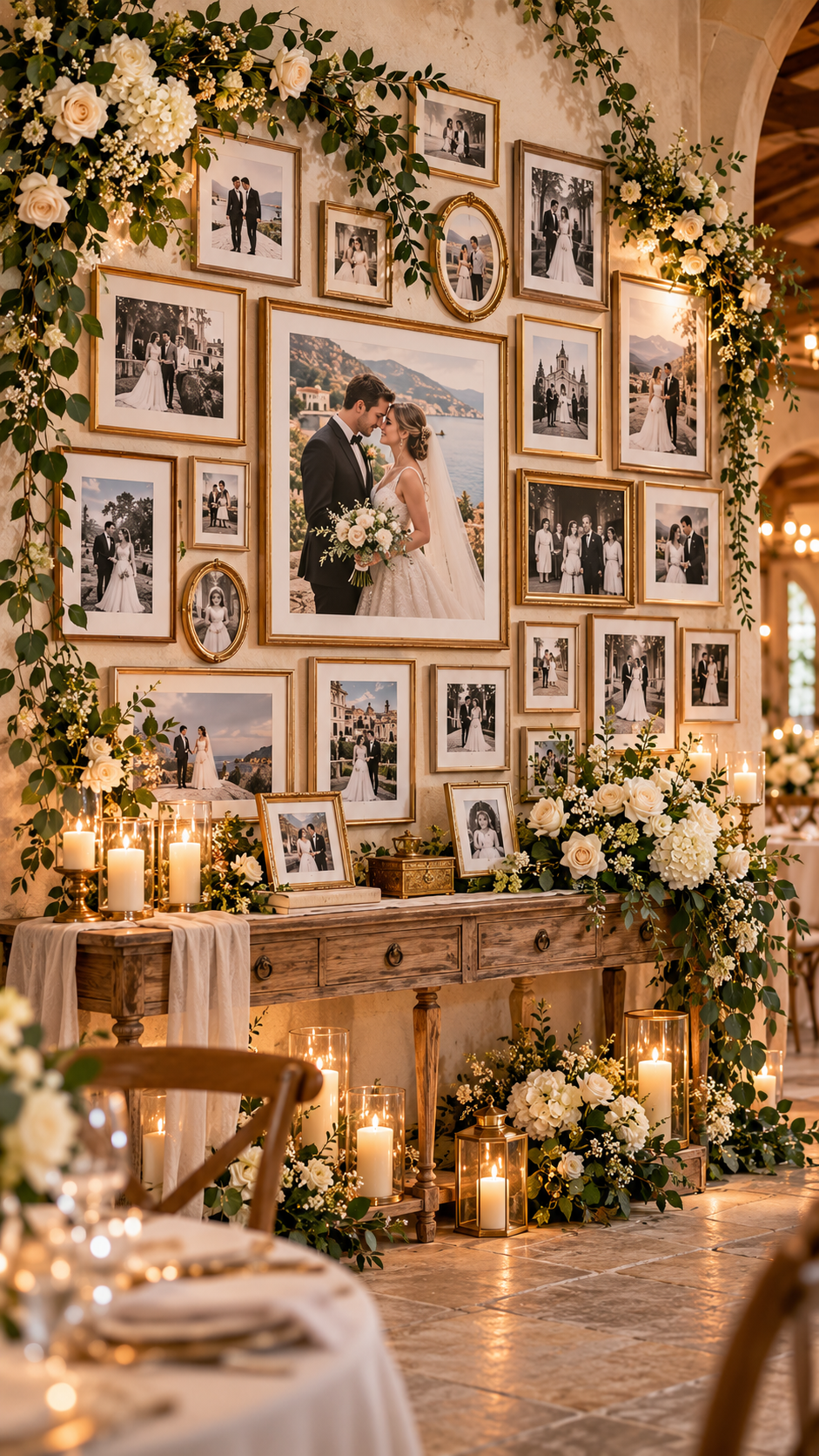
Using frames in several sizes adds visual rhythm to a gallery wall. Large images can act as anchors, while smaller photographs fill the surrounding spaces.
One effective arrangement includes two or three larger photographs combined with multiple medium and small frames. The larger photographs might feature engagement portraits or favorite couple images, while the smaller frames can include candid photographs, family memories, or travel moments.
Keeping the frame finish consistent helps unify the design. Gold frames can create an elegant atmosphere, black frames feel modern and architectural, while natural wood brings warmth.
Another possibility is mixing frame styles while staying within one color family. For example, antique brass, matte gold, and aged champagne frames can create subtle variation without looking chaotic.
Spacing is particularly important. Even when frame sizes vary, similar distances between frames create visual structure.
Create a Romantic Story With Black and White Photography
Black-and-white photographs can make a wedding photo wall feel timeless and sophisticated.
Removing strong colors allows viewers to focus more closely on expressions, gestures, and emotional moments. It can also solve a common design problem: photographs taken in different locations and lighting conditions may contain conflicting colors.
Converting them to black and white visually unifies the collection.
This technique works particularly well for formal weddings, historic venues, minimalist receptions, and classic ballroom celebrations.
Couples can also mix modern engagement photographs with older family wedding portraits. Because all the images share the same monochromatic treatment, photographs from different generations can look surprisingly cohesive.
Add Florals Without Covering the Photographs
Flowers can make gallery-style Wedding Photo Displays feel more integrated with the rest of the wedding decor, but restraint is important.
Instead of surrounding every frame with flowers, concentrate floral details around one or two edges of the display.
A cluster of garden roses, hydrangeas, eucalyptus, or trailing greenery in one corner can create softness without distracting from the photographs. Another option is placing a floral arrangement on a console table beneath the gallery wall.
For modern weddings, even fewer flowers may be needed. A simple branch arrangement or sculptural greenery can complement the photographs while keeping the design clean.
The goal is to make the photographs remain the primary focus.
Include Family Wedding Photographs
One of the most meaningful additions to a wedding gallery wall is a collection of wedding portraits from previous generations.
Parents, grandparents, and even great-grandparents can be represented.
These photographs create a visual connection between the current wedding and the family history surrounding it. Guests often spend considerable time examining these images, especially when they recognize relatives.
Small captions can be included beneath selected frames with names and wedding years.
For example:
Grandma & Grandpa — 1968
or
Mom & Dad — 1994
Simple labels like these provide context without overwhelming the design.
Where This Wedding Photo Display Works Best
Gallery walls are particularly effective against neutral backgrounds.
White walls, plaster surfaces, exposed brick, wooden panels, and fabric backdrops can all work beautifully.
If the venue does not allow items to be attached to walls, a freestanding panel can be used instead. Large painted wooden boards, portable exhibition walls, and architectural frames can replicate the look without altering the venue.
A gallery wall can also be combined with a welcome sign or seating chart.
For example, guests might first see a welcome message and then discover photographs surrounding it.
This transforms a functional wedding station into a more personal experience.
🥈 Best 2 Wedding Photo Displays With a Hanging Memory Installation
For couples who prefer something more organic and romantic, a hanging photo installation can create beautiful movement and visual depth.
Instead of placing photographs flat against a wall, images are suspended from ribbons, wire, strings, branches, metal frames, or wooden structures.
This type of display works especially well in outdoor weddings, garden receptions, barns, greenhouses, and venues with high ceilings.
The photographs seem to float in the environment, creating a softer and more immersive effect.
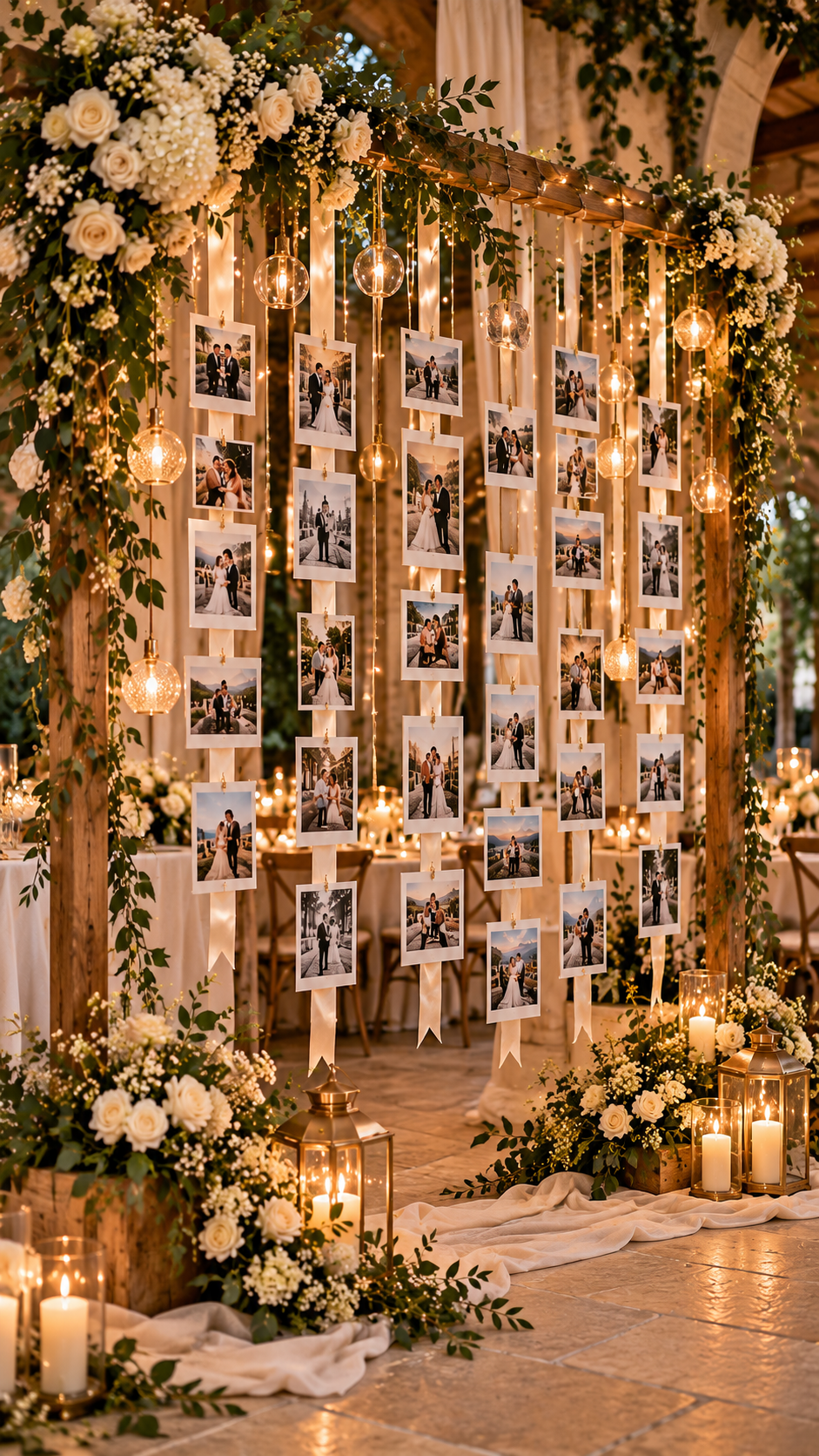
Wedding Photo Displays Hanging From a Wooden Frame
One of the easiest ways to create this concept is by building or renting a simple freestanding wooden frame.
The structure can resemble a large open window or rectangular arch.
Photographs can then be suspended vertically using thin ribbons, transparent thread, twine, or delicate chains.
Several vertical rows create a layered curtain of memories.
The wooden structure can remain natural for rustic weddings or be painted white, black, cream, or muted green depending on the wedding palette.
Fresh greenery can be placed across the top corner of the frame to soften the structure.
The result feels architectural while still maintaining a relaxed atmosphere.
Use Ribbons for a Softer Romantic Effect
Ribbon can dramatically change the appearance of hanging photographs.
Thin satin ribbon feels refined and elegant, while silk ribbon creates gentle movement. Velvet ribbon can add richness for autumn or winter weddings.
Neutral shades such as ivory, champagne, taupe, dusty rose, sage green, and soft beige are easy to integrate into wedding palettes.
Photographs can be attached using miniature clips or secured directly to the ribbon.
Avoid using too many different ribbon colors. One or two complementary tones usually create a more sophisticated appearance.
Turn Tree Branches Into Natural Wedding Photo Displays
Outdoor weddings offer another beautiful possibility: hanging photographs from tree branches.
A mature tree near the ceremony or reception area can become a natural memory display.
Photographs can be suspended from thin ribbons at varying lengths. Some can hang alone, while others may be paired with small greenery sprigs or lightweight decorative elements.
The display looks especially beautiful when placed near cocktail tables or garden seating.
At evening receptions, nearby string lights or small lanterns can make the installation feel magical.
However, avoid attaching heavy objects directly to delicate branches. Lightweight prints and ribbons are usually safer and visually more elegant.
Create Movement With Different Hanging Heights
One reason hanging displays feel visually interesting is their three-dimensional quality.
Instead of arranging photographs at exactly the same level, vary the heights slightly.
Longer hanging lines can create visual depth, particularly when guests can walk around or beside the display.
However, variation should remain controlled.
Completely random lengths can make the installation appear messy. A gradual pattern usually looks more intentional.
For example, photographs might hang slightly longer toward the center and gradually become shorter toward the sides.
This creates a subtle arch shape.
Another approach is dividing photographs into several vertical columns with consistent spacing.
Add Soft Lighting Around the Display
Lighting can transform hanging Wedding Photo Displays after sunset.
Small warm-white fairy lights can be woven through the supporting frame or nearby greenery.
Another elegant option is placing lanterns or LED candles at the base of the installation.
The light should illuminate the photographs without overpowering them.
Very bright string lights can create reflections on glossy prints, so matte photographs often work better for this type of setup.
Warm light generally creates the most romantic effect.
Important Note: When hanging wedding photographs outdoors, use secure clips, weather-resistant materials, and sturdy supports. Wind can easily move lightweight photographs, so test the installation before guests arrive and avoid placing delicate prints where rain or strong breezes could damage them.
Make the Display Interactive
Hanging photo installations can also become interactive guest experiences.
One section of the display can include blank cards where guests write short messages or memories.
Another possibility is creating a “memory wall” where guests attach their own instant photographs during the reception.
This allows the installation to evolve throughout the celebration.
At the beginning of the event, it may feature only photographs of the couple. By the end of the night, it can include new photographs and messages from friends and family.
This creates a meaningful keepsake that extends beyond the wedding day.
🥉 Best 3 Wedding Photo Displays That Tell the Story of Your Relationship
The third idea goes beyond decorative photographs and turns the display into a complete visual timeline.
Instead of showing images randomly, the photographs are arranged chronologically.
Guests can follow the relationship from early memories through engagement and finally to the wedding day.
This approach works particularly well for couples who have been together for many years or have shared important experiences such as traveling, moving cities, adopting pets, renovating a home, or building a family.
The display becomes part decoration and part storytelling installation.
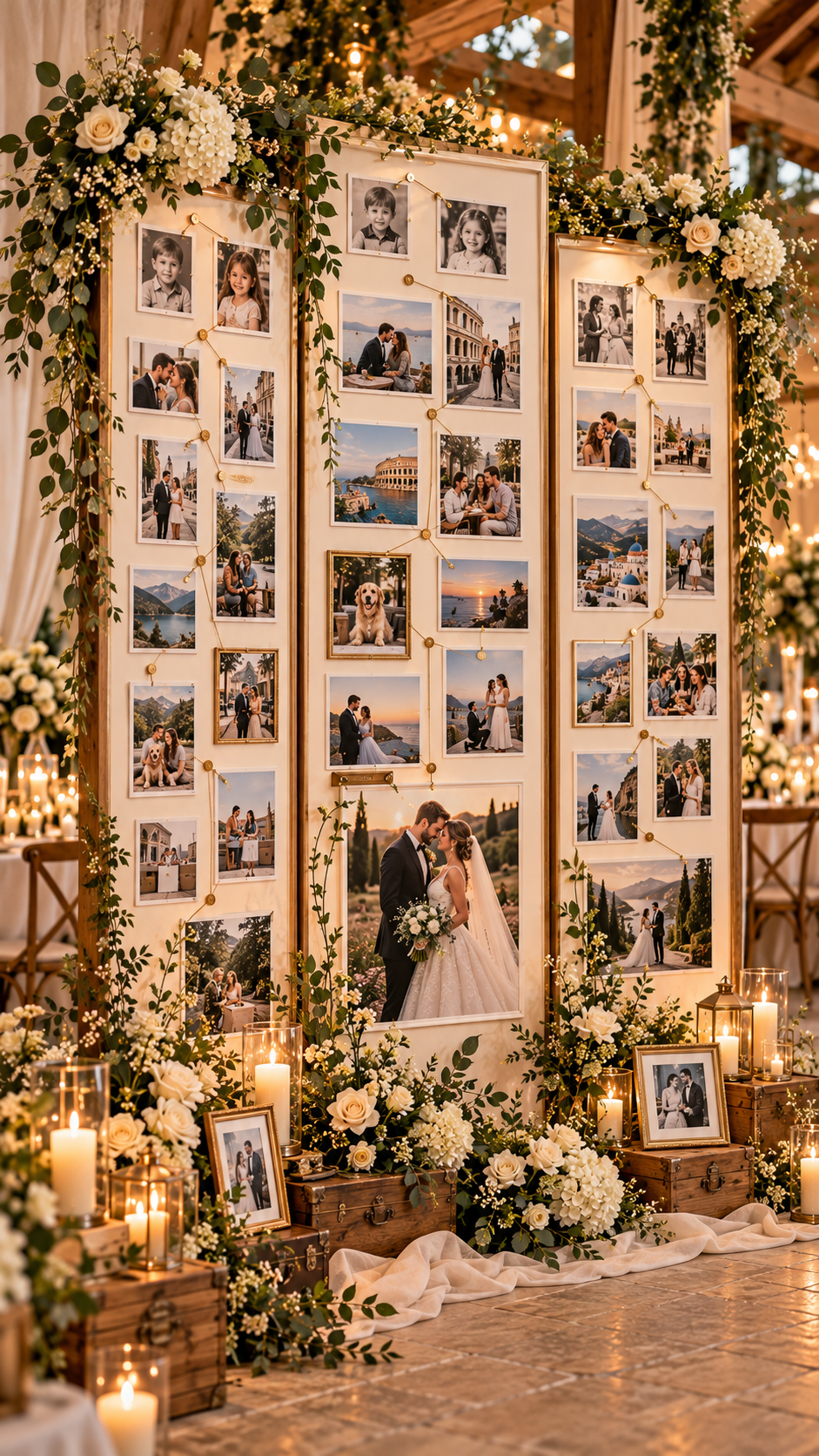
Wedding Photo Displays With a Relationship Timeline
A relationship timeline can begin with the earliest photograph of the couple.
From there, photographs can represent key milestones.
Possible moments include:
first trip together
first holiday celebration
moving into a first home
graduation
adopting a pet
favorite vacations
the proposal
engagement photographs
Small date markers can help guests understand the sequence.
These labels do not need to contain long explanations. A city name, year, or short phrase can be enough.
For example:
London 2018
Our First Home 2020
The Proposal 2025
Short captions allow the photographs to remain visually dominant.
Use Large Panels for a Museum Style Display
For a more sophisticated presentation, photographs can be mounted on large vertical panels.
Three panels placed side by side can divide the story into chapters.
For example:
How We Met
Our Adventures
The Road to the Wedding
Each panel might contain several photographs with minimal captions.
This museum-style approach works especially well at contemporary weddings.
Large cream, beige, white, charcoal, or muted green panels can become significant decorative features while still maintaining a clean aesthetic.
Typography should remain simple.
Small serif fonts can feel classic, while modern sans-serif lettering creates a contemporary atmosphere.
Include Travel Memories
Travel photographs are often some of the most visually interesting images couples have.
Different landscapes, cities, beaches, mountains, and architectural backgrounds naturally add variety.
If travel has played an important role in the relationship, dedicate part of the display to those memories.
A small map can even be incorporated behind the photographs.
Pins or subtle lines can indicate destinations the couple has visited together.
However, the display should still prioritize personal photographs rather than becoming purely travel-themed.
Add Childhood Photographs From Both Partners
Another charming variation is beginning the timeline before the couple met.
Childhood photographs can be displayed side by side.
One side shows one partner’s childhood while the other shows the second partner’s.
The two visual paths can gradually move toward the center, where the photographs of the couple together begin.
This format tells a beautiful visual story: two separate lives eventually becoming one shared journey.
It can also create humorous moments when childhood photographs show similar hobbies, fashion, or personalities.
Guests often enjoy comparing the images.
Include Pets and Everyday Life
Not every photograph needs to come from a major milestone.
Sometimes ordinary memories make the display feel more authentic.
Photographs with pets, weekend breakfasts, gardening, road trips, home projects, or spontaneous candid moments can reveal more about the relationship than formal portraits.
These everyday photographs create emotional balance.
Engagement photos may be beautifully polished, but candid images often feel more relatable.
Combining both styles prevents the display from looking like a professional photo portfolio.
Instead, it becomes a genuine representation of life together.
Creative Materials for Wedding Photo Displays
The materials surrounding the photographs have a strong influence on the final style.
A simple photograph can feel completely different depending on whether it is presented with wood, acrylic, metal, fabric, or flowers.
For a romantic garden wedding, natural materials often work best.
Wooden frames, linen ribbons, greenery, and botanical decorations create softness.
For modern weddings, acrylic sheets, black metal structures, and minimalist frames can look cleaner.
Elegant ballroom weddings often benefit from metallic finishes such as brushed brass, antique gold, or champagne.
The most important principle is consistency.
Using too many materials at once can make the display feel disconnected from the overall wedding aesthetic.
Choose two or three dominant materials and repeat them throughout the design.
Best Photograph Sizes for Wedding Photo Displays
Photograph size depends largely on how far away guests will stand.
Tiny photographs may work for intimate tabletop displays, but they can become difficult to appreciate on large walls.
For gallery walls, combining several print sizes usually creates the most interesting composition.
Large anchor photographs might measure approximately 16 x 20 inches or larger.
Medium images can fill surrounding areas, while smaller photographs add detail.
For hanging installations, prints around 4 x 6 or 5 x 7 inches are often manageable because they remain lightweight.
Large storytelling panels can support much bigger photographs.
The goal is ensuring important images remain visible from several feet away.
When possible, print a few test sizes before committing to the entire collection.
Matte or Glossy Prints for Wedding Photo Displays
Print finish is another important decision.
Glossy prints often have stronger contrast and vibrant colors, but they can create glare under wedding lighting.
Matte prints usually photograph better and are easier to view from different angles.
They also tend to feel more sophisticated in decorative displays.
For outdoor installations, matte or lustre finishes are often practical because reflections are reduced.
If photographs will be placed behind glass, glare-resistant acrylic or non-reflective glazing can also improve visibility.
Black-and-white photographs look particularly elegant with matte finishes.
How Many Photographs Should Be Used
There is no single perfect number.
The ideal quantity depends on the display concept.
A small frame wall may only need 12 to 20 photographs.
A large storytelling installation might include 30 to 50.
The biggest mistake is trying to include every meaningful image.
A curated collection usually feels more powerful.
Choose photographs that communicate different parts of the story rather than multiple nearly identical images from the same event.
For example, one strong engagement photograph may have more visual impact than six similar engagement portraits.
Variety creates interest.
Mix close-up portraits, wider environmental photographs, candid moments, detail shots, and group pictures.
Where to Place Wedding Photo Displays During the Reception
Location strongly affects how much attention the display receives.
One of the best places is near the reception entrance.
Almost every guest will pass through this area, making it ideal for a large installation.
Cocktail hour is another excellent location because guests naturally wander and explore.
A display near the guest book can also encourage people to pause.
Lounge areas work particularly well for gallery-style displays because guests spend longer periods there.
Avoid placing the installation in narrow walkways where people cannot comfortably stop.
Also consider photography.
A beautiful display can double as an informal photo backdrop for guests if there is enough space around it.
Styling Wedding Photo Displays With Flowers and Greenery
Flowers can connect photographs to the wedding’s overall visual identity.
If the ceremony uses roses, hydrangeas, peonies, dahlias, or wildflowers, repeating small amounts of those flowers near the photo display creates continuity.
However, greenery often works even better because it adds texture without competing with the images.
Eucalyptus, olive branches, ivy, smilax, ferns, and seasonal foliage can soften frames and structures.
For autumn weddings, dried grasses and muted foliage can create warmth.
Winter weddings can use evergreen branches, delicate white flowers, and subtle metallic details.
Spring weddings may incorporate fresh green foliage and soft blossoms.
Summer installations can feature abundant garden flowers.
Budget Friendly Wedding Photo Displays
Beautiful displays do not always require expensive custom structures.
One of the easiest budget approaches is collecting secondhand frames.
Frames can be painted in a consistent finish to create visual unity.
Another option is printing photographs and attaching them directly to large foam boards or lightweight panels.
Simple wooden frames can also be built from basic lumber.
Ribbons, clips, and string are inexpensive materials for hanging installations.
Instead of fresh flowers, greenery from local growers or preserved foliage can reduce costs.
Couples who enjoy DIY projects can prepare most of the installation before the wedding and assemble it at the venue.
The key is testing everything in advance.
Photograph arrangements should be measured and photographed during a trial setup so they can be recreated quickly on the wedding day.
How to Make Wedding Photo Displays Feel Elegant Instead of Cluttered
Elegance usually comes from restraint.
Choose a defined color palette.
Limit frame finishes.
Maintain consistent spacing.
Avoid excessive decorations around every photograph.
Negative space is important.
Allowing some empty areas around photographs helps viewers focus on individual images.
Another effective technique is repeating visual elements.
If one section uses ivory ribbon, continue using the same ribbon elsewhere instead of introducing new colors.
Consistency creates polish.
The photographs themselves should also be edited with similar tones when possible.
Slight adjustments to brightness, warmth, or color balance can help images from different years feel more cohesive.
Best Color Palettes for Wedding Photo Displays
Neutral color palettes are popular because they allow photographs to remain dominant.
Cream, ivory, beige, champagne, warm white, and natural wood create a timeless foundation.
For modern weddings, black and white can feel dramatic.
Muted sage green works beautifully for botanical weddings.
Dusty blue can create a soft romantic atmosphere.
Warm terracotta, bronze, and caramel tones work well for autumn celebrations.
Burgundy can add depth to elegant winter or late-autumn weddings.
Metallic accents such as brass or gold can elevate almost any neutral palette.
The display does not need to match every wedding color exactly.
It should simply feel visually connected to the broader celebration.
Final Thoughts on the Best 3 Wedding Photo Displays
The most memorable Wedding Photo Displays are not necessarily the largest or most expensive. They are the displays that feel connected to the couple’s real story.
🥇 A curated gallery wall is ideal for couples who want something polished, timeless, and visually sophisticated.
🥈 A hanging memory installation creates a softer and more romantic atmosphere, especially for outdoor or garden weddings.
🥉 A relationship timeline display transforms photographs into a complete visual story, allowing guests to follow meaningful moments from the past to the wedding day.
Each idea can be customized using different frames, flowers, materials, photograph styles, and layouts.
Most importantly, the display should contain images that genuinely matter.
Wedding decor disappears after the celebration, but photographs represent real experiences. When those photographs are carefully displayed, they become more than decoration.
They become part of the wedding story itself. 💍📸✨
Related posts:

Best 3 Minimalist Cozy Interiors Ideas That Make Simple Homes Feel Warm and Beautiful
Best 3 Cozy Reading Chairs That Make Any Corner Feel Like Your Favorite Escape
Best 3 Wainscoting and Beadboard Styles That Instantly Make Any Room Look More Expensive
Best 3 Thanksgiving Table Ideas That Will Make Your Holiday Dinner Look Unforgettable
Best 3 Christmas Tree Ideas 2026 Everyone Will Want to Copy This Holiday Season
Best 3 Practical Magic House Ideas That Make Any Home Feel Enchanted