A practical magic house is more than a beautiful Victorian-inspired home filled with candles, herbs, old furniture, and mysterious corners. The look is compelling because it blends romance, nature, history, comfort, and a slightly supernatural atmosphere without making the home feel like a Halloween set. It is the kind of house that appears to have collected stories for generations—a place where copper pans hang above a busy kitchen, climbing plants soften the porch, old books fill shelves, and candlelight makes every room feel warmer after sunset.
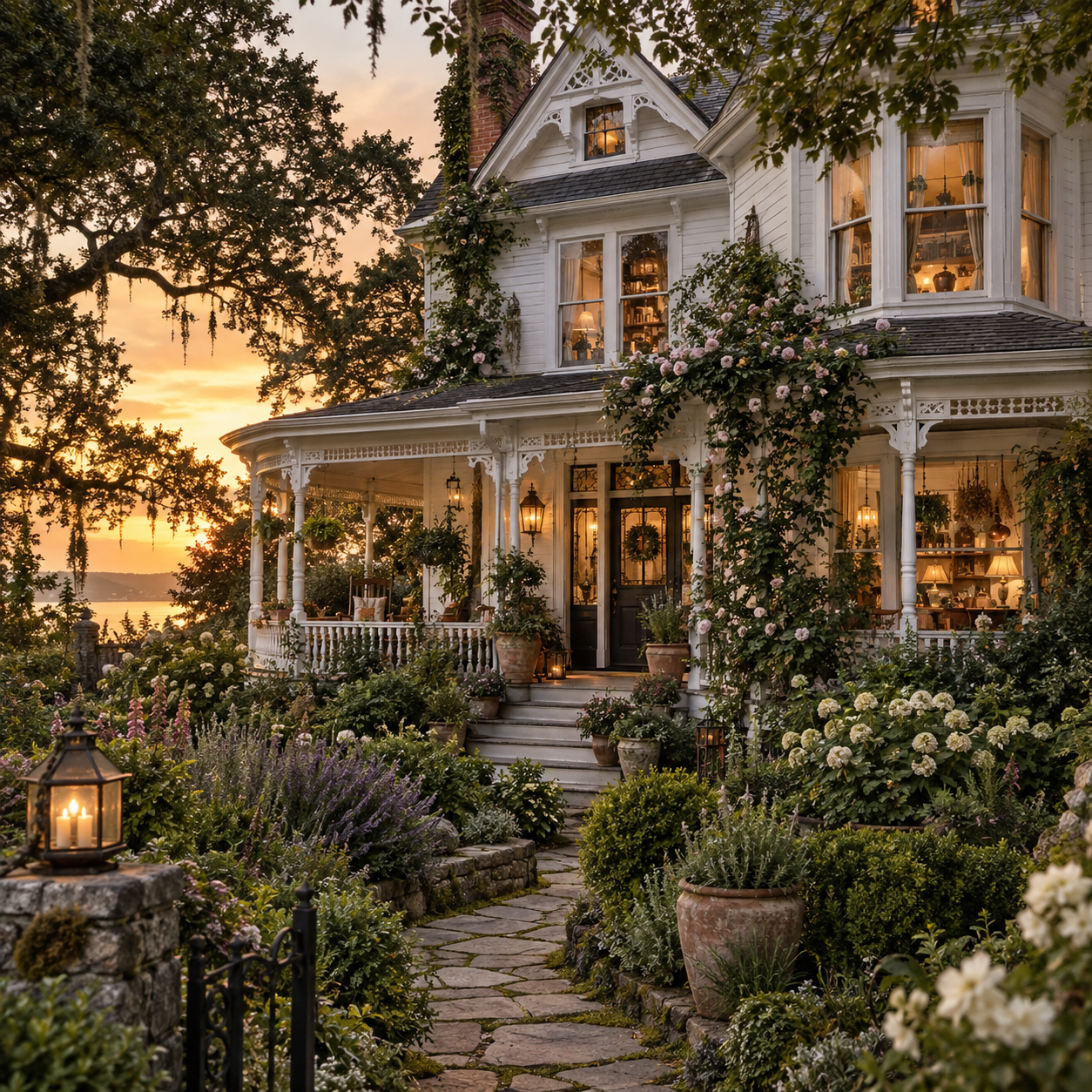
Much of the fascination comes from the memorable Owens family home in the 1998 film Practical Magic. The famous white Victorian exterior was purpose-built on San Juan Island in Washington, while many interior scenes were created separately on a Los Angeles soundstage. The original exterior was later dismantled, which means the iconic house was ultimately a piece of production design rather than a permanent historic residence. (Architectural Digest)
That may actually make the aesthetic even more interesting for home lovers. Instead of trying to find or reproduce one exact building, the Practical Magic house aesthetic can be interpreted through atmosphere: romantic Victorian shapes, botanical abundance, handcrafted materials, old-world kitchens, imperfect antiques, dramatic windows, earthy colors, and rooms that feel lived in rather than professionally staged.
The secret is restraint. A successful magical interior does not need pentagrams painted on the walls or shelves overloaded with obvious witch decorations. The strongest rooms feel believable first and mysterious second.
These Best 3 Practical Magic House ideas offer three different ways to capture that unforgettable feeling while creating a home that still looks sophisticated, comfortable, and timeless.
Why the Practical Magic House Look Still Feels So Irresistible
The visual appeal begins with contrast. The house feels grand without appearing cold, old without appearing neglected, feminine without becoming overly delicate, and mysterious without becoming frightening.
That combination is surprisingly difficult to achieve.
Many modern interiors are built around perfection. Furniture coordinates precisely, cabinets are spotless, decorative objects follow predictable color schemes, and almost everything looks deliberately purchased. A practical magic inspired interior works differently. It becomes more beautiful when objects appear to have arrived at different moments in the home’s history.
A faded wooden table can stand beside elegant glassware. A polished brass lamp can share a room with dried herbs. Fine curtains can hang next to weathered wood. Family photographs, botanical illustrations, ceramics, candles, baskets, old books, garden clippings, and hand-thrown pottery can coexist without needing to belong to exactly the same design collection.
🌿 Nature is equally important. Flowers should not appear only as decorative bouquets placed on a dining table. They can climb walls, dry above countertops, spill from garden beds, cover a pergola, or sit casually in a handmade ceramic jug.
🔥 Warmth matters too. Candlelight, aged wood, linen, brass, copper, stone, and amber-colored lamps keep the darker elements of the aesthetic inviting.
🏡 Architecture provides the final layer. Tall windows, traditional trim, porches, pitched roofs, wooden floors, open shelving, vintage doors, and unexpected little rooms create the feeling that the house has evolved gradually instead of being designed all at once.
The goal is not to create a movie replica. It is to capture the emotional language behind it.
Important Note: The most convincing Practical Magic inspired home should feel like a real house with history rather than a themed attraction. Use mystical details sparingly and let natural materials vintage character botanical elements and warm lighting create most of the magic.
Practical Magic House Color and Material Guide
Before choosing furniture or decorations, establishing a restrained palette makes the entire concept easier to control.
A practical magic inspired home usually works best when soft neutrals create the background while darker natural shades provide depth. Instead of relying heavily on pure black, consider charcoal, espresso brown, dried herb green, burgundy, midnight blue, and antique bronze.
These colors feel mysterious while remaining appropriate for everyday living.
| Design Element | Best Choices | Effect in the Home |
|---|---|---|
| Walls | Warm ivory soft cream pale sage muted plaster white | Keeps rooms bright and timeless |
| Wood | Walnut chestnut dark oak reclaimed pine | Creates historic warmth |
| Metals | Aged brass copper blackened iron | Adds old world character |
| Fabrics | Linen velvet cotton wool lace | Creates soft layered texture |
| Botanical colors | Olive moss eucalyptus forest green | Connects interiors with the garden |
| Accent colors | Burgundy plum rust amber midnight blue | Introduces romantic drama |
| Lighting | Candles warm lamps antique sconces | Makes rooms intimate and mysterious |
| Decorative materials | Glass ceramic stone wicker wood | Prevents the style from looking artificial |
The palette should not look perfectly matched. In fact, small inconsistencies are useful. One room might lean toward cream and honey-colored wood while another feels moodier with plum textiles and dark furniture.
Those changes make the house feel collected over generations.
Texture should receive just as much attention as color. Smooth modern plastics and high-gloss surfaces can quickly weaken the atmosphere. Replace them, when practical, with materials that develop character over time.
A scratched wooden worktable often works better than a pristine marble island. Slightly irregular handmade ceramics can feel more appropriate than identical factory-made accessories. Linen curtains that move in the breeze often contribute more atmosphere than perfectly structured window treatments.
That imperfect beauty becomes the foundation for all three ideas below.
🥇 Top 1 Practical Magic House Kitchen With Botanical Old World Charm
If only one room receives the full practical magic house treatment, make it the kitchen.
The kitchen should feel like the emotional center of the home rather than simply the place where meals are prepared. Imagine a room where coffee is made early in the morning, fresh flowers are trimmed after coming in from the garden, bread cools near an open window, herbs hang from wooden rails, and friends gather around the table long after dinner has ended.
This is not a minimalist kitchen.
It should contain visible evidence of life.
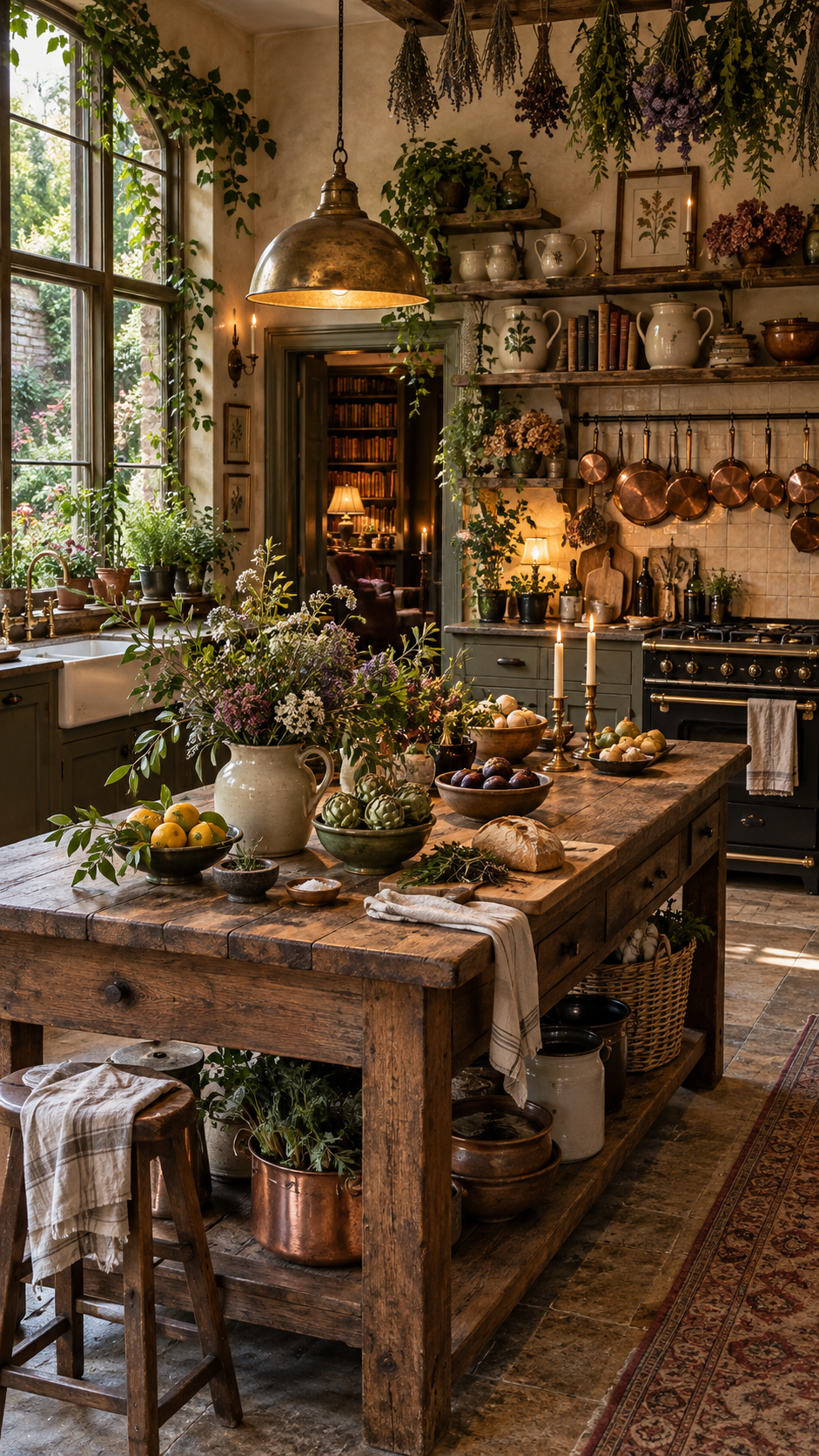
Copper cookware, ceramic mixing bowls, glass jars, cutting boards, botanical ingredients, cookbooks, baskets, dried herbs, fresh branches, wooden spoons, and linen towels can remain visible without making the room chaotic.
The difference between charming abundance and clutter is composition.
Objects should form small functional groups. A collection of wooden boards can lean against one section of backsplash. Several copper pans can hang above a worktable. Glass containers can hold flour, tea, dried flowers, or herbs. A large ceramic vessel can contain fresh garden branches.
Everything does not need to be displayed.
Leaving small areas of breathing space makes the objects that remain visible feel intentional.
Create a Large Working Table Instead of a Perfect Island
A massive polished kitchen island can feel too contemporary for this style. A freestanding wooden worktable immediately introduces a more authentic atmosphere.
Look for thick timber, visible grain, slightly irregular edges, turned legs, drawers, or signs of previous use. The table should look strong enough to have survived decades of baking, family dinners, flower arranging, gardening projects, and midnight conversations.
It can still provide modern function.
Storage baskets can sit underneath. Cutting boards can remain on top. Small stools can slide beneath one side. A pendant light can hang overhead.
The goal is to hide modern convenience inside a composition that feels older.
If replacing an existing island is unrealistic, the same feeling can be achieved by changing its exterior. Wood paneling, darker paint, aged brass hardware, open end shelves, or a butcher-block surface can soften a modern kitchen dramatically.
Fill Open Shelves With Useful Beautiful Objects
Open shelving belongs naturally in this aesthetic because it makes ordinary household objects part of the decoration.
Choose ceramics in cream, brown, olive, dusty blue, and imperfect white. Mix several styles rather than purchasing twenty identical pieces. Combine pottery with glass jars, small framed artwork, old cookbooks, wooden bowls, and perhaps a tiny vase containing garden cuttings.
🌿 Herbs provide one of the easiest magical details.
Rosemary, thyme, sage, lavender, mint, basil, bay, and other kitchen plants can appear fresh in pots or dried in small bundles.
They do not need mystical labels.
Their natural fragrance, texture, and color already create the desired effect.
Glass jars are especially useful because they make ordinary ingredients appear beautiful. Dried citrus, loose tea, cinnamon, beans, grains, spices, nuts, pasta, and baking ingredients can become part of the visual composition.
Avoid filling every available shelf.
A few empty spaces give the eye somewhere to rest.
Add Copper Brass and Blackened Iron
The right metal finishes can transform a plain kitchen.
Highly polished chrome often feels too crisp for a practical magic interior, while copper, brass, bronze, and dark iron create immediate warmth.
Copper cookware is particularly effective because it changes subtly with age. A mixture of brighter and darker pieces feels more natural than an identical brand-new set.
Brass can appear on cabinet knobs, taps, lighting, picture frames, candlesticks, and small decorative trays.
Blackened iron works beautifully for shelf brackets, pot rails, hooks, lantern-inspired lights, and fireplace accessories.
🔥 The combination of warm wood and aged metal is one of the easiest ways to make a recently renovated kitchen feel established.
Make the Kitchen Feel Connected to the Garden
A truly convincing version of this aesthetic should never feel separated from nature.
Place potted herbs near the windows. Grow climbing plants outside. Keep flowers casually arranged rather than tightly styled. Fill a bowl with seasonal fruit. Place muddy gardening boots near a back door if the layout allows.
Even the view through the kitchen window matters.
A flower bed, herb garden, mature shrub, climbing rose, or small tree immediately strengthens the atmosphere because the interior and exterior start to feel like parts of the same world.
The best result is a kitchen that feels beautiful at midday but becomes even more enchanting in the evening.
Turn off strong ceiling lights and rely instead on pendant lamps, wall sconces, candles, and small table lamps.
Suddenly, the copper glows, the wood becomes richer, and shadows make shelves feel deeper.
That transformation from practical daylight kitchen to romantic evening gathering place captures the aesthetic perfectly.
🥈 Top 2 Romantic Practical Magic House Porch and Secret Garden
The second idea moves the magic outside.
A Practical Magic house garden should never look like landscaping was completed in a single weekend. The most convincing version feels as if different generations planted different flowers, added different pathways, and slowly allowed nature to soften every architectural edge.
That does not mean neglect.
Successful romantic gardens are often carefully maintained behind the scenes. Their wildness is controlled.
Plants can spill over pathways without making them unusable. Roses can climb structures without covering windows completely. Herbs can grow densely while still remaining accessible.
The finished garden should feel abundant rather than chaotic.
Begin With a Porch That Feels Like an Outdoor Room
A porch immediately establishes the transition between house and garden.
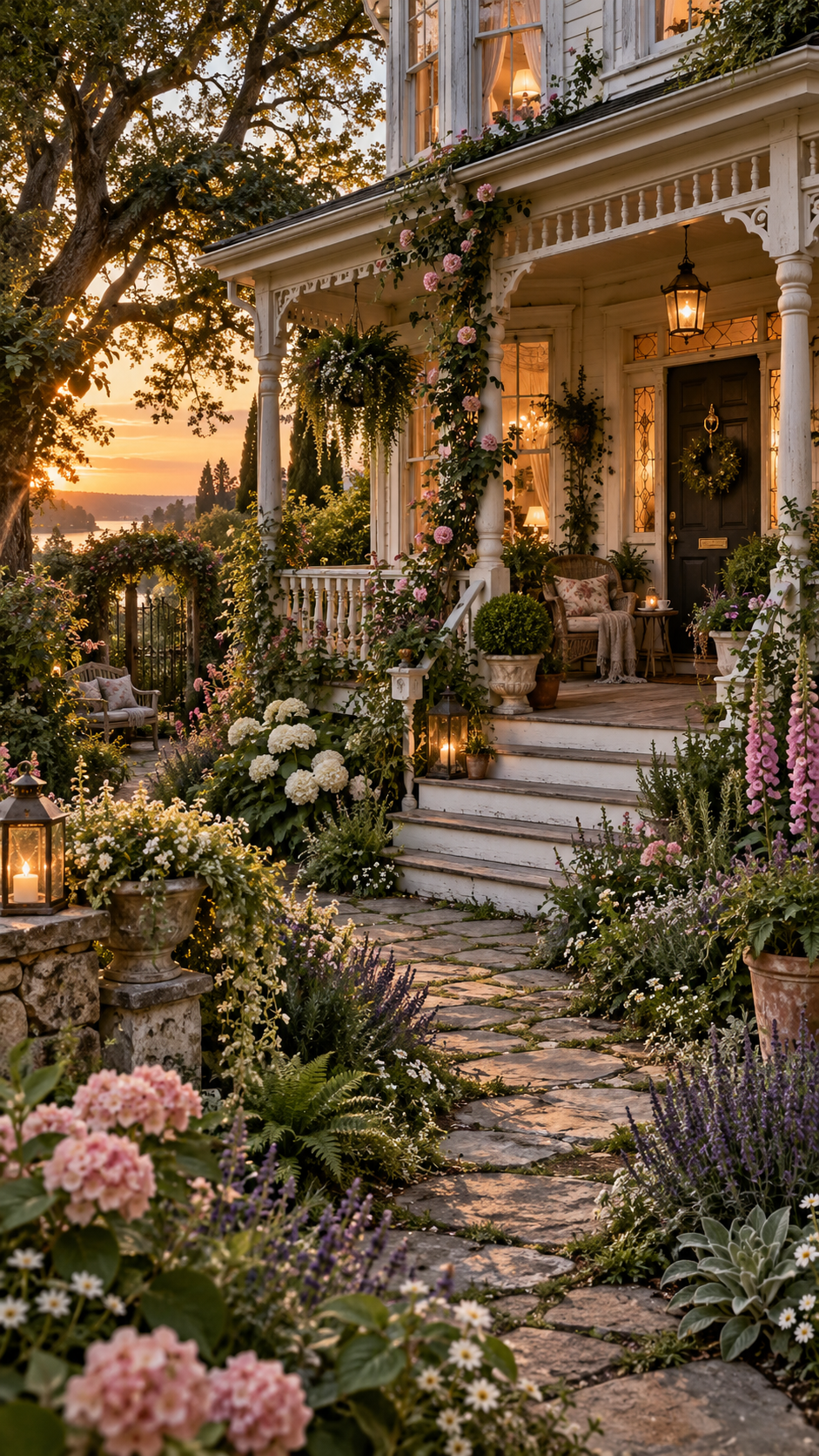
Instead of treating it as an empty strip of flooring beside the front door, style it almost like another living room.
A weathered bench, wicker chairs, linen cushions, terracotta pots, baskets, lanterns, small side tables, and climbing plants can make the porch feel usable throughout the day.
Keep the colors natural.
Cream, faded green, brown, charcoal, dusty blue, muted burgundy, and warm wood work particularly well.
The porch should not look newly decorated for a photograph. Leave a watering can near the plants. Place gardening gloves in a basket. Allow a stack of books to sit beside a chair. Add one slightly mismatched stool.
Those ordinary objects create narrative.
✨ At night, lighting changes everything.
Warm wall lanterns and subtle string lights hidden among vines can create beautiful illumination without turning the porch into a festive display. Add candles inside glass lanterns when appropriate.
The objective is soft pools of warm light surrounded by shadow.
Create an Herb Garden That Looks Beautiful and Useful
Herb gardens are perfect for this style because they combine practical purpose with romantic imagery.
Instead of organizing every herb in identical containers, consider a loose combination of garden beds, raised wooden boxes, aged terracotta pots, and stone-edged planting areas.
Allow textures to overlap.
Soft lavender can grow beside upright rosemary. Sage can introduce silvery foliage. Thyme can creep near stones. Mint can live safely inside a container where its vigorous growth can be controlled.
Flowering plants can be mixed among culinary herbs to prevent the area from looking like an agricultural plot.
Calendula, roses, chamomile, foxglove-style ornamental planting where locally appropriate, nasturtiums, cosmos, and other cottage-garden flowers can provide that romantic abundance.
Local climate should determine the exact plants.
The visual principle matters more than copying a particular species.
Choose layers of height, color, fragrance, foliage, and seasonality.
Let Pathways Feel Slightly Hidden
Straight paved paths often look formal and contemporary.
A more atmospheric garden can use stepping stones, gravel, brick, weathered pavers, or narrow winding routes that disappear partially behind plants.
You should still be able to walk safely.
The illusion of mystery comes from planting, not dangerous surfaces.
🌙 A pathway feels especially enchanting when visitors cannot see its entire destination from the beginning.
A taller shrub might obscure the next turn. An arch covered with vines might create a transition. A small bench can appear beyond a cluster of ornamental grasses.
This sense of discovery is one of the most effective ways to make even a modest garden feel larger.
Rather than viewing the garden from one point, the visitor experiences it gradually.
Introduce One Quiet Secret Corner
Every romantic garden benefits from one place that feels removed from the rest of the property.
It does not need to be large.
A chair under a tree can become the entire destination.
A tiny table surrounded by herbs can work equally well. So can a bench placed beside a garden wall.
Add enough planting to make the spot feel protected without completely hiding it.
The goal is intimacy.
A person sitting there should feel surrounded by leaves, flowers, birds, wind, and shifting light.
Avoid filling the area with obvious mystical symbols.
Nature already supplies the magic.
A beautiful tree canopy, mossy stone, old terracotta pot, candle lantern, climbing vine, or weathered bench usually creates more mystery than a dozen novelty decorations.
🥉 Top 3 Candlelit Attic Library and Moody Bedroom Retreat
The third idea explores the quieter and more mysterious side of the aesthetic.
Not every room in a practical magic inspired house needs to be bright and botanical. A darker upstairs bedroom, attic reading room, or private study can create contrast with the lighter kitchen and garden.
Imagine entering a room in the late afternoon.
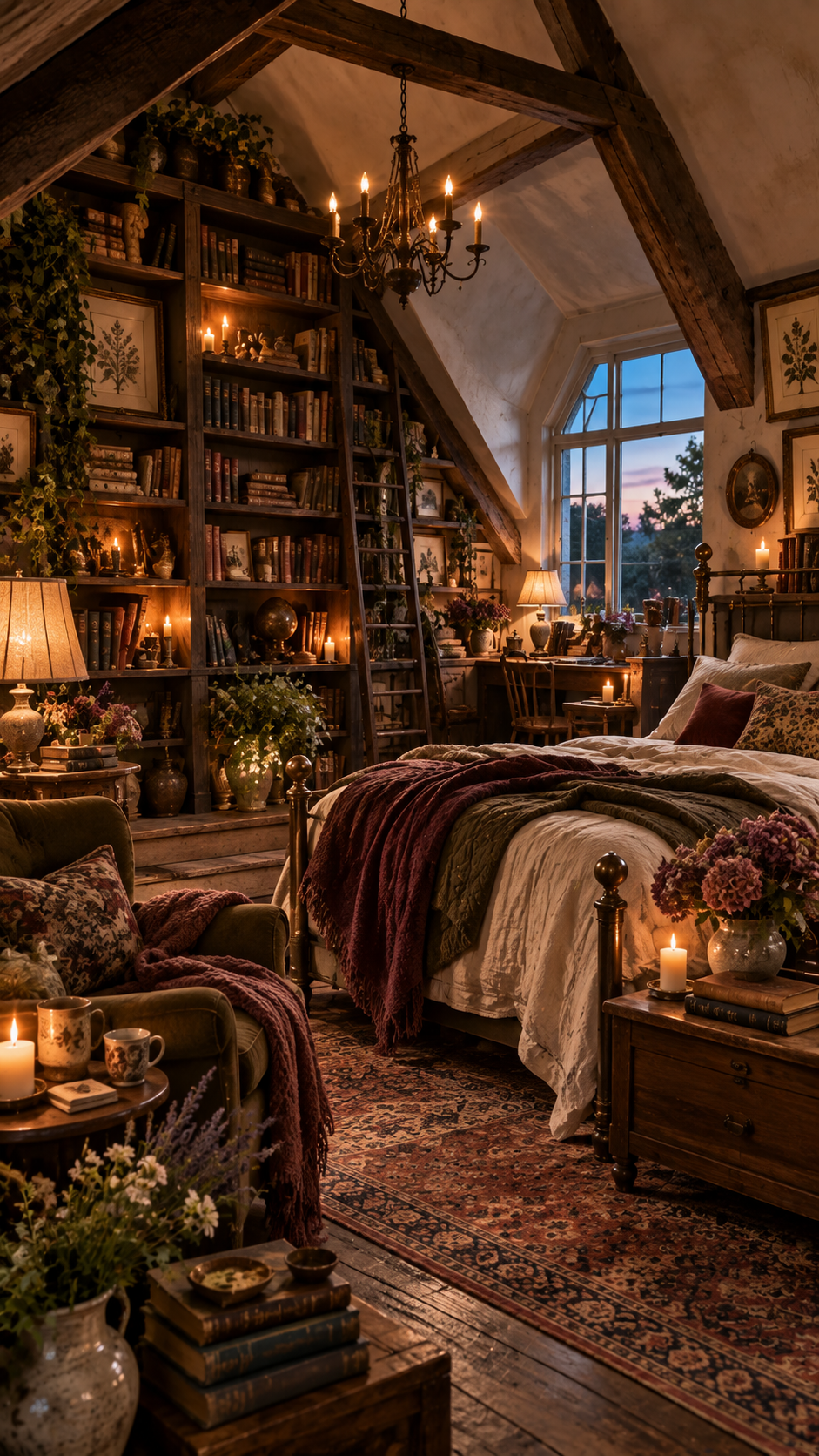
Books cover one wall. Linen curtains soften tall windows. Dark wooden furniture anchors the room. A faded rug covers part of the floor. Dried flowers sit inside an old bottle. A small lamp illuminates a chair.
The atmosphere should feel private, thoughtful, and slightly mysterious.
It is the place where rain sounds better against the windows.
Build the Room Around Books and Collected Objects
Books instantly give a room history.
Floor-to-ceiling built-ins are beautiful but unnecessary. Freestanding wooden bookcases, wall shelves, small stacks on side tables, and old cabinets can produce the same feeling.
Do not arrange every book according to exact height or color.
That tends to make a library feel decorative rather than functional.
Mix vertical books with occasional horizontal stacks. Leave room for framed photographs, ceramics, a brass candlestick, dried flowers, interesting stones, wooden boxes, or small pieces of artwork.
📚 The shelves should look personal.
A convincing collected interior suggests that objects matter because they have stories attached to them.
A chipped ceramic bowl might have belonged to a grandparent. A frame might contain an old landscape. A box might store handwritten letters.
Even when those stories exist only in the homeowner’s imagination, designing around meaningful objects makes rooms feel more emotional.
Choose Moody Colors Without Making the Room Dark
A mysterious room does not require black walls.
Deep warm colors usually create richer results.
Consider muted olive, smoky blue, cocoa brown, aubergine, faded burgundy, warm gray, mushroom, or dark teal.
These shades can appear on one wall, furniture, curtains, bedding, or rugs rather than everywhere at once.
Keeping the ceiling lighter helps preserve openness.
Natural wood also prevents deep colors from becoming oppressive.
A dark green wall beside a walnut dresser and ivory bedding, for example, feels romantic rather than gloomy.
The room becomes even more layered when materials change with the light.
Velvet looks dramatically different at night than in daytime. Brass glows near warm lamps. Linen curtains become almost translucent when sunlight passes through them.
These subtle transformations make the room feel alive.
Use Layered Bedding Instead of Perfect Hotel Styling
Bedrooms inspired by this aesthetic should look inviting enough that someone would actually want to crawl into bed with a novel and a cup of tea.
Start with natural fabrics.
Linen and cotton work beautifully because slight wrinkles add softness rather than looking untidy.
Layer a neutral base with one or two deeper colors. An ivory duvet might sit beneath an olive quilt. Cream pillows could be mixed with faded floral cushions. A burgundy throw could rest casually across the foot of the bed.
Avoid excessive symmetry.
Perfectly identical bedside tables and matching lamps can sometimes make a bedroom feel too staged.
One side might have a wooden table and lamp while the other uses a small antique cabinet. Similar visual weight matters more than perfect duplication.
🕯️ Candlelight can add atmosphere, but safe electric candle alternatives and warm table lamps can create a similar effect where open flames are unsuitable.
The goal is intimacy rather than darkness.
Turn an Attic Into the Most Magical Room in the House
Attics are naturally suited to this aesthetic because unusual rooflines, exposed beams, dormer windows, and irregular corners already feel different from conventional rooms.
Instead of hiding every architectural imperfection, emphasize it.
Paint beams slightly darker than surrounding surfaces. Place a reading chair beneath a sloping ceiling. Fit bookshelves into awkward corners. Position a small desk beneath a dormer window.
Old trunks can provide storage.
A faded rug can make bare floorboards more comfortable.
Plants that tolerate the available light can soften the edges.
Attics are also ideal locations for objects that would look overly theatrical downstairs. An old telescope, celestial print, antique mirror, dramatic candelabra, botanical specimen illustration, or collection of unusual glass bottles can feel natural in this environment.
The key remains moderation.
Choose two or three strong elements and allow the architecture to do the rest.
How to Combine All Three Practical Magic House Ideas
The greatest impact comes when the three concepts are connected rather than treated as separate themes.
Begin with the botanical kitchen.
Its warm wood, copper details, herbs, ceramics, and imperfect surfaces establish the home’s everyday character.
Allow those materials to appear elsewhere.
The same aged brass used for kitchen hardware might reappear on bedroom lamps. Similar ceramic pots can move onto the porch. The dark wood of the worktable can echo the shelves in the library.
Then use the garden as the bridge between spaces.
Plants visible through windows connect the indoors with the outdoors. Fresh flowers from the garden can appear on kitchen tables. Herbs can move between garden beds and cooking shelves.
Finally, let the attic or bedroom introduce deeper colors.
This creates a natural progression through the home.
The public areas feel brighter and welcoming. The outdoor spaces feel lush and romantic. Private rooms become darker and more introspective.
That variation prevents the entire house from turning into a single visual theme.
The Details That Make a Practical Magic Inspired Home Feel Expensive
Luxury in this style rarely comes from shiny surfaces.
It comes from depth.
A room becomes more convincing when the eye discovers details gradually.
Perhaps the curtains are simple linen, but the curtain rod is aged brass. The walls may be cream, but an antique landscape hangs inside a dark wooden frame. The table may be rustic, but fresh flowers sit inside hand-thrown pottery.
Contrast creates richness.
Avoid filling the house with inexpensive objects merely because they have moons, stars, mushrooms, ravens, or mystical phrases printed on them.
Those items can be fun in small quantities, but an entire interior built from symbolic merchandise often loses the timeless quality that makes the aesthetic appealing.
Instead, choose objects based on material.
Wood.
Glass.
Stone.
Iron.
Copper.
Linen.
Wool.
Ceramic.
Botanical matter.
These materials naturally create the earthy, layered mood associated with a practical magic inspired home.
Age also matters.
A brand-new object can still work beautifully, particularly when it is handmade or uses natural materials. However, incorporating genuine vintage pieces gives the room instant complexity.
One old cabinet often has more visual power than twenty small decorative accessories.
How to Create the Look in a Modern House
Victorian architecture certainly helps, but it is not required.
A standard suburban house, apartment, cottage, or recently built home can still capture the atmosphere.
Focus first on elements you can control.
Replace overly cool lighting with warmer options. Introduce wooden furniture. Add linen curtains. Bring in living plants. Display useful kitchenware. Replace a few chrome details with warm metal finishes. Hang artwork in vintage-style frames.
Then gradually layer character.
Add one antique cabinet.
Introduce one beautiful rug.
Create an herb garden.
Collect ceramic vessels over time.
Use baskets instead of plastic storage where practical.
Paint one room a moodier color.
The transformation should happen slowly.
That gradual process actually suits the aesthetic because a house assembled over months or years generally feels more authentic than one decorated through a single shopping trip.
Practical Magic House Styling Through the Seasons
One reason this aesthetic has such lasting appeal is its ability to change throughout the year.
🌱 Spring can introduce flowering branches, pale ceramics, fresh herbs, linen, bulbs, and soft botanical colors.
🌿 Summer can emphasize open windows, overflowing gardens, woven baskets, white flowers, fresh fruit, and lighter textiles.
🍂 Autumn is naturally dramatic. Dried leaves, apples, pears, pumpkins, deep burgundy fabrics, amber glass, candles, branches, and copper tones fit effortlessly into the palette.
❄️ Winter can move toward evergreen branches, beeswax-colored candles, wool blankets, dried citrus, dark wood, and warm lights.
Seasonal changes should feel like additions to an existing home rather than complete redesigns.
Keep the core furniture and materials consistent.
Change flowers, foliage, textiles, fruit, candles, and small decorative elements.
This makes the home feel connected to the natural calendar outside its windows.
What to Avoid When Designing a Practical Magic House
The biggest mistake is confusing atmospheric design with costume design.
If every wall contains occult artwork, every shelf holds potion bottles, and every table is covered with candles, the room can quickly become theatrical.
A subtler approach is usually much stronger.
The second mistake is making everything artificially old.
Authentic vintage pieces can be beautiful, but fake distressing on every surface often looks less convincing than mixing genuinely aged objects with simple contemporary pieces.
A modern sofa can work perfectly beside an antique table.
A contemporary refrigerator can exist inside a traditional kitchen.
A newly made linen curtain can hang above old wooden floors.
That contrast makes a real home practical.
The third mistake is ignoring function.
Beauty should not make everyday life inconvenient.
Kitchen surfaces still need room for food preparation. Garden paths should remain safe. Candles require appropriate placement. Bookshelves need enough strength to hold books. Vintage electrical fixtures should be properly checked when necessary.
The aesthetic becomes more believable when everything actually works.
The Final Secret Behind the Practical Magic House Aesthetic
The unforgettable quality of a practical magic house does not really come from Victorian trim, copper pans, dried herbs, antique furniture, or candlelight individually.
It comes from the feeling that the home belongs deeply to the people living inside it.
The rooms contain evidence of cooking, gardening, reading, gathering, remembering, and changing seasons. The house feels beautiful because it feels inhabited.
That is why the strongest interpretation is not a perfect reproduction of a movie set.
It is a personal home influenced by the same ideas.
🥇 Start with a warm botanical kitchen where cooking, conversation, herbs, ceramics, copper, and aged wood create the heart of the house.
🥈 Extend the atmosphere into a romantic porch and secret garden filled with layered planting, weathered materials, warm evening lights, and quiet hidden corners.
🥉 Finish with a moody attic library or bedroom retreat where books, dark wood, linen, vintage objects, and gentle lighting introduce mystery.
Together, these three ideas create something far more interesting than ordinary witchy decor.
They create a home that feels romantic but useful, mysterious but welcoming, old-fashioned but comfortable, and magical without trying too hard.
And perhaps that is the real reason the Practical Magic house aesthetic continues to capture so much attention.
It makes everyday life look a little more enchanted.
Related posts:

Top 3 Ganpati Decoration at Home Ideas That Will Make Your Celebration Look Absolutely Stunning
Top 3 Dorm Whiteboard Ideas That Are Cute and Actually Useful
Top 3 Fall Entry Table Decor Ideas That Make Your Home Look Instantly Expensive
Top 3 Fall Chalkboard Ideas That Make Every Autumn Space Look Instantly Cozy
Top 3 Black Accent Walls That Make Any Room Look Instantly More Expensive