Winter Window Art is one of the most enchanting ways to transform your home into a beautiful seasonal retreat without investing in expensive decorations. While many homeowners focus on decorating their Christmas trees, fireplaces, and front porches, windows offer an extraordinary creative opportunity that is often overlooked. With the right artistic techniques, ordinary glass can become a breathtaking canvas filled with snowy landscapes, luminous ice-inspired mosaics, and delicate botanical frost patterns.
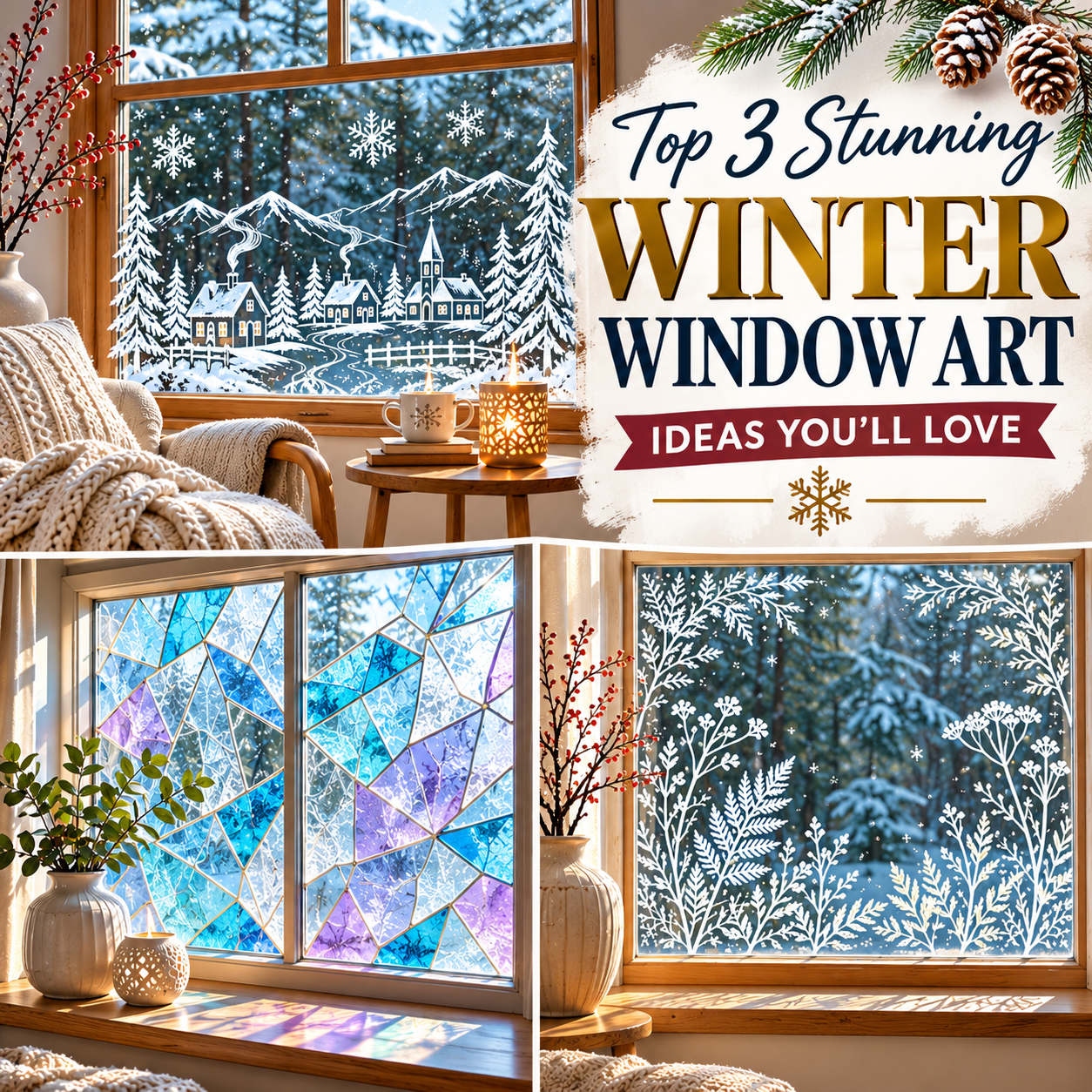
Unlike traditional Christmas decorations, winter window art can remain beautifully displayed long after the holiday season ends. Its timeless charm makes it perfect for December, January, and February, bringing warmth, personality, and artistic sophistication to your interior even during the coldest months of the year.
The beauty of winter window decorations lies in their versatility. Whether you live in a modern apartment, a charming countryside cottage, a Scandinavian-inspired home, or a traditional American farmhouse, you can customize your window artwork to complement your existing interior design.
You do not necessarily need professional painting skills or expensive artistic supplies. Washable chalk markers, removable window films, transparent craft materials, and simple botanical templates can help you create surprisingly sophisticated results.
The following three winter window art ideas explore completely different artistic approaches, from romantic snowy villages to contemporary ice mosaics and elegant nature-inspired frost illustrations.
Each concept offers its own distinctive atmosphere, making your windows some of the most captivating decorative features in your home.
Why Winter Window Art Is Perfect for Seasonal Home Decorating
Winter often brings shorter days, colder temperatures, and landscapes that appear less colorful than during other seasons. However, these conditions also create opportunities to introduce beautiful artistic elements that celebrate the quieter elegance of nature.
Windows are particularly effective decorative surfaces because they interact continuously with changing natural light. An artwork that appears delicate and understated during the morning may become wonderfully dramatic when illuminated by afternoon sunlight or surrounded by warm interior lighting after sunset.
Unlike conventional wall decorations, window art also creates a visual connection between indoor and outdoor spaces. Snowy illustrations can complement a winter garden, while translucent colored designs can introduce beautiful reflections into a room.
Another significant advantage is flexibility. Temporary window artwork allows homeowners to experiment with creative ideas without permanently changing their interiors.
You can introduce a romantic winter village in December, maintain it through January, or replace it with minimalist botanical designs whenever you want a fresh seasonal appearance.
Winter window art can also provide an enjoyable creative activity for families. Children can contribute small snowflakes or simple decorative shapes, while adults can develop more sophisticated compositions that complement the overall interior aesthetic.
The most successful designs are not necessarily the most complicated. Carefully selected colors, balanced compositions, and thoughtful use of negative space can produce results that feel surprisingly luxurious.
The Best Materials for Creating Beautiful Winter Window Art
Choosing the right materials is essential for achieving attractive, long-lasting, and removable winter window decorations.
Different materials produce different artistic effects, so your selection should depend on the visual atmosphere you want to create.
| Material | Best Application | Difficulty | Visual Effect |
|---|---|---|---|
| Washable white chalk markers | Snowy landscapes | Easy | Soft and romantic |
| Removable translucent window film | Ice mosaics | Moderate | Colorful and luminous |
| Static cling window sheets | Geometric artwork | Easy | Clean and contemporary |
| Fine-tip washable glass markers | Botanical illustrations | Moderate | Delicate and sophisticated |
| Paper stencils | Snowflakes and decorative motifs | Easy | Precise and consistent |
| Water-based removable window paint | Large artistic compositions | Moderate | Expressive and detailed |
| Transparent craft film | Layered glass artwork | Moderate | Artistic and dimensional |
| Microfiber cleaning cloth | Surface preparation and removal | Easy | Clean professional finish |
Before beginning any project, clean your windows thoroughly. Dust, fingerprints, condensation, and cleaning residue can interfere with the application of artistic materials.
Make sure the glass is completely dry before applying markers, removable films, or decorative clings.
Important Note: Always choose materials specifically labeled as suitable and removable for window glass. Test them on a small, inconspicuous area first, especially if your windows have protective coatings, tinting, or specialized films. Avoid permanent markers, strong adhesives, abrasive cleaning tools, and materials that could damage the glass surface.
🥇 Best 1 Winter Window Art With Enchanting Snowy Village Landscapes
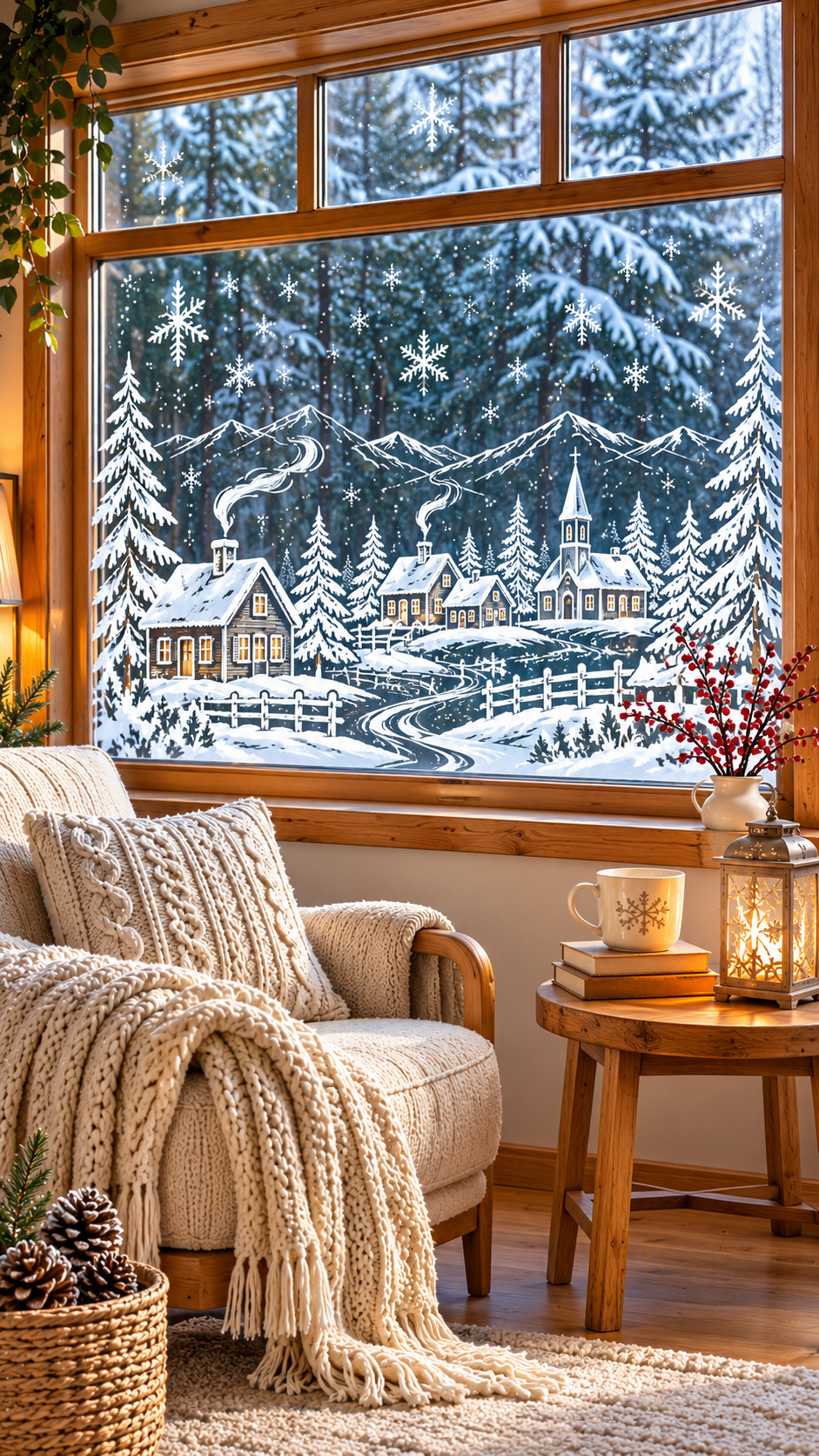
Imagine looking toward your living room window and discovering an enchanting miniature village surrounded by snow-covered pine trees, picturesque cottages, distant mountains, and gently falling snowflakes.
This extraordinary winter window art idea transforms ordinary glass into a romantic seasonal landscape inspired by charming European mountain villages, cozy American countryside homes, and the peaceful atmosphere of traditional winter illustrations.
Instead of relying on colorful holiday characters or conventional Christmas symbols, this artistic concept celebrates the timeless beauty of winter itself.
The result is an elegant decoration that remains relevant throughout the entire cold season.
Create a Magical Winter Landscape Across Your Window
The foundation of this design is a beautifully composed snowy village stretching across the lower portion of the window.
Begin by imagining the window as a transparent landscape painting. The bottom edge becomes the snowy ground, while the upper sections represent the sky and distant surroundings.
Create small cottages with steep roofs, miniature chimneys, traditional windows, and delicate architectural details.
Some buildings can appear closer to the viewer, while others can be drawn smaller to create the illusion of distance.
Include gently curved pathways connecting the cottages. These pathways introduce movement into the composition and encourage the eye to travel naturally across the artwork.
Surround the village with snow-covered evergreen trees.
Varying their heights and shapes helps create a more realistic landscape. Taller trees can frame the edges of the window, while smaller trees can appear near distant cottages and mountain silhouettes.
The upper portion of the window should remain relatively open. A few scattered snowflakes, tiny stars, or delicate falling snow can introduce atmosphere without overwhelming the composition.
Choose a Sophisticated Monochromatic Color Palette
White is the most effective primary color for this style of winter window painting.
It creates the impression of freshly fallen snow while allowing the outdoor landscape to remain visible behind the artwork.
Unlike heavily colored window decorations, monochromatic white illustrations offer a sophisticated appearance that complements a wide variety of interior styles.
You can introduce subtle secondary colors if desired.
Soft gray can add dimension to distant mountain silhouettes, while muted silver may highlight delicate snowflakes or architectural details.
However, the most timeless approach is to maintain a predominantly white composition.
This creates the impression that an extraordinary winter landscape has naturally appeared across the glass.
Use Layering to Create Beautiful Visual Depth
One of the secrets behind professional-looking winter window art is creating a convincing sense of depth.
Although the glass itself is completely flat, you can suggest multiple visual layers through scale, line thickness, and the placement of decorative elements.
Draw the most distant mountains using thin, delicate lines.
Position medium-sized pine trees and cottages slightly below these silhouettes.
Finally, introduce larger trees, snowy bushes, and decorative details along the foreground.
This layered arrangement prevents the artwork from appearing flat or repetitive.
You can also create subtle areas of snowfall by using different sizes of white dots. Larger dots appear closer, while smaller dots suggest distant snowflakes.
These details contribute to the peaceful, immersive atmosphere of the finished composition.
How to Create Snowy Village Winter Window Art
Start with a simple paper sketch of your intended composition. This allows you to experiment with the placement of houses, trees, pathways, and mountain silhouettes before transferring the design onto the glass.
Prepare the window by cleaning and drying it thoroughly.
Using a removable white glass marker, lightly outline the main landscape elements.
Begin with the distant mountains and smaller buildings. Gradually introduce larger cottages and trees toward the foreground.
Once the main outlines are complete, add architectural details such as roof tiles, window frames, chimneys, fences, and tiny doorways.
Create snow-covered roofs using slightly thicker white strokes.
Add delicate branches to the evergreen trees and introduce small snowflakes throughout the upper section of the window.
Finish by reviewing the composition from several feet away. This makes it easier to identify areas that feel overcrowded or empty.
The objective is to create a harmonious winter scene rather than fill every available section of glass.
Make Your Winter Village Look Beautiful After Sunset
One of the most captivating characteristics of snowy village window art is its appearance during the evening.
When the outdoor surroundings become darker, the white illustrations often become more visually prominent.
Warm interior lighting can enhance the cozy atmosphere, particularly when combined with soft textiles, wooden furniture, and neutral seasonal decorations.
Position a warm-white LED lamp near the window or introduce battery-operated candles on the windowsill.
The combination of gentle illumination and white glass illustrations creates a peaceful environment reminiscent of an enchanting winter storybook.
Avoid placing excessive decorations directly in front of the artwork. A few carefully selected objects are usually enough to complement the landscape.
A ceramic vase filled with bare winter branches, a small wooden sculpture, or a soft knitted blanket on a nearby chair can complete the setting beautifully.
Where This Winter Window Art Works Best
Snowy village illustrations are especially attractive on larger windows that provide sufficient space for horizontal landscapes.
Living room windows offer an excellent opportunity to create expansive artistic compositions.
Dining room windows can benefit from smaller villages accompanied by delicate mountain silhouettes.
Bedroom windows can feature peaceful snowy cottages surrounded by minimalist evergreen trees.
Even kitchen windows can become charming seasonal focal points when decorated with a small winter landscape along the bottom edge.
For homeowners seeking a cozy and romantic atmosphere, this winter village concept offers an exceptional combination of creativity, affordability, and timeless seasonal appeal.
🥈 Best 2 Winter Window Art With Translucent Stained Glass Ice Mosaics
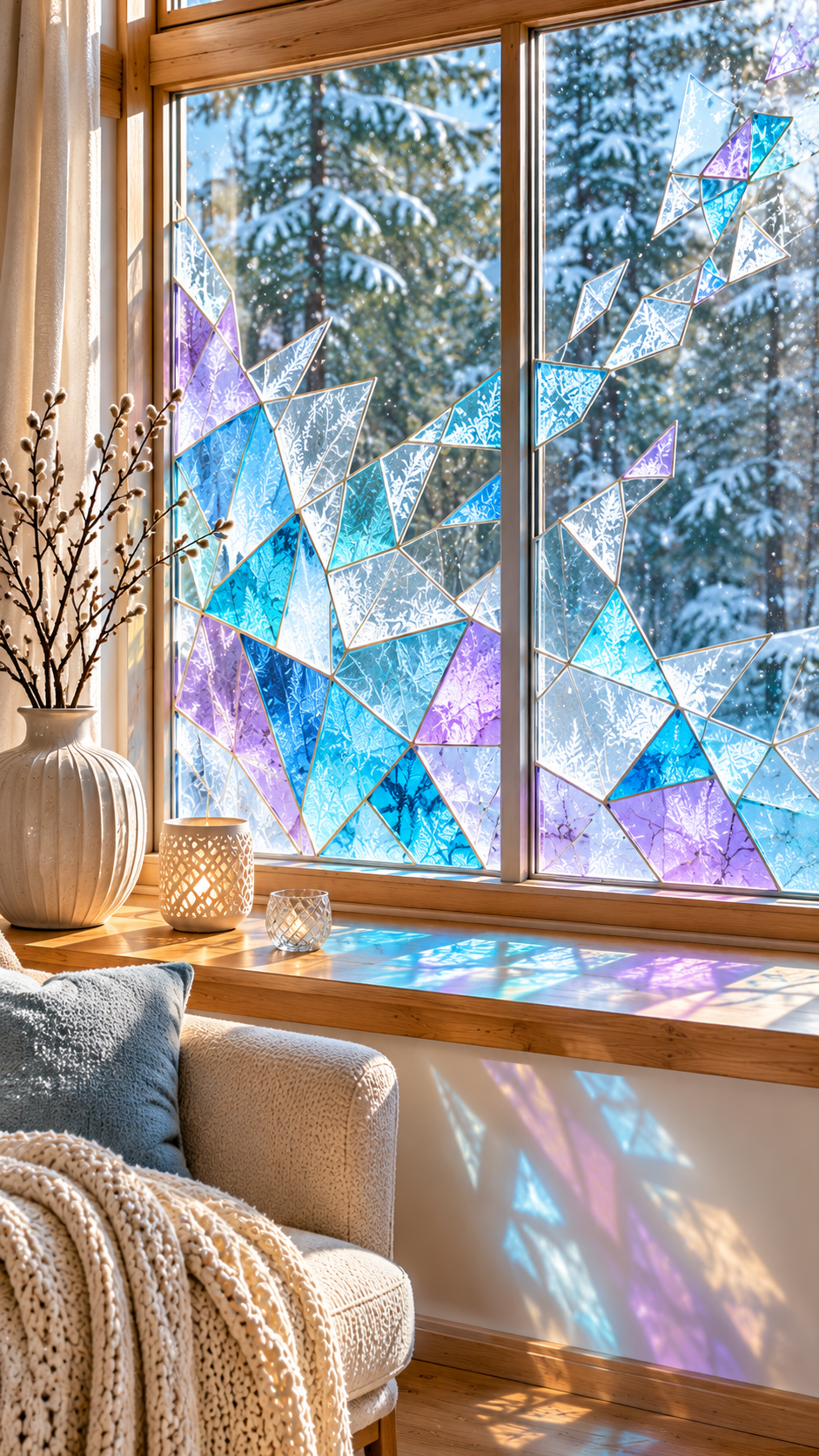
For homeowners who prefer modern artistic interiors, translucent stained glass ice mosaics offer a breathtaking alternative to traditional winter window painting ideas.
Inspired by frozen lakes, crystalline ice formations, glacier surfaces, and the extraordinary beauty of fractured winter landscapes, this concept transforms ordinary windows into luminous geometric artworks.
Rather than painting recognizable cottages or snowy forests, this approach focuses on abstract forms, transparent colors, and the relationship between glass and natural light.
The result can resemble a sophisticated contemporary stained glass installation without requiring permanent architectural modifications.
Transform Natural Light Into a Decorative Feature
Traditional decorations are usually appreciated for their physical appearance, but translucent winter window art introduces an additional dimension through the interaction of sunlight and color.
As daylight passes through transparent or translucent decorative films, the artwork changes subtly throughout the day.
Morning sunlight may create soft blue reflections, while afternoon light can reveal delicate lavender and silver undertones.
Cloudy weather produces a quieter, more subdued appearance that complements the peaceful atmosphere of winter.
The changing effect makes this artwork feel alive and dynamic.
Instead of simply decorating your window, you are creating an artistic experience that evolves with the surrounding environment.
Take Inspiration From Beautiful Natural Ice Formations
Nature provides an extraordinary source of inspiration for geometric winter window decorations.
Frozen lakes often develop intricate networks of irregular lines. Ice crystals reveal fascinating angular shapes, while glaciers contain overlapping layers of blue, white, and translucent structures.
These natural formations can be interpreted through carefully arranged geometric shapes.
Use irregular triangles, elongated polygons, fragmented diamonds, and angular translucent pieces to create an organic mosaic.
Avoid making every shape identical.
The most convincing ice-inspired compositions combine precise geometric edges with naturally irregular arrangements.
Larger translucent sections can represent expansive frozen surfaces, while smaller fragments suggest delicate crystalline formations.
Leave occasional transparent areas between shapes to emphasize the feeling of fragmented ice.
Select an Elegant Winter Color Palette
Color selection plays a particularly important role in stained glass winter window art.
Rather than using bright rainbow colors, choose a restrained palette inspired by natural winter landscapes.
| Color | Artistic Role | Recommended Use |
|---|---|---|
| Transparent ice blue | Primary winter color | Larger mosaic sections |
| Pale lavender | Soft artistic contrast | Selected geometric fragments |
| Frosted white | Snow-inspired texture | Borders and smaller details |
| Cool silver gray | Visual depth | Transitional sections |
| Deep glacier blue | Dramatic contrast | Limited accent pieces |
| Clear transparent film | Negative space | Balancing the composition |
| Muted pale aqua | Luminous variation | Light-reflecting accents |
The combination of ice blue, frosted white, and pale lavender creates a particularly refined appearance.
Homeowners who prefer dramatic contemporary interiors can introduce a limited amount of deeper glacier blue.
For minimalist spaces, a nearly monochromatic arrangement of frosted white and transparent silver-gray shapes may be more appropriate.
Create an Artistic Mosaic Without Permanent Changes
Removable decorative window films and static cling materials make it possible to create an extraordinary stained glass effect without replacing the actual window.
Start by sketching the approximate arrangement of your geometric mosaic on paper.
Decide whether you want the artwork to cover the entire window, occupy one corner, form an irregular border, or extend diagonally across the glass.
For most residential spaces, partial coverage creates a more balanced appearance while preserving natural daylight and outdoor views.
Cut suitable removable decorative film into irregular geometric pieces.
Arrange the largest shapes first, followed by smaller fragments that connect or complement the main composition.
Maintain subtle gaps between selected pieces to create the appearance of natural ice fractures.
Experiment with different color placements before completing the entire design.
A strong mosaic composition should feel intentional rather than randomly assembled.
Explore the Beauty of Asymmetrical Compositions
Symmetrical stained glass designs can appear elegant, but asymmetrical arrangements are particularly effective for this winter-inspired concept.
Imagine a dramatic ice formation beginning in the lower-left corner of a window and gradually spreading upward.
The larger shapes can remain concentrated near the corner, while smaller crystalline fragments extend toward the center.
Alternatively, create an abstract arrangement along one vertical edge of the window, gradually reducing the size and density of the geometric pieces.
These asymmetrical compositions feel contemporary and architectural.
They also allow the remaining glass to function as negative space, preventing the window from appearing visually overwhelming.
Pair Your Ice Mosaic With Contemporary Interior Design
Translucent winter window art works exceptionally well with minimalist, Scandinavian, Japandi, and modern interior design styles.
The cool color palette complements natural wood, warm ivory textiles, polished concrete, brushed metal, and neutral furniture.
A light oak console beneath the window can provide an attractive visual contrast to the icy blue artwork.
Cream-colored curtains soften the overall appearance, while a simple ceramic vase introduces an organic element.
Homeowners who enjoy quiet luxury aesthetics can create an especially sophisticated atmosphere by limiting additional decorations.
Allow the geometric window artwork to become the primary seasonal focal point.
A carefully selected decorative bowl, sculptural candleholder, or elegant winter branch arrangement can provide enough visual support without competing with the mosaic.
Choose the Best Location for Translucent Winter Window Art
Windows that receive attractive natural daylight are particularly suitable for stained glass-inspired compositions.
Living room windows can display dramatic mosaics that become captivating decorative features throughout the day.
Home office windows benefit from smaller geometric arrangements that introduce color without creating excessive visual distraction.
Staircase windows provide an extraordinary opportunity to create vertically oriented architectural compositions.
Dining rooms can feature delicate ice mosaics that interact beautifully with natural daylight during meals.
The amount of coverage should always reflect the practical needs of the room.
Preserve sufficient visibility and natural light, particularly in smaller interiors.
With thoughtful placement and a carefully selected color palette, translucent stained glass ice mosaics can make ordinary residential windows feel like sophisticated architectural artworks.
🥉 Best 3 Winter Window Art With Delicate Botanical Frost Patterns
Few winter phenomena are as fascinating as the delicate crystalline patterns that sometimes appear on cold glass.
Their branching structures, feather-like formations, and intricate botanical silhouettes resemble extraordinary natural illustrations.
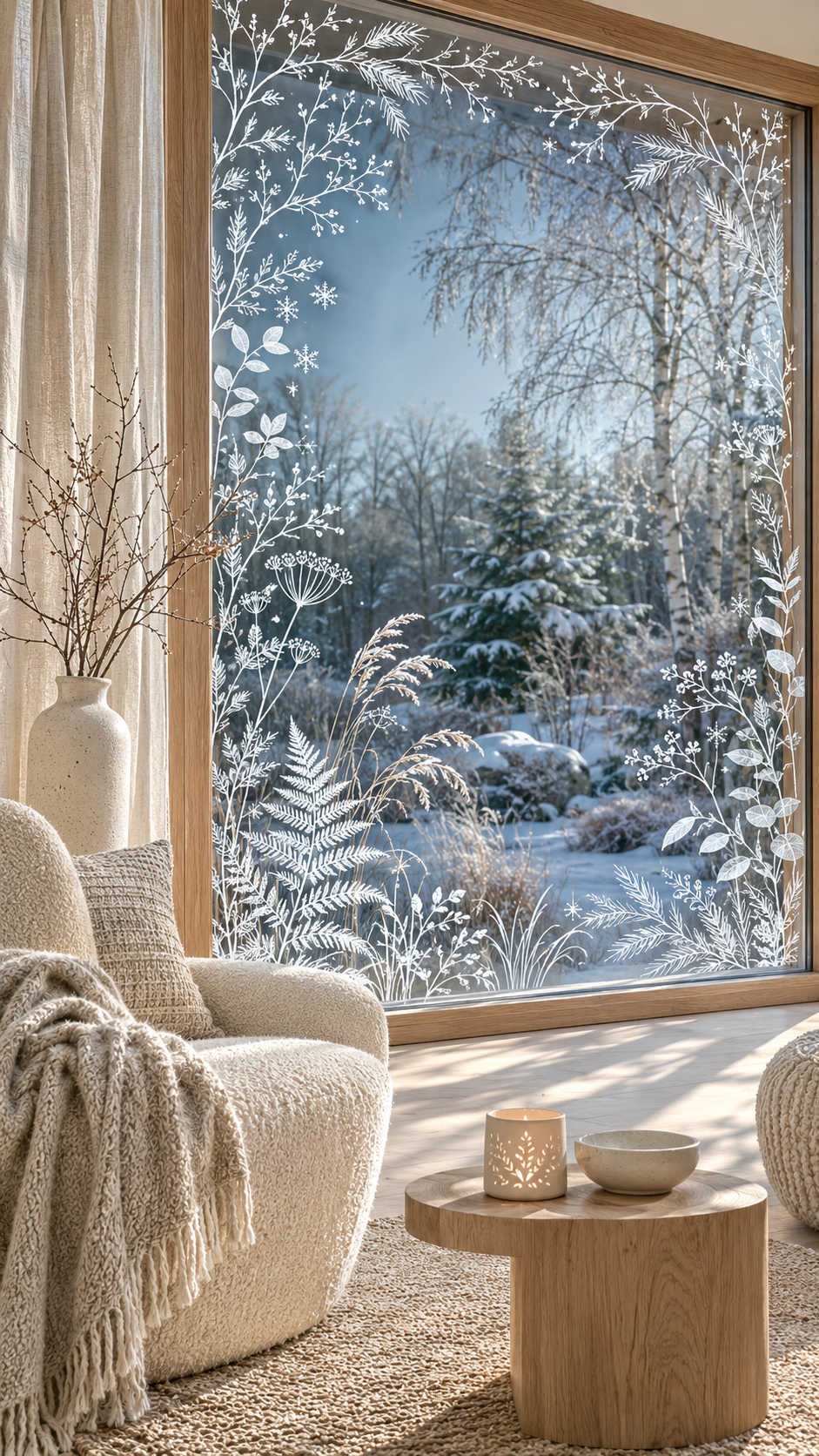
This winter window art idea captures that beauty through sophisticated hand-drawn patterns inspired by frost crystals, winter ferns, bare branches, delicate grasses, and the quiet elegance of Scandinavian nature.
Unlike bold seasonal decorations, botanical frost artwork feels subtle, timeless, and wonderfully refined.
It is an ideal choice for homeowners who appreciate minimalist decorating and natural artistic details.
Capture the Extraordinary Beauty of Winter Frost
Natural frost formations often develop branching structures that resemble miniature forests or delicate fern leaves.
These beautiful patterns provide the perfect inspiration for decorative glass illustrations.
Begin by selecting several botanical forms that complement one another.
Elegant fern-like branches can create the foundation of the composition. Fine crystalline lines can extend outward from these branches, introducing delicate complexity.
Bare winter twigs, miniature seed heads, slender grasses, and tiny snowflakes can provide additional visual interest.
The overall design should appear organic and graceful rather than rigid or heavily structured.
Imagine that beautiful winter frost has naturally grown across the edges of your window.
This approach produces an artistic effect that feels closely connected to the season.
Frame Your Window Instead of Covering the Entire Glass
One of the most effective ways to create elegant botanical winter window art is to concentrate the illustration around the edges.
Rather than filling the entire surface, use delicate botanical patterns to form an artistic frame.
Begin with larger frost-inspired branches in the bottom corners.
Allow fine stems and miniature crystalline details to extend upward along the vertical edges.
A few graceful branches can appear near the upper corners, creating a balanced relationship between different sections of the window.
Leave the central area mostly transparent.
This arrangement preserves the outdoor view while creating the impression that the landscape beyond the window is framed by extraordinary natural frost.
The generous negative space also enhances the sophisticated minimalist appearance of the artwork.
Introduce Botanical Diversity Through Delicate Details
Although fern-like frost patterns are particularly attractive, incorporating several different botanical shapes makes the composition more visually engaging.
Consider combining slender branches with delicate seed heads, fine meadow grasses, miniature pine sprigs, and intricate crystalline leaves.
Each botanical element contributes a different texture.
Thin grasses introduce movement and softness.
Bare branches create architectural structure.
Fern-like illustrations offer graceful complexity.
Tiny snowflakes and crystalline dots introduce the unmistakable atmosphere of winter.
The combination should remain visually cohesive through consistent line thickness and a restrained color palette.
Avoid introducing too many unrelated motifs.
A small collection of carefully repeated botanical forms often produces a more professional appearance than an overcrowded mixture of decorative elements.
Use Fine Lines to Achieve a Luxurious Appearance
The success of botanical frost window art depends heavily on the quality of its delicate lines.
Choose a fine-tip removable white marker suitable for glass.
Begin with the main stems, drawing gently curved lines that follow the direction of natural plant growth.
Introduce secondary branches using thinner strokes.
Add miniature crystalline structures along selected branches.
Where appropriate, include tiny dots or delicate leaf shapes.
Avoid pressing too heavily against the glass or creating excessively thick outlines.
Fine, controlled strokes help achieve the subtle elegance associated with natural frost formations.
If you are unfamiliar with botanical drawing, use simple paper templates placed behind the glass as a guide.
This technique allows you to reproduce intricate decorative forms without needing advanced freehand drawing skills.
Discover the Elegance of Scandinavian Winter Window Art
Scandinavian interiors frequently celebrate natural materials, understated color palettes, functional simplicity, and a close connection to the surrounding landscape.
Botanical frost patterns complement these principles beautifully.
The delicate white artwork pairs naturally with pale wooden furniture, linen curtains, wool blankets, soft gray upholstery, and warm neutral walls.
Rather than competing with the existing interior, the botanical illustrations quietly enhance its seasonal atmosphere.
You can reinforce this aesthetic with carefully selected accessories.
A clear glass vase containing bare winter branches, a small handmade ceramic bowl, or a natural wooden candleholder can provide a beautiful connection between the window artwork and the surrounding room.
The finished space should feel peaceful, balanced, and inviting.
Create a Beautiful Botanical Window Composition Step by Step
Prepare the glass using a suitable nonabrasive cleaning method and allow it to dry completely.
Sketch several frost-inspired botanical patterns on paper.
Choose two or three primary branch structures that will become the main decorative features.
Place the templates behind the window if you prefer to trace the illustrations.
Begin with the larger botanical forms near the lower corners.
Gradually introduce smaller stems, crystalline branches, and delicate leaves.
Extend selected patterns upward along the sides of the glass.
Add a few smaller details near the upper corners if needed to balance the composition.
Step back regularly to evaluate the overall appearance.
The design should remain airy, graceful, and visually balanced.
Finish by adding a limited number of tiny snowflakes or crystalline dots.
These final details can soften the transitions between individual botanical elements and create the impression of naturally developing frost.
Enjoy a Timeless Decoration Beyond Christmas
One of the greatest advantages of botanical frost patterns is their remarkable seasonal flexibility.
Traditional holiday decorations often feel out of place once Christmas has ended.
However, delicate botanical winter window art remains appropriate throughout January and February.
Its inspiration comes directly from nature rather than a specific celebration.
This makes it particularly attractive for homeowners who want their interiors to maintain a beautiful seasonal atmosphere without frequently replacing decorations.
The artwork can also transition gracefully toward early spring.
As the season changes, you can gradually replace selected frost-inspired details with delicate botanical illustrations representing emerging buds and new growth.
This subtle evolution allows your window to become a creative expression of the changing seasons.
Which Winter Window Art Idea Is Best for Your Home?
Each of these three approaches offers a different artistic atmosphere.
The ideal choice depends on your interior design preferences, available natural light, creative confidence, and desired seasonal appearance.
| Design | Interior Style | Difficulty | Main Visual Attraction |
|---|---|---|---|
| Snowy Village Landscapes | Cottagecore, farmhouse, traditional | Easy to moderate | Romantic winter storytelling |
| Stained Glass Ice Mosaics | Modern, contemporary, Japandi | Moderate | Luminous geometric artwork |
| Botanical Frost Patterns | Scandinavian, minimalist, quiet luxury | Moderate | Delicate natural elegance |
Snowy village landscapes are particularly effective for families and homeowners who enjoy cozy, romantic seasonal decorations.
Their charming architectural details and miniature winter scenery create an inviting atmosphere filled with personality.
Translucent ice mosaics are an excellent choice for contemporary interiors where artistic experimentation and natural light play important decorative roles.
Their geometric structures introduce an unusual visual experience that differs significantly from conventional winter decorations.
Botanical frost patterns are ideal for homeowners seeking a more understated approach.
Their delicate details provide seasonal beauty without overwhelming the surrounding interior.
All three concepts can be adapted to different window sizes, room functions, and decorating budgets.
How to Make Winter Window Art Look Expensive on a Small Budget
Beautiful winter window decorations do not necessarily require expensive materials.
The luxurious appearance of a finished design often depends more on composition, color coordination, and attention to detail than the cost of individual supplies.
Start by limiting your color palette.
White, ice blue, soft gray, pale lavender, and transparent tones create a cohesive winter atmosphere that naturally feels sophisticated.
Maintain sufficient negative space.
Overdecorating is one of the most common mistakes in seasonal window design. Leaving selected areas completely transparent allows the artwork to breathe and emphasizes its most beautiful details.
Use consistent artistic techniques throughout the composition.
If your design features delicate line drawings, avoid introducing unrelated thick shapes or excessively bold colors.
Consider the surrounding interior before selecting your artwork.
A romantic cottage landscape may complement traditional wooden furniture beautifully, while geometric ice mosaics may be more appropriate for a contemporary apartment.
Finally, pay attention to the windowsill.
A clean, thoughtfully decorated windowsill enhances the appearance of the artwork far more effectively than an overcrowded collection of seasonal accessories.
Simple design decisions can transform inexpensive materials into decorations that feel elegant, intentional, and professionally styled.
Common Winter Window Art Mistakes to Avoid
Even the most beautiful artistic concept can lose its charm when practical decorating considerations are overlooked.
Understanding these common mistakes can help you achieve more attractive results.
Covering Too Much of the Window
Although decorating an entire window can create a dramatic effect, excessive coverage may reduce natural daylight and interfere with outdoor visibility.
Partial compositions are often more elegant and practical for everyday residential spaces.
Using Too Many Colors
A large variety of unrelated colors can make winter artwork appear visually chaotic.
Restrained color palettes generally create a more cohesive and sophisticated seasonal atmosphere.
Applying Decorations to Dirty or Damp Glass
Dust, fingerprints, and condensation can interfere with the appearance and adhesion of decorative materials.
Always prepare the glass properly before beginning your project.
Choosing Permanent Artistic Materials
Seasonal artwork should usually remain removable.
Permanent markers, strong adhesives, and unsuitable paints may leave residue or damage specialized window surfaces.
Ignoring the Interior Design Style
Window decorations should complement the surrounding room.
Consider furniture colors, architectural details, curtains, lighting, and existing seasonal accessories before choosing your artistic concept.
Forgetting About Window Functionality
Windows must remain practical and safe to operate.
Avoid placing materials where they could interfere with window handles, ventilation, emergency exits, or other essential functions.
Frequently Asked Questions About Winter Window Art
What Is the Best Material for Winter Window Art?
Washable chalk markers and removable glass markers are excellent options for hand-drawn winter artwork.
For translucent geometric designs, removable decorative window films and static cling materials are particularly useful.
Always confirm that the selected product is suitable for your specific window surface.
Can I Create Winter Window Art Without Drawing Skills?
Absolutely. Paper templates, reusable stencils, and pre-cut decorative window clings make it possible to create beautiful artwork without advanced drawing abilities.
Simple snowflakes, minimalist trees, geometric shapes, and botanical outlines are especially beginner-friendly.
How Long Can Winter Window Decorations Stay on Glass?
The appropriate display duration depends on the materials used, sunlight exposure, humidity, condensation, and manufacturer recommendations.
Many removable window decorations can remain displayed throughout the winter season when applied and maintained correctly.
Is Winter Window Art Only Suitable for Christmas?
No. Winter window art celebrates the entire winter season.
Snowy landscapes, ice crystals, botanical frost patterns, and abstract stained glass mosaics remain appropriate well beyond Christmas.
How Can I Make My Winter Window Painting Look Professional?
Choose a consistent color palette, create a preliminary sketch, maintain balanced spacing, and pay close attention to fine artistic details.
A carefully planned composition usually looks more professional than a complicated design created without preparation.
Can Winter Window Art Be Used in Small Apartments?
Yes. Small apartments can benefit greatly from seasonal window artwork because it introduces decorative personality without occupying valuable floor space.
Minimalist botanical borders and small translucent mosaics are particularly suitable for compact interiors.
How Do I Remove Winter Window Art Safely?
Follow the removal instructions provided by the manufacturer of your chosen artistic materials.
Many washable glass markers can be removed with a damp microfiber cloth, while removable static cling decorations can be carefully peeled away.
Avoid abrasive scrapers or aggressive cleaning chemicals, especially on coated or tinted glass.
Final Thoughts on the Best Winter Window Art Ideas
Winter Window Art offers an extraordinary opportunity to celebrate the quiet beauty of the coldest season through creativity, artistic expression, and thoughtful interior decorating.
An enchanting snowy village can transform your living room into a romantic winter retreat. A translucent stained glass ice mosaic can introduce captivating geometric beauty and luminous reflections. Delicate botanical frost patterns can create a sophisticated atmosphere inspired by the peaceful elegance of nature.
Each of these ideas demonstrates that ordinary windows can become some of the most beautiful artistic features in your home.
You do not need expensive renovations, permanent installations, or professional artistic training to achieve remarkable results.
With carefully selected removable materials, a harmonious color palette, and a thoughtfully balanced composition, even the simplest window can become an extraordinary seasonal masterpiece.
The greatest beauty of winter window art is its ability to transform with the surrounding environment.
Morning sunlight, softly falling snow, cloudy winter afternoons, and warm evening illumination can each reveal a different dimension of the artwork.
Whether your decorating style is romantic cottagecore, contemporary architectural elegance, Scandinavian minimalism, or timeless quiet luxury, these three creative winter window art ideas offer inspiring ways to celebrate the season.
Instead of allowing your windows to remain ordinary and overlooked, turn them into beautiful artistic canvases that capture the enchanting spirit of winter and make your home feel more magical every day.


