There is something instantly comforting about fall dough bowl ideas. A simple wooden bowl filled with pumpkins, dried leaves, candles, pinecones, or seasonal greenery can transform an ordinary table into a warm autumn focal point. The beauty of a dough bowl is that it feels naturally relaxed rather than overly decorated, making it perfect for homes that want to capture the cozy atmosphere of fall without filling every surface with seasonal accessories.
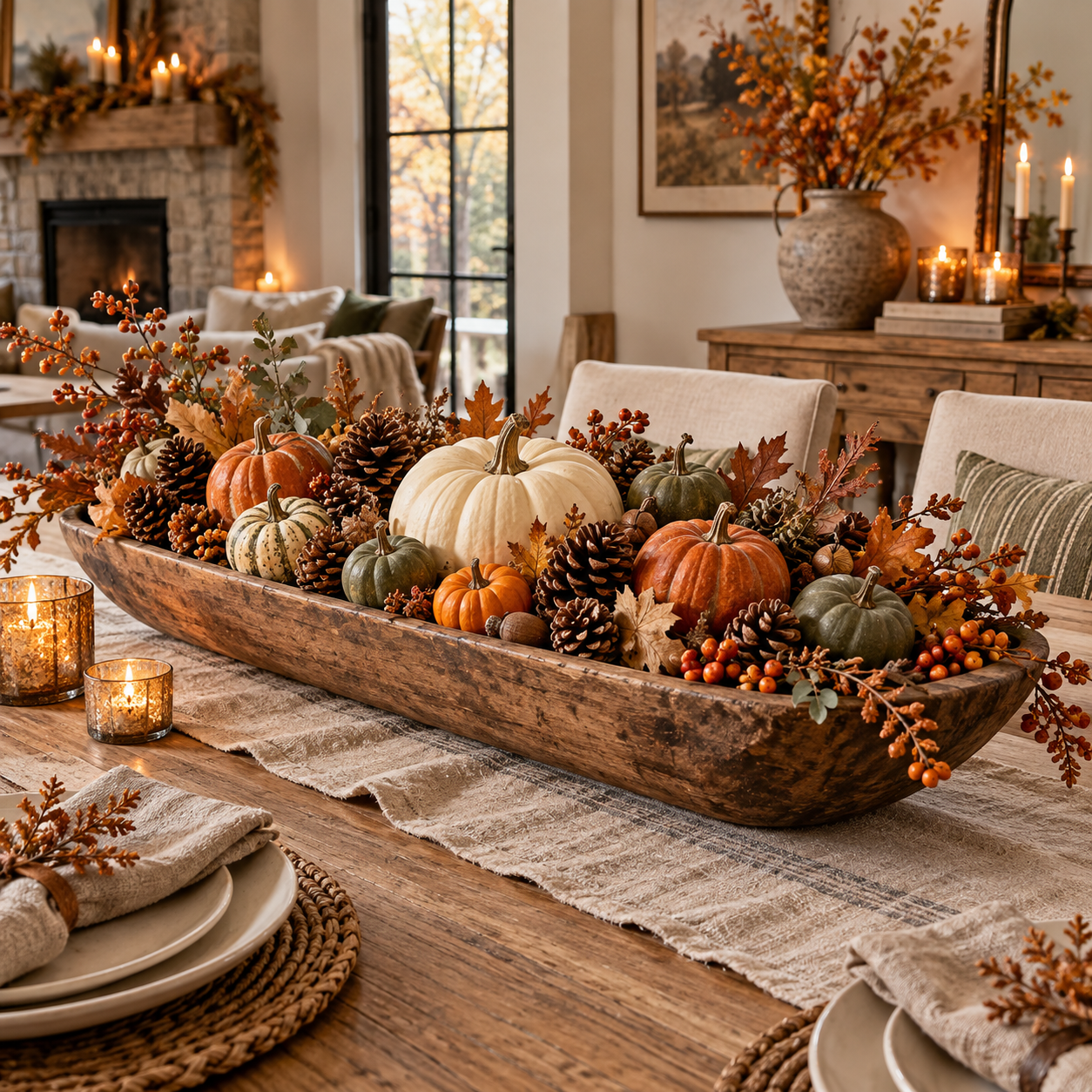
Traditional wooden dough bowls already bring warmth because of their organic texture, visible grain, imperfect edges, and slightly rustic character. When those natural qualities are combined with autumn colors such as warm cream, muted orange, rust, olive green, deep brown, burgundy, and golden beige, the entire arrangement can feel sophisticated while still maintaining that familiar fall charm.
The best displays are not necessarily the ones with the most decorations. In fact, carefully selecting a few coordinated materials often produces a more luxurious result. A handful of pumpkins, one strand of greenery, several natural branches, and a candle can sometimes create more visual impact than a bowl overflowing with unrelated accessories.
🍂 The following Top 3 fall dough bowl ideas explore three very different decorating directions: a classic harvest arrangement, a soft neutral display, and a dramatic botanical centerpiece. Each can be adapted for dining tables, kitchen islands, coffee tables, console tables, entryways, or even covered porches.
Why Fall Dough Bowl Ideas Work So Beautifully in Seasonal Decorating
A dough bowl works particularly well in autumn because its long, low shape naturally creates a centerpiece without blocking views across a table. Unlike a tall floral arrangement, it spreads horizontally, allowing the eye to travel across the display. This makes it especially practical for dining tables where people still need to see and speak comfortably across the room.
The material also plays an important role. Wood introduces an earthy element that pairs naturally with pumpkins, leaves, pinecones, acorns, branches, dried flowers, and other seasonal ingredients. Even when the surrounding room is modern, the wooden texture helps soften clean architectural lines.
Another advantage is flexibility. A dough bowl can move from one area of the home to another throughout the season. An arrangement might begin on the dining table in early September, move to the kitchen island during October, and later become part of a Thanksgiving buffet display.
🍁 That adaptability makes dough bowls especially useful for homeowners who prefer seasonal decorations that can evolve instead of being completely replaced every few weeks.
Choosing the Right Dough Bowl Before Decorating
The bowl itself establishes the personality of the arrangement. A heavily distressed wooden dough bowl creates a farmhouse or rustic feeling, while a smooth light-oak bowl can fit beautifully into Scandinavian, Japandi, organic modern, or contemporary interiors.
Dark walnut and aged brown finishes create a richer, moodier look. They work particularly well with cream pumpkins, brass candleholders, dark berries, and burgundy foliage. Pale or washed wood feels lighter and can be paired with beige, sage, dusty orange, and soft ivory decorations.
Size is equally important. A very small bowl can become cluttered quickly, while an oversized dough bowl may need more decorative material than expected. For a dining table or kitchen island, a long medium-to-large bowl usually gives enough space to create layers without looking crowded.
The goal is to leave some of the wood visible. When every inch disappears under decorations, much of the character that makes the dough bowl special is lost.
Quick Comparison of the Top 3 Fall Dough Bowl Ideas
Each of these styles creates a different autumn mood. Choosing the right one depends largely on the existing colors and decorating style of the room.
| Fall Dough Bowl Style | Main Colors | Best Materials | Overall Mood | Best Placement |
|---|---|---|---|---|
| 🥇 Classic Harvest Layers | Burnt orange cream brown olive | Pumpkins leaves pinecones berries | Warm abundant traditional | Dining table kitchen island |
| 🥈 Neutral Organic Autumn | Ivory beige taupe sage | Pale pumpkins eucalyptus wood beads | Calm elegant modern | Coffee table console table |
| 🥉 Moody Botanical Fall | Burgundy deep brown bronze forest green | Dark foliage candles dried branches | Dramatic sophisticated luxurious | Entry console dining table |
The three approaches can also be mixed carefully. For example, a neutral arrangement can include one small rust-colored pumpkin, while a classic harvest bowl can borrow sophisticated brass details from the moody botanical style.
The secret is maintaining a dominant design direction instead of treating every autumn decoration as an opportunity to add another color.
🥇 Top 1 Fall Dough Bowl Ideas With Layered Pumpkins and Harvest Textures
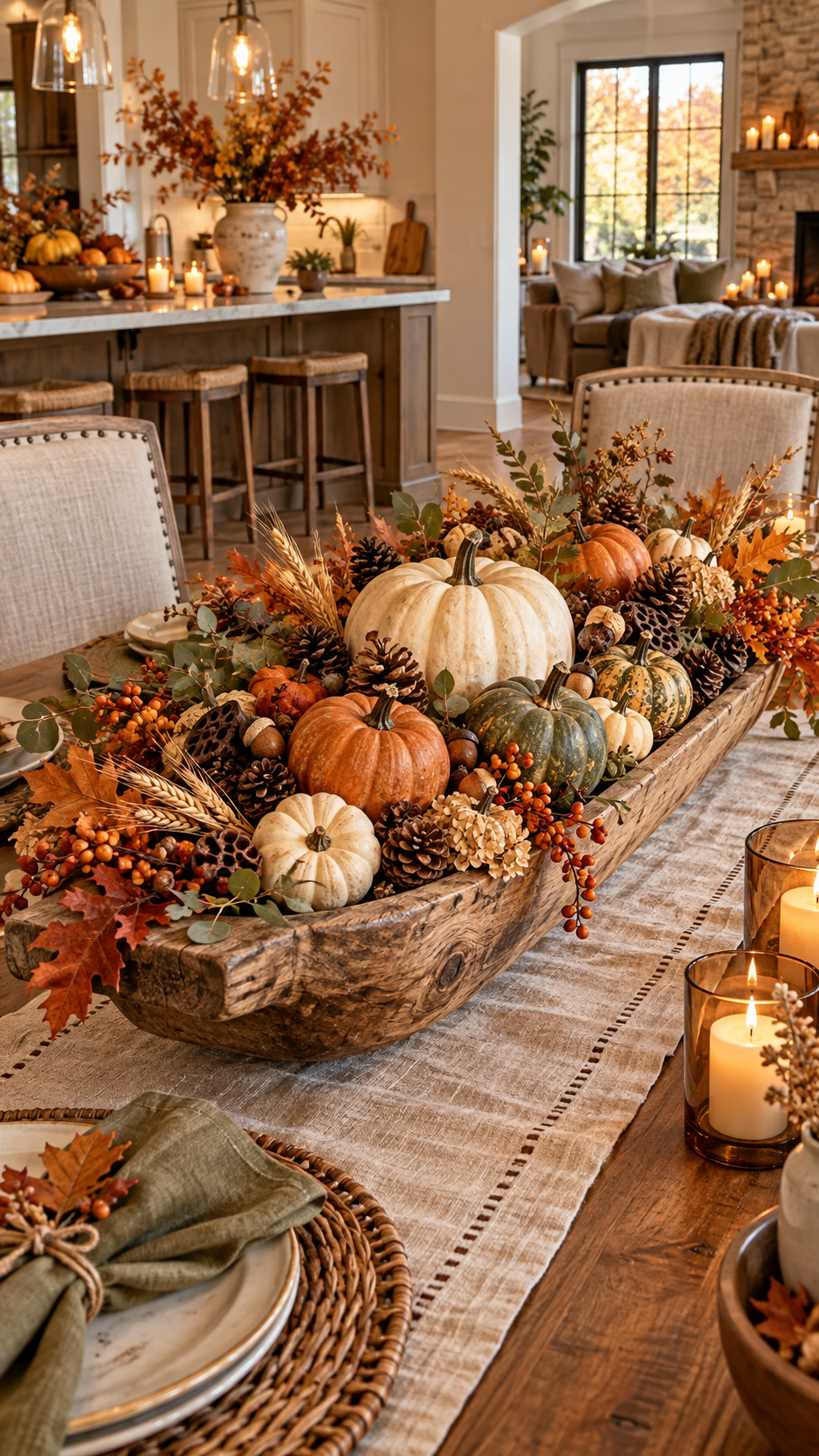
The first approach celebrates everything people naturally associate with the harvest season. Think miniature pumpkins, warm leaves, textured pinecones, small berries, moss, seed pods, and rustic wooden details arranged in loose overlapping layers.
This style feels abundant and welcoming, making it particularly effective in kitchens and dining areas. It immediately introduces the feeling of autumn without requiring a complicated decorating plan.
Start With Pumpkins as the Main Visual Anchor
Miniature pumpkins are one of the easiest ingredients to use because they naturally provide shape, color, and seasonal identity. Instead of using pumpkins that are all the same size, combine several proportions.
A larger pumpkin near the center can act as the main anchor. Surround it with smaller pumpkins positioned at different angles so the arrangement feels organic rather than perfectly symmetrical.
🎃 Realistic artificial pumpkins are practical for displays that need to last throughout the season. Natural mini pumpkins, however, can create beautiful variations in color and surface texture.
Choose two or three dominant pumpkin tones rather than every color available. Cream, burnt orange, muted green, and dusty brown work particularly well together.
Add Natural Materials Between the Larger Objects
Once the pumpkins are positioned, small natural details can fill the negative spaces. Pinecones, acorns, walnuts, dried seed pods, preserved moss, or tiny bundles of wheat can create interesting texture without competing with the main elements.
The key is layering rather than lining everything up. Allow foliage to disappear underneath pumpkins before emerging elsewhere. Place pinecones partly behind other objects instead of positioning each one independently.
This creates depth, which is often what separates an intentional centerpiece from a simple container filled with decorations.
Small branches with muted autumn leaves can extend gently beyond the ends of the bowl. Those horizontal lines exaggerate the elongated shape of the dough bowl and make the arrangement appear more generous.
Use Autumn Foliage Without Making the Display Too Busy
Fall foliage can easily dominate a centerpiece, particularly when artificial stems contain very bright orange or red leaves. Instead of using heavily saturated colors everywhere, choose muted foliage with olive, copper, amber, or faded burgundy tones.
A few carefully positioned stems usually create enough movement.
The arrangement should still reveal pumpkins, wood texture, and smaller natural objects. If leaves cover everything, remove several stems and allow the design to breathe.
🍂 One useful technique is to place foliage mostly around the outer edges while keeping the central area slightly cleaner. This keeps the pumpkins visible while creating an attractive frame around them.
Important Note: If real candles are included in any dough bowl arrangement, keep flames completely separated from dried leaves, grasses, pinecones, wood, paper, artificial plants, and other combustible materials. Flameless LED candles are the safer choice when decorative materials are packed closely together.
Where This Classic Fall Dough Bowl Looks Best
A long dining table is an ideal location because the arrangement can act as the seasonal centerpiece without needing additional decor nearby.
On a kitchen island, the same design can create warmth in a room that otherwise contains mostly hard surfaces such as stone countertops, cabinetry, metal fixtures, and appliances.
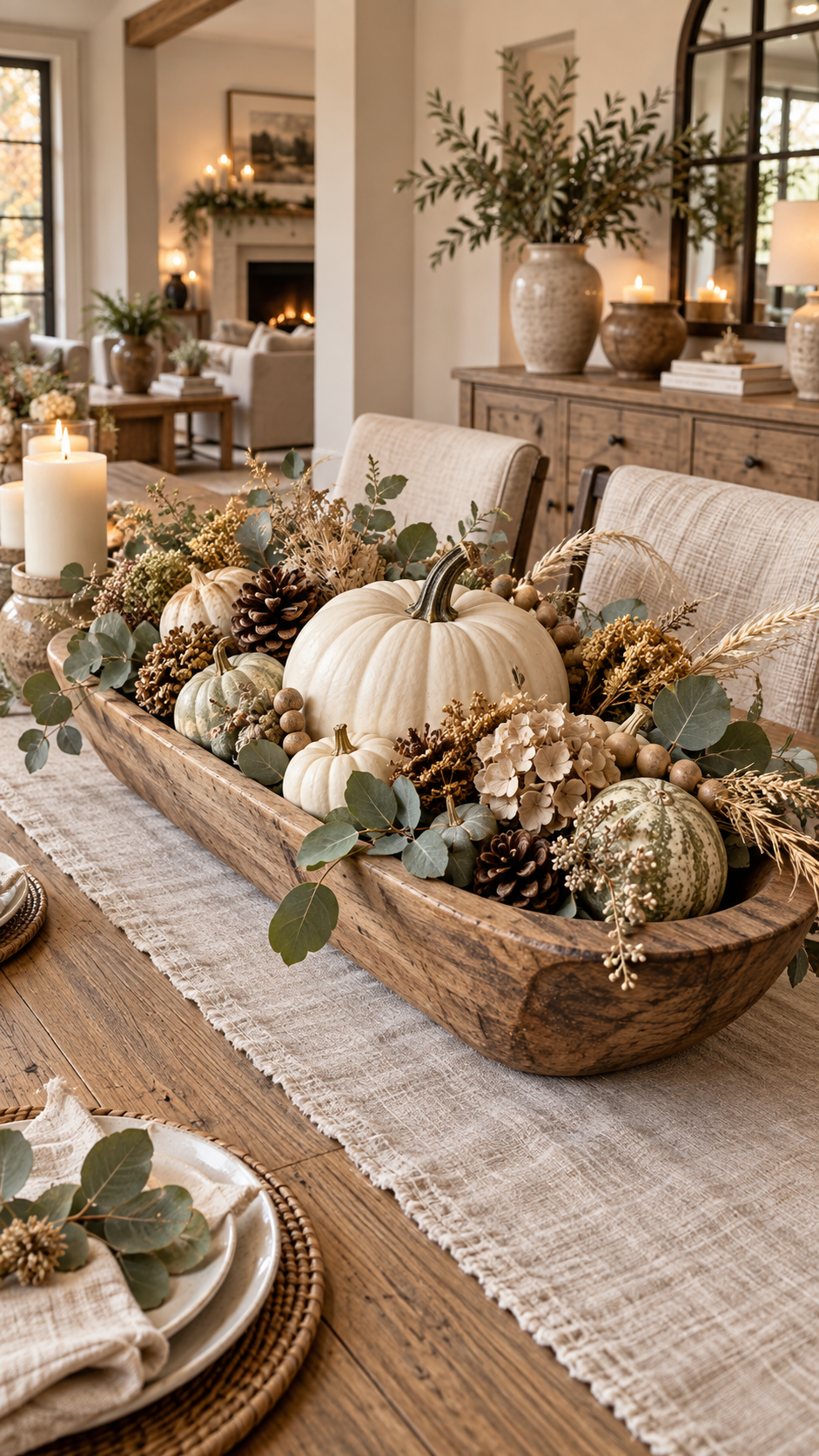
For a slightly more refined look, place the dough bowl on a simple linen runner. Oatmeal, cream, or natural flax colors work particularly well because they introduce another soft texture without distracting from the centerpiece.
The finished look should feel like a curated harvest gathered from the season rather than a perfectly manufactured display.
🥈 Top 2 Fall Dough Bowl Ideas With Soft Neutral Organic Decor
Not every autumn home needs bright orange pumpkins. Neutral fall dough bowl ideas can create the same seasonal warmth using ivory, taupe, beige, muted sage, pale wood, soft brown, and subtle touches of faded gold.
This approach works beautifully in modern interiors where the permanent furniture already uses warm whites, natural oak, travertine, boucle, linen, or other understated organic materials.
Instead of relying on obvious fall colors, the design communicates autumn through texture.
Build a Soft Color Palette First
Begin with cream or ivory pumpkins in different finishes. Some can be smooth, while others might have subtle fabric, velvet, ceramic, or natural-looking textures.
Add one or two muted green pumpkins to prevent the palette from appearing flat. Soft sage or dusty olive introduces contrast while remaining calm and sophisticated.
🤍 Avoid using too many identical white decorations. The goal is not a completely monochromatic arrangement but rather a layered neutral palette.
Warm ivory, oatmeal, mushroom beige, taupe, sage, and natural wood create enough variation to keep the bowl visually interesting.
Introduce Eucalyptus and Dried Grasses
Greenery gives a neutral bowl life.
Muted eucalyptus stems work particularly well because their rounded leaves add softness without creating a traditional floral centerpiece. Dried grasses, preserved wheat, or delicate beige seed heads can add vertical texture while maintaining the understated color palette.
Instead of standing the stems vertically, weave them horizontally through the bowl. Allow some pieces to extend slightly beyond the wooden edges.
The greenery should feel loosely gathered rather than tightly arranged.
🌿 A few wispy grass stems can provide movement while helping the arrangement connect visually with other natural materials used around the room.
Add Wood Beads and Small Decorative Accents
Wooden bead garlands have become popular in seasonal styling because they create an easy way to introduce movement.
Rather than coiling the entire garland on top of the centerpiece, allow sections to disappear beneath pumpkins and greenery. A short portion can drape naturally over one side of the bowl.
The effect should feel casual.
Other suitable accents include small ceramic mushrooms, natural wood ornaments, miniature pears, sculptural seed pods, or tiny stoneware vessels.
The best rule is restraint. Two unusual accents usually create more sophistication than eight different decorative accessories.
Layer Materials to Keep Neutral Fall Dough Bowl Ideas Interesting
Neutral decorating depends heavily on texture because color contrast is intentionally limited.
Combine smooth ceramic surfaces with rough wood. Place soft velvet pumpkins near dried grasses. Mix matte stoneware with delicate foliage.
Those tactile contrasts give the eye something to explore even when every material remains within a quiet autumn palette.
A piece of loosely folded linen beneath the dough bowl can strengthen the organic appearance. However, the fabric should look relaxed rather than perfectly pressed.
This is particularly effective on dark wood dining tables, where the lighter centerpiece creates a beautiful focal area.
Where Neutral Dough Bowl Decor Works Best
A neutral arrangement is ideal for coffee tables because it remains visually calm. It can sit alongside books, candles, or a small vase without making the surface appear overcrowded.
It is equally effective on an entry console where the centerpiece can be paired with a large mirror, ceramic lamp, or minimal artwork.
In an open-plan home, neutral colors also create continuity. The dough bowl can introduce autumn into the living area without clashing with nearby kitchen finishes or furniture.
✨ The result is seasonal but subtle—perfect for interiors where autumn decor should feel integrated into the overall design instead of temporarily placed on top of it.
🥉 Top 3 Fall Dough Bowl Ideas With Moody Botanical Drama
The third style moves away from cheerful harvest decorating and creates a deeper, more dramatic atmosphere.
Imagine a dark wooden dough bowl filled with burgundy foliage, dried seed heads, sculptural branches, deep brown pumpkins, blackened leaves, bronze details, and soft candlelight.
This direction feels sophisticated and slightly mysterious, making it especially effective from late September through Thanksgiving.

Create a Deep Autumn Color Story
Begin with several dark seasonal colors instead of bright traditional orange.
Burgundy, oxblood, plum, forest green, espresso brown, bronze, charcoal, and antique gold can all contribute to a luxurious autumn palette.
🍷 These richer shades work especially well against pale walls because the centerpiece becomes a strong visual focal point.
A few cream accents can prevent the display from becoming too heavy. One small ivory pumpkin or a handful of pale dried flowers may be enough to provide contrast.
Use Dramatic Branches as the Structural Element
Instead of filling the entire bowl with pumpkins, allow branches to establish the shape of the arrangement.
Dark twisting stems, burgundy leaves, dried hydrangeas, or sculptural seed pods can extend outward from the center.
Keep the arrangement relatively low but allow several branches to rise slightly above the other materials.
This creates architectural movement.
The bowl begins to feel closer to a botanical installation than a traditional seasonal decoration, which works beautifully in contemporary interiors.
Introduce Metallic Details Carefully
Bronze and antique brass are ideal companions for moody autumn colors.
A small brass object, subtle metallic pumpkin, or aged-gold decorative leaf can catch the light without making the arrangement look glamorous in an overly formal way.
The metallic element should appear intentional but restrained.
Too much shiny gold can quickly change the atmosphere from organic and autumnal to festive. Matte, aged, or brushed finishes are usually more convincing.
✨ Think of metallic details as highlights rather than dominant objects.
Add Soft Candlelight for Evening Atmosphere
A dramatic dough bowl becomes especially beautiful during the evening when paired with warm light.
Flameless pillar candles can be integrated between foliage and pumpkins, while nearby table lamps or sconces provide additional ambient lighting.
Choose warm candle tones rather than very bright white light. The glow should enhance burgundy leaves, bronze surfaces, and dark wood.
Another option is placing the dough bowl beneath a pendant light on the dining table. Soft downward illumination naturally emphasizes the centerpiece and creates deeper shadows around the surrounding materials.
The effect is particularly appealing for fall dinners and Thanksgiving gatherings.
Where Moody Fall Dough Bowl Ideas Look Most Impressive
A dramatic arrangement works beautifully in an entryway because it immediately establishes the seasonal mood when someone enters the home.
It can also become the central feature of a dining room where deeper colors complement walnut furniture, dark cabinetry, black accents, or bronze lighting.
For homes with very light neutral interiors, this darker style creates intentional contrast. A pale oak or stone dining table can make the burgundy and espresso elements appear even richer.
The goal is not to make the room look dark. Instead, the centerpiece introduces concentrated color and depth within an otherwise balanced space.
How to Make Fall Dough Bowl Ideas Look Expensive
Expensive-looking decor rarely depends on expensive objects alone. Composition makes a much larger difference.
Start by avoiding perfect symmetry. Nature rarely grows in completely balanced arrangements, so slightly uneven placement often feels more sophisticated.
Create visual hierarchy by choosing one dominant object or group. Perhaps the central pumpkin is largest, the botanical branch extends farther than everything else, or a cluster of three ceramic pumpkins establishes the strongest shape.
Then allow smaller details to support the main feature.
Use Fewer Colors
A tightly controlled color palette can immediately make an arrangement feel more intentional.
Instead of combining orange, yellow, red, white, black, green, and gold, select three or four primary tones.
For example:
Cream + olive + warm brown + muted rust creates a natural harvest palette.
Ivory + taupe + sage + pale wood creates modern organic autumn decor.
Burgundy + espresso + bronze + cream creates a dramatic luxury palette.
🎨 Repeating those colors elsewhere in the room through pillows, throws, artwork, or table linens can make the entire seasonal design feel professionally coordinated.
Mix Different Heights and Shapes
An arrangement filled only with round pumpkins can become visually repetitive.
Add elongated branches, narrow candles, delicate stems, irregular pinecones, soft fabric, and small sculptural accents.
These different shapes create rhythm across the bowl.
Objects near the center can be slightly taller, while materials around the edges gradually become lower. This creates a gentle pyramid effect without making the arrangement appear formal.
Leave Some Empty Space
One of the easiest ways to improve an overloaded dough bowl is simply removing a few objects.
Negative space allows individual materials to become visible. It also prevents beautiful wood grain from disappearing entirely.
An arrangement should look full enough to feel finished but open enough to show deliberate placement.
This balance is especially important in smaller homes, where heavily decorated surfaces can make a room feel crowded.
Easy Ways to Refresh the Same Dough Bowl Throughout Fall
One of the biggest advantages of dough bowl decorating is that the basic arrangement does not need to remain identical from September through November.
Early fall can feel lighter. Use pale pumpkins, eucalyptus, wheat, and soft green foliage.
As October approaches, introduce deeper rust, orange, brown, or burgundy accents.
Later in the season, transition toward Thanksgiving by adding walnuts, dried pears, miniature gourds, darker leaves, wheat bundles, or subtle brass accessories.
🍁 The bowl evolves while the overall foundation stays the same.
This approach reduces the amount of seasonal decor that needs to be stored because only a few smaller elements change.
Early Fall Styling
For the beginning of the season, keep the palette relatively fresh.
Cream pumpkins, muted green gourds, eucalyptus, pale grasses, and natural wood create a gentle transition out of summer.
This works especially well while outdoor temperatures are still warm and the home does not yet feel ready for heavier seasonal colors.
October Styling
October can introduce stronger contrast.
Swap several neutral pumpkins for burnt orange, rust, deep olive, or brown versions. Add richer foliage and a few pinecones.
The display can feel warmer without becoming Halloween-specific.
If Halloween decorations are used elsewhere in the room, the dough bowl can remain sophisticated and seasonal rather than themed.
November and Thanksgiving Styling
November is the perfect time to emphasize harvest materials.
Wheat, nuts, dried fruit, leaves, seed pods, small gourds, and warm metallic details can replace some of the lighter foliage.
This produces a mature, abundant appearance appropriate for Thanksgiving gatherings.
🦃 Keeping novelty decorations minimal allows the centerpiece to transition effortlessly through the entire month.
Best Places Around the Home for Fall Dough Bowl Decor
Although dining tables are the obvious location, dough bowls can decorate many other spaces.
A large kitchen island provides enough surface area for a generous arrangement. Pairing it with a simple vase or bowl of seasonal fruit can make the kitchen feel naturally connected to autumn.
On a coffee table, keep the dough bowl smaller or less densely decorated so there is still space for daily use.
An entry console is ideal for more dramatic styling because the display rarely needs to be moved.
A long dough bowl can even work on a covered porch table when protected from rain and strong wind.
Styling a Dough Bowl on a Dining Table
Dining tables benefit from low arrangements.
Avoid excessive vertical branches that interfere with conversation. Allow the centerpiece to spread horizontally instead.
A linen table runner can visually connect the dough bowl with plates, napkins, and candleholders during special meals.
For everyday styling, the bowl can remain as the only decorative object on the table.
Styling a Dough Bowl on a Coffee Table
Coffee table arrangements should feel compact and accessible.
Use fewer loose materials that may fall out when the bowl is moved. Pumpkins, wood beads, ceramic objects, and short greenery stems are ideal.
Pair the dough bowl with a small stack of books or a simple candle for a relaxed designer look.
Styling a Dough Bowl on a Console Table
Console tables allow more decorative freedom.
A taller branch can rise from one end of the bowl, especially when placed beneath artwork or beside a mirror.
Lamps provide warm evening light, making the texture of wood, pumpkins, foliage, and dried materials appear richer.
🍂 This location is particularly effective for the moody botanical concept.
Common Mistakes to Avoid With Fall Dough Bowl Ideas
One common mistake is using too many tiny decorations. Small objects need larger anchor pieces to create structure.
Start with the biggest pumpkins, candles, or branches first. Add smaller accessories only after the main composition is established.
Another mistake is distributing every item evenly. If every pumpkin is placed the same distance apart, the centerpiece can look artificial.
Group objects in clusters.
Three pumpkins placed close together often appear more natural than three pumpkins positioned equally across the bowl.
Avoid Too Many Competing Textures
Texture is important, but every decorative item does not need to be different.
If the bowl already contains velvet pumpkins, rough pinecones, glossy ceramics, shiny metal, woven fabric, dried grasses, faux fur, glass ornaments, and wood beads, the visual story can become confusing.
Choose several textures and repeat them.
Repetition creates cohesion.
Avoid Ignoring the Surrounding Room
A centerpiece should belong to the room where it is displayed.
A dramatic farmhouse arrangement may feel out of place in an extremely minimalist space, while an all-white bowl might disappear in an already pale interior.
Look at the furniture, flooring, wall color, textiles, and lighting before selecting the autumn palette.
The most successful seasonal decor feels like an extension of the home rather than a temporary layer placed on top of it.
Final Thoughts on the Top 3 Fall Dough Bowl Ideas
The best fall dough bowl ideas combine seasonal character with thoughtful styling. A dough bowl does not need dozens of decorations to become the centerpiece of a room. Strong materials, controlled color, varied texture, and intentional layering are usually enough.
🥇 Classic layered pumpkins and harvest textures are perfect for homes that love traditional fall warmth. Pumpkins, pinecones, foliage, berries, and rustic materials create an abundant seasonal display that feels welcoming from early fall through Thanksgiving.
🥈 Neutral organic autumn decor offers a softer alternative. Ivory pumpkins, sage greenery, dried grasses, wood beads, and muted natural materials create a peaceful arrangement suited to modern, Scandinavian, Japandi, farmhouse, and organic contemporary interiors.
🥉 Moody botanical drama delivers the most sophisticated transformation. Burgundy leaves, dark branches, bronze accents, deep brown pumpkins, and warm candlelight turn a simple wooden dough bowl into a dramatic seasonal statement.
The most important design principle is balance. Allow the natural beauty of the wooden bowl to remain visible, choose a limited color story, and combine materials in layers rather than filling every available gap.
Whether the final look is rustic, neutral, modern, or dramatic, a well-styled dough bowl can bring the warmth of autumn into a room with surprisingly little effort.
🍁 And because the arrangement can easily change as the season progresses, it becomes more than a temporary centerpiece. It becomes a flexible foundation for decorating from the first hint of fall all the way through Thanksgiving.
Related posts:

Top 3 Fall Bathroom Decor Ideas That Make Your Space Look Expensive
Top 3 Fall Office Decor Ideas That Make Your Workspace Look Instantly More Expensive
Top 3 Fall Bedding Combo Ideas That Make Any Bedroom Look Expensive
Top 3 Fall Fireplace Mantel Decorating Ideas That Make Your Living Room Look Expensive
Top 3 Fall Planter Ideas That Will Make Your Porch Look Expensive This Season
Top 3 Fall Basket Decor Ideas That Make Any Home Look Warm and Expensive