Fall mantle decor has a special way of transforming an ordinary living room into a warm, inviting retreat that feels ready for crisp mornings, candlelit evenings, and everything cozy about autumn. Because the fireplace naturally commands attention, the mantle above it is one of the most powerful places to introduce seasonal character without redecorating the entire room.
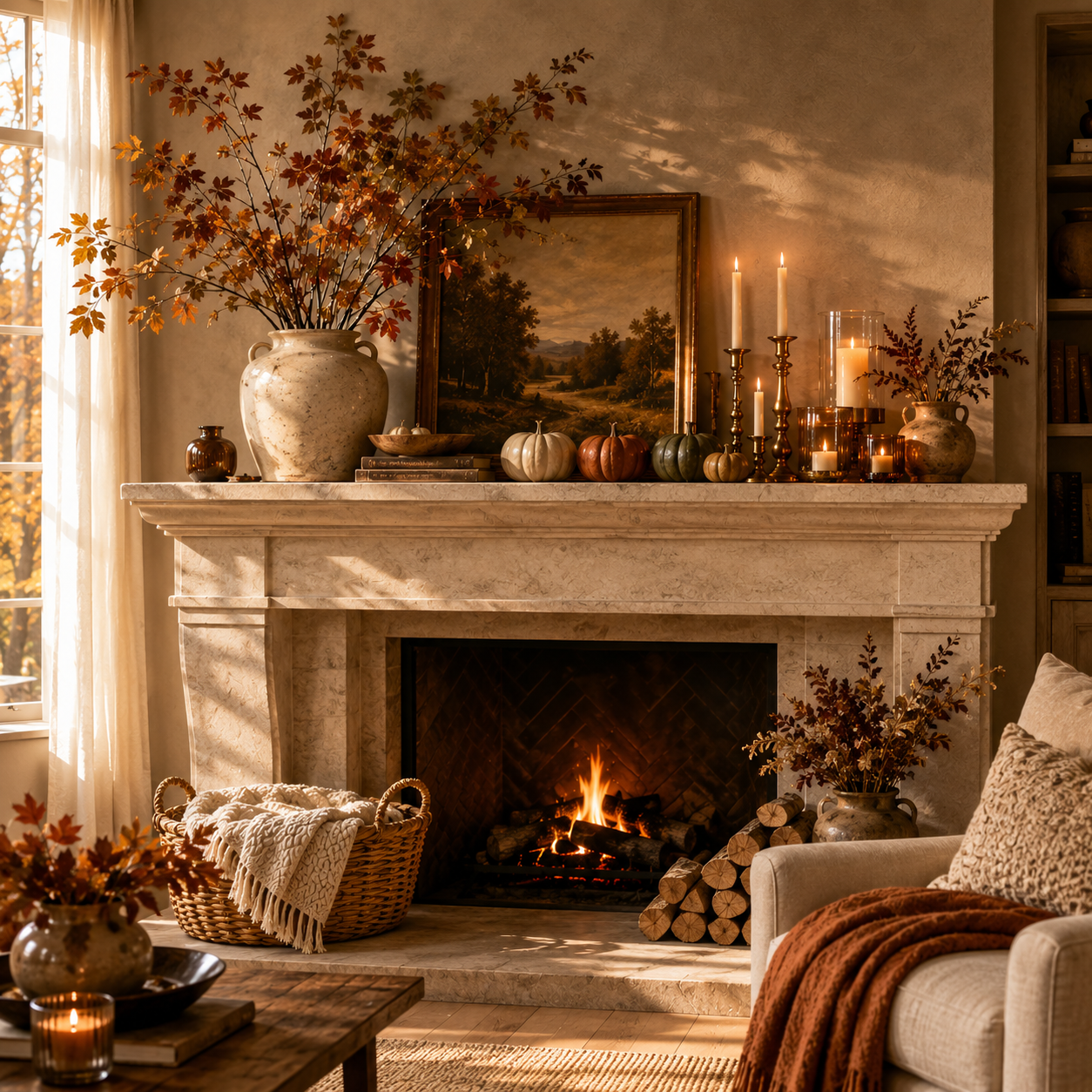
The most beautiful fall mantles today are not necessarily packed with pumpkins, orange leaves, and obvious seasonal signs. 🍂 A more sophisticated approach combines autumn colors with natural materials, layered textures, sculptural branches, vintage artwork, candles, ceramics, and carefully selected seasonal accents. The result can feel distinctly autumnal while still complementing the home’s existing interior style.
For a fresh seasonal update, these Top 3 fall mantle decor ideas offer three very different approaches. The first celebrates organic branches and natural materials, the second creates atmosphere through layered candlelight, and the third explores a moodier vintage-inspired interpretation of autumn. Each concept can be adapted to traditional fireplaces, modern stone surrounds, small apartment mantles, or decorative fireplace shelves.
Why Fall Mantle Decor Can Transform the Entire Living Room
A fireplace is often one of the strongest architectural features in a living room. Even when there is no fire burning, the eye naturally travels toward the mantle because of its height, central position, and relationship with the surrounding furniture.
That makes seasonal mantle decorating surprisingly influential. 🍁 A few carefully chosen objects can introduce an entirely new color story to the room without requiring new furniture, curtains, rugs, or wall paint.
Autumn is particularly well suited to mantle styling because the season provides an extraordinary range of natural materials. Dried branches, colorful leaves, seed pods, small pumpkins, acorns, grasses, berries, pinecones, and weathered wood all offer interesting shapes and textures.
However, successful fall styling depends heavily on restraint.
Rather than displaying every autumn decoration available, choose a clear visual direction and allow a few beautiful pieces to dominate. Negative space can be just as important as the decorations themselves.
Choosing the Right Fall Mantle Decor Style
Before collecting decorations, consider the atmosphere you want the room to communicate.
A bright neutral living room may look beautiful with sculptural branches, cream ceramics, and muted pumpkins. A traditional room might benefit from vintage landscapes, brass candlesticks, and dark autumn foliage. A contemporary home can embrace minimalist arrangements using oversized branches and only a handful of sculptural objects.
Here is a quick comparison of the three featured approaches:
| Fall Mantle Decor Idea | Main Visual Feature | Best Colors | Key Materials | Overall Mood |
|---|---|---|---|---|
| 🥇 Natural Branch Gallery | Oversized autumn branches | Rust, olive, beige, brown | Wood, ceramic, stone, foliage | Organic and sophisticated |
| 🥈 Layered Candlelight Mantle | Candles at different heights | Ivory, amber, caramel, brass | Wax, glass, metal, wood | Warm and intimate |
| 🥉 Moody Vintage Autumn Mantle | Vintage artwork and deep colors | Burgundy, tobacco, olive, chocolate | Antique frames, brass, dark wood | Dramatic and nostalgic |
None of these styles requires an enormous collection of seasonal decorations. In fact, their strongest quality comes from creating atmosphere with relatively simple elements.
Important Note: If the fireplace is functional, keep dried foliage, paper decorations, textiles, garlands, candles, and other combustible materials safely away from flames and hot surfaces. Always follow the fireplace and candle manufacturers’ clearance and safety instructions.
🥇 Best 1 Natural Branch Gallery Fall Mantle Decor for Organic Autumn Elegance
One of the most sophisticated ways to decorate a mantle for fall is to treat it almost like a miniature botanical gallery.
Instead of covering every available centimeter with decorations, begin with one dramatic natural element: a large arrangement of autumn branches.
This immediately creates height, movement, and seasonal color while maintaining an elegant appearance. 🍂 The irregular silhouettes of branches also provide something manufactured decorations often cannot reproduce—a sense of authentic seasonal imperfection.
Create a Dramatic Botanical Focal Point
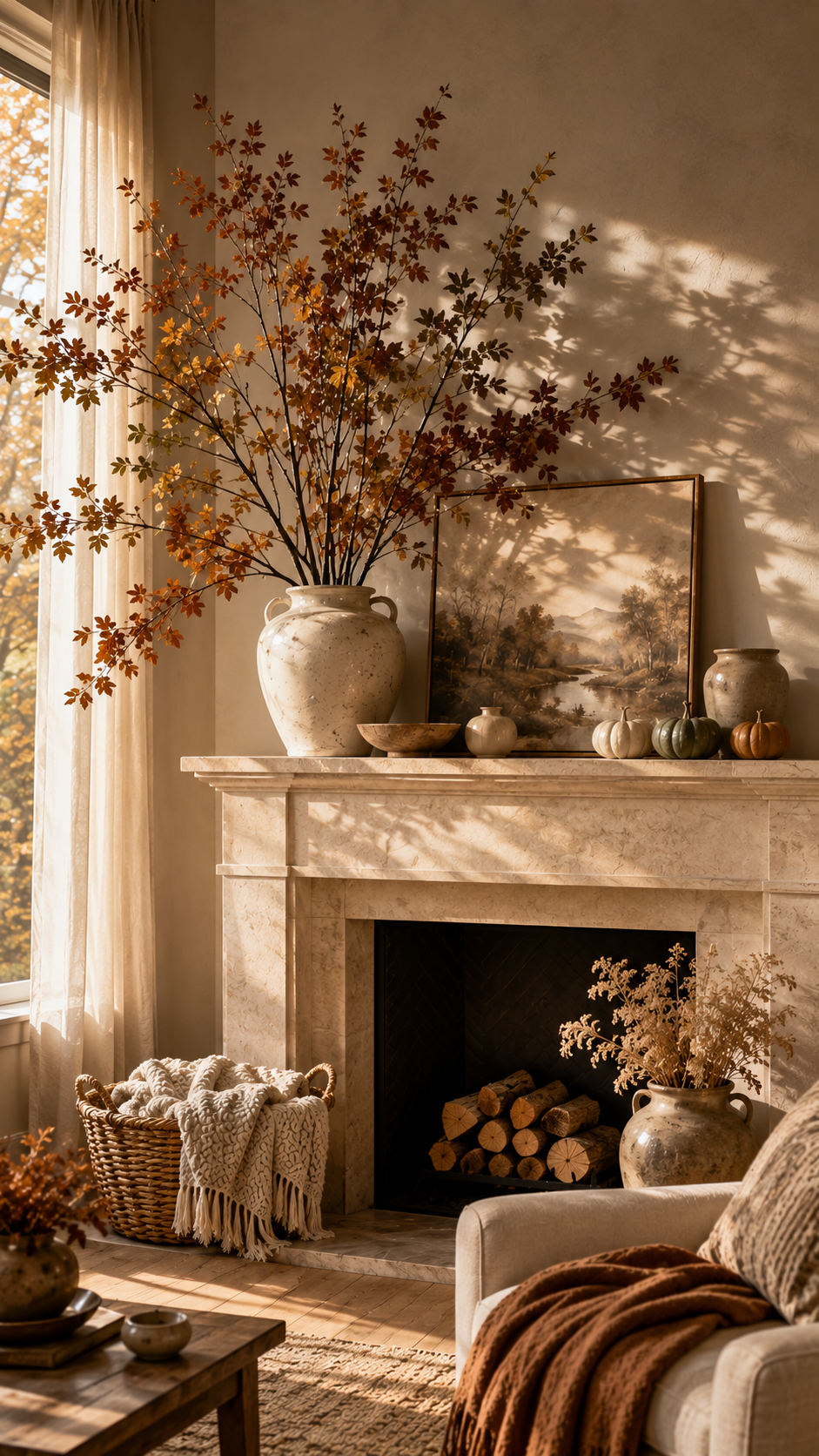
Choose a substantial ceramic vase and position it slightly off-center on the mantle. Rather than selecting a tiny vessel filled with short stems, use a larger vase capable of supporting tall, architectural branches.
Branches can extend considerably above the mantle.
This vertical dimension is particularly effective in rooms with high ceilings because it visually connects the fireplace with the wall above it.
Look for foliage in muted autumn shades such as:
- 🍁 Burnished rust and cinnamon
- 🌿 Deep olive and moss green
- 🤎 Tobacco brown and warm taupe
- 🧡 Muted terracotta
- 🌾 Golden beige and wheat tones
The colors do not need to be perfectly uniform. Natural variation makes the arrangement more convincing and visually interesting.
If fresh branches are unavailable, high-quality faux botanical stems can create a similar effect. The key is choosing stems with realistic branching patterns and avoiding overly shiny artificial leaves.
Layer Handmade Ceramics Around the Branches
Once the primary branch arrangement establishes the silhouette, smaller objects can create visual balance.
Handmade-looking ceramics are particularly effective for this style because their irregular surfaces reinforce the organic character of the display.
Consider small bowls, sculptural vessels, matte ceramic pumpkins, or miniature pottery pieces in cream, stone, sand, mushroom, and warm brown.
Rather than arranging them symmetrically, create small clusters.
For example, the tall branch arrangement might occupy the left side of the mantle while two smaller ceramic vessels sit toward the right. A low object in the center can visually connect both areas.
This creates an asymmetrical composition that feels curated rather than rigid.
Use Pumpkins Without Making the Mantle Feel Too Themed
Pumpkins are practically synonymous with autumn decorating, but they do not need to dominate the arrangement. 🎃
Instead of using numerous bright orange pumpkins, choose only two or three in restrained colors.
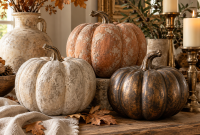
Muted heirloom varieties work especially well. Think dusty sage, creamy white, faded terracotta, pale caramel, or subtle gray-green.
Their unusual shapes contribute texture without turning the mantle into a literal harvest display.
For an even more minimalist interpretation, skip pumpkins entirely and rely on branches, ceramics, and seasonal foliage to communicate autumn.
Add a Simple Artwork Layer Behind the Arrangement
Artwork can provide another layer of depth.
Instead of hanging a large seasonal sign, lean a framed landscape painting or botanical artwork against the wall.
A misty countryside scene, abstract landscape, vintage botanical print, or muted nature study can complement the autumn branches without competing with them.
Leaning artwork rather than hanging it also makes seasonal transitions easier.
When winter arrives, the autumn branches can be replaced with evergreen foliage while the artwork remains.
This approach creates a mantle that feels like part of the interior design rather than a temporary holiday installation.
Extend the Natural Fall Mantle Decor Below the Fireplace
The mantle itself does not have to carry the entire composition.
A woven basket positioned beside the hearth can hold a folded wool blanket. A small stack of firewood can introduce additional organic texture. A stoneware vessel placed on the floor can contain a few tall dried grasses.
These lower elements visually connect the decorated mantle with the rest of the room.
The result is especially effective when nearby furniture includes linen, wool, leather, oak, or other natural materials.
🥇 Why this idea works: it delivers unmistakable autumn atmosphere through natural forms and color rather than relying on excessive themed decorations.
🥈 Best 2 Layered Candlelight Fall Mantle Decor for Cozy Autumn Evenings
If the first idea celebrates nature, the second focuses almost entirely on atmosphere.
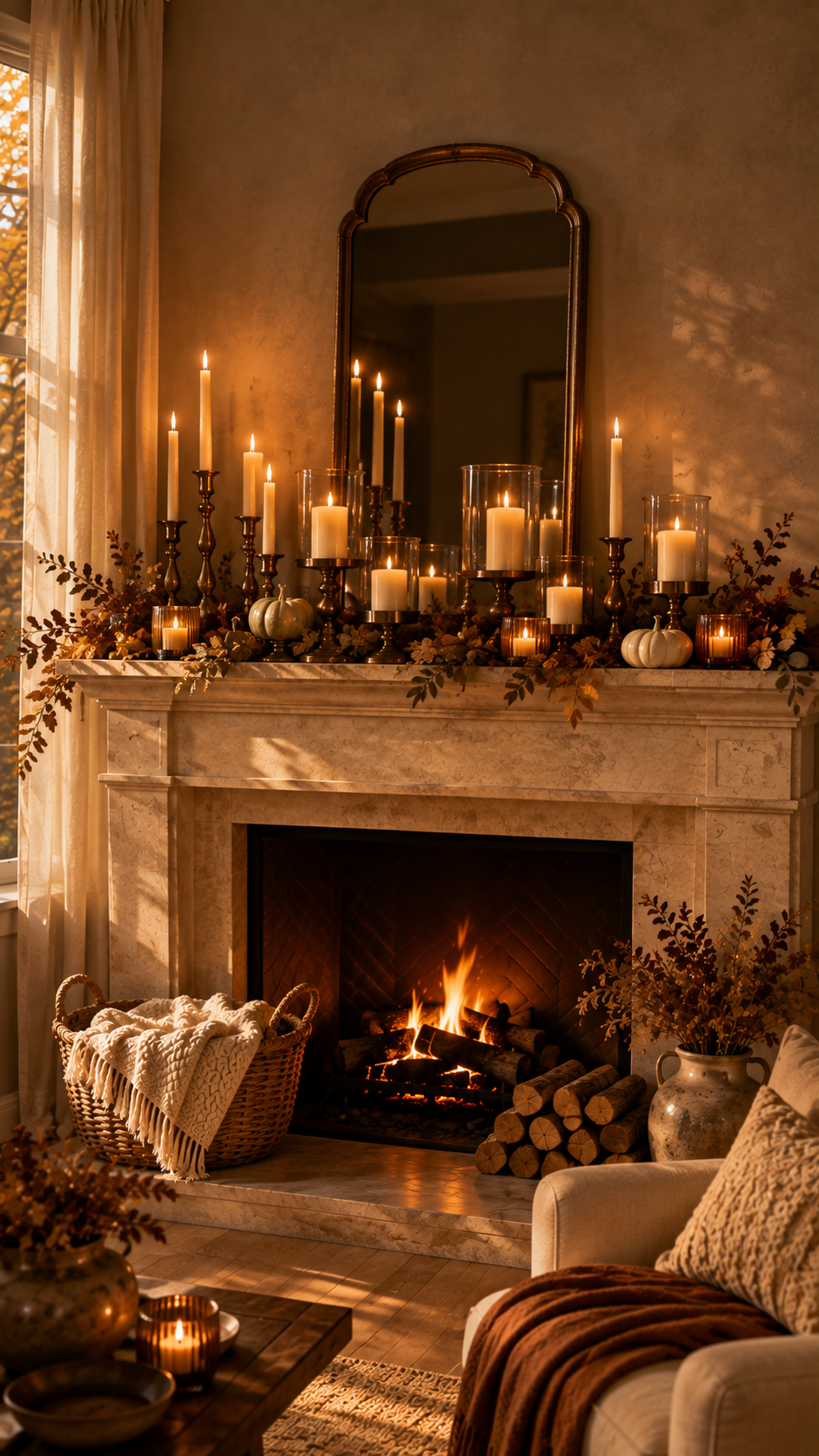
Few things make an autumn living room feel as inviting as warm candlelight. 🕯️ Instead of treating candles as small accessories, this fall mantle decor concept makes them the central decorative feature.
The goal is to create multiple points of light at different heights, producing a beautiful layered glow after sunset.
Build the Mantle Around Different Candle Heights
A single pair of identical candlesticks can look elegant, but a more atmospheric autumn arrangement uses varying heights.
Combine tall taper candles with shorter pillar candles and perhaps one or two glass lanterns.
This variation creates rhythm across the mantle.
For example, three brass candlesticks of different heights could occupy one side while several ivory pillar candles form a lower group on the opposite side.
Between them, leave enough empty space for the composition to breathe.
The arrangement should feel collected rather than perfectly symmetrical.
Choose Warm Materials That Reflect Candlelight
The materials surrounding the candles have a major influence on the overall mood.
Brass is especially effective because its warm metallic surface reflects candlelight beautifully. Antique brass can feel traditional and nostalgic, while streamlined brushed brass works in more contemporary interiors.
Amber glass is another excellent autumn material.
When candlelight passes through amber-colored glass, the resulting glow becomes richer and warmer. 🤎 Even simple glass hurricane holders can produce a dramatic effect when arranged against a neutral wall.
Other complementary materials include dark wood, smoked glass, handmade ceramics, travertine, aged bronze, and natural stone.
Together, these materials produce a layered environment where light becomes part of the decoration.
Introduce a Loose Autumn Garland
A subtle garland can soften the horizontal edge of the mantle.
Instead of using a thick, perfectly symmetrical garland, choose something loose and slightly irregular.
Eucalyptus, dried oak leaves, olive branches, preserved foliage, or delicate berry stems can work beautifully.
Allow the greenery to move naturally across the mantle rather than forming a rigid line.
A small section can gently trail toward one side, creating movement without overwhelming the fireplace.
The foliage should support the candle display rather than hide it.
Keep the Color Palette Quiet and Warm
This style works particularly well with a restrained autumn palette.
Think ivory candles, amber glass, aged brass, caramel foliage, dark brown wood, and perhaps small touches of rust or burgundy.
The absence of bright colors allows the warm candlelight to become more visually prominent.
During daylight, the mantle appears elegant and understated. As evening arrives, the entire composition changes.
The reflective surfaces begin to glow, shadows deepen, and the fireplace area becomes a cozy visual destination.
✨ This transition from daytime decoration to nighttime atmosphere is what makes the concept particularly appealing.
Style the Area Around the Fireplace for Evening Comfort
The surrounding seating can reinforce the candlelight theme.
Add a chunky knitted throw to an armchair, place a wool blanket over the sofa, or introduce one or two velvet cushions in warm earthy colors.
A small wooden side table with a ceramic mug or reading book can subtly suggest how the room is meant to be enjoyed.
Avoid adding too many decorative objects.
The atmosphere should come primarily from texture and light.
If open flames are impractical, realistic flameless LED candles can create a similar layered effect, particularly when they use warm flickering light and varied heights.
🥈 Why this idea works: it transforms the fireplace into an atmospheric centerpiece that becomes even more beautiful as daylight fades.
🥉 Best 3 Moody Vintage Fall Mantle Decor for Rich Seasonal Character
Not every autumn interior needs to be light, beige, and minimalist.
A deeper, more dramatic interpretation can create an exceptionally sophisticated seasonal atmosphere. 🍷 The third fall mantle decor idea combines vintage artwork, aged materials, dark foliage, and rich autumn colors.
The result feels nostalgic, collected, and slightly mysterious.
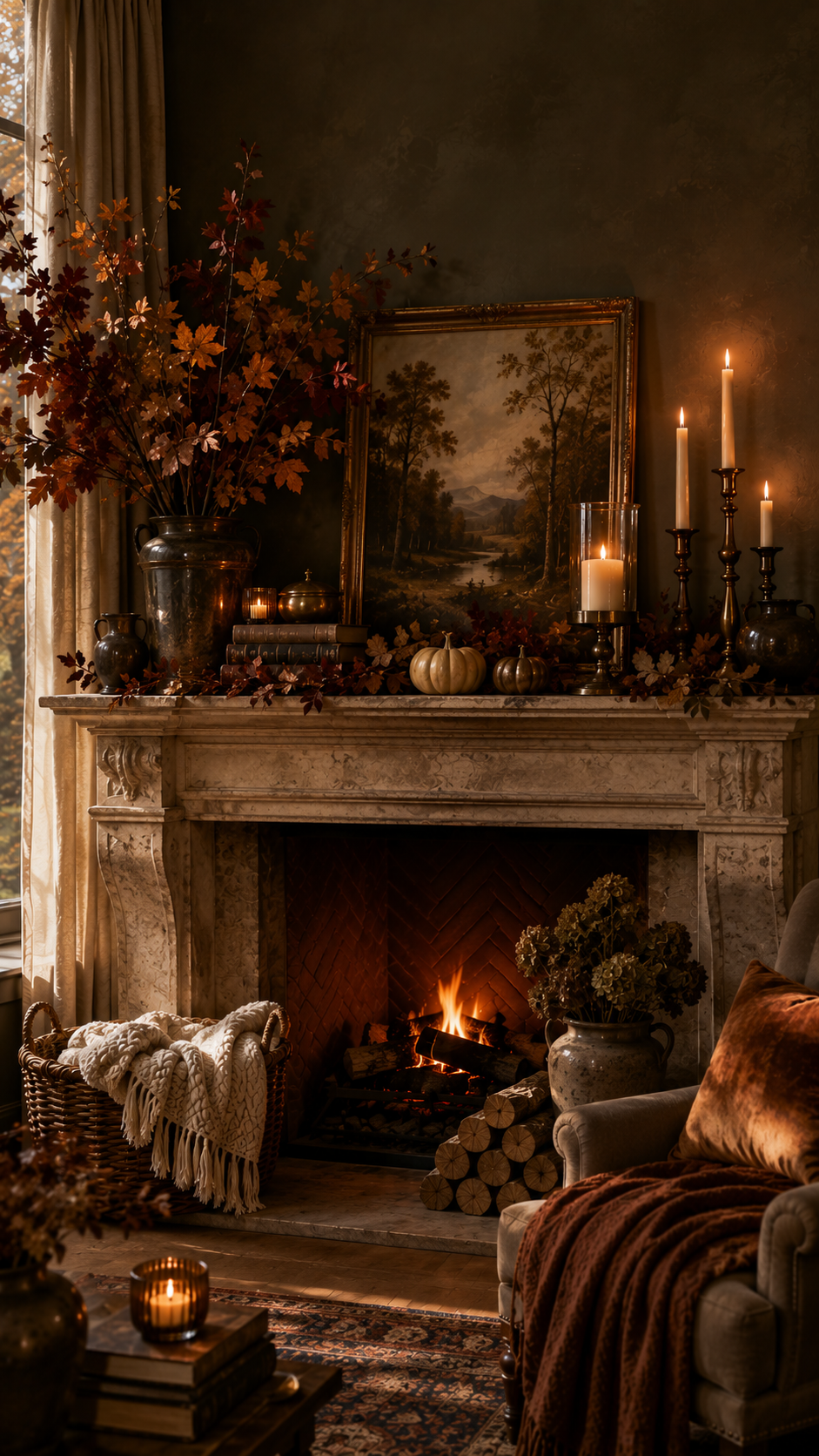
Rather than recreating a traditional farmhouse harvest display, this approach draws inspiration from old European interiors, antique shops, historic country houses, and classic autumn landscape paintings.
Begin With Vintage Artwork
Artwork should establish the mood.
Choose one larger vintage-inspired landscape painting and lean it against the wall above the mantle.
Scenes featuring forests, countryside paths, mountains, lakes, or cloudy autumn skies work particularly well.
Colors such as deep olive, tobacco brown, faded gold, charcoal, rust, and burgundy immediately create seasonal richness.
Instead of displaying only one piece, smaller framed artwork can be layered partially in front of the larger painting.
The frames do not need to match.
A mixture of antique brass, dark wood, and aged gold frames can make the arrangement feel as though it developed gradually over time.
That collected quality is central to the style.
Add Deep Autumn Botanical Colors
Botanical arrangements can reinforce the darker palette.
Instead of bright orange maple leaves, consider deep burgundy branches, dark berries, dried hydrangeas, brown seed pods, eucalyptus, or faded olive foliage.
Place them inside a vintage-looking ceramic or metal vessel.
The arrangement can be relatively loose.
Branches extending sideways create a dramatic silhouette against the wall and help connect the artwork with the objects below.
Dark botanical colors are particularly striking against warm cream, taupe, greige, plaster, or limewashed walls.
Mix Brass Candlesticks With Dark Wood
A few antique-inspired brass candlesticks introduce warmth and prevent the palette from becoming visually heavy.
The brass should look slightly aged rather than highly polished.
Combine them with darker wooden elements such as a carved box, small pedestal, vintage frame, or sculptural object.
These materials create the impression of objects collected over many years.
That is exactly what gives this style its character.
Unlike highly coordinated seasonal decorating, vintage-inspired styling benefits from slight inconsistencies in finish, scale, and texture.
Introduce One Unexpected Autumn Color
A small amount of unexpected color can make the display feel particularly memorable.
Burgundy is an excellent choice.
A single burgundy taper candle, a cluster of dark red berries, or a small piece of vintage artwork containing wine-red tones can introduce dramatic depth.
Deep plum can produce a similar effect.
For something more earthy, use burnt sienna or tobacco.
The key is moderation.
One concentrated accent is usually more sophisticated than repeating the same dramatic color everywhere.
Use Books to Create Height
Vintage books are excellent styling tools because they provide both texture and height.
Stack two or three books horizontally and place a small ceramic object or candlestick on top.
Choose covers in muted colors such as olive, brown, faded burgundy, charcoal, or cream.
Avoid making the arrangement look excessively staged. Books should appear naturally integrated into the display.
This small detail helps create the impression of a living room designed for actual living rather than purely for seasonal photography.
Let the Mantle Feel Slightly Imperfect
Perfect symmetry can work beautifully in formal interiors, but the vintage autumn approach becomes more interesting when the arrangement is intentionally imperfect.
One side might contain taller foliage while the other has layered artwork and candlesticks.
Objects can overlap slightly.
Frames can vary in height.
Branches do not need to point in identical directions.
This controlled imperfection creates visual depth and authenticity.
🥉 Why this idea works: it provides a richer alternative to conventional bright autumn decorating while creating a sophisticated room that can transition beautifully into late fall.
How to Choose the Best Fall Mantle Decor Idea for Your Home
The best concept depends on more than personal taste. Consider the architecture, wall color, fireplace material, furniture, and amount of natural light in the room.
If your home already features warm woods, linen, stone, and neutral upholstery, Natural Branch Gallery Fall Mantle Decor can reinforce those organic materials beautifully.
For rooms primarily used during evenings, Layered Candlelight Fall Mantle Decor can have the greatest emotional impact because the decoration becomes increasingly atmospheric after sunset.
If your interior includes antique furniture, dark wood, traditional architectural details, vintage rugs, or rich colors, Moody Vintage Fall Mantle Decor may feel particularly natural.
You can also borrow elements from multiple ideas.
A large branch arrangement from the first concept could be combined with brass candleholders from the second. Vintage artwork from the third concept could become the backdrop for a minimalist botanical arrangement.
The secret is maintaining one dominant visual story.
Fall Mantle Decor Color Palettes That Feel Sophisticated
Color is often what separates refined seasonal styling from a display that feels overly themed.
Instead of thinking only about traditional orange, consider autumn as a much broader spectrum.
🌾 Warm neutral palette: cream, oatmeal, mushroom, camel, beige, and natural wood.
🍂 Earthy botanical palette: rust, terracotta, olive, moss, tobacco, and warm brown.
🕯️ Candlelight palette: ivory, caramel, amber, aged brass, and dark walnut.
🍷 Moody autumn palette: burgundy, plum, chocolate, forest green, charcoal, and antique gold.
Limiting the display to approximately three primary colors plus natural materials can help create cohesion.
For example, an ivory-and-olive arrangement might use cream ceramics, olive foliage, and warm oak. A moodier display could combine burgundy foliage, dark wood, and antique brass.
How to Make Fall Mantle Decor Look Expensive on a Budget
Beautiful seasonal styling does not require expensive designer decorations.
Natural materials can provide some of the most visually impressive elements.
Branches gathered responsibly from your own property can become an oversized arrangement. Pinecones, seed pods, and dried leaves can introduce seasonal texture without requiring large purchases.
Thrift stores and flea markets can also be excellent sources for frames, candlesticks, pottery, baskets, books, and small artwork.
Rather than searching specifically for “fall decorations,” look for objects in autumnal colors and materials.
A brown ceramic vase does not need to have pumpkins printed on it to feel seasonal. In fact, versatile objects often produce a more sophisticated result because they can remain in the room throughout the year.
Changing only the botanical materials may be enough to transition them from one season to another.
Common Fall Mantle Decor Mistakes to Avoid
One common mistake is making every object the same height.
When everything sits along one horizontal line, the display can feel flat. Use a combination of tall, medium, and low elements to create movement.
Another mistake is excessive symmetry.
Matching objects positioned at identical distances can work in formal spaces, but autumn decorating often benefits from a slightly more relaxed arrangement.
Overcrowding is another frequent problem.
If every inch of the mantle is occupied, individual pieces lose their impact. 🍁 Leave intentional empty areas so the eye can appreciate the most beautiful objects.
Finally, avoid introducing too many unrelated autumn colors.
Bright orange, yellow, red, green, purple, and brown can quickly become visually chaotic when used together. A smaller palette usually produces a more contemporary and polished result.
How to Transition Fall Mantle Decor From Early Autumn to Thanksgiving
One advantage of using sophisticated seasonal foundations is that the mantle can evolve gradually rather than being completely redesigned.
In early fall, emphasize greenery, branches, and muted earthy colors.
As October progresses, introduce deeper rust tones, pumpkins, dried foliage, or darker candles.
By November, the arrangement can become warmer and richer. Add brass, brown leaves, wheat, deeper burgundy accents, or additional candlelight.
For Thanksgiving, a few subtle harvest elements can be introduced without changing the entire composition.
Small heirloom pumpkins, dried pears, wheat bundles, or sculptural gourds can complement an existing natural arrangement.
After Thanksgiving, many of these elements can transition directly into winter.
Remove the pumpkins and distinctly autumnal leaves, then introduce evergreen branches, pinecones, and perhaps darker berries.
This approach reduces both decorating effort and seasonal storage.
Creating Balance Above and Below the Fall Mantle
The fireplace should be considered as one complete composition.
If the mantle is heavily decorated while the hearth below is completely empty, the visual weight may feel concentrated too high on the wall.
A few carefully selected floor-level elements can create balance.
A woven basket filled with blankets is one option. A beautiful firewood holder is another. Large ceramic vessels, lanterns, or a small stool can also work depending on the fireplace design.
However, the lower area does not need to mirror the mantle.
Think of it as visual support.
If the upper arrangement is elaborate, keep the hearth simple. If the mantle itself is minimalist, slightly stronger floor-level styling may help anchor the fireplace.
Bringing the Rest of the Living Room Into the Fall Story
A beautifully decorated mantle becomes even more convincing when small elements elsewhere in the room repeat its materials or colors.
This does not mean filling the entire house with matching pumpkins.
Instead, repeat subtle details.
If the mantle features rust-colored branches, introduce one rust velvet cushion on the sofa. If antique brass candlesticks are prominent, a small brass bowl on the coffee table can create visual continuity.
A wool throw can repeat the oatmeal tones of ceramic mantle pieces.
An amber glass vase elsewhere in the room can echo candleholders above the fireplace.
These connections make the seasonal design feel intentional.
They also allow the mantle to remain the main focal point because the rest of the room supports rather than competes with it.
Final Thoughts on the Top 3 Fall Mantle Decor Ideas
The most compelling fall mantle decor does more than announce that autumn has arrived. It changes how the entire room feels.
🥇 Natural Branch Gallery Fall Mantle Decor is ideal for anyone who loves organic textures, sophisticated neutrals, and effortless botanical styling. Oversized branches, handmade ceramics, subtle pumpkins, and natural materials create a seasonal display that feels timeless rather than overly themed.
🥈 Layered Candlelight Fall Mantle Decor is designed around atmosphere. Candles at multiple heights, amber glass, brass, delicate foliage, and warm textiles transform the fireplace into an exceptionally inviting evening focal point.
🥉 Moody Vintage Fall Mantle Decor offers something richer and more dramatic. Vintage landscape paintings, aged brass, dark foliage, burgundy accents, old books, and layered frames create a deeply atmospheric interpretation of autumn with nostalgic character.
Whichever approach suits the home, the strongest result usually comes from editing rather than adding. Choose a limited palette, establish one dominant focal point, mix heights and textures, and leave enough negative space for every object to have visual impact.
🍂 Autumn decorating does not have to mean covering the mantle with dozens of seasonal accessories. Sometimes one spectacular branch, several beautifully aged candlesticks, or a single moody landscape painting can communicate the season more effectively than an entire collection of pumpkins.
When the colors, textures, lighting, and proportions work together, the fireplace becomes more than a place for seasonal decorations. It becomes the warm visual heart of the autumn home.
Related posts:

Best 3 Plastic Pumpkins Makeover Ideas That Look Surprisingly Expensive
Best 3 Bookshelf Wallpaper Ideas That Make Any Wall Look Expensive
Best 3 Wedding Photo Displays That Make Your Celebration Feel More Personal
Best 3 Minimalist Cozy Interiors Ideas That Make Simple Homes Feel Warm and Beautiful
Best 3 Cozy Reading Chairs That Make Any Corner Feel Like Your Favorite Escape
Best 3 Wainscoting and Beadboard Styles That Instantly Make Any Room Look More Expensive