Creating a bedroom for a toddler sounds simple until you start thinking about everything the room needs to accomplish. It has to feel comfortable enough for restful nights, safe enough for increasingly independent little explorers, practical enough for everyday routines, and interesting enough to encourage play and imagination. The best Toddler Bedroom Ideas manage to bring all of these needs together without turning the bedroom into an overwhelming collection of toys, colors, and miniature furniture.
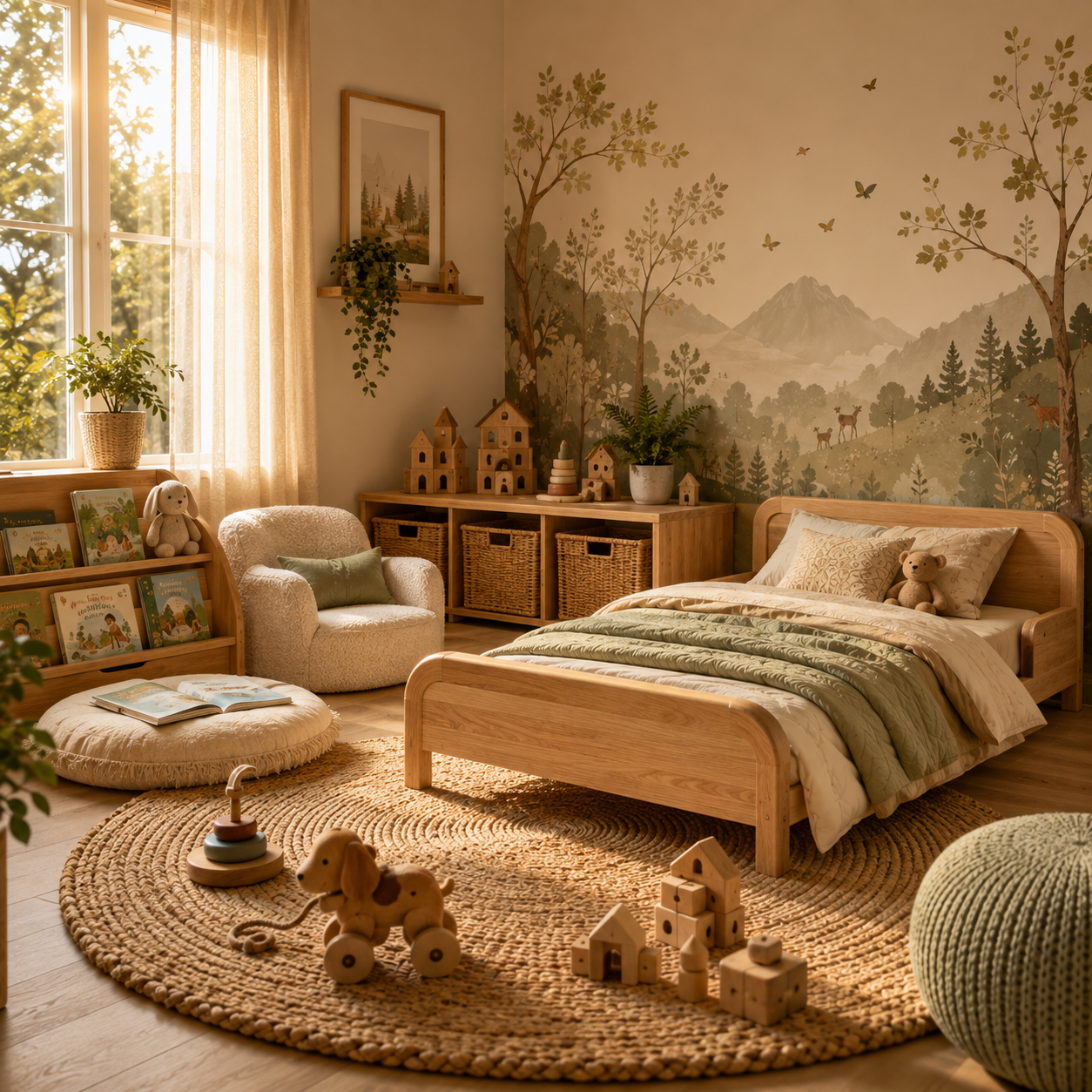
A thoughtfully designed toddler bedroom is also very different from a nursery. Babies depend almost entirely on adults to interact with their environment, while toddlers increasingly want to reach their own books, choose a toy, climb into bed, put something away, and explore the room independently. 🌿 The bedroom therefore becomes one of the first spaces that can genuinely feel like their own.
The most beautiful rooms don’t necessarily contain the most decorations. Instead, they usually have one clear design concept supported by thoughtful furniture placement, accessible storage, comfortable textures, and a restrained color palette.
Among countless possibilities, three concepts stand out because they combine style, practicality, imagination, and longevity especially well. These are the 3 Best Toddler Bedroom Ideas for creating a room that feels magical today while remaining adaptable as your child grows.
What Makes the Best Toddler Bedroom Ideas Actually Work
Before choosing colors or adorable decorations, it helps to understand what makes a toddler bedroom successful.
A toddler experiences a room differently from an adult. Adults naturally notice the overall composition—the wall color, furniture style, rug, lighting, and decorative details. A toddler interacts with the room much closer to floor level. The lower half of the bedroom matters enormously.
Books positioned within reach can invite reading. Low baskets can encourage independent play and cleanup. A small chair can become a place for looking through picture books. An accessible bed can make bedtime and mornings feel increasingly independent.
This is why effective Toddler Bedroom Ideas combine aesthetics with accessibility.
At the same time, toddlers grow remarkably quickly. Designing every detail around one very specific age can mean redesigning the bedroom again shortly afterward. A more sustainable approach is to create a sophisticated foundation and allow easily replaceable elements—artwork, bedding, toys, baskets, and accessories—to carry the playful personality.
Quick Comparison of the Top 3 Toddler Bedroom Ideas
| Toddler Bedroom Idea | Best Feature | Ideal For | Overall Feeling | Adaptability |
|---|---|---|---|---|
| 🥇 Calm Montessori Inspired Toddler Retreat | Independence and simplicity | Small and medium rooms | Calm natural and cozy | Excellent |
| 🥈 Storybook Reading and Play Bedroom | Imagination and reading | Toddlers who love books and creative play | Magical warm and playful | Very Good |
| 🥉 Nature Inspired Adventure Bedroom | Personality without visual chaos | Active and curious toddlers | Organic adventurous and inviting | Excellent |
Each approach creates a distinctive atmosphere, but all three share one principle: the bedroom should be designed around the child’s experience rather than simply looking impressive in photographs.
Important Note: Toddler safety should always come before aesthetics. Secure appropriate furniture to the wall, keep cords and potentially hazardous objects inaccessible, follow current product-specific safety guidance, and choose age-appropriate beds, furniture, lighting, toys, and window treatments.
🥇 Best 1 Calm Montessori Inspired Toddler Bedroom Retreat
Among the most versatile Toddler Bedroom Ideas, a calm Montessori-inspired bedroom deserves the number-one position because it can be beautiful, functional, and surprisingly easy to adapt.
The concept revolves around independence.
Instead of filling the bedroom with large furniture designed primarily for adults, create an environment where important everyday objects are accessible at toddler height. The result can feel remarkably peaceful because everything has a clear purpose and place.
This doesn’t mean the bedroom has to become a strict Montessori environment. Even incorporating a few Montessori-inspired principles can completely transform how the room functions.
Create a Low and Welcoming Sleep Zone
The bed naturally becomes one of the largest visual elements in a toddler bedroom, so its design significantly influences the atmosphere.
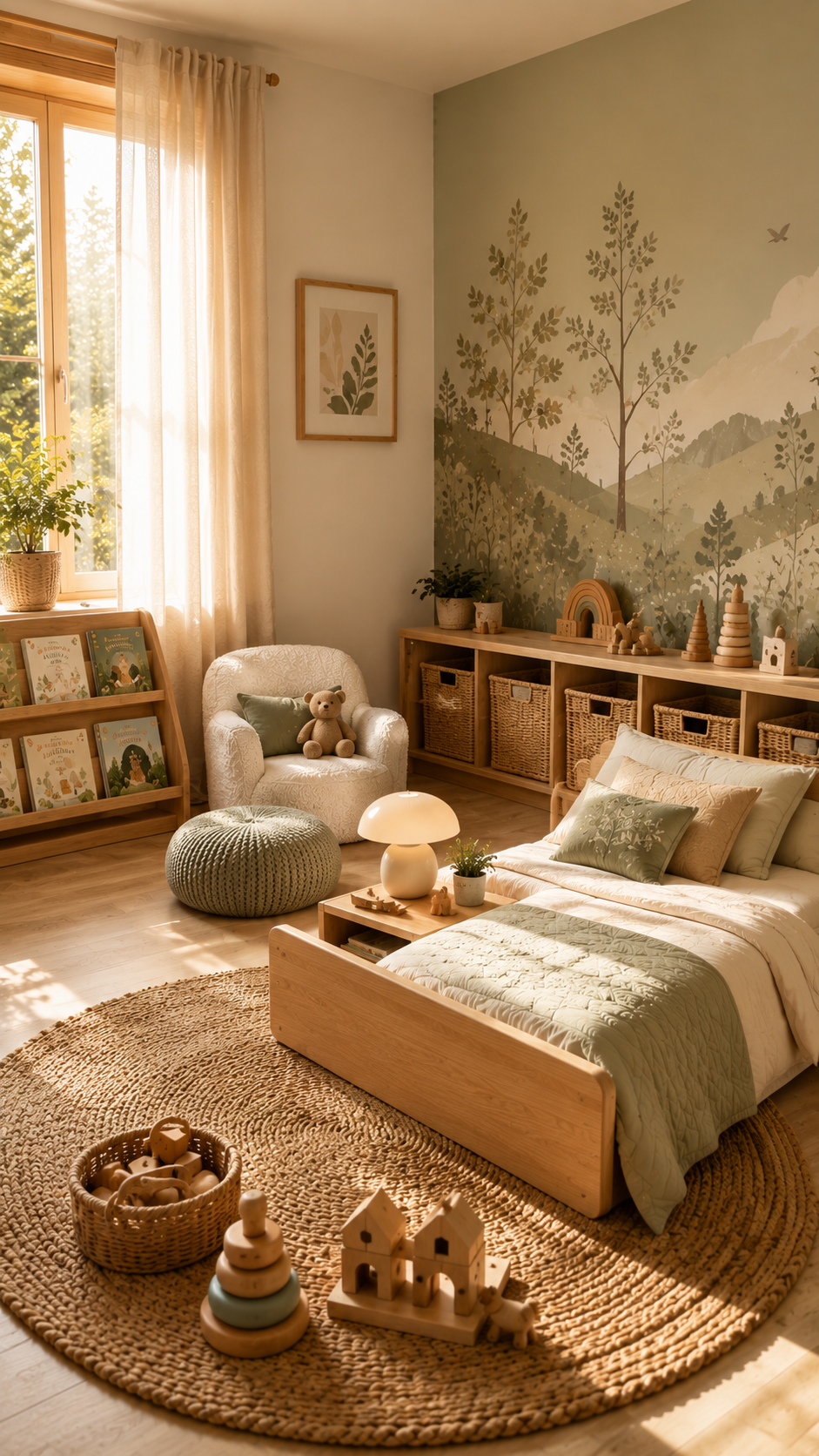
A low-profile toddler bed can create a wonderfully grounded appearance. Choose a simple design in natural wood, warm white, muted beige, or another timeless finish rather than something heavily themed.
Positioning the sleeping area against a calm wall can establish a strong visual anchor.
Instead of surrounding it with excessive decoration, use a few intentional elements. Soft neutral bedding, one small pillow where age-appropriate, a beautiful fitted sheet, and a lightweight blanket suitable for the child’s age can create a welcoming appearance.
The wall behind the bed can remain relatively restrained.
Warm ivory, soft cream, pale greige, muted sage, dusty blue, or gentle clay tones work particularly well because they provide personality without making the sleeping area visually intense.
🌙 The goal is to make bedtime feel like entering the calmest part of the room.
Keep Everyday Toddler Essentials Within Reach
Accessibility is where this bedroom idea becomes especially useful.
Imagine the room from approximately your toddler’s eye level. What can they actually reach?
A low bookshelf displaying several books with covers facing outward can make reading more inviting. Rather than storing dozens of books on a tall shelf, rotate a smaller collection periodically.
The same principle works beautifully with toys.
Place selected toys in low woven baskets, wooden cubbies, or accessible storage bins. Toys that aren’t currently being used can remain elsewhere and rotate into the room later.
This creates two benefits.
First, toddlers can begin making simple independent choices.
Second, fewer visible objects reduce visual clutter.
A bedroom containing five thoughtfully displayed activities can sometimes encourage deeper play than a room containing fifty toys competing simultaneously for attention.
Use Natural Materials to Create Warmth
Montessori-inspired Toddler Bedroom Ideas often look especially beautiful when natural materials dominate the space.
Natural or light oak furniture introduces warmth without appearing heavy. A wool or washable woven rug can visually soften the floor. Linen-look curtains can diffuse daylight beautifully. Woven baskets provide texture while serving a practical purpose.
These materials also help prevent a neutral bedroom from becoming sterile.
There is an important difference between minimalist and empty.
A successful toddler room can remain visually calm while still feeling warm and tactile. Wood grain, woven fibers, cotton bedding, textured rugs, and handmade-looking accessories introduce subtle variation.
🌿 Think soft and natural rather than perfectly polished.
Build a Tiny Independence Station
One of the most charming additions to this toddler bedroom is a small independence zone.
Depending on the child’s age and family routine, this might include a child-height mirror securely installed, a few accessible clothing hooks, a tiny chair, or low storage for selected everyday items.
The station doesn’t need to occupy much space.
Even a narrow wall can become useful.
Install two or three rounded hooks at an appropriate height and place a small basket underneath. A favorite cardigan, little backpack, or dress-up item can become part of the room rather than disappearing inside a large wardrobe.
This transforms unused vertical space into something meaningful.
Keep the Color Palette Calm but Not Boring
Neutral toddler bedrooms sometimes become so beige that they lose personality.
Instead of eliminating color, control it.
Start with approximately three main visual families. For example:
warm ivory + natural oak + muted sage
or
soft beige + creamy white + dusty blue
or
warm greige + oak + muted terracotta.
Then repeat these colors subtly throughout the bedroom.
If the wall is pale sage, for instance, the same green might reappear in a small pillow, illustrated artwork, or storage basket.
This repetition creates cohesion.
The result feels professionally designed without requiring matching furniture sets.
Why This Toddler Bedroom Idea Takes First Place
The biggest advantage of this concept is longevity.
Remove a few toddler-specific objects several years later and the foundation can easily become a stylish young child’s bedroom. The natural furniture, quiet walls, practical storage, and simple layout don’t immediately become outdated.
It also works extremely well in smaller bedrooms because the furniture can remain low and visually lightweight.
For parents who want a bedroom that feels calm, beautiful, functional, and adaptable, this is difficult to beat.
🥈 Best 2 Storybook Reading and Play Toddler Bedroom
The second of the 3 Best Toddler Bedroom Ideas takes a more whimsical direction.
Instead of making the room primarily about simplicity, this design revolves around storytelling.
The bedroom becomes a gentle storybook environment containing places to sleep, read, imagine, and play. 📚✨
The challenge is avoiding an overly themed room.
A bedroom doesn’t need giant cartoon characters on every wall to feel magical. In fact, subtle storytelling elements often create a more sophisticated and longer-lasting design.

Make a Cozy Reading Corner the Main Feature
Every storybook-inspired toddler bedroom deserves a memorable reading nook.
Choose one corner with comfortable natural light if possible.
Place a soft rug or washable floor cushion there. Add a low book display where colorful covers become part of the decoration. A tiny upholstered chair, soft beanbag appropriate for the child’s age, or floor-level cushion can define the reading area.
Then introduce atmosphere.
A small fabric canopy can create a cocoon-like effect when safely installed and used appropriately. Alternatively, use a painted arch or subtle wallpaper panel behind the books to visually frame the area without adding physical fabric.
The goal isn’t simply storing books.
It is creating a destination.
📖 When a child can visually recognize “this is my reading corner,” the room becomes divided into meaningful little zones.
Introduce Storybook Character Through the Walls
Walls offer enormous creative potential.
Instead of decorating all four walls aggressively, select one focal area.
A hand-painted-style woodland mural can introduce quiet fantasy. Delicate clouds, trees, hills, stars, flowers, tiny houses, or abstract landscapes can create a sense of narrative without dominating the bedroom.
Wallpaper can achieve the same effect.
Look for illustrations with relatively soft colors and enough negative space between motifs. Dense patterns containing many saturated colors can quickly make a small toddler bedroom feel busy.
Another approach is a painted half wall.
A dusty blue, muted olive, clay, warm beige, or blush lower section combined with creamy upper walls can add character while maintaining visual calm.
The decoration should whisper a story rather than shout a theme.
Design Different Zones for Different Activities
A highly functional toddler bedroom benefits from simple zoning.
The sleeping zone should feel calm.
The reading zone can feel cozy.
The play zone can feel slightly more energetic.
Storage connects everything together.
You don’t need room dividers to achieve this. A rug can define the play area. A small wall treatment can identify the reading nook. The bed naturally establishes the sleep area.
These subtle visual boundaries help organize the bedroom without physically shrinking it.
In a small room, one area can perform multiple roles.
For example, a central rug can become a play surface during the day while maintaining open floor space. A low bench can provide seating while hiding toys inside. A low bookshelf can separate a reading corner without blocking light.
🧸 Every piece of furniture should ideally earn its place.
Use Toys as Carefully Curated Decoration
Toddler toys are naturally colorful.
Instead of fighting this, use selected toys as decorative objects.
A beautiful wooden stacking toy, a small stuffed animal, a wooden train, or a miniature dollhouse can look wonderful when intentionally displayed.
The secret is editing.
Avoid placing every toy on open shelving simultaneously.
Use a combination of open and concealed storage.
Open shelves can display the most attractive and frequently used toys. Baskets or drawers can hold visually messy collections such as building blocks, toy vehicles, or miscellaneous play pieces.
This balance keeps the bedroom playful without allowing toys to dominate the design.
Create Magic Through Lighting
Lighting can completely change the emotional quality of a toddler bedroom.
During the day, maximize soft natural light where possible. Lightweight curtains can gently filter sunlight while maintaining an airy feeling.
In the evening, warmer ambient lighting can make the room feel calmer.
Rather than relying entirely on one strong ceiling fixture, consider layered lighting. A ceiling light can provide general illumination while an appropriately designed bedside or wall-mounted light can create a softer bedtime atmosphere.
Decorative lighting should remain secondary to safety and practicality.
The visual goal is a soft evening glow rather than bright clinical illumination.
✨ A storybook bedroom becomes especially magical when the light feels warm and gentle.
Choose a Theme That Can Evolve
One reason heavily themed children’s bedrooms age quickly is that the child’s interests change.
Today it might be dinosaurs.
Next year it might be trains.
Then space.
Then animals.
Instead of designing the entire architecture around one character or obsession, choose a broader imaginative theme.
Woodland, meadow, ocean, sky, mountains, or storybook village themes provide far more flexibility.
Specific interests can then appear through replaceable objects such as prints, books, bedding, and toys.
If dinosaurs suddenly become the obsession, dinosaur artwork can join a woodland room surprisingly naturally.
If the obsession disappears six months later, replace the artwork without repainting everything.
Why This Toddler Bedroom Idea Takes Second Place
The storybook bedroom is particularly successful because it creates emotional richness.
It doesn’t just provide a place to sleep. It creates tiny experiences within one room.
There is somewhere to curl up with a book.
Somewhere to build.
Somewhere to imagine.
Somewhere to rest.
It ranks just behind the Montessori-inspired room because it can require slightly more decorative planning and restraint. But for families wanting a toddler bedroom filled with imagination, this concept is exceptionally charming.
🥉 Best 3 Nature Inspired Adventure Toddler Bedroom
The third concept combines playful adventure with sophisticated natural design.
A nature-inspired toddler bedroom works particularly well for energetic children because it can create a sense of discovery without filling the room with loud primary colors or cartoon graphics.
Think less “themed jungle bedroom” and more “beautiful little indoor adventure retreat.” 🌲
The difference is significant.
One relies on obvious themed decorations.
The other uses natural color, texture, shapes, and carefully selected playful elements to suggest adventure.

Build the Room Around an Earthy Color Palette
Start with colors inspired by nature.
Muted forest green can provide depth. Sage creates softness. Warm clay introduces gentle warmth. Sand, oatmeal, cream, and oak prevent darker colors from becoming overwhelming.
You don’t need all of these colors simultaneously.
A particularly effective combination could be:
cream walls + oak furniture + muted green accents + warm brown textiles.
Another could be:
soft sage walls + ivory textiles + pale wood + touches of rust.
These combinations feel child-friendly while remaining sophisticated.
They also work for different ages, which makes future bedroom updates much easier.
Make the Bed Feel Like a Tiny Adventure Base
The bed can provide a subtle sense of adventure without becoming novelty furniture.
A simple house-frame bed, for example, creates an architectural silhouette while remaining relatively timeless. A low wooden bed with a softly painted landscape behind it can produce a similar effect.
Avoid overdecorating the bed itself.
The surrounding environment can communicate the theme more effectively.
A mountain-shaped painted detail, a few framed botanical illustrations, woodland artwork, or simple nature-inspired bedding can establish the concept.
The room should still feel restful when the toys are put away.
That is a useful design test.
🌙 If the bedroom remains visually peaceful after playtime ends, the balance is probably working.
Add a Small Exploration and Play Zone
Toddlers need room to move.
Instead of filling every empty wall with furniture, preserve some open floor space.
A comfortable rug can define a small exploration area. Add a few carefully selected toys that encourage imaginative or constructive play.
The play zone might contain building blocks, wooden animals, simple puzzles, or open-ended toys stored in low baskets.
A small play table can also work well if the room has enough space.
Choose something relatively simple rather than oversized. Rounded forms and natural wood can integrate seamlessly with the overall bedroom design.
The important thing is maintaining circulation.
A toddler bedroom shouldn’t feel like an obstacle course created by too much furniture.
Bring Nature Indoors Through Texture
Nature-inspired design becomes much more convincing when it extends beyond color.
Texture matters enormously.
A woven wool-look rug can suggest natural fibers. Rattan-style baskets add warmth. Oak furniture provides visible grain. Cotton or linen-look curtains soften windows.
Wall decorations can also introduce tactile character.
Simple wooden shapes, framed botanical illustrations, textured wall hangings positioned safely, or a subtle mural can create depth.
You don’t need actual indoor plants within a toddler’s reach to achieve a botanical atmosphere.
Leaf motifs, floral illustrations, natural materials, and earthy colors can communicate the same feeling with fewer practical concerns.
Create a Beautiful Adventure Wall
Every strong room benefits from one visual focal point.
For this concept, make it an adventure wall.
A muted mountain mural is one possibility.
A delicate forest landscape is another.
You could also use simple wallpaper featuring tiny trees, woodland animals, stars, clouds, or botanical forms.
The remaining walls should generally stay quieter.
This prevents the room from becoming visually exhausting.
If the feature wall contains detailed illustration, choose simpler bedding.
If the bedding contains stronger patterns, keep the wall treatment softer.
This relationship between pattern and negative space is one of the easiest ways to make children’s rooms look polished rather than chaotic.
Incorporate Storage Into the Adventure Theme
Storage doesn’t need to look purely utilitarian.
Low wooden cubbies can resemble part of the room’s architecture. Woven baskets reinforce the natural material palette. A wooden peg rail can display a small backpack or selected dress-up items.
Consider labeling storage with simple visual symbols for toddlers who aren’t reading yet.
A small picture representing blocks, animals, books, or art supplies can help indicate where things belong.
This turns cleanup into part of the room’s everyday rhythm.
At the same time, keep some storage closed.
Not every object deserves to become decoration.
A mix of beautiful open storage and practical concealed storage usually produces the strongest result.
Why This Toddler Bedroom Idea Takes Third Place
The nature-inspired adventure bedroom offers perhaps the strongest personality of the three designs.
It is especially effective when you want something playful but don’t want a stereotypical cartoon-themed children’s room.
Its natural palette also makes it relatively easy to update.
As the child grows, remove toddler-specific toys and replace playful artwork with more mature nature prints. The wooden furniture, earthy colors, and textural foundation can remain.
That gives the room considerably more longevity than highly specific themes.
How to Choose Between These 3 Best Toddler Bedroom Ideas
All three concepts can create a wonderful bedroom, so the best choice depends on the atmosphere you want to prioritize.
Choose 🥇 the Calm Montessori Inspired Toddler Retreat if independence, simplicity, organization, and longevity matter most.
Choose 🥈 the Storybook Reading and Play Bedroom if you want imagination, books, storytelling, and cozy visual magic to become central features.
Choose 🥉 the Nature Inspired Adventure Bedroom if you prefer a slightly bolder room with organic colors, playful exploration, and an outdoors-inspired personality.
You can also combine selected characteristics.
A Montessori-inspired bedroom can have a storybook reading corner.
A nature-inspired room can incorporate accessible Montessori-style shelving.
A storybook bedroom can use the muted earthy colors associated with the nature-inspired design.
The goal isn’t following a rigid design category. It is creating a coherent bedroom where individual ideas support each other.
Smart Toddler Bedroom Ideas for Small Rooms
A small bedroom doesn’t necessarily need fewer ideas. It needs more selective ones.
Start by preserving floor space.
Avoid automatically placing large furniture against every wall. Ask whether each piece performs a meaningful function.
A low dresser can potentially provide clothing storage while also serving another appropriate practical purpose. A storage bench can combine seating and concealed organization. Under-bed storage may provide valuable space depending on the bed design.
Vertical space is useful too, but accessibility and safety remain important.
Higher shelves can store items managed by adults while toddler-accessible storage remains closer to floor level.
🧺 This creates two storage layers: independent storage and parent-controlled storage.
Mirrors can also increase the perception of space when securely installed in an appropriate location. Light wall colors, consistent flooring, and furniture with relatively simple silhouettes prevent visual fragmentation.
Most importantly, resist miniaturizing every possible bedroom feature.
A tiny room doesn’t need a tiny version of everything.
It needs the right things.
Toddler Bedroom Storage Ideas That Reduce Visual Clutter
Storage is arguably more important in a toddler bedroom than elaborate decoration.
Toddlers accumulate many small objects, and these objects can make even a beautifully designed bedroom appear chaotic.
Begin by separating possessions into categories.
Books can occupy accessible display shelving.
Favorite toys can remain in low baskets.
Building pieces can live inside closed containers.
Clothes belong in drawers or wardrobes.
Special items and rotating toys can be stored higher or outside the room.
This simple hierarchy makes organization much easier.
Try not to make every storage container visually different.
Using several baskets in related materials or colors creates repetition, which helps the room appear intentional.
Natural woven baskets are particularly versatile because they introduce texture without adding strong color.
Wooden bins and muted fabric baskets can achieve the same effect.
🧸 The storage itself becomes part of the interior design.
Toddler Bedroom Ideas That Can Grow With Your Child
One of the smartest strategies is separating the room into permanent foundation and temporary personality.
The foundation includes expensive or difficult-to-change elements:
flooring
main furniture
large storage
wall color
window treatments
major lighting.
These elements should generally remain relatively timeless.
Temporary personality comes from easier-to-replace elements:
bedding
artwork
toys
small rugs
baskets
decorative accessories
removable wall details.
This distinction can dramatically extend the lifespan of the room.
Imagine a toddler bedroom built around pale oak furniture, warm ivory walls, and muted green accents.
At age three, woodland animals might provide the decorative theme.
At age six, those animals can disappear and space illustrations might arrive.
At age nine, the artwork could become landscapes or abstract prints.
The expensive foundation remains relevant throughout every transition.
💡 Design the permanent elements for longevity and let inexpensive details capture the child’s current interests.
Common Toddler Bedroom Design Mistakes to Avoid
One common mistake is overdecorating.
Children’s rooms naturally tempt adults to use more colors, patterns, toys, artwork, and accessories than they would elsewhere. But combining everything simultaneously can make the bedroom visually overstimulating.
Another mistake is ignoring the child’s perspective.
Beautiful shelves positioned too high may look excellent but offer little independence. Storage that a toddler cannot open creates additional dependence during everyday play.
Oversized furniture can also cause problems.
A huge wardrobe, large bed frame, deep dresser, play table, chair, bookshelf, and toy chest can quickly consume the entire bedroom.
Prioritize circulation and open floor area.
Another mistake is making every element match perfectly.
Matching bed, dresser, wardrobe, shelves, baskets, rug, and accessories can make the bedroom feel more like a showroom than a personal space.
Instead, coordinate materials without making everything identical.
Natural oak can coexist beautifully with painted cream furniture, woven baskets, and soft textiles.
Variation gives the bedroom character.
How to Make Toddler Bedroom Ideas Look More Expensive
Creating a sophisticated toddler bedroom doesn’t necessarily require expensive furniture.
Visual restraint often matters more.
Start by reducing unnecessary colors.
A controlled palette immediately makes the room feel more cohesive.
Then repeat materials.
If natural oak appears on the bed, echo similar warmth through picture frames, baskets, or small furniture.
Choose fewer but larger decorative statements.
One beautiful wall mural can have more impact than fifteen unrelated wall decorations.
One substantial rug can create more visual cohesion than several tiny mats.
One thoughtfully styled reading corner can feel more intentional than toys scattered throughout every corner.
Lighting also makes an enormous difference.
Soft daylight combined with warm evening illumination makes natural materials look richer and colors feel more nuanced.
Finally, leave breathing space.
Not every wall requires decoration.
Not every shelf requires objects.
Not every corner needs furniture.
✨ Empty space is part of the design.
Creating the Perfect Toddler Bedroom Layout
A practical layout begins with movement.
Stand at the entrance and imagine the everyday routine.
Can you walk comfortably toward the bed?
Can drawers open without colliding with furniture?
Is the central play area relatively unobstructed?
Can frequently used toys be reached easily?
Does the reading corner feel separated enough to become inviting?
These questions matter more than achieving perfect symmetry.
Place the largest essential furniture first.
Usually that means the bed and main clothing storage.
Next, identify the best remaining area for play.
Then establish reading and accessible storage around the available space.
Decorations come last.
This order prevents the common mistake of designing around beautiful accessories while ignoring everyday functionality.
Final Thoughts on the 3 Best Toddler Bedroom Ideas
The most successful toddler bedrooms aren’t simply miniature versions of adult bedrooms, and they don’t need to resemble brightly colored indoor playgrounds either.
They occupy a wonderful space somewhere between those extremes.
The 🥇 Calm Montessori Inspired Toddler Retreat earns first place because it creates independence, visual peace, practical organization, and exceptional adaptability.
The 🥈 Storybook Reading and Play Bedroom transforms everyday activities into something imaginative by giving reading and storytelling a central role.
The 🥉 Nature Inspired Adventure Bedroom brings playful personality through earthy colors, organic materials, subtle adventure elements, and room for exploration.
Whichever direction you choose, the strongest Toddler Bedroom Ideas share several qualities: thoughtful accessibility, controlled color, practical storage, comfortable textures, open floor space, and enough flexibility to evolve.
A toddler’s bedroom doesn’t need to contain everything.
It needs to contain the right things in the right places.
Create a calm foundation. 🌿 Give favorite objects room to shine. 🧸 Keep books accessible. 📚 Preserve space for movement and imagination. ✨ Choose furniture and materials that can survive changing interests.
When these elements come together, a toddler bedroom can become much more than a beautiful room.
It becomes a tiny world designed at exactly the right scale—a peaceful place to sleep, an inviting place to read, an exciting place to play, and one of the first spaces a growing child can truly experience as their own.
Related posts:

Top 3 Small Closet Inspo Ideas That Make a Beautiful Organized Bedroom Feel Twice as Big
Top 3 Fall Bedding Combo Ideas That Make Any Bedroom Look Expensive
Top 3 Dreamy Bedroom Ideas That Make Every Night Feel Like a Luxury Escape
Top 3 Room Ideas for Teens That Make Any Bedroom Look Incredible
Best 3 Bedroom Aesthetic Styles & Color Themes That Will Completely Transform Your Space
Best 3 Fall Bedroom Ideas That Make Every Night Feel Like a Luxury Retreat