
A beautifully styled garland on mantle can transform an ordinary fireplace into an extraordinary focal point that makes an entire living room feel warmer, more sophisticated, and effortlessly luxurious. Whether your home features a traditional brick fireplace, a modern marble surround, a rustic wooden mantel, or a decorative fireplace that never produces heat, the right garland arrangement introduces softness, movement, texture, and architectural beauty without requiring an expensive renovation.
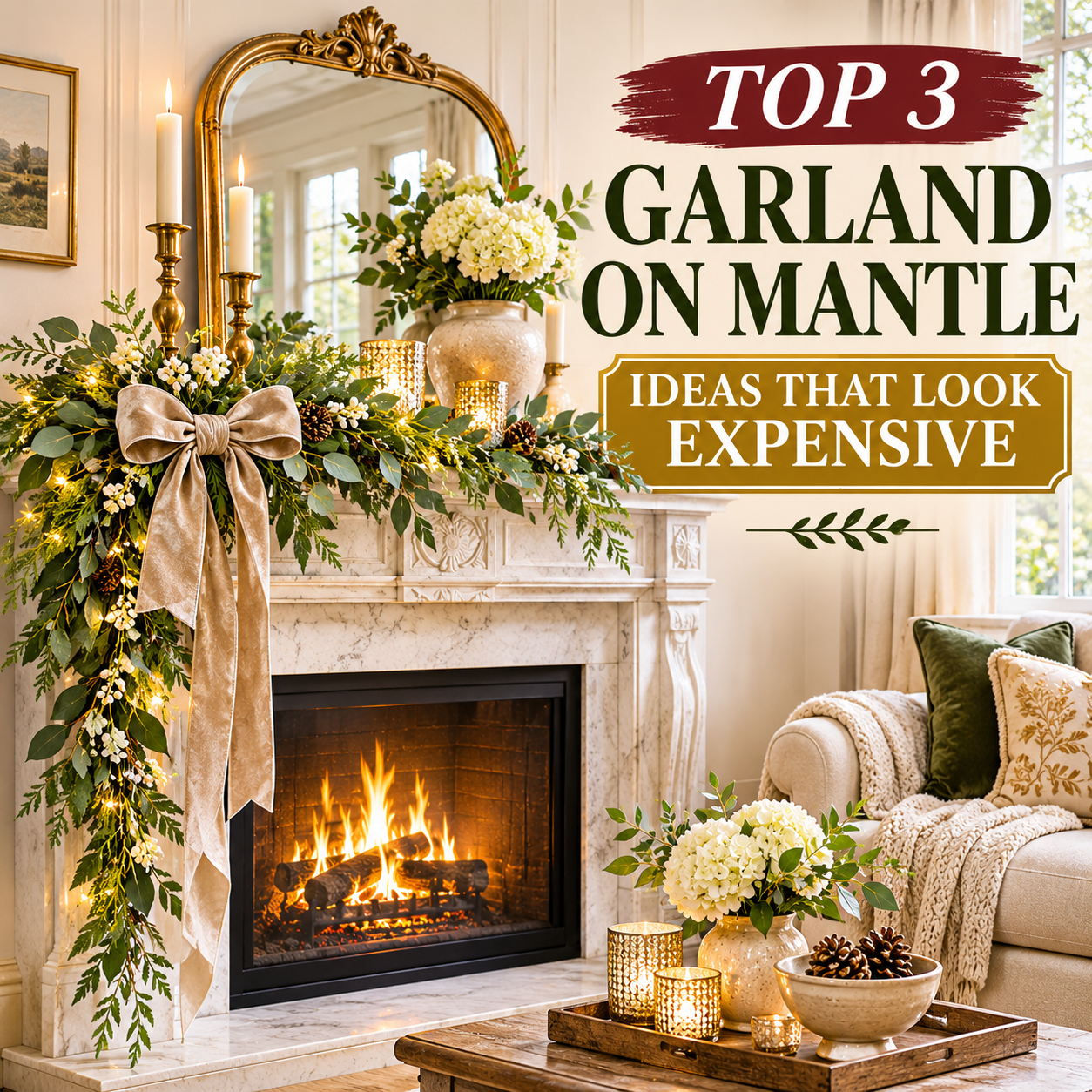
The secret to an impressive fireplace display is not simply purchasing the thickest greenery or adding countless decorative accessories. Instead, professional-looking mantel styling depends on proportion, carefully selected materials, elegant draping techniques, and thoughtful coordination with the surrounding interior. A simple collection of branches, preserved foliage, subtle ribbons, and beautiful decorative objects can create a remarkably high-end appearance when arranged with intention.
🌿 One particularly appealing advantage of mantel garlands is their versatility. Unlike decorations that belong exclusively to Christmas or another holiday, a thoughtfully designed garland can become a beautiful year-round feature. Fresh botanical textures can celebrate spring, delicate greenery can complement summer interiors, warm dried foliage can introduce autumn atmosphere, and refined evergreen branches can bring timeless winter elegance.
For homeowners who appreciate stylish interiors, the best garland designs also provide opportunities to experiment with different decorative personalities. Romantic European-inspired arrangements offer graceful movement, architectural botanical installations create contemporary drama, and carefully layered natural materials introduce the warmth of understated luxury.
The following Best 3 Garland on Mantle Ideas explore three distinctive approaches that can make an ordinary fireplace look like a carefully designed feature in a beautiful designer home.
Why Garland on Mantle Decorating Makes Such a Dramatic Difference
A fireplace naturally attracts attention because it occupies an important architectural position within a room. Even when the fireplace is not being used, its mantel creates a horizontal surface that visually anchors furniture, artwork, mirrors, and decorative accessories.
Adding a garland introduces a softer element to this structured composition. The flowing lines of branches and foliage contrast beautifully with straight mantel edges, angular stonework, and smooth painted surfaces.
This contrast is particularly important in contemporary interiors, where too many rigid shapes can make a room feel visually cold. Organic greenery brings subtle irregularity and softness without compromising the clean appearance of modern architecture.
In more traditional homes, garlands can emphasize existing decorative features. A carefully draped arrangement draws attention to carved wooden details, antique fireplace surrounds, decorative moldings, and natural stone textures.
Another benefit involves visual continuity. When a garland incorporates colors and materials already present throughout the room, the fireplace becomes connected to the surrounding furniture rather than appearing as an isolated decoration.
For example, eucalyptus leaves can complement sage-green upholstery, while champagne-colored ribbons can coordinate with brushed brass lighting. Natural branches can echo wooden furniture, and delicate linen accents can connect the mantel to nearby curtains or upholstered seating.
✨ The most successful garland arrangements look as though they were designed specifically for the fireplace rather than simply placed there.
🥇 Best 1 Garland on Mantle With Romantic European Botanical Draping
The first and most elegant approach takes inspiration from romantic European country homes, where architectural details, botanical arrangements, antique furniture, and timeless materials create beautiful interiors that feel both luxurious and welcoming.
Instead of arranging greenery in one perfectly straight horizontal line, this design emphasizes a graceful, asymmetrical silhouette.
A generous botanical arrangement stretches across the mantel, with one end cascading downward in a controlled, natural-looking movement. The opposite side remains comparatively compact, creating visual balance without strict symmetry.
The result resembles an elaborate floral installation found in a charming French countryside residence or a beautifully restored English manor house.
What makes this style particularly appealing is its combination of abundance and restraint. The foliage looks rich and expressive, yet the overall composition remains carefully controlled.


Create a Luxurious Asymmetrical Garland on Mantle Silhouette
Begin by studying the proportions of the fireplace and the space surrounding it.
If the mantel is relatively wide, the arrangement can stretch across most of its length while allowing one side to descend gracefully. For a smaller fireplace, a more compact garland with a short cascading section usually creates better balance.
The arrangement should appear naturally flowing rather than rigidly constructed.
Use a flexible greenery base and build the silhouette with foliage that varies in length, shape, and texture. Select longer branches for the descending portion, while keeping the central arrangement fuller and more structured.
A beautiful composition might feature delicate eucalyptus leaves, soft olive branches, and graceful trailing greenery.
The longest stems should create a continuous visual movement from the mantel surface toward one side of the fireplace surround.
Avoid cutting every branch to the same length. Variation is essential because natural botanical arrangements rarely follow perfectly repeated patterns.
🌿 Allow a few individual stems to extend beyond the main greenery mass. These subtle imperfections create the relaxed sophistication associated with professional floral styling.
Choose Elegant Greenery With Natural Movement
Not every type of foliage produces the same decorative effect.
For a romantic European mantel, greenery with flexible stems and delicate leaf shapes is generally more effective than stiff, bulky branches.
Olive foliage offers beautiful muted green tones and fine, elongated leaves. Eucalyptus introduces rounded shapes and soft silvery undertones. Preserved ruscus can provide a more structured silhouette while maintaining an organic appearance.
Combining two or three complementary foliage varieties creates greater depth than relying on a single uniform garland.
The goal is to establish a dominant botanical texture and then introduce smaller contrasting details.
For example, olive branches can form the main body, eucalyptus can add fullness, and a few preserved stems can create delicate movement along the edges.
Avoid using too many unrelated plant varieties. Excessive botanical diversity can make the arrangement look like a collection of leftover floral materials rather than an intentional design.
A limited palette also helps the garland coordinate with the room throughout different seasons.
Add Antique Inspired Decorative Accents
A romantic garland becomes especially beautiful when paired with a small collection of elegant decorative objects.
Consider placing a large antique-inspired mirror above the mantel. Its reflective surface can introduce brightness while visually expanding the arrangement.
A pair of understated ceramic vessels or aged brass objects can provide height variation without competing with the greenery.
The most sophisticated arrangements often feature decorative accents in different scales.
A tall vessel might stand near the shorter end of the garland, while a small sculptural object anchors the opposite side.
Natural linen ribbons can introduce additional softness. Choose wide, loosely tied ribbon rather than tightly constructed bows.
Warm ivory, faded champagne, muted taupe, and dusty sage are particularly compatible with the romantic botanical aesthetic.
🎀 A single beautifully draped ribbon often contributes more elegance than numerous bows distributed across the entire mantel.
Make the Arrangement Look Naturally Collected
One of the biggest challenges with elaborate garlands is avoiding an appearance that feels excessively manufactured.
Perfectly repeated leaves, equally spaced decorations, and identical branch angles can make even expensive artificial greenery look artificial.
To create a more convincing arrangement, gently reshape flexible stems and vary the direction of individual branches.
Some leaves should face forward, while others should turn sideways to reveal their natural silhouettes.
Introduce subtle gaps where the underlying mantel remains visible.
These areas of negative space prevent the composition from becoming visually heavy.
A convincing botanical installation should appear abundant without looking compressed.
This approach is especially successful in living rooms with classic wall moldings, vintage mirrors, linen furniture, marble fireplaces, and warm neutral color palettes.
🥈 Best 2 Garland on Mantle With Modern Architectural Greenery
For homeowners who prefer contemporary interiors, the second approach transforms an ordinary mantel garland into a sculptural design statement.
Rather than emphasizing romantic abundance, this interpretation focuses on carefully controlled shapes, striking botanical contrasts, and intentional negative space.
The result feels closer to a modern architectural installation than a traditional seasonal decoration.
Imagine a minimalist living room featuring a pale limestone fireplace, a large abstract painting, a sculptural ceramic vessel, and a beautifully restrained arrangement of deep green foliage.
The garland becomes an extension of the room’s architectural design.
Every branch appears purposeful, and every empty space contributes to the overall composition.

Design a Minimalist Garland on Mantle With Sculptural Lines
Begin with a relatively slim greenery base rather than an oversized, heavily layered garland.
Position the foliage slightly behind the front edge of the mantel so the architectural surface remains visible.
Instead of creating a uniform horizontal arrangement, develop a silhouette with subtle variations in height.
One section might feature taller vertical branches, while another remains low and compact.
A short cluster of gently trailing leaves can introduce movement without producing the elaborate cascade associated with romantic designs.
This technique creates a more architectural composition.
The greenery becomes a series of interconnected shapes rather than a continuous decorative mass.
For especially modern interiors, consider placing a concentrated arrangement toward one end of the mantel and allowing the rest of the surface to remain relatively uncluttered.
The contrast between foliage and empty space creates a surprisingly luxurious effect.
✨ Minimalist mantel decorating succeeds when each element has enough visual space to be appreciated individually.
Combine Deep Green Foliage With Natural Stone
Color contrast is one of the defining features of this approach.
Deep green foliage looks exceptionally striking against pale limestone, white marble, cream-colored plaster, and light oak.
The darker botanical shapes emphasize the clean lines of the fireplace while preventing the surrounding architecture from feeling sterile.
A restrained palette of forest green, warm ivory, charcoal, and natural stone can create a sophisticated contemporary appearance.
If the room already contains darker cabinetry or black metal accents, these elements can be repeated in the mantel composition.
For example, a matte charcoal ceramic vase can introduce visual continuity with nearby lighting fixtures.
A low, sculptural stone bowl can reinforce the natural materials used in the fireplace surround.
The key is to avoid introducing decorative colors that have no connection to the surrounding interior.
Rather than treating the garland as an independent accent, make it part of the room’s existing material palette.
Introduce Unexpected Botanical Shapes
Modern garland arrangements can become particularly interesting when they incorporate plants with distinctive structural characteristics.
Long, narrow olive leaves create fine directional lines, while broader magnolia foliage introduces bold shapes.
Preserved branches with visible natural curves can provide additional architectural interest.
The combination should remain simple.
For example, a slim greenery foundation can be enhanced with a few strategically placed magnolia leaves.
Their broad surfaces create contrast against smaller foliage without requiring additional decorative accessories.
Alternatively, use predominantly olive branches and introduce carefully positioned bare twigs to create a minimalist woodland silhouette.
An arrangement built around botanical contrast can feel far more sophisticated than one filled with ornaments, signs, ribbons, and decorative accessories.
Texture is equally important.
Matte foliage, smooth ceramic surfaces, naturally veined stone, and warm wooden accents provide subtle richness even when the color palette remains limited.
Style the Fireplace With Quiet Luxury Accessories
Contemporary luxury decorating often prioritizes quality, proportion, and craftsmanship over decorative quantity.
Apply the same philosophy to the mantel.
Instead of filling the surface with numerous small accessories, select one or two substantial objects that complement the greenery.
An oversized ceramic vessel can create height, while a small sculptural bowl can provide a low horizontal element.
A framed abstract artwork or an architectural mirror above the fireplace can complete the composition.
Avoid adding too many competing focal points.
If the artwork is already visually dramatic, keep the greenery restrained.
If the garland itself features an unusual sculptural shape, choose simpler accessories.
This balance ensures that the fireplace feels curated rather than overcrowded.
The modern architectural approach works particularly well in Japandi interiors, Scandinavian-inspired living rooms, contemporary townhouses, modern apartments, and homes with minimalist furniture.
🥉 Best 3 Garland on Mantle With Layered Natural Textures and Soft Seasonal Details
The third approach emphasizes organic warmth through a carefully layered combination of foliage, natural fibers, preserved botanicals, and understated decorative details.
Unlike the romantic arrangement, which focuses on graceful draping, or the modern arrangement, which emphasizes sculptural restraint, this interpretation celebrates the beauty of tactile materials.
It is particularly suitable for cozy interiors, relaxed farmhouse homes, rustic cottages, and living rooms featuring wood, linen, stone, and handmade furnishings.
The defining characteristic is a sense of warmth that feels natural rather than heavily themed.
Instead of changing the entire mantel every season, the main botanical foundation remains consistent while smaller decorative elements evolve throughout the year.


Build a Textural Garland on Mantle With a Timeless Botanical Base
Start by selecting a garland that feels appropriate for the room during several different seasons.
Muted eucalyptus, olive foliage, preserved greenery, and natural-looking artificial branches can all provide versatile foundations.
A mixed botanical base generally creates more visual interest than a tightly uniform arrangement.
To develop a layered appearance, combine foliage with contrasting leaf sizes and textures.
For example, slender olive leaves can sit beside the rounded shapes of eucalyptus.
A few delicate preserved stems can introduce an additional level of detail.
Keep the arrangement full enough to feel intentional, but not so thick that it obscures the fireplace’s architectural features.
A loose, naturally shaped garland works especially well on wooden mantels because its organic forms complement visible grain patterns.
The most effective arrangements reveal some of the original surface beneath the foliage.
This creates a layered look rather than the impression of a solid decorative barrier.
Introduce Linen Ribbon and Natural Fiber Details
Natural textiles offer an easy way to make greenery feel more refined.
Soft linen ribbon is particularly effective because its irregular woven texture complements botanical materials.
Choose neutral shades such as oatmeal, cream, faded taupe, or warm beige.
Instead of attaching numerous bows, use a few loose ribbon accents to establish gentle movement.
A narrow strip of linen can be woven discreetly through the greenery, allowing sections to appear naturally between branches.
Alternatively, a single oversized bow can serve as the main decorative feature near one end of the arrangement.
For a more rustic interpretation, consider natural cotton cord or carefully finished jute accents.
These materials should remain subtle.
The objective is to highlight the foliage rather than cover it.
🎀 Soft woven textiles introduce visual warmth without requiring bright colors or elaborate ornamentation.
Layer Preserved Botanicals for Added Depth
Dried and preserved botanicals can create beautiful contrasts when incorporated thoughtfully.
Delicate seed heads, dried grasses, subtle wheat stems, and naturally colored branches introduce textures that are difficult to achieve with ordinary artificial greenery alone.
Select materials that complement the underlying botanical palette.
For example, muted beige grasses can soften a dark green arrangement, while delicate brown seed pods can introduce warmth to a pale neutral fireplace.
Avoid using too many preserved elements simultaneously.
A small cluster of interesting natural textures usually looks more refined than an arrangement containing every available dried botanical variety.
Position the materials in small, uneven groups rather than distributing them at identical intervals.
This produces a more natural composition.
When using delicate preserved materials, remember that excessive handling can cause breakage.
Build the arrangement carefully and choose secure attachment points that do not crush fragile stems.
Keep dried materials away from fireplace heat, flames, and other ignition sources.
Create a Garland That Changes With the Seasons
One of the strongest advantages of a neutral botanical foundation is its flexibility.
During spring, the arrangement can feature delicate blossoms, pale green accents, and light linen ribbon.
Summer styling can remain simple, emphasizing airy foliage and natural wooden details.
Autumn can introduce warm copper-colored leaves, muted dried grasses, and soft amber accents.
Winter might feature additional evergreen textures, understated metallic details, or subtle battery-powered lighting where appropriate.
The main garland does not need to be replaced every few months.
Instead, a few removable decorative elements can reflect the changing atmosphere outside.
This method reduces unnecessary decorating expenses and helps maintain a consistent interior aesthetic.
The fireplace remains a beautiful architectural focal point rather than becoming a completely different display with every seasonal transition.
Best 3 Garland on Mantle Styles Compared
Each of the three approaches offers a distinctive decorative personality. Choosing the best arrangement depends on the fireplace architecture, existing furniture, preferred color palette, and amount of visual detail desired.
| Design Feature | 🥇 Romantic European Draping | 🥈 Modern Architectural Greenery | 🥉 Layered Natural Textures |
|---|---|---|---|
| Main aesthetic | Elegant and romantic | Minimalist and sculptural | Warm and organic |
| Garland shape | Asymmetrical cascading | Slim and structured | Soft and loosely layered |
| Featured greenery | Olive and eucalyptus | Magnolia and architectural branches | Mixed foliage and preserved botanicals |
| Dominant colors | Sage, ivory, champagne | Forest green, stone, charcoal | Olive, beige, taupe |
| Decorative accents | Antique vessels and linen ribbons | Sculptural ceramics and minimalist artwork | Natural fibers and dried botanicals |
| Ideal fireplace | Marble or traditional carved mantel | Limestone or contemporary surround | Wood, brick, or natural stone |
| Styling complexity | Moderate to advanced | Simple to moderate | Moderate |
| Seasonal flexibility | High | Very high | Very high |
| Overall impression | Romantic countryside luxury | Contemporary designer elegance | Relaxed timeless sophistication |
Although all three approaches can produce impressive results, the most beautiful choice is usually the one that complements the existing interior rather than competing with it.
A richly carved traditional fireplace may benefit from flowing greenery, while a streamlined stone surround often looks better with a restrained botanical arrangement.
Similarly, a rustic wooden mantel can become particularly inviting when natural fibers and preserved foliage reinforce the warmth of the surrounding room.
How to Choose the Perfect Garland Length for Your Fireplace Mantel
Proportion plays an essential role in creating a polished display.
A garland that is too short can appear disconnected from the mantel, while an excessively long arrangement can overwhelm the fireplace or interfere with surrounding furniture.
Before purchasing greenery, measure the mantel’s usable width and decide whether the arrangement will remain horizontal or include a decorative cascade.
Different styling methods require different amounts of material.
A straight garland may only need to cover most of the mantel width. A cascading design requires additional length to create the desired draping effect.
A compact asymmetrical arrangement can often be achieved with less greenery than a dramatic full-width installation.
Recommended Garland Lengths for Different Mantel Sizes
The following measurements are approximate planning guidelines rather than fixed decorating rules.
| Mantel Width | Straight Arrangement | Gentle Cascading Arrangement | Dramatic Draped Arrangement |
|---|---|---|---|
| 36 inches | 30–36 inches | 48–60 inches | 60–72 inches |
| 48 inches | 42–48 inches | 60–72 inches | 72–84 inches |
| 60 inches | 54–60 inches | 72–84 inches | 84–108 inches |
| 72 inches | 66–72 inches | 84–96 inches | 108–120 inches |
| 84 inches | 78–84 inches | 96–108 inches | 120–144 inches |
These ranges assume that the draping sections can be safely supported and positioned away from the fireplace opening.
A thick garland may appear shorter once its branches are shaped, while a loosely arranged botanical strand may cover a greater visual distance.
It is therefore useful to evaluate both the advertised length and the actual fullness of the greenery.
For designs requiring additional volume, combining two slimmer garlands can sometimes create a more natural appearance than purchasing one extremely bulky arrangement.
How to Secure Garland on Mantle Without Damaging the Surface
A beautiful garland should remain stable throughout the decorating season.
However, attaching decorations to natural stone, painted wood, brick, or delicate fireplace finishes requires care.
The best attachment method depends on the mantel material, the weight of the arrangement, and whether the fireplace produces heat.
For lightweight decorations on compatible, unheated surfaces, appropriately rated removable mounting products may offer a convenient solution.
However, not every adhesive product is suitable for painted wood, porous stone, high temperatures, or delicate finishes.
A more substantial garland may require mechanical support designed for the specific mantel.
Purpose-made mantel clips can work on some profiles, provided they fit securely and support the intended weight.
Whenever possible, avoid drilling into historic stonework or permanently altering valuable fireplace materials.
Use a Stable Attachment System
Before styling, determine the approximate weight of the complete arrangement, including greenery, ribbons, decorative objects, and any lighting accessories.
The attachment system must support the finished display rather than only the empty garland.
Test the stability of each mounting point before adding the final decorative elements.
For a cascading arrangement, the descending section may create additional pulling force along the mantel edge.
Distribute the weight across suitable secure points instead of relying on a single attachment.
Make sure children and pets cannot easily pull on hanging decorations.
For valuable or delicate fireplace surrounds, a freestanding decorative display positioned securely on top of the mantel may be preferable to attaching materials directly to the surface.
Keep Fireplace Safety Part of the Design
Fireplaces create special decorating challenges because surrounding surfaces can become hot.
Even decorative materials that are safe in an ordinary living room may be unsuitable near flames, hot glass, vents, or a chimney opening.
⚠️ Important Note: Never allow garlands, ribbons, dried botanicals, electrical cords, or other combustible decorations to hang into an active fireplace opening or contact heated surfaces. Follow the fireplace manufacturer’s required clearances, and remove any decorations that cannot remain safely outside those areas. Battery-operated lights and artificial greenery are not automatically heat-safe.
When clearances cannot be maintained, style the mantel only while the fireplace is permanently unused or choose a different decorative location.
Safety should guide the final silhouette rather than being treated as an afterthought.
How to Make an Inexpensive Garland Look Luxurious
A high-end mantel arrangement does not always require premium materials.
In many cases, the difference between an inexpensive-looking display and a designer-inspired installation comes from the way ordinary materials are arranged.
One of the simplest improvements is reshaping artificial foliage.
Garlands often arrive tightly compressed in packaging, with branches pointing in nearly identical directions.
This flattened appearance makes them look less realistic.
Carefully separate the stems, lift individual branches, and introduce variations in direction.
The finished garland should reveal multiple layers rather than one solid line of leaves.
Create Fullness With Selective Layering
Instead of purchasing an expensive oversized garland, start with a simple botanical foundation.
Add small groups of complementary greenery where additional fullness is needed.
Concentrate these groups around key visual areas rather than covering the entire arrangement uniformly.
For instance, a romantic cascading design benefits from greater fullness near the point where the greenery begins to descend.
A modern arrangement may look better with one prominent cluster and several quieter sections.
This targeted approach creates a more intentional silhouette while using fewer materials.
Choose a Limited Color Palette
An overly complicated combination of colors can make decorative greenery look less sophisticated.
Begin with one primary foliage color and introduce only one or two complementary shades.
An arrangement featuring olive green, warm ivory, and muted champagne can look exceptionally elegant.
For a more contemporary fireplace, deep green and charcoal may be sufficient.
If the mantel is already surrounded by colorful artwork or patterned furnishings, the garland may look better without additional bright accents.
Color restraint allows textures and natural shapes to become more visually important.
Replace Cheap Looking Accents With Better Textures
Plastic ornaments, shiny artificial berries, overly glittered leaves, and thin synthetic ribbons can sometimes distract from an otherwise beautiful arrangement.
Replacing these materials with carefully chosen alternatives can elevate the overall appearance.
Consider matte ceramic accents, quality linen ribbon, preserved botanical stems, natural wood, or restrained metallic details.
These materials tend to coordinate well with furniture and architectural finishes.
The goal is not to eliminate all decorative accents, but to choose objects that look as though they belong in the room even when the garland is removed.
How to Style Garland Around a Mirror or Artwork
Many fireplaces already feature a mirror, painting, or decorative wall installation above the mantel.
The garland should support this existing focal point rather than conceal it.
For a large round mirror, an asymmetrical botanical arrangement can create beautiful contrast between the mirror’s symmetrical shape and the natural movement of the greenery.
A rectangular mirror may benefit from a lower, more restrained garland that emphasizes the width of the mantel.
When artwork is positioned above the fireplace, consider its dominant colors and visual complexity.
A colorful landscape painting may coordinate beautifully with simple olive foliage.
A minimalist abstract piece could be complemented by architectural greenery.
If the artwork contains delicate details, avoid placing tall foliage directly in front of important sections.
Balance Vertical and Horizontal Elements
A fireplace composition usually contains several competing directional lines.
The mantel itself creates a strong horizontal shape, while artwork, mirrors, and decorative objects introduce vertical elements.
A carefully styled garland can connect these directions.
For example, low greenery may stretch horizontally along the mantel while a tall ceramic vessel creates an elegant vertical accent.
An asymmetrical cascade can provide additional downward movement, visually softening the overall arrangement.
The relationship between these shapes often determines whether the fireplace looks professionally styled.
Too many vertical accents can create visual clutter, while an arrangement without height variation may appear flat.
Aim for a balanced composition that encourages the eye to move naturally around the fireplace.
How to Coordinate Garland With Your Living Room Color Scheme
A garland becomes most convincing when it feels integrated into the surrounding room.
Start by identifying the dominant materials and colors already present in the space.
Consider the sofa upholstery, curtain fabric, flooring, wall color, furniture finishes, and lighting fixtures.
A living room with warm oak furniture, beige upholstery, and ivory walls may benefit from olive greenery and natural linen ribbon.
A room with dark wood, charcoal furniture, and dramatic artwork might look beautiful with deeper green foliage and sculptural black accessories.
For a pale Scandinavian-inspired interior, soft eucalyptus, warm white ceramics, and light wooden accents can create a restrained botanical composition.
Repeat Colors Without Creating Perfect Matches
Decorative elements do not need to match every surrounding color exactly.
In fact, slight variations often create a richer appearance.
For example, sage-green upholstery can coordinate with darker olive foliage without looking identical.
A brass lamp can complement champagne-colored ribbons without requiring additional gold decorations throughout the arrangement.
These subtle relationships help create visual continuity.
A successful interior usually contains repeated color families and textures rather than perfectly matching decorative sets.
🌿 Allow the garland to echo the room’s natural palette while introducing just enough contrast to remain visually interesting.
Common Garland on Mantle Decorating Mistakes to Avoid
Even beautiful materials can produce disappointing results when proportions and styling techniques are overlooked.
One common mistake is purchasing a garland solely because it looks full in a product photograph.
A large arrangement may look impressive in isolation but overwhelm a narrow fireplace.
Conversely, a very thin garland can disappear against an elaborate stone surround.
Always consider the relationship between the greenery and the fireplace architecture.
Another frequent mistake is decorating every inch of the mantel.
While abundant arrangements can be beautiful, they still benefit from visual breathing room.
A small section of exposed wood, marble, or stone allows the original architectural material to remain part of the composition.
Avoid Perfectly Repeated Decorations
Identical bows, evenly spaced ornaments, and repeated botanical clusters may create a rigid appearance.
For a more refined design, establish visual rhythm through controlled variation.
Use decorative details in different sizes and position them according to the overall silhouette.
A large decorative feature can be balanced by several smaller accents rather than an identical object on the opposite side.
Avoid Too Many Competing Textures
Botanical greenery already introduces considerable visual complexity.
Adding glitter, patterned ribbons, multiple metallic finishes, flowers, berries, ornaments, and decorative signs can make the arrangement feel unnecessarily crowded.
Choose a clear design direction.
Romantic arrangements benefit from flowing foliage and soft textiles.
Modern arrangements work best with sculptural contrast.
Organic arrangements look beautiful with natural fibers and preserved botanicals.
Maintaining this distinction helps each style retain its individual identity.
Avoid Ignoring the Fireplace Surround
A beautiful garland should enhance the fireplace rather than hide it.
Decorative carvings, unusual stone patterns, reclaimed wood grain, and distinctive mantel profiles are valuable architectural features.
Allow these details to remain visible.
If the fireplace is already highly decorative, a relatively simple garland may create the strongest overall effect.
If the surround is minimal, a more expressive botanical installation can introduce welcome visual interest.
How to Maintain Garland Throughout the Year
Long-lasting mantel decorations require occasional care.
Artificial foliage can collect dust, particularly when positioned near frequently used living spaces.
Remove dust gently with an appropriate soft brush or microfiber cloth, following the material manufacturer’s cleaning recommendations.
Avoid aggressive cleaning methods that could damage delicate leaves or loosen attached botanical elements.
Preserved greenery generally requires more careful handling because it may become brittle or discolored when exposed to unsuitable conditions.
Keep it away from excessive moisture, direct heat, and strong sunlight where recommended.
Fresh greenery needs particular attention because moisture loss can affect its appearance and increase its flammability.
Fresh botanical decorations should never be allowed to dry out near a working fireplace.
Store Seasonal Accents Separately
If the garland is designed to remain in place throughout multiple seasons, use removable accents.
Small decorative clusters, ribbons, and botanical additions can be stored separately when not in use.
This makes seasonal transitions easier and reduces unnecessary handling of the underlying arrangement.
It also encourages more thoughtful decorating.
Instead of purchasing an entirely new garland each season, refresh the existing installation with a limited selection of coordinating materials.
The result is a more consistent decorative style and a more practical approach to maintaining a beautiful home.
Frequently Asked Questions About Garland on Mantle Decorating
Should Garland Hang Over Both Sides of a Mantel?
Not necessarily.
A garland can remain entirely on top of the mantel, cascade over one side, or feature balanced draping at both ends.
The best configuration depends on the fireplace proportions and desired aesthetic.
Single-sided cascading arrangements tend to create a romantic and contemporary appearance, while symmetrical draping can feel more traditional.
For smaller fireplaces, a compact horizontal arrangement may be the most attractive option.
Any descending greenery must remain outside the required fireplace safety clearances.
What Is the Best Greenery for a Year Round Mantel Garland?
Olive branches, eucalyptus, and natural-looking mixed foliage are versatile options for interiors that use neutral colors.
Their relatively subtle botanical shapes coordinate with different furnishings and decorative accessories.
High-quality artificial greenery may be easier to maintain for extended displays, while preserved materials can provide interesting natural texture where environmental conditions are suitable.
The best choice also depends on whether the fireplace is operational and whether the intended installation can remain safely away from heat.
Can You Put Garland on a Small Fireplace Mantel?
Yes.
Small mantels can look especially elegant with carefully scaled greenery.
Choose a relatively slim arrangement and avoid oversized decorative accents.
A short asymmetrical design can introduce movement without overwhelming the fireplace.
One sculptural accessory or a small framed artwork may be enough to complete the composition.
Keeping some of the mantel visible helps preserve a sense of openness.
How Do You Make a Mantel Garland Look Fuller?
Begin by separating and reshaping the existing branches.
Then introduce small groups of complementary foliage where additional density is needed.
Layering different leaf shapes creates visual depth and a more natural appearance.
Rather than distributing every addition evenly, concentrate fullness around important sections of the design.
This produces a more realistic arrangement than simply adding identical greenery everywhere.
Can Mantel Garland Work Without Holiday Decorations?
Absolutely.
A simple botanical garland can become an elegant architectural accent throughout the year.
Olive foliage, eucalyptus, restrained sculptural branches, and natural linen details are particularly effective for nonseasonal displays.
The key is choosing materials and colors that complement the room rather than relying on recognizable holiday ornaments.
A carefully designed garland can make a fireplace feel complete even when no seasonal decorations are present.
Should a Mantel Garland Be Symmetrical or Asymmetrical?
Both approaches can be beautiful.
Symmetrical arrangements often suit traditional fireplaces, formal living rooms, and balanced architectural interiors.
Asymmetrical designs introduce more movement and can feel relaxed, romantic, or contemporary.
A useful approach is to consider the objects above the fireplace.
A large centered mirror may coordinate beautifully with asymmetrical greenery, while a dramatic off-center painting might benefit from a more restrained arrangement.
The most successful solution creates visual balance without requiring every element to match.
Final Thoughts on the Best 3 Garland on Mantle Ideas
The most beautiful fireplace decorations do more than add greenery to an empty surface. They transform the mantel into a thoughtfully composed architectural feature that enhances the atmosphere of the entire living room.
The three approaches offer distinctive interpretations of the same decorating principle.
🥇 Romantic European Botanical Draping creates graceful movement through cascading greenery, delicate foliage, antique-inspired accents, and elegant natural textiles. It is especially appealing in traditional interiors and rooms that celebrate timeless decorative beauty.
🥈 Modern Architectural Greenery introduces contemporary sophistication through sculptural botanical shapes, controlled proportions, striking material contrasts, and intentional negative space. It is an excellent choice for minimalist living rooms and modern fireplace surrounds.
🥉 Layered Natural Textures and Soft Seasonal Details emphasizes warmth and versatility through mixed foliage, linen accents, preserved botanicals, and adaptable seasonal styling. It works beautifully in cozy, rustic, farmhouse, and naturally inspired interiors.
Ultimately, the secret to creating an impressive garland on mantle is understanding the relationship between greenery, architecture, color, texture, and proportion.
A carefully shaped arrangement with a few meaningful decorative details can look significantly more luxurious than an oversized display crowded with unnecessary accessories.
By choosing the right silhouette, coordinating botanical materials with existing furnishings, maintaining safe clearances, and allowing the fireplace’s original beauty to remain visible, even a simple garland can become one of the most elegant features in a home.
The result is a fireplace that feels welcoming, beautifully balanced, and effortlessly expensive throughout the year.
Related posts:

Best 3 Stocking Hanging Ideas That Make Any Christmas Home Look Magical Without a Fireplace


Best 3 Budget Home Decorating Ideas That Make an Ordinary House Look Like a Designer Dream

Best 3 Cozy House Aesthetic Ideas That Make Every Room Feel Like a Dreamy Warm Sanctuary

Best 3 Minimalist Home Decor on a Budget Ideas That Make Your Home Look Surprisingly Expensive

Best 3 Minimalist Home Decor With Plants Ideas That Make Any Room Look Stunningly Expensive

