
Minimalist Home Decor With Plants is one of the most beautiful ways to transform an ordinary living space into a sophisticated, peaceful, and naturally inviting home. Instead of filling every corner with decorative accessories, this approach celebrates the beauty of carefully selected greenery, sculptural plant silhouettes, elegant containers, and intentional placement. The result is an interior that feels fresh, luxurious, and effortlessly stylish without becoming cluttered or overwhelming.
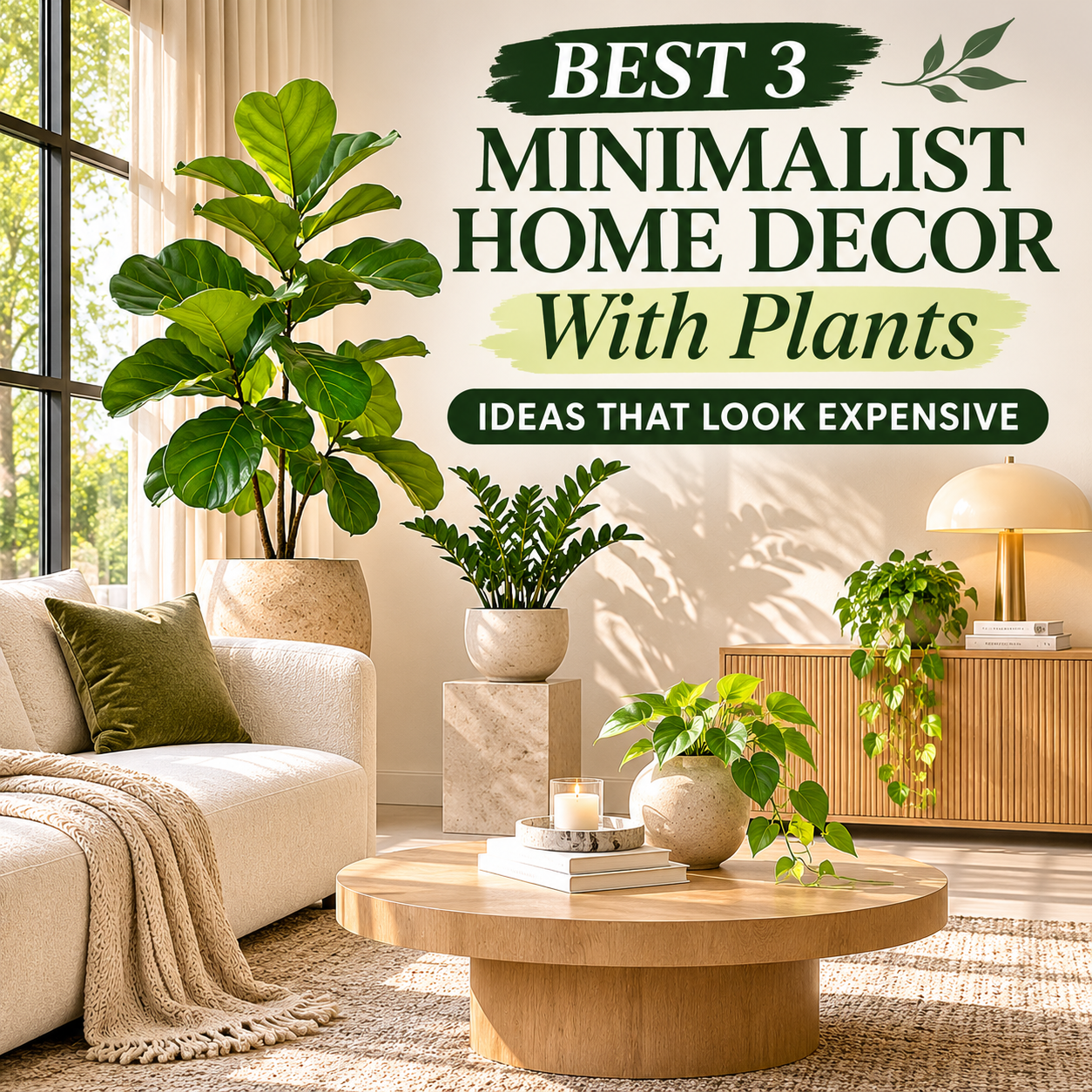
🌿 Imagine walking into a beautifully designed home where soft natural light illuminates a single architectural plant, delicate green leaves create graceful shadows against warm ivory walls, and elegant ceramic planters complement clean modern furniture. Every element feels intentional. Nothing appears excessive, yet the entire room feels alive.
This is the true appeal of decorating with plants in a minimalist home.
Unlike traditional indoor plant decorating, which often emphasizes large collections, crowded shelves, and numerous botanical varieties, minimalist plant styling focuses on visual balance, negative space, architectural form, and thoughtful composition.
A single well-positioned plant can become more visually powerful than an entire collection of decorative objects.
The secret lies in understanding how greenery interacts with the surrounding architecture, furniture, lighting, and natural materials.
Whether decorating a modern apartment, contemporary family home, compact studio, or sophisticated open-plan interior, these three distinctive approaches offer practical inspiration for creating an elegant botanical atmosphere.
The best part is that creating beautiful minimalist interiors with plants does not require expensive renovations or dozens of houseplants.
It simply requires making a few thoughtful choices.
🌿 Why Minimalist Home Decor With Plants Creates Such Beautiful Interiors
Minimalist interiors rely on simplicity, proportion, and intentional design. Their greatest strength is the ability to make a room feel spacious and visually organized.
However, completely minimalist spaces sometimes appear too rigid, cold, or unfinished.
Plants introduce an essential element that furniture and decorative accessories cannot fully reproduce: organic movement.
Leaves grow in different directions. Stems create interesting lines. Shadows change throughout the day. Natural forms introduce subtle irregularities that contrast beautifully with straight architectural edges.
These qualities bring life into minimalist interiors without requiring additional decorative clutter.
For example, consider a living room furnished with a cream sofa, rectangular travertine coffee table, and simple oak media cabinet.
Without greenery, the room might feel elegant but slightly static.
Introducing one beautifully shaped rubber plant in a matte limestone-colored container creates an entirely different visual experience.
The broad leaves interrupt the straight lines of the furniture, while their deep green color introduces contrast against the neutral surroundings.
The plant becomes a natural focal point.
✨ This is why minimalist botanical decorating works so effectively: greenery provides decoration through its natural shape rather than through excessive accessories.
Another advantage is flexibility.
Plants can complement Scandinavian, Japandi, contemporary, Mediterranean, and organic modern interiors without requiring a complete change in decorating style.
A sculptural plant in a black cylindrical planter creates a contemporary architectural statement.
The same plant in a warm clay container develops a softer Mediterranean personality.
Placed inside a pale ceramic vessel, it becomes beautifully suited to Scandinavian minimalism.
The underlying principle remains consistent: fewer plants, better placement, and stronger visual relationships.
🥇 Best 1 Minimalist Home Decor With Plants Using Architectural Greenery and Sculptural Statements
The first approach focuses on turning a carefully selected houseplant into a living architectural feature.
Rather than treating greenery as an accessory placed beside existing decorations, this strategy makes the plant itself an important part of the room’s composition.
The result is sophisticated, contemporary, and surprisingly dramatic.
Architectural greenery is especially effective in homes featuring clean furniture silhouettes, open floor plans, neutral walls, and generous natural light.
A beautiful plant can add vertical movement, organic contrast, and personality without compromising the minimalist atmosphere.


🪴 Choose Plants With Strong Architectural Silhouettes
Not every houseplant creates the same visual effect.
For minimalist interiors, the most striking choices often feature recognizable silhouettes, sculptural leaves, or naturally structured growth habits.
A rubber plant is an excellent example.
Its broad, glossy leaves create a powerful visual statement, particularly when the plant develops a strong central trunk and balanced branching structure.
A bird of paradise can also create dramatic architectural impact with its upright stems and impressive paddle-shaped leaves, provided the room offers sufficiently bright light.
For something more restrained, a snake plant introduces striking vertical geometry.
Its upright leaves resemble living sculptures, making it particularly effective beside modern furniture, plain walls, and contemporary architectural details.
Other interesting possibilities include the ZZ plant, with its glossy symmetrical foliage, and certain upright philodendrons that develop structured, attractive forms.
The objective is not to find the largest possible plant.
Instead, look for a specimen with a silhouette that complements the surrounding room.
A narrow upright plant might suit a compact architectural recess, while a broad branching plant could balance a spacious open wall.
The shape of the plant matters just as much as its size.
🏡 Create a Single Botanical Focal Point
One of the most effective techniques in minimalist decorating is establishing a clear visual hierarchy.
Every room benefits from an obvious focal point.
Sometimes this is an architectural fireplace, sculptural pendant light, beautiful window, or statement furniture piece.
A carefully positioned plant can perform the same function.
Imagine a spacious contemporary living room with pale oak floors, warm ivory walls, and a low-profile cream sofa.
Instead of adding multiple decorative tables, baskets, and artwork arrangements, position one mature rubber plant near the end of the seating area.
Choose a substantial matte ceramic planter in soft taupe or natural stone.
Leave enough space around the plant for its silhouette to remain clearly visible.
The negative space surrounding the leaves becomes part of the design.
This approach makes the plant appear more intentional and visually important.
It also prevents the room from developing the busy atmosphere commonly associated with large indoor plant collections.
🌱 Styling inspiration: Choose one visually significant plant for the main living area and allow its natural structure to become the centerpiece of the botanical design.
🎨 Pair Sculptural Plants With Monolithic Planters
The planter is almost as important as the plant itself.
In architectural minimalist interiors, containers should complement the room’s proportions rather than compete for attention.
Simple cylindrical, tapered, rectangular, and softly rounded shapes usually work beautifully.
Consider finishes such as matte ivory ceramic, charcoal stoneware, warm concrete, pale limestone, or textured clay.
These materials provide visual substance while allowing the greenery to remain the central attraction.
For example, a tall snake plant inside a charcoal cylindrical planter creates a beautiful contrast against light-colored walls.
A deep green rubber plant inside a wide ivory ceramic vessel produces a softer, more luxurious impression.
A sculptural bird of paradise in a sand-colored planter can create an elegant botanical feature within a contemporary dining area.
Avoid containers featuring too many decorative patterns, unrelated textures, or contrasting colors.
Minimalist design works best when the container and plant feel like a single coordinated composition.
The container should also be appropriately sized for the plant’s root system and fitted with drainage or a suitable inner nursery pot.
A beautiful decorative vessel cannot compensate for poor plant care.
☀️ Use Natural Light to Highlight Botanical Shapes
Natural light can transform the appearance of architectural greenery.
When daylight passes through or around leaves, it creates highlights, shadows, and subtle tonal variations.
These effects add dimension to otherwise simple interiors.
Positioning a plant near a bright window can create beautiful leafy shadows across a pale wall.
However, the placement must suit the plant’s actual lighting requirements.
Some plants tolerate moderate indirect light, while others need bright conditions to maintain healthy growth.
Bird of paradise plants generally need much brighter environments than ZZ plants.
Snake plants tolerate a range of indoor conditions but still benefit from sufficient light.
Decorative arrangements should never require placing a plant somewhere it cannot thrive.
Instead, work with the existing light conditions and select greenery accordingly.
For evening styling, a nearby floor lamp or wall light can illuminate the plant’s silhouette and create an attractive architectural feature.
Keep artificial lighting subtle and avoid harsh spotlights that make the arrangement feel theatrical.
The objective is gentle emphasis rather than dramatic excess.
✨ Why Architectural Greenery Looks So Expensive
Architectural greenery creates the appearance of luxury through proportion, simplicity, and confidence.
High-end interiors often feature fewer decorative objects, but those objects are selected with great care.
A single sculptural plant follows the same philosophy.
It occupies space with purpose.
Its natural shape provides movement.
Its carefully chosen planter introduces material interest.
And its surroundings remain visually calm.
The effect can feel remarkably sophisticated even when the actual decorating budget is modest.
This makes architectural greenery an excellent choice for homeowners who want a designer-inspired interior without investing in expensive furniture or unnecessary accessories.
🥈 Best 2 Minimalist Home Decor With Plants Using Floating Botanical Islands and Elegant Negative Space
The second approach introduces a more creative way to arrange greenery through carefully separated botanical islands.
Instead of gathering numerous plants together in one crowded corner, this style distributes a small number of coordinated plants throughout the room.
Each plant occupies its own visually defined area.
The surrounding empty space prevents the arrangements from competing with one another.
This approach is especially effective in open-plan homes, modern apartments, and interiors where greenery needs to connect several functional zones.

🌱 Design Botanical Islands Instead of Crowded Plant Collections
Traditional indoor plant displays frequently combine several pots in one location.
Although this can create a lush greenhouse-inspired appearance, it may overwhelm a minimalist interior.
Floating botanical islands offer a more restrained alternative.
The idea is to position individual plants in carefully chosen locations so they create a subtle visual rhythm.
For example, a contemporary open-plan room could feature a medium-height rubber plant near the living area, a compact ZZ plant on a low freestanding pedestal, and a restrained trailing plant near the dining space.
These arrangements remain visually connected through their foliage colors and planter finishes.
However, they are separated by sufficient negative space.
This creates a feeling of botanical continuity without turning the interior into a crowded indoor garden.
The eye moves naturally between each green accent.
A successful arrangement should feel effortless rather than overly symmetrical.
The plants should complement the furniture layout while keeping the main circulation paths completely unobstructed.
🪴 Introduce Low Botanical Pedestals
Low plant pedestals can create an elegant gallery-like effect.
Instead of positioning every plant directly on the floor, introduce one simple pedestal to vary the visual height of the arrangement.
A solid oak block, matte stone plinth, or minimalist cylindrical stand can work beautifully.
For example, imagine a compact ZZ plant displayed on a low travertine-inspired pedestal beside a modern armchair.
The arrangement feels deliberate and sculptural.
A small rounded plant creates an interesting contrast against the geometric pedestal.
The furniture remains simple, and no additional accessories are necessary.
Another option is a minimal black metal stand holding one beautifully shaped plant.
The thin frame allows the arrangement to appear visually lightweight, making it useful in smaller interiors.
Choose stable stands that can safely support the container and wet potting mix.
Avoid narrow, top-heavy arrangements in high-traffic spaces or homes with curious pets and small children.
💚 A plant pedestal should elevate the composition visually without making the room feel crowded.
📐 Balance Plants Through Height and Visual Weight
One of the most important principles of botanical interior design is visual balance.
Plants have different levels of visual weight depending on their height, foliage density, container size, and silhouette.
A large rubber plant with broad leaves has a stronger visual presence than a small snake plant.
A tall architectural planter may attract more attention than a low ceramic bowl.
These differences should influence placement.
Consider arranging greenery across three broad levels:
- Low level: Compact plants displayed on stable floor plinths or low stands.
- Middle level: Medium houseplants positioned beside occasional furniture or freestanding room elements.
- High level: One taller plant creating an elegant vertical statement.
These levels do not need to appear together in every room.
In fact, minimalist interiors often look more refined when only two heights are used.
For example, a tall plant near a window might be balanced by a compact plant on a freestanding stand several feet away.
Their differing proportions create a pleasant visual rhythm.
The key is avoiding unnecessary repetition.
Three plants of identical height arranged in a straight line may look overly rigid.
Several unrelated plants positioned at random can feel chaotic.
A thoughtful combination of differing silhouettes produces a more natural and balanced effect.
🏡 Use Greenery to Connect Open Plan Living Areas
Open-plan spaces can be difficult to decorate because the living, dining, and working areas often share the same visual environment.
Furniture helps define these zones, but too many decorative objects can interrupt the spacious atmosphere.
Botanical islands offer a subtle solution.
Imagine an open-plan apartment where a cream sofa separates the seating area from the dining table.
A sculptural plant near the transition between the zones creates a gentle visual boundary.
Another smaller plant positioned near the dining area repeats the green accent.
The two plants establish continuity without requiring matching furniture or additional architectural partitions.
This technique is particularly effective when the room already features a restrained palette of natural oak, warm white, soft taupe, and muted charcoal.
Greenery becomes the connecting color.
Because the individual plants remain separated, the interior retains its open appearance.
🎨 Coordinate Planter Finishes Without Making Everything Identical
Minimalist spaces benefit from visual consistency, but perfect matching can sometimes appear overly manufactured.
Instead of using identical containers throughout the room, select planters that share a coordinated material language.
For example, combine warm ivory stoneware with pale limestone textures and light sand-colored ceramics.
Alternatively, use charcoal, matte black, and deep gray containers for a more contemporary aesthetic.
The finishes should feel related even when their shapes differ.
One cylindrical planter might complement a softly rounded ceramic vessel.
A compact stoneware pot may pair beautifully with a larger tapered container.
The resulting arrangement feels curated rather than purchased as a matching set.
Avoid introducing several strongly contrasting decorative colors through the planters.
Let the leaves provide the main color variation.
🌿 Preserve Negative Space Around Every Botanical Arrangement
Negative space is not wasted space.
In minimalist decorating, it helps the eye understand which objects deserve attention.
A plant displayed against a relatively uncluttered background appears more striking because its foliage has room to be appreciated.
This principle is especially useful in compact apartments.
Rather than filling every available corner with greenery, identify a few locations where plants can become natural visual anchors.
Leave other areas intentionally clear.
For example, a beautiful architectural plant near the living room window may be enough to establish the botanical atmosphere.
Another smaller plant near the dining area can repeat the natural accent.
Additional plants should only be introduced when they contribute something meaningful to the composition.
Important Note: Beautiful minimalist plant styling should always begin with healthy growing conditions. Choose plant locations according to available light, watering needs, drainage, airflow, and household safety before finalizing the decorative arrangement. Some popular houseplants are toxic to pets if chewed or ingested, so check each species carefully when decorating homes with animals or young children.
✨ Why Floating Botanical Islands Feel Modern and Luxurious
Floating botanical islands are effective because they introduce greenery without sacrificing the spaciousness associated with minimalist design.
Every arrangement has a purpose.
Each plant contributes to the overall composition.
The repeated green accents create harmony between different parts of the home.
At the same time, the carefully preserved empty spaces prevent the interior from feeling overcrowded.
This approach is particularly suitable for people who enjoy houseplants but prefer interiors that look organized, peaceful, and architecturally refined.
🥉 Best 3 Minimalist Home Decor With Plants Using Living Green Silhouettes and Soft Botanical Shadows
The third approach transforms greenery into a subtle decorative experience through natural silhouettes, filtered daylight, and beautiful leaf shadows.
Rather than focusing primarily on the number of plants or their containers, this technique explores how botanical forms interact with walls, windows, and architectural surfaces.
The result is artistic, calming, and especially attractive in contemporary minimalist homes.
It also creates an atmosphere that changes naturally throughout the day.

☀️ Turn Simple Walls Into Living Botanical Compositions
A plain wall can become an unexpectedly beautiful feature when greenery is positioned thoughtfully nearby.
The secret is selecting plants with interesting outlines.
Leaves with distinctive shapes create delicate visual patterns, particularly when sunlight approaches from the side.
A slender palm, for example, can produce layered shadows with fine linear details.
A rubber plant creates broader, more graphic silhouettes.
A monstera can introduce dramatic leaf shapes with recognizable openings, although it requires appropriate space and growing conditions.
Instead of hanging additional artwork on the wall, allow the plant’s natural shadow to become the decoration.
This technique works particularly well with warm white, light beige, limestone, and soft greige walls.
Smooth or lightly textured surfaces help the shadows remain visually readable.
For a more restrained effect, position the plant where its shadow falls across only a portion of the wall.
The composition should look spontaneous and natural rather than overly controlled.
🪟 Create an Elegant Window Side Botanical Scene
Windows provide some of the most beautiful opportunities for minimalist plant styling.
They introduce natural light, architectural framing, and a connection to the outdoors.
A well-positioned plant can enhance all three qualities.
Imagine a large contemporary window framed by simple linen curtains.
A slender indoor palm stands nearby in a warm stone-colored planter.
During the morning, daylight passes through the leaves, creating delicate patterns on the floor.
The room feels bright, peaceful, and naturally sophisticated.
The effect requires very little additional decoration.
A similar composition could use a medium-sized rubber plant near a tall window.
Its dark green leaves create contrast against pale curtains and light walls.
For a more sculptural appearance, choose a plant with a balanced branching structure and place it beside a simple architectural column or narrow wall section.
Always consider the plant’s light requirements and protect sensitive species from intense direct sunlight when necessary.
Avoid positioning foliage directly against cold glass, heating vents, or frequently opened doors.
The arrangement should remain beautiful and practical throughout changing seasons.
🎨 Develop a Calm Green and Neutral Color Story
Botanical shadow styling works particularly well when the surrounding interior uses a carefully controlled color palette.
Warm neutrals provide a quiet background that allows natural greenery to become more noticeable.
Excellent combinations include ivory with deep botanical green, oatmeal with muted olive, warm taupe with forest green, and pale oak with soft sage accents.
For more contemporary interiors, charcoal and dark green create a sophisticated contrast.
The key is maintaining consistency.
If the room already features several bold colors, the botanical arrangement may lose its subtle architectural impact.
Instead, allow green to become the primary decorative accent.
A simple ivory sofa, natural wood furniture, and warm beige walls can provide the perfect foundation.
The leaves introduce color.
The shadows introduce pattern.
The planter introduces texture.
No additional decorative complexity is necessary.
🌾 Introduce Botanical Movement Through Delicate Foliage
Not every minimalist plant arrangement needs dramatic broad leaves.
Fine foliage can produce a softer, more delicate effect.
A healthy indoor palm with graceful fronds may create beautiful visual movement.
Certain fern varieties can introduce a gentle layered appearance, especially in environments that provide suitable humidity and indirect light.
Their delicate foliage contrasts elegantly with simple walls and contemporary furniture.
However, fine-leaved plants should be chosen according to the actual indoor environment.
Some species require higher humidity, consistent moisture, or more specific lighting conditions than common low-maintenance houseplants.
A beautiful fern will not remain attractive in a location that is excessively dry or unsuitable for its needs.
For busy homeowners, a smaller number of reliable plants is generally preferable to an elaborate collection requiring constant intervention.
A healthy plant with a beautiful natural form will always contribute more to the interior than a struggling plant selected only for its appearance.
💡 Use Gentle Evening Lighting to Extend the Botanical Atmosphere
Botanical silhouettes do not need to disappear after sunset.
Thoughtful artificial lighting can create a beautiful evening atmosphere.
A warm floor lamp placed near an architectural plant may illuminate the leaves and create a soft decorative silhouette.
A discreet wall light can emphasize the natural texture of foliage.
In modern interiors, warm white lighting often complements greenery beautifully.
Avoid positioning lights too close to leaves or exposing plants to excessive heat.
The lighting should support the room’s atmosphere rather than interfere with healthy plant growth.
Choose soft illumination that enhances the space without creating harsh contrasts.
For example, a simple floor lamp with a linen shade may produce a gentler effect than a powerful exposed spotlight.
The resulting room feels intimate, peaceful, and sophisticated.
This approach is especially attractive in bedrooms, quiet reading areas, and contemporary living spaces where relaxation is a priority.
✨ Why Botanical Shadows Create a Designer Inspired Interior
Botanical shadow styling is powerful because the decoration becomes dynamic.
Traditional decorative objects remain visually consistent throughout the day.
Plants behave differently.
Their leaves interact with changing light.
Their shadows shift across walls.
Their silhouettes change gradually as they grow.
This natural variation brings quiet visual interest into minimalist interiors without requiring additional accessories.
The result resembles a living artwork that evolves with the surrounding environment.
It is an especially appealing solution for homeowners who appreciate subtle luxury, natural materials, and interiors that feel connected to the outdoors.
🌿 Best 3 Minimalist Home Decor With Plants Ideas Compared
Each of these three botanical decorating approaches creates a different visual experience.
The best choice depends on the room’s proportions, available light, architectural features, and desired atmosphere.
| Decorating Approach | Main Design Feature | Recommended Plants | Ideal Placement | Overall Atmosphere |
|---|---|---|---|---|
| 🥇 Architectural Greenery | One strong sculptural focal point | Rubber plant, snake plant, bird of paradise | Spacious living areas and architectural corners | Bold, elegant, contemporary |
| 🥈 Floating Botanical Islands | Separated green accents connected through visual rhythm | ZZ plant, compact philodendron, rubber plant | Open-plan apartments and multifunctional rooms | Balanced, organized, sophisticated |
| 🥉 Living Green Silhouettes | Natural foliage outlines and changing botanical shadows | Indoor palm, rubber plant, suitable ferns | Bright windows and simple feature walls | Artistic, peaceful, atmospheric |
These decorating approaches do not need to remain completely separate.
A home may feature one sculptural plant in the main living room, a smaller botanical island near the dining area, and a delicate plant silhouette beside a bedroom window.
The important principle is maintaining visual consistency.
Plants should enhance the existing architecture rather than overwhelm it.
🪴 How to Choose the Right Plants for Minimalist Interior Decorating
Selecting plants only because they look beautiful in photographs can lead to disappointing results.
A successful botanical interior must balance visual appeal with practical growing conditions.
The first consideration should always be available natural light.
Different rooms provide different environments, even within the same home.
A bright south-facing room in the Northern Hemisphere may receive considerably stronger sunlight than a shaded room with small windows.
Nearby buildings, roof overhangs, window treatments, and seasonal changes also influence light availability.
Understanding these differences makes it easier to select plants that remain attractive over time.
🌱 Match Plant Selection to Indoor Light Conditions
The following comparison provides a useful starting point.
| Plant | Typical Indoor Light Preference | Visual Character | Styling Potential |
|---|---|---|---|
| Snake Plant | Bright indirect light; tolerates lower light | Upright and geometric | Contemporary architectural accents |
| ZZ Plant | Medium to bright indirect light; tolerates lower light | Glossy and structured | Restrained botanical islands |
| Rubber Plant | Bright indirect light | Broad and sculptural | Statement greenery |
| Bird of Paradise | Very bright light, often with some direct sun | Tall and dramatic | Large architectural focal points |
| Monstera | Bright indirect light | Bold and irregular | Organic silhouette styling |
| Parlor Palm | Medium to bright indirect light | Soft and delicate | Gentle botanical shadows |
| Boston Fern | Indirect light with relatively high humidity | Fine and layered | Soft botanical accents |
Lower-light tolerance does not mean a plant can thrive indefinitely without meaningful natural or supplemental growing light.
Even relatively adaptable houseplants need suitable conditions.
Watering schedules should also depend on the species, container, growing medium, temperature, and actual moisture level rather than following one universal timetable.
Choosing a plant that suits the home reduces maintenance problems and preserves the beauty of the overall design.
🎨 Select Plant Colors That Complement the Interior
Green foliage offers much more variety than it first appears.
Some plants have deep forest-green leaves.
Others feature bright emerald, muted olive, bluish-green, or variegated foliage.
These differences can influence the room’s atmosphere.
Deep green plants generally create a sophisticated contrast against ivory, cream, and warm beige interiors.
Lighter foliage may produce a softer appearance in Scandinavian-inspired spaces.
Plants with strongly patterned leaves can become more visually dominant.
For minimalist decorating, consider choosing one primary foliage character throughout the room.
Several plants with complementary shades of green often create a more harmonious effect than a collection featuring many unrelated colors and patterns.
Consistency helps greenery feel like part of the interior design rather than a series of separate decorative purchases.
🏡 How Many Plants Should a Minimalist Room Have
One of the most common questions when decorating with greenery is how many plants are necessary.
There is no universal number.
A spacious living room may accommodate several beautifully positioned plants without appearing crowded.
A compact studio might look complete with just one carefully selected specimen.
The answer depends on room size, furniture density, available light, and the visual weight of each plant.
Instead of counting plants alone, evaluate how they interact with the surrounding environment.
A large plant with dense foliage may visually occupy as much space as several smaller specimens.
A slender snake plant may introduce greenery while requiring very little floor area.
The most effective approach is to begin with one plant and evaluate the result before adding another.
Consider whether the room still feels balanced.
Look at the space from the doorway, main seating position, and adjacent rooms.
Does the greenery enhance the architecture?
Does it interrupt movement?
Does it create an attractive focal point?
Or does it make the space feel unnecessarily busy?
These questions are more useful than following a fixed decorating formula.
✨ A minimalist home should never feel obligated to display more plants simply because additional space is available.
🌿 How to Make Minimalist Plant Decor Look Expensive on a Budget
Beautiful botanical interiors do not require rare plants, designer containers, or luxury furniture.
The most significant visual improvements often come from careful selection and thoughtful placement.
Start by choosing healthy, well-shaped plants rather than purchasing many inexpensive specimens.
A single attractive rubber plant can make a stronger statement than several unrelated small plants displayed together.
Next, prioritize container consistency.
Simple ceramic or matte-finish planters often create a sophisticated look without elaborate decoration.
Affordable nursery pots can also be placed inside decorative outer containers, provided excess water is managed carefully.
Another effective strategy is to reuse existing furniture and materials.
A sturdy wooden stool, simple plant stand, or suitable low pedestal may provide the elevation needed for a beautiful arrangement.
There is no reason to purchase an entirely new collection of accessories.
Natural light is another free decorating resource.
A well-positioned plant near a suitable window can create an impressive visual effect without requiring additional lighting equipment.
Finally, maintain the plants properly.
Clean leaves, healthy growth, balanced pruning, and tidy containers all contribute to a more polished appearance.
An inexpensive but healthy plant often looks more luxurious than a costly specimen that has been poorly maintained.
🚫 Common Mistakes That Make Minimalist Plant Decor Look Cluttered
Even beautiful plants can disrupt an interior when they are arranged without considering the overall composition.
One common mistake is placing too many plants in a single small area.
This can create visual density that conflicts with minimalist design.
Another mistake is choosing containers with unrelated colors, materials, and decorative patterns.
The result may feel fragmented even when the plants themselves are attractive.
Incorrect proportions can also weaken the design.
A tiny plant may disappear visually beside oversized furniture, while a very large plant can overwhelm a narrow space.
Plant stands that are too tall or too delicate for their containers may create both aesthetic and practical problems.
Poor lighting is another frequent issue.
A plant positioned in a dark architectural recess might look beautiful initially but gradually lose its attractive appearance if the conditions are unsuitable.
Similarly, foliage placed too close to windows, heat sources, or strong drafts may develop damage.
The final mistake is decorating without leaving enough negative space.
Minimalist design relies on the relationship between objects and their surroundings.
If every available location contains a decorative element, the room loses its sense of visual calm.
The strongest botanical interiors recognize that empty space is an essential part of the composition.
✨ How to Maintain an Elegant Botanical Interior Throughout the Year
A minimalist home decorated with plants should remain attractive beyond the initial styling process.
Regular plant care is essential for preserving the composition.
Remove damaged or yellowing leaves when appropriate.
Clean dust from broad foliage to maintain its natural appearance and allow light to reach the leaf surfaces.
Monitor watering needs and ensure that decorative containers do not hold standing water around the roots.
Rotate suitable plants occasionally if they begin leaning strongly toward the light, while recognizing that some species are sensitive to frequent repositioning.
As plants grow, their proportions may change.
A small rubber plant that originally suited a narrow stand might eventually become a strong floor-level feature.
A compact plant could develop a broader canopy and require more surrounding space.
Rather than treating these changes as problems, allow the interior arrangement to evolve naturally.
Sometimes moving one plant is enough to refresh an entire room.
During darker seasons, plants may need to be positioned closer to suitable light sources or supported with appropriate grow lighting.
Growth and watering needs may also change.
By adapting the arrangement to the plants’ actual conditions, the interior can remain elegant without constant redecorating.
A well-maintained botanical composition often becomes more beautiful as the plants mature.
🌿 Final Thoughts on the Best 3 Minimalist Home Decor With Plants Ideas
Minimalist Home Decor With Plants demonstrates that natural beauty and sophisticated interior design can work together without requiring excessive decoration.
The most impressive spaces are not necessarily those with the greatest number of plants.
They are the homes where greenery has been selected and positioned with intention.
🥇 Architectural Greenery and Sculptural Statements create a powerful focal point through a beautifully shaped plant, elegant planter, and carefully considered proportions. This approach is ideal for contemporary homes that favor bold simplicity and timeless luxury.
🥈 Floating Botanical Islands and Elegant Negative Space introduce greenery throughout the home while preserving a spacious, organized atmosphere. Carefully separated plants establish visual rhythm and help connect different living areas without unnecessary clutter.
🥉 Living Green Silhouettes and Soft Botanical Shadows transform natural foliage into subtle architectural artwork. Changing daylight, organic outlines, and gentle illumination create a peaceful botanical atmosphere that feels artistic and refined.
Although each approach offers a distinctive design personality, they share the same essential principles.
Choose plants that suit the available light.
Select containers that complement the existing interior.
Respect the proportions of the room.
Allow negative space to remain visible.
And most importantly, let greenery become part of the home’s architecture rather than simply another decorative accessory.
A carefully chosen plant can soften a modern room, introduce beautiful natural contrast, and create a focal point that feels both elegant and welcoming.
With thoughtful placement, harmonious materials, and a commitment to simplicity, even the most ordinary interior can become a sophisticated botanical retreat.
Sometimes, the most stunning home transformation begins with just one beautiful plant.
Related posts:

Best 3 Minimalist Wall Decor Ideas That Make Empty Walls Look Surprisingly Expensive

Best 3 Indoor Olive Tree Decor Ideas That Make Any Home Look Like a Luxury Mediterranean Villa

Best 3 Minimalist Console Table Decor Ideas That Make Any Space Look Effortlessly Expensive

Best 3 Minimalist Entryway Decor Ideas That Make Your Home Look Instantly Expensive
Best 3 Minimalist Shelf Decor Ideas That Make Any Shelf Look Effortlessly Expensive
Best 3 Painting Pumpkins Ideas DIY Girly That Look Super Cute and Expensive

