
Blanket Storage Solutions can completely transform the way a home looks, feels, and functions without requiring expensive renovations, oversized furniture, or complicated organizing systems. A collection of cozy throws, chunky knitted blankets, soft fleece layers, and seasonal bedding can make a living space feel wonderfully inviting. However, when those same blankets are scattered across sofas, piled onto chairs, or hidden inside overflowing closets, even a beautifully decorated home can begin to feel cluttered.
The secret to creating a sophisticated and comfortable interior is finding storage that feels like a natural part of the home’s design. Instead of treating blankets as objects that need to disappear, thoughtful storage solutions turn everyday textiles into organized, accessible, and sometimes surprisingly beautiful elements of the room.
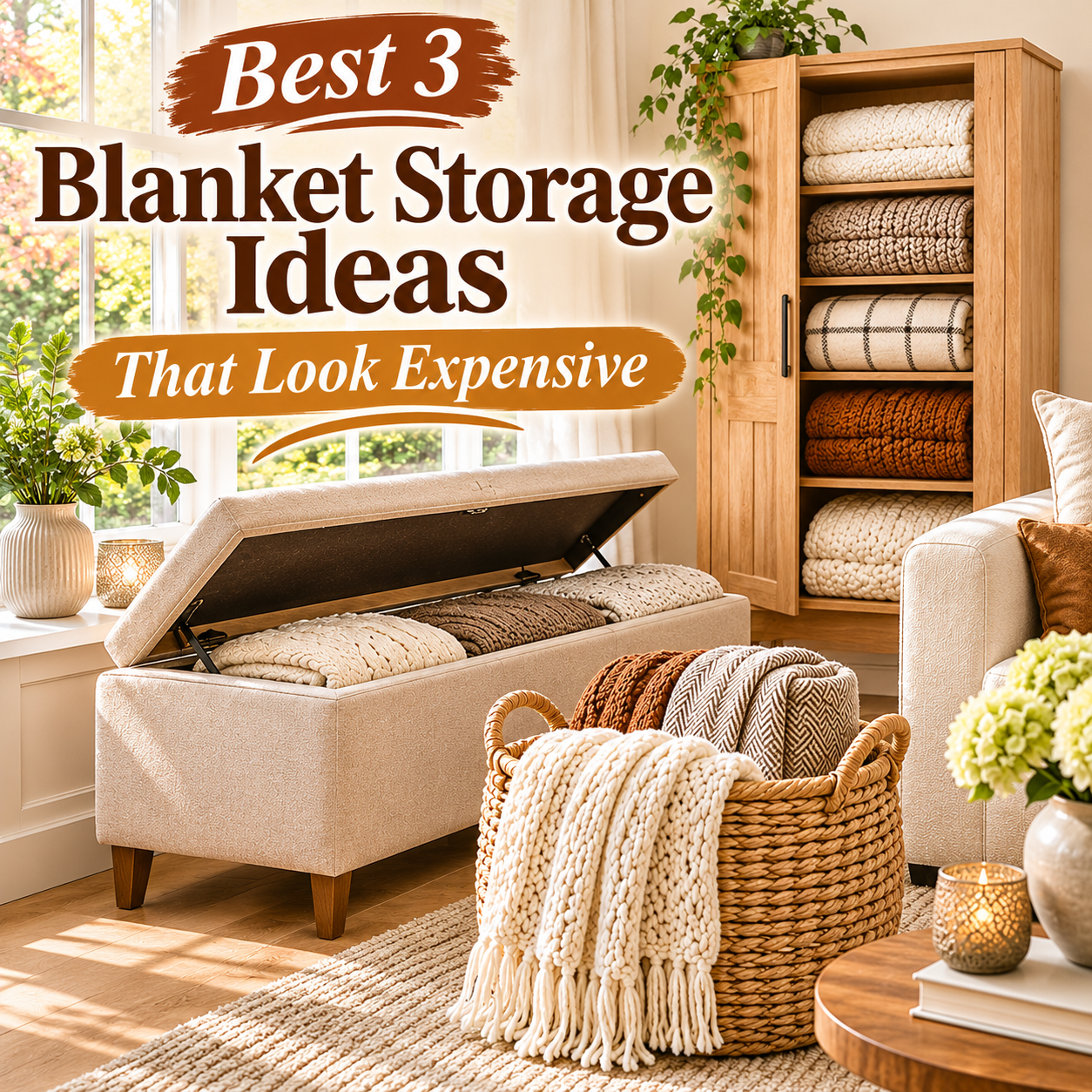
🏡 Imagine a cozy living room where every blanket has a designated place. A gorgeous upholstered bench sits beneath a window, concealing several plush throws inside. A woven basket beside the sofa holds two neatly rolled blankets, ready for a relaxing evening. In another corner, an elegant storage cabinet keeps seasonal bedding protected and completely out of sight.
Each arrangement serves a practical purpose, but it also contributes to the atmosphere of the room.
The most successful blanket storage ideas balance three essential qualities: convenience, efficient use of space, and attractive design. They make blankets easy to reach when needed while preventing unnecessary clutter from dominating the interior.
Whether you live in a compact apartment, a charming countryside cottage, a modern townhouse, or a spacious family home, the right storage approach can make your rooms feel calmer and more intentional.
✨ These Best 3 Blanket Storage Solutions explore three distinctive approaches to organizing cozy textiles beautifully: a luxurious concealed-storage bench, an elegant open-basket system, and a space-saving vertical blanket cabinet.
Each concept offers a different combination of style, practicality, and storage capacity, making it possible to choose a solution that works with your actual home rather than forcing your home to accommodate another piece of furniture.
Why Beautiful Blanket Storage Solutions Make Such a Difference in Everyday Living
Blankets are among the most frequently used textiles in many homes. They provide warmth during chilly evenings, make sofas more comfortable, add softness to bedrooms, and create cozy spaces for reading, relaxing, or watching movies.
Unfortunately, their soft and flexible construction also makes them surprisingly difficult to organize.
Unlike books, dishes, or decorative objects, blankets rarely maintain a consistent shape when folded. Thick knitted throws can expand after being stacked, fleece blankets may slide off smooth surfaces, and oversized comforters can occupy an entire storage compartment.
As a result, a storage method that works beautifully for smaller household accessories may not be effective for blankets.
The solution begins with understanding how textiles behave.
A thin cotton throw can fit neatly inside a relatively shallow compartment. A bulky wool blanket needs more breathing room. An oversized comforter may require a deep storage chest or a dedicated cabinet shelf.
Choosing storage according to the blanket’s size, material, and frequency of use prevents frustration and creates a more sustainable organizing routine.
The Hidden Connection Between Storage and Visual Calm
A room can contain beautiful furniture, expensive fabrics, and carefully chosen decorations yet still feel visually overwhelming when everyday objects lack designated storage.
Blankets are particularly noticeable because they occupy large areas of visible space.
A brightly colored throw draped over a chair can become an unexpected focal point. Several blankets stacked unevenly on a sofa may interrupt the room’s visual balance.
When those same textiles are organized inside attractive containers or concealed compartments, the furniture and architecture become easier to appreciate.
The room feels more spacious even though its physical dimensions have not changed.
This effect is especially valuable in smaller homes, where visual clutter can make an already compact living area appear crowded.
🌿 Beautiful storage does not necessarily mean hiding everything. It means making deliberate decisions about which blankets remain visible and which ones should be stored away.
A single textured throw can look wonderful inside an open basket, while a collection of mismatched seasonal blankets may be better suited to concealed storage.
The distinction creates order without eliminating the warmth and personality that make a home comfortable.
Why the Best Storage System Depends on Your Daily Habits
One of the most common organizing mistakes is choosing a storage container purely because it looks attractive.
An elegant wooden chest may seem ideal, but it becomes inconvenient if you need to move several decorative cushions every time you want a blanket.
Similarly, a narrow blanket ladder may look beautiful but offer insufficient capacity for a household that regularly uses six or seven large throws.
Consider how often each blanket is used.
Daily blankets should be stored where they can be reached in seconds. Occasional guest blankets can be placed inside a bench or cabinet. Bulky winter bedding can be stored farther away during warmer months.
This simple distinction makes the entire home easier to maintain.
Rather than repeatedly organizing blankets that have accumulated across the furniture, a well-designed system encourages everyone to return them to their proper place naturally.
🥇 Best 1 Blanket Storage Solutions With a Luxurious Upholstered Bench and Hidden Textile Compartments
The first and most sophisticated approach combines comfortable seating with generous concealed storage.
An upholstered storage bench offers something particularly valuable in modern homes: it performs two different functions while occupying the floor space of only one piece of furniture.
From the outside, it resembles an elegant furnishing selected for its beautiful proportions, soft upholstery, and refined construction.
Inside, it provides a practical compartment for blankets, throws, and other household textiles.
Imagine a gorgeous oatmeal-colored linen storage bench positioned beneath a large living room window.
Its softly rounded silhouette complements a neutral sofa, while a beautifully upholstered lid provides a comfortable place to sit.
The bench rests on discreet dark walnut legs, creating a refined contrast against pale oak flooring.
Underneath the lid, several neatly folded blankets sit inside a spacious compartment. A thick ivory cable-knit throw, a soft taupe fleece blanket, and a lightweight cotton coverlet are organized so that each can be removed without disturbing the others.
The result is exceptionally practical while maintaining the appearance of a professionally furnished interior.
💎 The luxury of this concept comes from its seamless combination of comfort, function, and architectural simplicity.


Choose a Storage Bench That Complements the Room Without Looking Bulky
The most important consideration when choosing a blanket storage bench is proportion.
A large rectangular trunk can provide considerable storage, but it may overwhelm a small room. Conversely, an attractive narrow bench may offer surprisingly little usable interior space.
Begin by identifying where the bench will be placed.
At the foot of a bed, a storage bench should generally remain proportionate to the width of the bed and leave comfortable walking space around nearby furniture.
In a living room, it might fit beneath a window, against an unused wall, or beside a spacious seating arrangement.
A window-facing bench can create a particularly charming reading corner, provided the window remains accessible and the furnishing does not block heating or ventilation.
Choose a height that feels comfortable for sitting if the bench is designed to support a seated person.
Softly curved upholstery can make the piece feel lighter and more inviting, while straight architectural lines are ideal for contemporary interiors.
Select Upholstery That Makes Everyday Storage Feel Elegant
Upholstery has a significant influence on whether a storage bench appears sophisticated or purely utilitarian.
Linen-look woven fabrics introduce natural texture and understated character. Performance fabrics can offer easier maintenance for busy households, while velvet creates a richer and more dramatic appearance.
For a calm, timeless interior, consider warm ivory, oatmeal, stone gray, mushroom beige, or muted taupe.
These shades coordinate beautifully with many blanket colors and make the bench easy to incorporate into future room updates.
In a darker interior, a walnut-colored frame with charcoal upholstery can create a more architectural look.
A deep olive or dusty blue bench may provide a subtle statement without overwhelming the surrounding furniture.
Avoid choosing delicate upholstery solely for its appearance if the bench will experience frequent use.
A washable or easily maintained surface may provide better long-term satisfaction, particularly in households with children or pets.
Create a Beautifully Organized Hidden Blanket Compartment
An attractive storage bench becomes significantly more useful when the interior is organized according to the blankets it holds.
Instead of dropping textiles into the compartment randomly, divide the space into practical zones.
One section might contain frequently used throws. Another could hold larger guest blankets. A smaller compartment can accommodate pillow covers or lightweight seasonal textiles.
If the bench has one continuous interior space, soft fabric dividers or appropriately sized organizers can help maintain separation.
Avoid filling the compartment so tightly that the lid presses against the blankets.
Overcrowding can make textiles difficult to retrieve and may cause delicate fabrics to develop unwanted creases.
A useful technique is to fold blankets into consistent rectangular shapes and arrange them vertically when the compartment’s depth allows.
This creates a file-like system in which individual blankets remain visible.
Instead of lifting an entire pile to reach the bottom blanket, you can select the one you need directly.
Make the Storage Bench a Functional Part of a Cozy Reading Corner
One particularly beautiful application of this storage concept is a reading nook.
Position the bench near a bookshelf, window, or comfortable armchair, leaving sufficient space to open its lid fully.
A floor lamp with warm, adjustable lighting can provide illumination for evening reading.
Nearby, a small side table offers space for a book or warm drink.
The blankets remain inside the bench until needed, keeping the area organized throughout the day.
During colder evenings, a soft wool throw can be removed and placed over the reading chair.
When reading time ends, the blanket returns to the bench.
This creates a pleasant routine in which comfort and organization work together rather than competing for space.
📖 Best for: Bedrooms, living rooms with unused wall space, guest rooms, window seating areas, and homes that need attractive concealed storage without adding another traditional cabinet.
Important Safety and Material Considerations
A storage bench should be designed for its intended use.
If it will serve as seating, confirm that the manufacturer identifies it as suitable for sitting and provides an appropriate load rating.
A decorative storage chest is not automatically a safe seat.
For a bench with a hinged lid, a well-designed lid-support mechanism can help prevent accidental slamming. The opening should remain accessible without requiring awkward lifting or moving heavy objects.
Before storing blankets, make sure they are completely clean and dry.
Wool, cotton, fleece, and delicate knitted materials can react differently to compression, humidity, and prolonged storage.
Important Note: Never store damp blankets inside sealed benches, cabinets, or storage bags. Trapped moisture can encourage mildew and unpleasant odors. Choose clean, fully dry textiles and a storage location that remains appropriately ventilated and protected from excessive humidity.
A beautiful storage solution should preserve the condition of the blankets as carefully as it preserves the appearance of the room.
🥈 Best 2 Blanket Storage Solutions With Sculptural Woven Baskets and a Curated Cozy Textile Collection
The second approach celebrates the beauty of everyday blankets rather than concealing them completely.
Large woven storage baskets can transform practical textile organization into a warm and inviting decorative feature.
This concept is particularly appealing for households that use blankets frequently and want them within easy reach.
Instead of opening cabinets or lifting furniture lids, anyone can simply reach into a basket and select a favorite throw.
The challenge is making the arrangement feel intentional rather than resembling an overflowing laundry basket.
The secret lies in choosing containers with beautiful materials, balanced proportions, and sufficient capacity.
Imagine a spacious living room with a low, cream-colored sofa and softly textured walls.
Beside the sofa stands an oversized handwoven basket made from natural seagrass or rattan.
Its gently tapered silhouette creates an organic contrast with the clean lines of the surrounding furniture.
Inside, three beautifully folded blankets form a harmonious arrangement.
An ivory knitted throw introduces softness, a warm caramel cotton blanket adds gentle contrast, and a muted gray wool throw provides a slightly darker accent.
The blankets are not perfectly identical.
Their different textures create visual richness, while their coordinated colors keep the arrangement sophisticated.
🧺 The basket becomes an attractive object in its own right, combining natural craftsmanship with everyday convenience.

Choose Woven Baskets That Offer Genuine Blanket Storage Capacity
Not every decorative basket is suitable for blanket storage.
Smaller baskets may work for rolled hand towels or magazines but become impractical when filled with large throws.
A useful blanket basket needs sufficient width to accommodate folded textiles and enough depth to prevent them from spilling over its edges.
For several standard sofa throws, a basket approximately 40–50 centimeters wide can be a practical starting point, although actual capacity depends on blanket thickness and basket shape.
A narrow, tall basket may work well for rolled lightweight throws.
A wider, lower basket can be better suited to chunky knitted blankets because it allows them to rest naturally without excessive compression.
Consider the basket’s construction as carefully as its dimensions.
Tightly woven rattan can provide a structured appearance, while seagrass introduces a more rustic, organic texture.
Cotton-rope baskets offer a softer alternative, especially where rigid natural fibers might snag delicate fabrics.
Felt storage baskets can create a more contemporary appearance and are often lightweight enough to move easily between rooms.
The best material depends on both the decorating style and the type of blankets being stored.
Compare Natural Basket Materials Before Choosing Your Favorite
Different materials create different visual and practical effects.
| Basket Material | Visual Character | Best Blanket Type | Main Advantage |
|---|---|---|---|
| Natural rattan | Elegant and structured | Folded cotton and fleece throws | Strong decorative presence |
| Seagrass | Rustic and organic | Casual sofa blankets | Beautiful natural texture |
| Cotton rope | Soft and relaxed | Delicate knitted blankets | Gentle interior surface |
| Wool felt | Modern and understated | Lightweight everyday throws | Flexible and easy to move |
| Woven fabric | Casual and versatile | Mixed household blankets | Often collapsible for storage |
Natural baskets can vary in finish and construction.
Before placing an expensive knitted blanket inside one, inspect the interior for rough fibers, exposed staples, or sharp edges.
If necessary, add a removable cotton or linen liner.
This protects the textiles while creating a softer, more finished appearance.
Master the Art of Rolling and Folding Blankets for an Elegant Basket Display
One of the most effective ways to make open blanket storage look beautiful is to establish a consistent folding method.
For lightweight cotton throws, rolling can create a clean and organized appearance.
Begin by folding the blanket lengthwise into a manageable strip.
Then roll it gently from one end, keeping the tension consistent without compressing the fabric excessively.
Place the rolled blankets upright in the basket if its depth provides enough support.
Their circular ends create an appealing visual pattern that feels orderly and intentional.
For heavier knitted throws, a loose rectangular fold may be more appropriate.
Chunky knit fabrics can lose their attractive shape when rolled too tightly, particularly if they contain delicate or loosely constructed stitches.
Fold these blankets gently and place them near the top of the basket.
The natural drape of a thick knitted throw can create softness without making the arrangement look messy.
Create a Beautiful Three Blanket Color Arrangement
A coordinated color palette can make even an affordable basket arrangement appear thoughtfully designed.
One attractive approach is to select three blankets with different textures but related colors.
For example, combine a soft ivory cotton throw, a warm beige woven blanket, and a mushroom-colored knitted throw.
The colors are closely related, but the variations in texture prevent the arrangement from looking flat.
For a more dramatic contrast, choose a charcoal basket containing a pale cream throw, a muted olive blanket, and a deep chocolate-brown knitted layer.
The darker tones create richness, while the cream textile keeps the arrangement visually balanced.
A romantic cottage interior might feature dusty rose, oatmeal, and faded sage.
A coastal-inspired home could combine natural linen, soft white, and muted blue.
🎨 The goal is not to purchase new blankets simply to create matching colors. Instead, select the most visually harmonious textiles from the blankets you already own and store the remaining ones elsewhere.
This keeps the open display attractive without requiring the entire blanket collection to follow a strict color scheme.
Position Blanket Baskets Where They Feel Convenient and Intentional
The location of a basket can significantly influence its usefulness.
Beside a sofa, a large woven basket provides immediate access to blankets during movie nights or relaxed evenings.
Near a reading chair, a smaller basket creates a dedicated place for a favorite throw.
In a bedroom, an attractive fabric basket beside a dresser can hold an additional lightweight blanket for cooler nights.
However, baskets should never obstruct doors, walkways, or furniture that needs to open.
Consider how the room functions during everyday activities.
A basket that looks beautiful in a photograph may become inconvenient if everyone must walk around it repeatedly.
For narrow rooms, choose a taller, smaller-footprint basket rather than a wide container that projects into the circulation area.
A structured rectangular basket may fit more efficiently against a wall than a round one.
The objective is to make storage feel integrated into the room’s daily routine.
Prevent Open Blanket Storage From Looking Overcrowded
The biggest disadvantage of open storage is that clutter remains visible.
An oversized basket filled with too many blankets can quickly lose its elegant appearance.
Instead of allowing the entire collection to rise above the basket rim, keep most blankets below or near the top edge.
One blanket may drape gently over the side for a relaxed appearance, but the remaining textiles should look contained.
If the basket routinely overflows, the problem is usually insufficient capacity rather than poor folding technique.
Consider adding concealed storage for seasonal blankets or replacing the basket with a larger design.
Avoid using multiple decorative baskets when one properly sized container would be sufficient.
Several baskets scattered around a small living room can make the space feel fragmented.
🌿 Best for: Cozy living rooms, casual family spaces, Scandinavian interiors, organic modern homes, cottages, and households that want frequently used blankets visible and accessible.
🥉 Best 3 Blanket Storage Solutions With a Slim Vertical Cabinet and Beautifully Organized Seasonal Blankets
The third approach offers a particularly effective solution for homes with limited floor space and large blanket collections.
A slim vertical storage cabinet uses height rather than width to create generous storage capacity.
This makes it especially useful in apartments, smaller bedrooms, multipurpose rooms, and homes where every square meter matters.
Unlike open baskets, vertical cabinets can conceal blankets of different colors, patterns, and materials behind a consistent furniture exterior.
They are also ideal for separating everyday throws from seasonal bedding.
Imagine a sophisticated narrow cabinet positioned against a warm ivory wall.
Its smooth oak doors feature discreet recessed handles, while the cabinet’s slim silhouette allows it to fit comfortably into a modest unused wall section.
Inside, adjustable shelves hold several carefully folded blankets.
Lightweight summer throws occupy an easily accessible middle shelf.
Thicker winter blankets are stored on a lower shelf.
Additional guest bedding rests on an upper shelf, protected inside breathable fabric storage bags.
The cabinet appears simple and understated from the outside, but its interior functions as a highly organized textile library.
✨ This approach is particularly valuable because it creates a permanent storage system without requiring blankets to remain on display.

Use Vertical Space to Organize Blankets Without Expanding Furniture Footprints
The most important advantage of vertical storage is its efficient use of available wall space.
A low storage chest occupies a considerable amount of floor area relative to its height.
A narrow cabinet can potentially provide several levels of storage within a similar or smaller footprint.
The ideal cabinet should have sufficient depth for folded blankets without extending unnecessarily far into the room.
Measure your largest frequently used blankets after folding them.
Use those dimensions to estimate the minimum shelf depth and width required.
Do not rely exclusively on a cabinet’s exterior measurements.
Door thickness, internal supports, and shelf brackets can reduce usable storage space.
Adjustable shelves provide additional flexibility because different types of blankets require different vertical clearances.
A compartment designed for thin cotton throws may not accommodate a thick winter comforter.
Being able to reposition shelves allows the cabinet to adapt as household needs change.
Create an Easy Three Zone Blanket Storage System
An organized vertical cabinet benefits from dividing the collection into three practical categories.
The first category contains everyday blankets.
These should occupy the most accessible shelves, generally around waist or chest height, where they can be reached comfortably.
The second category contains occasional blankets.
Guest throws, spare fleece blankets, and additional bed coverings can be stored on lower or upper shelves depending on their weight.
The third category contains seasonal bedding.
Thick winter blankets can move into storage during warmer months, while lightweight summer covers may be stored during colder periods.
This approach prevents frequently used blankets from becoming buried beneath items that are only needed a few times each year.
A cabinet should be organized according to how often items are needed rather than simply arranging all blankets by size.
Fold Blankets According to Shelf Dimensions
Consistent folding makes cabinet storage significantly more efficient.
Start by measuring the width and depth of a shelf.
Then fold each blanket into a rectangle that fits comfortably within those dimensions.
For large blankets, folding lengthwise first can help establish a manageable width.
Continue folding until the blanket forms a compact shape that does not extend beyond the shelf edge.
Avoid forcing oversized blankets into compartments that are too shallow.
This can create unstable piles and make it difficult to close the cabinet doors.
For stacks of lightweight blankets, place larger and heavier items at the bottom.
Delicate or loosely knitted textiles should be stored according to their care instructions and should not be compressed beneath heavy bedding.
An alternative is to use fabric shelf bins.
These keep smaller blankets together and allow an entire group to be removed without disturbing adjacent items.
Introduce Beautiful Interior Organization With Breathable Textile Storage Bags
Seasonal blankets often remain unused for several months.
During this period, protecting them from dust, moisture, and unnecessary handling becomes important.
Breathable fabric storage bags can be useful for clean, completely dry textiles in a suitable indoor environment.
Cotton or other breathable fabric covers may be appropriate for materials that benefit from air circulation.
Clear or labeled organizers can also make it easier to identify the contents without opening every container.
However, avoid assuming that every blanket should be tightly compressed.
Some synthetic comforters may tolerate carefully controlled compression for limited periods, but delicate wool, down-filled bedding, and certain lofted materials can lose shape when compressed improperly.
Always follow the manufacturer’s storage guidance.
The objective is to preserve the blanket’s comfort and structure, not simply force the maximum number of textiles into the smallest possible space.
Add Subtle Labels for a More Efficient Blanket Collection
Labels might seem unnecessary for a small household, but they can become remarkably helpful when several types of bedding are stored together.
Instead of using highly visible plastic labels on the cabinet exterior, place small fabric tags or understated labels inside the doors or on storage bags.
Useful categories include guest blankets, winter throws, lightweight covers, and spare bedding.
This makes seasonal changes faster and prevents unnecessary searching.
For households with multiple bedrooms, individual categories can also help keep textiles assigned to the correct room.
A guest-room blanket should be easy to locate when visitors arrive, rather than hidden among unrelated bedding.
The organization should remain simple enough that everyone in the household understands it.
Complicated systems with too many categories often become difficult to maintain.
Make a Vertical Storage Cabinet Look Like Beautiful Furniture
Although the cabinet’s primary purpose is organization, its exterior can still contribute to a sophisticated interior.
A natural oak finish creates warmth and works beautifully with neutral interiors.
Painted cabinets in soft mushroom, warm white, or pale greige can blend into surrounding walls.
For a more dramatic room, dark walnut or muted charcoal introduces an elegant architectural contrast.
Flat-front doors create a clean contemporary appearance.
Subtle framed doors work well in traditional and cottage-inspired homes.
Slim handles in brushed brass or dark bronze can add a refined finishing detail without making the cabinet appear excessively decorative.
Keep the top of the cabinet relatively uncluttered.
The strongest visual effect comes from allowing the furniture’s proportions, material, and finish to create interest.
A cabinet that stores blankets efficiently while looking beautiful enough to belong in the room offers far more long-term value than a purely temporary storage arrangement.
🔑 Best for: Small apartments, bedrooms without generous closet space, guest rooms, large seasonal blanket collections, and homes that need concealed textile storage with minimal visual clutter.
Secure Tall Storage Furniture for Everyday Safety
A vertical cabinet should be stable and appropriate for its intended load.
Tall storage furniture can present a tip-over hazard, especially when doors are opened, shelves are unevenly loaded, or children attempt to climb it.
Follow the manufacturer’s assembly and anchoring instructions, using wall fixings appropriate to the wall construction.
Keep heavier items on lower shelves whenever practical.
Ensure doors can open fully without striking nearby furniture or obstructing essential movement through the room.
A slim cabinet is only a successful space-saving solution when it remains safe and convenient to use.
Best 3 Blanket Storage Solutions Compared for Different Homes
All three approaches provide attractive ways to organize blankets, but they solve different problems.
A concealed-storage bench combines seating and storage.
A woven basket offers immediate access and visual warmth.
A vertical cabinet maximizes capacity while keeping the collection out of sight.
The following comparison highlights their practical differences.
| Storage Solution | Storage Capacity | Best Location | Visual Style | Main Advantage |
|---|---|---|---|---|
| 🥇 Upholstered storage bench | Medium to large depending on dimensions | Bedroom footboard area, window nook, living room | Luxurious and refined | Combines seating with hidden storage |
| 🥈 Sculptural woven basket | Small to medium | Beside sofas and reading chairs | Organic and cozy | Easy access to everyday throws |
| 🥉 Slim vertical cabinet | Medium to large | Bedroom, guest room, unused wall space | Clean and architectural | Uses vertical space for seasonal organization |
For households that need a beautiful multifunctional furniture piece, the storage bench offers an appealing balance of practicality and elegance.
For families that use blankets throughout the day, a woven basket may be easier to maintain because retrieving and returning textiles requires almost no effort.
For larger collections, a vertical cabinet offers greater flexibility and a more structured organization system.
The best option is not necessarily the largest or most expensive.
It is the one that encourages everyday organization without becoming inconvenient.
How to Choose Blanket Storage Solutions Based on Blanket Size and Material
Different types of blankets require different storage conditions.
A lightweight cotton throw behaves differently from a chunky wool blanket or an oversized winter comforter.
Understanding these differences helps prevent storage problems and unnecessary damage.
Lightweight Cotton and Linen Throws
Cotton and linen blankets are generally easy to fold and store in moderate-sized compartments.
They work particularly well inside woven baskets, fabric bins, and shallow shelves.
Their relatively compact shape makes them suitable for vertical folding systems.
For a beautiful open arrangement, consider grouping several lightweight throws with coordinated colors.
Keep them away from prolonged direct sunlight where fading may become an issue.
Chunky Knitted and Wool Blankets
Chunky knitted textiles often require more generous storage space.
Their loose structures can be distorted by excessive compression or rough container surfaces.
A wide, smooth-lined basket or roomy storage bench may be more appropriate than a tightly packed cabinet.
Fold loosely rather than stretching or tightly rolling delicate knitted fabrics.
Clean wool blankets according to their care instructions before extended storage, and consider suitable protection against textile pests.
Fleece and Microfiber Blankets
Fleece blankets are often practical for everyday family use because they are lightweight, soft, and easy to handle.
They can work well in storage baskets or cabinet compartments.
Folding them into consistent rectangles helps prevent uneven stacks.
Keep them clean and dry, and avoid storing them near excessive heat or in unsuitable damp spaces.
Oversized Comforters and Winter Bedding
Large comforters require careful planning because their volume can exceed the usable capacity of decorative storage furniture.
A deep cabinet compartment or spacious storage chest may be more suitable than a basket.
For down or other lofty fillings, avoid prolonged tight compression unless the manufacturer specifically recommends it.
The filling needs to retain its loft to provide effective insulation.
The best long-term storage method depends on the comforter’s construction, filling material, and care label.
Smart Blanket Storage Solutions for Small Apartments and Compact Living Rooms
Small spaces often require more thoughtful storage than large homes.
An apartment may have limited closet capacity, minimal unused wall space, and furniture arranged close together.
Adding another large cabinet is not always practical.
Instead, focus on storage that uses existing furniture locations and underutilized areas.
Replace a Single Purpose Furniture Piece With Hidden Storage
If a room already needs a bench, replacing a non-storage bench with one that has an interior compartment can increase functionality without introducing another furniture footprint.
Similarly, some ottomans offer built-in storage beneath their upholstered tops.
The most effective choice depends on the room’s existing layout.
Avoid purchasing a storage bench simply because it offers additional capacity if the space does not actually need another bench.
Functional furniture should solve two genuine needs rather than create a new decorating problem.
Use Narrow Wall Sections More Efficiently
A narrow section of wall between a doorway and a wardrobe may be too small for conventional furniture but suitable for a compact storage unit.
Measure the space carefully, including the clearance needed to open doors or drawers.
A taller cabinet can make use of vertical space without extending far into the room.
In particularly small apartments, a wall-mounted or built-in solution may provide greater efficiency, provided it is installed correctly and safely.
Keep Everyday Blankets Close to Where They Are Used
Convenience becomes especially important in compact spaces.
If the main sofa is the location where blankets are used most frequently, placing storage nearby can prevent blankets from spreading into other rooms.
One medium-sized basket may be sufficient for two everyday throws.
Seasonal extras can remain inside a bedroom cabinet.
This prevents the living room from functioning as the storage area for every blanket in the household.
How to Organize Blanket Storage Solutions Without Buying More Containers
Beautiful organization does not always require purchasing new storage products.
In many homes, the first step is evaluating the blankets already owned and identifying existing storage spaces.
Empty a designated storage area and examine the collection.
Separate blankets according to their purpose and frequency of use.
Some may be used every evening, while others are reserved for guests or colder months.
Consider whether every blanket still serves a useful purpose.
A worn-out throw that is never used may be occupying space that could accommodate a much-loved blanket.
Items that remain in good condition but are no longer needed can be donated where suitable.
Once the collection has been reviewed, assign each blanket a storage location.
Frequently used items should remain accessible.
Seasonal bedding can occupy less convenient compartments.
The goal is to organize according to actual needs rather than simply filling storage spaces.
Establish a Simple Blanket Return Routine
Even the most beautifully designed storage system will become untidy if blankets are never returned.
Fortunately, an effective routine does not need to be complicated.
After using a blanket, fold or roll it according to the storage method and return it to its designated place.
For everyday throws, a simple loose fold is often sufficient.
There is no need to create perfectly symmetrical arrangements after every use.
A basket that accommodates naturally folded blankets will be easier to maintain than one requiring an elaborate decorative composition.
If children regularly use the blankets, choose accessible storage that they can manage safely and independently.
When organization becomes convenient, consistency is much easier to achieve.
Common Blanket Storage Mistakes That Make a Home Look Cluttered
Even attractive containers can create problems when they are used incorrectly.
Understanding the most common mistakes helps prevent wasted space and keeps the storage system practical.
Choosing Containers That Are Too Small
A beautiful basket may look ideal in a store but become overwhelmed by two thick blankets.
Always measure the folded textiles before selecting the container.
Leave enough extra capacity for easy retrieval.
A container should hold blankets comfortably rather than requiring them to be forced into position.
Hiding Every Blanket Too Far Away
Concealed storage creates visual calm, but it becomes frustrating when frequently used blankets are difficult to access.
Keep at least one or two everyday throws near the seating area where they are used.
Other blankets can remain inside cabinets or benches.
This creates a balance between convenience and a tidy appearance.
Ignoring Fabric Care Requirements
Not all blankets tolerate the same storage conditions.
Some materials need loose folding, while others can be stacked more compactly.
Delicate fabrics may snag on rough basket interiors.
Bulky bedding may lose loft when compressed excessively.
Following the care label is more important than achieving a perfectly compact arrangement.
Allowing Seasonal Blankets to Occupy Everyday Storage
Winter bedding can take up considerable space even when it is not being used.
Keeping every seasonal blanket in the living room throughout the year creates unnecessary crowding.
A seasonal rotation can free up accessible compartments.
Store off-season blankets clean and dry in suitable conditions, then return them to everyday storage when temperatures change.
Prioritizing Appearance Over Accessibility
A storage arrangement might look stunning when first styled, but its success depends on daily use.
A heavy chest lid, an awkwardly positioned cabinet, or a basket that cannot accommodate ordinary folding habits may discourage consistent organization.
Practical accessibility should guide the design.
The most sophisticated storage is often the storage that works so naturally it requires very little attention.
How to Maintain Beautiful Blanket Storage Throughout the Year
Blanket organization becomes much easier when storage adapts to seasonal changes.
During colder months, thicker throws and insulating blankets may be used almost every day.
During warmer seasons, lightweight cotton and linen covers may be more appropriate.
A flexible storage system allows these items to change places without requiring the entire home to be reorganized.
Spring and Summer Blanket Organization
As temperatures rise, review the thicker blankets that are no longer needed.
Clean them according to their care instructions and allow them to dry completely.
Fold them carefully and move them into designated seasonal storage.
Keep one or two lightweight throws accessible for cooler evenings or air-conditioned rooms.
This reduces the amount of visible textile clutter while preserving everyday comfort.
Autumn and Winter Blanket Organization
When colder weather arrives, bring thicker blankets back into accessible storage.
Inspect them for odors, dust, or signs of damage before use.
Place the most frequently used throws inside the living room basket or storage bench.
Store occasional blankets in the vertical cabinet.
This rotation keeps the living room comfortable without allowing every blanket in the household to accumulate on the sofa.
Refresh Storage Compartments During Seasonal Changes
Seasonal transitions are also convenient opportunities to clean storage furniture.
Remove blankets and inspect the inside of baskets, benches, and cabinets.
Vacuum dust from corners and wipe suitable surfaces according to their material requirements.
Allow cleaned compartments to dry before replacing the textiles.
Check woven baskets for damaged fibers and inspect hinged furniture for signs of wear.
These small maintenance habits help storage furniture remain attractive and functional for years.
Frequently Asked Questions About Blanket Storage Solutions
What Is the Best Way to Store Blankets in a Living Room?
The best method depends on how frequently the blankets are used and how much storage space is available.
For everyday throws, a large woven basket beside the sofa is convenient and visually attractive.
For households that prefer completely concealed storage, an upholstered storage bench offers an elegant alternative.
The most important consideration is keeping frequently used blankets easy to reach and simple to return.
How Do You Store Blankets Without a Closet?
Blankets can be stored inside furniture with built-in compartments, such as storage benches, suitable ottomans, and cabinets.
Large fabric or woven baskets are another practical option.
In smaller homes, vertical storage can help maximize available wall space.
Choose a method based on the number and size of blankets rather than relying only on appearance.
How Can I Make Blanket Storage Look Expensive?
Select containers with attractive proportions, durable materials, and finishes that complement the surrounding furniture.
Natural woven baskets, refined upholstery, and beautifully constructed wooden cabinets can create an elegant appearance.
Keep visible blankets neatly arranged and avoid overflowing containers.
A restrained selection of coordinated textures can make even affordable storage feel thoughtfully designed.
Is It Better to Roll or Fold Blankets for Storage?
Both methods can work well.
Rolling is convenient for many lightweight throws and can look attractive inside deep baskets.
Folding is often more practical for shelves, benches, and larger textiles.
Delicate knitted or bulky blankets may benefit from loose folding rather than tight rolling.
Always consider the material and the manufacturer’s instructions.
How Many Blankets Should Be Stored in One Basket?
The ideal number depends on basket size and blanket thickness.
A medium basket may comfortably accommodate two or three lightweight throws, while a large basket can sometimes hold more.
Bulky knitted blankets occupy considerably more space.
Avoid packing the basket so tightly that blankets become difficult to retrieve or the container loses its shape.
Can Blankets Be Stored in Vacuum Bags?
Some blankets and synthetic bedding may be suitable for vacuum storage when the manufacturer permits it.
However, prolonged compression can damage the loft or structure of certain materials, particularly down-filled items and delicate textiles.
Check the care instructions before using compression bags.
When uncertain, loose folding inside a clean, dry storage compartment is generally a more conservative choice.
How Do You Keep Stored Blankets Smelling Fresh?
Begin by storing only clean, completely dry blankets.
Keep storage furniture in a dry indoor location with appropriate ventilation.
Clean the containers periodically and avoid trapping moisture inside sealed compartments.
Strong fragrances are not necessary for effective storage and may be unsuitable for people sensitive to scents.
Good cleaning practices and suitable storage conditions are more important.
What Is the Best Blanket Storage Solution for a Small Bedroom?
An upholstered storage bench can work well if the bedroom has enough space at the foot of the bed.
For rooms with limited floor area, a slim vertical cabinet may provide more efficient storage.
A soft fabric basket is useful for one or two frequently used throws.
Choose the option that preserves comfortable movement around the bed and does not obstruct wardrobes or doorways.
Final Thoughts on the Best 3 Blanket Storage Solutions for a Cozy and Beautifully Organized Home
Beautiful Blanket Storage Solutions prove that practical organization can contribute just as much to an attractive interior as carefully selected furniture and decorations.
The goal is not to hide every textile or create a perfectly staged room.
It is to give blankets thoughtful places where they can remain clean, accessible, and easy to organize.
Each of the three approaches offers a distinctive way to achieve that balance.
🥇 A luxurious upholstered storage bench is the ideal choice for homeowners who want beautiful multifunctional furniture. By combining comfortable seating with concealed textile storage, it creates a sophisticated arrangement that makes bedrooms and living rooms feel more organized without adding unnecessary visual clutter.
🥈 Sculptural woven baskets provide a warm, relaxed, and effortlessly charming solution for everyday throws. Their natural textures introduce organic beauty, while their open construction makes blankets easy to retrieve and return. This approach is especially attractive for cozy living rooms and family spaces where comfort is part of daily life.
🥉 A slim vertical blanket cabinet offers a refined solution for maximizing storage capacity in compact homes. Its adjustable shelves and concealed compartments make it particularly effective for seasonal bedding, guest blankets, and larger textile collections that require structured organization.
The most beautiful homes are not necessarily the ones with the largest closets or the most expensive furniture.
They are the ones where everyday necessities have been considered carefully.
A thoughtfully chosen basket can make a quiet corner feel warmer.
A concealed-storage bench can transform unused space into something practical and inviting.
A narrow cabinet can bring order to a collection of blankets that once occupied several different rooms.
Ultimately, the best blanket storage solution is one that fits naturally into the way your household lives.
Choose materials that complement your interior, dimensions that genuinely accommodate your textiles, and a storage method that makes everyday organization effortless.
With the right combination of functionality, attractive textures, and intentional design, even a simple collection of cozy blankets can become part of a beautifully organized home that feels calm, comfortable, welcoming, and surprisingly luxurious.
Related posts:

Best 3 Budget Home Decorating Ideas That Make an Ordinary House Look Like a Designer Dream

Best 3 Cozy House Aesthetic Ideas That Make Every Room Feel Like a Dreamy Warm Sanctuary

Best 3 Minimalist Home Decor on a Budget Ideas That Make Your Home Look Surprisingly Expensive

Best 3 Minimalist Home Decor With Plants Ideas That Make Any Room Look Stunningly Expensive

Best 3 Minimalist Wall Decor Ideas That Make Empty Walls Look Surprisingly Expensive

Best 3 Indoor Olive Tree Decor Ideas That Make Any Home Look Like a Luxury Mediterranean Villa

