
Indoor Olive Tree Decor is one of the most beautiful ways to introduce Mediterranean elegance, organic textures, and timeless sophistication into a modern home. With delicate silvery-green leaves, gracefully twisting branches, and beautifully sculptural trunks, olive trees create an atmosphere that feels effortlessly luxurious without requiring elaborate decorations. Whether displayed in a sunlit living room, positioned beside an elegant entryway console, or styled inside a peaceful dining space, an olive tree can instantly become the defining feature of an interior.
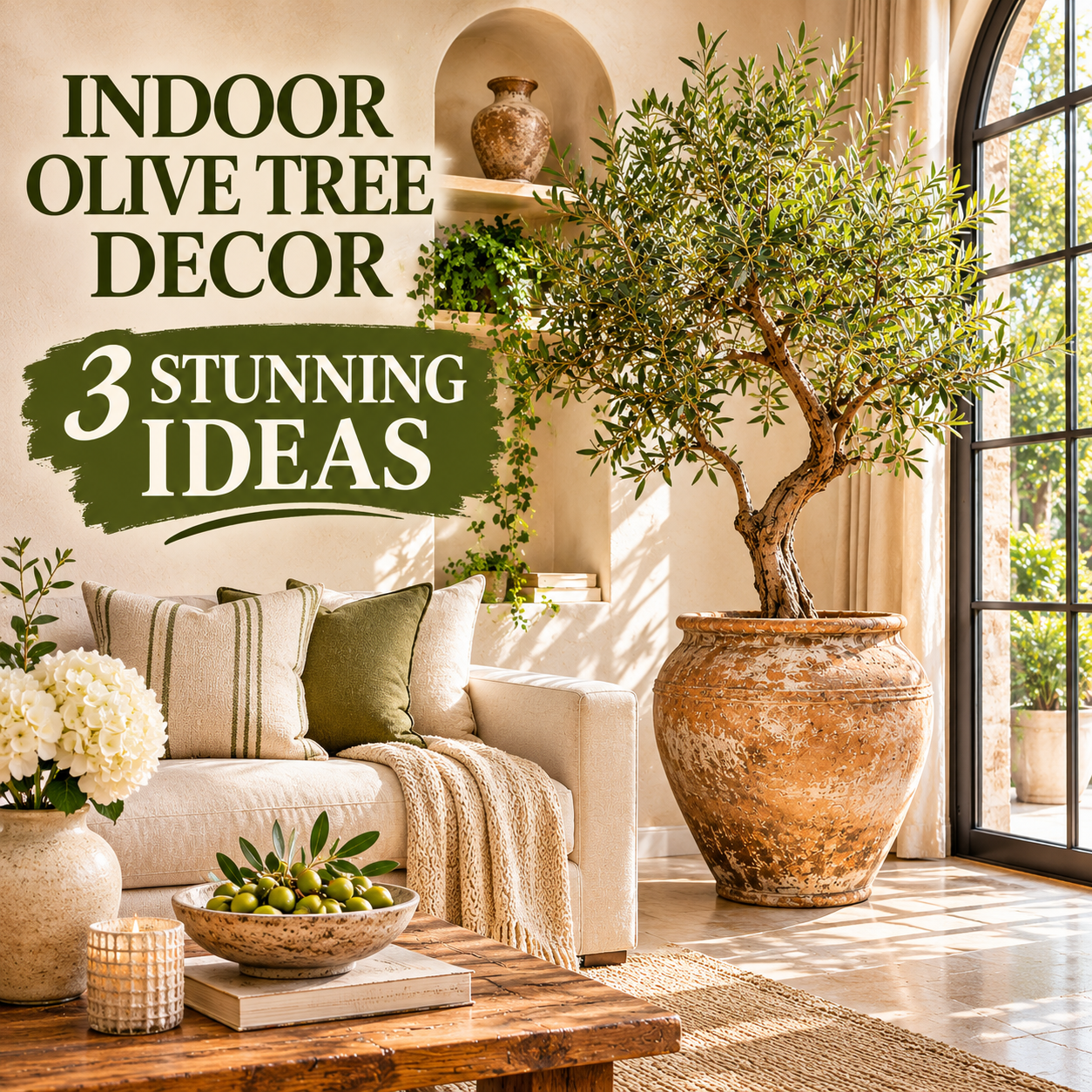
🌿 The charm of indoor olive trees comes from their unusual balance between rustic character and contemporary refinement. Unlike tropical houseplants with oversized glossy leaves, olive trees have airy foliage that allows natural light to move through their branches. Their irregular silhouettes introduce gentle movement while maintaining the sophisticated simplicity associated with Mediterranean villas, quiet luxury interiors, and beautiful European country homes.
An olive tree also offers something that many decorative accessories cannot provide: architectural presence. Its slender trunk draws attention upward, while its naturally asymmetrical canopy softens furniture arrangements and creates visual interest.
A carefully chosen olive tree can make a relatively ordinary room feel thoughtfully designed. Pairing it with an oversized stone planter, handmade terracotta pottery, or a beautifully textured ceramic container transforms a simple botanical element into a statement piece.
However, successful indoor olive tree styling requires more than placing an attractive plant in an empty corner. The surrounding colors, furniture proportions, natural lighting, decorative materials, and planter dimensions all influence the final appearance.
The most impressive results come from creating a complete decorative composition around the tree rather than treating it as an isolated accessory.
These three indoor olive tree decor ideas explore distinctive ways to incorporate olive trees into elegant interiors, from romantic Mediterranean arrangements to refined contemporary styling and sophisticated architectural displays.
Each approach offers its own visual personality while preserving the natural beauty that makes olive trees such extraordinary decorative elements.
Why Indoor Olive Tree Decor Creates Such an Elegant Interior Atmosphere 🌿
Olive trees have long been associated with Mediterranean landscapes, peaceful courtyards, historic gardens, and traditional European architecture.
Their distinctive character brings those associations indoors, creating a subtle connection between residential interiors and the beauty of nature.
Unlike heavily flowering plants, an olive tree relies on restrained colors and organic structure to make an impression.
Its narrow leaves feature muted green surfaces and lighter undersides that reflect sunlight softly. This delicate combination complements many popular interior color palettes, particularly ivory, beige, oatmeal, limestone, warm white, taupe, and natural wood.
The trunk becomes another essential decorative feature.
Older olive trees often develop beautiful irregular shapes and deeply textured bark. Even younger specimens can display slender branching patterns that provide an appealing contrast to smooth walls, polished floors, and contemporary furniture.
✨ One of the greatest advantages of olive tree styling is its versatility.
An olive tree can look equally appropriate inside a relaxed European farmhouse, an upscale modern apartment, an elegant Mediterranean-inspired residence, or a contemporary home featuring sophisticated natural materials.
The key difference lies in how the tree is presented.
For example, a terracotta planter immediately introduces traditional Mediterranean warmth, while an oversized ivory ceramic vessel creates a cleaner, more contemporary appearance.
A textured limestone container enhances architectural elegance, whereas an aged clay pot creates a romantic, collected-over-time atmosphere.
The tree remains the focal point, but its decorative surroundings determine the personality of the entire arrangement.
Best 3 Indoor Olive Tree Decor Styles Compared
Before choosing a decorative direction, consider the architectural character of the room, the available floor space, and the overall atmosphere you want to create.
The following comparison highlights three particularly elegant approaches.
| Indoor Olive Tree Decor Style | Ideal Location | Recommended Planter | Main Color Palette | Overall Atmosphere |
|---|---|---|---|---|
| 🥇 Mediterranean Villa Olive Tree | Bright living room or sunroom | Aged terracotta or textured limestone | Ivory, sand, clay, warm beige | Romantic, sun-drenched, timeless |
| 🥈 Quiet Luxury Sculptural Olive Tree | Contemporary living room or spacious foyer | Oversized matte ivory ceramic | Champagne, taupe, greige, walnut | Minimal, sophisticated, expensive-looking |
| 🥉 Architectural Olive Tree Gallery | Entryway or dining room near a bright window | Travertine-inspired or natural stone vessel | Cream, walnut, bronze, soft olive | Artistic, structured, gallery-inspired |
Although all three designs feature the same botanical inspiration, their decorative arrangements create noticeably different results.
The Mediterranean approach emphasizes warmth, craftsmanship, and relaxed European character.
Quiet luxury styling focuses on refined proportions, understated materials, and intentional simplicity.
The architectural gallery arrangement treats the olive tree almost like a living sculpture, emphasizing silhouette, spatial balance, and carefully curated surroundings.
Understanding these differences makes it easier to choose a design that complements the existing home rather than forcing an unrelated style into the room.
🥇 Best 1 Indoor Olive Tree Decor With a Romantic Mediterranean Villa Corner
Best for sunlit living rooms and relaxed European inspired interiors
Imagine entering a beautiful Mediterranean villa where warm sunlight streams through tall windows and illuminates a graceful olive tree standing inside an oversized antique terracotta planter.
The surrounding room features creamy plaster walls, pale limestone flooring, linen upholstery, and beautifully weathered wooden furniture.
Nothing feels overly decorated.
Instead, every material appears natural, authentic, and thoughtfully selected.
This is the defining character of romantic Mediterranean indoor olive tree decor.
The olive tree becomes the centerpiece of a carefully composed corner that celebrates organic beauty, handcrafted textures, and timeless European elegance.
Its delicate foliage contrasts beautifully with the substantial appearance of ceramic pottery and architectural stone surfaces.
The result is a peaceful and welcoming setting that feels sophisticated without appearing formal.


Choose an Aged Terracotta Planter With Authentic Mediterranean Character 🏺
The planter is arguably the most important decorative element after the olive tree itself.
For a romantic Mediterranean arrangement, choose an oversized terracotta container featuring a warm, earthy finish.
Traditional clay colors work particularly well because they create an immediate connection with rustic European courtyards and Mediterranean landscapes.
Consider planters in muted tones such as:
- Warm Tuscan clay
- Soft weathered terracotta
- Pale cinnamon
- Natural sandy beige
- Chalky antique cream
- Muted reddish brown
An aged finish introduces character that perfectly complements the rugged appearance of an olive tree trunk.
Rather than choosing a container with a perfectly polished surface, look for subtle variations in color, handmade irregularities, and natural-looking texture.
These details help the planter appear as though it belongs inside an established European residence.
For especially elegant results, select a container that visually supports the size of the tree.
A tall olive tree with a generous canopy usually looks more balanced inside a substantial planter than a narrow decorative pot.
However, the planter should not overwhelm the foliage.
The most successful arrangement creates harmony between the height of the tree, the width of the canopy, and the visual weight of the container.
When using a living olive tree, ensure the actual planting pot provides adequate drainage. A decorative terracotta or stone outer container can conceal a practical nursery pot when necessary.
Create a Beautiful Sunlit Corner With Natural Limestone and Linen ☀️
A Mediterranean olive tree looks particularly stunning when surrounded by materials that echo the landscapes of southern Europe.
Natural limestone is an excellent choice because its soft beige coloring enhances the silvery-green foliage without creating harsh contrast.
A limestone-inspired floor, small side table, or decorative pedestal can help establish the desired atmosphere.
If the room already features hardwood flooring, introduce the same warm mineral character through accessories.
A textured stone bowl, sculptural ceramic vessel, or light-colored side table may be enough.
Linen upholstery provides another essential layer.
Choose a relaxed armchair or sofa in warm ivory, oatmeal, or sandy beige.
The fabric should appear natural and inviting rather than excessively structured.
Soft linen curtains can also enhance the composition by filtering daylight into the room.
The movement of the curtains complements the graceful branches, creating a light and romantic atmosphere.
🌿 Position the olive tree where its irregular silhouette can be appreciated against a relatively uncluttered background.
A softly textured plaster wall is especially effective.
The delicate branches create beautiful patterns against the pale surface, transforming the tree into a natural decorative sculpture.
Add a Rustic Wooden Bench and Collected European Accessories 🪵
A romantic Mediterranean corner becomes more interesting when it includes a small amount of carefully selected furniture.
A rustic wooden bench, for example, can create a charming companion to an olive tree.
Choose natural oak, reclaimed wood, or a weathered walnut finish.
The goal is to introduce warmth and character rather than create a perfectly coordinated furniture set.
Place the bench beside the olive tree, leaving enough space for the branches to remain visually prominent.
A folded linen throw can soften the wooden surface.
One handmade ceramic bowl or antique-inspired pottery piece may provide another subtle detail.
Avoid placing numerous decorations around the base of the tree.
A Mediterranean villa aesthetic feels most authentic when natural materials have enough space to express their individual character.
A single substantial pottery vessel often looks more convincing than several tiny decorative objects.
The surrounding floor should remain relatively clear, allowing the olive tree to stand confidently as the main attraction.
Complete the Mediterranean Look With Warm Architectural Details ✨
The most captivating Mediterranean interiors often rely on architectural textures rather than excessive ornamentation.
If the room has plaster walls, arched openings, exposed wooden beams, or natural stone surfaces, use these features to support the olive tree arrangement.
An olive tree positioned near an arched window can create a particularly romantic composition.
Its branches naturally echo the softness of the curved architectural opening.
Aged bronze hardware, natural woven textures, and subtle antique accents can reinforce the atmosphere without making the room feel themed.
For homes without traditional Mediterranean architecture, the same character can be introduced through more accessible decorative elements.
Consider a large arched mirror positioned near the tree, a textured neutral rug, or a simple ceramic lamp with a warm linen shade.
These details create visual harmony while remaining practical for everyday interiors.
The finished arrangement should feel like a comfortable corner in a beautiful European countryside residence.
It should invite relaxation, reflect natural daylight, and allow the olive tree to provide most of the decorative interest.
🥈 Best 2 Indoor Olive Tree Decor With Quiet Luxury and a Sculptural Ivory Planter
Best for contemporary homes with elegant neutral interiors
Quiet luxury interiors are defined by thoughtful proportions, exceptional materials, and understated sophistication.
Rather than relying on bold patterns or elaborate decorations, these spaces create beauty through subtle contrasts, refined textures, and carefully chosen statement pieces.
An olive tree is especially well suited to this approach.
Its naturally graceful shape provides an organic contrast to contemporary furniture, while its muted foliage blends beautifully with sophisticated neutral colors.
In this arrangement, the olive tree is displayed inside a large ivory ceramic planter with a smooth, elegant silhouette.
The surrounding interior features soft greige walls, sculptural furniture, natural walnut accents, and beautifully layered fabrics.
Every element feels intentional.
There is no need for unnecessary botanical accessories or complicated arrangements.
The olive tree itself becomes the room’s most expressive feature.

Select an Oversized Ivory Ceramic Planter for a Refined Statement 🤍
Unlike the rustic character of terracotta pottery, quiet luxury styling benefits from containers with cleaner shapes and more restrained finishes.
An oversized ivory ceramic planter creates a striking foundation for a sophisticated indoor olive tree.
Choose a matte or subtly textured surface rather than an extremely glossy finish.
A matte appearance generally feels softer and pairs naturally with the understated character of olive foliage.
Beautiful color choices include warm ivory, chalk white, soft mushroom, pale greige, and creamy stone.
The shape of the planter also matters.
A gently rounded vessel can introduce softness to a contemporary interior, while a tall cylindrical planter creates a more architectural appearance.
A low, substantial container may work beautifully with a taller tree, provided it is appropriately sized for the plant and visually balanced.
Avoid excessive decorative patterns.
The goal is to allow the natural branching structure to remain the primary focal point.
The contrast between smooth ceramic and rugged bark creates visual interest without additional ornamentation.
This is especially effective in rooms where furniture already features refined materials such as natural walnut, travertine, brushed bronze, or high-quality linen.
Position the Olive Tree Beside a Contemporary Sofa for Beautiful Visual Balance 🛋️
One of the most elegant ways to use an indoor olive tree is to position it near a contemporary sofa.
The arrangement works particularly well when the furniture features low, horizontal proportions.
A graceful tree introduces vertical movement, balancing the long lines of the sofa and creating a more dynamic composition.
Choose a sofa upholstered in warm white, oatmeal, mushroom, or soft taupe.
These colors allow the olive foliage to remain visible without competing with the furniture.
A sculptural sofa featuring gently curved arms can create an especially beautiful contrast with the tree’s delicate branching pattern.
The relationship between the two objects should feel balanced rather than symmetrical.
For example, a large sofa can be positioned along the main wall, while the olive tree occupies the brighter end of the seating arrangement near a window.
A small walnut side table may complete the composition.
Keep accessories limited.
A single book, handmade ceramic bowl, or elegant table lamp can provide enough visual detail.
✨ The luxury comes from proportion and material quality rather than the number of decorative objects.
Allow negative space around the planter so the tree feels intentionally displayed.
This approach makes the room appear more spacious and visually organized.
Combine Olive Green Foliage With Champagne Neutral Interiors 🎨
Color coordination is essential when creating a sophisticated botanical arrangement.
Olive trees have naturally subdued foliage, making them especially compatible with refined neutral interiors.
Instead of introducing numerous bright colors, build a palette around gentle tonal variations.
Warm ivory walls can establish a light, elegant foundation.
Greige upholstery introduces subtle depth.
Walnut furniture adds warmth, while pale stone accessories provide a soft mineral contrast.
Champagne-toned metallic details can introduce a luxurious finishing touch.
The olive tree becomes the natural green accent that prevents the room from feeling monotonous.
A well-composed palette might include approximately sixty percent warm neutrals, thirty percent natural wood and stone tones, and ten percent subtle accents.
These proportions are flexible design guidelines rather than strict rules.
The important principle is visual balance.
Too many competing colors can reduce the impact of the olive tree.
A restrained palette allows the delicate silvery-green leaves to become a sophisticated feature.
Avoid introducing numerous unrelated green accessories merely to match the tree.
A small amount of repeated olive or sage coloring may create harmony, but the botanical arrangement should retain its individuality.
Use Architectural Lighting to Highlight the Beautiful Branch Structure 💡
Lighting dramatically influences how an olive tree appears inside a room.
During the daytime, natural sunlight can reveal the subtle color variations within the foliage.
Individual leaves catch the light differently, creating a delicate combination of soft green and silvery tones.
A location near a bright window therefore provides both practical and decorative benefits.
During the evening, carefully arranged interior lighting can preserve the tree’s visual presence.
A warm floor lamp placed nearby can illuminate the surrounding wall and make the tree’s silhouette more noticeable.
Wall sconces may create an equally beautiful effect.
However, avoid directing intense heat from lighting fixtures toward the foliage.
The aim is to emphasize the sculptural character of the tree rather than expose it to unnecessarily harsh conditions.
In a quiet luxury interior, the most attractive lighting usually feels gentle and integrated into the architecture.
Warm ambient illumination enhances natural textures, softens ceramic surfaces, and creates a relaxing atmosphere.
The olive tree becomes a beautiful silhouette against the room’s neutral backdrop.
Keep the Surrounding Decor Intentionally Minimal 🌿
The defining feature of this second design is restraint.
An olive tree already provides intricate botanical detail through its leaves, branches, and textured trunk.
Additional decorations should therefore be selected carefully.
Instead of surrounding the planter with multiple baskets, books, vases, and sculptures, choose one or two complementary objects.
A natural stone side table may provide architectural weight.
A single ceramic vessel can reinforce the refined material palette.
A generously textured wool rug might soften the overall setting.
Each object should contribute to the atmosphere without competing with the tree.
This restrained approach is especially effective in contemporary apartments where floor space is valuable.
The olive tree can serve as a decorative statement without requiring an extensive collection of accessories.
The finished room feels open, balanced, elegant, and exceptionally comfortable.
🥉 Best 3 Indoor Olive Tree Decor With an Architectural Gallery Style Display
Best for elegant entryways and dining spaces with sculptural character
The third approach treats an olive tree as a botanical artwork.
Rather than focusing primarily on rustic warmth or quiet luxury simplicity, architectural gallery styling emphasizes composition, silhouette, and visual structure.
The olive tree becomes a sculptural element that interacts with artwork, architectural surfaces, and carefully chosen decorative materials.
Imagine a spacious entryway with warm cream walls, an elegant walnut console, and an irregular olive tree displayed inside a beautifully textured stone planter.
A large abstract artwork introduces a sophisticated backdrop.
Natural daylight illuminates the delicate branches, revealing their irregular shapes and subtle shadows.
The entire composition feels reminiscent of a curated European design gallery.
This style is particularly effective in rooms where a single botanical arrangement can provide a strong visual statement.

Choose a Natural Stone Planter With Strong Architectural Presence 🪨
A gallery-inspired olive tree requires a container that feels substantial and beautifully crafted.
Natural stone or stone-inspired planters are especially suitable because they provide an appealing contrast to the delicate foliage.
Consider materials and finishes such as limestone, travertine-inspired ceramic, textured sandstone, or pale concrete.
Each material creates a slightly different character.
Limestone introduces natural softness.
Travertine-inspired surfaces create a sophisticated European appearance.
Sandstone offers rustic warmth, while pale concrete produces a cleaner contemporary effect.
The shape should be simple enough to emphasize the tree rather than distract from it.
A wide cylindrical container, tapered stone vessel, or softly rounded planter may work beautifully.
Avoid excessively ornate carvings or decorative patterns.
The most elegant result comes from the relationship between the stone texture and the sculptural trunk.
A slightly irregular tree silhouette can be particularly striking when paired with a clean geometric container.
The natural asymmetry creates movement, while the planter provides visual stability.
Together, these elements form a balanced decorative composition.
Create an Artistic Entryway Arrangement With a Walnut Console 🪵
An entryway offers an excellent opportunity to use an olive tree as a decorative statement.
Because entryways often contain relatively few furniture pieces, a beautifully positioned tree can immediately influence the atmosphere of the entire home.
Choose a console table featuring natural walnut or another warm wood finish.
The richness of the wood creates a beautiful contrast with the subdued green foliage.
Position the olive tree near one end of the console, ideally where the tree receives sufficient natural daylight.
The tree should not block the main walkway or interfere with the opening of nearby doors.
A large abstract artwork or elegant mirror can create a complementary backdrop.
Keep the console styling carefully curated.
One sculptural ceramic bowl, a small collection of beautiful books, or a refined bronze object may provide enough decorative interest.
The aim is to create an arrangement in which every element has a clear visual purpose.
Avoid filling the console with numerous small objects.
A gallery-inspired setting feels more sophisticated when larger pieces are surrounded by comfortable amounts of empty space.
🌿 The olive tree should remain the dominant vertical element, while the console provides a strong horizontal foundation.
This relationship creates a beautifully balanced composition.
Introduce Asymmetrical Styling for a Natural Gallery Aesthetic
Traditional interior arrangements often rely on perfect symmetry.
However, olive trees have naturally irregular shapes, making them particularly well suited to asymmetrical compositions.
An asymmetrical arrangement feels organic and visually interesting.
Instead of positioning the olive tree exactly between two identical pieces of furniture, place it slightly to one side.
Allow the branches to extend naturally into the surrounding space.
A large artwork can balance the composition without mirroring the tree’s exact shape.
The key is visual weight.
For example, a tall tree positioned on the left side of an entryway can be balanced by a broad walnut console extending toward the right.
A substantial ceramic bowl or small sculptural object may complete the arrangement.
The objects do not need to match in height.
They simply need to feel visually connected.
This approach works especially well with olive trees because their branching patterns rarely follow a perfectly symmetrical structure.
Rather than trying to control every branch, celebrate the natural irregularity.
The result feels artistic, relaxed, and much more authentic than an overly coordinated display.
Style an Olive Tree Near a Dining Area for European Elegance 🍽️
An architectural olive tree arrangement can also complement a sophisticated dining space.
A tall olive tree placed near a bright dining room window creates a beautiful vertical accent without occupying valuable tabletop space.
This approach is particularly attractive in rooms featuring natural wood dining tables, upholstered chairs, and warm neutral colors.
Choose a planter that complements the primary furniture materials.
For example, a pale stone vessel can provide contrast beside a dark walnut dining table.
A matte cream planter may create a softer appearance in a room featuring lighter oak furniture.
The surrounding decorations should remain restrained.
A low ceramic centerpiece, simple linen table runner, or elegant pendant light may provide enough additional character.
Avoid oversized floral arrangements that compete with the olive tree.
The tree should provide the primary botanical feature, allowing the dining table to remain practical and visually uncluttered.
During daytime meals, natural daylight can highlight the foliage and introduce a peaceful Mediterranean atmosphere.
In the evening, warm architectural lighting creates a refined backdrop for entertaining.
The result is a dining environment that feels welcoming, artistic, and carefully designed.
Enhance the Gallery Look With Abstract Art and Soft Bronze Accents ✨
The final layer of architectural gallery styling comes from thoughtfully selected artwork and metallic details.
Abstract artwork works particularly well because it can complement the olive tree without introducing a competing natural scene.
Choose paintings or framed prints featuring warm neutrals, gentle organic shapes, and subtle texture.
Cream, mushroom, charcoal, muted clay, and soft brown provide particularly harmonious options.
The artwork should feel sophisticated but not visually overwhelming.
An understated composition allows the olive tree to retain its prominent role.
Bronze accents can introduce warmth and subtle contrast.
A small bronze sculpture, aged metal lamp, or understated frame provides enough metallic detail to enhance the arrangement.
Avoid excessive polished gold or highly reflective accessories.
The objective is a refined gallery atmosphere rather than an overly glamorous display.
Natural materials should remain dominant.
The finished space should make the olive tree appear as though it has been intentionally selected for its sculptural beauty.
How to Choose the Perfect Indoor Olive Tree for Your Decor 🌳
Choosing the right olive tree is essential because size, trunk character, canopy density, and lighting requirements all influence the final arrangement.
An oversized tree may overwhelm a compact room, while an extremely small specimen can disappear beside substantial furniture.
Before selecting a plant, consider both the available space and the decorative atmosphere.
Select the Right Olive Tree Height for Your Room
The ideal height depends on ceiling dimensions, furniture proportions, and the position of the tree.
For smaller apartments, a compact olive tree can provide natural elegance without occupying too much floor space.
In spacious living rooms, a taller specimen may create a more dramatic architectural statement.
Use the following approximate styling guide.
| Room or Display Area | Suggested Decorative Tree Height | Recommended Visual Effect |
|---|---|---|
| Small window-side arrangement | 2–3 feet | Compact and delicate |
| Apartment living room | 3–5 feet | Balanced and welcoming |
| Spacious living room | 5–7 feet | Elegant statement |
| Large foyer with high ceilings | 6–8 feet | Architectural and dramatic |
These measurements are decorative guidelines, not strict horticultural recommendations. Actual suitability depends on available light, tree maturity, container size, and ceiling clearance.
For living trees, remember that an olive tree needs room for its branches to develop.
Avoid placing the canopy against walls, ceilings, or furniture.
The branches should have enough space to preserve their naturally graceful shape.
A slightly smaller tree with attractive proportions often looks more elegant than an oversized specimen squeezed into an unsuitable location.
Understand the Difference Between Real and Artificial Olive Trees
Both real and artificial olive trees can work beautifully in interior design, but they serve different practical purposes.
A living olive tree provides authentic foliage, natural seasonal changes, and the pleasure of caring for a real plant.
However, olive trees are sun-loving plants that generally perform best in very bright conditions.
An indoor location without adequate direct sunlight may not support healthy long-term growth.
A high-quality artificial olive tree offers greater flexibility for decorative placement.
Artificial specimens can be positioned in locations that are unsuitable for living olive trees, such as darker entryways or interior corners.
The quality of the artificial tree makes a significant difference.
Look for realistic branching patterns, naturally varied leaf colors, and a trunk that does not appear excessively uniform.
Avoid trees with unnaturally shiny plastic foliage or repetitive branch shapes.
| Feature | Real Olive Tree | Artificial Olive Tree |
|---|---|---|
| Appearance | Naturally authentic | Depends on quality |
| Sunlight | Requires abundant bright light and direct sun | No sunlight requirement |
| Watering | Necessary according to soil conditions | Not required |
| Maintenance | Watering, monitoring, occasional pruning | Dusting and occasional reshaping |
| Placement flexibility | Limited by growing conditions | Very flexible |
| Long-term changes | Grows and responds to seasons | Maintains a consistent shape |
| Best use | Bright windows and sunrooms | Decorative areas with insufficient natural light |
The right choice depends on whether botanical care or decorative convenience is the priority.
Important Note: 🌿 A real olive tree should not be treated as a low-light houseplant. Olive trees generally need several hours of direct sunlight and excellent drainage, making a bright south-facing window or similarly sunny exposure preferable. Where adequate light is unavailable, a realistic artificial olive tree is usually the more practical decorative choice.
Look for Beautiful Natural Branching Instead of Perfect Symmetry
The most attractive olive trees often feature unusual branching patterns.
A slightly curved trunk or asymmetrical canopy adds character and makes the tree feel more organic.
Perfectly symmetrical foliage can sometimes appear artificial, especially in interiors emphasizing natural materials.
When selecting a living olive tree, prioritize plant health alongside appearance.
Look for healthy leaves, structurally sound branches, and a stable trunk.
Avoid choosing a weak or unhealthy plant simply because its trunk has an attractive shape.
For artificial trees, realistic proportions are particularly important.
Branches should vary in direction and length.
Leaf coloring should include subtle variations rather than a single flat shade of green.
A well-designed artificial tree can create an exceptionally elegant decorative effect when styled inside a substantial planter.
Indoor Olive Tree Decor Color Combinations That Look Expensive 🎨
Color harmony can dramatically improve the appearance of an indoor olive tree.
Because olive leaves feature muted green and silvery tones, they naturally complement many sophisticated interior palettes.
The most successful combinations support the foliage rather than compete with it.
Ivory and Terracotta for Mediterranean Warmth
Ivory and terracotta create a beautifully relaxed color combination.
Warm white walls provide brightness, while terracotta pottery introduces natural depth.
The olive leaves add a delicate green accent that softens the contrast.
This palette works particularly well with linen upholstery, rustic oak furniture, limestone-inspired flooring, and handmade ceramics.
The resulting room feels sunny, timeless, and welcoming.
Greige and Walnut for Quiet Luxury
Greige combines the warmth of beige with the subtle coolness of gray.
When paired with walnut furniture, it creates a refined foundation for an olive tree.
The rich brown wood contrasts beautifully with silvery-green foliage.
An ivory planter can brighten the composition, while champagne-toned accents introduce understated elegance.
This palette is ideal for contemporary homes that favor sophisticated neutrals and beautifully crafted materials.
Cream and Bronze for Architectural Sophistication
Cream walls and subtle bronze accents provide an elegant background for a sculptural olive tree.
The warm metallic finish introduces depth without overpowering the botanical element.
A natural stone planter reinforces the architectural character.
The combination feels especially appropriate in entryways, dining rooms, and contemporary gallery-inspired interiors.
How to Make Indoor Olive Tree Decor Look Professionally Styled ✨
Professional-looking botanical arrangements rarely depend on expensive accessories alone.
Instead, they rely on scale, proportion, texture, and careful placement.
Several practical styling principles can dramatically improve the final appearance of an olive tree display.
Allow Enough Negative Space Around the Canopy
An olive tree has a naturally intricate silhouette.
Its numerous slender branches create visual complexity even when the foliage is relatively sparse.
Surrounding the tree with excessive furniture or accessories can reduce the impact of that structure.
Leave enough space around the canopy for the individual branches to remain visible.
A clean wall, uncluttered window area, or simple furniture arrangement often provides the most attractive backdrop.
Negative space makes the tree feel more intentional and allows its natural shape to become a focal point.
Layer Textures Without Overdecorating
Olive trees pair particularly well with materials that have visible natural texture.
Stone, clay, linen, wood, and handmade ceramics all complement the tree’s organic character.
However, combining every possible texture in one corner can create visual confusion.
Choose two or three primary materials.
For example, a terracotta planter, linen chair, and pale stone floor create a balanced Mediterranean composition.
An ivory ceramic planter, walnut table, and wool rug provide a refined quiet luxury arrangement.
The materials should feel connected rather than identical.
Small variations create depth, while repeated neutral colors maintain harmony.
Use the Tree as a Statement Instead of Adding Too Many Plants
A large olive tree can become the main botanical feature of a room.
Adding numerous other large houseplants nearby may weaken its visual prominence.
Instead, allow the olive tree to stand independently.
If additional greenery is desired, position smaller plants elsewhere in the room rather than clustering every botanical element together.
This creates a more sophisticated visual rhythm.
The olive tree remains the primary statement, while other plants provide subtle supporting details.
Common Indoor Olive Tree Decor Mistakes to Avoid
Even a beautiful olive tree can appear awkward when the surrounding arrangement lacks balance.
Understanding common decorating mistakes makes it easier to create a result that feels polished and intentional.
Choosing a Planter That Is Too Small
A narrow decorative planter can make a tall olive tree appear top-heavy.
The effect becomes particularly noticeable when the tree has a wide canopy or substantial trunk.
Choose a planter that provides sufficient visual weight without overwhelming the tree.
For living specimens, functional root space and drainage must also be considered.
A beautiful container should support both the appearance and the practical requirements of the plant.
Placing a Living Tree in a Dark Corner
A dark corner may look attractive in an interior photograph, but it is rarely an appropriate long-term location for a real olive tree.
Insufficient light can lead to weak growth and leaf loss.
Choose a bright location that meets the tree’s growing requirements.
If the ideal decorative position receives very little sunlight, use a high-quality artificial olive tree instead.
This preserves the intended visual effect without compromising the health of a living plant.
Selecting an Artificial Tree With Unrealistic Foliage
Low-quality artificial trees often feature overly glossy leaves, identical branch patterns, and unnatural colors.
These details can make an otherwise elegant interior appear less refined.
Choose artificial foliage with delicate leaves, subtle color variation, and naturally irregular branching.
A convincing trunk and properly proportioned canopy are equally important.
A well-made artificial tree can be especially beautiful when paired with an elegant stone or ceramic planter.
Overcrowding the Base With Decorative Accessories
Too many accessories can distract from the olive tree.
Avoid surrounding the planter with an excessive collection of lanterns, baskets, tiny sculptures, and decorative objects.
Instead, select a few pieces that complement the chosen design style.
The most sophisticated arrangements allow the olive tree to remain the dominant visual feature.
How to Care for a Real Indoor Olive Tree While Preserving Its Beauty 🌿
A living olive tree requires appropriate care to maintain its attractive foliage and branching structure.
Unlike many tropical houseplants, olive trees are adapted to sunny environments with well-draining soil.
This makes correct indoor placement particularly important.
Provide Strong Natural Sunlight
Olive trees thrive in abundant light and generally prefer direct sunlight.
Position the plant beside one of the brightest suitable windows in the home.
A south-facing window is often ideal in the Northern Hemisphere, although actual light exposure depends on surrounding buildings, seasonal conditions, and geographic location.
In the Southern Hemisphere, north-facing windows often provide comparable exposure.
If indoor natural light is insufficient, a suitable grow light may help support the plant.
Decorative lamps should not be considered substitutes for horticultural lighting.
Rotating the container occasionally can also encourage more balanced growth when the tree receives stronger light from one direction.
Water Carefully and Maintain Good Drainage
Olive trees generally prefer their soil to dry somewhat between waterings.
Watering frequency depends on the size of the plant, container, indoor temperature, sunlight, and growing season.
Check the soil rather than following a rigid calendar.
When watering is needed, water thoroughly and allow excess moisture to drain away.
Avoid leaving the roots standing in water.
A pot with drainage holes and a suitable well-draining growing medium is essential.
Decorative containers without drainage should be used as outer cachepots rather than as permanently waterlogged planting vessels.
Maintain a Natural and Elegant Canopy
Occasional pruning may help maintain the tree’s shape and remove dead or damaged branches.
However, excessive trimming can weaken its natural character.
The beauty of an olive tree comes partly from its irregular branching pattern.
Avoid trying to create an unnaturally perfect sphere.
Instead, preserve graceful branches and a balanced overall structure.
For living specimens, prune according to the plant’s health and seasonal growth needs rather than solely for appearance.
Healthy foliage and a natural silhouette will usually create a more attractive display than aggressive shaping.
Creating a Timeless Interior With Indoor Olive Tree Decor
The appeal of Indoor Olive Tree Decor extends beyond temporary decorating trends.
An olive tree combines natural beauty, elegant proportions, and an unmistakably Mediterranean character that complements a wide variety of architectural styles.
Its delicate leaves provide understated color.
Its branches create sculptural movement.
Its trunk introduces natural texture that contrasts beautifully with polished contemporary surfaces.
The first design, 🥇 Romantic Mediterranean Villa Corner, is perfect for creating warmth through aged terracotta, limestone, linen, and rustic wood.
The second design, 🥈 Quiet Luxury Sculptural Olive Tree, offers refined elegance through oversized ivory ceramics, sophisticated neutral colors, and beautifully balanced furniture.
The third design, 🥉 Architectural Olive Tree Gallery, celebrates artistic composition through natural stone, walnut furniture, abstract artwork, and subtle bronze details.
Each style demonstrates that a beautifully designed olive tree arrangement does not require excessive decorations.
The strongest results come from choosing a distinctive tree, selecting an appropriate planter, and allowing the surrounding materials to enhance its natural character.
Whether the goal is a romantic Mediterranean atmosphere, an elegant contemporary retreat, or a sophisticated gallery-inspired interior, an olive tree can provide a timeless decorative statement.
🌿 With the right proportions, textures, lighting, and placement, a simple olive tree becomes more than a plant. It becomes a graceful architectural feature that gives the entire room a sense of beauty, calm, and effortless sophistication.
Related posts:

Best 3 Minimalist Console Table Decor Ideas That Make Any Space Look Effortlessly Expensive

Best 3 Minimalist Entryway Decor Ideas That Make Your Home Look Instantly Expensive
Best 3 Minimalist Shelf Decor Ideas That Make Any Shelf Look Effortlessly Expensive
Best 3 Painting Pumpkins Ideas DIY Girly That Look Super Cute and Expensive
Best 3 Apartment Laundry Room Ideas That Make Small Spaces Look Surprisingly Luxurious
Best 3 Crochet Table Decorations That Make Any Dining Table Look Beautiful and Expensive

