
Minimalist Entryway Decor is one of the simplest ways to transform an ordinary entrance into a beautiful, welcoming space that feels sophisticated, organized, and surprisingly luxurious. The entryway is the first part of your home that guests experience, yet it is often overlooked when decorating. With the right combination of carefully chosen furniture, beautiful natural materials, subtle lighting, and intentional styling, even the smallest entrance can look like it belongs in an expensive interior design magazine.
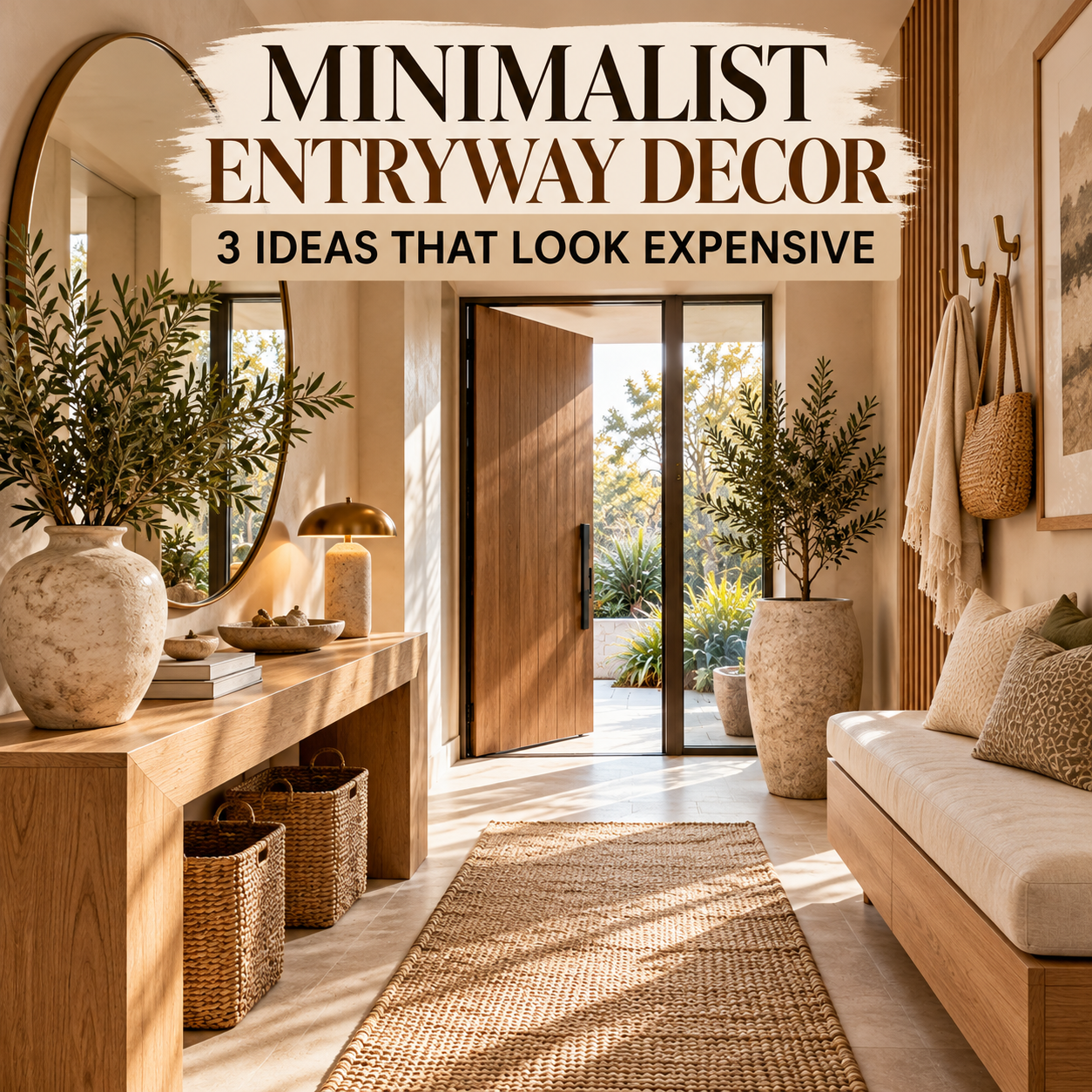
The beauty of minimalist decorating lies in creating an impressive atmosphere without filling every corner with furniture or accessories. Instead of relying on excessive decorations, a thoughtfully designed entryway uses clean silhouettes, balanced proportions, harmonious colors, and attractive textures to establish an immediate sense of elegance.
✨ The most luxurious entryways are not necessarily the largest or most expensive. They are the ones where every detail feels intentional.
A beautiful entrance should also make everyday life easier. There should be a convenient place to put your keys, somewhere to organize shoes, enough room to move comfortably, and a welcoming atmosphere that makes arriving home feel special.
These Best 3 Minimalist Entryway Decor ideas explore three distinctive approaches to designing a sophisticated entrance: architectural console styling, floating furniture arrangements, and a sculptural natural-material concept.
Each design offers a different personality while embracing the same essential philosophy of understated elegance.
Whether you are decorating a narrow apartment hallway, a small foyer, or a spacious entrance, these ideas will help you create a beautiful first impression without unnecessary clutter.
Why Minimalist Entryway Decor Makes a Home Feel More Expensive
A minimalist entrance creates an immediate feeling of order and sophistication.
When someone enters a home, the first impression is influenced by lighting, furniture arrangement, color harmony, and the amount of visual clutter. An overcrowded entrance can feel smaller and more chaotic, even when it contains attractive furniture.
A carefully edited entryway, however, allows the architecture and individual decorative elements to stand out.
Rather than competing for attention, every object contributes to a unified visual experience.
One particularly effective technique is to emphasize a single focal point. This might be a sculptural mirror, a beautifully crafted console table, an unusual pendant light, or a striking natural stone vessel.
The surrounding elements should support that focal point instead of distracting from it.
🌿 Natural materials also contribute to the luxurious atmosphere.
Warm oak, walnut, limestone, travertine, linen, ceramic, and brushed metal introduce subtle variations that make neutral spaces visually interesting.
These materials have distinctive textures that help a room feel warm and authentic rather than overly polished or artificial.
Minimalist Entryway Decor also works particularly well in homes where the entrance connects directly to a living room.
A consistent color palette and carefully selected furniture can create a smooth transition between spaces without requiring identical decorations throughout the house.
The result is an entrance that feels like a natural extension of the home’s interior design rather than an isolated decorating project.
🥇 Best 1 Minimalist Entryway Decor With an Architectural Console and Oversized Mirror
The first approach creates a refined, gallery-inspired entrance using a beautifully proportioned console table and one dramatic mirror.
This combination is particularly effective because it creates a strong focal point without requiring several decorative objects.
Imagine entering a peaceful contemporary home where a slim natural oak console sits against a warm ivory wall.
Above the console hangs a large, elegantly shaped mirror with a subtle bronze or dark walnut frame.
A beautiful ceramic vessel containing a few sculptural branches sits on one side of the console, while a small stone tray provides a practical place for everyday essentials.
The arrangement feels expensive because the materials, silhouettes, and proportions are carefully considered.
Nothing appears unnecessary.


Choose a Console Table With Beautiful Architectural Lines
The console table establishes the foundation of this design.
Instead of choosing furniture with ornate carvings, multiple decorative drawers, or complicated hardware, look for a piece featuring a simple but distinctive silhouette.
A slim oak console with gently rounded edges creates a warm contemporary feeling.
A walnut console with substantial rectangular legs introduces a more dramatic architectural appearance.
A narrow console with a limestone or travertine-inspired top adds another dimension of elegance through its natural surface pattern.
🪵 Beautiful materials can make simple furniture feel exceptionally sophisticated.
Proportion is more important than the price of the furniture.
A console that is too deep may obstruct movement, especially in narrow entryways.
A piece that is too small can appear visually insignificant beneath a large mirror.
For compact spaces, a console approximately 10–14 inches deep may provide useful surface space without occupying too much of the walkway. Always measure the actual clearance before purchasing.
The goal is to create a piece that visually anchors the wall while leaving the entrance open and comfortable.
Use One Oversized Mirror as the Main Statement
An oversized mirror can transform the entire atmosphere of an entrance.
Mirrors reflect available light, introduce depth, and provide a convenient place for checking your appearance before leaving home.
However, the mirror’s shape should complement the console rather than simply repeat it.
For example, a rectangular console with sharp architectural lines can look particularly beautiful beneath a softly rounded mirror.
An elegant oval mirror can soften a contemporary entrance dominated by straight walls and geometric furniture.
An irregular organic mirror can create a subtle artistic statement while preserving a minimalist atmosphere.
🪞 The frame also influences the design.
A thin antique bronze frame feels elegant and understated.
A frameless mirror creates a seamless contemporary look.
A natural walnut frame introduces warmth and works particularly well with ivory, stone, and beige interiors.
Choose a mirror that feels substantial enough to become the main decorative feature without overwhelming the available wall space.
Style the Console With Three Carefully Selected Elements
One of the easiest ways to make a console appear professionally styled is to limit the arrangement to a few objects with different heights and functions.
Begin with one tall element.
This could be a beautiful ceramic vase containing fresh branches, delicate foliage, or sculptural dried botanicals.
Next, introduce a smaller practical object, such as a shallow stone bowl for keys.
Finally, add one understated decorative piece, perhaps a small handcrafted sculpture or a low ceramic vessel.
The objects should differ in height, shape, and visual weight.
However, they should share a coordinated material palette.
For example, an ivory ceramic vase, pale limestone tray, and dark walnut decorative object can create an elegant arrangement without introducing additional colors.
Leave a generous portion of the tabletop empty.
The remaining negative space allows the individual pieces to feel more important.
Introduce Subtle Lighting for a Warm Gallery Atmosphere
Lighting can make this console arrangement feel dramatically more luxurious after sunset.
A small table lamp with a linen shade creates warm ambient light while introducing another attractive texture.
Alternatively, a single wall sconce above or beside the console can create a more architectural effect.
Warm white lighting around 2700K often works beautifully for a welcoming residential entrance.
Avoid overly bright lighting that creates harsh reflections across the mirror or makes the space feel clinical.
A carefully positioned light source should highlight the wood grain, ceramic surfaces, and natural textures without dominating the composition.
This first Minimalist Entryway Decor concept is especially suitable for homeowners who appreciate timeless contemporary interiors and want a sophisticated statement without excessive decoration.
🥈 Best 2 Minimalist Entryway Decor With a Floating Bench and Hidden Wall Storage
The second approach combines visual lightness with practical organization.
This design is particularly appealing in compact homes where traditional entryway furniture may occupy too much floor space.
Instead of placing a large cabinet or freestanding bench against the wall, the entrance features a beautifully crafted floating bench with integrated concealed storage and carefully positioned wall hooks.
The floor remains visually open, making the entrance feel lighter and less crowded.
Imagine a narrow apartment hallway with warm white walls, natural oak flooring, and a streamlined floating bench.
A slim upholstered cushion adds comfort, while a discreet storage compartment keeps everyday accessories out of sight.
Above the bench, a small arrangement of minimal hooks provides a convenient place for frequently used jackets and bags.
The overall appearance is calm, practical, and sophisticated.

Install a Floating Bench to Create Visual Space
A floating bench offers an appealing combination of form and function.
Because the bench is attached to the wall rather than supported by visible legs, it creates a sense of openness beneath the seating area.
This uninterrupted view of the floor can be particularly effective in narrow entrances.
A floating bench made from solid-looking oak or walnut introduces warmth without requiring complicated decorative details.
A design with slightly rounded edges can soften the architectural appearance.
For additional comfort, a slim upholstered cushion in natural linen, oatmeal, or warm gray may be added.
The cushion should fit neatly within the dimensions of the bench rather than hanging loosely over the edges.
🪑 The goal is to make the seating look integrated into the architecture rather than added as an afterthought.
Wall-mounted seating must be properly supported by structural framing or a suitable engineered mounting system. Its load capacity should be confirmed before use, especially where people will regularly sit to put on shoes.
A professionally installed bench can become an elegant and practical feature that contributes to the room’s overall architectural character.
Conceal Everyday Clutter Behind Minimal Storage
A beautiful entrance must be able to accommodate real life.
Shoes, umbrellas, keys, small bags, and seasonal accessories can quickly disrupt the appearance of an otherwise carefully decorated space.
The solution is not necessarily to remove all these items.
It is to provide convenient storage that prevents them from remaining constantly visible.
A floating bench with a lift-up compartment or integrated drawer can accommodate smaller accessories.
A shallow wall-mounted shoe cabinet may be another suitable option, especially when floor space is limited.
For a seamless appearance, choose cabinet fronts without prominent decorative hardware.
Push-to-open mechanisms or discreet recessed handles can help preserve the minimalist silhouette.
Storage finishes should coordinate with the surrounding architecture.
A warm white cabinet against an ivory wall can appear visually subtle, while a natural oak cabinet introduces a controlled amount of contrast.
Hidden storage allows the entrance to remain practical without compromising its sophisticated appearance.
Create an Organized Wall With Minimal Hooks
Wall hooks are an everyday necessity in many entrances, but their appearance can influence the overall design.
Instead of installing a large decorative coat rack with numerous visible attachments, choose a small number of well-spaced hooks that suit the household’s needs.
Brushed stainless steel, matte black, natural wood, and aged brass are attractive options.
A row of matching wooden pegs can create a warm Scandinavian feeling.
Minimal metal hooks offer a more architectural appearance.
For an especially refined result, choose hooks that fold away when not being used.
🚪 The arrangement should feel orderly even when coats or bags are hanging.
Consider the size and weight of the items that will be stored.
Bulky winter coats require more space than lightweight jackets, while heavy bags need secure mounting.
Avoid positioning hooks where hanging objects obstruct a doorway or interfere with the circulation space.
Add One Vertical Accent Without Crowding the Wall
Minimalist Entryway Decor can still include personality.
The important distinction is that decorative elements should enhance the functional design rather than compete with it.
Above or beside the floating bench, consider one understated framed artwork.
A monochromatic abstract composition, architectural photograph, or textured neutral artwork can introduce visual interest.
Choose a frame in a material that complements the bench or hardware.
Another option is a narrow wall-mounted light that creates a soft pool of illumination.
This can highlight the bench and provide useful lighting when entering the home at night.
If the entrance receives natural light, the arrangement may need very little additional decoration.
The warmth of the wood, the softness of the cushion, and the carefully positioned hooks can provide enough visual character.
Keep the Floor Almost Completely Clear
The strongest feature of this design is the sense of openness.
Avoid filling the area beneath the bench with numerous decorative baskets or exposed shoe racks.
If additional storage is essential, choose one container that fits neatly within the available space and coordinates with the rest of the design.
In a particularly narrow entrance, leaving the floor entirely clear may produce the most visually effective result.
A small, low-profile entry mat can provide practical protection for the flooring without visually dominating the area.
This second concept is ideal for apartments, townhouses, and compact homes where maximizing usable space is just as important as creating a beautiful interior.
🥉 Best 3 Minimalist Entryway Decor With Sculptural Stone and Organic Natural Materials
The third approach introduces a more artistic atmosphere inspired by refined contemporary interiors and natural architecture.
Instead of relying primarily on traditional entryway furniture, this design emphasizes sculptural forms, tactile materials, and a restrained earth-toned palette.
Imagine a sophisticated entrance with soft plaster walls, pale natural stone flooring, and a striking sculptural pedestal positioned against one wall.
A large handcrafted ceramic vessel sits on the pedestal, displaying a single architectural branch.
Nearby, an elegant wooden stool or narrow bench provides a subtle functional element.
The space feels almost like a private art gallery, yet the natural materials prevent it from becoming cold or impersonal.
This style is especially effective in entrances with interesting architectural features or enough floor space to appreciate a freestanding focal point.

Introduce a Sculptural Pedestal as a Focal Point
A sculptural pedestal creates immediate visual interest without requiring multiple decorative accessories.
The pedestal might be a simple limestone block, a cylindrical plaster-finish column, or a beautifully shaped wooden stand.
Its form should feel substantial but not excessively ornate.
A cylindrical pedestal can soften entrances dominated by rectangular walls and doors.
A square stone pedestal introduces a more structured architectural appearance.
A pedestal featuring subtle natural variations in color can become an attractive decorative object even before anything is placed on top.
✨ One memorable sculptural element can create more visual impact than an entire collection of small decorations.
The key is to select a focal point that has enough presence to command attention without restricting movement.
Pedestals should be stable, appropriately placed, and kept away from tight circulation paths where they could be knocked over.
In homes with children or pets, a low, securely positioned sculptural object may be safer than a tall, top-heavy arrangement.
Combine Travertine Inspired Textures With Warm Wood
Natural stone and wood create a sophisticated combination because their contrasting textures complement one another.
Stone brings a feeling of permanence, structure, and quiet elegance.
Wood introduces warmth, organic variation, and a welcoming residential atmosphere.
A travertine-inspired pedestal can look beautiful beside a dark walnut stool.
A pale limestone surface pairs elegantly with natural oak.
Warm cream-colored stone can also complement smoked wood finishes for a more dramatic appearance.
The materials do not need to match exactly.
In fact, slight variations in tone can make the space feel more authentic.
However, the overall palette should remain controlled.
For example, ivory walls, sandy stone, warm oak, and dark bronze accents create a cohesive combination that feels luxurious without becoming visually busy.
Avoid introducing too many unrelated finishes.
The richness should come from the natural characteristics of the materials rather than an excessive number of competing colors.
Decorate With One Oversized Organic Arrangement
An organic arrangement provides the perfect finishing touch for a sculptural entryway.
Instead of using a large bouquet with numerous flower varieties and bright colors, choose something more architectural.
A tall branch with a distinctive silhouette can look beautiful inside a handmade ceramic vessel.
Fresh olive branches create a soft Mediterranean feeling.
Simple eucalyptus stems offer gentle movement and muted green tones.
Bare branches can establish an understated artistic presence, especially during the cooler months.
The container should complement the organic arrangement.
A large matte ceramic vessel in warm white, charcoal, or earthy beige can provide visual weight without competing with the branches.
Keep the composition slightly asymmetrical.
Perfect symmetry can sometimes make organic arrangements feel overly formal.
A few carefully selected stems with different directions and heights create a more natural appearance.
Use Textured Walls to Add Depth Without Extra Decor
Wall finishes can dramatically influence the character of a minimalist entrance.
A perfectly smooth white wall produces a clean contemporary appearance, but subtle texture can introduce additional depth and warmth.
Limewash-inspired paint, fine plaster textures, and softly mottled neutral finishes can create beautiful variations when illuminated by natural or artificial light.
These finishes work especially well with stone and wood because they share an organic visual quality.
The effect should remain subtle.
Strong patterns or highly contrasting textures may compete with the sculptural focal point.
Choose soft warm white, pale mushroom, sand, or light greige tones that enhance the natural materials.
In a narrow entryway, a gentle textured finish on one focal wall may be enough.
The surrounding walls can remain smooth to preserve a balanced atmosphere.
Finish With Soft Architectural Lighting
Sculptural objects become particularly beautiful when illuminated with carefully directed light.
A discreet ceiling spotlight can emphasize the texture of a ceramic vessel or stone pedestal.
A wall washer can highlight subtle plaster variations.
An understated pendant may provide ambient illumination when ceiling height and door clearance allow.
The lighting should reveal the shapes and textures without creating distracting glare or harsh shadows.
Warm lighting is particularly appealing because it enhances the natural tones of oak, walnut, limestone, and ceramic.
This third Minimalist Entryway Decor concept is ideal for homeowners who prefer artistic interiors, organic modern design, and the understated richness of natural materials.
Comparing the Best 3 Minimalist Entryway Decor Ideas
Each design approach offers a distinctive balance of elegance, practicality, and visual character.
The best choice depends on the size of the entrance, the storage required, and the atmosphere you want to create.
| Design Idea | Main Feature | Best For | Color Palette | Key Advantage |
|---|---|---|---|---|
| 🥇 Architectural Console | Slim console and oversized mirror | Medium and narrow entryways | Ivory, oak, bronze, taupe | Elegant focal point with everyday convenience |
| 🥈 Floating Bench | Wall-mounted seating and concealed storage | Small apartments and compact foyers | Warm white, natural wood, oatmeal | Maximizes visible floor space |
| 🥉 Sculptural Organic Design | Stone pedestal and natural materials | Spacious or architecturally interesting entrances | Limestone, sand, walnut, cream | Creates an artistic luxury atmosphere |
For households that need significant storage, the floating bench concept may offer the most practical solution.
For homeowners seeking a timeless and easily adaptable entrance, the architectural console arrangement is an excellent starting point.
The sculptural organic concept is particularly appealing when the entrance already has adequate storage elsewhere and can function primarily as a welcoming design statement.
All three approaches can be adapted to different budgets.
The most important factor is the quality of the overall composition rather than the number of expensive objects involved.
The Best Color Palettes for Minimalist Entryway Decor
Color plays a central role in determining whether a minimalist entrance feels welcoming or uninviting.
Although white is often associated with minimalism, an entirely white space is not the only option.
Warm neutral colors can produce a more layered and inviting atmosphere while preserving the simplicity of the design.
Warm Ivory and Natural Oak
This palette creates a soft, bright, and welcoming entrance.
Warm ivory walls provide a gentle backdrop for light oak furniture and subtle ceramic decorations.
A beige or oatmeal cushion introduces comfortable texture without interrupting the color harmony.
The result feels peaceful, approachable, and timeless.
This combination is particularly effective in entrances that receive limited natural light because the pale finishes help reflect available illumination.
Mushroom Taupe and Dark Walnut
For a more sophisticated and dramatic atmosphere, combine mushroom taupe walls with dark walnut furniture.
The darker wood introduces contrast and visual weight, while the muted wall color prevents the space from feeling harsh.
Add a small amount of aged bronze or soft brass for understated richness.
This palette looks particularly attractive in contemporary homes with dark doors, natural stone flooring, or warm architectural lighting.
Limestone Beige and Soft Charcoal
Limestone beige creates a subtle natural foundation that complements modern architectural elements.
Soft charcoal provides controlled contrast through a mirror frame, small sculptural object, or metal hardware.
The darker accents should remain limited.
Too many dark elements can make a compact entrance feel visually heavy.
A few strategically positioned charcoal details can help define the room without disrupting its calm atmosphere.
How to Make a Small Minimalist Entryway Look Bigger
Small entrances require thoughtful furniture selection.
A beautifully decorated foyer can still feel uncomfortable if the layout restricts circulation or creates obstacles around the front door.
The most successful small-space arrangements balance attractive styling with practical movement.
Begin by considering the natural pathway through the entrance.
Doors should open comfortably, and household members should be able to move through the area while carrying bags, groceries, or other everyday items.
Choose furniture that follows the proportions of the available space.
Narrow wall-mounted storage, shallow consoles, and compact benches can provide functionality without occupying excessive floor area.
Mirrors can help distribute available light and create a greater sense of depth.
However, their placement should be intentional.
A mirror positioned opposite a cluttered storage area may simply multiply the appearance of clutter.
Whenever possible, reflect an attractive wall, light source, or architectural feature.
💡 Lighting is equally important.
A small entrance with balanced lighting often feels more comfortable than a larger space illuminated by one harsh overhead fixture.
Use soft ambient illumination and add focused lighting where necessary.
Finally, allow some walls and floor areas to remain undecorated.
Open space is not an indication that the room is unfinished.
It is an important component of the minimalist composition.
How to Create Minimalist Entryway Decor on a Budget
A luxurious-looking entrance does not require an expensive renovation.
Many of the strongest improvements involve editing existing furniture, selecting one meaningful accent, and creating a more harmonious appearance.
Begin by removing items that do not belong in the entrance.
Relocate unnecessary decorations, outdated accessories, and frequently accumulating clutter.
This simple change can make the space feel noticeably more organized before any money is spent.
Next, examine the furniture already available.
An existing console may look entirely different after being refinished in a natural wood tone or painted a sophisticated neutral color.
Changing prominent hardware can also create a cleaner contemporary appearance.
A basic mirror can become a statement piece when positioned at the correct height and paired with a carefully styled surface.
Rather than buying multiple inexpensive decorations, consider purchasing one beautiful ceramic vessel or a well-made tray.
A single distinctive object often creates a stronger impression than several unrelated accessories.
Natural materials can also provide affordable visual interest.
A few responsibly gathered branches or simple greenery can introduce movement and texture without requiring elaborate floral arrangements.
For additional savings, explore secondhand furniture and vintage accessories.
A simple wooden bench, solid console, or understated ceramic vase may be available at a fraction of the price of comparable new pieces.
The important consideration is whether the object fits the intended design.
A bargain is only useful when it contributes to the overall composition.
Common Minimalist Entryway Decor Mistakes to Avoid
Even a carefully selected color palette and beautiful furniture may not create the desired effect if the proportions and organization are overlooked.
One common mistake is choosing decorative objects that are too small.
A large wall paired with several tiny accessories can appear fragmented rather than sophisticated.
One appropriately scaled mirror or framed artwork often creates a more cohesive result.
Another mistake is prioritizing appearance while ignoring everyday practicality.
A beautiful console that provides no convenient place for keys or frequently used accessories may quickly become cluttered.
Likewise, an elegant entrance without adequate shoe storage may struggle to maintain its clean appearance.
Excessive matching is another issue.
Using the same material, color, and finish on every object can make the space feel flat.
A more interesting approach combines complementary textures while maintaining a controlled palette.
For example, natural oak, matte ceramic, soft linen, and brushed bronze introduce variety without sacrificing harmony.
Finally, avoid copying elaborate styling arrangements that do not suit the actual size of the entrance.
A large decorative pedestal might look stunning in a spacious foyer but impractical in a narrow apartment hallway.
The most successful design always responds to the architecture and everyday needs of the home.
Important Note: Minimalist Entryway Decor should never compromise safe movement or essential access. Keep doorways, stairs, and required exit paths clear, secure wall-mounted furniture and heavy mirrors appropriately, and avoid tall unstable decorations in busy circulation areas. A beautiful entrance should remain comfortable and functional for everyone who uses it.
How to Maintain a Beautiful Minimalist Entryway Every Day
Creating a beautiful entrance is only the beginning.
Maintaining its appearance requires simple habits that prevent everyday objects from accumulating.
Establish a designated location for frequently used essentials.
Keys should have a consistent place, whether inside a small drawer or on a shallow tray.
Shoes should be stored in a cabinet or designated compartment rather than scattered across the floor.
Bags and coats should be returned to their assigned storage areas when not needed.
A practical organizational system makes these habits easier.
🧺 The goal is not to make the entrance look permanently unoccupied.
It is to create a space where everyday objects have logical places to belong.
Regular cleaning also helps preserve the elegant appearance of natural materials.
Dust can become particularly visible on dark wood, mirrors, and stone surfaces.
Use cleaning methods appropriate to each material and avoid harsh products that could damage delicate finishes.
For example, natural stone may require a cleaner specifically formulated for its surface.
Wood furniture should be maintained according to its finish.
A simple routine of returning items to their places and wiping frequently used surfaces can keep the entryway looking attractive without requiring extensive cleaning sessions.
Seasonal Styling Without Losing the Minimalist Look
A minimalist entrance does not need to look identical throughout the year.
Small seasonal changes can introduce freshness while preserving the carefully established design.
The key is to replace selected accents rather than continually adding more objects.
Spring Minimalist Entryway Styling
Spring provides an opportunity to introduce delicate greenery and lighter organic forms.
Replace winter branches with fresh foliage or a restrained arrangement of seasonal flowers.
Choose a simple ceramic vessel that complements the permanent furniture.
Soft green accents can look beautiful against ivory walls and natural oak.
Avoid introducing numerous brightly colored decorations that disrupt the established palette.
Summer Minimalist Entryway Styling
Summer styling can emphasize openness, light, and natural textures.
A simple arrangement of olive branches or leafy stems creates an airy appearance.
Natural linen, pale wood, and sandy ceramic finishes complement the relaxed atmosphere of the season.
If the entrance receives strong sunlight, lightweight visual elements can help preserve a bright and uncomplicated appearance.
A small woven accessory may introduce texture, but it should not compete with the room’s main focal point.
Autumn Minimalist Entryway Styling
Autumn welcomes deeper natural tones and richer textures.
A ceramic vase containing sculptural branches can replace a summer greenery arrangement.
Warm walnut, muted rust, olive, and mushroom tones complement the existing neutral foundation.
One small seasonal accent may be enough to suggest autumn without turning the entire entrance into a decorative display.
Soft lighting becomes particularly important as the days grow shorter.
Winter Minimalist Entryway Styling
Winter styling can introduce subtle warmth and architectural simplicity.
A few evergreen branches in a neutral vessel create a seasonal atmosphere.
A small decorative object in aged brass or dark ceramic can add depth.
Warm ambient lighting helps the entrance feel inviting during darker evenings.
Rather than filling every surface with seasonal decorations, focus on a single carefully styled focal point.
This approach allows the entrance to remain elegant throughout the year.
How to Choose the Right Minimalist Entryway Decor for Your Home
The ideal design depends on more than personal taste.
The architecture, lighting, available storage, and daily routines of the household should guide the decision.
If the entrance features a long empty wall and sufficient circulation space, an architectural console with an oversized mirror can establish an elegant focal point.
This arrangement is versatile and can adapt easily to changes in interior style.
For a compact apartment where shoes and accessories need organized storage, a floating bench with concealed compartments may be more practical.
Its streamlined silhouette allows the space to remain visually open while providing useful everyday functionality.
In a spacious foyer with existing closets or separate storage, a sculptural natural-material arrangement can become a beautiful decorative statement.
The additional floor area allows larger artistic forms to be appreciated without obstructing movement.
Before making purchases, measure the entrance carefully.
Consider the width of the walkway, the swing of the front door, the location of electrical outlets, and the amount of natural light.
Evaluate which items are used daily and where they can be stored conveniently.
Then choose a single design direction and build around it.
A cohesive plan generally produces a more sophisticated result than buying attractive pieces individually and trying to combine them afterward.
Final Thoughts on the Best 3 Minimalist Entryway Decor Ideas
A beautiful entrance has the power to change how an entire home feels.
It creates the first impression for arriving guests and the final impression before leaving. More importantly, it can make everyday routines feel calmer, more organized, and more enjoyable.
The best Minimalist Entryway Decor ideas demonstrate that luxurious interiors do not depend on excessive furniture, elaborate accessories, or expensive renovations.
They depend on thoughtful proportions, beautiful materials, functional organization, and a clear visual direction.
🥇 An architectural console with an oversized mirror creates an elegant and timeless focal point that works beautifully in contemporary homes.
🥈 A floating bench with concealed storage combines sophisticated design with practical solutions for compact entrances.
🥉 A sculptural stone and organic-material arrangement introduces artistic character and understated luxury through texture, form, and natural beauty.
Whichever approach you choose, resist the temptation to fill every available surface.
Allow individual objects to stand out.
Choose materials that feel authentic.
Create convenient storage for everyday essentials.
And remember that a welcoming home does not need to be perfectly decorated to feel beautiful.
Sometimes, a simple wooden console, an elegant mirror, soft lighting, and one thoughtfully selected ceramic vase are all that is needed to transform an ordinary entrance into a stunning first impression.
The secret to an expensive-looking minimalist entryway is not having more but making every detail matter.
Related posts:
Best 3 Minimalist Shelf Decor Ideas That Make Any Shelf Look Effortlessly Expensive
Best 3 Painting Pumpkins Ideas DIY Girly That Look Super Cute and Expensive
Best 3 Apartment Laundry Room Ideas That Make Small Spaces Look Surprisingly Luxurious
Best 3 Crochet Table Decorations That Make Any Dining Table Look Beautiful and Expensive
Best 3 Fabric Ceiling Ideas That Will Make Any Room Look Stunning and Expensive

Best 3 Plastic Pumpkins Makeover Ideas That Look Surprisingly Expensive

