
Minimalist Coffee Table Decor can completely transform the appearance of a living room without requiring expensive furniture, dramatic renovations, or dozens of decorative accessories. Sometimes, the difference between an ordinary coffee table and one that looks professionally styled comes down to just a few carefully selected objects. A sculptural ceramic piece, an elegantly arranged collection of books, or a beautifully organized decorative tray can make an everyday surface feel sophisticated, inviting, and effortlessly luxurious.
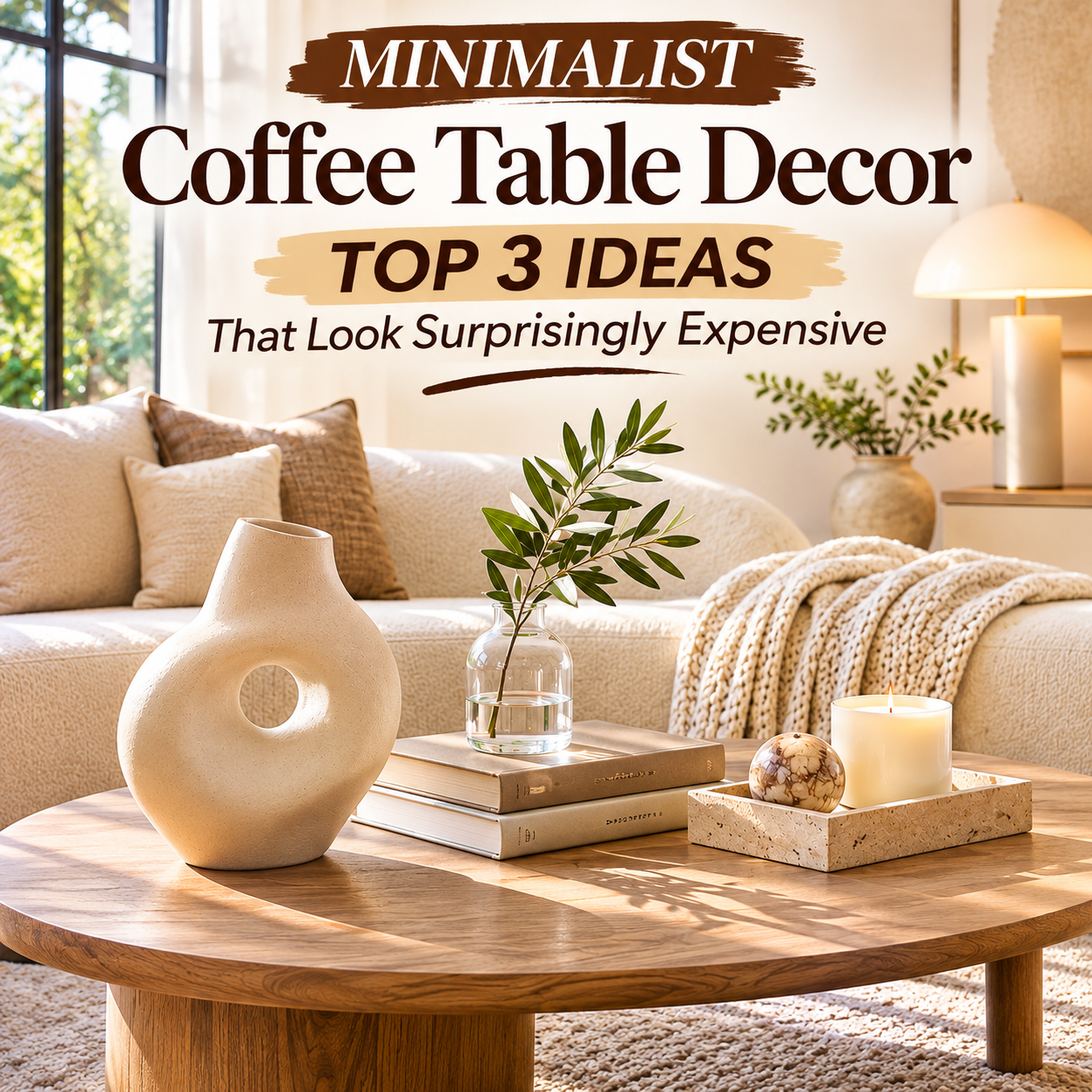
The secret is not simply decorating with fewer items. It is understanding how proportion, texture, negative space, and visual balance work together to create an arrangement that feels intentional. When every object has a clear purpose, even the simplest coffee table becomes an elegant focal point that enhances the surrounding furniture rather than competing with it.
✨ The most beautiful minimalist coffee table arrangements often feature only two or three complementary elements. Instead of filling the surface with random decorations, they create visual interest through thoughtful contrasts between materials, shapes, heights, and finishes.
Imagine a warm oak coffee table displaying a single handcrafted ceramic sculpture. Or picture a low travertine table featuring two oversized art books and a delicate glass vessel. Even a small apartment coffee table can look remarkably sophisticated when a carefully chosen tray brings order to everyday essentials.
These approaches demonstrate why minimalist decorating is so appealing. They allow homeowners to create luxurious-looking interiors without sacrificing comfort or practicality.
Whether your living room features contemporary furniture, Scandinavian simplicity, Japandi influences, or warm organic modern details, the following three minimalist coffee table decorating ideas offer beautiful ways to introduce personality while maintaining a clean, uncluttered atmosphere.
Why Minimalist Coffee Table Decor Can Make an Entire Living Room Feel More Luxurious
The coffee table occupies a unique position in most living rooms. It is often located at the center of the seating arrangement, making it one of the first surfaces people notice when entering the space.
Because of its prominent location, the way it is decorated can influence the appearance of the entire room.
A coffee table covered with unrelated items may make an otherwise beautiful living room feel cluttered. By contrast, an intentionally styled table creates a sense of visual calm that allows surrounding furniture, textiles, and architectural details to stand out.
Minimalist decorating achieves this effect by emphasizing quality, proportion, and simplicity.
Instead of using several inexpensive decorative pieces to fill every available corner, it encourages the selection of a few objects with distinctive shapes, pleasing textures, or meaningful personal connections.
A handcrafted stone bowl may introduce more character than five small decorative figurines. One beautifully designed art book can create a stronger visual impression than an assortment of magazines. A single architectural vase may be more memorable than a crowded arrangement of artificial flowers.
The result is a coffee table that appears carefully curated rather than excessively decorated.
The Power of Negative Space in Coffee Table Styling
Negative space refers to the empty areas surrounding decorative objects.
In minimalist coffee table styling, this empty space is not wasted. It is an essential part of the composition.
When objects are positioned too closely together, their individual shapes become difficult to appreciate. Each decorative element competes for attention, and the arrangement can begin to look visually confusing.
Leaving generous breathing room around accessories allows their forms, materials, and details to become more noticeable.
For example, a beautifully sculpted ceramic bowl placed slightly off-center on a wooden coffee table can create an elegant focal point even when the rest of the surface remains completely empty.
The surrounding wood becomes part of the visual design, emphasizing the bowl’s organic silhouette.
🌿 Negative space also improves functionality. An uncluttered table provides room for coffee cups, books, remote controls, and other everyday necessities without requiring decorative arrangements to be constantly rearranged.
Minimalist coffee table decor should look beautiful while remaining practical enough for daily living.
How Texture Creates Interest Without Visual Clutter
Minimalism does not require every object to have a perfectly smooth surface or a matching finish.
In fact, combining a few contrasting textures often produces the most sophisticated results.
A matte ceramic vase creates an interesting contrast against polished glass. Rough limestone brings depth to a smooth walnut surface. A linen-covered book softens the appearance of a metal tray.
These subtle material differences introduce dimension without relying on bright colors or excessive ornamentation.
The key is maintaining consistency in the overall visual atmosphere.
For example, a coffee table arrangement might combine warm ivory ceramic, pale oak, and soft beige linen. Although the materials differ, the cohesive color palette allows them to feel harmonious.
This approach is particularly effective when the surrounding living room already contains textured upholstery, natural wood furniture, or understated architectural features.
The coffee table becomes a continuation of the room’s visual language rather than a separate decorative display.
🥇 Best 1 Minimalist Coffee Table Decor With a Single Sculptural Statement Piece
The first and most visually confident approach involves transforming the coffee table into a miniature art gallery.
Instead of arranging numerous decorative accessories, select one exceptional sculptural object and allow it to become the unmistakable centerpiece.
This approach works especially well for homeowners who appreciate contemporary art, architectural interiors, and quietly luxurious spaces.
Picture a magnificent oval travertine coffee table positioned in front of a soft cream sofa. At its center sits a handcrafted ivory ceramic sculpture with graceful asymmetric curves.
The sculpture has an organic silhouette, a softly textured surface, and subtle variations in its natural finish.
Nothing else competes with it.
The empty stone surface surrounding the sculpture creates an elegant sense of openness, while daylight passing through nearby windows emphasizes the delicate contours of the object.
The composition feels sophisticated because every detail is deliberate.


Choose an Architectural Object With a Distinctive Shape
The success of sculptural minimalist coffee table decor depends heavily on the shape of the centerpiece.
Objects with interesting silhouettes are particularly effective because they remain visually engaging even without colorful patterns or elaborate embellishments.
Consider an abstract ceramic sculpture featuring flowing curves, an asymmetrical stone object, a handcrafted wooden form, or a low decorative vessel inspired by contemporary sculpture.
These objects can introduce artistic personality without overwhelming the table.
Rounded shapes often create a softer, more inviting atmosphere. They are particularly suitable for living rooms containing angular sofas, rectangular rugs, and straight architectural lines.
Conversely, a sculptural object with geometric edges can introduce structure to a room dominated by curved furniture.
The most compelling arrangements create a gentle visual contrast between the object and its surroundings.
For instance, an irregular ivory sculpture looks especially striking against a rectangular dark walnut table.
A smooth spherical stone object can soften a sharp-edged glass coffee table.
An elongated wooden sculpture can introduce natural warmth to a polished concrete surface.
🎨 The goal is to create a focal point that looks interesting from several viewing angles, not merely from the perspective of a photograph.
Experiment With Handmade Ceramic Sculptures
Handmade ceramics are particularly well suited to minimalist coffee table decorating because their subtle imperfections introduce warmth and individuality.
Unlike mass-produced decorative items with identical finishes, handcrafted ceramic objects often feature slight variations in shape, texture, and color.
These differences make each piece feel personal.
A matte white ceramic sculpture may contain delicate grooves or irregular edges that become more visible as sunlight changes throughout the day.
A sand-colored stoneware vessel can introduce earthy softness without overpowering surrounding furniture.
A sculptural ceramic knot may create an elegant contemporary statement through its intertwined shape.
When selecting a piece, consider its relationship to the table’s overall dimensions.
A very small sculpture placed on a large coffee table may appear insignificant. An oversized decorative object on a compact table can feel awkward and impractical.
A useful starting point is choosing a centerpiece that occupies approximately one-quarter to one-third of the table’s visible surface, although the ideal proportion depends on its shape and the amount of functional space required.
The arrangement should feel visually substantial without preventing everyday use.
Use Natural Stone for an Understated Luxury Aesthetic
Natural stone accessories create a particularly sophisticated impression because they combine visual simplicity with substantial material presence.
Travertine, limestone, marble, and soapstone each offer distinctive textures and color variations.
A pale travertine sculpture may feature delicate pores and warm cream undertones. A smooth marble bowl can introduce soft veining. A limestone sphere contributes organic texture through its understated surface.
These details become especially beautiful when natural daylight moves across the coffee table.
For a cohesive aesthetic, consider pairing contrasting stone finishes.
A creamy marble object can look beautiful against dark wood. A rough limestone piece may provide depth on a polished stone table. A dark soapstone vessel can create a striking contrast against pale oak.
However, avoid placing hard stone accessories directly onto delicate surfaces without protection.
Soft felt pads or discreet protective bases help prevent scratches while preserving the clean appearance of the arrangement.
Master the Art of Off Center Placement
A common decorating instinct is to position every accessory in the exact center of the coffee table.
Although symmetrical placement can look elegant, an off-center composition often creates a more relaxed and sophisticated impression.
Place the sculptural object slightly toward one side of the table rather than directly in the middle.
This positioning introduces subtle visual movement while leaving a larger uninterrupted surface available for everyday use.
On a rectangular coffee table, the sculpture might sit closer to one end, creating a pleasing contrast between the decorated and undecorated areas.
On a round table, position the object slightly away from the center to avoid making the arrangement appear overly formal.
On an irregular organic-shaped table, consider placing the sculpture where the curve of the tabletop naturally directs attention.
The resulting composition should feel balanced rather than mathematically symmetrical.
When This Minimalist Coffee Table Decor Style Works Best
Single-object styling is especially effective in rooms where furniture, artwork, or architectural details already provide visual interest.
A living room with a statement sofa, beautifully textured rug, or impressive floor-to-ceiling windows may not need an elaborate coffee table arrangement.
One sculptural object is often enough to complete the atmosphere.
This approach is also ideal for people who prefer quick cleaning routines.
With only one accessory to move, dusting and maintaining the coffee table becomes considerably easier.
✨ The most compelling quality of this design is its restraint. Rather than making the table look unfinished, the empty space helps the chosen object feel more significant.
🥈 Best 2 Minimalist Coffee Table Decor With Curated Art Books and a Delicate Vessel
The second approach introduces a more layered and editorial aesthetic while maintaining the simplicity that defines minimalist decorating.
Instead of relying on a single sculptural object, this composition combines carefully selected coffee table books with one small decorative vessel.
The arrangement feels intellectual, artistic, and personal.
It is particularly suitable for homeowners who enjoy photography, architecture, travel, fashion, interior design, or visual storytelling.
Imagine a beautifully finished walnut coffee table displaying two oversized hardcover books in muted ivory and taupe.
Their covers feature understated typography and elegant photography.
Resting beside the books is a small hand-blown glass vessel containing a single delicate branch.
The books introduce horizontal structure, while the vessel creates a subtle vertical accent.
Together, they form an arrangement that feels relaxed yet thoughtfully curated.

Select Coffee Table Books That Reflect Your Personal Interests
Coffee table books are popular decorative accessories, but their greatest value comes from the stories and interests they represent.
Rather than selecting books solely because their covers match the living room, choose subjects that genuinely appeal to you.
A photography enthusiast might display a beautifully printed collection of architectural landscapes.
Someone who enjoys travel may prefer books featuring Mediterranean villages, Scandinavian cabins, or historic European cities.
Art lovers might choose publications exploring modern sculpture, abstract painting, or contemporary design.
These books become natural conversation starters while contributing visual character to the table.
The most successful minimalist arrangement usually features one or two substantial books rather than a large stack.
Oversized hardcovers often work particularly well because their proportions create a stronger visual foundation.
If the covers feature different colors, look for a connecting element such as similar typography, muted tones, or complementary imagery.
A warm beige photography book can pair beautifully with a charcoal architecture volume.
A soft ivory design book may complement a muted sage-green publication.
The combination should feel collected rather than excessively coordinated.
Create an Elegant Layered Book Arrangement
Layering is a useful styling technique because it creates visual depth without requiring many objects.
Begin with the largest book as the foundation.
Place a slightly smaller book on top, allowing part of the lower cover to remain visible.
For a deliberately relaxed effect, the upper book can be shifted slightly rather than aligned perfectly with the edges below.
This subtle irregularity makes the composition feel more natural.
Alternatively, position two books side by side if the coffee table is wide enough.
The second option creates a flatter and more open composition, particularly suitable for low-profile contemporary furniture.
Consider the thickness of the books as well.
Two substantial volumes may provide enough height to support a small accent object without requiring additional accessories.
Avoid creating a tall stack that becomes inconvenient when people want to browse the books or use the table.
📚 A coffee table book arrangement should invite interaction. The books should remain easy to open, remove, and enjoy rather than functioning only as decorative props.
Introduce a Delicate Glass or Ceramic Vessel
Once the books have established the horizontal foundation, introduce a single vessel to create contrast.
A small clear-glass vase can add visual lightness to a dark wooden table.
An ivory ceramic bud vase provides softness beside glossy book covers.
An amber glass vessel introduces subtle warmth without requiring a dramatic color change.
The vessel should remain relatively simple so it does not compete with the books.
Consider a narrow-necked vase containing one slender botanical stem.
A single olive branch, eucalyptus sprig, or delicate dried botanical element can introduce organic movement without creating an oversized floral display.
Fresh greenery works particularly well in rooms with plenty of natural light.
Dried stems are convenient for homeowners who prefer low-maintenance arrangements.
If the books feature particularly bold cover artwork, an empty sculptural vessel may be the better choice.
The object can contribute height and texture without adding another visual element.
Balance Horizontal and Vertical Elements
One of the reasons book-and-vessel arrangements look so polished is the contrast between horizontal and vertical forms.
Books naturally create broad, flat layers.
A narrow vase or small botanical arrangement introduces height.
Combining these elements prevents the composition from appearing excessively flat while keeping the overall number of objects low.
The height difference should feel intentional rather than dramatic.
A tall arrangement that obstructs conversation across the sofa may be visually impressive but impractical.
For most everyday coffee tables, low decorative objects are preferable because they preserve sightlines between people sitting opposite each other.
If using a delicate branch, choose one with an airy silhouette rather than a dense bouquet.
The negative space between its leaves or stems helps maintain a light and uncluttered feeling.
This composition is especially effective when viewed from the side, where the layered books and upright vessel create a gentle rhythm.
Coordinate Book Colors With the Coffee Table Finish
Color coordination can transform a simple collection of books into an elegant decorative feature.
However, coordination does not require matching every object perfectly.
Instead, aim for complementary undertones.
For a light oak coffee table, ivory, oatmeal, charcoal, and muted olive book covers can create a beautiful Scandinavian-inspired palette.
For a dark walnut table, cream, warm gray, muted bronze, and soft taupe offer sophisticated contrast.
For a marble coffee table, books in charcoal, ivory, soft beige, or deep chocolate may help emphasize the stone’s natural veining.
Glass tables often benefit from books with visually substantial covers because their solid forms provide contrast against the transparent surface.
The most important consideration is balance.
If the table already features dramatic grain or strong stone veining, choose relatively quiet book covers.
If the table has a simple matte finish, a book with slightly more distinctive artwork may introduce welcome personality.
Add Personal Meaning Without Creating Clutter
Minimalist design becomes especially appealing when decorative objects have personal significance.
A favorite photography book may remind someone of a memorable journey.
A small handmade vase might have been purchased from a local artisan.
A beautiful architecture volume may reflect a long-standing interest in design.
These associations make the arrangement feel more authentic.
Rather than repeatedly purchasing new accessories to follow decorating trends, thoughtful homeowners can gradually develop a collection of meaningful objects.
The coffee table then becomes a small, evolving display of personal interests.
A single book can be replaced occasionally to refresh the composition.
A botanical stem can change with the seasons.
A cherished handmade vessel can remain a permanent feature.
This approach allows the arrangement to evolve naturally without requiring constant spending.
When This Minimalist Coffee Table Decor Style Works Best
Book-and-vessel styling works particularly well in living rooms where relaxation, reading, and conversation are important.
It creates an inviting atmosphere without making the table overly formal.
The arrangement also suits households that enjoy displaying personal collections but prefer a restrained decorative aesthetic.
Unlike a purely sculptural centerpiece, books introduce an interactive element that people can genuinely use.
The result is a coffee table that feels both beautiful and lived in.
✨ For an especially refined composition, select two beautiful books and one understated vessel, then leave the remaining tabletop comfortably open.
🥉 Best 3 Minimalist Coffee Table Decor With a Refined Tray and Everyday Essentials
The third approach combines minimalist beauty with practical organization.
Rather than treating the coffee table as a purely decorative surface, it creates a dedicated area for a few everyday essentials.
A carefully chosen tray becomes the foundation of the arrangement, keeping frequently used items visually organized while preserving the rest of the table.
This approach is particularly useful for small living rooms, busy households, and anyone who prefers decorating solutions that simplify daily routines.
Imagine a rectangular natural oak coffee table with a low-profile travertine tray positioned toward one side.
Inside the tray sits a small ceramic cup holding a pair of reading glasses, a simple covered container for small essentials, and a beautifully shaped decorative stone.
The objects are practical but aesthetically coordinated.
Their arrangement creates a sense of order without making the coffee table look sterile.
The surrounding tabletop remains clear, providing plenty of space for drinks, snacks, or casual activities.

Choose a Decorative Tray That Complements the Table
The tray is the visual foundation of this minimalist coffee table arrangement.
Its shape, material, and proportions determine how the smaller objects relate to one another.
A rectangular tray introduces structure and works beautifully on round or organic-shaped coffee tables.
A circular tray can soften a rectangular coffee table.
An oval tray creates a graceful compromise between geometric precision and organic movement.
Material selection is equally important.
A wooden tray introduces warmth and natural character.
A marble or travertine tray creates a refined architectural appearance.
A matte metal tray offers a contemporary aesthetic, particularly when paired with dark wood or stone.
For a more tactile composition, a leather-covered tray can introduce understated luxury while keeping the overall arrangement visually quiet.
Avoid trays with excessively ornate handles, dramatic patterns, or distracting embellishments when aiming for a truly minimalist appearance.
The tray should organize the composition rather than become a competing focal point.
Establish a Simple Three Object Arrangement
A useful way to create a balanced tray display is to begin with three objects that serve different purposes.
The first can provide practical storage, such as a small lidded ceramic container for remote controls or other compact essentials.
The second can introduce visual interest, such as a smooth decorative stone, shallow sculptural bowl, or handcrafted wooden accent.
The third can add warmth or softness, such as a small bud vase or a simple coaster set.
These three objects create a complete arrangement without requiring unnecessary additions.
However, the number is not a strict rule.
A particularly small tray may look better with only two pieces.
A large tray may accommodate three accessories comfortably while still leaving visible space between them.
The goal is to create a composition that looks intentional rather than crowded.
Try varying the shapes of the objects.
A cylindrical container, low oval bowl, and small irregular vessel can create gentle visual contrast.
Keeping the color palette consistent allows the different shapes to remain harmonious.
Transform Everyday Essentials Into Attractive Details
One of the most practical advantages of tray-based decorating is its ability to bring order to objects that would otherwise appear scattered.
Remote controls, coasters, reading glasses, and small personal items often accumulate on coffee tables throughout the day.
Instead of attempting to eliminate these necessities, incorporate discreet storage solutions into the arrangement.
A small lidded box can conceal a remote control if its dimensions allow.
A shallow bowl may hold a pair of reading glasses.
A compact container can organize coasters.
These simple additions preserve functionality while making the surface look considerably more polished.
Choose containers with finishes that complement the surrounding decorative elements.
For example, a matte ivory ceramic box may coordinate beautifully with a travertine tray.
A dark wooden container can add visual depth to a pale oak table.
A smooth leather-covered storage box may suit an elegant contemporary living room.
Practical items do not need to disappear completely. They simply benefit from having a designated place.
Design a Beautiful Minimalist Coffee Ritual
Coffee tables are naturally associated with relaxing moments, making them excellent places to create a small daily ritual.
For people who enjoy a quiet morning coffee or an afternoon tea, a tray can organize a few items that make these moments feel more intentional.
Consider a compact arrangement featuring a ceramic cup, a matching coaster, and a small decorative dish.
During everyday use, the tray can serve as a temporary landing place for drinks and small accessories.
When the drinks are removed, the remaining objects maintain a clean decorative appearance.
A handmade espresso cup in a warm oatmeal glaze may look especially beautiful beside a pale stone tray.
A dark ceramic cup can introduce elegant contrast to an ivory tabletop.
A simple glass tumbler can feel fresh and contemporary when placed beside natural wood.
☕ The pleasure of this styling approach comes from combining ordinary routines with beautiful materials. The arrangement should enhance daily comfort rather than create a display that people are afraid to touch.
For homes with children or active pets, choose sturdy accessories and avoid leaving hot drinks, fragile objects, or unstable decorative pieces unattended.
Keep the Tray Easy to Move
A decorative tray should improve convenience, not create additional work.
One of the most useful features of a tray-based arrangement is the ability to move several objects at once.
When the coffee table is needed for a board game, casual meal, or family activity, the entire tray can be relocated.
This makes it easier to maintain a consistently organized surface.
However, the tray itself should not become too heavy.
Large stone trays can look magnificent, but their weight may make daily movement inconvenient.
For households that frequently rearrange their coffee table, a lightweight wooden or metal tray may be more practical.
Choose a stable base and avoid overfilling the tray with fragile accessories.
Keep handles accessible if the design includes them.
The most successful tray arrangements combine an attractive appearance with effortless everyday use.
Create Contrast Between the Tray and the Table
Subtle material contrast can make a tray arrangement look more sophisticated.
A light travertine tray creates an elegant focal point on a dark walnut table.
A black metal tray can add structure to a pale oak surface.
A natural wooden tray may introduce warmth to a glossy marble tabletop.
The contrast should be visible without becoming overly dramatic.
For example, pairing a warm beige stone tray with a similarly colored wood table creates a soft tonal composition.
The two materials differ in texture but remain connected through their warm undertones.
By contrast, a dark bronze tray placed on a cream table creates stronger definition.
Both approaches can look beautiful.
The ideal choice depends on whether the surrounding room feels soft and understated or more architectural and graphic.
When This Minimalist Coffee Table Decor Style Works Best
Tray-based styling is particularly suitable for living rooms that serve several purposes.
A family coffee table may need to accommodate drinks, remote controls, books, and occasional activities.
A compact apartment may have limited space for additional storage furniture.
A busy household may prioritize easy cleaning and quick organization.
In each situation, a tray provides a practical decorative solution.
Rather than requiring the table to remain perfectly untouched, the arrangement makes daily use feel naturally integrated into the design.
The result is a coffee table that looks organized, welcoming, and beautifully considered.
Comparing the Best 3 Minimalist Coffee Table Decor Ideas
Although all three approaches emphasize simplicity, they create different visual impressions and serve different lifestyles.
The following comparison highlights their individual strengths.
| Styling Approach | Main Decorative Elements | Overall Appearance | Best For | Maintenance |
|---|---|---|---|---|
| 🥇 Single Sculptural Statement | One ceramic, stone, or wooden sculpture | Artistic, architectural, luxurious | Contemporary living rooms and design-focused interiors | Very low |
| 🥈 Curated Books and Delicate Vessel | One or two art books and a small vase | Editorial, personal, sophisticated | Reading spaces and cozy modern living rooms | Low |
| 🥉 Refined Tray and Everyday Essentials | Decorative tray, compact storage, and one accent | Organized, practical, understated | Small apartments and multifunctional living rooms | Low to moderate |
The most suitable option depends on how the coffee table is used.
If the main goal is creating a dramatic yet uncluttered focal point, the single-sculpture approach offers exceptional simplicity.
For a more personal and inviting atmosphere, curated books introduce character and encourage interaction.
If daily functionality is the priority, tray-based organization provides an elegant balance between decoration and convenience.
None of these styles requires an expensive collection of accessories.
Their effectiveness comes from making careful choices and allowing each object enough space to be appreciated.
How to Choose the Right Minimalist Coffee Table Decor for Different Table Shapes
The shape of the coffee table influences how decorative objects should be arranged.
A composition that looks balanced on a rectangular table may not work as effectively on a round or irregular surface.
Understanding these differences helps create a more harmonious result.
Minimalist Coffee Table Decor for Round Tables
Round coffee tables naturally encourage softer, more organic arrangements.
Their curved edges work beautifully with sculptural objects, circular trays, and compact botanical displays.
For a single-object composition, consider an asymmetrical ceramic sculpture positioned slightly away from the center.
If using books, choose a relatively compact stack and pair it with a small vessel to avoid overwhelming the curved surface.
A round tray can create a cohesive appearance, while a rectangular tray introduces geometric contrast.
The main consideration is preserving enough visible tabletop to appreciate its shape.
An oversized arrangement can make a small round table appear crowded.
Minimalist Coffee Table Decor for Rectangular Tables
Rectangular coffee tables provide more flexibility because their elongated proportions naturally support linear compositions.
A book stack can be positioned toward one end.
A sculptural centerpiece can sit slightly off-center.
A long, narrow tray can follow the direction of the tabletop.
For a balanced appearance, consider dividing the table visually into three sections.
One section may contain the decorative arrangement, while the remaining sections provide breathing room and practical space.
This division does not need to be perfectly measured.
It simply helps prevent accessories from spreading across the entire surface.
Long coffee tables can also accommodate a single elongated sculptural object that follows the direction of the tabletop.
This creates a sophisticated architectural impression without requiring multiple decorations.
Minimalist Coffee Table Decor for Square Tables
Square coffee tables often look best with compact arrangements that establish a clear focal point.
Because the proportions are balanced on every side, decorative objects can easily appear too centered or overly symmetrical.
An off-center sculptural bowl creates a relaxed effect.
A rectangular book stack introduces directional movement.
A small circular tray softens the geometry of the table.
For particularly large square coffee tables, consider placing the decorative arrangement within one visual quadrant while keeping the remaining surface open.
This approach prevents the table from looking like a crowded display platform.
Minimalist Coffee Table Decor for Small Tables
Compact coffee tables benefit most from restraint.
Even attractive decorative objects can overwhelm a small surface when their combined footprint leaves insufficient room for everyday necessities.
Choose one compact sculpture, one small book stack, or a narrow tray.
Avoid combining all three styling methods on the same small table.
Lower-profile objects are often preferable because they preserve open sightlines and prevent the arrangement from feeling oversized.
For very small tables, a single elegant object may provide all the decoration required.
The Best Materials and Color Combinations for Minimalist Coffee Table Styling
Material and color selection play an important role in determining whether a minimalist arrangement feels warm, luxurious, or overly plain.
The most sophisticated compositions often combine restrained colors with noticeable textural differences.
Warm Ivory and Natural Oak for a Soft Scandinavian Look
Warm ivory and pale oak create a light, welcoming atmosphere.
This combination suits rooms with cream upholstery, linen curtains, and neutral rugs.
An ivory ceramic sculpture on an oak coffee table introduces softness without making the arrangement appear excessively decorative.
For book-based styling, choose covers in oatmeal, pale gray, and warm white.
The subtle tonal differences prevent the composition from looking flat.
This palette is especially appealing in bright living rooms where daylight can enhance the natural grain and texture of the materials.
Travertine and Walnut for Quiet Luxury
Travertine and walnut create a sophisticated contrast between pale stone and richly colored wood.
The warmth of walnut balances the cool solidity of natural stone.
A small travertine tray on a dark walnut coffee table can create a beautiful architectural focal point.
Similarly, a cream-colored stone sculpture looks striking against deep brown wood grain.
Because both materials contain natural variations, the arrangement feels visually interesting even without additional colors.
This combination suits contemporary interiors that emphasize craftsmanship and understated luxury.
Charcoal and Cream for Modern Architectural Elegance
Charcoal and cream offer a more graphic interpretation of minimalist decorating.
A charcoal ceramic vessel can create a strong focal point on a pale stone coffee table.
Cream art books may soften the appearance of a black or dark gray tabletop.
The contrasting colors create definition, while their muted character prevents the arrangement from feeling overly dramatic.
To introduce warmth, incorporate a subtle natural element such as a small wooden object or a beige linen-covered book.
The resulting composition feels modern without becoming cold.
Muted Earth Tones for Organic Minimalism
Soft clay, mushroom beige, warm taupe, muted olive, and sandy brown create a relaxed natural aesthetic.
These colors work beautifully with handmade pottery and organic-shaped accessories.
A warm terracotta-toned ceramic vessel may add personality to a pale oak table without introducing a bright accent color.
A muted olive book cover can complement a sandy stone tray.
A soft beige sculptural object may harmonize with warm walnut furniture.
🌿 Earth tones are particularly useful for creating minimalist arrangements that feel inviting rather than overly polished.
Common Minimalist Coffee Table Decorating Mistakes to Avoid
Even beautifully selected accessories can produce disappointing results when their proportions, placement, or visual relationships are not carefully considered.
Avoiding a few common mistakes can make an immediate difference.
Adding Too Many Small Decorative Objects
One of the most frequent mistakes is using numerous small accessories to fill empty space.
Miniature figurines, tiny candles, decorative beads, small bowls, and multiple vases may look attractive individually.
Together, however, they can create a fragmented appearance.
A more effective approach is replacing several small items with one larger, visually interesting piece.
This produces a stronger focal point and makes the surface easier to maintain.
Choosing Accessories That Are Too Tall
Tall floral arrangements and oversized decorative structures can obstruct sightlines across a seating area.
This becomes particularly inconvenient when people sit opposite each other and want to have a conversation.
Choose lower sculptural objects and restrained botanical accents for everyday coffee table styling.
A tall object may be appropriate in a formal setting, but it should not interfere with how the room functions.
Ignoring the Scale of the Coffee Table
Accessories should feel proportionate to the furniture supporting them.
A tiny ceramic bowl may disappear visually on a large table.
An oversized tray can overwhelm a compact surface.
Evaluate the overall arrangement from several angles, including the view from the sofa and the room entrance.
If the accessories look too small, consider increasing the size of the primary object rather than adding more pieces.
If the arrangement appears crowded, remove an item or choose a smaller accessory.
Matching Every Material and Color Perfectly
Although cohesive color palettes are helpful, excessive matching can make a coffee table arrangement feel artificial.
A wooden tray, wooden bowl, wooden sculpture, and wooden decorative beads may blend together without sufficient contrast.
Introduce subtle differences in material and texture.
Pair wood with ceramic, stone with glass, or matte surfaces with delicate polished finishes.
The goal is harmony rather than uniformity.
Prioritizing Appearance Over Everyday Comfort
A coffee table should remain usable.
If decorative arrangements must be completely dismantled whenever someone wants to place a drink on the surface, the design may be too elaborate.
Consider the needs of the household before selecting accessories.
Leave space for daily activities.
Choose stable objects.
Avoid fragile pieces in high-traffic areas.
Use coasters where appropriate.
Beautiful coffee table styling should make daily life more enjoyable, not more complicated.
Important Note: ✨ The most successful minimalist coffee table decor is not defined by how few objects you own, but by how thoughtfully each object contributes to the composition. Keep enough open surface for everyday life, choose accessories that genuinely appeal to you, and remember that empty space is an intentional design element rather than something that needs to be filled.
How to Style Minimalist Coffee Table Decor on a Budget
Creating a sophisticated coffee table arrangement does not require purchasing expensive designer accessories.
In many cases, the most effective transformation begins with objects already available at home.
A favorite hardcover book may become the foundation of an editorial display.
A simple ceramic bowl can serve as a sculptural centerpiece.
An existing wooden tray may provide the perfect structure for organizing everyday essentials.
The key is evaluating these objects through the lens of shape, texture, proportion, and purpose.
Start by Removing Everything From the Table
Before purchasing anything new, clear the entire coffee table.
This reveals the natural beauty of its surface and allows you to appreciate its proportions.
Observe the wood grain, stone veining, or architectural shape.
Consider how much of the surface should remain visible.
Then introduce one decorative object.
Step back and evaluate the composition.
If the table already looks balanced, additional accessories may be unnecessary.
If something feels missing, consider whether a small contrast in height or texture would improve the arrangement.
This process encourages intentional decorating rather than automatic accumulation.
Repurpose Beautiful Objects You Already Own
Ordinary household objects can often function as sophisticated minimalist accessories.
A handmade bowl may look beautiful when displayed empty.
A favorite hardcover book can become a decorative foundation.
A small glass container may function as a bud vase.
A wooden serving tray can provide an organized base for everyday essentials.
Repurposing familiar objects also introduces authenticity.
Instead of creating a generic display assembled entirely from new purchases, the arrangement reflects personal taste and existing belongings.
Invest in One Excellent Statement Piece
If your budget allows for a new purchase, consider investing in one distinctive object rather than several inexpensive accessories.
A well-made ceramic sculpture, natural stone bowl, or beautifully designed tray can remain useful for years.
Choose a piece that works with your existing furniture and feels appealing beyond temporary decorating trends.
Neutral finishes often provide versatility, allowing the accessory to move between rooms or complement future furniture changes.
The most valuable purchase is not necessarily the most expensive object.
It is the one that improves the overall composition while remaining practical and personally meaningful.
How to Maintain a Beautiful Minimalist Coffee Table Every Day
One of the greatest advantages of minimalist styling is its simplicity of maintenance.
With fewer decorative objects, cleaning and reorganizing require less effort.
However, a beautifully styled coffee table can still become cluttered when everyday items accumulate without designated storage.
Establishing a few simple habits helps preserve the arrangement.
Create a Permanent Place for Everyday Essentials
Remote controls, coasters, and other frequently used objects should have an easy-to-reach location.
A small decorative container or tray can provide this organization without introducing visual clutter.
If an item is used daily, avoid hiding it somewhere inconvenient simply to maintain a perfect appearance.
Instead, integrate practical storage into the arrangement.
Convenience supports consistency.
When everyday objects have a designated place, the coffee table is less likely to become disorganized.
Refresh the Arrangement Without Buying New Decor
A minimalist coffee table can feel fresh through simple adjustments.
Move a sculpture slightly to change the balance of the composition.
Rotate the top book to display different cover artwork.
Replace a botanical stem with a new seasonal branch.
Exchange the position of a tray and a small vase.
These changes create subtle visual variety without requiring additional purchases.
A familiar object can feel surprisingly different when viewed against a new arrangement.
Choose Accessories That Are Easy to Clean
Highly textured decorations may collect dust more easily than smooth ceramic, glass, or polished stone.
When selecting accessories, consider the amount of maintenance they require.
Simple forms are generally easier to wipe clean.
Removable trays make cleaning the table more convenient.
Washable or easily maintained objects are particularly useful in households where the coffee table receives frequent use.
For natural stone, wood, or specialty finishes, follow the appropriate care instructions to avoid damage from unsuitable cleaning products.
A practical minimalist arrangement should remain beautiful without demanding constant attention.
Frequently Asked Questions About Minimalist Coffee Table Decor
How Many Items Should Be on a Minimalist Coffee Table?
There is no universal number, but one to three carefully selected decorative elements is a useful starting point.
A small table may look best with one sculptural object.
A larger table may accommodate two art books and a small vase.
A tray can organize several everyday items while making them appear as one cohesive arrangement.
The most important consideration is preserving enough visible surface for practical use.
Should Minimalist Coffee Table Decor Be Symmetrical?
Not necessarily.
Symmetrical arrangements can create a formal and balanced appearance, but slightly asymmetrical compositions often feel more relaxed.
Positioning a decorative object off-center can introduce visual movement and make the arrangement feel more natural.
The ideal placement depends on the coffee table’s shape and the surrounding furniture.
Can Minimalist Coffee Table Decor Include Plants?
Yes.
A small plant or a single botanical stem can introduce organic texture and visual softness.
Choose plants with proportions appropriate for the table.
Avoid oversized arrangements that block sightlines or occupy too much surface area.
A simple vessel containing one slender branch can be particularly effective in a minimalist setting.
What Is the Best Coffee Table Decor for a Small Living Room?
A single sculptural object or a compact decorative tray is often the most practical choice.
Both arrangements provide visual interest without occupying excessive space.
Low-profile accessories help maintain an open appearance and preserve unobstructed views across the room.
How Can a Coffee Table Look Expensive Without Luxury Accessories?
Focus on proportion, material contrast, and negative space.
A simple ceramic bowl can look sophisticated when paired with a beautiful wooden surface and generous surrounding space.
A pair of well-chosen books can create an elegant editorial appearance.
A basic tray can make everyday objects look intentionally organized.
Careful arrangement often has a greater visual impact than the price of the individual accessories.
Are Coffee Table Books Necessary for Minimalist Styling?
No.
Coffee table books are useful for creating layered, personal arrangements, but they are not essential.
Homeowners who prefer a cleaner appearance may choose a single ceramic or stone sculpture.
Those who prioritize functionality may prefer a tray with practical storage.
The best arrangement reflects the way the table is actually used.
Final Thoughts on the Best 3 Minimalist Coffee Table Decor Ideas
Beautiful Minimalist Coffee Table Decor proves that a carefully considered arrangement can make an ordinary living room feel sophisticated, welcoming, and visually complete.
The secret is not following a rigid decorating formula or purchasing an expensive collection of accessories.
It is choosing a few meaningful objects and arranging them in a way that complements the table, the surrounding furniture, and everyday life.
🥇 Best 1 Single Sculptural Statement Piece creates a refined gallery-inspired focal point. A handcrafted ceramic sculpture, natural stone bowl, or beautifully shaped wooden object introduces artistic personality while allowing the rest of the tabletop to remain elegantly open.
🥈 Best 2 Curated Art Books and a Delicate Vessel brings a more personal and editorial atmosphere. Thoughtfully selected hardcover books, a small ceramic or glass vase, and subtle contrasts in height create an arrangement that feels intellectual, inviting, and effortlessly stylish.
🥉 Best 3 Refined Tray With Everyday Essentials offers an ideal balance between beauty and practicality. A well-chosen tray organizes frequently used items while transforming an ordinary surface into a cohesive decorative feature.
Each approach offers a different interpretation of minimalist elegance.
A sculptural centerpiece emphasizes artistic confidence.
A book arrangement celebrates personality and visual storytelling.
A practical tray introduces order and convenience.
The strongest choice is the one that supports the way you enjoy your living room.
For homeowners seeking a luxurious appearance with minimal maintenance, the single-sculpture approach is particularly compelling. It creates an unmistakable focal point while requiring almost no effort to preserve.
For those who enjoy books, creativity, and personal details, an editorial arrangement provides more opportunities for subtle seasonal changes.
For busy households, tray-based styling delivers everyday functionality without sacrificing sophisticated design.
Ultimately, the most beautiful minimalist coffee tables do not attempt to display everything at once.
They celebrate thoughtful restraint, carefully selected materials, attractive proportions, and the quiet confidence of leaving some space untouched.
A single extraordinary object, two beautiful books, or one elegantly organized tray may be all that is needed to transform a simple coffee table into one of the most memorable details in the entire living room.
Related posts:

Best 3 Refresh My Living Room Ideas That Make an Old Space Feel Completely New Without Renovating

Top 3 Fall Living Room Inspo Ideas That Make Your Home Look Stunning This Season
Best 3 Budget Friendly Living Room Inspo Ideas That Make Your Home Look Expensive for Less
Best 3 Moody Living Room Inspo Ideas That Make Dark Interiors Look Unbelievably Luxurious
Best 3 Modern Organic Living Room Ideas That Make Any Home Look Effortlessly Luxurious
Best 3 Warm Neutral Living Room Inspo Ideas That Make Any Home Look Effortlessly Luxurious

