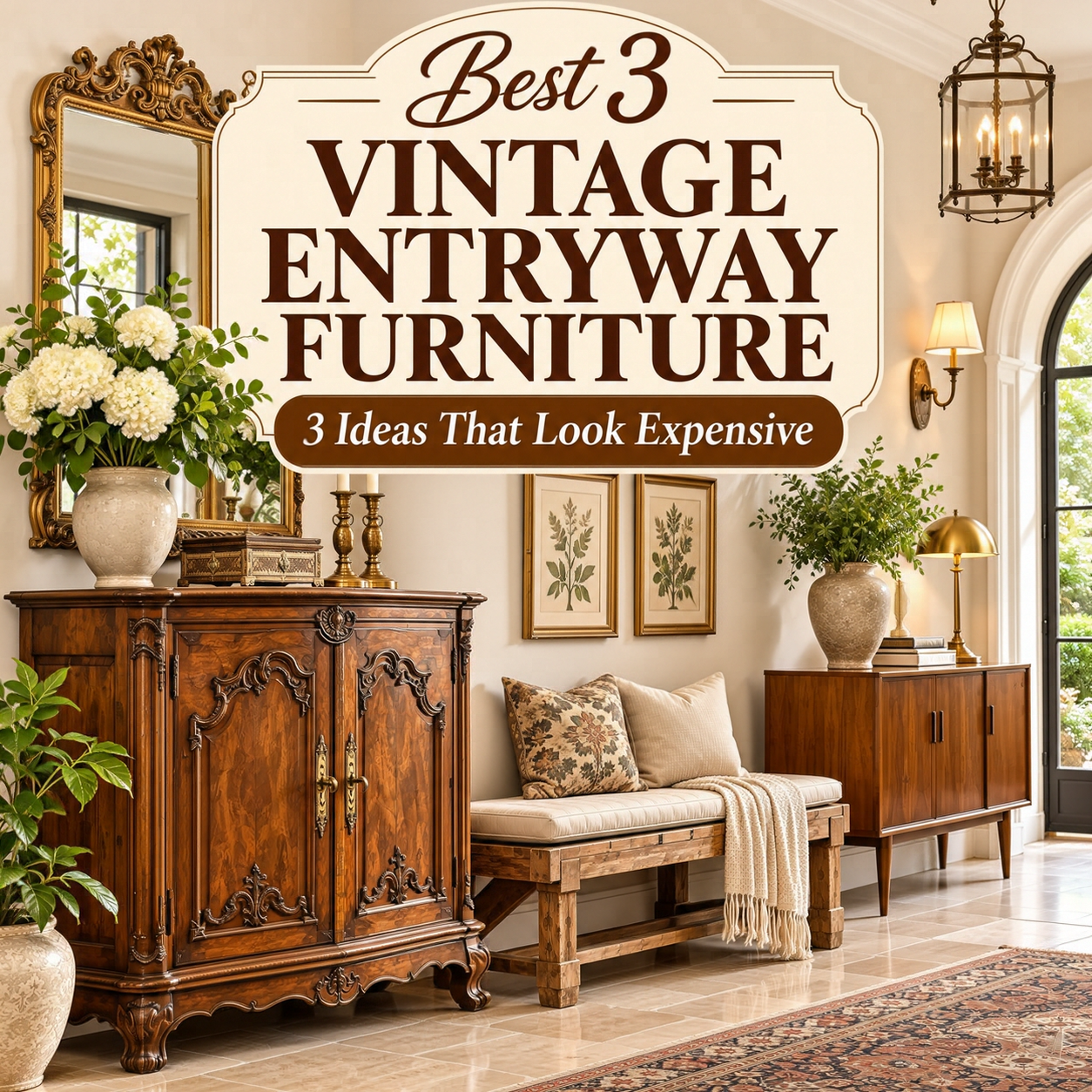
Vintage Entryway Furniture has an extraordinary ability to transform an ordinary entrance into a beautiful, character-filled space that feels elegant, welcoming, and surprisingly expensive. While modern interiors often emphasize sleek surfaces and perfectly coordinated furniture, vintage pieces introduce something far more memorable: authentic craftsmanship, rich materials, distinctive silhouettes, and the irresistible charm of furniture that seems to carry a story from another era.
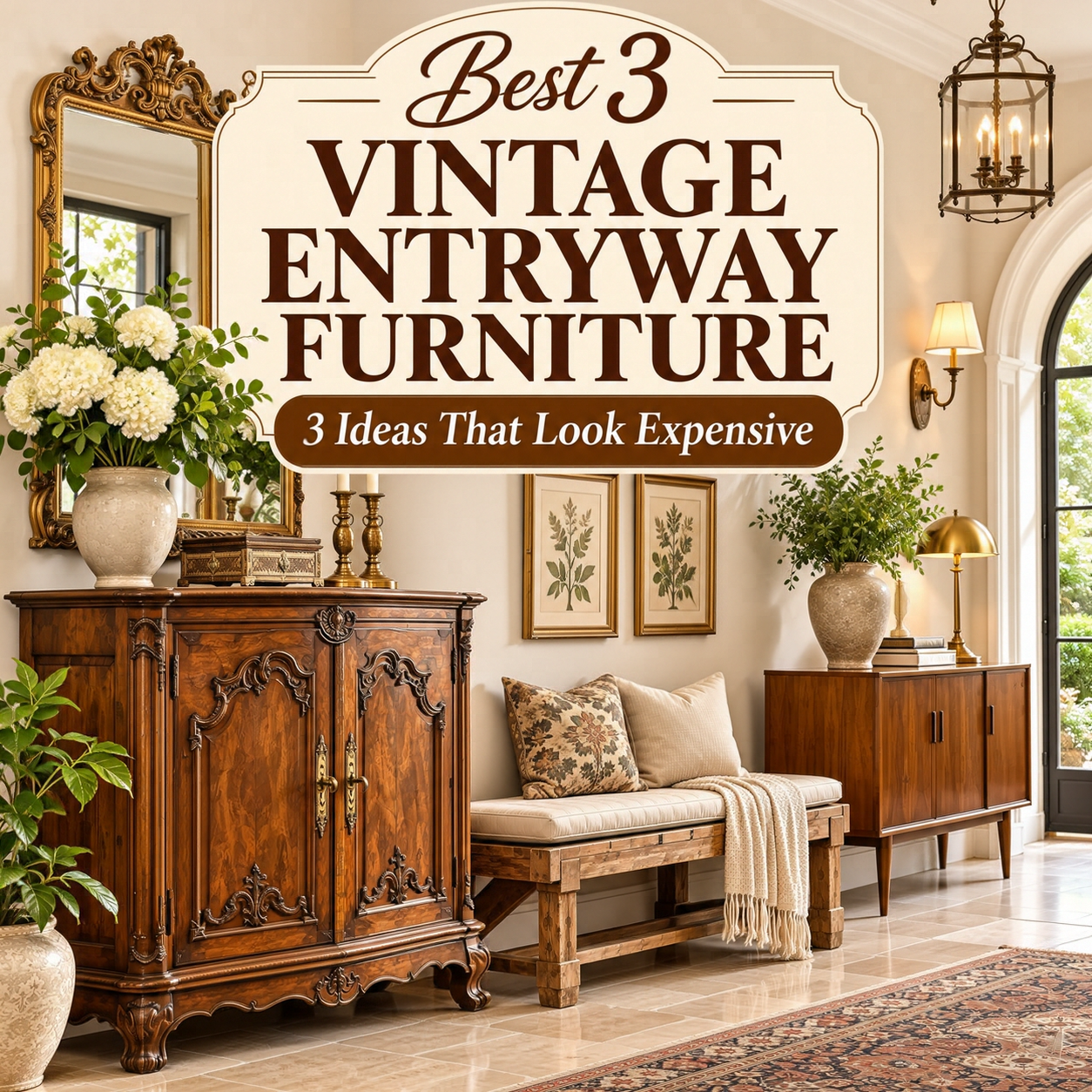
Imagine opening the front door to discover a beautifully aged walnut cabinet with delicate brass handles, a romantic antique wooden bench upholstered in natural linen, or an elegant narrow dresser that looks as though it belongs in a luxurious European country house.
These pieces immediately create an atmosphere of warmth and sophistication.
The most beautiful vintage entrances are not necessarily filled with expensive antiques. Instead, they feature carefully selected furniture that combines practical everyday functionality with timeless design.
✨ The secret to an unforgettable entrance is choosing vintage furniture that feels collected rather than coordinated.
A weathered wooden cabinet can become a stunning focal point beside contemporary architecture. An antique church pew can introduce romantic countryside character into a modern farmhouse. A beautifully proportioned mid-century credenza can provide stylish hidden storage while creating the atmosphere of an exclusive boutique hotel.
The possibilities are surprisingly versatile.
Whether your home features a narrow hallway, a compact apartment entrance, a traditional foyer, or a spacious entry hall, vintage furniture can introduce a distinctive personality without requiring major renovations.
These Best 3 Vintage Entryway Furniture ideas explore three exceptionally beautiful approaches: a European antique cabinet with architectural character, a romantic reclaimed wooden bench with countryside charm, and a sophisticated mid-century storage piece with timeless retro elegance.
Each approach focuses on furniture selection, authentic materials, proportions, restoration, and practical functionality rather than simply decorating an empty entrance.
The result is a home that feels more personal, more welcoming, and effortlessly luxurious.
Why Vintage Entryway Furniture Creates an Unforgettable First Impression
An entrance is much more than a passage between the outdoors and the living spaces.
It establishes the personality of an entire home.
When guests step through the front door, the furniture they encounter communicates something about the architecture, atmosphere, and character of the interior.
An entrance dominated by generic furniture may feel practical, but it rarely creates a lasting impression.
Vintage Entryway Furniture introduces visual interest through details that are difficult to reproduce convincingly with ordinary contemporary pieces.
Consider the gentle irregularities of aged oak, the soft patina of traditional brass hardware, or the intricate craftsmanship of a hand-carved cabinet.
These characteristics create depth and individuality.
Even relatively simple vintage furniture can become visually remarkable because of its materials, proportions, and history.
The Beauty of Authentic Materials and Natural Aging
One of the greatest advantages of vintage furniture is the character developed through years of use.
Solid wood may develop subtle variations in color.
Brass handles can acquire a warm, aged finish.
Traditional joinery and carved edges may reveal the careful work of experienced furniture makers.
These details create a feeling of authenticity.
However, age alone does not guarantee quality.
A well-maintained vintage cabinet made from solid wood or quality veneer may offer excellent longevity, while a damaged or poorly constructed antique can require substantial restoration.
The goal is to appreciate genuine craftsmanship rather than assuming every old object is automatically valuable.
🌿 Natural aging becomes beautiful when it enhances the furniture without compromising its strength or functionality.
A gently worn finish can feel romantic.
A loose structural joint, unstable leg, or severely damaged drawer requires attention before the furniture becomes part of a busy household entrance.
Vintage Furniture Makes Modern Interiors Feel More Personal
Vintage pieces work especially well when contrasted with contemporary surroundings.
A carved wooden cabinet against a smooth plaster wall creates an interesting relationship between ornament and simplicity.
A reclaimed bench beside modern flooring introduces warmth without requiring the entire home to adopt a rustic aesthetic.
An elegant 1960s credenza can look remarkably sophisticated beneath a contemporary architectural light fixture.
The contrast allows the furniture to become a focal point.
Rather than reproducing a historical interior exactly, successful vintage furniture selection gives old pieces a meaningful role in contemporary living.
This approach also encourages more thoughtful purchasing.
Instead of replacing an entire furniture collection whenever design trends change, homeowners can invest in distinctive pieces that continue to feel relevant over time.
Quick Comparison of the Best 3 Vintage Entryway Furniture Ideas
Choosing the right furniture depends on the size of the entrance, the type of storage required, and the overall atmosphere of the home.
The following comparison highlights the essential differences between the three featured approaches.
| Vintage furniture style | Defining characteristics | Best materials | Ideal entrance | Main practical advantage |
|---|---|---|---|---|
| 🥇 European Antique Cabinet | Carved details, elegant proportions, aged hardware | Walnut, oak, mahogany, brass | Traditional foyer or spacious hallway | Concealed storage and architectural presence |
| 🥈 Reclaimed Wooden Bench | Rustic character, visible grain, romantic simplicity | Reclaimed oak, pine, linen, iron | Cottage, farmhouse, or narrow entrance | Comfortable seating and everyday convenience |
| 🥉 Mid Century Vintage Credenza | Low silhouette, tapered legs, geometric simplicity | Teak, walnut veneer, solid hardwood | Modern apartment or contemporary entrance | Organized storage with retro sophistication |
Each furniture style offers a completely different visual experience.
The antique cabinet introduces classical elegance, the reclaimed bench creates approachable warmth, and the mid-century credenza provides refined functionality.
Understanding these differences makes it easier to choose a furniture piece that suits the architecture and daily needs of the home.
🥇 Best 1 Vintage Entryway Furniture With a European Antique Cabinet and Timeless Architectural Elegance
Few pieces of furniture can make an entrance feel as sophisticated as an authentic European-style antique cabinet.
Its beautifully proportioned doors, intricate wooden details, elegant handles, and rich natural finish immediately create the atmosphere of a historic country estate or luxurious Parisian residence.
Unlike a conventional modern storage cabinet, an antique piece often possesses a distinctive architectural character.
The furniture becomes more than a practical object.
It becomes the central feature of the entrance.
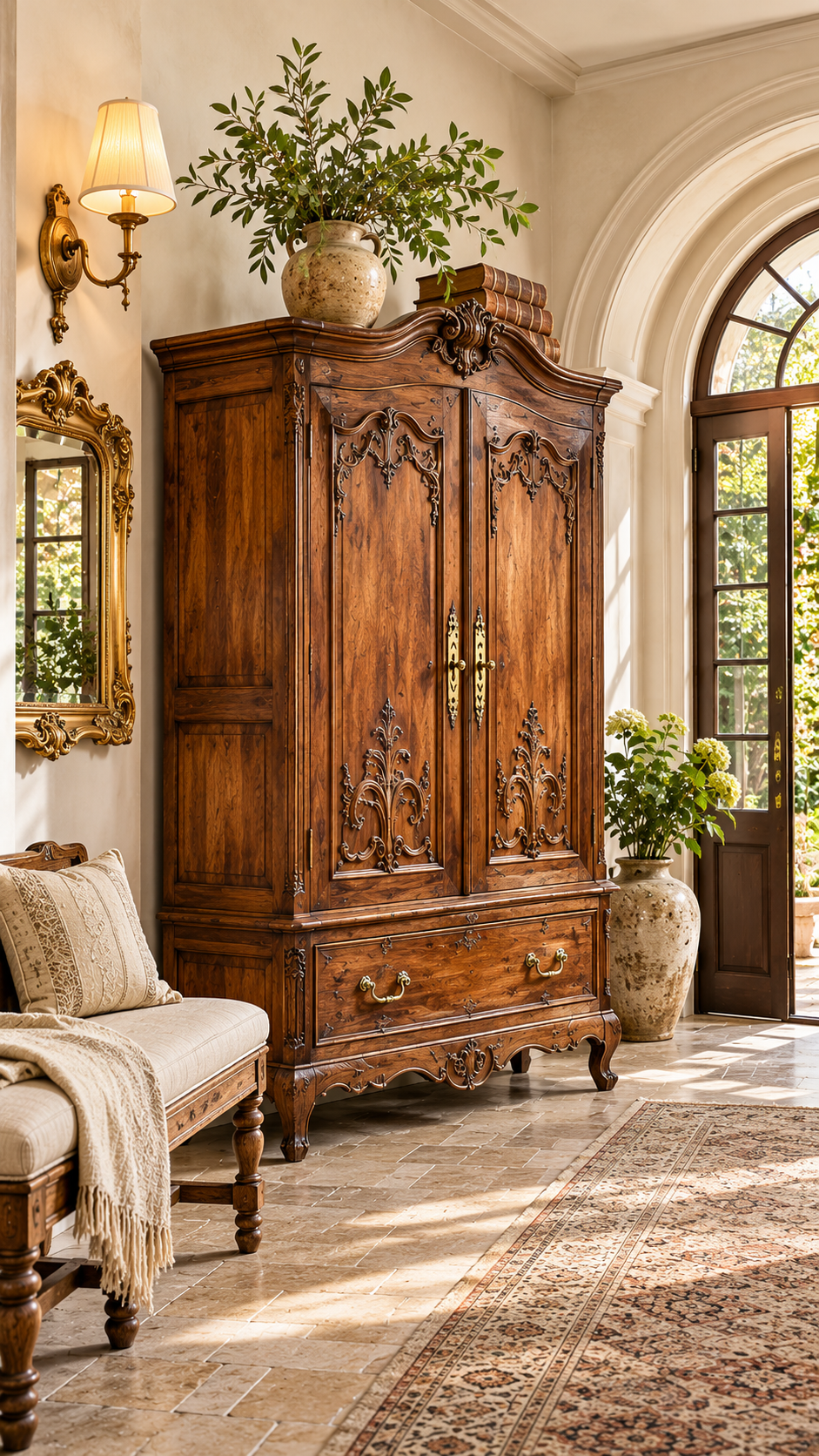
Imagine a spacious foyer with warm limestone flooring, softly textured cream walls, and a magnificent antique walnut cabinet positioned against the main wall.
The cabinet features gently curved edges, original brass keyholes, beautifully aged wood grain, and delicate carvings that reveal the craftsmanship of another generation.
A contemporary wall light provides subtle illumination, allowing the cabinet’s natural textures to remain the main attraction.
The atmosphere feels elegant, established, and deeply personal.
✨ This approach works particularly well when the goal is to make an ordinary entrance feel like part of a historic European residence.
Choose an Antique Cabinet With Beautiful Proportions
The most successful antique furniture arrangements begin with proportion.
A large cabinet may look spectacular in a spacious foyer, but the same piece can overwhelm a narrow hallway.
Before purchasing vintage furniture, measure the available wall width, ceiling height, door clearance, and walking space.
Consider how cabinet doors will open and whether drawers can be accessed comfortably.
A shallow antique cupboard may be more practical than a deeper dresser in a compact entrance.
For a traditional foyer, a cabinet approximately 90–140 centimeters wide can create a substantial focal point, provided the room offers enough circulation space.
Smaller entrances may benefit from narrower pieces, such as antique bedside cupboards or compact hall cabinets repurposed for storage.
The exact dimensions matter more than the furniture’s historical classification.
A piece originally designed for a bedroom can function beautifully in an entryway when its proportions and storage configuration are appropriate.
The best furniture should appear naturally connected to the architecture rather than awkwardly inserted into the available space.
Look for Walnut Oak and Rich Traditional Wood Finishes
Wood selection strongly influences the appearance of antique furniture.
Walnut is particularly attractive because of its deep brown tones, sophisticated grain patterns, and naturally luxurious appearance.
Oak offers a more substantial and architectural character.
Its visible grain and durability make it suitable for furniture that experiences frequent everyday use.
Mahogany and mahogany-veneered pieces can introduce a warmer reddish-brown tone associated with traditional interiors.
However, identifying wood species accurately may require closer inspection, especially when furniture has been stained or refinished.
For a romantic European atmosphere, look for naturally aged finishes rather than excessively glossy coatings.
A gently polished wooden surface often feels more authentic than furniture covered with a thick, mirror-like layer of modern varnish.
Small variations in tone can enhance the appearance.
They create the impression that the furniture has evolved naturally over time.
🌿 A beautiful antique cabinet should feel rich and established without appearing excessively heavy or visually overwhelming.
Preserve Original Brass Hardware Whenever Possible
One of the most charming characteristics of antique cabinets is their hardware.
Traditional brass handles, decorative escutcheons, small keyholes, and original hinges can contribute significantly to a piece’s visual identity.
These details often distinguish authentic vintage furniture from contemporary reproductions.
Before replacing old handles, consider whether careful cleaning would restore their usefulness.
Some aged brass finishes possess a particularly beautiful muted appearance.
Aggressive polishing can remove patina that contributes to the furniture’s historical character.
When hardware is damaged beyond repair, replacement pieces should complement the cabinet’s proportions and period.
Avoid selecting handles simply because they look expensive.
Oversized modern hardware may visually overpower delicate antique doors.
A restrained approach generally produces a more convincing result.
Give the Antique Cabinet a Practical Modern Purpose
An antique cabinet becomes especially valuable when it supports everyday routines.
Inside the entrance, its shelves can store folded shopping bags, seasonal accessories, shoe-care supplies, or small organizational containers.
Drawers can hold keys, sunglasses, gloves, and other frequently used essentials.
If the cabinet has adjustable shelving, the interior can be adapted to suit different storage requirements.
Small baskets or removable dividers can introduce contemporary convenience without permanently altering the original construction.
For valuable antiques, reversible modifications are preferable to cutting new openings or changing historical components.
A carefully chosen cabinet can deliver the benefits of modern concealed storage while maintaining an unmistakably vintage appearance.
This balance is what makes the piece feel both luxurious and livable.
Create a Beautiful European Furniture Composition
An antique cabinet does not require an elaborate surrounding arrangement.
Its proportions, woodworking, and finish already provide visual interest.
A simple plaster wall in warm ivory, mushroom, or soft taupe can create a beautiful backdrop.
Natural stone or dark hardwood flooring can reinforce the furniture’s traditional character.
One thoughtfully chosen wall-mounted light can emphasize its silhouette without drawing excessive attention away from the cabinet.
If the furniture has ornate carvings, keep nearby shapes comparatively simple.
If its design is more restrained, a traditional framed mirror or a small antique landscape painting can create a convincing historical connection.
The goal is not to create a crowded antique shop.
It is to give one exceptional furniture piece enough space to communicate its character.
Restore an Antique Cabinet Without Erasing Its History
Restoration should begin with a careful assessment.
Examine the cabinet for structural movement, loose joints, damaged veneer, insect activity, and signs of moisture exposure.
A stable antique may require only cleaning and routine maintenance.
A more seriously damaged piece may need specialist attention.
Before stripping an original finish, investigate whether it contributes to the furniture’s historical or monetary value.
Unnecessary refinishing can remove distinctive details that make the piece desirable.
For ordinary secondhand furniture with little collectible significance, a sympathetic restoration may improve both appearance and functionality.
Wood repairs, careful cleaning, and appropriate finish maintenance can give a neglected piece many more years of useful life.
Important Note: Before refinishing or modifying older furniture, check for possible lead-containing paint, unstable construction, and valuable original finishes. Seek professional advice when necessary, and securely anchor tall or top-heavy cabinets to prevent tipping, particularly in homes with children.
An entrance should feel beautiful, but safety and structural reliability must always come first.
When restored thoughtfully, an antique cabinet can become a meaningful piece of furniture that remains useful for generations.
🥈 Best 2 Vintage Entryway Furniture With a Romantic Reclaimed Wooden Bench and European Countryside Charm
The second approach introduces a softer, more relaxed interpretation of vintage elegance.
Instead of creating a formal atmosphere with an antique cabinet, this design celebrates the natural character of reclaimed wooden seating.
A vintage bench can make an entrance feel like the welcoming hallway of a beautiful English cottage, French farmhouse, or Scandinavian countryside home.
Its appeal comes from simplicity.
Visible wood grain, gently worn edges, traditional construction, and naturally aged surfaces create warmth that feels genuine rather than manufactured.
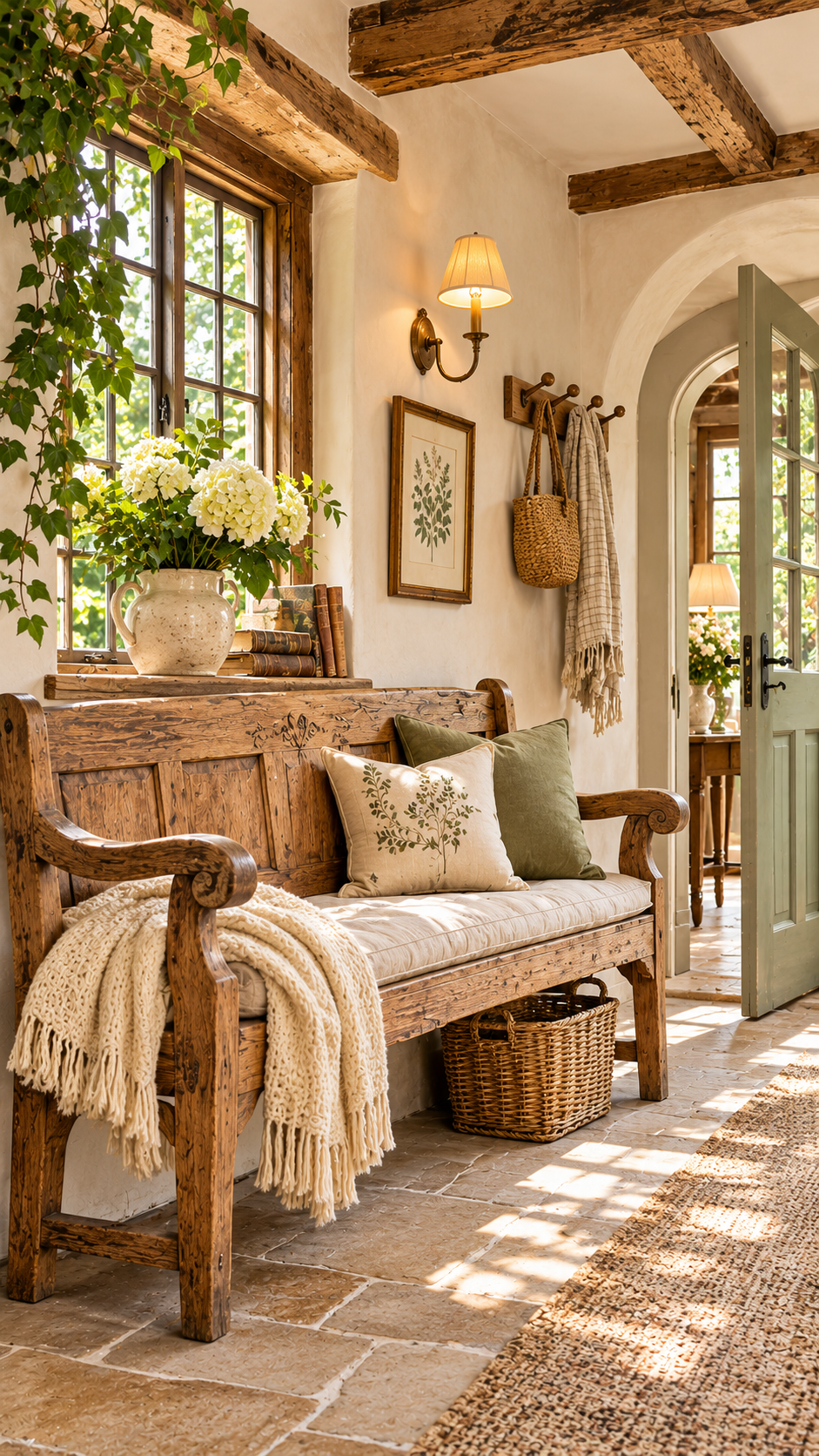
Imagine entering a charming country residence with whitewashed walls, terracotta flooring, and an exceptionally beautiful reclaimed oak bench positioned beneath a traditional window.
The bench features a simple elongated wooden seat, sturdy legs, and subtle marks from years of use.
A neutral linen cushion adds comfort without hiding the original timber.
Its elegant imperfection creates a welcoming atmosphere.
This furniture arrangement feels romantic, practical, and wonderfully unpretentious.
🏡 A beautifully aged wooden bench can make an entrance feel inviting even before any decorative accessories are introduced.
Choose Between a Vintage Church Pew and a Rustic Farmhouse Bench
Two particularly attractive furniture options are antique church pews and traditional farmhouse benches.
An old church pew often features a high wooden backrest, gently curved armrests, and a distinctive architectural silhouette.
Its construction can make it a dramatic feature in a country-style entrance.
However, original church pews may be relatively deep and heavy.
They are generally better suited to entrances with adequate floor space.
A farmhouse bench offers a more flexible alternative.
Many traditional examples feature a simple wooden seat supported by substantial legs or a straightforward stretcher construction.
Backless versions can fit beneath windows, beside staircases, or along narrow walls.
The absence of a backrest also creates greater visual openness.
For compact entrances, a backless bench can provide comfortable seating without making the hallway feel crowded.
The decision should depend on the desired atmosphere and available dimensions.
A church pew feels architectural and nostalgic.
A farmhouse bench feels relaxed, adaptable, and charmingly rustic.
Celebrate Authentic Reclaimed Wood Textures
Reclaimed wood is especially appealing because it introduces natural variation.
Old oak may display deep grain, darkened knots, and subtle changes in color.
Reclaimed pine can offer a lighter, softer appearance with warm honey tones.
Both materials can work beautifully in vintage-inspired entrances.
The most attractive wood does not necessarily need to appear perfectly smooth.
Gentle irregularities can enhance its personality.
However, reclaimed furniture should be checked carefully for splinters, unstable joints, protruding nails, and other hazards.
A bench intended for daily seating must be structurally reliable.
A professional furniture repairer can strengthen weakened joints while preserving much of the original appearance.
For a comfortable finish, surfaces that regularly contact clothing or skin should be smooth and safe.
A suitable finish can help protect the timber from moisture and everyday wear.
The aim is to preserve visible character while making the furniture comfortable for contemporary life.
Add Linen Upholstery Without Hiding the Vintage Character
A wooden bench can feel beautiful on its own.
However, carefully selected upholstery can improve comfort and introduce an additional layer of sophistication.
Natural linen is particularly appropriate for romantic vintage furniture.
Its slightly irregular texture complements aged timber.
Warm ivory, oatmeal, flax, and muted sage are attractive color choices.
A simple cushion with discreet ties can be removed when cleaning or when the original wooden seat needs to be displayed.
For a more traditional appearance, consider a narrow mattress-style bench cushion with subtle tufting.
Avoid upholstery that is excessively thick or heavily patterned unless it suits the bench’s historical character.
The cushion should enhance the furniture rather than dominate it.
If the bench has beautiful carved details or an unusual shape, keep as much of the original structure visible as possible.
The result should feel comfortable and naturally integrated.
Turn the Vintage Bench Into a Functional Everyday Seating Area
One of the greatest practical advantages of a bench is the convenience it provides near the entrance.
It offers a comfortable place to sit while putting on shoes, adjusting boots, or preparing to leave the house.
This becomes especially valuable in households with children, older family members, or anyone who prefers seated shoe changes.
The surrounding area can also support simple organization.
A removable basket placed beneath a sufficiently tall bench may hold scarves, pet accessories, or occasionally used items.
A small shoe tray nearby can protect the flooring from wet footwear.
However, not every bench has enough space underneath for storage.
Measure the available clearance before purchasing baskets or organizers.
Keep frequently used footwear accessible without obstructing the walking route.
A vintage bench should make the entrance easier to use rather than becoming another obstacle.
Create a Romantic Countryside Atmosphere With Natural Finishes
The character of a reclaimed wooden bench becomes especially attractive when paired with natural architectural materials.
Limewashed or softly painted walls provide a gentle backdrop.
Traditional terracotta flooring introduces Mediterranean or European farmhouse warmth.
Aged stone creates an established countryside atmosphere.
Wide wooden floorboards can emphasize the organic qualities of the furniture.
These materials do not need to match perfectly.
A slightly weathered oak bench can look beautiful beside pale stone flooring.
Warm pine can complement an earthy terracotta floor.
The relationship between materials should feel harmonious but not overly coordinated.
A restrained palette of ivory, warm beige, natural brown, muted olive, and dusty clay can provide a beautiful foundation.
The furniture remains the central element, while the architectural finishes create a feeling of continuity.
Make a Narrow Entrance Feel Welcoming With a Slim Vintage Bench
A long, narrow hallway often presents a difficult furniture challenge.
Large cabinets may obstruct circulation, while decorative pieces that offer no useful function can consume valuable space.
A slim vintage bench presents an attractive alternative.
A depth of approximately 30–40 centimeters may work in some hallways, although the correct measurement depends on the home’s layout and the bench’s construction.
Choose a design with relatively simple legs and minimal projecting details.
Backless furniture can be especially effective because it allows the wall above to remain visually open.
If the hallway is extremely narrow, a compact vintage stool may provide similar character while occupying less space.
Consider the position of doors, stairs, and frequently used pathways before deciding where to place the furniture.
An attractive entrance should never compromise safe and comfortable movement.
Find Beautiful Vintage Benches in Unexpected Places
Some of the most appealing vintage benches were not originally designed for residential entryways.
Old school benches, farmhouse seating, traditional dining benches, and former church furniture can all offer interesting possibilities.
Architectural salvage stores may carry distinctive pieces that are difficult to find through conventional furniture retailers.
Estate sales and local secondhand shops can also reveal exceptional furniture.
When evaluating a potential purchase, examine the construction carefully.
Look underneath the seat.
Check the joints.
Inspect the legs for signs of instability.
Consider whether the proportions will fit the intended location.
A slightly worn finish is usually easier to address than a severely compromised structural frame.
The best secondhand purchase is not simply the most unusual object.
It is a piece that combines character, reliable construction, and a clear purpose in the home.
🥉 Best 3 Vintage Entryway Furniture With a Mid Century Credenza and Sophisticated Retro Elegance
The third approach introduces a completely different interpretation of vintage style.
Rather than embracing ornate antiques or rustic reclaimed wood, it celebrates the timeless simplicity of mid-century furniture.
A beautifully preserved vintage credenza can create a striking entrance with the atmosphere of an exclusive design hotel.
Its low horizontal proportions, elegant tapered legs, warm timber finishes, and carefully organized compartments make it exceptionally suitable for contemporary homes.
Imagine a refined apartment entrance with natural oak flooring, softly painted walls, and a stunning walnut credenza dating from the mid-twentieth-century design tradition.
The furniture features smooth cabinet doors, rounded wooden edges, slim legs, and discreet sculptural handles.
Its beautifully balanced silhouette creates a feeling of effortless sophistication.
The result feels vintage without becoming old-fashioned.
It combines historical design character with the practical requirements of modern living.
✨ A mid-century credenza is particularly effective when the goal is to introduce vintage personality without sacrificing clean architectural lines.
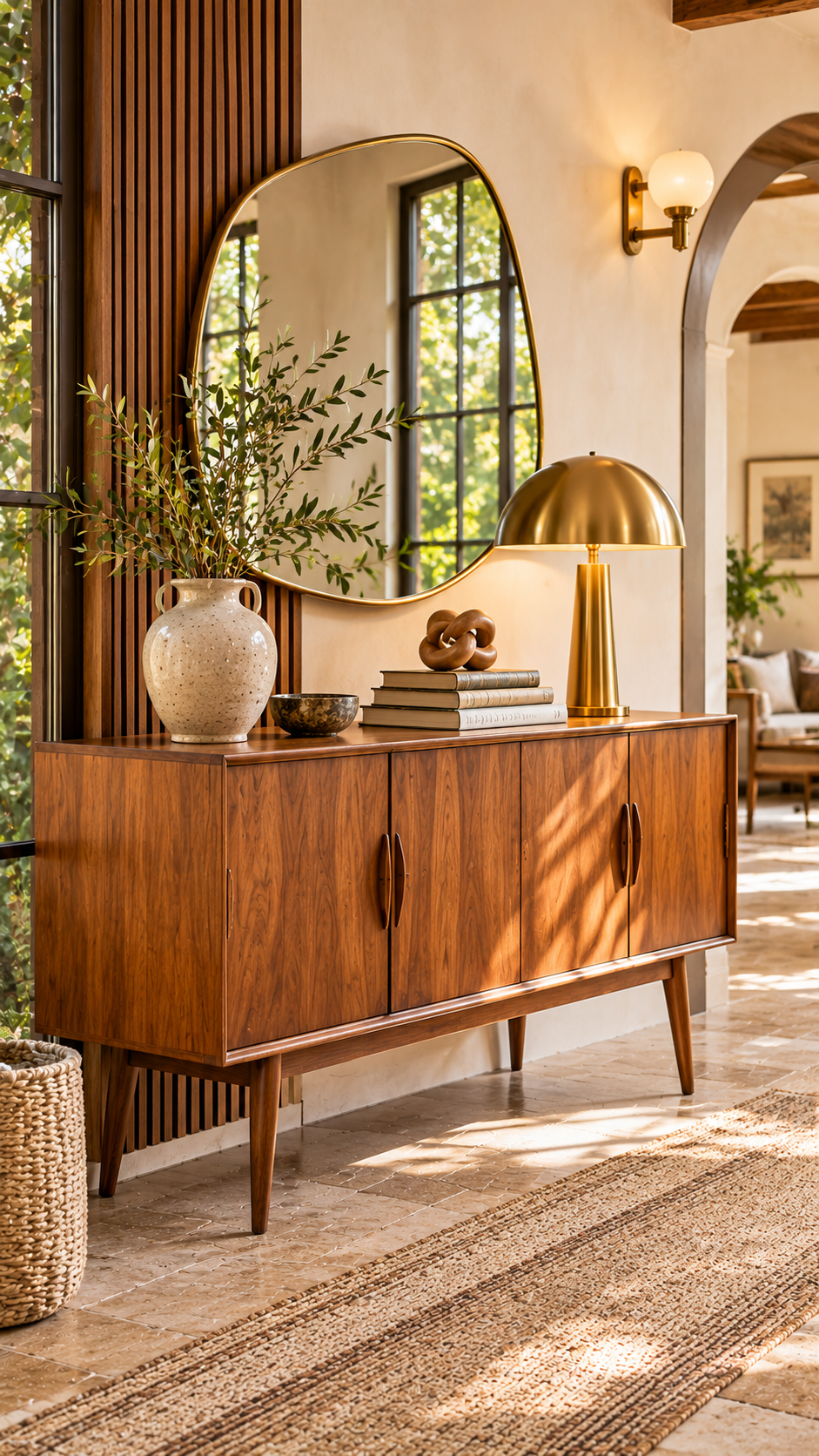
Choose a Credenza With an Elegant Low Profile
A defining characteristic of many mid-century credenzas is their horizontal silhouette.
Unlike tall storage cabinets, these pieces often emphasize width rather than height.
This makes them visually interesting in rooms where a long wall needs a substantial furniture feature.
Their low proportions can also make a modest entrance appear more open.
However, a credenza may be too deep for a narrow hallway.
Many pieces were originally designed for dining rooms or living spaces rather than compact entrances.
Measure carefully before purchasing.
A shallow vintage sideboard or compact mid-century cabinet may provide a better solution when floor space is limited.
Consider the relationship between furniture height and surrounding architectural features.
A low credenza beneath a window can create an attractive arrangement.
A longer piece positioned against a spacious wall can establish a strong horizontal focal point.
Its placement should feel deliberate and balanced.
Discover the Beauty of Teak and Walnut Furniture
Mid-century furniture is frequently associated with beautifully finished timber.
Teak offers a warm golden-brown appearance and distinctive grain.
Walnut can create a deeper, more sophisticated atmosphere.
Oak and other hardwoods also appear in many vintage designs.
However, not every mid-century cabinet is made entirely from solid wood.
Many well-made examples combine solid components with quality wood veneer over engineered cores.
This construction is not automatically a sign of inferior furniture.
In fact, veneer has long been used in fine cabinetmaking to create consistent surfaces and showcase attractive grain patterns.
When shopping, inspect the edges and corners for lifting veneer, swelling, or impact damage.
Check whether doors close properly and whether the cabinet feels stable.
Pay attention to existing finishes.
Excessive sanding can damage thin veneer, so restoration methods should match the furniture’s construction.
A carefully maintained teak or walnut credenza can become one of the most visually impressive pieces in an entrance.
Look for Distinctive Tapered Legs and Original Handles
Furniture legs play an important role in mid-century design.
Slender tapered legs can make a substantial cabinet appear lighter.
They create a small visible gap beneath the furniture, allowing more flooring to remain exposed.
This detail helps the piece feel less bulky than a cabinet that rests directly on the floor.
Some mid-century designs feature sculptural wooden legs.
Others use metal supports or more architectural base structures.
Original handles are equally important.
Recessed wooden pulls, simple brass fittings, and integrated finger grooves can reinforce the furniture’s historical identity.
Replacing these details with contemporary hardware may alter the intended design.
When possible, preserve original components that remain functional.
Small features often make the greatest difference between a convincing vintage piece and a generic retro imitation.
Transform a Vintage Credenza Into Beautiful Hidden Storage
A credenza offers excellent potential for practical organization.
Its internal compartments can accommodate many everyday essentials that would otherwise remain visible near the front door.
Drawers can hold keys, sunglasses, reusable shopping bags, gloves, and small accessories.
Cupboards can store seasonal items or removable organizers.
A shallow tray inside one drawer can make frequently used objects easier to find.
However, antique and vintage storage furniture may have irregular internal measurements.
Commercial organizers will not always fit perfectly.
Measure individual compartments before purchasing inserts.
Removable dividers, fabric containers, and appropriately sized baskets can provide modern organization without permanently changing the furniture.
The most successful arrangement preserves the cabinet’s original design while making it convenient for everyday life.
Combine Retro Furniture With Contemporary Architecture
A mid-century credenza can look exceptionally elegant in a contemporary interior.
Its warm wood tones contrast beautifully with smooth plaster, pale stone, and understated architectural surfaces.
A simple off-white wall can make dark walnut appear richer.
Soft olive or muted clay paint can enhance the furniture’s retro personality.
Natural oak flooring produces a warm tonal relationship.
For a more dramatic atmosphere, consider darker flooring with a medium-toned wooden cabinet.
The key is creating enough contrast for the furniture’s silhouette to remain clearly visible.
Avoid forcing every surrounding element into a mid-century theme.
The entrance does not need retro wallpaper, retro lighting, retro flooring, and retro accessories simultaneously.
A single authentic furniture piece can provide sufficient historical character.
The surrounding architecture can remain contemporary.
This restraint allows the credenza to feel like a genuine design discovery rather than a themed interior.
Restore Mid Century Furniture With Respect for Original Design
Vintage credenzas may display scratches, faded finishes, loose hardware, or minor veneer damage.
Some imperfections are consistent with normal use.
Others may require repair.
Begin by identifying the cabinet’s materials and existing finish.
Wood veneer requires different treatment from solid timber.
Lacquered surfaces may respond differently to cleaning products than oil-finished furniture.
Test any suitable cleaning or maintenance product in an inconspicuous area.
For collectible designer furniture, consult a restoration professional before making irreversible changes.
Original finishes and hardware may contribute to the piece’s value.
For less collectible secondhand furniture, careful restoration can improve its appearance and extend its useful life.
The goal should be to retain the elegant proportions and craftsmanship that made the piece desirable in the first place.
Make a Compact Apartment Entrance Feel More Sophisticated
Although large credenzas require adequate space, smaller mid-century cabinets can be excellent choices for apartments.
A compact unit with two doors and slender legs can provide meaningful storage without visually overwhelming the entrance.
Choose a piece with a shallow depth when circulation space is limited.
Rounded corners can also be useful in areas where people frequently walk past furniture.
If a conventional credenza is too large, consider a vintage record cabinet or small mid-century chest.
These alternatives often share similar design characteristics while occupying less floor space.
The important consideration is not the original furniture label.
It is the relationship between the object’s dimensions, craftsmanship, and practical purpose.
A compact vintage cabinet can deliver the same sophisticated atmosphere as a larger statement piece when selected thoughtfully.
How to Choose the Right Vintage Entryway Furniture for Your Home
The most attractive vintage furniture is not always the most practical choice.
A magnificent antique cabinet may be inappropriate for an exceptionally narrow hallway.
A beautifully aged wooden bench may offer insufficient storage for a household that needs concealed organization.
A stylish mid-century credenza may have the perfect appearance but require more floor space than the entrance can comfortably provide.
The best furniture choice begins with understanding the room.
Measure the Entrance Before Falling in Love With a Furniture Piece
Vintage furniture is often available as a single unique item.
Unlike contemporary furniture collections, it may not come in several convenient sizes.
This makes accurate measurement essential.
Record the available wall width, furniture depth, and ceiling height.
Measure nearby doors and note their swing paths.
Consider whether drawers or cabinet doors can open completely.
As a practical planning reference, aim to retain a comfortable unobstructed walking route, often around 90 centimeters where space permits, while respecting applicable building and accessibility requirements.
A narrow entrance may require a smaller piece or a shallower design.
Do not purchase a beautiful cabinet simply because it fits against the wall.
It must also work comfortably within the movement patterns of the home.
Match Furniture Function to Daily Household Habits
Different households need different things from an entrance.
Some require a comfortable place to sit while changing shoes.
Others prioritize concealed storage.
Some prefer a visually striking furniture piece that introduces character without requiring significant daily use.
A reclaimed bench is particularly suitable when seating is important.
An antique cabinet offers opportunities for concealed storage.
A mid-century credenza can provide multiple compartments while maintaining a sophisticated appearance.
Think about what happens during an ordinary morning.
Where do keys go?
Where are shoes changed?
Which accessories need to remain accessible?
How frequently are cabinet doors opened?
Furniture that supports these routines will remain useful long after its initial visual novelty has faded.
Evaluate Construction Rather Than Age Alone
Old furniture is not automatically well constructed.
Some vintage pieces were manufactured economically.
Others may have suffered damage through poor storage, moisture, or repeated repairs.
Inspect the frame for movement.
Check whether doors and drawers function correctly.
Look for damaged joints, missing hardware, and signs of wood deterioration.
Examine the underside when possible.
Ask sellers about known restoration work and structural problems.
A carefully constructed piece from a less prestigious period may be a better purchase than a fashionable antique with severe damage.
The goal is to find furniture with both beauty and dependable utility.
Where to Find Vintage Entryway Furniture That Looks Expensive
Finding exceptional vintage furniture often requires patience.
Traditional furniture stores may offer vintage-inspired reproductions, but authentic secondhand pieces are frequently discovered through less predictable sources.
Antique dealers can provide curated selections and may offer valuable information about furniture construction, provenance, and restoration.
Estate sales can reveal distinctive furniture that has remained within a household for many years.
Architectural salvage shops sometimes carry unusual benches, cupboards, and historic fittings.
Local secondhand stores may offer more affordable discoveries, although condition and authenticity can vary considerably.
Online vintage marketplaces provide access to a wider variety of styles.
However, purchasing large furniture remotely introduces additional considerations.
Request clear photographs of the front, back, interior, underside, joints, and damaged areas.
Confirm exact measurements.
Ask whether the furniture has been repaired or refinished.
Consider delivery costs and the possibility of damage during transportation.
For valuable antiques, documentation of provenance and previous restoration can be particularly useful.
How to Recognize a Beautiful Vintage Furniture Investment
The term investment should be understood carefully.
Most furniture purchases should be justified primarily by usefulness, enjoyment, and quality rather than expectations of financial appreciation.
Still, some characteristics can help identify desirable pieces.
Distinctive proportions are important.
Well-executed joinery can indicate careful construction.
Original hardware and attractive wood grain contribute visual character.
A stable frame and functional doors make furniture easier to live with.
A design that suits multiple interior styles may also remain desirable for longer.
Avoid choosing furniture solely because it resembles an expensive piece seen online.
Authentic quality should be visible in the construction, not merely suggested by fashionable styling.
Beautiful Vintage Furniture Finishes That Complement Different Homes
The finish of vintage furniture has a powerful influence on the entrance’s overall atmosphere.
A dark walnut cabinet can feel formal and luxurious.
A softly weathered oak bench creates countryside warmth.
A teak credenza introduces golden tones associated with sophisticated retro interiors.
Painted vintage furniture can also be attractive, particularly when the original surface is already damaged and the piece has no significant collectible value.
Muted cream, dusty sage, warm gray, and soft mushroom colors can complement traditional woodwork.
However, painting every piece of vintage furniture is not always necessary.
Original timber often provides more visual depth than an opaque painted surface.
Consider the existing floors and walls before changing a finish.
A warm wood cabinet may already be the ideal contrast against pale walls.
A lighter finish may help a substantial bench feel less imposing.
Preserving natural wood can also establish a more authentic relationship between vintage craftsmanship and contemporary architecture.
Common Vintage Entryway Furniture Mistakes That Can Ruin the Look
Even beautiful furniture can feel disappointing when selected or positioned poorly.
One common mistake is buying oversized pieces.
An antique wardrobe may possess extraordinary character but create serious circulation problems in a compact foyer.
Another mistake is ignoring furniture condition.
A cabinet with unstable legs or a bench with weakened joints should not be used without appropriate repairs.
Excessive refinishing can also diminish character.
Removing every mark, changing all the hardware, and applying an overly glossy coating may make a vintage piece appear less authentic.
A further mistake is combining too many competing furniture styles in one small entrance.
A heavily carved cabinet, rustic bench, and retro credenza may all be beautiful individually.
Together, they can overwhelm the space.
Select one primary furniture piece and allow it to establish the room’s personality.
Finally, avoid prioritizing appearance over everyday usefulness.
The entrance is one of the most frequently used transitional areas of a home.
Furniture should make movement, storage, and daily routines more convenient.
Its elegance should support the way people live.
How to Make Vintage Entryway Furniture Look Luxurious on a Budget
Creating a beautiful vintage entrance does not require buying museum-quality antiques.
Affordable furniture can look remarkably sophisticated when it has attractive proportions and authentic materials.
A simple secondhand wooden bench may become an impressive feature after careful cleaning and minor repairs.
An ordinary vintage cupboard can feel special because of its original handles, interesting grain, or unusual dimensions.
A compact mid-century cabinet may provide all the retro character needed for an apartment entrance.
Start with the furniture itself rather than purchasing numerous decorative accessories.
Look for construction quality and proportion.
Consider whether the existing finish can be preserved.
Budget for any essential repairs before spending money on visual improvements.
A structurally sound piece with an attractive silhouette often offers more lasting value than an elaborate object requiring expensive restoration.
💡 The smartest vintage purchase is a beautiful piece that already meets most of your practical requirements.
Avoid treating every imperfection as a problem.
Some signs of age can contribute charm.
At the same time, be realistic about the cost of professional repairs, transportation, replacement hardware, and protective finishes.
A slightly more expensive piece in excellent condition may ultimately be more economical than a severely damaged bargain.
The best budget-friendly vintage interiors feel carefully collected rather than cheaply improvised.
Frequently Asked Questions About Vintage Entryway Furniture
What Is the Best Vintage Furniture for a Small Entryway?
A slim reclaimed wooden bench, shallow antique cupboard, or compact mid-century cabinet can work beautifully in a small entrance.
The best choice depends on whether seating or storage is more important.
Prioritize shallow furniture dimensions, reliable construction, and adequate walking space.
A small piece with distinctive craftsmanship often creates a stronger impression than oversized furniture squeezed into a limited area.
Can Vintage Entryway Furniture Work in a Modern Home?
Absolutely.
Vintage furniture can create an attractive contrast with contemporary architecture.
A carved walnut cabinet introduces warmth to smooth modern walls.
A reclaimed wooden bench softens hard flooring and simple architectural lines.
A mid-century credenza complements modern interiors through its clean proportions and functional design.
The most successful combinations preserve the furniture’s character without requiring every surrounding element to follow the same historical style.
Is It Better to Buy Antique or Vintage Furniture?
Both can be excellent choices.
In common design usage, antique furniture is generally considered at least 100 years old, while vintage furniture usually refers to recognizable pieces from earlier decades that do not necessarily meet the antique threshold.
The distinction matters less than condition, craftsmanship, proportions, and practicality when selecting furniture for daily entryway use.
Older antiques may require more specialized care.
Later vintage pieces may offer more familiar storage configurations.
Should Vintage Wooden Furniture Be Repainted?
Repainting depends on the furniture’s condition and significance.
A common secondhand cabinet with a severely damaged finish may benefit from sympathetic refinishing.
A valuable antique with original surfaces may lose historical character or collectible value if painted.
Whenever possible, investigate the existing finish before making permanent changes.
Preserving beautiful original wood is often an excellent option.
What Vintage Furniture Style Looks Most Expensive?
European antique cabinets, well-crafted mid-century credenzas, and beautifully restored solid-wood benches can all create a luxurious appearance.
The result depends on proportions, materials, workmanship, condition, and how naturally the furniture fits the entrance.
A simple piece with excellent craftsmanship can look more sophisticated than an ornate but poorly constructed reproduction.
How Can Vintage Entryway Furniture Be Kept in Good Condition?
Keep furniture away from persistent moisture and excessive direct sunlight whenever practical.
Clean surfaces using methods appropriate for the existing finish.
Avoid harsh products that may damage aged varnish, veneer, or decorative hardware.
Inspect structural joints and handles periodically.
Use protective measures where wet shoes, umbrellas, or bags could damage surfaces.
For fragile or valuable pieces, specialist furniture conservation advice can help preserve their condition.
Final Thoughts on the Best 3 Vintage Entryway Furniture Ideas
Vintage Entryway Furniture offers an exceptional opportunity to create an entrance that feels personal, sophisticated, and full of timeless character.
Unlike disposable design trends, carefully selected vintage pieces can remain beautiful and functional for many years.
The key is choosing furniture with authentic craftsmanship, appropriate proportions, and a practical role in everyday life.
🥇 A European antique cabinet creates an atmosphere of traditional luxury through beautifully aged wood, architectural detailing, and elegant concealed storage. It is ideal for homeowners who appreciate classical furniture and romantic European interiors.
🥈 A reclaimed wooden bench introduces approachable countryside charm through natural timber, simple construction, and practical seating. It is especially attractive in cottages, farmhouses, and welcoming family entrances.
🥉 A mid-century vintage credenza combines elegant retro design with contemporary functionality. Its low silhouette, rich wood grain, and carefully organized compartments make it an outstanding choice for modern homes and sophisticated apartments.
Each of these three furniture styles demonstrates that vintage elegance does not require an entire room filled with antiques.
Sometimes one beautiful object is enough.
A cabinet with original brass handles.
A wooden bench with decades of natural character.
A carefully preserved credenza with gracefully tapered legs.
These pieces establish a sense of individuality that ordinary mass-produced furniture can struggle to achieve.
The most memorable entrances are not necessarily perfectly coordinated or extravagantly furnished.
They feel authentic.
They reveal personality.
They combine beauty with the comfortable rhythms of daily living.
And when the right vintage furniture finds its place, even an ordinary hallway can become one of the most distinctive and inviting spaces in the entire home.
Related posts:

Fall Table Centerpieces Best 3 Stunning Ideas That Make Every Autumn Table Look Expensive
Best 3 Laundry Folding Tables That Can Completely Transform Your Laundry Room
How to Transform Your Porch with Reclaimed Wood and Make It Look Amazing
Minimalist Outdoor Furniture Ideas for a Simple Porch Look That Will Make Your Neighbors Jealous
How to Add a Porch Swing to Your Outdoor Space and Make It the Coziest Spot Ever
How to Make a Small Porch Look Amazing Even with Barely Any Furniture


