The most beautiful fall table centerpieces do more than decorate the middle of a dining table. They establish the entire atmosphere of an autumn gathering, bringing together seasonal color, natural texture, candlelight, flowers, foliage, and carefully selected decorative objects. Whether the table is being prepared for Thanksgiving dinner, a relaxed October gathering, or simply everyday autumn dining, the right centerpiece can instantly make the space feel warmer and more intentional.
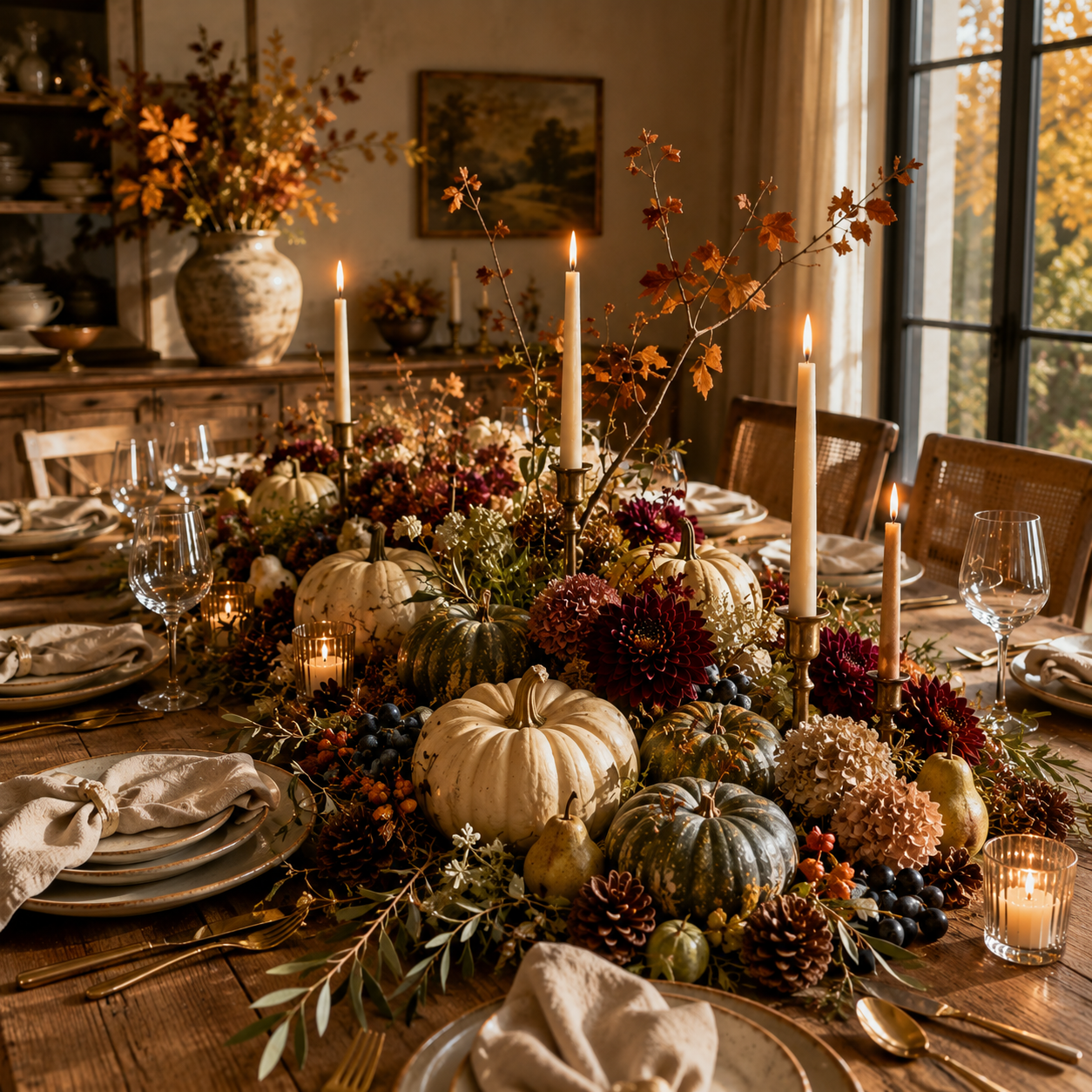
🍂 The secret is not necessarily using more decorations. Sophisticated fall tables often rely on a limited collection of materials repeated thoughtfully across the table. A few sculptural branches, miniature pumpkins, seasonal flowers, ceramic vessels, linen, and warm candles can create far more impact than an overcrowded arrangement.
Among countless decorating possibilities, three approaches stand out because they create distinctly different autumn moods while remaining practical enough for real homes. The Best 3 fall table centerpieces explored below range from an abundant natural harvest arrangement to an elegant candlelit composition and a relaxed woodland-inspired tablescape.
Each idea can also be adapted to different table sizes, interior styles, budgets, and occasions.
🍁 Why Fall Table Centerpieces Completely Transform an Autumn Dining Space
A dining table occupies a visually important position in many homes. During autumn, it becomes even more significant because the season naturally encourages indoor gatherings, slower dinners, celebrations, and cozy evenings with family and friends.
A centerpiece gives that table a visual anchor.
Without one, even beautiful dinnerware and linens can sometimes appear disconnected. Add a carefully designed arrangement in the center, however, and suddenly the plates, glasses, napkins, candles, and surrounding room feel like parts of one complete composition.
Fall provides an especially rich decorating palette. There are pumpkins with beautifully irregular shapes, pears and apples in muted colors, dried seed heads, burgundy foliage, branches, grasses, dahlias, chrysanthemums, hydrangeas, berries, acorns, and countless other seasonal materials.
The key is editing.
Rather than combining every recognizable autumn decoration, select a few materials that support one clear design direction. This creates a table that feels sophisticated instead of themed.
The Best 3 Fall Table Centerpieces at a Glance
| Rank | Fall Table Centerpiece Idea | Best Feature | Ideal Style | Best Occasion |
|---|---|---|---|---|
| 🥇 Best 1 | Natural Harvest Runner | Abundant seasonal layers | Organic luxury | Thanksgiving and autumn dinners |
| 🥈 Best 2 | Candlelit Floral Centerpiece | Warm atmospheric glow | Elegant and romantic | Dinner parties and evening entertaining |
| 🥉 Best 3 | Woodland Branch and Foliage Centerpiece | Sculptural natural texture | Rustic modern | Casual fall gatherings and everyday styling |
These three ideas share one important principle: the centerpiece should enhance the dining experience rather than compete with it.
That means considering not only how the table photographs, but also whether guests can see each other, reach serving dishes, move glasses comfortably, and enjoy dinner without navigating around oversized decorations.
🥇 Best 1 Natural Harvest Runner Fall Table Centerpieces
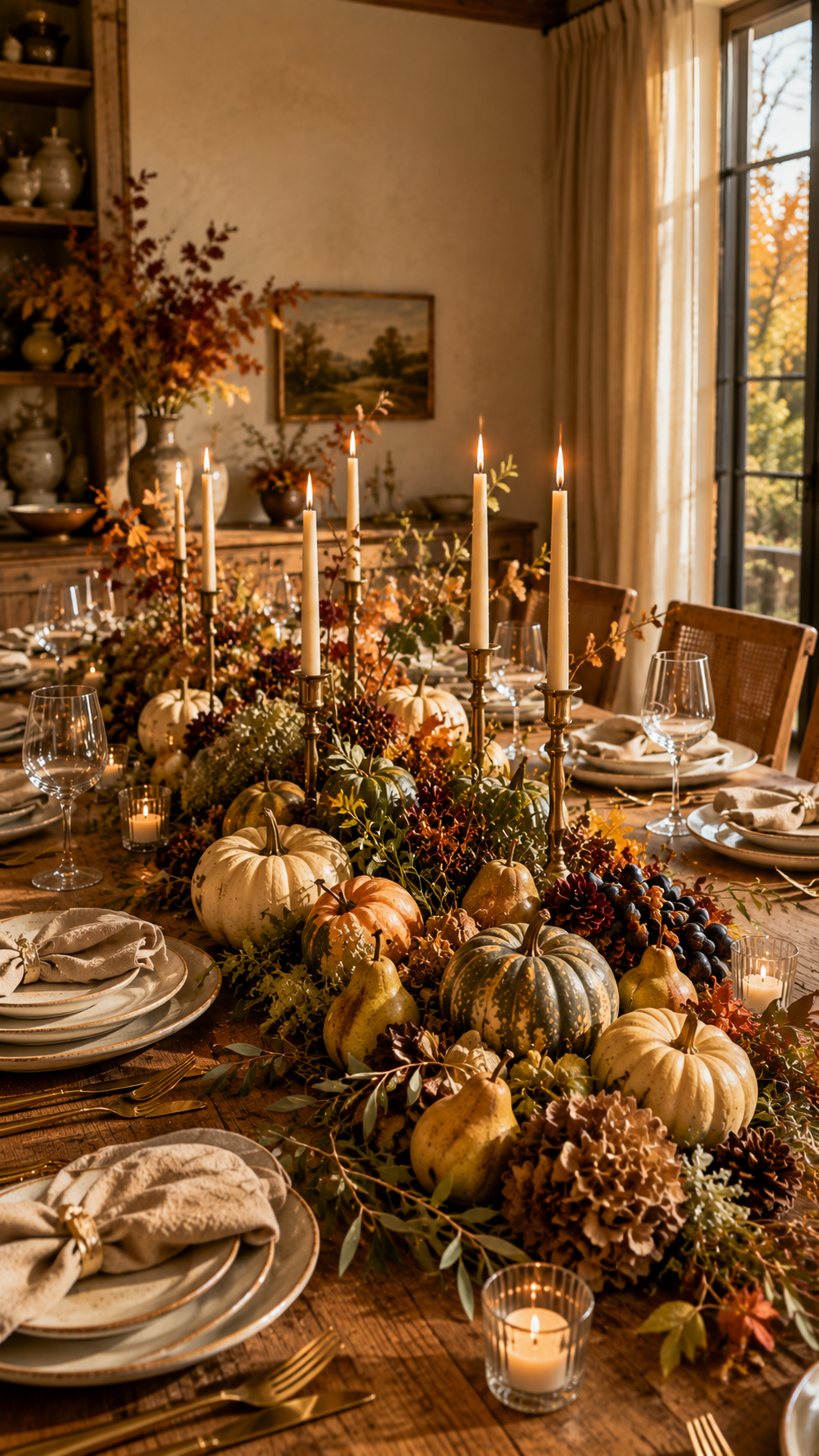
Among all fall table centerpieces, the natural harvest runner is perhaps the most instantly recognizable expression of autumn. However, the most sophisticated version looks very different from a table covered randomly with orange pumpkins and artificial leaves.
Instead, imagine an organic landscape running gently through the middle of the dining table.
Small heirloom pumpkins overlap with pears, seasonal foliage, dried flowers, herbs, berries, and understated candles. Some elements sit directly on the table while others rise slightly, producing a naturally layered composition.
The result feels abundant without becoming chaotic.
🍂 Create an Organic Centerpiece Instead of a Perfect Arrangement
One reason harvest centerpieces can look particularly beautiful is their irregularity.
Nature rarely creates perfect symmetry, so the arrangement should not either.
Begin with one or two slightly larger objects near the middle of the table. A pale heirloom pumpkin, an aged ceramic vessel, or a low bowl can become the visual anchor.
Then gradually extend smaller elements outward.
For example, place miniature pumpkins at slightly different angles instead of creating a perfectly straight row. Tuck pears or apples between them. Allow eucalyptus, olive branches, grapevine, rosemary, or autumn foliage to loosely connect the individual objects.
The centerpiece should appear as though it naturally evolved across the table.
This relaxed asymmetry makes even inexpensive seasonal materials look more sophisticated.
🎃 Choose Pumpkins With Sophisticated Autumn Colors
Bright orange is certainly appropriate for autumn, but it does not need to dominate the table.
Consider heirloom pumpkins in shades such as:
- creamy ivory
- muted sage green
- dusty peach
- warm terracotta
- pale beige
- soft gray-green
- deep burgundy
Mixing several subtle colors creates more visual depth than using identical pumpkins.
Shape is equally important.
Flat Cinderella-style pumpkins, elongated gourds, tiny round pumpkins, and deeply ribbed varieties can create a beautiful sculptural rhythm when mixed together.
Natural imperfections are desirable. Slightly uneven stems, irregular surfaces, and subtle variations in color make the centerpiece feel authentic.
🍁 For an elegant interior, combine ivory and sage pumpkins with oak, linen, stoneware, and brass candlesticks. For a warmer rustic table, introduce terracotta, burnt orange, dark wood, and amber glass.
🍐 Add Seasonal Fruit for an Unexpected Luxury Detail
Fruit is one of the easiest ways to make harvest-style fall table centerpieces look more refined.
Pears are especially effective.
Their sculptural shape and muted green, yellow, or russet skin work naturally with autumn foliage and pumpkins. Small red or burgundy apples can provide deeper accents.
For a more dramatic table, use dark grapes cascading slightly from a low ceramic bowl.
Pomegranates are another beautiful possibility. Their rich burgundy-red exterior introduces depth without requiring artificial decorative objects.
The fruit does not need to be arranged formally.
Place individual pears between pumpkins, allow a few grapes to spill naturally across the runner, or fill a shallow pedestal bowl with a restrained mixture of seasonal produce.
The effect recalls an old-world harvest table while still looking contemporary.
🌿 Introduce Greenery to Balance Warm Autumn Colors
Green is surprisingly important in fall decorating.
Without it, a centerpiece filled with orange, brown, beige, and burgundy can become visually heavy.
Muted greenery creates relief.
Olive branches are particularly effective because their silvery leaves complement both warm wood and pale pumpkins. Eucalyptus works well in more contemporary interiors, while rosemary and sage introduce beautiful culinary associations.
For a garden-inspired table, incorporate small pieces of autumn foliage that have only partially changed color.
A branch containing green, amber, and rusty leaves naturally connects summer greenery with deeper autumn shades.
This transitional quality often looks more realistic than completely brown foliage.
🕯️ Weave Candles Through the Harvest Runner
A harvest centerpiece becomes dramatically more beautiful after sunset.
Place candles at irregular intervals along the arrangement rather than grouping every candle together.
Taper candles provide height, while votives and small pillar candles create lower pools of light.
The combination is especially effective.
Choose holders that coordinate with the surrounding interior. Antique brass creates warmth and traditional elegance. Clear glass disappears visually and works beautifully in contemporary rooms. Dark bronze or black metal adds contrast to pale tables.
Flame color naturally intensifies the warm tones of pumpkins, fruit, wood, and foliage.
That means the centerpiece can feel relatively understated during the day and become dramatically atmospheric at night.
Important Note: Keep flames safely separated from dried leaves, grasses, branches, fabric, and other flammable materials. If the arrangement is dense, high-quality flameless candles can provide a similar glow with significantly more flexibility.
🍽️ Keep the Harvest Centerpiece Low Enough for Conversation
A common mistake with fall table centerpieces is building an arrangement that looks impressive from the doorway but becomes inconvenient once guests sit down.
Most of the central arrangement should remain relatively low.
Instead of creating one enormous floral bouquet, spread visual interest horizontally.
This is one reason pumpkins and fruit work so well. They provide volume without creating a wall between guests.
If taller branches or candles are included, keep them visually light so people can still see through the arrangement.
For a long rectangular dining table, allow the centerpiece to stretch across approximately two-thirds of the table while leaving comfortable space near both ends.
The result feels generous but functional.
🥈 Best 2 Elegant Candlelit Floral Fall Table Centerpieces
The second of the Best 3 fall table centerpieces takes a more refined approach.
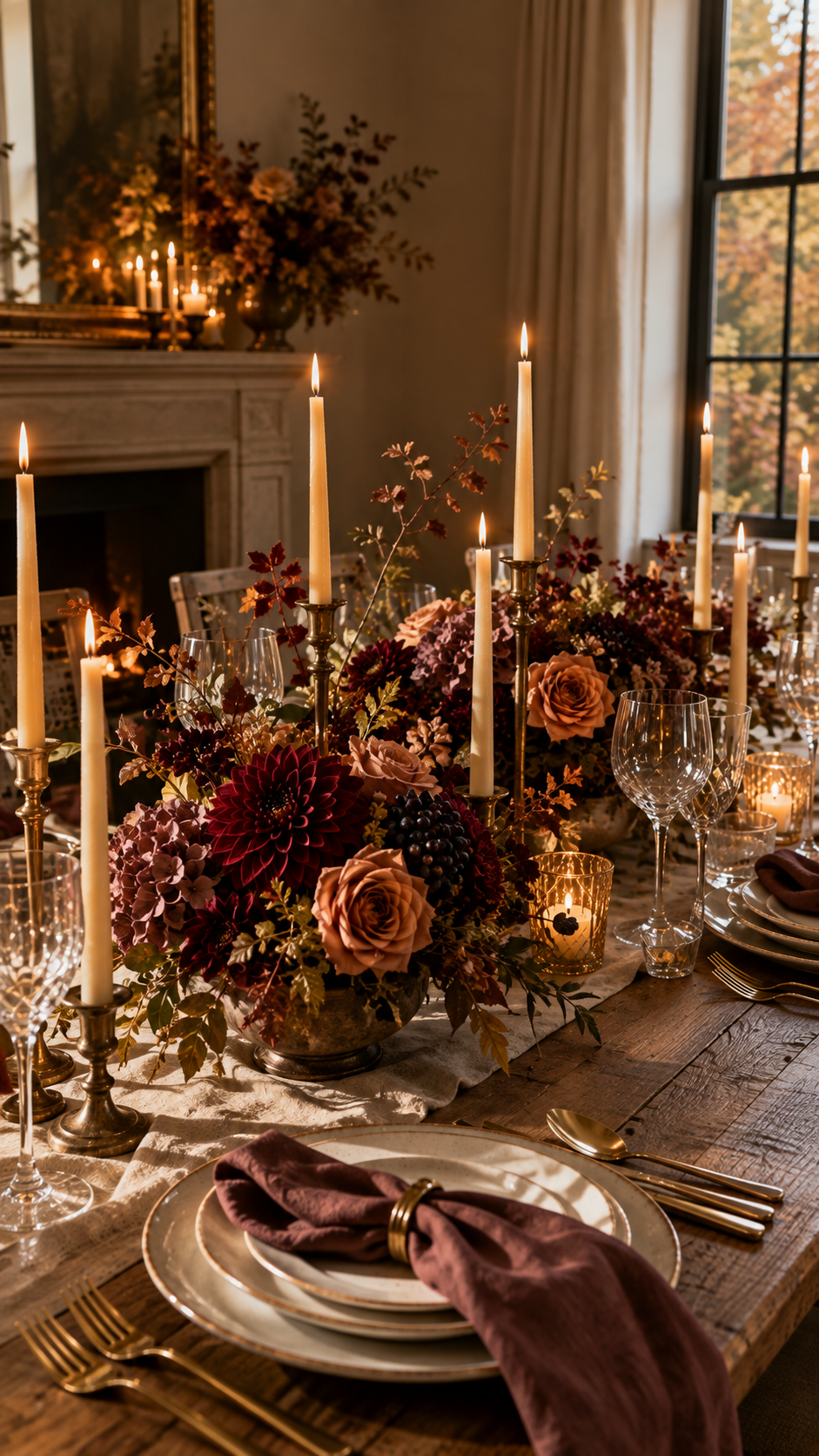
Instead of making pumpkins the dominant feature, this design places seasonal flowers and candlelight at the center of the composition.
🌹 Think less rustic harvest festival and more intimate autumn dinner in an elegant country house.
The palette becomes deeper and moodier. Burgundy dahlias, dusty roses, chocolate cosmos, copper chrysanthemums, muted hydrangeas, berries, and dark foliage can be combined in low arrangements surrounded by flickering taper candles.
This style is ideal for evening entertaining because the centerpiece becomes increasingly beautiful as natural daylight fades.
🌺 Build a Low Seasonal Floral Arrangement
The flowers should feel seasonal without becoming excessively formal.
Avoid creating a perfectly round florist-style dome.
Instead, allow certain stems to extend slightly farther than others. Include flowers at different stages of bloom and mix them with foliage, berries, and textural seed heads.
The arrangement can sit inside a low ceramic bowl, antique-style urn, stone vessel, or understated metal container.
Low vessels are particularly useful because they encourage horizontal floral arrangements rather than tall bouquets.
A beautiful autumn palette might combine burgundy dahlias, dusty peach roses, chocolate cosmos, faded hydrangeas, dark berries, rust-colored chrysanthemums, and olive foliage.
The precise flowers matter less than the overall color relationship.
Aim for colors that feel slightly muted rather than extremely saturated.
🏺 Choose a Vessel That Looks Beautiful Before Flowers Are Added
The container has a surprisingly large influence on the overall character of a centerpiece.
For rustic elegance, choose aged terracotta.
For contemporary minimalism, try a low matte ceramic bowl.
For traditional autumn interiors, antique brass or silver can provide beautiful contrast against natural foliage.
Stoneware works particularly well when the dining room already contains limestone, oak, plaster, or other natural materials.
The vessel should support the flowers rather than visually compete with them.
A good test is simple: if the empty container already looks attractive sitting on the dining table, it will probably work beautifully within the finished centerpiece.
🕯️ Use Different Candle Heights to Create Visual Rhythm
Candles should not all appear at precisely the same height.
Instead, create a subtle rhythm.
Place taller taper candles near the floral arrangement, slightly shorter ones farther away, and perhaps several low votives between place settings.
This variation creates layers without requiring more decorative objects.
For an especially sophisticated effect, avoid placing candlesticks in a perfectly symmetrical sequence.
A slightly irregular arrangement often feels more relaxed and expensive.
Candle colors can also transform the atmosphere.
Ivory is timeless. Taupe and mushroom shades create modern softness. Deep burgundy candles add drama. Muted olive can look surprisingly elegant with natural wood and cream linen.
🍂 The best choice is usually a color already present elsewhere in the centerpiece.
✨ Let Candlelight Become Part of the Decoration
The second centerpiece concept is especially powerful because light itself becomes a decorative material.
Glassware catches tiny reflections.
Metal candlesticks glow.
Flowers develop deeper shadows.
Polished silverware begins reflecting warm points of light.
Even ordinary ceramic plates look richer under candlelight.
This is why evening tables often need fewer physical decorations than daytime tables. The atmosphere created by lighting provides much of the visual complexity.
If the dining room has a pendant or chandelier above the table, dim it slightly and allow candles to provide the warmer secondary light.
The result is intimate rather than theatrical.
🍷 Coordinate the Centerpiece With the Place Settings
A centerpiece should never feel like an isolated decoration dropped onto an unrelated table.
Repeat one or two elements throughout the place settings.
If the centerpiece contains burgundy flowers, perhaps use burgundy linen napkins.
If brass candlesticks are prominent, introduce subtle gold-toned flatware or napkin rings.
If the flowers are primarily ivory and dusty peach, keep plates warm white rather than brilliant cool white.
These small repetitions create visual unity.
Avoid matching everything exactly, however.
The goal is coordination rather than a rigid decorating set.
A beautifully layered autumn table often combines several related textures: linen, ceramic, glass, wood, foliage, and metal.
🥉 Best 3 Woodland Branch and Foliage Fall Table Centerpieces
The third idea takes inspiration directly from the autumn landscape.
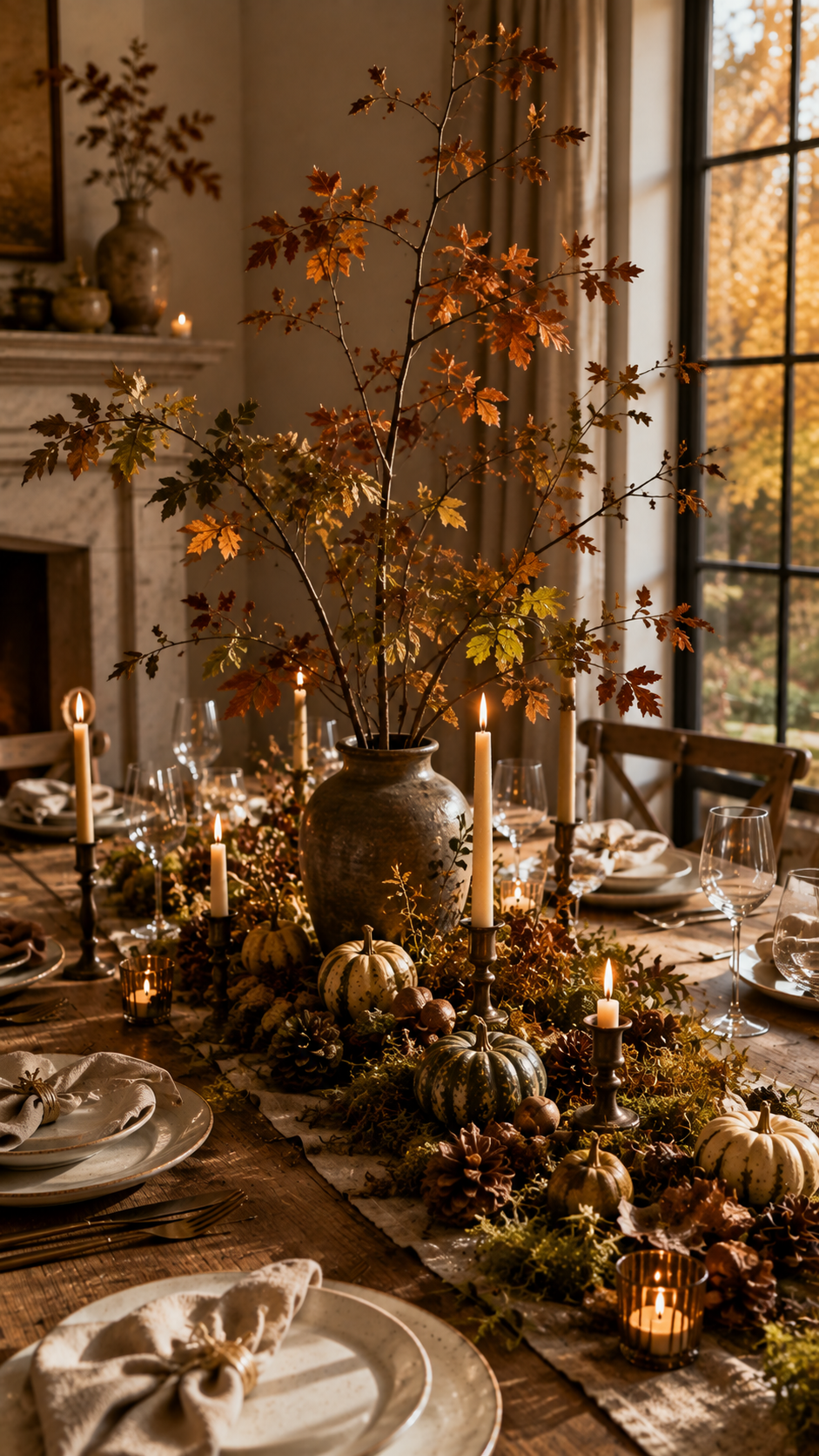
Rather than using abundant pumpkins or elaborate flowers, woodland fall table centerpieces focus on sculptural branches, seasonal leaves, mossy textures, seed heads, pinecones, acorns, and understated candlelight.
🌿 This approach feels especially appropriate for homes with rustic modern, Scandinavian, organic contemporary, farmhouse, or nature-inspired interiors.
It is also an excellent option for anyone who wants a centerpiece that feels autumnal without looking overtly festive.
🌳 Begin With One Sculptural Autumn Branch
One extraordinary branch can sometimes create more impact than twenty small decorative objects.
Look for a branch with an interesting natural structure and attractive foliage.
It might contain rusty oak leaves, golden maple leaves, deep burgundy foliage, or even mostly bare twigs with a few remaining leaves.
Place it inside a heavy ceramic or stone vessel so the composition feels stable.
The branch should rise vertically but also extend outward naturally.
Do not force every twig into a symmetrical shape.
Its irregular silhouette is precisely what makes the centerpiece interesting.
On a long dining table, one branch arrangement can become the focal point while smaller objects extend outward below it.
🍂 Create a Woodland Floor Along the Center of the Table
The lower portion of the centerpiece can mimic the textures found beneath autumn trees.
Use a restrained mixture of pinecones, acorns, small branches, seed pods, dried leaves, miniature mushrooms as decorative motifs, and tiny seasonal gourds.
Natural moss can provide a striking green accent, although it should be used sparingly.
The goal is not to literally recreate a forest floor.
Instead, borrow its visual language.
Keep portions of the table visible between objects. Negative space allows individual textures to stand out.
A linen runner in oatmeal, warm gray, muted olive, or natural flax can establish a soft foundation beneath the arrangement.
🪵 Combine Woodland Elements With Refined Materials
Natural decorating becomes particularly sophisticated when rough textures are contrasted with polished ones.
For example:
rough branch + clear wine glass
pinecone + polished brass candlestick
linen runner + glazed ceramic plate
acorns + silver flatware
dried foliage + crystal glassware
These contrasts prevent the table from looking overly rustic.
A woodland centerpiece can therefore work beautifully even inside a sophisticated dining room.
The trick is balancing approximately equal amounts of refinement and natural imperfection.
If everything is rough, the table may feel casual.
If everything is polished, it may lose the organic autumn atmosphere.
🕯️ Add Small Pools of Warm Light
Rather than filling the woodland table with numerous tall candlesticks, consider several low votives mixed with a few slim tapers.
This makes the arrangement feel grounded.
Amber glass candleholders work particularly well because they reinforce the golden colors of autumn foliage.
Clear glass offers a lighter alternative.
If using branches with leaves above the table, carefully consider candle placement. The flame should remain well away from foliage.
Strategically placed low light can reveal the textures of bark, linen, ceramics, and dried botanical materials beautifully.
🍁 How to Choose Between the Best 3 Fall Table Centerpieces
Each centerpiece creates a different emotional experience.
The Natural Harvest Runner is the best option when the table should feel generous, seasonal, and celebratory. It is especially effective for Thanksgiving because food and harvest imagery naturally belong together.
The Elegant Candlelit Floral Centerpiece is better for formal dinners, romantic gatherings, or occasions when the dining room should feel polished and atmospheric.
The Woodland Branch and Foliage Centerpiece is ideal for relaxed interiors and anyone who prefers understated seasonal decorating.
Consider the surrounding room before deciding.
A traditional dining room with dark wood furniture may look spectacular with flowers and brass candlesticks. A pale oak Scandinavian dining space might suit sculptural branches and neutral linen. A warm farmhouse kitchen could easily support an abundant pumpkin and fruit runner.
The best centerpiece looks like a natural extension of the room.
🎨 The Best Color Palettes for Fall Table Centerpieces
Autumn decorating does not require orange everywhere.
In fact, expanding beyond traditional orange can make fall table centerpieces feel dramatically more sophisticated.
Cream and Sage
Combine ivory pumpkins, eucalyptus, pale ceramics, linen, and light oak.
This palette feels calm and organic.
Burgundy and Dusty Rose
Use dark dahlias, burgundy candles, faded pink flowers, berries, and brass accents.
The effect is romantic and luxurious.
Terracotta and Olive
Warm terracotta ceramics paired with olive foliage and oatmeal linen create an earthy Mediterranean interpretation of fall.
Brown and Amber
Chocolate-colored foliage, amber glass, dark wood, and cream candles create a deeply cozy atmosphere.
Rust and Natural Linen
Rust-colored flowers or napkins paired with undyed linen and aged ceramics feel casual yet sophisticated.
🎨 Limiting the centerpiece to roughly three primary colors usually produces a more cohesive result.
🍽️ How to Style Fall Table Centerpieces on Different Table Shapes
Table shape influences centerpiece design more than many people realize.
A long rectangular table naturally supports horizontal arrangements.
Use runners, multiple small floral arrangements, scattered pumpkins, and repeated candlesticks to draw the eye along the entire table.
A round table works differently.
Rather than stretching decorations outward, create one central composition that can be appreciated from every direction. A low bowl filled with seasonal flowers, surrounded by a few candles and miniature pumpkins, works beautifully.
Oval tables can support either approach.
For a small dining table, restraint becomes especially important. One sculptural vase and two small candles may be enough.
Scale should always correspond to available surface area.
✨ How to Make Inexpensive Fall Table Centerpieces Look Expensive
Expensive-looking decorating is usually more about editing than cost.
First, avoid excessive quantities of obviously artificial seasonal decorations.
One real branch collected from the garden can look more sophisticated than an entire bag of plastic autumn leaves.
Second, prioritize natural materials.
Pumpkins, pears, apples, branches, dried hydrangeas, pinecones, herbs, and foliage provide rich textures automatically.
Third, use quality-looking neutral foundations.
A simple linen runner can elevate inexpensive decorations dramatically.
Fourth, repeat materials intentionally.
If one brass candlestick appears randomly, it may look accidental. If three or five appear at measured intervals, they become a design feature.
Finally, pay attention to spacing.
Luxury interiors often use more negative space than expected.
Allow the table itself to remain visible.
🌾 Natural Materials That Instantly Improve an Autumn Centerpiece
Autumn offers an enormous selection of decorating materials that can be sourced from gardens, farmers markets, grocery stores, or existing household collections.
Branches provide height.
Fruit adds color.
Pumpkins create sculptural volume.
Herbs introduce greenery.
Dried flowers provide softness.
Ceramics add architectural form.
Linen introduces texture.
Candles create movement and atmosphere.
Combining materials from different categories is more effective than simply increasing quantity.
For example, five different varieties of pumpkins can still look visually flat because they share similar textures.
But two pumpkins combined with one ceramic bowl, a pear, linen, foliage, and a brass candlestick create far greater visual complexity.
That contrast is what makes a centerpiece interesting.
🍂 Fall Table Centerpieces for Thanksgiving Without Looking Overdecorated
Thanksgiving tables often become overcrowded because the centerpiece must compete with serving dishes, dinnerware, glasses, bread baskets, and food.
A practical solution is designing the centerpiece in sections.
Instead of one enormous arrangement, create several small clusters running down the table.
For example, one cluster could contain a small pumpkin and candle. Another could feature pears and foliage. A third might contain a miniature floral arrangement.
The visual repetition connects everything, but individual sections can easily be removed when large serving dishes arrive.
Another strategy is decorating the spaces between serving dishes after determining where food will be placed.
This reverses the usual process.
Function comes first, decoration second.
The result often looks better because the centerpiece naturally integrates with the meal.
🕯️ Day to Night Styling for Fall Table Centerpieces
One of the most useful decorating strategies is creating a centerpiece that changes character throughout the day.
During daylight, natural materials should provide most of the visual interest.
Pumpkins, foliage, flowers, ceramics, fruit, and linen look beautiful in natural sunlight.
As evening approaches, candles take over.
This means the table does not need to be redesigned before dinner.
Simply light the candles and perhaps dim overhead lighting.
Warm candlelight immediately deepens burgundy, amber, rust, and brown tones while softening neutral shades.
Glassware becomes more reflective and metallic surfaces become more prominent.
A well-designed centerpiece therefore has two identities: fresh and textural during the day, intimate and glowing at night.
🌿 Final Styling Secrets for Beautiful Fall Table Centerpieces
The most memorable fall table centerpieces rarely depend on complicated decorating techniques. Instead, they combine thoughtful proportions, seasonal materials, natural color relationships, and atmospheric lighting.
Start with one strong concept.
Do not combine every autumn trend on the same table.
If pumpkins are the main attraction, allow them to dominate. If flowers are the focus, keep secondary decorations quieter. If a sculptural branch creates the drama, resist surrounding it with unnecessary objects.
🍁 Then layer textures gradually.
Add linen beneath ceramics. Place fruit beside foliage. Contrast smooth glass with rough bark. Introduce candles only after the primary arrangement feels balanced.
Step away from the table occasionally and look at the composition from across the room.
A successful centerpiece should attract attention without overwhelming the dining space.
🍁 Which of the Best 3 Fall Table Centerpieces Is the Winner
For maximum seasonal impact, 🥇 Best 1 Natural Harvest Runner earns the top position. It captures the abundance of autumn beautifully while remaining flexible enough for casual dinners, Thanksgiving celebrations, and sophisticated entertaining.
The combination of heirloom pumpkins, seasonal fruit, greenery, candles, and natural textures creates a centerpiece that feels unmistakably autumnal without requiring excessive decoration.
🥈 Best 2 Elegant Candlelit Floral Centerpiece is the strongest choice for a more luxurious atmosphere. Deep seasonal flowers and layered candlelight transform an ordinary dinner into an intimate autumn occasion.
Meanwhile, 🥉 Best 3 Woodland Branch and Foliage Centerpiece offers the most understated interpretation. Its sculptural branches, natural textures, and restrained palette make it ideal for modern organic interiors and relaxed everyday fall decorating.
Whichever direction is chosen, the fundamental principle remains the same: beautiful fall table centerpieces should celebrate the textures, colors, and natural abundance of autumn while leaving enough breathing room for the people gathered around the table.
That balance between decoration and hospitality is what turns a beautifully styled autumn table into a space people genuinely want to sit around. 🍂
Related posts:
Best 3 Laundry Folding Tables That Can Completely Transform Your Laundry Room

How to Transform Your Porch with Reclaimed Wood and Make It Look Amazing
Minimalist Outdoor Furniture Ideas for a Simple Porch Look That Will Make Your Neighbors Jealous
How to Add a Porch Swing to Your Outdoor Space and Make It the Coziest Spot Ever
How to Make a Small Porch Look Amazing Even with Barely Any Furniture
How to Style a Front Porch with Classic White Furniture and Make It Look Effortlessly Chic


