Wainscoting and Beadboard Styles are among the most effective ways to transform an ordinary wall into an architectural feature without completely remodeling a room. A relatively simple application of molding, panels, or narrow vertical boards can make a bedroom feel more polished, give a bathroom classic character, or turn a plain dining room into a space that looks thoughtfully designed.
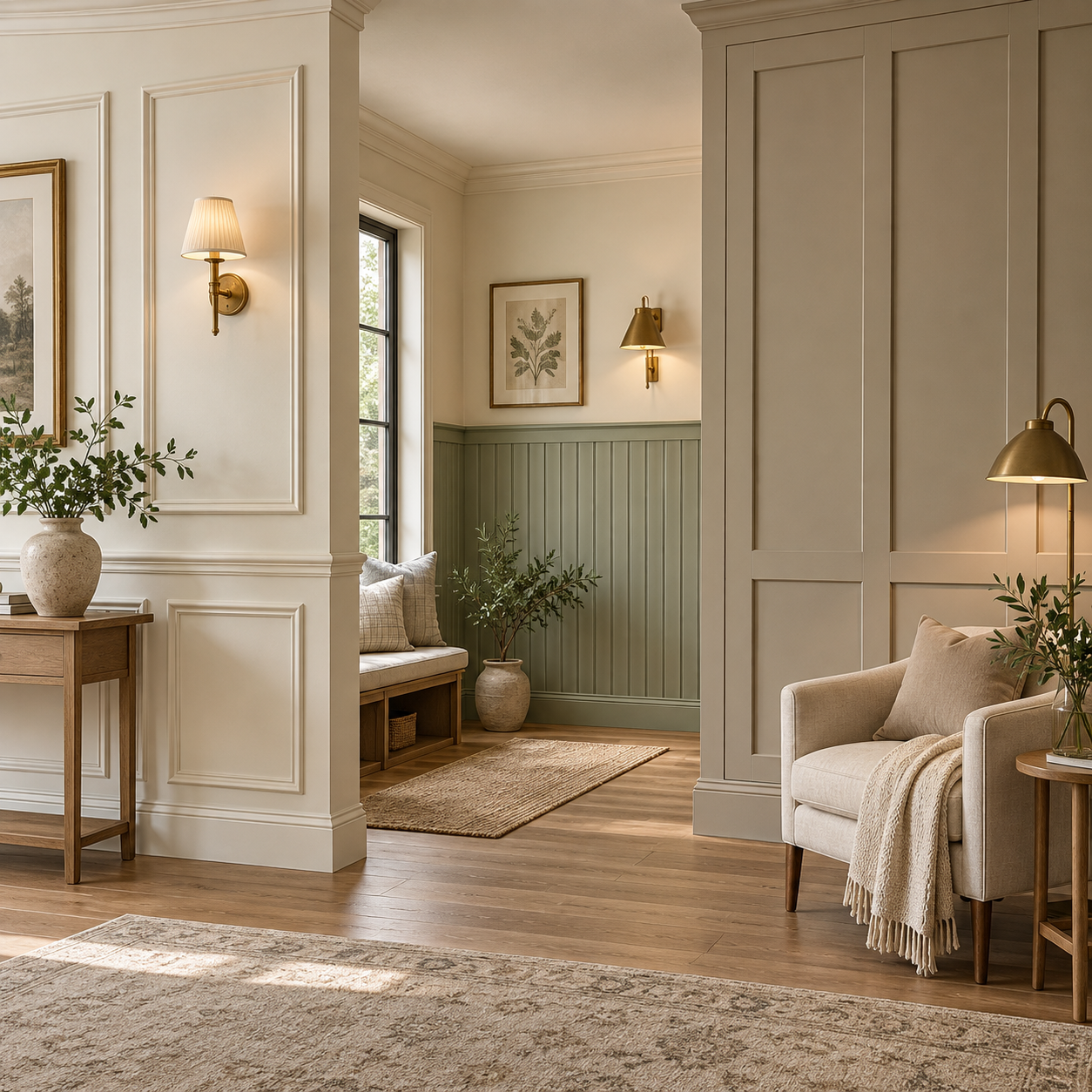
What makes wall paneling especially appealing is its versatility. Wainscoting can look traditional and formal, relaxed and cottage-inspired, or surprisingly clean and contemporary depending on the panel proportions, paint color, trim profile, and height. Beadboard offers similar flexibility, particularly when paired with warm neutrals, soft whites, muted greens, or natural wood.
Instead of treating decorative wall paneling as one generic design feature, it helps to understand the different visual effects that each style creates. Some options emphasize architectural symmetry, while others introduce texture or make ceilings appear taller.
Among the many possibilities, three approaches stand out for their combination of beauty, versatility, and timeless appeal.
🥇 Classic Picture Frame Wainscoting
🥈 Vertical Beadboard Wall Paneling
🥉 Modern Tall Wainscoting With Clean Moldings
Each has a distinct personality, making it possible to choose a wall treatment that complements the room rather than competing with it.
Why Wainscoting and Beadboard Styles Are Becoming So Popular
Decorative wall treatments have existed for centuries, but their role in modern interiors has evolved dramatically. Historically, wainscoting was often installed to protect lower walls from furniture, moisture, and everyday wear. Today, protection can still be useful, but homeowners are increasingly choosing paneling for visual reasons.
Flat drywall can sometimes make a room feel unfinished, especially when the furniture and color palette are intentionally simple. Adding molding or beadboard introduces subtle shadows, lines, and dimensional detail. 🏡 This makes the walls themselves become part of the interior design.
Another reason for the popularity of Wainscoting and Beadboard Styles is that they work with many decorating aesthetics. Traditional homes can use detailed molding profiles, while minimalist interiors can rely on thin trim and monochromatic paint.
Even small rooms can benefit. A narrow hallway with simple rectangular molding suddenly feels architectural. A compact powder room with vertical beadboard can appear taller and more charming. A plain bedroom can gain the feeling of a custom-designed interior simply by adding panel molding behind the bed.
The key is choosing the right style and proportion for the room.
Quick Comparison of the Best 3 Wainscoting and Beadboard Styles
Before examining each idea in detail, this comparison shows how the three styles differ.
| Style | Best For | Visual Effect | Recommended Height | Design Personality |
|---|---|---|---|---|
| 🥇 Classic Picture Frame Wainscoting | Dining rooms, bedrooms, hallways | Elegant and architectural | Lower third to half wall | Traditional to transitional |
| 🥈 Vertical Beadboard Wall Paneling | Bathrooms, kitchens, cottage rooms | Textured and visually taller | Half wall or full wall | Cottage, coastal, farmhouse |
| 🥉 Modern Tall Wainscoting | Living rooms, bedrooms, entryways | Dramatic and sophisticated | Two thirds wall or higher | Modern, transitional, luxury |
None of these approaches has to be restricted to one particular aesthetic. Paint color, molding thickness, furniture, lighting, and decorative accessories can completely change the personality of the finished wall.
A white beadboard bathroom may feel coastal, for example, while deep olive beadboard behind a freestanding bathtub can create a sophisticated country-house atmosphere.
Important Note: Always consider the room’s ceiling height before choosing the height of decorative wall paneling. Panels that are positioned too high or too low can visually distort the proportions of the room, while carefully balanced wainscoting can make the architecture feel more intentional.
🥇 Best 1 Classic Picture Frame Wainscoting for Timeless Elegance
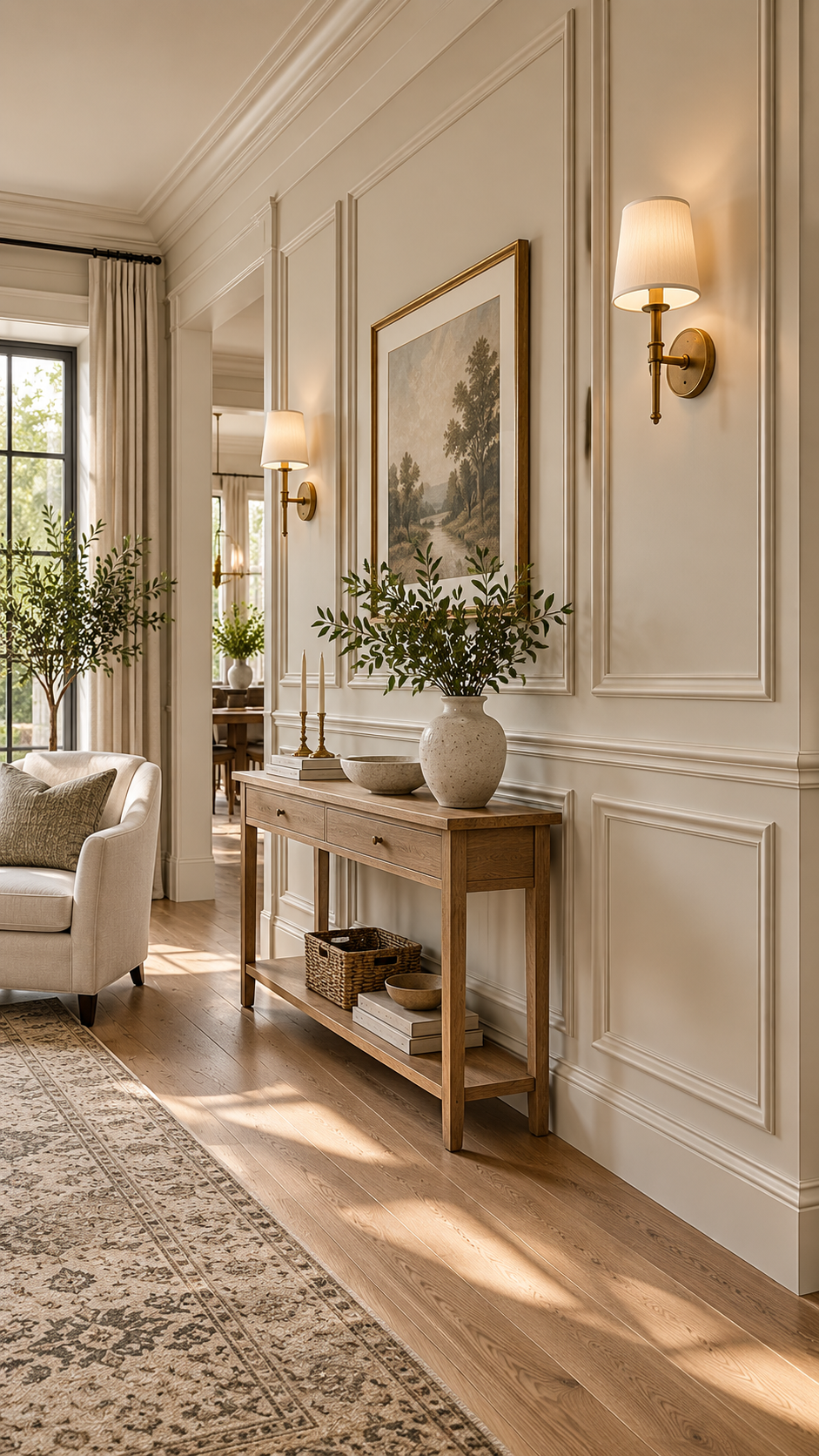
Classic picture frame wainscoting is one of the most adaptable wall treatments available. It consists of rectangular molding frames arranged across the lower portion of a wall, typically finished with a horizontal chair rail or decorative cap.
The appeal comes from symmetry.
Even when painted exactly the same color as the wall, the molding creates gentle highlights and shadows. These subtle changes give a flat surface more depth without introducing additional patterns or materials.
This style is particularly effective in dining rooms, bedrooms, entryways, and formal living areas where a little architectural detail can make the space feel finished.
Creating Balanced Picture Frame Proportions
The success of picture frame wainscoting depends heavily on spacing. Frames should not feel randomly distributed across the wall.
Usually, the molding rectangles are designed around existing architectural elements such as doors, windows, corners, fireplaces, or built-in cabinetry.
For example, a wide wall might contain three large rectangular panels rather than six narrow ones. The larger shapes create a calmer and more expensive-looking composition.
Consistent spacing is equally important. Keeping similar gaps between each frame creates visual rhythm and allows the eye to move naturally around the room.
📐 Proportion often matters more than ornamentation.
Simple molding installed with excellent proportions can look more luxurious than heavily decorated trim installed without balance.
Try Tonal Paint for a Sophisticated Look
One of the easiest ways to modernize traditional picture frame wainscoting is to paint the molding and surrounding wall the same color.
Instead of contrasting white trim against a colored wall, monochromatic paint creates a softer appearance.
Imagine warm greige walls with matching molding throughout a dining room. The trim becomes visible primarily through natural shadows rather than strong color contrast.
This approach is especially attractive in modern transitional interiors where traditional architecture is paired with contemporary furniture.
Popular colors include:
- warm white
- mushroom beige
- pale taupe
- muted sage
- soft grey
- dusty blue
- charcoal
- deep forest green
Darker colors create stronger drama, while pale shades keep the effect subtle and airy.
Extend Picture Frame Molding Through a Hallway
Hallways are often overlooked when decorating a home, yet they are excellent locations for decorative molding.
A long hallway with blank walls can feel almost empty even when artwork is added. Installing repeated picture frame molding introduces rhythm and makes the passage feel intentionally designed.
Small framed artwork can then be centered within selected panels.
Alternatively, the molding can remain completely undecorated. The architecture alone may provide enough visual interest.
Pairing warm white walls with natural wood flooring creates an elegant and understated foundation. Add simple wall sconces or a narrow console table, and the hallway immediately feels more refined.
Use Wainscoting Behind the Bed
Bedroom walls offer another interesting opportunity.
Instead of using wallpaper or a dramatic painted accent wall behind the bed, picture frame wainscoting can create a quieter architectural focal point.
The molding may extend approximately halfway up the wall or reach much higher behind the headboard.
For a calm bedroom, use wide rectangular panels painted in soft beige, warm ivory, or dusty grey.
Natural linen bedding, light oak furniture, and understated lighting help reinforce the sophisticated look.
The result feels luxurious without depending on trends.
🥈 Best 2 Vertical Beadboard Wall Paneling for Charming Texture
Beadboard has a completely different visual personality.
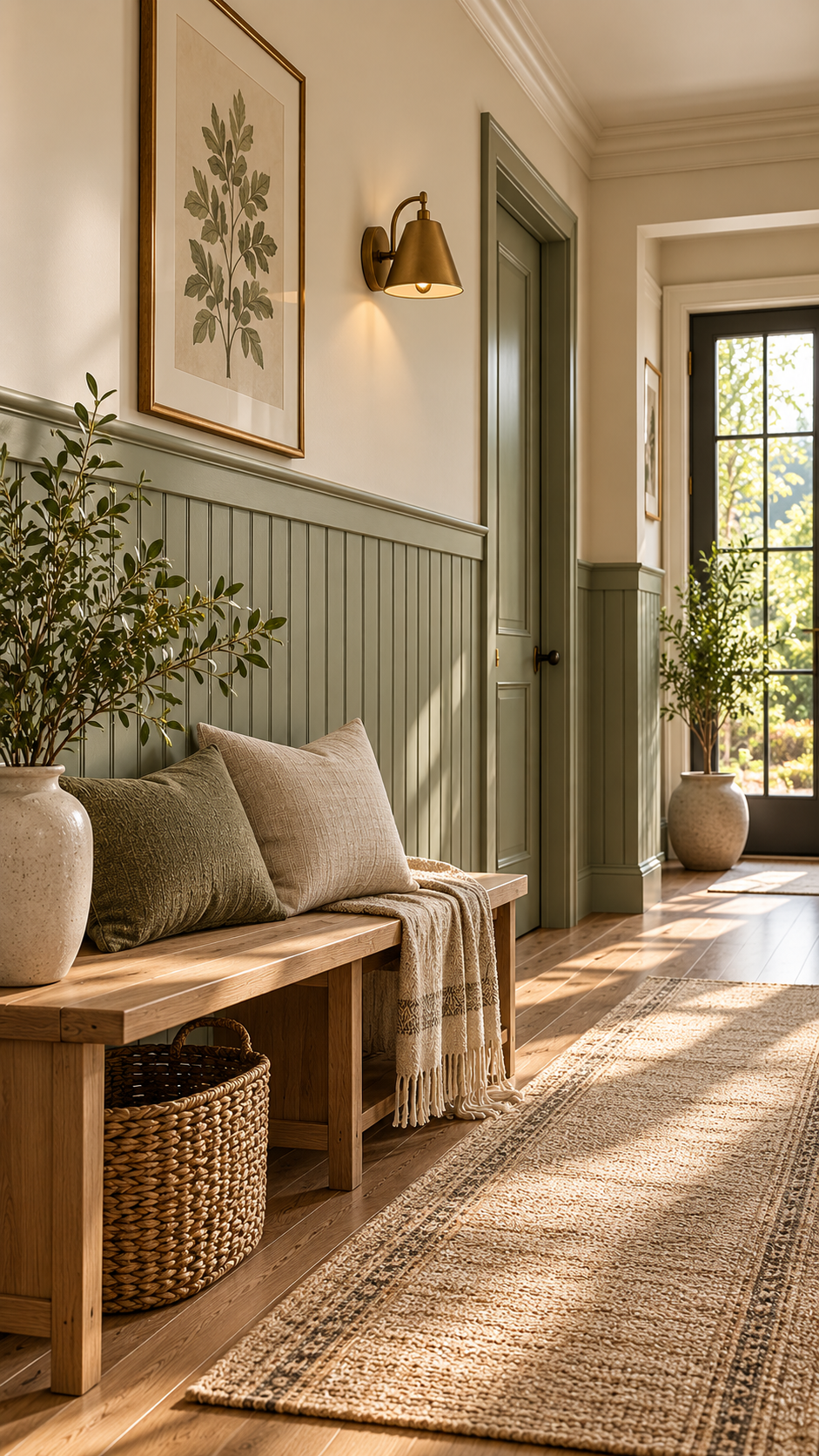
Instead of rectangular molding frames, beadboard is characterized by repeated narrow vertical grooves. These lines introduce texture and can visually stretch the walls upward.
Traditional beadboard is strongly associated with cottage, farmhouse, and coastal interiors. However, modern interpretations have expanded far beyond those styles.
With the right colors and materials, beadboard can feel surprisingly sophisticated.
Why Vertical Beadboard Works So Well in Small Rooms
Vertical lines naturally encourage the eye to travel upward.
This can make beadboard particularly helpful in small bathrooms, narrow entryways, compact kitchens, and powder rooms.
When the beadboard runs from the floor to approximately halfway up the wall, the upper section can remain painted or wallpapered.
This creates two visual layers without overwhelming the room.
For example, soft cream beadboard could be paired with delicate botanical wallpaper above it. The combination adds character while retaining an inviting atmosphere.
Alternatively, both areas can be painted the same color for a quieter effect.
Beadboard in Bathrooms
Bathrooms are probably one of the most natural environments for beadboard.
The paneling introduces detail into a space that often contains many smooth, hard surfaces such as tile, glass, porcelain, and stone.
Adding vertical boards can provide much-needed warmth.
Picture a small bathroom with warm white beadboard, a natural wood vanity, aged brass hardware, and a simple round mirror. The result feels inviting rather than clinical.
For something moodier, consider deep green beadboard paired with cream walls and stone flooring.
🛁 The contrast between traditional vertical paneling and modern bathroom fixtures creates an especially appealing balance.
Moisture-resistant materials should always be selected in areas where water exposure is likely.
Full Wall Beadboard for a Stronger Statement
Beadboard does not have to stop at chair-rail height.
Covering an entire wall can create a beautiful architectural backdrop.
This works especially well behind:
- beds
- breakfast benches
- bathroom vanities
- mudroom storage
- dining benches
- freestanding bathtubs
- reading corners
Full-height vertical paneling produces a more continuous look and emphasizes ceiling height.
In bedrooms, it can substitute for a traditional headboard wall. Paint the beadboard a muted color and position a simple upholstered bed against it.
Because the wall already contains plenty of linear detail, the remaining decor can stay relatively minimal.
Colored Beadboard for a Contemporary Twist
White beadboard will always be classic, but color can completely change its personality.
Muted olive green creates a natural, garden-inspired atmosphere. Dusty blue works beautifully in coastal spaces without appearing overly themed.
Warm clay, deep burgundy, charcoal, and muddy brown can make beadboard look modern and dramatic.
🎨 Even pale butter yellow can create an inviting cottage feel when paired with natural timber and vintage-inspired hardware.
A useful strategy is to choose a slightly muted shade rather than a highly saturated color. Muted tones allow the texture of the paneling to remain the primary visual feature.
Beadboard Kitchen Islands
Beadboard does not necessarily need to cover an entire room.
Using it on a kitchen island can introduce just enough texture to make the cabinetry more interesting.
Vertical beadboard applied to the sides or rear face of an island works especially well in kitchens that otherwise contain simple shaker-style cabinets.
Paint it the same color as the island for a subtle result.
Another option is to use a slightly deeper tone than the surrounding cabinetry.
For example, cream perimeter cabinets could be paired with a muted sage beadboard island.
The detail remains understated while still providing a memorable focal point.
🥉 Best 3 Modern Tall Wainscoting for a Sophisticated Statement
Tall wainscoting offers a more dramatic interpretation of traditional wall paneling.
Instead of stopping around chair-rail height, the molding extends approximately two thirds of the way up the wall or even closer to the ceiling.
This additional height changes the entire visual balance of the room.
The architecture becomes more prominent, making the wall treatment feel like an intentional design feature rather than a protective lower-wall detail.
Modern tall wainscoting works particularly well in bedrooms, living rooms, entryways, offices, and dining spaces.
Use Larger Panels for a Cleaner Modern Appearance
Traditional decorative paneling may feature multiple narrow rectangles.
Modern interiors generally benefit from fewer, larger panels.
Large rectangles create cleaner visual lines and prevent the wall from appearing overly busy.
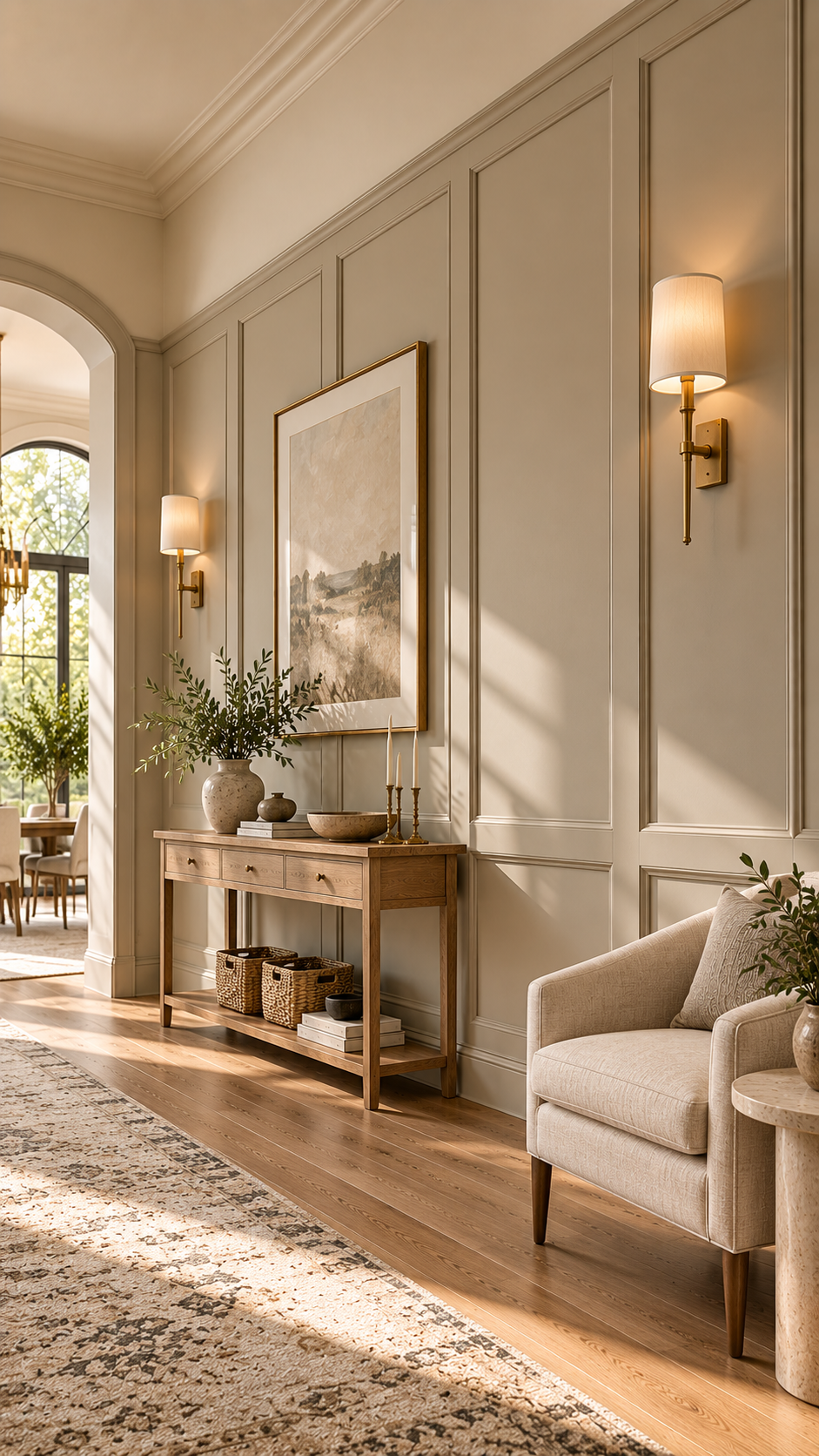
Imagine a living room wall divided into three generous panels extending from the baseboard to approximately three quarters of the wall height.
A narrow molding profile defines each section, while the entire surface is painted the same warm neutral color.
The result feels architectural but restrained.
This is an excellent approach for homes where traditional detailing is desired without creating a formal or historic appearance.
Paint Tall Wainscoting in Warm Neutral Colors
Warm neutrals work particularly well with large-scale wall paneling.
Shades such as oatmeal, stone, mushroom, cream, greige, and warm taupe highlight the molding while creating a comfortable atmosphere.
The subtle shadows around each trim piece become visible as daylight moves through the room.
🌤️ This changing light gives the wall depth throughout the day.
Pair warm neutral wainscoting with:
- light oak
- walnut
- linen
- wool
- brushed brass
- matte black accents
- travertine
- natural stone
These materials complement the architectural detail without making the space feel excessively decorated.
Create a Tall Wainscoting Bedroom Feature Wall
A bedroom is an ideal place to experiment with taller proportions.
Rather than covering every wall, tall molding can be installed behind the bed.
A wide central panel may frame the headboard, while narrower panels extend toward each bedside table.
Wall sconces can even be positioned inside the side panels.
This creates a custom-built appearance that feels similar to a boutique hotel room.
For maximum sophistication, keep the paint color consistent across the wall, molding, baseboard, and sometimes even the door trim.
The monochromatic finish allows the relief of the molding to create visual interest without breaking the room into too many contrasting elements.
Combine Tall Wainscoting With Wallpaper
Another beautiful possibility is to combine tall lower-wall paneling with wallpaper above it.
Because the wainscoting already occupies much of the wall, only a limited area of wallpaper remains visible.
This can prevent decorative patterns from becoming overwhelming.
A botanical wallpaper above muted green wainscoting creates a romantic, nature-inspired room.
For a more contemporary look, consider a soft abstract wallpaper above warm beige paneling.
In dining rooms, subtle heritage-inspired prints can create a classic atmosphere without making the space feel overly formal.
The transition between paneling and wallpaper should be finished with a clean horizontal molding or decorative cap.
How to Choose the Right Wainscoting Height
Panel height can dramatically affect the way a room feels.
Traditional wainscoting often occupies approximately one third of the wall. This proportion can work beautifully in formal interiors, especially when ceilings are reasonably high.
Half-wall paneling feels more substantial and is commonly used with beadboard.
Tall paneling creates greater architectural presence.
There is no universal measurement that works in every room. Doors, windows, furniture height, ceiling proportions, and existing trim should all influence the decision.
A useful approach is to temporarily mark the proposed panel height using painter’s tape.
Step across the room and examine the proportions from multiple viewpoints.
This simple test can reveal whether the paneling feels too short, too dominant, or appropriately balanced before any permanent material is installed.
Choosing Between Beadboard and Traditional Wainscoting
Although the terms are sometimes used interchangeably, beadboard and wainscoting are not exactly the same thing.
Wainscoting broadly refers to decorative paneling applied to the lower or selected portion of a wall.
Beadboard is one particular paneling style characterized by narrow vertical grooves.
Therefore, beadboard can function as wainscoting when installed on the lower part of a wall.
The choice depends largely on the mood desired.
Picture frame wainscoting generally feels more architectural and refined.
Beadboard feels more textured, casual, and handcrafted.
Tall modern panel molding falls somewhere between these two extremes. It retains the symmetry of traditional molding while working easily in contemporary homes.
Best Paint Colors for Wainscoting and Beadboard Styles
Paint color can completely transform decorative paneling.
White remains popular because it emphasizes architectural detail while keeping rooms bright.
However, warmer neutrals are becoming equally appealing.
Cream, beige, mushroom, and greige create softness and work beautifully with natural wood.
Green is another excellent choice.
Muted sage creates a relaxed atmosphere, while deep forest green produces a richer, more dramatic effect.
Blue can range from pale coastal shades to sophisticated slate tones.
For rooms where a stronger visual statement is desired, charcoal, chocolate brown, burgundy, or nearly black paneling can create impressive depth.
The ideal shade should respond to the light in the room.
North-facing spaces may benefit from warmer undertones, while rooms with strong warm daylight can often support slightly cooler colors.
Should Wainscoting Match the Wall Color
Both approaches can work.
Painting wainscoting and the upper wall in the same color creates a cohesive, modern appearance.
The architectural detail remains visible through texture and shadows.
Using different colors creates stronger visual separation.
For example, white beadboard paired with sage walls creates a classic cottage look.
Warm taupe paneling with cream walls feels elegant and transitional.
Dark charcoal wainscoting beneath pale grey walls creates stronger contrast and can make a dining room feel more dramatic.
The choice depends on whether the goal is subtle architecture or obvious visual definition.
How to Make Wainscoting Look Expensive
Expensive-looking interiors rarely depend on excessive detail.
Precision usually creates the strongest impression.
Consistent spacing, balanced proportions, crisp corners, smooth caulking, and professional paintwork make paneling appear custom-built.
Avoid making every panel extremely narrow simply to add more molding.
Fewer, larger panels often feel calmer and more sophisticated.
Another effective technique is repeating the proportions used elsewhere in the room.
If windows are tall and narrow, wall panels can echo that vertical shape.
If the architecture is wide and horizontal, larger rectangular panels may feel more natural.
✨ Visual harmony makes decorative molding feel like part of the original architecture rather than an afterthought.
Styling Furniture Around Decorative Wall Paneling
Once paneling has been installed, furniture should work with rather than hide the architecture.
Large furniture can still be positioned against wainscoted walls, but consider how its dimensions align with the panel layout.
A bed looks especially polished when centered within a large molding rectangle.
A dining sideboard can align with two or three panels.
Console tables work beautifully against repeated hallway molding.
Artwork should also respect the architectural lines.
Instead of hanging several small pieces randomly across multiple panels, consider centering one artwork within a defined section.
This strengthens visual order.
Plants, lamps, ceramics, and textiles can then add softness to the structured geometry of the wall.
Mixing Wainscoting With Different Interior Styles
One of the biggest misconceptions about wall molding is that it belongs only in traditional homes.
The same paneling can look completely different depending on the surrounding furniture.
In a classic interior, picture molding might be paired with antique furniture, detailed chandeliers, patterned rugs, and traditional artwork.
In a contemporary room, the same molding could be painted soft greige and paired with a low-profile sofa, sculptural lighting, abstract artwork, and minimal accessories.
Beadboard has similar flexibility.
Natural wood beadboard paired with clean cabinetry can feel distinctly modern.
Painted cream beadboard with vintage accessories creates cottage charm.
Dark beadboard with stone flooring and simple furniture can feel sophisticated and almost architectural.
The wall treatment provides the framework. The furnishings determine much of the final personality.
Small Room Ideas Using Wainscoting and Beadboard
Decorative paneling can work extremely well in compact spaces.
Powder rooms are particularly suitable because their small size allows bolder colors and patterns to be used without overwhelming a larger living area.
Try dark green beadboard with a light stone sink and warm metal fixtures.
A narrow hallway can benefit from simple lower-wall molding painted in the same shade as the upper wall.
Small bedrooms can use tall paneling behind the bed rather than bulky decorative furniture.
Even a compact laundry room can feel more intentional with beadboard surrounding shelves and cabinets.
The key is restraint.
In very small spaces, excessive molding detail may create visual clutter. Larger patterns and consistent colors generally work better.
Final Thoughts on the Best 3 Wainscoting and Beadboard Styles
The best Wainscoting and Beadboard Styles prove that walls do not need elaborate decoration to become memorable architectural features.
🥇 Classic Picture Frame Wainscoting is ideal for creating timeless structure and elegance. Its symmetrical panels work beautifully in dining rooms, bedrooms, hallways, and living spaces, especially when finished in sophisticated tonal paint.
🥈 Vertical Beadboard Wall Paneling introduces texture and relaxed character. It is particularly effective in bathrooms, kitchens, cottage-inspired spaces, and small rooms where vertical lines can create the impression of greater height.
🥉 Modern Tall Wainscoting delivers the strongest architectural statement. Larger panels, clean moldings, and elevated proportions make it especially suitable for contemporary bedrooms, living rooms, dining areas, and elegant entryways.
What connects all three styles is their ability to transform plain drywall into something intentional.
Beautiful paneling does not necessarily require complicated ornamentation. Thoughtful proportions, carefully selected paint colors, clean installation, and a clear relationship with the surrounding furniture can have a much greater impact.
For a subtle upgrade, soft tonal picture frame molding may be enough. For cottage character, beadboard brings texture and warmth. For a more dramatic interior, tall wainscoting can turn an entire wall into an architectural focal point.
Whichever approach is chosen, decorative wall paneling offers something that many temporary decorating trends cannot: lasting architectural character that can continue evolving simply through new paint colors, furnishings, lighting, and accessories.
Related posts:

Best 3 Thanksgiving Table Ideas That Will Make Your Holiday Dinner Look Unforgettable
Best 3 Christmas Tree Ideas 2026 Everyone Will Want to Copy This Holiday Season
Best 3 Practical Magic House Ideas That Make Any Home Feel Enchanted
Top 3 Ganpati Decoration at Home Ideas That Will Make Your Celebration Look Absolutely Stunning
Top 3 Dorm Whiteboard Ideas That Are Cute and Actually Useful
Top 3 Fall Entry Table Decor Ideas That Make Your Home Look Instantly Expensive