Creating beautiful Dog Spaces is no longer about placing a basic dog bed in the corner of the living room and hoping it blends into the background. Modern pet-friendly interiors are becoming far more thoughtful, combining comfort, organization, durability, and sophisticated design to create spaces that work equally well for dogs and their owners. From beautifully integrated sleeping nooks to practical mudroom stations and luxurious indoor-outdoor retreats, a dedicated dog area can become one of the most functional features of a home.

The best Dog Spaces feel intentionally designed rather than added as an afterthought. They provide dogs with somewhere secure to rest, eat, play, and retreat while helping homeowners control clutter, muddy paws, toys, leashes, food containers, and other everyday pet essentials. 🐕 When carefully planned, even a relatively small unused corner can become an impressive canine sanctuary.
Among the many possibilities, three concepts stand out for their balance of practicality, comfort, and visual appeal. 🥇 Best 1 The Built In Dog Nook, 🥈 Best 2 The Ultimate Dog Mudroom Station, and 🥉 Best 3 The Indoor Outdoor Dog Retreat each solve a different challenge while offering plenty of opportunities for beautiful interior design.
Why Thoughtfully Designed Dog Spaces Are Becoming a Home Essential 🐾
Dogs naturally look for places where they can relax without being completely disconnected from the household. A dedicated area gives them that sense of familiarity while creating clearer boundaries inside the home. Instead of having beds, blankets, bowls, and toys scattered between rooms, thoughtfully planned Dog Spaces bring those necessities together in an organized way.
The idea is particularly useful in busy family homes. A dog returning from a rainy walk may need somewhere to have its paws cleaned before entering the living room. Another dog may prefer a quiet sleeping area away from children, visitors, or household activity. Some homes simply need better storage for bags of food, grooming products, toys, collars, towels, and walking equipment.
Good design can solve all of these problems without making the house feel like a kennel.
Modern dog areas can borrow materials, cabinetry, and architectural details from the surrounding interior. Natural oak cabinetry, warm neutral paint, woven baskets, stone flooring, washable upholstery, and beautifully designed hooks can make the space feel like an intentional extension of the home.
There is also an important emotional element. Dogs spend a considerable amount of time resting, observing, and waiting for their owners. Providing a comfortable location where they can settle while remaining connected to household activity can make everyday life more pleasant for both dog and owner.
What Makes the Best Dog Spaces Successful
A beautiful dog area needs more than attractive styling. Its location, materials, proportions, ventilation, cleaning requirements, and accessibility all matter.
The most successful designs generally combine several functions.
A comfortable sleeping surface gives the dog somewhere predictable to rest. Accessible storage keeps frequently used supplies close by. Durable flooring makes cleaning easier. Good airflow prevents enclosed spaces from becoming stuffy. Nearby hooks or drawers can organize walking accessories, while washable fabrics simplify maintenance.
The space should also suit the individual dog.
A large breed requires considerably more floor area than a small companion breed. Older dogs may benefit from low-entry beds and non-slip flooring, while energetic dogs might need direct access to an outdoor area.
Rather than forcing every dog into the same design, the architecture should respond to how the animal actually lives.
| Dog Space Idea | Best Location | Main Purpose | Space Required | Best Feature |
|---|---|---|---|---|
| 🥇 Built In Dog Nook | Kitchen living room or hallway | Sleeping and relaxing | Small to medium | Seamlessly integrated into cabinetry |
| 🥈 Dog Mudroom Station | Mudroom laundry room or entry | Cleaning storage and organization | Medium | Excellent control of muddy paws and pet supplies |
| 🥉 Indoor Outdoor Dog Retreat | Rear entry patio or garden room | Relaxing playing and outdoor access | Medium to large | Strong connection between interior and garden |
These three approaches can also be adapted rather than copied literally. A compact apartment might use only a small cabinetry nook, while a larger suburban home could combine a mudroom washing station with direct garden access.
🥇 Best 1 Built In Dog Nook for Beautiful Integrated Dog Spaces
The built-in dog nook is one of the most elegant Dog Spaces for homeowners who want their pet’s sleeping area to become part of the architecture.
Instead of positioning a freestanding dog bed somewhere in the room, this approach creates a designated opening beneath cabinetry, a console, a staircase, a window seat, or another built-in structure. The result feels sophisticated and intentional while using floor area that might otherwise remain wasted.
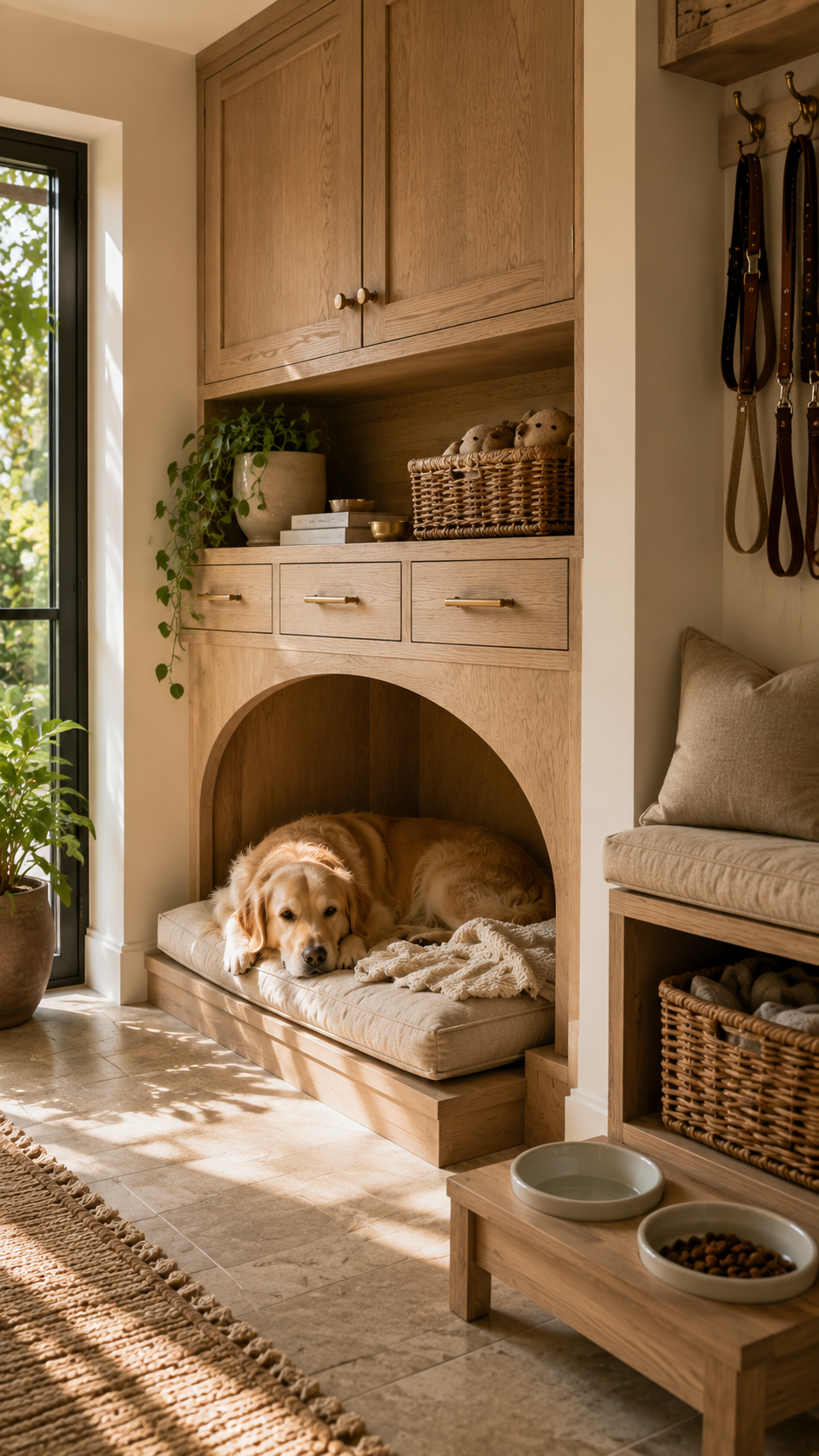
Imagine a warm contemporary kitchen with natural oak cabinetry extending along one wall. At the end of the cabinetry, a generous arched opening reveals a beautifully upholstered dog bed surrounded by softly finished wood. Above the nook, drawers store toys, grooming supplies, and walking accessories.
The dog receives a cozy retreat while the homeowner gains a remarkably tidy solution.
Choosing the Perfect Location for a Built In Dog Nook
Location determines whether the nook becomes a place the dog actually enjoys.
Many dogs prefer being close enough to observe family activity. A nook positioned near a kitchen, family room, or open-plan living area can therefore work particularly well. The dog can rest comfortably while still seeing people moving around the home.
However, the nook should not sit directly in the busiest traffic path.
Constant footsteps, opening doors, or moving chairs can make the area less relaxing. Ideally, it should occupy the edge of an active room rather than its center.
Spaces underneath staircases are another interesting possibility. The often-unused triangular area can accommodate a surprisingly generous dog retreat when properly ventilated and finished.
Window seats can work beautifully too. A dog bed beneath a wide window bench creates a comfortable sleeping zone while the upper surface remains available as seating.
Make the Dog Bed Feel Architecturally Integrated
The difference between an ordinary pet corner and a sophisticated built-in dog nook is often found in the details.
Instead of simply sliding a commercial dog bed beneath a cabinet, consider designing the opening around a removable cushion. The cushion can fit neatly from edge to edge, giving the nook a custom appearance.
An upholstered mattress in oatmeal, taupe, warm gray, olive, or another practical neutral shade can coordinate naturally with surrounding furniture.
For a more traditional interior, an arched opening adds softness and character. Contemporary homes may benefit from clean rectangular openings with minimal trim.
Small details can elevate the design further. A subtle wall light positioned outside the sleeping area, beautifully finished timber, or a discreet name plaque can create personality without turning the space into novelty décor.
🐾 The goal is to make the nook feel like miniature architecture rather than an oversized pet accessory.
Add Hidden Storage Above the Dog Nook
One of the biggest advantages of built-in Dog Spaces is the ability to incorporate storage.
Drawers directly above the sleeping area can hold collars, harnesses, brushes, medication containers, waste bags, and small toys. Larger cabinets can accommodate blankets or unopened bags of food.
Open shelving can also be incorporated, although closed cabinetry usually creates a calmer appearance.
Consider organizing the storage according to frequency of use. Everyday walking accessories should remain easy to reach, while backup supplies can occupy higher or deeper cabinets.
A shallow drawer containing a leash, waste bags, and treats can dramatically simplify the routine before every walk.
Choose Durable and Washable Materials
A luxurious-looking dog nook still needs to survive everyday pet life.
Removable cushion covers are essential. Performance fabrics, tightly woven upholstery, and washable cotton or linen blends can provide a refined appearance while remaining practical.
The interior walls should also be easy to wipe clean.
Wood veneer, sealed timber, durable painted surfaces, and washable wall panels are generally easier to maintain than delicate wallpaper or highly textured finishes.
Flooring deserves equal attention. Hardwood can look beautiful, but the surface should have enough traction for comfortable entry and exit. Stone or porcelain tile can provide exceptional durability when paired with a thick cushioned bed.
Important Note: Never design a built-in dog nook as a tightly sealed enclosure. The opening should provide generous ventilation, enough room for the dog to stand and reposition comfortably, and easy unrestricted access so the dog can enter or leave whenever desired.
Styling the Built In Dog Nook
Keep styling relatively restrained.
A comfortable bed should remain the focal point because functionality matters more than decoration. One attractive storage basket nearby can hold favorite toys, while a simple hook can accommodate a frequently used leash.
Avoid filling the nook with decorative objects that reduce usable space.
The surrounding cabinetry can carry most of the visual interest. Natural oak, creamy ivory, muted sage, mushroom, warm greige, or soft charcoal finishes all work beautifully depending on the overall interior.
This approach creates a sophisticated pet-friendly feature that can fit surprisingly well into both traditional and contemporary homes.
🥈 Best 2 Ultimate Dog Mudroom Station for Organized Dog Spaces
For households with dogs that frequently explore gardens, parks, beaches, trails, or muddy walking routes, the ultimate dog mudroom station may be the most practical option of all.
This Dog Space is designed around the transition between outdoors and indoors.
Instead of muddy paws traveling through hallways and across living-room rugs, the dog enters a dedicated cleaning and organization zone. Towels, leads, food, grooming supplies, outdoor gear, and cleaning equipment remain conveniently located in one place.
A well-designed dog mudroom can still look remarkably sophisticated.
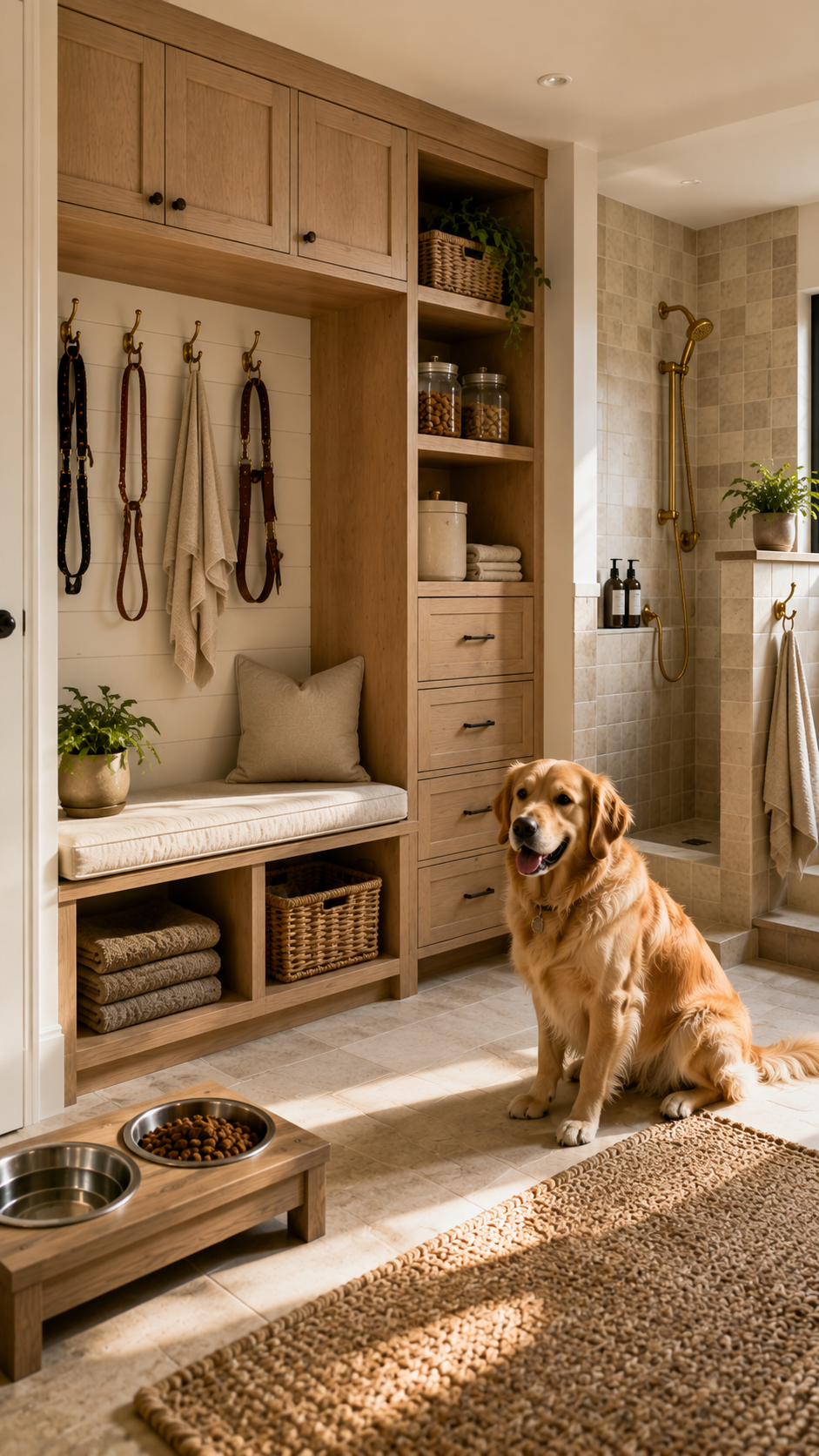
Picture limestone-look flooring, warm oak cabinetry, a built-in bench, woven baskets, brass or matte-black hooks, and a beautifully tiled dog washing station. The practical requirements become part of the interior rather than something homeowners need to hide.
Start With an Easy Clean Entrance
The floor is arguably the most important surface in a dog mudroom.
It needs to tolerate wet paws, dirt, occasional spills, and frequent cleaning. Porcelain tile, sealed stone, and other water-resistant hard surfaces are particularly useful.
Texture is equally important.
Extremely polished surfaces may become slippery when wet. A lightly textured finish can provide better traction while still looking refined.
A washable runner can add softness along the main circulation path. Choose something that can handle repeated cleaning rather than a delicate rug requiring specialist care.
Positioning an absorbent mat immediately inside the entrance provides another layer of protection.
Create a Dedicated Dog Washing Station 🚿
For larger mudrooms, a dedicated dog wash can completely transform everyday maintenance.
Unlike a conventional bathtub, a dog washing station can be positioned at a more convenient height or designed with a low entry depending on the dog’s size and mobility.
A handheld sprayer makes it easier to rinse muddy legs and paws. Waterproof wall tile protects surrounding surfaces, while a recessed niche can store shampoo and grooming products.
The visual design does not need to look clinical.
Warm handmade-style tiles, subtle natural stone patterns, or elegant neutral ceramics can coordinate beautifully with the rest of the mudroom.
A nearby stack of clean towels completes the setup.
For smaller homes where a complete shower is unrealistic, even a simple paw-cleaning station near the entrance can provide significant benefits.
Build Storage Around Everyday Dog Routines
A dog mudroom becomes significantly more useful when every item has a predictable home.
Hooks can organize leads and harnesses. Deep drawers can store towels. Baskets can separate toys from grooming equipment. Airtight containers can keep food organized and protected.
Frequently used items should remain within comfortable reach.
An attractive row of wall hooks above a bench can accommodate several leads without creating visual clutter. Individual baskets can be assigned to different dogs in multi-pet households.
Food storage deserves particular attention. Large bags can quickly make a beautiful room feel messy, so integrating a dedicated cabinet can improve both organization and appearance.
Pull-out containers are particularly useful because they allow easy access without requiring bulky bins to remain visible.
Include a Comfortable Resting Zone
A mudroom should not be entirely utilitarian.
Adding a comfortable dog bed beneath a bench or cabinetry creates somewhere for the dog to settle while paws dry after a walk.
This can essentially combine the first and second Dog Spaces ideas.
A large built-in bench might include drawers for human shoes on one side and an open dog sleeping nook on the other. Hooks above organize jackets and leads, while a nearby cabinet stores dog supplies.
The result is a multifunctional entrance that works for every member of the household.
Design a Beautiful Feeding Station
The mudroom can also become an excellent location for food and water bowls.
Built-in feeding drawers have become popular because they allow bowls to disappear when necessary. However, a permanently accessible water source is generally more practical for everyday use.
Another option is a shallow recessed area beneath cabinetry containing two attractive bowls.
This keeps the feeding zone visually organized while preventing bowls from sitting directly in a walking path.
A waterproof or easily washable surface underneath makes spills much easier to manage.
Use Vertical Space for Maximum Organization
Small mudrooms can still become impressive Dog Spaces when vertical surfaces are used effectively.
Tall cabinets provide storage without consuming much additional floor area. Upper shelves can hold rarely used supplies, while everyday equipment remains lower.
Wall-mounted hooks are ideal for leads, raincoats, harnesses, and travel accessories.
A narrow peg rail can provide substantial storage while maintaining a classic, understated appearance.
The key is creating enough organization without making the room feel like a pet-supply store. Repeating the same cabinetry, baskets, hardware, and materials used elsewhere in the home creates a much calmer result.
🥉 Best 3 Indoor Outdoor Dog Retreat for the Ultimate Pet Friendly Home
The indoor-outdoor dog retreat takes dedicated Dog Spaces to another level by creating a comfortable transition between the home and garden.
This concept works particularly well for dogs that enjoy spending time outside while still wanting access to a protected indoor resting area.
Rather than treating the backyard and interior as completely separate environments, the design creates one interconnected canine-friendly zone.
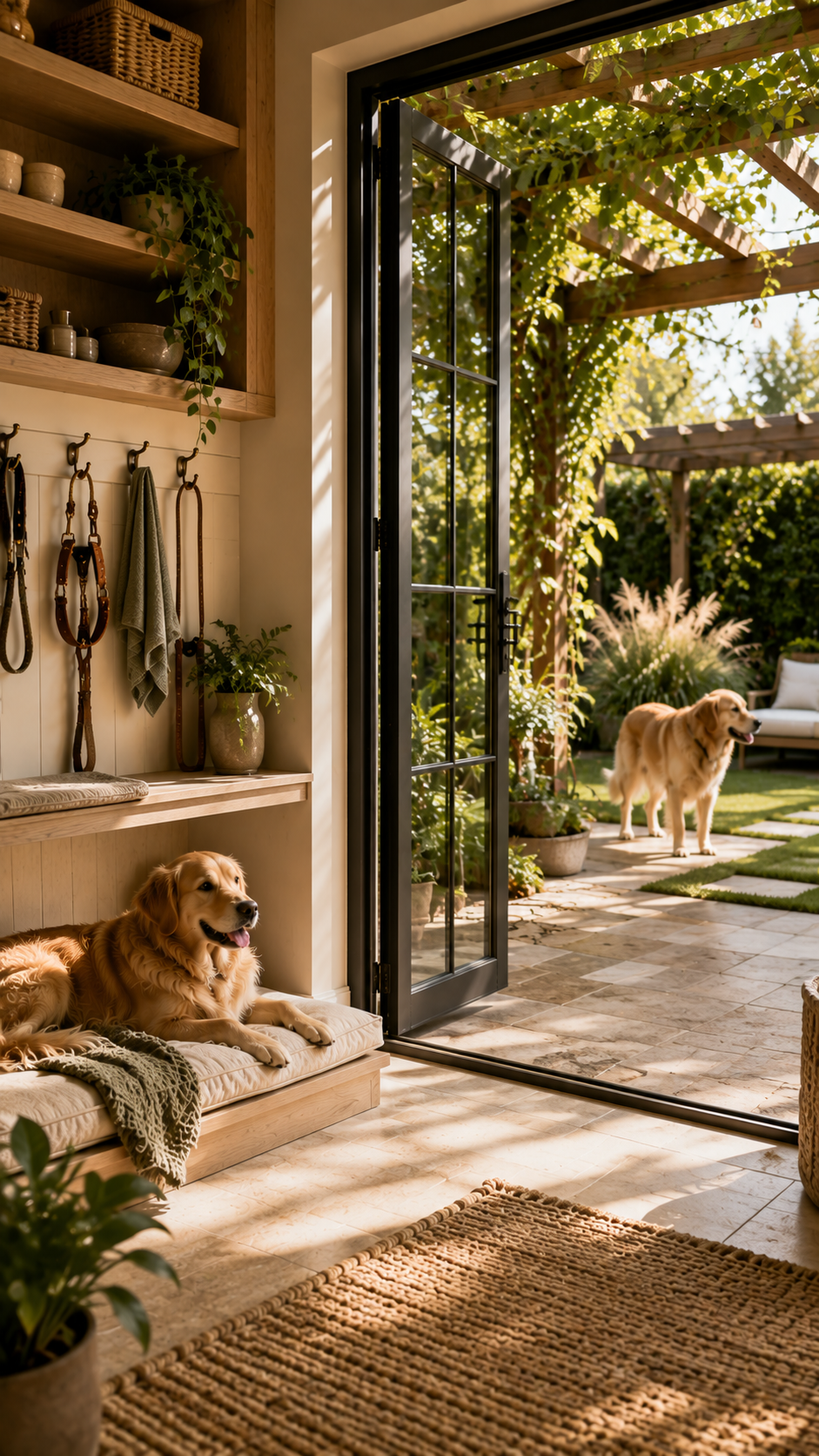
Imagine a bright garden room opening through wide glass doors onto a secure landscaped courtyard. Inside, a large washable dog bed sits beneath built-in storage. Outside, shaded stone paving transitions into soft lawn, planting, and a comfortable resting platform.
The dog can move naturally between environments while the entire composition remains elegant enough to complement sophisticated residential architecture.
Connect the Retreat Directly to the Garden 🌿
The strongest indoor-outdoor Dog Spaces have a clear relationship with the landscape.
A rear mudroom, utility room, sunroom, enclosed porch, or garden room can provide the indoor component. Doors then connect directly to a secure outdoor area.
Large glass panels are particularly effective because they allow dogs to see the garden even while resting inside.
The outdoor section does not need to occupy the entire backyard.
A thoughtfully designed side courtyard or compact enclosed patio can provide enough room for fresh air and relaxed observation.
The goal is not necessarily to create a huge exercise field. Instead, it is to create an accessible extension of the dog’s indoor environment.
Create Comfortable Shade Outdoors
Outdoor dog areas require protection from intense sun and changing weather.
Architectural overhangs, pergolas, mature trees, covered terraces, or other suitable structures can provide shade while making the retreat feel more integrated with the garden.
A comfortable outdoor bed or raised platform can be positioned beneath the sheltered area.
Natural materials help the retreat blend into residential landscaping. Timber structures, stone paving, gravel, and planting can create a far more attractive environment than an exposed concrete enclosure.
🌿 Planting around the edges can soften boundaries and create a peaceful atmosphere, provided the selected plants are appropriate for a pet-accessible garden.
Use Dog Friendly Landscaping
A beautiful dog garden needs to tolerate activity.
Delicate planting directly beside frequently used paths may quickly become damaged. Instead, establish clear movement routes using durable paving, gravel where appropriate, or robust ground surfaces.
Planting can then be concentrated around protected edges.
Raised planters are another useful strategy because they separate more vulnerable plants from active areas.
Avoid designing narrow dead-end spaces where dogs may become trapped or frustrated. Circular or interconnected pathways can create a more natural sense of movement.
A mixture of sunny and shaded zones gives the dog more choice throughout the day.
Add an Outdoor Water Point
Easy access to fresh water is especially valuable in an indoor-outdoor retreat.
A simple outdoor water station can be incorporated near the covered section. The surrounding surface should tolerate splashes and be easy to clean.
Some homeowners may also integrate an outdoor rinsing point.
This can be extremely useful after garden play, particularly during wet weather. A discreet handheld shower near the back entrance allows muddy paws to be rinsed before the dog returns indoors.
When integrated into attractive landscaping, even practical features like these can contribute positively to the overall design.
Make Security Part of the Landscape
Secure boundaries are fundamental to an outdoor dog retreat.
Fortunately, they do not need to dominate the garden visually.
Fencing can be softened with planting, integrated into hedges, or designed using materials that coordinate with the home’s architecture.
Gates should be positioned thoughtfully, particularly near driveways or street-facing areas.
The garden layout should also consider visibility. Being able to observe the outdoor dog area from inside the house can make the environment more practical and connected.
Security should feel integrated into the landscape rather than added afterward.
How to Choose Between These 3 Best Dog Spaces
The best concept depends primarily on lifestyle, available space, and the dog’s everyday routine.
For an apartment or compact home, 🥇 the built-in dog nook is usually the easiest concept to adapt. It requires relatively little floor area and can transform otherwise unused cabinetry space into a comfortable retreat.
For active households where dogs regularly return home wet or muddy, 🥈 the dog mudroom station offers extraordinary practical value. It creates a clear transition zone between outdoors and the cleaner areas of the home.
For properties with accessible gardens, 🥉 the indoor-outdoor dog retreat provides the most expansive experience. It gives dogs more freedom to enjoy fresh air while maintaining a strong connection with the interior.
Larger homes can combine all three.
A dog could have a sleeping nook in the family room, a washing and storage station beside the rear entrance, and a landscaped outdoor retreat connected to the garden.
The concepts do not need to compete with one another. Instead, they can form different layers of a complete pet-friendly home.
Best Materials for Stylish Dog Spaces
Materials can determine whether Dog Spaces remain attractive after years of everyday use.
Washable performance fabrics are ideal for cushions and upholstered surfaces. Removable covers make regular cleaning considerably easier.
For cabinetry, painted wood, sealed timber, and quality laminates can provide a balance between durability and sophisticated appearance.
Hard flooring is often the most practical choice around feeding and washing areas. Porcelain tile offers exceptional versatility because it can imitate stone, concrete, or even timber while remaining relatively easy to maintain.
Natural stone can create an exceptionally luxurious appearance but may require appropriate sealing and maintenance.
Wood flooring works particularly well around sleeping nooks when protected from excessive moisture.
Color also matters.
Mid-tone neutrals can hide everyday marks better than extremely pale surfaces. Warm taupe, mushroom, natural oak, muted olive, charcoal, and earthy stone shades can create a refined palette while remaining practical.
Small Dog Spaces Ideas for Compact Homes
Limited square footage does not prevent homeowners from creating a meaningful dog area.
The secret is identifying underused space.
The lower section of a tall cabinet can become a sleeping nook. A console table can be redesigned with an open lower compartment. An unused area beneath stairs can accommodate a bed. Even the end of a kitchen island may provide enough room for a small dog retreat when designed safely.
Vertical storage becomes particularly valuable in compact homes.
Rather than dedicating an entire cabinet to pet supplies, a single drawer can organize walking equipment while a basket holds toys.
Wall hooks eliminate the need for bulky storage furniture.
A small washable mat and beautifully designed bowl station can define a feeding zone without requiring architectural renovation.
The most effective compact Dog Spaces are often the simplest. One comfortable bed, one storage drawer, and one basket can be enough when each element has been positioned carefully.
Luxury Dog Spaces Ideas Without Making Them Look Excessive
Luxury does not necessarily mean creating a miniature mansion for a dog.
The most sophisticated Dog Spaces often rely on restraint.
High-quality materials, excellent proportions, beautiful craftsmanship, and thoughtful integration create more impact than excessive decoration.
A precisely fitted oak sleeping nook with a thick washable cushion can look more luxurious than an elaborate themed pet room.
Similarly, a beautifully tiled washing station with high-quality hardware can become an architectural feature in its own right.
Consistency is crucial.
If the home features brushed brass hardware, repeating that finish subtly around the dog station creates continuity. If the kitchen uses natural oak cabinetry, extending the same material into the dog nook prevents it from feeling disconnected.
Luxury emerges when the pet space appears to have been considered at the same time as the rest of the interior.
Common Mistakes to Avoid When Designing Dog Spaces
One of the most common mistakes is prioritizing appearance over the dog’s actual needs.
A tiny built-in nook may photograph beautifully but become useless if the dog cannot comfortably stand, turn, stretch, or change sleeping positions.
Another mistake is choosing difficult-to-clean materials.
Highly delicate rugs, fragile upholstery, and porous surfaces may create unnecessary maintenance around feeding or washing areas.
Poor location can also undermine an otherwise excellent design.
A dog bed placed beside a noisy appliance, directly beside a frequently opened exterior door, or in the middle of household traffic may not provide the peaceful retreat originally intended.
Storage should also remain realistic.
Dog equipment tends to accumulate over time. Designing only enough space for one leash and a few toys can quickly lead to clutter. A little additional closed storage makes the design more adaptable.
Finally, avoid making the area overly themed.
Paw-print wallpaper, dog-shaped decorations, novelty signs, and excessive accessories are unnecessary if the architecture already communicates the purpose of the space. A restrained approach usually produces a more timeless result.
Add Personality Without Sacrificing Sophisticated Design ✨
Dog Spaces should still have personality.
The easiest way to achieve this is through small, meaningful details.
A beautiful ceramic bowl, woven toy basket, personalized hook, subtle framed photograph, or custom cushion can make the area feel individual without overwhelming the interior.
Color provides another opportunity.
A muted forest-green cushion can complement warm oak cabinetry. Deep navy can create contrast against pale stone. Terracotta and earthy brown tones can introduce warmth.
Textures can make a simple dog nook feel especially inviting.
Combine smooth cabinetry with woven baskets, soft upholstery, natural timber, and subtle stone surfaces. The variation creates visual richness without requiring excessive decoration.
🐕 Above all, personality should come from the way the space accommodates the dog rather than from novelty décor.
A favorite blanket, preferred sleeping position, collection of well-loved toys, or convenient place beside the family’s everyday activity will make the area feel genuinely personal.
Creating Dog Spaces That Grow With Your Pet
Long-term planning is particularly important when designing permanent built-ins.
Puppies grow quickly, and their behavior changes considerably as they mature. A sleeping nook designed around a small puppy’s current dimensions may become impractical within months.
Whenever possible, design according to expected adult size.
Accessibility should also be considered over the long term. High platforms, steep steps, and slippery flooring may become challenging as a dog ages.
Low-entry beds and level transitions provide greater flexibility.
Removable components are useful too.
A fitted cushion can be replaced when worn. Adjustable shelving can accommodate changing storage requirements. Removable gates can adapt the space as training needs evolve.
Flexible design usually produces better long-term value than an extremely specialized installation.
Final Thoughts on the 3 Best Dog Spaces
The most successful Dog Spaces prove that pet-friendly living and sophisticated interior design can exist beautifully together.
🥇 Best 1 The Built In Dog Nook is ideal for creating a cozy architectural retreat without consuming unnecessary floor space. By integrating a comfortable sleeping area into cabinetry, stairs, window seating, or another existing structure, it provides one of the most elegant solutions for compact and medium-sized homes.
🥈 Best 2 The Ultimate Dog Mudroom Station is the practical champion. It brings washing, storage, feeding, walking equipment, and resting into one organized transition zone, making it particularly valuable for active dogs and busy households.
🥉 Best 3 The Indoor Outdoor Dog Retreat creates the strongest connection with nature. By linking a comfortable interior resting space with a secure, shaded, thoughtfully landscaped garden area, it provides a flexible environment where dogs can enjoy both indoor comfort and outdoor stimulation.
Whichever concept works best, the guiding principle remains the same: design the space around real everyday behavior.
Think about where the dog naturally chooses to sleep, which entrance is used after walks, where food is stored, how often muddy paws need cleaning, and which household spaces allow the dog to remain close to family activity.
Then use durable materials, comfortable surfaces, smart storage, and architectural details to make those routines easier.
🐾 A truly beautiful dog-friendly home does not attempt to hide the fact that a dog lives there. Instead, it thoughtfully accommodates the dog while preserving the character and sophistication of the interior.
With the right planning, Dog Spaces can become more than practical pet corners. They can become some of the warmest, smartest, and most thoughtfully designed areas in the entire home.
Related posts:

Best 3 Plastic Pumpkins Makeover Ideas That Look Surprisingly Expensive
Best 3 Bookshelf Wallpaper Ideas That Make Any Wall Look Expensive
Best 3 Wedding Photo Displays That Make Your Celebration Feel More Personal
Best 3 Minimalist Cozy Interiors Ideas That Make Simple Homes Feel Warm and Beautiful
Best 3 Cozy Reading Chairs That Make Any Corner Feel Like Your Favorite Escape
Best 3 Wainscoting and Beadboard Styles That Instantly Make Any Room Look More Expensive