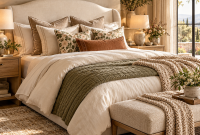
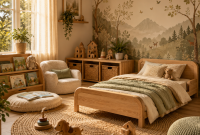
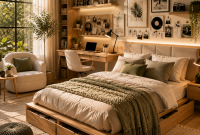
A bedroom should be more than a place where the day ends. It should feel like a private retreat where soft textures, flattering light, calming colors, and thoughtful details work together to create an atmosphere that instantly slows everything down. The best Dreamy Bedroom Ideas transform an ordinary sleeping space into something immersive and beautiful without making it impractical for everyday life.
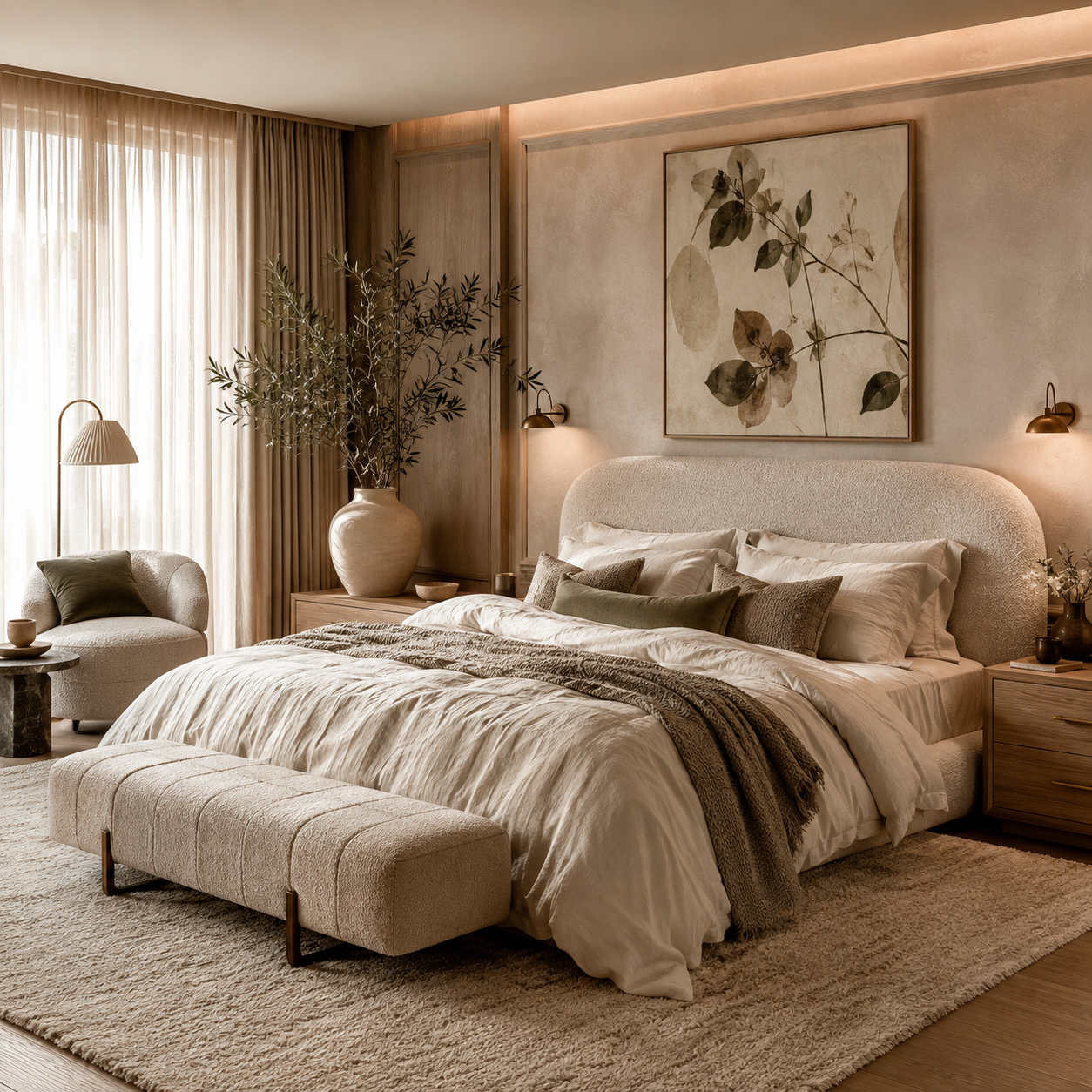
What makes a bedroom feel truly dreamy is not simply filling it with pretty furniture or following one particular decorating trend. The feeling usually comes from layering. Gentle lighting softens architectural lines. Textiles introduce depth and comfort. A carefully selected palette creates emotional consistency, while small decorative details add personality without overwhelming the room.
Some dreamy bedrooms are bright, airy, and almost cloudlike. Others feel romantic and botanical, filled with flowing fabrics and organic forms. A darker bedroom can be equally dreamy when deep colors, warm illumination, and luxurious materials create a cocooning atmosphere.
The following three approaches offer completely different ways to create an unforgettable bedroom while keeping comfort, function, and visual harmony at the center of the design.
What Makes Dreamy Bedroom Ideas Feel So Special ✨
Dreamy bedroom design usually begins with atmosphere rather than individual furniture pieces. When entering the room, there should be an immediate emotional response. The space might feel peaceful, romantic, luxurious, warm, or almost magical.
Lighting plays an especially important role because harsh illumination can instantly destroy that softness. Instead of relying entirely on one bright ceiling fixture, dreamy rooms usually combine several gentle light sources. Bedside lamps, wall sconces, hidden LED lighting, candles, pendant lights, and natural daylight can all contribute different layers of illumination.
Texture is equally important. Linen bedding, washed cotton, bouclé, velvet, wool, natural wood, plaster, and soft rugs create surfaces that invite touch. Even a mostly neutral bedroom becomes visually interesting when several textures are combined.
The most successful rooms also leave enough negative space. Dreamy does not mean crowded. A few beautifully chosen objects often create a stronger atmosphere than dozens of unrelated decorations.
Quick Comparison of the Top 3 Dreamy Bedroom Ideas
| Dreamy Bedroom Style | Best Colors | Hero Materials | Ideal Mood | Best For |
|---|---|---|---|---|
| 🥇 Ethereal Cloudlike Retreat | Ivory creamy beige soft greige pale oak | Linen bouclé wool oak plaster | Calm airy luxurious | Minimalists and neutral decor lovers |
| 🥈 Romantic Botanical Escape | Dusty rose sage cream muted terracotta | Linen wood botanical textiles aged brass | Romantic organic enchanting | Nature inspired and cozy bedrooms |
| 🥉 Moody Luxury Cocoon | Chocolate brown charcoal burgundy olive | Velvet dark wood linen bronze | Intimate dramatic sophisticated | Cozy sleepers and dramatic interiors |
Each approach can be adapted to small bedrooms, large primary suites, apartments, guest rooms, or modern homes. The secret is maintaining consistency rather than copying every decorative detail.
🥇 Best 1 Ethereal Dreamy Bedroom Ideas With a Cloudlike Neutral Retreat
The most universally calming approach is a light neutral bedroom designed to feel almost weightless. Instead of using stark white everywhere, build the room from subtle layers of ivory, warm cream, oatmeal, sand, mushroom, and pale greige.
These colors reflect natural light beautifully while preventing the room from feeling cold or clinical. The objective is to create the visual softness of morning light moving through linen curtains.
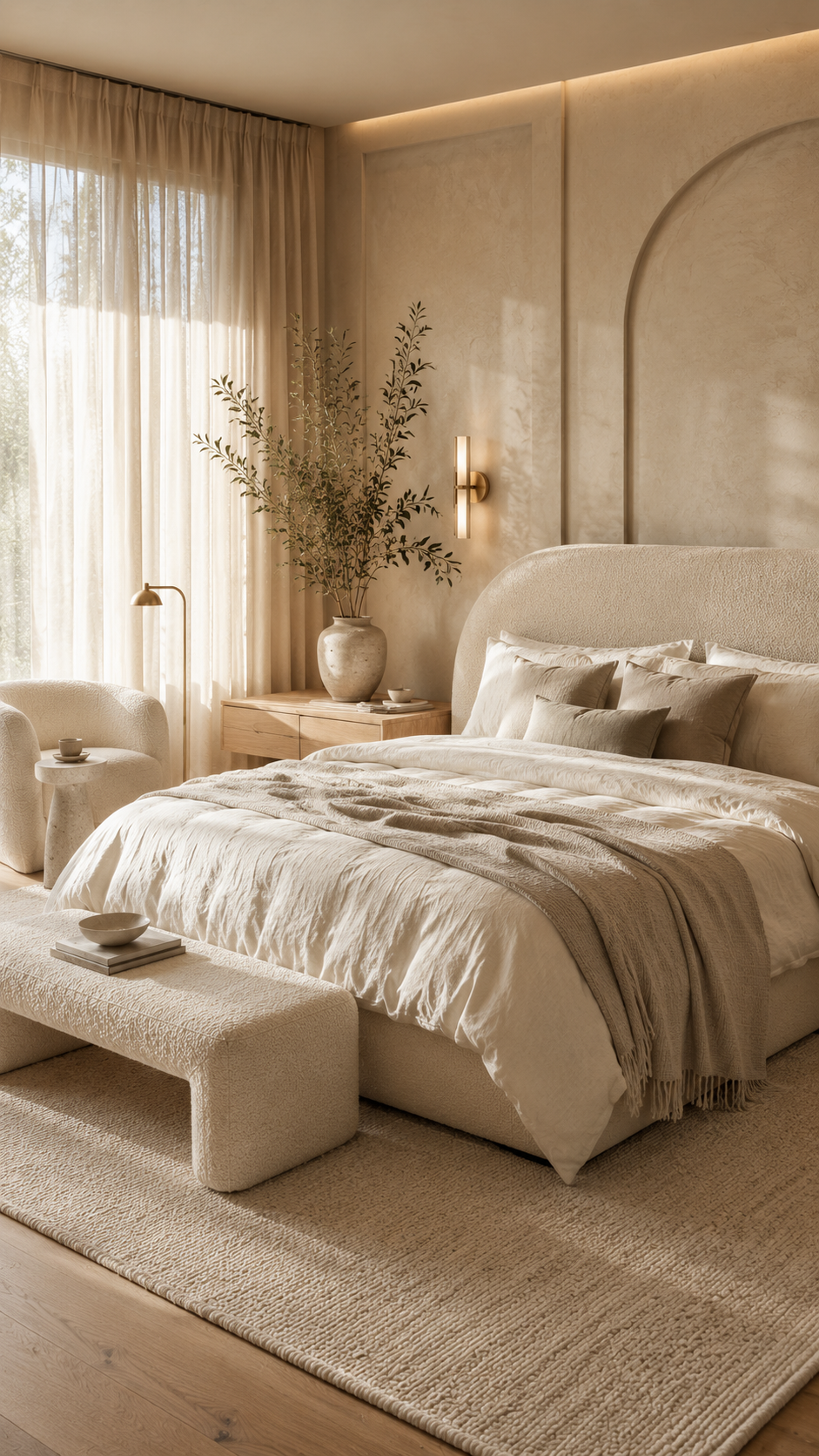
Start With a Soft Architectural Background 🤍
Walls establish the emotional tone of the bedroom before furniture is even introduced. Warm off-white paint is an easy choice, but textured plaster, limewash, or subtle microcement can create significantly more depth.
A slightly imperfect wall finish catches light differently throughout the day. Small variations in tone make the room appear softer and more organic than perfectly flat paint.
For an especially luxurious appearance, consider extending the wall treatment behind the bed into a subtle feature wall. Vertical timber panels, pale oak slats, curved plaster detailing, or oversized upholstered panels can provide architectural interest without making the room visually busy.
The goal is restraint. Architectural details should quietly frame the bed rather than compete with it.
Make the Bed the Soft Visual Center 🛏️
The bed should immediately feel inviting. Choose an upholstered frame in warm ivory, oatmeal, mushroom, or pale beige and look for soft shapes rather than sharp corners.
A generously padded headboard instantly makes the room feel more luxurious. Curved, channel-tufted, scalloped, or oversized rectangular headboards can all work depending on the overall design.
Layer the bedding instead of relying on one perfectly coordinated set. Begin with crisp cotton or linen sheets, followed by a lightweight duvet, a folded quilt, and one textured throw near the foot of the bed.
Pillows can combine different neutral tones. Cream, ivory, camel, and soft taupe work beautifully together because slight color variations create visible depth.
Avoid making the bed look excessively staged. Slightly relaxed linen folds often feel more inviting than perfectly rigid hotel-style arrangements.
Introduce Pale Natural Wood 🌿
Wood prevents a neutral bedroom from becoming visually flat. Pale oak is especially effective because it adds warmth while maintaining the airy atmosphere.
Use it through nightstands, a bench, floating shelving, ceiling beams, flooring, or a low dresser.
Natural wood grain should remain visible whenever possible. Highly glossy finishes tend to feel more formal, while matte or lightly oiled surfaces support the soft contemporary atmosphere.
A simple pale oak nightstand with rounded edges can look more sophisticated than heavily decorated furniture because the material itself becomes part of the design.
Create Cloudlike Curtains
Floor-to-ceiling curtains are one of the easiest ways to dramatically change the atmosphere of a bedroom.
Mount the curtain rod close to the ceiling rather than directly above the window. Allow the fabric to extend generously toward the floor.
Sheer linen or lightweight voile filters daylight beautifully and creates subtle movement when air enters the room. For privacy and darkness at night, combine the sheer layer with concealed blackout curtains.
Warm ivory generally works better than bright optical white because it harmonizes more naturally with beige furniture and warm wood.
The resulting effect feels soft, tall, and almost cinematic.
Layer Lighting Instead of Using One Bright Fixture 💡
A dreamy bedroom needs flattering light at multiple heights.
Small pendant lights or wall sconces beside the bed free up nightstand space while creating an elegant hotel-like composition. Warm bedside lamps add intimacy, while concealed lighting behind a headboard can produce a subtle halo effect.
If a ceiling fixture is needed, choose something sculptural but visually soft. Fabric pendants, frosted glass, rice paper lanterns, and rounded plaster lights work especially well.
Select warm bulbs rather than cool white lighting.
Important Note: Keep all major bedroom lighting within a similar warm color temperature so the room feels cohesive at night rather than mixing yellow ambient light with harsh blue white illumination.
Ground the Bedroom With a Large Rug
A soft rug makes the entire room feel more luxurious immediately.
Rather than placing a tiny rug beside the bed, choose a larger design extending beneath the bed and outward on both sides. This visually anchors the sleeping zone and gives bare feet a comfortable surface in the morning.
Wool, wool blends, and textured low-pile rugs work particularly well. Cream, oatmeal, faded taupe, and subtle abstract patterns preserve the serene atmosphere.
When the walls, curtains, bed, rug, and upholstery all feature slightly different textures, even a very restrained color palette feels rich rather than boring.
🥈 Best 2 Romantic Dreamy Bedroom Ideas With Botanical Layers and Soft Color
For a bedroom that feels more expressive, romantic botanical styling creates a beautiful balance between nature, softness, and personality.
This approach still uses a calming foundation but introduces muted greens, faded florals, dusty rose, earthy terracotta, and warm metallic accents.
Instead of feeling overly feminine or traditional, the room can look contemporary when floral references are subtle and the furniture remains clean-lined.
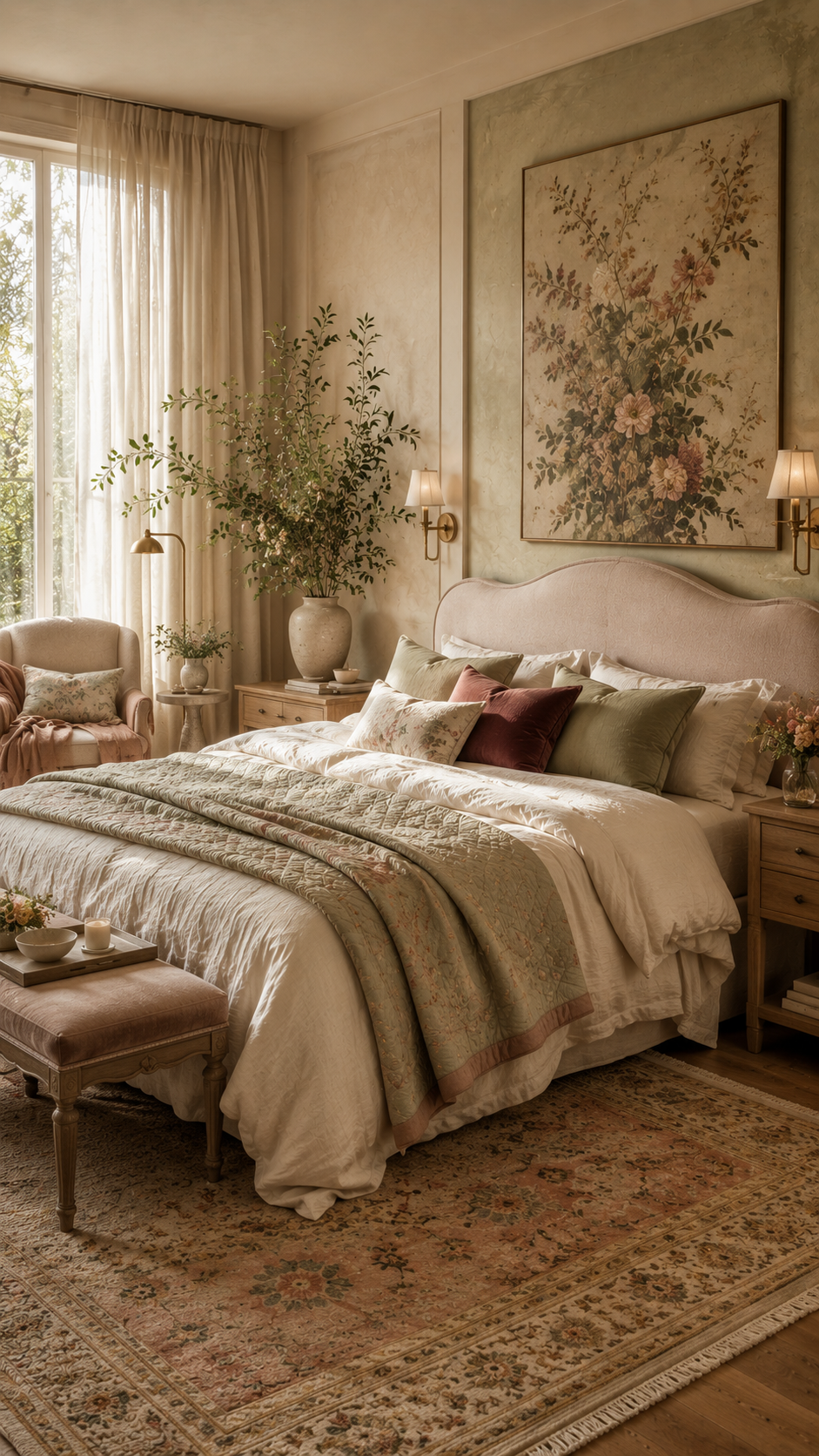
Build the Palette Around Nature 🌸
Begin with one gentle natural color.
Sage green is particularly versatile because it combines beautifully with cream, pale wood, dusty pink, muted burgundy, and aged brass.
Another approach is starting with a warm blush or earthy rose and balancing it with olive or eucalyptus green.
The colors should appear slightly faded rather than extremely saturated. Think dried flowers, antique textiles, moss, clay, stone, and autumn leaves rather than bright artificial color.
A natural palette creates romance without making the bedroom feel childish.
Use Botanical Art Instead of Excessive Floral Patterns
Botanical bedrooms can quickly become visually busy when floral prints appear on every surface.
A more sophisticated strategy is using one or two strong botanical moments.
Large vintage-inspired botanical artwork above the bed can become a beautiful focal point. Oversized photography of branches, wildflowers, or leaves works well in contemporary bedrooms.
Pressed botanical specimens in thin frames provide another subtle option.
For a dramatic design, consider hand-painted mural wallpaper behind the bed featuring delicate branches or abstract foliage.
Then keep most other surfaces relatively simple.
This balance allows the botanical theme to feel intentional rather than themed.
Add Romantic Bedding Through Texture
Romantic bedrooms benefit from bedding that looks relaxed and tactile.
Washed linen in cream, muted blush, clay, sage, or warm beige creates natural softness. Add a quilt or coverlet with subtle stitching and finish with one luxurious throw.
Velvet can provide a beautiful contrast when used sparingly. A dusty rose velvet cushion or muted olive lumbar pillow introduces richness without overpowering the bed.
Small floral prints can also work when paired with solid textiles.
For example, a delicate botanical cushion against mostly plain linen bedding becomes an accent rather than the dominant pattern.
Introduce an Elegant Vintage Element 🕯️
One carefully chosen vintage-style element can instantly make the room feel more collected.
Consider an aged wood nightstand, antique-style mirror, carved bench, ceramic lamp, vintage rug, or brass wall sconce.
The room does not need to become entirely traditional. In fact, vintage pieces often look more interesting beside modern furniture.
A clean upholstered bed paired with an antique wooden nightstand creates contrast. Likewise, a modern floating dresser can sit beautifully beneath an ornate aged mirror.
Mixing eras prevents the bedroom from looking like a showroom.
Bring Real Greenery Into the Space 🌿
Plants are one of the most literal ways to reinforce a botanical bedroom.
Choose plants based on the available light rather than appearance alone. A healthy medium-sized plant is usually more attractive than several struggling ones.
Tall greenery can soften empty corners. Smaller plants can sit on a dresser, floating shelf, or window ledge.
Branches placed in a large ceramic vessel provide another elegant option. Olive branches, eucalyptus-style foliage, or seasonal flowering branches create height without occupying much floor space.
Even dried botanicals can work beautifully when natural greenery is impractical.
Use Warm Metals for a Romantic Glow
Brass, bronze, and aged gold pair exceptionally well with botanical palettes.
Use them selectively through lamp bases, wall lights, drawer pulls, picture frames, or small decorative objects.
Avoid making every metal surface identical. Slight variation creates a more organic collected appearance.
Polished gold can look glamorous, while aged brass feels softer and more timeless.
Against sage green or dusty rose walls, warm metal accents provide a subtle glow that becomes especially beautiful during the evening.
Create a Reading Corner if Space Allows 📚
A dreamy bedroom becomes even more inviting when it offers a place to relax before sleeping.
A compact upholstered chair beside a window can transform an unused corner. Add a tiny side table, floor lamp, and soft throw.
For smaller bedrooms, a built-in window bench or padded bedroom bench may provide the same feeling without requiring as much space.
The objective is not simply adding furniture. It is creating another quiet ritual within the room.
Reading, journaling, drinking tea, or simply sitting near the window gives the bedroom a purpose beyond sleeping.
🥉 Best 3 Moody Dreamy Bedroom Ideas With a Luxurious Cocooning Atmosphere
Dreamy bedrooms do not have to be pale.
Deep colors can create some of the most atmospheric sleeping spaces because they visually reduce contrast and make the room feel enclosed, intimate, and protected.
Chocolate brown, smoky charcoal, deep olive, burgundy, aubergine, and muted navy can all create a sophisticated cocoon when balanced with warm textiles and thoughtful lighting.
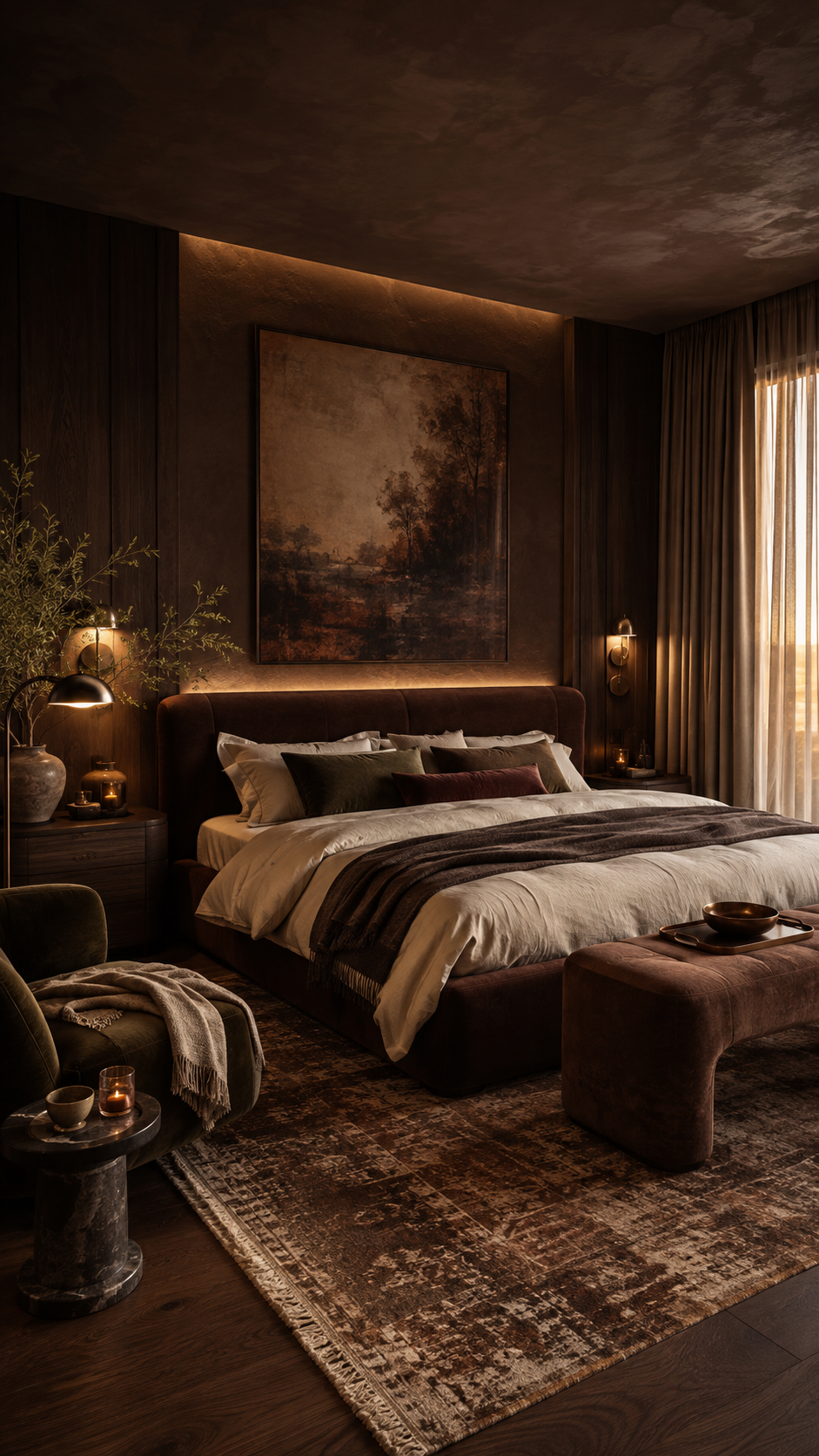
Choose a Deep Color With Warm Undertones 🌙
Dark walls can feel either luxurious or severe depending on the undertone.
Warm chocolate brown creates immediate comfort. Deep olive brings an organic richness. Charcoal with warm undertones feels contemporary, while muted burgundy introduces drama and romance.
Painting both the walls and ceiling in related tones can make the room feel especially immersive.
This technique, often called color drenching, reduces visual boundaries and creates a cocoon effect.
In small rooms, dark colors can actually feel intentional rather than cramped when the design is consistent.
Use Dark Wood for Architectural Weight
Walnut, smoked oak, and dark-stained timber work beautifully in moody bedrooms.
A walnut bed frame, paneled headboard wall, or pair of sculptural nightstands adds richness that pale furniture cannot provide.
Visible wood grain keeps the darkness from feeling flat.
Mix dark timber with tactile surfaces such as velvet, linen, wool, and textured plaster so the room contains multiple levels of visual depth.
The effect should feel luxurious and natural rather than glossy and formal.
Add Velvet Strategically
Velvet reflects light differently depending on its direction, making it especially effective in darker interiors.
A velvet headboard in olive, rust, tobacco, burgundy, or deep taupe becomes instantly dramatic.
If a full velvet bed feels excessive, introduce the material through cushions, a bench, or a small armchair.
Pair velvet with more casual fabrics such as linen to maintain balance.
Too many shiny luxurious surfaces can make a bedroom feel formal. Combining velvet with relaxed bedding creates a more inviting result.
Create Pools of Warm Light 🔥
Lighting is arguably even more important in a dark bedroom than in a pale one.
Instead of trying to brightly illuminate every corner, allow shadows to remain part of the atmosphere.
Place warm lights strategically near the bed, dressing area, and reading chair.
Wall sconces can create pools of illumination across textured walls. Small table lamps produce intimate bedside lighting. Hidden LED strips beneath floating furniture or behind a headboard can add an architectural glow.
Candlelight also complements dark colors beautifully, especially when reflected in bronze, glass, or aged metal.
The resulting room should feel intentionally dim rather than poorly lit.
Balance Darkness With Lighter Bedding
A dark bedroom does not require dark bedding.
In fact, cream, flax, oatmeal, and warm beige bedding can look especially striking against deep walls.
The contrast highlights the bed and prevents the room from becoming visually heavy.
Start with light linen sheets and a soft duvet. Then add darker throws or cushions that reference the wall color.
For example, cream bedding in a chocolate bedroom can be finished with tobacco velvet cushions and a warm brown wool throw.
This creates continuity without eliminating contrast.
Introduce Large Scale Artwork 🎨
Dark bedrooms are excellent backgrounds for artwork.
A large abstract painting above the bed can provide movement and personality. Choose muted colors that connect with the room rather than extremely bright hues that break the atmosphere.
Vintage landscapes, expressive botanical paintings, black-and-white photography, and abstract earth-toned art can all work.
One large piece often looks more luxurious than a wall filled with many small frames.
If the bedroom already contains dramatic architectural details, however, artwork may not be necessary. A paneled wood wall or textured plaster surface can become the artwork itself.
Dreamy Bedroom Ideas for Small Bedrooms 🏡
Small bedrooms can feel exceptionally dreamy because their compact dimensions naturally support a cozy atmosphere.
The key is avoiding unnecessary furniture.
Choose a bed with integrated storage or slim legs to keep the room practical. Floating nightstands preserve floor space and make the design appear lighter.
Wall-mounted reading lights eliminate the need for large table lamps.
Curtains should still extend from near the ceiling toward the floor because this visually increases height.
Mirrors can reflect both daylight and evening lamps, amplifying the available illumination.
Rather than using many small decorations, choose a few larger pieces. One substantial artwork, one sculptural lamp, and one beautiful plant will usually make the room feel calmer than numerous miniature accessories.
A limited color palette is also especially effective in compact rooms.
When walls, curtains, bedding, and furniture share related tones, the visual boundaries become less obvious, helping the bedroom feel more spacious.
How to Layer Textures for a Dreamier Bedroom ✨
Texture is what transforms a visually attractive bedroom into a space that also feels inviting.
Start with the largest surfaces.
Walls can provide subtle texture through plaster or limewash. Flooring introduces natural grain or softness. Curtains add vertical fabric movement.
Then build the bed using several tactile layers.
Smooth cotton sheets can sit beneath a softly rumpled linen duvet. A wool throw provides heavier texture, while velvet or bouclé cushions introduce contrast.
Furniture should contribute another material. Wood provides warmth, stone adds visual weight, and metal introduces subtle reflection.
The goal is not using every possible material.
Choose approximately four to six dominant textures and repeat them throughout the room.
For example, pale oak nightstands can connect visually with an oak bench. Linen bedding can echo linen curtains. Brass sconces can coordinate with a small brass tray.
Repetition creates harmony.
The Best Dreamy Bedroom Color Combinations 🎨
Color determines the emotional character of a bedroom.
For an airy retreat, combine warm ivory, pale oak, oatmeal, and soft mushroom.
For a romantic botanical room, mix sage green, dusty rose, cream, and aged brass.
For a Mediterranean-inspired bedroom, consider warm plaster, terracotta, linen, olive green, and natural stone.
A luxurious moody palette might combine chocolate brown, burgundy, tobacco, cream, and bronze.
For a softer contemporary approach, use greige, warm white, pale taupe, muted clay, and light oak.
The important principle is maintaining undertone consistency.
Warm whites generally look best with warm beige, natural timber, and earthy colors. Cooler whites work more naturally with blue-gray and cooler stone.
When undertones clash, a room can feel visually unsettled even when the individual colors are beautiful.
Decorative Details That Make Dreamy Bedroom Ideas Feel Complete 🌙
After the major furniture, lighting, textiles, and color palette are established, smaller details can complete the atmosphere.
A ceramic vase filled with branches adds organic height.
A small stack of books makes a nightstand feel personal.
A sculptural bowl can hold jewelry while functioning as decoration.
Softly scented candles contribute both visual warmth and fragrance.
A beautiful water carafe beside the bed adds quiet hotel-like luxury.
Framed photography can introduce meaningful memories without dominating the design.
Natural objects such as stone, wood, shells, or dried botanicals can create subtle connections to the outdoors.
The most important rule is editing.
Leave some surfaces empty.
A nightstand does not need six decorative objects. A lamp, book, and small ceramic dish may be enough.
Empty space allows beautiful objects to receive attention.
How to Make a Dreamy Bedroom Feel Expensive Without Overspending 💫
Luxury is often created through proportion and consistency rather than price.
One of the easiest upgrades is improving curtain placement. Hanging inexpensive curtains high and wide can look significantly more luxurious than costly curtains mounted incorrectly.
Another effective strategy is upgrading bedding gradually.
Instead of buying an entire matching bedroom set, invest first in good sheets and a quality duvet cover. Add a textured throw later.
Changing hardware can also transform inexpensive furniture. Simple drawers fitted with tasteful brass, bronze, or wood handles often look significantly more custom.
Paint can deliver another dramatic improvement.
A cohesive wall color, especially when extended onto trim or ceiling details, can make basic architecture appear more intentional.
Lighting should receive special attention.
Replacing a generic ceiling fixture with a sculptural pendant and adding warm bedside lamps can dramatically alter how the room feels after sunset.
Secondhand furniture can also add character that inexpensive new furniture sometimes lacks.
A vintage dresser, wooden bench, or aged mirror may become the piece that gives the entire bedroom personality.
Styling the Bedroom for Morning and Night 🌅
A truly successful dreamy bedroom should feel beautiful during both daylight and evening.
During the morning, natural light should filter softly through curtains rather than entering as harsh glare. Light surfaces, mirrors, and pale textiles can distribute daylight through the room.
At night, the atmosphere should become warmer and more intimate.
Turn off bright overhead lighting and rely on smaller lamps, sconces, or indirect lighting.
This transition creates a natural psychological signal that the day is slowing down.
Keeping the room visually calm also supports the nighttime atmosphere. Store chargers, clothing, papers, and miscellaneous objects in drawers or baskets whenever possible.
A beautiful bedroom does not need to be perfectly styled every moment, but reducing visible clutter makes it easier to experience the atmosphere created by the design.
Final Thoughts on the Top 3 Dreamy Bedroom Ideas
The most memorable bedrooms are not defined by a single trend. They create an emotional atmosphere through carefully coordinated color, texture, lighting, furniture, and personal details.
🥇 An ethereal neutral retreat is ideal for anyone who loves calm interiors filled with pale oak, creamy linen, soft plaster, and abundant natural light. It feels timeless, peaceful, and quietly luxurious.
🥈 A romantic botanical bedroom introduces more personality through sage greens, dusty florals, natural wood, warm metals, vintage accents, and expressive greenery. It feels intimate, organic, and beautifully collected.
🥉 A moody cocooning bedroom embraces deep color, velvet, dark timber, dramatic artwork, and pools of warm evening light. It creates an immersive atmosphere that feels private, sophisticated, and incredibly cozy.
Whichever direction is chosen, the strongest Dreamy Bedroom Ideas rely on intentional layering rather than excessive decoration. Start with the feeling the bedroom should create, establish a cohesive palette, choose tactile materials, and design the lighting carefully.
The result can be a bedroom that feels more than simply attractive.
It becomes a personal escape where mornings feel softer, evenings feel calmer, and everyday routines take place inside a space that feels beautifully removed from the outside world.
Related posts:

Best 3 Couples’ Bedroom Ideas That Turn an Ordinary Space Into a Romantic Luxury Retreat
Best 3 Bedding Set Ideas That Will Make Your Bedroom Look Like a Luxury Designer Retreat
Top 3 Small Closet Inspo Ideas That Make a Beautiful Organized Bedroom Feel Twice as Big
Top 3 Fall Bedding Combo Ideas That Make Any Bedroom Look Expensive
The 3 Best Toddler Bedroom Ideas That Make a Small Room Feel Magical and Beautiful
Top 3 Room Ideas for Teens That Make Any Bedroom Look Incredible