Boho Living Room Ideas are perfect for anyone who wants a home that feels relaxed, layered, artistic, and deeply personal without looking overly formal or carefully staged. The best bohemian interiors combine natural materials, collected objects, comfortable furniture, earthy colors, greenery, and handcrafted details in a way that feels effortless. Instead of following rigid decorating rules, boho design encourages you to create a living room that tells a story through texture, color, and meaningful pieces.
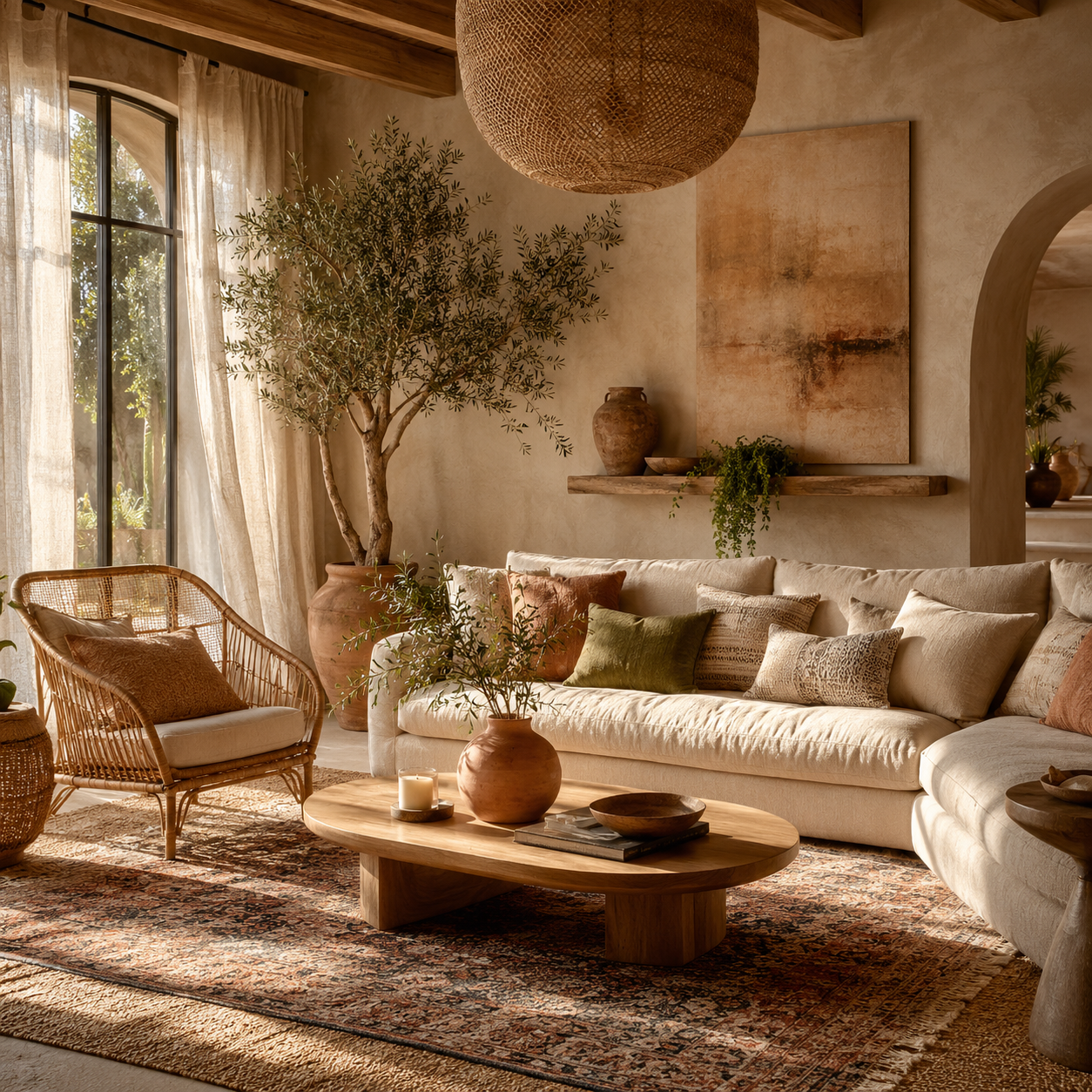
Yet modern boho style has evolved far beyond the heavily decorated rooms filled with bright patterns that many people associate with traditional bohemian interiors. Today, some of the most beautiful boho spaces are calmer, more architectural, and surprisingly sophisticated. Warm neutral walls, sculptural furniture, natural oak, woven textiles, vintage accents, soft lighting, and carefully selected plants can create a bohemian atmosphere without making the room feel cluttered.
The secret is balance. A successful boho living room should feel collected rather than crowded, comfortable rather than chaotic, and expressive without becoming visually overwhelming.
Among countless possibilities, three approaches stand out for their versatility and timeless appeal. 🌿 The first combines warm earthy colors with rich natural textures. The second creates a lighter Mediterranean-inspired bohemian retreat. The third introduces a darker and more dramatic version of boho style filled with vintage character.
Here are the Top 3 Boho Living Room Ideas that can transform an ordinary living space into a warm and unforgettable interior.
What Makes Modern Boho Living Room Ideas Feel So Inviting
Modern bohemian interiors are attractive because they often feel less perfect than highly polished contemporary rooms. Instead of matching every furniture piece, boho design welcomes variation. A slightly weathered wooden table can sit next to a modern linen sofa. A vintage ceramic vase may be displayed beside a sculptural lamp. Handmade baskets can share a room with polished architectural finishes.
This contrast creates visual depth.
Texture is particularly important. Boho rooms rarely depend on a single decorative material. Instead, they combine several tactile surfaces such as washed linen, chunky wool, woven jute, unfinished wood, rattan, handmade ceramics, plaster, and stone.
The effect becomes especially beautiful when the color palette remains relatively controlled. Cream, oatmeal, sand, terracotta, caramel, olive, rust, walnut, and muted brown naturally work together because they resemble colors found outdoors.
🌿 Plants provide another important layer. Large indoor trees, trailing vines, potted palms, olive trees, rubber plants, and smaller botanical arrangements help connect the living room with nature.
Lighting also matters. Rather than relying exclusively on one bright ceiling fixture, boho interiors usually benefit from several smaller light sources. Floor lamps, woven pendants, candles, table lamps, and indirect lighting create a softer atmosphere.
Ultimately, the most appealing boho living rooms look as though they developed gradually over time.
Quick Comparison of the Top 3 Boho Living Room Styles
Before choosing a direction, it helps to understand how these three approaches differ.
| Boho Living Room Style | Main Color Palette | Key Materials | Overall Mood | Best For |
|---|---|---|---|---|
| 🥇 Earthy Layered Boho | Oatmeal, terracotta, caramel, olive | Linen, oak, jute, wool, clay | Warm and sophisticated | Cozy everyday living rooms |
| 🥈 Mediterranean Boho | Ivory, sand, pale wood, muted green | Plaster, rattan, linen, stone | Airy and relaxed | Bright and smaller spaces |
| 🥉 Moody Vintage Boho | Walnut, rust, tobacco, olive, charcoal | Dark wood, velvet, aged brass, vintage textiles | Dramatic and artistic | Character-rich interiors |
All three styles share the same bohemian philosophy, but they create very different visual experiences.
The right choice depends on the architecture of the room, the amount of natural light, existing furniture, and the atmosphere you want to create.
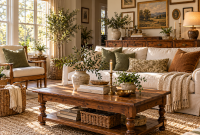
🥇 Best 1 Earthy Layered Boho Living Room Ideas With Natural Textures
The most versatile interpretation of bohemian style is a warm earthy living room built around natural materials and layered textures.
This approach works particularly well because it captures the relaxed spirit of boho decorating while maintaining enough restraint to feel sophisticated. Instead of filling every corner with decorative objects, the room focuses on a few strong pieces surrounded by tactile materials.
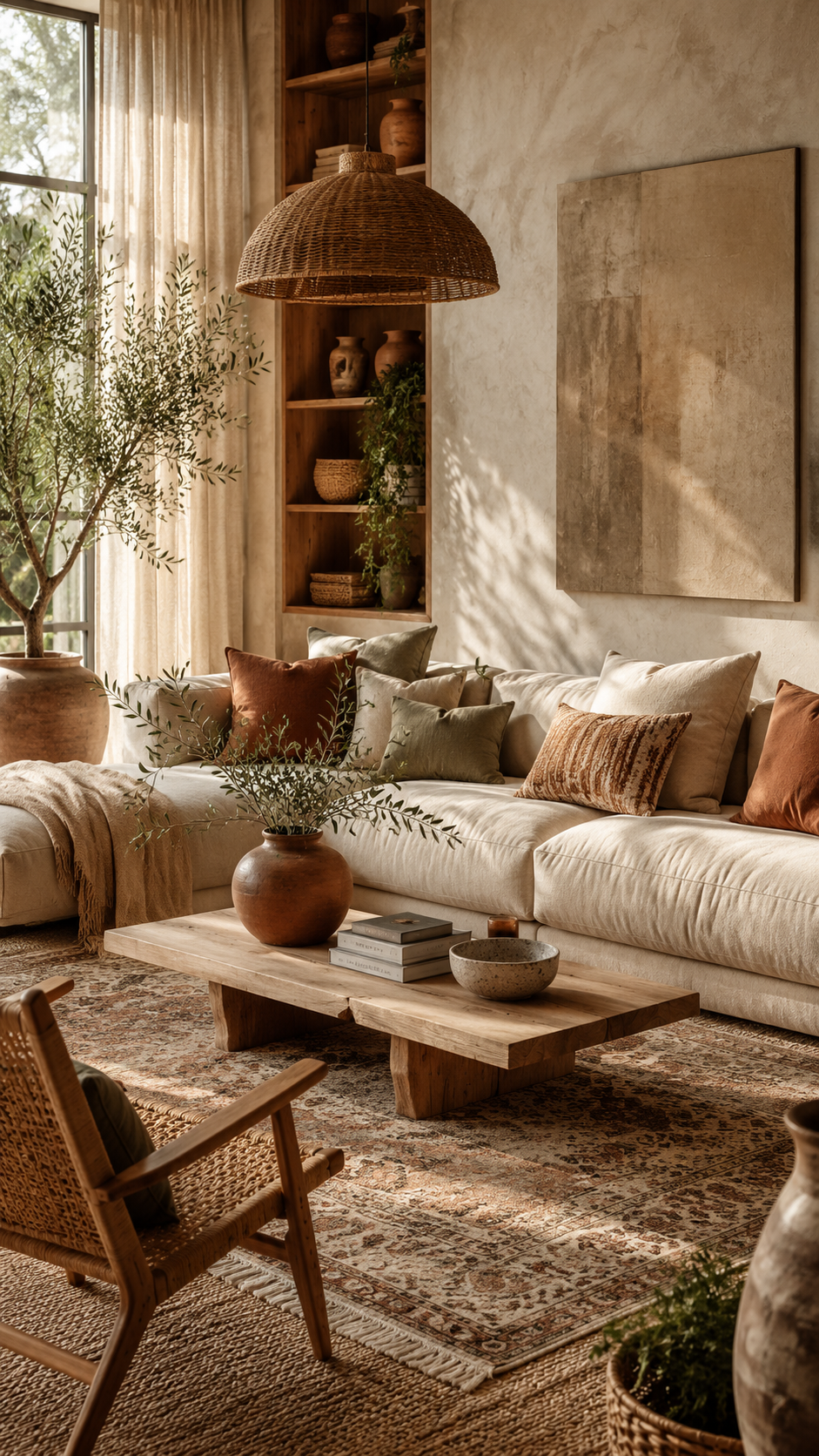
Imagine entering a living room with warm off-white plaster walls, a generous oatmeal linen sofa, a softly textured wool rug, and a low natural oak coffee table. Terracotta cushions introduce warmth while olive-green textiles provide subtle contrast.
Nothing feels aggressively colorful, yet the room still feels rich.
Start With a Warm Neutral Foundation
The walls are usually the largest visual surface in a living room, which means they strongly influence the atmosphere.
For earthy boho interiors, pure bright white can sometimes feel too crisp. Warmer alternatives such as ivory, creamy beige, pale mushroom, soft greige, or limewash-inspired plaster tend to create a more welcoming background.
A slightly imperfect wall texture can be particularly effective.
Limewash, mineral paint, microcement, or textured plaster introduces subtle variations that change throughout the day as sunlight moves across the surface.
These walls create character before a single decorative accessory is added.
If changing the wall finish is not possible, similar depth can be created through woven wall art, oversized artwork, wood shelving, or large textile hangings.
Choose a Comfortable Low Profile Sofa
The sofa should visually invite people to sit down.
Deep seating, soft cushions, relaxed linen upholstery, and slightly oversized proportions work beautifully in boho spaces. Structured sofas can still work, but furniture that looks too sharp or corporate may fight against the informal atmosphere.
Colors such as oatmeal, warm beige, mushroom, ivory, camel, or muted brown are particularly adaptable.
A neutral sofa also becomes the ideal canvas for layered cushions.
Try combining washed linen cushions with woven wool, subtle geometric patterns, faded stripes, or small embroidered details.
Instead of using several identical pillows, vary the sizes and textures while keeping the colors connected.
This creates the casually collected appearance that defines successful bohemian styling.
Layer the Floor With Natural Rugs
Floor coverings help anchor the seating arrangement while introducing another level of texture.
Jute and sisal rugs are popular choices because their natural fibers immediately add warmth. However, a flat woven rug alone can sometimes feel visually hard.
Layering creates a more luxurious result.
For example, place a large natural jute rug underneath a smaller vintage-inspired wool rug. The bottom rug defines the seating zone while the upper textile introduces pattern and softness.
Moroccan-inspired rugs can also work beautifully, especially designs with subtle geometric motifs rather than extremely strong colors.
Cream, faded rust, warm brown, muted black, olive, and sand usually blend easily with earthy boho palettes.
Introduce Terracotta and Clay Accents
Terracotta is almost naturally suited to boho interiors.
Its warm reddish-brown tone complements wood, linen, woven materials, greenery, and neutral upholstery.
Use terracotta strategically rather than everywhere.
A large handmade clay vase on a coffee table may be enough to establish the tone. Smaller ceramic vessels can be grouped on shelves or consoles.
Terracotta planters are another easy option.
Their slightly imperfect surfaces feel particularly attractive beside highly textured plants.
Handcrafted pieces work better than overly glossy decorations because small irregularities reinforce the relaxed atmosphere.
Use Plants as Architectural Elements 🌿
Plants should not simply be scattered randomly across the room.
In sophisticated boho interiors, greenery often works almost like architecture.
A large olive tree or indoor ficus can visually balance a tall window. A trailing plant can soften the edge of open shelving. A cluster of smaller plants can activate an otherwise empty corner.
Varying plant heights creates more interesting composition.
Use floor-standing planters, low ceramic pots, plant stands, shelves, and hanging baskets to distribute greenery vertically.
The containers matter too.
Woven baskets, aged terracotta, stoneware, and simple matte ceramic pots usually work better than brightly colored plastic containers.
Add Handcrafted Decorative Details
Small handcrafted objects make the room feel personal.
Think carved wooden bowls, irregular ceramics, woven baskets, vintage books, sculptural candleholders, handmade textiles, or simple stone objects.
The key is editing.
A coffee table covered with fifteen decorative objects may technically look bohemian, but it can quickly become visually exhausting.
A stronger arrangement might contain only a ceramic bowl, two books, a candle, and a small branch arrangement.
Each object then has enough visual space to be appreciated.
Important Note: A beautiful boho living room needs layers, but every layer should have a purpose. Leave visible empty space around furniture and decorative objects so the room feels collected and relaxed rather than cluttered.
Create Warm Evening Lighting ✨
The atmosphere should change beautifully after sunset.
A woven pendant can create interesting shadows across the walls, while a sculptural floor lamp provides softer illumination near the sofa.
Small lamps on consoles and side tables help eliminate dark empty corners.
Candles are also extremely effective.
Place them in ceramic, brass, stone, or glass holders instead of distributing them randomly throughout the room.
Warm lighting combined with textured walls creates the kind of intimate atmosphere that makes earthy boho spaces particularly appealing.
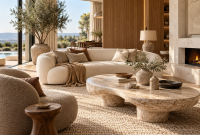
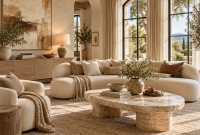
🥈 Best 2 Mediterranean Boho Living Room Ideas for an Airy Retreat
The second approach combines bohemian comfort with the relaxed architectural character of Mediterranean interiors.
This style feels brighter and lighter than traditional boho decor.
Instead of using many dark woods and heavily patterned textiles, Mediterranean boho interiors often feature creamy plaster walls, pale oak, stone, linen, rattan, and soft sun-washed colors.
The result feels like a quiet holiday home overlooking the sea even when the room is located far from the coast. ☀️
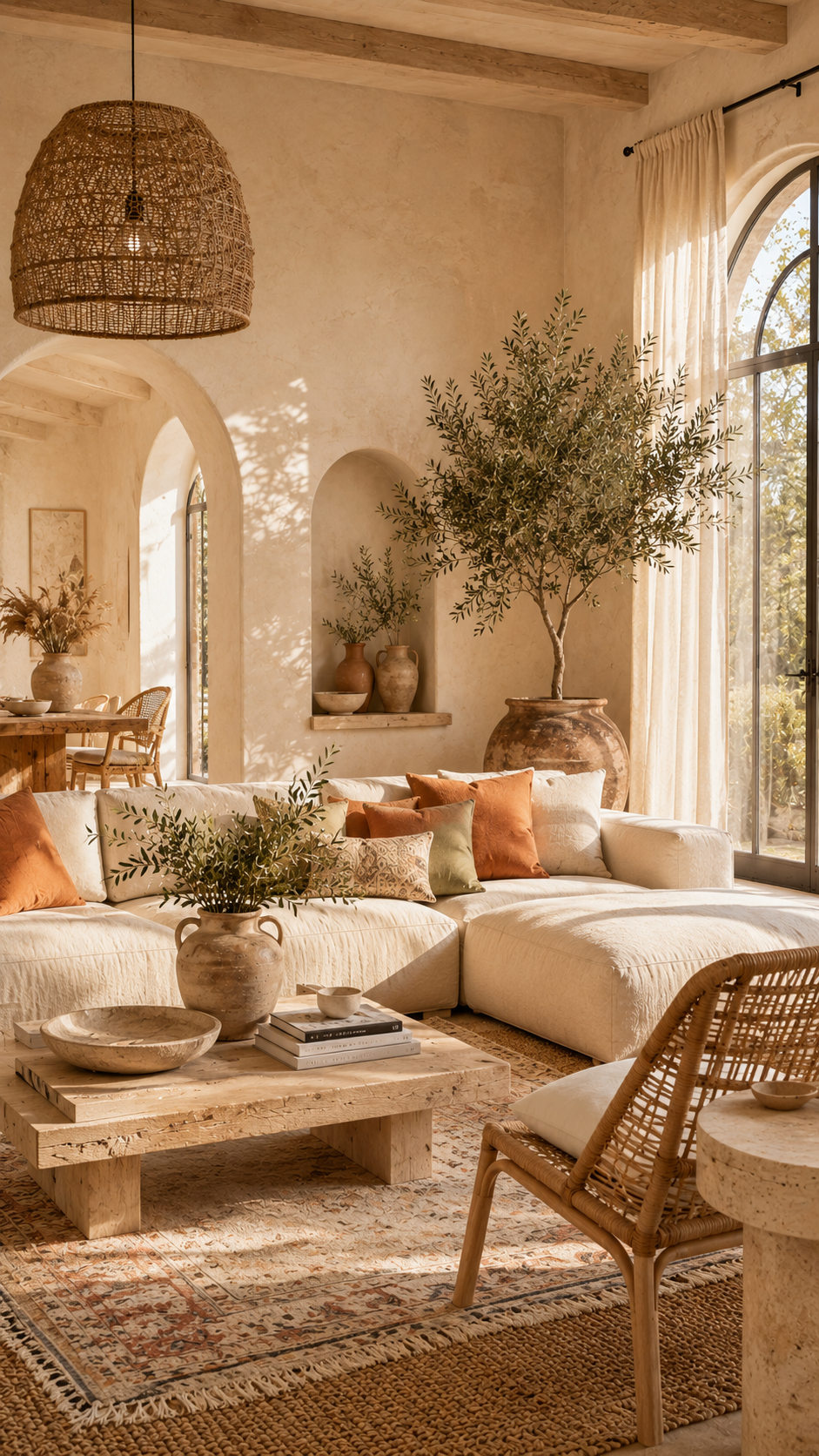
Use Creamy Walls and Sculptural Architecture
Mediterranean interiors often begin with architecture.
Rounded openings, plaster surfaces, built-in niches, soft corners, and natural stone immediately establish the mood.
Even standard rooms can borrow this aesthetic.
An arched floor mirror can introduce curved geometry. A softly rounded console can replicate the effect of built-in architecture. A decorative wall niche can create depth.
Warm off-white walls remain important.
Avoid cold gray undertones whenever possible.
Ivory, chalk, sand, warm cream, and pale limestone tones reflect natural light beautifully.
Choose Pale Natural Wood Furniture
While earthy boho rooms often use medium oak or warm walnut, Mediterranean boho spaces usually feel lighter with pale timber.
Natural oak, ash, elm, and unfinished-looking woods work especially well.
A chunky rectangular coffee table can provide rustic character.
Alternatively, a sculptural round table with softly irregular edges can make the room feel more contemporary.
The wood should ideally display visible grain.
Highly polished finishes often appear too formal for this style.
Small imperfections, knots, and variation help reinforce the connection with nature.
Bring in Rattan Without Overdoing It
Rattan is one of the most recognizable bohemian materials, but excessive rattan can make a room look themed.
Use it selectively.
A single lounge chair with a woven frame can become an excellent accent beside a linen sofa.
A large woven pendant can create another strong focal point.
Smaller applications include baskets, lampshades, side tables, cabinet fronts, and decorative trays.
Mixing rattan with plaster and stone keeps it sophisticated.
The contrast between smooth mineral surfaces and woven natural fibers creates visual interest without introducing additional color.
Keep the Furniture Arrangement Open
Mediterranean boho living rooms benefit from breathing room.
Instead of pushing every chair and table against the walls, create a relaxed central conversation area.
A sofa can face two lightweight lounge chairs with a coffee table positioned between them.
If the room is small, choose furniture with visible legs or open woven frames. These pieces allow more flooring to remain visible, which can make the room feel larger.
Low-profile furniture also helps emphasize ceiling height.
The composition should feel casual but intentional.
Add Sun Washed Textiles
Textiles are where subtle color can enter the room.
Rather than saturated jewel tones, choose faded terracotta, dusty peach, warm beige, muted olive, ochre, washed blue, and pale brown.
These shades should look slightly softened by sunlight.
Linen is particularly effective because its natural wrinkles reinforce the relaxed character of the space.
Use linen for curtains, cushion covers, slipcovers, and throws.
Long sheer linen curtains can dramatically change a room by diffusing sunlight and creating gentle movement.
Add Stone and Travertine Details
Stone makes Mediterranean boho rooms feel grounded.
A travertine side table, limestone pedestal, stone bowl, or sculptural lamp base can provide enough mineral texture without requiring major renovation.
Travertine is especially effective because its creamy color works naturally with pale wood and linen.
Its visible pores also add subtle detail.
For a more rustic appearance, consider irregular stone objects or handmade pottery.
The aim is not luxury in a polished hotel sense.
Instead, choose materials that appear timeless and natural.
Style With Olive Branches and Sculptural Greenery 🌿
While lush tropical plants work well in many bohemian spaces, Mediterranean styling often benefits from simpler greenery.
Olive branches are particularly appropriate.
A large ceramic vase filled with irregular olive branches can become a strong focal point on a dining console or coffee table.
Small olive trees can also work beautifully near windows.
Eucalyptus, rosemary, dried grasses, and subtle branches provide alternatives.
The overall botanical styling should remain airy rather than jungle-like.
Add Vintage Objects With Restraint
A few aged items keep pale interiors from feeling too new.
An antique wooden stool may sit beside a modern sofa.
A weathered ceramic pot can occupy a plaster niche.
Old books can be stacked beneath a sculptural object.
Vintage framed artwork can introduce muted color.
These objects create the impression that the room has developed gradually.
That sense of history prevents neutral interiors from becoming generic.
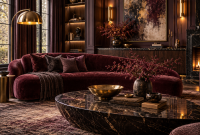
🥉 Best 3 Moody Vintage Boho Living Room Ideas With Artistic Character
Not every bohemian room needs to be light and neutral.
The third approach explores the opposite direction by combining deep colors, vintage furniture, warm woods, aged metals, dramatic textiles, and abundant character.
This interpretation feels particularly suitable for older homes, apartments with architectural details, libraries, creative studios, or living rooms where a more intimate atmosphere is desired.
Think dark walnut furniture, rust velvet upholstery, olive walls, Persian-inspired rugs, antique brass lighting, books, ceramics, and expressive artwork.
The room should feel soulful rather than gloomy.
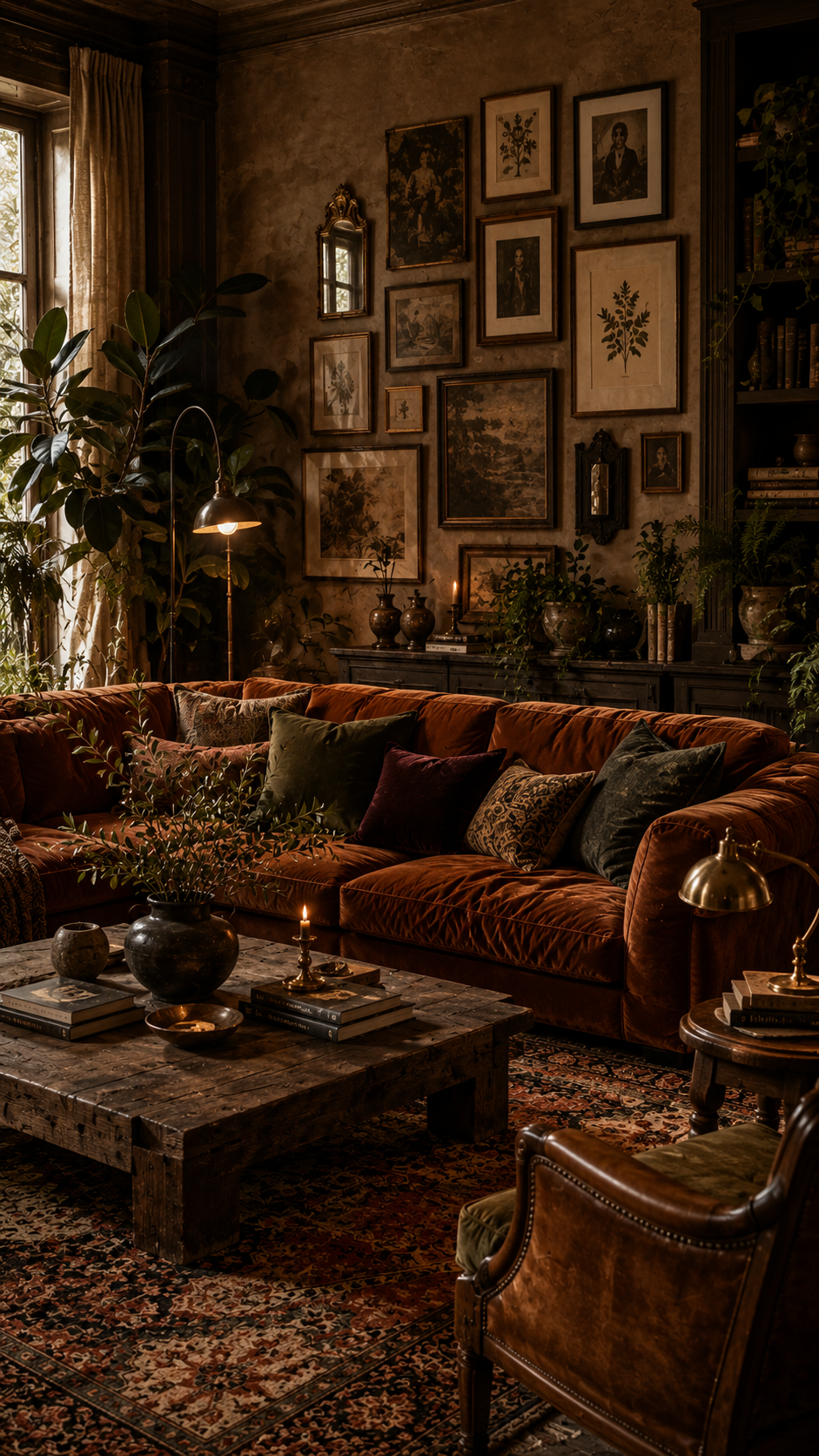
Begin With a Deeper Earthy Palette
Instead of ivory walls, consider muted olive, warm taupe, clay, tobacco, mushroom brown, or charcoal with warm undertones.
Dark walls can actually create a very comfortable atmosphere when combined with layered lighting.
They also make artwork, brass details, warm wood, and green plants stand out dramatically.
If painting every wall feels too intense, create one deeper accent wall.
Built-in shelving can also be painted a darker color while the remaining walls stay neutral.
This introduces drama without visually shrinking the entire room.
Choose Vintage Inspired Seating
A moody boho living room benefits from furniture with personality.
Velvet sofas, aged leather chairs, carved wood frames, and vintage lounge chairs can all work beautifully.
Rust, tobacco, moss green, camel, and deep brown are particularly effective upholstery colors.
Avoid making every item vintage.
One antique chair beside a contemporary sofa often creates more visual interest than an entire matching vintage set.
The contrast between eras makes the room feel collected.
Anchor the Space With an Expressive Rug
A richly patterned rug can become the foundation of the entire design.
Look for Persian-inspired patterns, faded botanical motifs, distressed geometric designs, or traditional woven textiles.
Deep rust, burgundy, olive, navy, caramel, and cream can create a particularly sophisticated palette.
The rug should ideally be large enough to connect the main furniture pieces.
A tiny rug floating beneath the coffee table can make the seating arrangement feel disconnected.
Larger rugs provide stronger visual grounding.
Mix Dark Wood With Aged Brass
Dark timber gives this style much of its depth.
Walnut, teak, mahogany-inspired finishes, and reclaimed wood can work particularly well.
Use these woods on coffee tables, cabinets, bookshelves, frames, and side tables.
Brass provides a warm metallic contrast.
Choose aged or brushed finishes rather than extremely shiny gold.
A brass floor lamp, picture light, candleholder, or small side table can introduce just enough reflection to prevent the room from feeling visually heavy.
Create an Artistic Gallery Wall 🎨
Artwork plays an important role in expressive boho interiors.
A gallery wall can combine botanical drawings, abstract art, vintage landscapes, photography, textile pieces, and small mirrors.
Frames do not need to match perfectly.
Mixing dark wood, antique brass, black, and natural timber can create an intentionally collected composition.
Before hanging anything, arrange the pieces on the floor.
Start with the largest artwork and build smaller pieces around it.
Leave enough space between frames so individual works remain visible.
Use Books as Part of the Decor
Books naturally complement this style.
Instead of hiding every book behind closed cabinets, allow selected volumes to become part of the visual composition.
Stack books horizontally beneath decorative objects.
Arrange books vertically across shelves with occasional gaps for ceramics or framed art.
A small stack can also become a temporary pedestal on a coffee table.
Older books with textured covers and faded colors are particularly attractive.
However, contemporary books can work equally well when arranged thoughtfully.
Add Dramatic Plants
Dark interiors often make green foliage look exceptionally vivid.
Large rubber plants, fiddle leaf figs, philodendrons, monsteras, and palms can create dramatic silhouettes.
Place them near windows where leaves can catch natural light.
Trailing plants are particularly effective on bookshelves.
The combination of deep walls, dark furniture, warm lighting, and glossy green leaves creates one of the most luxurious forms of bohemian styling.
Build Layers of Evening Light
Lighting becomes even more important in darker rooms.
One ceiling fixture will rarely create enough atmosphere.
Combine several light sources at different heights.
Use a floor lamp near the sofa, table lamps on consoles, picture lights above artwork, and candles around the coffee table.
A vintage-inspired pendant can provide another decorative layer.
Warm bulbs are generally more compatible with deep earthy colors than stark cool lighting.
The final effect should feel intimate, calm, and almost cinematic. ✨
How to Mix Boho Living Room Ideas Without Making the Space Look Busy
Bohemian decorating encourages mixing, but successful mixing requires visual relationships between objects.
Color repetition is one of the easiest strategies.
If a rug contains muted rust, repeat that color through a cushion, ceramic vase, or piece of artwork.
If a large plant introduces olive green, echo that shade somewhere else in the room.
Materials can also repeat.
A woven pendant might connect visually with baskets near the sofa. An oak coffee table can coordinate with wooden picture frames.
These subtle repetitions make diverse objects feel connected.
Another helpful strategy is creating visual hierarchy.
Every surface does not need to compete for attention.
Choose one major focal point, such as a sofa, fireplace, dramatic rug, gallery wall, oversized plant, or large window.
Supporting elements should complement that focal point rather than challenge it.
How to Create Boho Style in a Small Living Room
Boho style can work extremely well in small rooms because it does not require large or expensive furniture.
The key is controlling the number of objects.
Start with a compact neutral sofa and one expressive rug.
Instead of adding several chairs, introduce a lightweight woven chair or small pouf.
Use vertical surfaces for decoration.
Floating shelves, wall-mounted artwork, hanging planters, and tall mirrors provide character without consuming floor space.
Large mirrors are especially helpful because they reflect natural light and visually expand the room.
Furniture with hidden storage also becomes valuable.
A storage ottoman, cabinet coffee table, or low console can conceal everyday clutter while keeping the bohemian styling visible.
Small spaces generally benefit from the lighter Mediterranean variation, although deeper colors can still work when lighting is carefully considered.
Affordable Ways to Create a Boho Living Room
A beautiful boho room does not require replacing every piece of furniture.
Start with textiles.
Changing cushion covers, adding a throw, introducing a larger rug, or replacing synthetic curtains with textured fabric can dramatically change the atmosphere.
Plants provide another relatively simple transformation.
Even two strategically positioned large plants can change the feeling of a room more effectively than numerous small accessories.
Secondhand furniture also suits bohemian interiors naturally.
Vintage wooden stools, side tables, baskets, ceramic pots, framed art, and small cabinets often become more interesting as they age.
You can also repurpose existing objects.
An old wooden bench can become a coffee table. A ceramic jug can become a vase. Woven baskets can hide blankets or children’s toys.
Boho style rewards creativity more than perfection.
Which of These Top 3 Boho Living Room Ideas Should You Choose
The earthy layered boho living room is the strongest all-around choice for most homes.
Its combination of neutral upholstery, warm wood, terracotta, woven rugs, plants, and natural textures feels cozy without becoming overly decorative.
It can also evolve easily as trends change.
The Mediterranean boho living room is ideal when you want something brighter and calmer. Pale wood, creamy plaster, linen, rattan, stone, and simple greenery create a breezy atmosphere that works especially well in sunny rooms.
Meanwhile, the moody vintage boho living room offers the greatest visual drama. Deep earthy colors, dark wood, expressive rugs, vintage furniture, books, artwork, and warm brass details create a living room filled with personality.
There is no requirement to choose one style exclusively.
Elements from all three can coexist.
A Mediterranean room might include a vintage rug. An earthy boho interior can feature a dark walnut side table. A moody room can incorporate a creamy linen sofa to brighten the composition.
The goal is cohesion rather than strict categorization.
Final Thoughts on Creating a Beautiful Boho Living Room
The most memorable Boho Living Room Ideas are rarely created by purchasing an entire coordinated furniture collection. They develop through thoughtful layering.
Begin with comfortable furniture and a warm foundation.
Add natural materials such as linen, wood, stone, wool, clay, and rattan.
Introduce greenery to bring movement and life into the room.
Then slowly add meaningful decorative pieces, vintage discoveries, artwork, books, and handcrafted objects.
🌿 Remember that bohemian design is ultimately about personality.
A beautiful living room should reflect the people who use it.
The earthy layered approach offers warmth and versatility. The Mediterranean version provides freshness and simplicity. The moody vintage interpretation creates depth and artistic character.
Whichever direction you choose, prioritize natural textures, comfortable seating, thoughtful lighting, and enough empty space for individual pieces to breathe.
When those elements work together, a boho living room becomes more than a decorated space.
It becomes a relaxed, expressive, and deeply inviting place that feels collected over time and completely personal.
Related posts:

Best 3 Budget Friendly Living Room Inspo Ideas That Make Your Home Look Expensive for Less
Best 3 Moody Living Room Inspo Ideas That Make Dark Interiors Look Unbelievably Luxurious
Best 3 Modern Organic Living Room Ideas That Make Any Home Look Effortlessly Luxurious
Best 3 Warm Neutral Living Room Inspo Ideas That Make Any Home Look Effortlessly Luxurious
Best 3 Small Living Room Inspo Ideas That Make Tiny Spaces Look Surprisingly Luxurious
Best 3 Cozy Living Room Inspo Ideas That Will Make Your Home Feel Instantly Warm and Beautiful