
Finding practical backpack storage ideas can completely change the way an entryway, bedroom, mudroom, or family command center looks and functions. Backpacks have an annoying habit of ending up on floors, chairs, kitchen counters, staircases, and door handles—especially in busy homes where school bags, work backpacks, gym bags, and everyday totes are constantly coming and going.
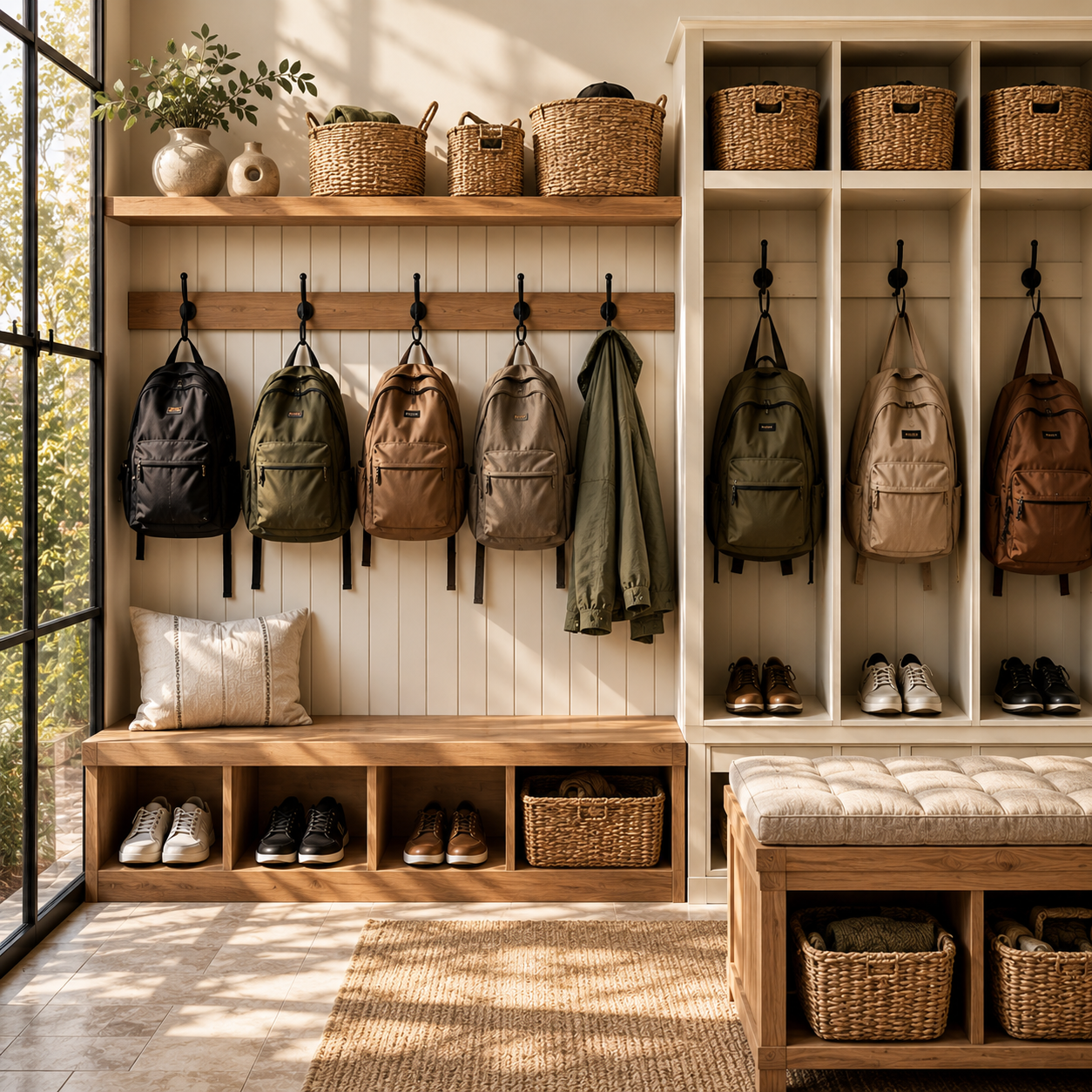
The best storage solution does more than hide clutter. It creates a predictable place where every backpack belongs while keeping frequently used bags easy to grab. 🎒 A thoughtfully designed backpack station can also provide room for jackets, shoes, lunch boxes, sports equipment, keys, and other essentials that tend to accumulate around the entrance of a home.
The most successful designs balance three things: accessibility, organization, and visual simplicity. A beautiful built-in storage wall may be perfect for a spacious mudroom, while a narrow row of wall hooks can transform a tiny hallway without taking up valuable floor space.
Among the many possibilities, three approaches stand out for their combination of practicality, versatility, and attractive design. These Best 3 backpack storage ideas range from simple wall-mounted solutions to sophisticated built-in systems, making it easier to find an option for almost any home.
Quick Comparison of the Best 3 Backpack Storage Ideas
Before choosing a storage system, consider how many backpacks need to be organized, how frequently they are used, and how much space is available.
| Backpack Storage Idea | Best For | Space Required | Storage Capacity | Installation Level |
|---|---|---|---|---|
| 🥇 Wall Hooks and Personalized Backpack Stations | Entryways and small homes | Low | Medium | Easy |
| 🥈 Built In Mudroom Lockers and Cubbies | Families and busy households | Medium to High | High | Moderate to Advanced |
| 🥉 Bench Storage with Backpack Organization | Multifunctional entryways | Medium | Medium to High | Easy to Moderate |
Each approach can be customized to match modern, farmhouse, Scandinavian, minimalist, traditional, or contemporary interiors.
The important part is creating a system that feels natural enough to use every day.
🥇 Best 1 Wall Hook Backpack Storage Ideas for Simple Everyday Organization
Sometimes the simplest solution is also the most effective.
Wall-mounted hooks are one of the most versatile backpack storage ideas because they use vertical space rather than valuable floor area. A previously empty hallway wall can become a highly functional backpack station with only a few carefully positioned hooks.
This approach works especially well near the main entrance, garage entrance, mudroom, or hallway leading toward bedrooms. Instead of backpacks being dropped onto the floor, every bag immediately has a designated location.
The result can be surprisingly transformative. ✨
A neat row of backpacks against a thoughtfully designed wall looks intentional rather than cluttered, particularly when the surrounding area includes coordinated baskets, labels, shelving, or decorative elements.


Create Individual Backpack Zones
For households with several people, individual storage zones can make the system considerably easier to maintain.
Each person can have a dedicated hook for a backpack and another hook for a jacket or coat. A small shelf above the hooks can hold baskets for gloves, hats, sunglasses, keys, or other frequently used accessories.
Children especially benefit from clearly defined storage spaces because there is less uncertainty about where their belongings should go.
Instead of creating one large collection of hooks where everything becomes mixed together, divide the wall visually into individual sections.
For example:
Upper shelf: seasonal accessories and baskets
Middle section: backpacks and jackets
Lower section: shoes, boots, or sports equipment
This creates a simple vertical organization system without requiring a large piece of furniture.
Use Strong Hooks at the Right Height
Not every decorative wall hook is suitable for a heavy backpack.
School backpacks can become surprisingly heavy when filled with books, laptops, water bottles, lunch containers, and supplies. Work backpacks may contain laptops, chargers, notebooks, and other electronics.
Choose sturdy hooks that can safely support the expected weight.
Mounting height matters as well.
For adults, hooks can generally sit higher on the wall, while children’s hooks should be positioned where they can comfortably hang and remove their own backpacks.
This small design decision can make the storage system much more practical.
A child-friendly backpack station encourages independent organization because children do not need assistance every time they return home.
Important Note: Backpack hooks should be securely attached to wall studs or installed with appropriate heavy-duty wall anchors. Frequently used backpacks can be much heavier than they appear, so lightweight decorative hooks or weak fasteners may not provide sufficient support.
Add a Wooden Backboard for a More Finished Look
Hooks do not have to be installed directly onto a plain wall.
A wooden backboard can turn a basic storage solution into a deliberate interior feature.
Natural oak works beautifully in Scandinavian and contemporary spaces, while painted wood can blend into traditional or modern interiors. Vertical slatted wood can create an especially sophisticated appearance while adding subtle architectural texture.
🌿 For a warm organic aesthetic, consider combining:
- Light natural oak
- Warm white walls
- Matte black or brushed metal hooks
- Woven baskets
- Neutral fabric storage bins
- Small indoor greenery
This combination keeps the functional storage area visually calm.
A narrow wooden rail running horizontally across the wall is another simple option. Multiple hooks can be attached along the rail, allowing the storage system to expand as needed.
Create Backpack Storage Behind a Door
One of the most overlooked storage areas in a home is the space behind a door.
If there is enough clearance, strong hooks installed on the wall behind a bedroom, laundry room, or utility room door can hold backpacks without making them visible from the main living area.
Over-the-door organizers can also work for lightweight bags.
However, heavy backpacks should ideally be supported by properly mounted hooks rather than thin over-door hardware.
This strategy is particularly useful in apartments, dorm rooms, and compact homes where dedicated mudroom space simply does not exist.
Combine Backpack Hooks with a Floating Shelf
A floating shelf installed above the backpack hooks creates additional storage without significantly increasing the footprint of the system.
Use baskets on the shelf to contain small objects that would otherwise create visual clutter.
For example, one basket could hold sports accessories while another contains winter hats and gloves.
The shelf can also provide a place for a few carefully selected decorative objects.
Keep decoration restrained, however. The backpack station already contains several visually complex objects, so overcrowding the shelf can make the area appear chaotic.
A small plant, ceramic bowl, framed print, or minimalist lamp may be enough.
Why Wall Mounted Backpack Storage Works So Well
The biggest advantage of wall storage is efficiency.
Instead of adding another cabinet or freestanding organizer, it transforms unused vertical wall area into practical storage.
It is also highly adaptable.
Two hooks may be enough for a small household, while a longer wall can accommodate five or six individual backpack stations.
And because the backpacks remain visible, there is little chance of forgetting them before leaving the house.
For renters or anyone looking for a relatively affordable organizational upgrade, this is often the easiest place to begin.
🥈 Best 2 Built In Backpack Storage Ideas with Mudroom Lockers and Cubbies
For households that need significantly more storage, built-in mudroom organization offers one of the most complete solutions.
These backpack storage ideas go beyond simply hanging bags on hooks. They create individual storage stations where backpacks, coats, shoes, lunch boxes, sports equipment, and seasonal accessories can all be organized together.
🏡 The classic configuration combines upper cabinets or shelves, an open hook section, and lower shoe storage.
When designed carefully, the entire installation can look like part of the architecture rather than an added storage unit.

Create One Locker for Each Family Member
Individual lockers are particularly useful in larger households.
Each person receives a vertical section with enough room for everyday belongings.
A typical locker might include an upper basket, two or three hooks, and a lower shoe compartment.
The backpack can occupy the central hook while coats and jackets hang beside it.
This creates clear boundaries.
Instead of asking where something belongs, every family member knows exactly where to place it.
Personalization does not have to mean large decorative name signs. Small brass labels, wooden tags, subtle initials, or color-coded baskets can identify each section while preserving a sophisticated appearance.
Build Deep Cubbies for Large Backpacks
Some backpacks are too bulky for shallow storage.
Sports bags, travel backpacks, school bags with multiple compartments, and laptop backpacks can project significantly from the wall.
If designing custom cabinetry, allow enough depth for the bags to hang naturally.
A deep open cubby can prevent backpacks from interfering with the walkway.
This becomes especially important in narrow mudrooms.
The goal is to keep storage visually contained within the cabinetry rather than having bags extend into circulation areas.
Add Closed Cabinets Above the Backpack Area
Open storage is convenient, but too much open storage can create visual noise.
One of the most effective strategies is combining accessible open backpack hooks with closed upper cabinetry.
Frequently used items stay within reach, while seasonal or less attractive objects disappear behind cabinet doors.
Store items such as extra reusable shopping bags, winter accessories, sports equipment, rain gear, or travel accessories inside these upper cabinets.
This combination provides the convenience of open storage without making the entire mudroom feel cluttered.
Incorporate Shoe Storage Below
Backpacks are often only one part of the entryway organization problem.
Shoes tend to accumulate in exactly the same area.
Adding dedicated shoe storage below each backpack station creates a more complete system.
Open cubbies work well for everyday shoes because they provide easy access and ventilation. Pull-out drawers can create a cleaner visual appearance, while baskets are useful for children’s shoes or sports accessories.
👟 A particularly practical configuration is:
Top: closed cabinet
Upper middle: basket or open shelf
Center: backpack and coat hooks
Lower middle: bench or open space
Bottom: shoe cubbies
This arrangement uses almost the entire height of the wall.
Consider a Built In Bench
A bench dramatically improves the functionality of a mudroom.
It provides a comfortable place to put on or remove shoes while also creating another layer of storage.
Backpacks can hang above the bench while shoes sit underneath.
For additional storage, the bench itself can contain drawers or lift-up compartments.
The design can remain relatively compact while serving several purposes simultaneously.
A natural oak bench against warm white cabinetry can create a beautiful contrast. Alternatively, painting the bench and cabinets the same color produces a seamless built-in appearance.
Choose Materials That Can Handle Everyday Use
Mudroom storage experiences more wear than many other pieces of furniture.
Backpacks repeatedly rub against surfaces. Shoes introduce dirt and moisture. Jackets may occasionally be wet. Children may bump bags against cabinetry.
Durable materials are therefore essential.
Painted wood or high-quality cabinetry finishes should be washable and resistant to minor scratches.
Wooden bench surfaces can be protected with a durable finish.
For the flooring directly beneath the storage system, easy-to-clean materials such as porcelain tile, natural stone, or durable engineered flooring can simplify maintenance.
A beautiful storage system should still be able to survive everyday family life.
Make the Built In Storage Feel Architectural
Built-in backpack storage becomes especially attractive when it feels integrated with the surrounding room.
Extend cabinetry close to the ceiling rather than leaving an awkward gap above it.
Match trim details with existing doors or baseboards.
Repeat colors and materials already used elsewhere in the house.
For example, a contemporary home might feature smooth warm-white cabinetry with natural oak accents and minimalist black hooks.
A traditional home could use shaker-style cabinet doors with antique brass hardware.
A Scandinavian-inspired mudroom might combine pale oak, soft beige cabinetry, woven baskets, and understated metal hardware.
The storage concept remains the same, but the visual language changes.
Use Labels Without Making the Space Look Like a Classroom
Labels can be incredibly useful, especially when organizing children’s belongings.
However, oversized labels and bright colors can sometimes dominate the interior.
For a more sophisticated appearance, choose small understated labels.
Wooden tags, engraved brass plates, minimalist black lettering, or neutral basket labels can provide enough guidance without overwhelming the design.
The same principle applies to baskets.
Matching baskets create visual consistency even when the contents inside them are completely different.
Why Mudroom Lockers Are Excellent for Busy Homes
The greatest strength of built-in backpack storage is capacity.
A single wall can organize an enormous amount of everyday clutter.
Instead of backpacks in one location, shoes somewhere else, and jackets hanging from random chairs, everything becomes consolidated into a single functional zone.
This can make morning routines noticeably easier.
School backpacks are already beside shoes and jackets. Work bags stay near the exit. Sports equipment can remain organized until practice day.
The system effectively creates a transition point between the outside world and the rest of the home.
🥉 Best 3 Bench Backpack Storage Ideas for Stylish Multifunctional Spaces
Not every home has enough room for full mudroom lockers.
That is where bench-based backpack storage ideas become particularly useful.
A storage bench creates a practical middle ground between simple wall hooks and extensive built-in cabinetry.
It can provide seating, backpack organization, shoe storage, and hidden storage while occupying relatively little space.
This approach works especially well in entryways, hallways, apartment entrances, laundry rooms, and small mudrooms.

Place Backpack Hooks Directly Above the Bench
The easiest configuration combines a bench with a row of hooks mounted above it.
Backpacks hang vertically while the bench creates a visual anchor beneath them.
Shoes can be stored underneath.
This simple arrangement instantly establishes a defined entryway zone even when the house does not have a dedicated mudroom.
For a more cohesive appearance, align the width of the hook rail with the width of the bench.
The two elements will visually read as one organized storage unit.
Choose a Bench with Open Cubbies
Open cubbies beneath a bench are ideal for items that need to be accessed frequently.
Shoes are the obvious choice, but the cubbies can also hold baskets containing sports accessories, dog walking supplies, reusable bags, or outdoor equipment.
🧺 Woven baskets soften the appearance of open storage while hiding smaller objects.
Natural materials such as rattan, seagrass, or woven fiber can add warmth to contemporary spaces.
For minimalist interiors, fabric bins or simple wooden drawers may create a cleaner appearance.
Use Drawers for Hidden Clutter
If visual simplicity is the priority, drawers are often better than open cubbies.
A backpack storage area naturally contains a lot of visible objects. Bags, straps, jackets, and shoes already introduce different colors and shapes.
Hidden storage provides visual balance.
Large drawers beneath the bench can contain shoes, sports accessories, pet supplies, or seasonal items.
Soft-close drawers are particularly useful in family homes because they are easy to operate and reduce slamming.
Try a Freestanding Storage Bench
Custom cabinetry is not necessary.
A freestanding bench can create an effective backpack station with significantly less commitment.
Position the bench against an empty entryway wall, install strong hooks above it, and add a narrow shelf.
The entire setup can create the appearance of a planned mudroom system without requiring extensive construction.
This option is particularly attractive for renters.
The bench itself can move to another home, while the wall can eventually be repaired if hooks are removed.
Create a Scandinavian Backpack Storage Corner
For an especially calm and contemporary aesthetic, Scandinavian-inspired styling works beautifully with backpack storage.
Start with a simple light-oak bench.
Add a pale warm-white or soft greige wall behind it.
Install minimalist black, brushed steel, or wooden hooks.
Use two or three matching woven baskets beneath the bench.
Add one understated cushion in linen or textured neutral fabric.
🌿 A small indoor plant can provide a subtle natural accent.
The key is restraint.
The functional objects—especially backpacks—already provide visual detail. The surrounding design should therefore remain relatively quiet.
Transform an Entryway Nook
Small architectural niches can become excellent backpack stations.
An awkward recess beside a staircase, a narrow section near the garage entrance, or an unused corner near the front door may be large enough for a compact bench.
Measure the available width carefully and choose a bench that fits comfortably without blocking circulation.
If the nook has enough height, install an upper shelf above the backpack hooks.
The result can resemble a custom built-in even when most components are inexpensive freestanding pieces.
Add a Charging Station for Work and School Bags
Modern backpack storage increasingly needs to accommodate electronics.
Many school and work backpacks contain tablets, laptops, headphones, smartwatches, and other rechargeable devices.
A nearby charging drawer or concealed power outlet can make the backpack station considerably more useful.
Devices can charge in one predictable location instead of being scattered across kitchen counters.
However, cables should be managed carefully.
Use a dedicated charging shelf or drawer rather than allowing loose wires to hang around backpack hooks.
This keeps the storage zone looking clean while making morning routines easier.
How to Choose the Right Backpack Storage Ideas for Your Home
The best storage system depends less on trends and more on everyday habits.
Start by counting how many backpacks regularly enter the house.
A household with one or two bags probably does not need an entire wall of cabinetry. A few sturdy hooks and a compact bench may solve the problem perfectly.
A family with several children, school backpacks, work bags, sports bags, jackets, and shoes may benefit enormously from individual mudroom lockers.
Consider frequency as well.
Everyday backpacks should remain easy to reach.
Occasionally used travel backpacks can be stored higher up or inside closets.
The most accessible storage positions should always be reserved for the objects used most frequently.
Measure Backpack Storage Before Buying Furniture
Backpacks need more room than many people expect.
Do not measure only the width of the bag.
Remember that straps hang downward and filled backpacks project outward from the wall.
Hang the largest backpack on a temporary hook and measure its actual footprint.
Then consider whether someone can comfortably walk past it.
This simple test can prevent a common mistake: creating a beautiful storage station that makes a narrow hallway uncomfortable to use.
Keep Frequently Used Items Together
A successful organization system follows everyday behavior.
Think about what happens immediately before leaving the house.
Someone might need:
🎒 Backpack
👟 Shoes
🧥 Jacket
🔑 Keys
🥤 Water bottle
🍱 Lunch box
Storing these objects close together reduces unnecessary searching.
This is why backpack stations often work best near the door that household members actually use most frequently—not necessarily the formal front entrance.
In many homes, the garage or side entrance is more practical.
Separate Everyday Backpacks from Occasional Bags
Not every bag deserves prime storage space.
Travel backpacks, hiking packs, spare tote bags, and luggage can occupy valuable hooks even though they are rarely used.
Keep the everyday backpack station focused.
Store occasional bags inside closets, upper cabinets, utility rooms, or under-bed storage.
This prevents the primary organization zone from becoming overloaded.
Backpack Storage Ideas for Small Spaces
Small homes require more deliberate storage choices, but limited floor area does not necessarily mean limited organization.
The secret is vertical space.
Install hooks above a narrow shoe cabinet.
Use the back of a door.
Create a backpack station on a small section of hallway wall.
Add an upper shelf that reaches toward the ceiling.
Even a wall less than a meter wide can provide meaningful storage when used efficiently.
Use Vertical Backpack Storage
Instead of arranging every bag horizontally, consider staggered hooks.
One backpack can hang slightly higher than another, allowing bags to overlap visually without interfering too much physically.
This technique can increase capacity on a narrow wall.
However, avoid packing the hooks too tightly.
Backpacks should still be easy to remove individually.
Utilize Closet Doors and Side Walls
Closets often contain overlooked vertical surfaces.
The inside of a sturdy closet door may accommodate lightweight backpack storage, while the side wall inside the closet can hold stronger mounted hooks.
This keeps backpacks hidden while remaining accessible.
For households that prefer extremely clean interiors, concealed backpack storage may be preferable to an open entryway station.
Backpack Storage Ideas for Kids
Children’s backpack storage should prioritize accessibility over perfection.
If hooks are too high, children will naturally drop backpacks onto the nearest available surface.
Position hooks at an appropriate height and provide clearly defined storage zones.
Bright colors are optional.
A children’s storage area can still look sophisticated with natural wood, warm neutrals, and small personalized labels.
The organizational logic matters more than the decorative theme.
Make Morning Routines Easier
The backpack station can become a complete school preparation zone.
Keep lunch bags nearby.
Provide a basket for hats or seasonal accessories.
Create a small place for school papers that need to leave the house.
Shoes can sit directly below.
When everything required for school is concentrated in one area, mornings become more predictable.
Give Each Child a Dedicated Hook
Sharing one large hook area can quickly become confusing.
Individual hooks create ownership.
Even in a small space, each child can have one backpack hook and one smaller accessory hook.
A subtle label above each section helps maintain the system.
This is a simple organizational principle, but it can dramatically improve consistency.
Stylish Backpack Storage Ideas That Blend with Home Decor
Functional storage does not have to look utilitarian.
Backpack organization can become an intentional part of the interior.
The easiest strategy is to coordinate materials with nearby furniture.
If the home features natural oak furniture, repeat oak in the backpack station.
If black hardware appears throughout the interior, choose matching hooks.
If the walls are warm white or greige, consider cabinetry in a closely related shade.
Repetition creates visual continuity.
Keep the Color Palette Calm
Backpacks themselves may already contain strong colors, logos, patterns, and reflective details.
A neutral backdrop prevents the storage zone from becoming visually overwhelming.
Warm white, cream, soft greige, muted sage, pale oak, medium walnut, and charcoal can all provide sophisticated foundations.
The exact palette should complement the surrounding interior.
Hide Visual Clutter with Baskets
Small objects create more visual clutter than large ones.
A backpack hanging neatly from a hook may look perfectly organized, while ten small accessories scattered around it make the same space appear chaotic.
Baskets solve this problem.
Use them for gloves, hats, scarves, umbrellas, sports accessories, pet supplies, or miscellaneous outdoor items.
Label them if necessary.
The goal is to reduce the number of individual objects visible at once.
Common Backpack Storage Mistakes to Avoid
One common mistake is creating storage that is visually attractive but inconvenient to use.
If backpacks require opening cabinet doors, moving other objects, or reaching an uncomfortable height, people are less likely to put them away consistently.
Accessibility should come first.
Another mistake is installing too few hooks.
Backpacks often share the same area with jackets, umbrellas, tote bags, and sports equipment. Providing only one hook per person may not be enough.
When space allows, two hooks per person create greater flexibility.
Weak hardware is another problem.
Heavy backpacks require strong support, particularly when the storage system is used every day.
Finally, avoid filling every inch of available space.
A little breathing room makes storage easier to use and visually calmer.
Creating a Complete Backpack Drop Zone
The most functional backpack storage systems are really drop zones.
They answer one simple question: where should everything go when someone enters the house?
Backpack storage is the centerpiece, but surrounding elements make the system more useful.
A bench handles shoes.
A small tray catches keys.
Baskets organize accessories.
Hooks hold backpacks and jackets.
Upper cabinets contain seasonal belongings.
A charging drawer manages electronics.
Together, these elements create an organized transition between home and the outside world.
Even a compact version can dramatically reduce clutter.
Final Thoughts on the Best 3 Backpack Storage Ideas
The most effective backpack storage ideas are not necessarily the largest or most expensive. They are the solutions that match the size of the home and the habits of the people using them.
🥇 Wall hook backpack storage is the strongest all-around option for simplicity, affordability, and efficient use of vertical space. It can transform even a narrow hallway or small entryway into an organized everyday drop zone.
🥈 Built-in mudroom lockers and cubbies provide the greatest storage capacity. They are particularly valuable for busy families who need to organize backpacks alongside coats, shoes, sports equipment, lunch bags, and seasonal accessories.
🥉 Bench backpack storage provides an excellent balance between the two. It combines comfortable seating, shoe organization, hidden or open storage, and accessible backpack hooks without requiring a full wall of custom cabinetry.
Whichever approach is chosen, the central principle remains the same: make the easiest place to put a backpack the place where it actually belongs.
When hooks are accessible, storage categories are obvious, and everyday essentials are grouped together, organization becomes less dependent on constant tidying. 🎒✨ A thoughtfully designed backpack station can turn an overlooked wall, awkward entryway, or cluttered mudroom into one of the hardest-working areas of the home.
Related posts:

Best 3 Thanksgiving Table Ideas That Will Make Your Holiday Dinner Look Unforgettable

Best 3 Christmas Tree Ideas 2026 Everyone Will Want to Copy This Holiday Season

Best 3 Practical Magic House Ideas That Make Any Home Feel Enchanted

Top 3 Ganpati Decoration at Home Ideas That Will Make Your Celebration Look Absolutely Stunning
Top 3 Dorm Whiteboard Ideas That Are Cute and Actually Useful
Top 3 Fall Entry Table Decor Ideas That Make Your Home Look Instantly Expensive

