The desire to refresh my living room often begins with a simple feeling that something about the space no longer feels exciting. Perhaps the furniture has remained in the same position for years, the coffee table has become a collection of everyday clutter, or the room simply feels disconnected from the way you actually live. The good news is that creating a beautiful transformation does not always require buying expensive furniture, repainting every wall, or committing to a major renovation.

Sometimes, the most impressive living room makeovers come from reconsidering what is already there. A better furniture arrangement can change how spacious a room feels. Restoring and updating existing pieces can bring forgotten beauty back into the space. Even redefining how different areas of the room function can create a surprisingly fresh experience.
The secret is to approach your living room refresh as a thoughtful transformation rather than another decorating project.
Instead of copying a particular interior design style, focus on making your existing room feel more intentional, functional, and visually balanced. This approach works beautifully in apartments, traditional houses, contemporary homes, and family living rooms where replacing every piece of furniture simply is not practical.
These Best 3 refresh my living room ideas explore three distinctive transformations: an intelligent furniture reset, a creative restoration of overlooked details, and a lifestyle-inspired room makeover.
Each idea offers an opportunity to rediscover your living room without losing the personality that makes it feel like home.
✨ Why Refreshing Your Living Room Can Feel Better Than Completely Redecorating
A living room is constantly evolving, even when its appearance stays the same.
The way people use the space changes over time. A room originally designed for entertaining guests may gradually become a family movie area. A once-perfect furniture arrangement might feel crowded after introducing additional storage. Even a beautiful room can become visually tiring when nothing changes for several years.
Refreshing the space allows your home to catch up with your lifestyle.
Unlike complete redecoration, a refresh does not begin by choosing an entirely new aesthetic. Instead, it starts by identifying which existing elements deserve to stay, which need improvement, and which no longer serve a useful purpose.
This distinction is particularly important for homeowners who appreciate their current furniture but want the room to feel different.
An expensive sofa might still be extremely comfortable. A wooden cabinet may have beautiful construction. An old armchair might carry sentimental value.
Replacing these pieces simply because the room feels outdated can create unnecessary expense.
A smarter approach is to change the relationship between objects, improve their condition, and reconsider their purpose.
🌿 A successful living room refresh should make the space feel noticeably different while allowing familiar pieces to remain part of its story.
That transformation can begin with something as simple as moving a chair, revealing an overlooked window, repairing a scratched tabletop, or reclaiming a corner that has become unused.
🏡 Before You Refresh My Living Room Start With a Simple Room Assessment
The most effective living room transformations begin before moving furniture or purchasing decorations.
Stand at the entrance of your living room and look at the entire space without focusing on individual objects.
Notice where your eyes naturally travel.
Does one oversized piece of furniture dominate the room? Is there an awkward empty area that never gets used? Do narrow pathways make walking between furniture uncomfortable?
Perhaps the room looks reasonably attractive but feels inconvenient during everyday activities.
These observations reveal more than an inspiration photograph because they identify problems specific to your home.
🔍 Identify What Makes the Room Feel Outdated
An outdated room does not necessarily contain outdated furniture.
Sometimes the problem is an arrangement that no longer suits the space.
A sofa placed directly against a distant wall may make conversations uncomfortable. Multiple side tables could interrupt movement. A large entertainment center might occupy valuable floor space without providing useful storage.
Even beautiful furniture can make a room feel tired when its placement has remained unchanged despite changing needs.
Ask yourself what you would improve if buying new furniture were not an option.
This question encourages creative thinking.
It shifts attention toward the arrangement, condition, and purpose of existing belongings instead of immediately assuming that new purchases are necessary.
📏 Measure Before Moving Heavy Furniture
Before attempting a major furniture rearrangement, measure the dimensions of your room and its largest furnishings.
Pay attention to doorways, windows, electrical outlets, heating and cooling equipment, and the direction doors open.
A furniture arrangement that looks attractive on paper may become inconvenient if it blocks a frequently used route.
For comfortable everyday circulation, aim for approximately 30–36 inches of clearance along primary walking paths whenever the room allows.
Secondary spaces between pieces of furniture may need less room, depending on their purpose.
Remember that measurements are planning guidelines rather than universal rules. The best arrangement will depend on your room size, furniture proportions, and household mobility needs.
Making a simple sketch can prevent hours of unnecessary furniture moving.
🥇 Best 1 Refresh My Living Room With a Complete Furniture Layout Reset
Best for living rooms that feel cramped, repetitive, or disconnected
One of the most dramatic ways to refresh my living room without spending money is to completely reconsider the furniture arrangement.
Many living rooms remain organized around decisions made when the home was first furnished.
The sofa was placed against the longest wall because it seemed logical. The television occupied the opposite side. An armchair filled an empty corner, while a side table was positioned wherever it happened to fit.
Over time, this arrangement becomes familiar.
However, familiar does not always mean functional or visually satisfying.
A furniture layout reset offers the opportunity to discover a different version of the same room.
The transformation does not depend on adding more furniture. In fact, some of the most successful arrangements involve removing unnecessary pieces and allowing the remaining furniture to become more purposeful.
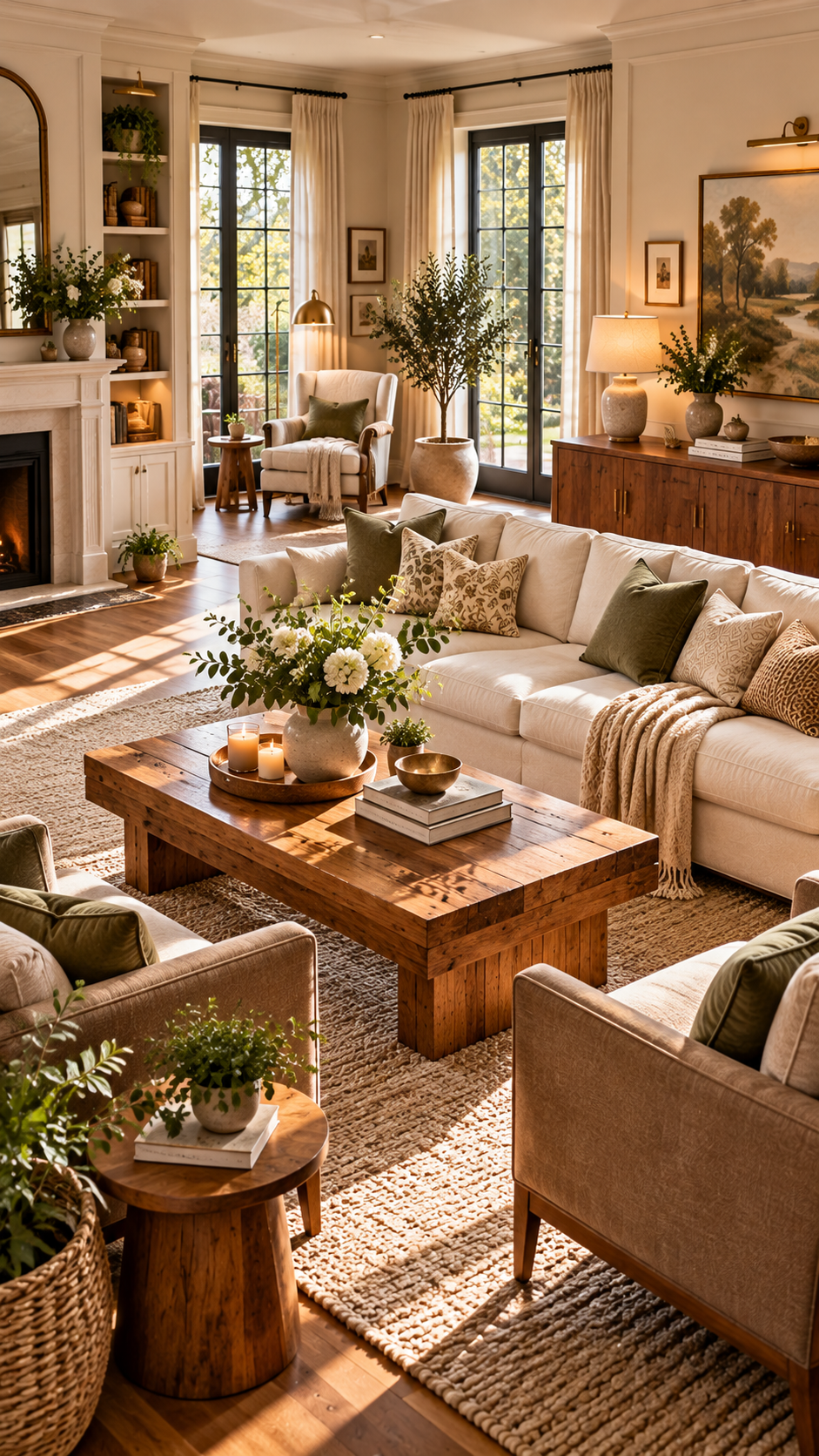
🛋️ Create a New Focal Point Without Buying Anything
Every living room benefits from a clear visual focal point.
Traditionally, this might be a television, fireplace, or large window. However, the most successful focal point is the one that supports how you want to experience the room.
If your living room has a beautiful garden view, consider repositioning the main seating area to celebrate that feature.
A sofa facing the windows can make natural scenery feel like part of the interior.
If your family enjoys conversation, arrange seating so people can comfortably face one another instead of organizing every chair around the television.
An existing bookcase or architectural feature could also become the visual anchor.
The objective is to create a deliberate relationship between furniture and the room’s strongest feature.
When the focal point changes, the entire living room can feel transformed even though every major piece of furniture remains the same.
🔄 Try a Floating Sofa Arrangement
Pushing every piece of furniture against the wall is a common living room arrangement, but it is not always the most effective.
In a sufficiently spacious room, moving a sofa slightly away from the wall can create a more intentional seating area.
The space behind the sofa might become a circulation pathway, a location for an existing console table, or simply a visual boundary between different activities.
This technique can be especially effective in rectangular living rooms where furniture tends to line the perimeter.
A floating arrangement gives the center of the room a clearer purpose.
However, it should never compromise comfortable movement.
Before committing to the position, walk around the room, open nearby doors, and check whether the new layout remains practical.
If the sofa creates an awkward narrow passage, move it closer to the wall or explore another orientation.
The best furniture arrangements are not simply beautiful from one viewpoint.
They remain comfortable from every direction.
🚪 Reclaim Forgotten Floor Space
Every living room contains areas that gradually become storage zones.
An unused corner might hold a decorative chair that nobody sits on. A narrow space beside the sofa may collect baskets, magazines, or miscellaneous household objects.
These areas can make the room feel unnecessarily crowded.
Start by temporarily removing furniture that does not serve an obvious purpose.
Move small tables, additional chairs, and freestanding accessories into another room while evaluating the arrangement.
Notice how the space feels without them.
Sometimes an empty section of floor becomes more visually valuable than another decorative object.
Clear floor space also makes movement easier and allows the proportions of your furniture to become more apparent.
This is especially useful when several items compete for attention.
Rather than filling every available area, give your most important furniture sufficient space to stand out.
🪑 Reposition an Existing Accent Chair
An accent chair can dramatically change a living room when moved to a more useful location.
A chair positioned beside a cabinet may function primarily as decoration.
Move it near the sofa, and it becomes part of the conversation area.
Place it beside a window, and it may become the most enjoyable seat in the house.
If the chair has an attractive backrest, consider positioning it where that detail becomes visible from the entrance.
This can create visual interest without requiring additional accessories.
The chair’s relationship with surrounding furniture matters more than its individual appearance.
Try several positions before deciding which feels natural.
A small change in angle can make the room feel more welcoming and less rigid.
✨ Finish the Layout Reset With a New Viewing Perspective
Once the furniture has been rearranged, stand at the entrance again.
Look toward the main seating area.
Notice whether the furniture creates a clear visual destination.
Then sit in every chair and evaluate the room from that position.
Can you comfortably reach the coffee table? Is the television visible where needed? Does daylight create uncomfortable glare? Are pathways easy to navigate?
A successful room transformation should improve the experience of using the space, not merely its appearance.
The final arrangement should feel purposeful, balanced, and surprisingly new.
That is what makes a furniture reset one of the most powerful no-renovation living room improvements.
🥈 Best 2 Refresh My Living Room by Restoring and Reinventing Existing Furniture
Best for living rooms with well-loved furniture that looks worn or dated
Not every tired-looking living room needs a new furniture collection.
Sometimes, the biggest opportunity lies in pieces that have gradually lost their original beauty.
A wooden table may have small scratches. Cabinet hardware may look dull. Upholstery might appear tired because it has not been properly maintained. A beautiful sideboard could disappear visually beneath miscellaneous objects.
Restoring and reinventing existing furniture offers a different kind of transformation.
Instead of changing the entire room’s decorating style, the focus shifts toward improving the condition and presentation of furnishings already in place.
The results can be subtle individually but remarkable when combined.
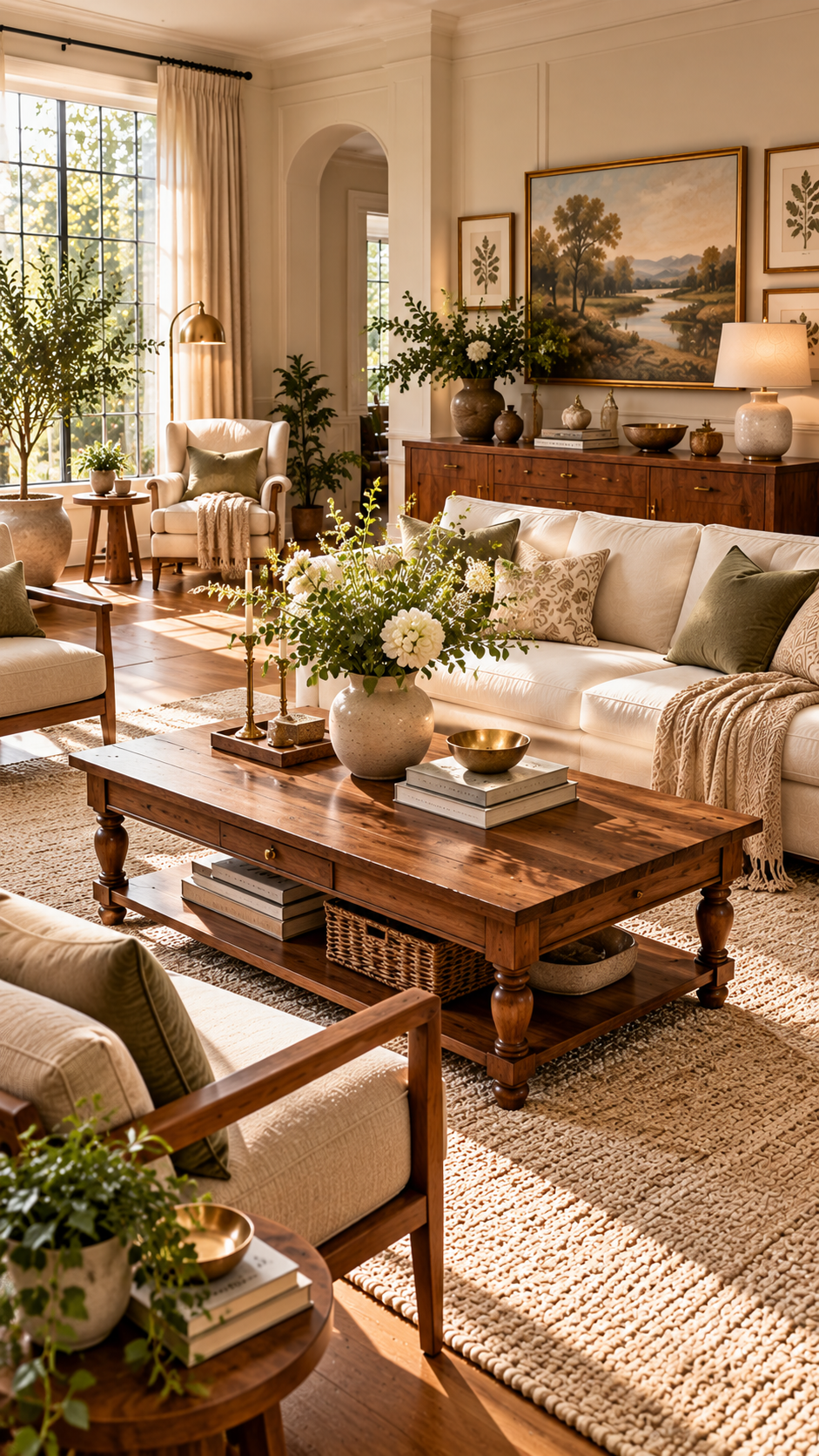
🪵 Restore the Beauty of Wooden Surfaces
Wooden furniture often develops signs of everyday use.
Coffee tables collect water marks, sideboards experience surface scratches, and frequently handled cabinet edges may lose some of their original finish.
Before considering replacement, inspect the condition of these surfaces.
Sometimes, a careful cleaning using a manufacturer-recommended product is enough to reveal the natural beauty of the wood.
Avoid applying aggressive cleaners or heavy furniture polish without checking the finish.
Different materials require different maintenance methods.
Solid wood, veneered furniture, laminate, and lacquered surfaces may look similar but respond differently to cleaning and restoration.
For minor cosmetic problems, an appropriate touch-up product may help disguise damage.
More extensive scratches, peeling veneer, or deteriorating finishes may require professional repair.
The goal is not necessarily to make every piece appear brand-new.
It is to restore its visual integrity while preserving the character that makes it special.
🔧 Give Cabinets a Subtle Hardware Makeover
Cabinet handles are small details that influence the entire appearance of furniture.
An older storage cabinet might have attractive proportions but hardware that makes it feel visually dated.
Replacing worn handles with a more streamlined or characterful design can create an immediate difference.
Consider understated brushed metal, dark bronze, or simple wooden pulls, depending on the existing cabinet.
The hardware should complement the furniture rather than compete with it.
Before purchasing replacements, measure the distance between existing screw holes.
Choosing hardware with compatible dimensions avoids unnecessary drilling and helps preserve the cabinet.
Keep the original handles if they are valuable or integral to an antique piece.
This simple update can make an existing sideboard feel intentionally refreshed without changing the furniture itself.
🧵 Revive Upholstery Instead of Replacing Seating
A sofa may appear tired even when its structure remains comfortable and functional.
Dust, flattened cushions, wrinkled covers, and minor fabric wear can make seating look older than it actually is.
Begin by checking the furniture’s care label.
Vacuum suitable upholstery using an appropriate attachment, paying attention to seams and the spaces beneath cushions.
If the cushion covers are removable, follow their cleaning instructions carefully rather than assuming they are machine washable.
For upholstered furniture with reversible cushions, rotating them regularly can help distribute everyday wear.
A professional upholstery cleaning may be worthwhile for more significant staining, provided the fabric is suitable for the treatment.
In some cases, replacing worn cushion inserts can improve both comfort and appearance.
The difference can be surprisingly dramatic.
A familiar sofa begins to feel supportive, refreshed, and ready for several more years of everyday use.
🖼️ Reinvent an Existing Piece Instead of Discarding It
Furniture often becomes overlooked because it has remained in the same role for too long.
A narrow console table might have spent years beneath a television.
Moving it behind a sofa could make it feel like a completely different piece.
A small cabinet previously used for miscellaneous storage might become an attractive location for frequently used books and games.
A sturdy side table could replace an inconvenient coffee table in a compact seating arrangement.
These changes do not require permanently altering the furniture.
They simply allow familiar objects to serve new purposes.
Before moving a piece, consider its dimensions, stability, load capacity, and suitability for its intended use.
Avoid stacking heavy objects on furniture not designed to support them, and secure tall storage units according to their manufacturer’s instructions.
Creative reuse should improve functionality without introducing unnecessary safety risks.
🧹 Refresh the Room Through a Careful Surface Reset
One of the most overlooked aspects of a living room refresh is the condition of visible surfaces.
A room can have beautiful furniture and still feel visually exhausting when tabletops, cabinets, and shelves are continuously covered.
Begin by clearing the coffee table completely.
Clean the surface and evaluate what genuinely belongs there.
Perhaps only a tray for everyday essentials and one meaningful object need to return.
Repeat the process with the sideboard, television cabinet, and occasional tables.
Avoid automatically replacing every object in its previous position.
Instead, decide what each surface should accomplish.
A coffee table needs usable space.
A sideboard may need to accommodate frequently accessed storage.
A small occasional table should remain convenient for the person sitting beside it.
This approach combines visual improvement with practical organization.
The result feels refreshed because the room becomes easier to use.
💎 Why Restored Furniture Can Look More Expensive Than New Furniture
A beautiful room does not depend entirely on new purchases.
Furniture with authentic wood grain, solid construction, and carefully maintained finishes often contributes more character than inexpensive replacement pieces.
Restoration also creates visual consistency.
A newly cleaned sofa, polished cabinet, repaired table, and organized shelving system collectively communicate that the room is cared for.
This sense of maintenance can make an interior feel more intentional.
Rather than replacing familiar objects to chase a temporary trend, you improve what already works.
The transformation becomes personal, practical, and potentially more economical than buying new furniture.
🥉 Best 3 Refresh My Living Room With a Lifestyle Inspired Space Transformation
Best for living rooms that no longer support everyday activities
The third approach to a living room refresh goes beyond furniture placement and surface improvements.
It involves changing what the room is designed to do.
Many living rooms are arranged around an idealized version of home life.
They may look beautiful when perfectly organized but fail to accommodate the activities that happen every day.
A family might enjoy board games but have nowhere convenient to store them.
Someone who loves reading may always end up using an uncomfortable chair.
A household that frequently entertains guests might struggle to create additional seating without moving furniture.
A lifestyle-inspired transformation addresses these problems directly.
Instead of asking how the room should look, ask how you want it to feel and function during ordinary moments.
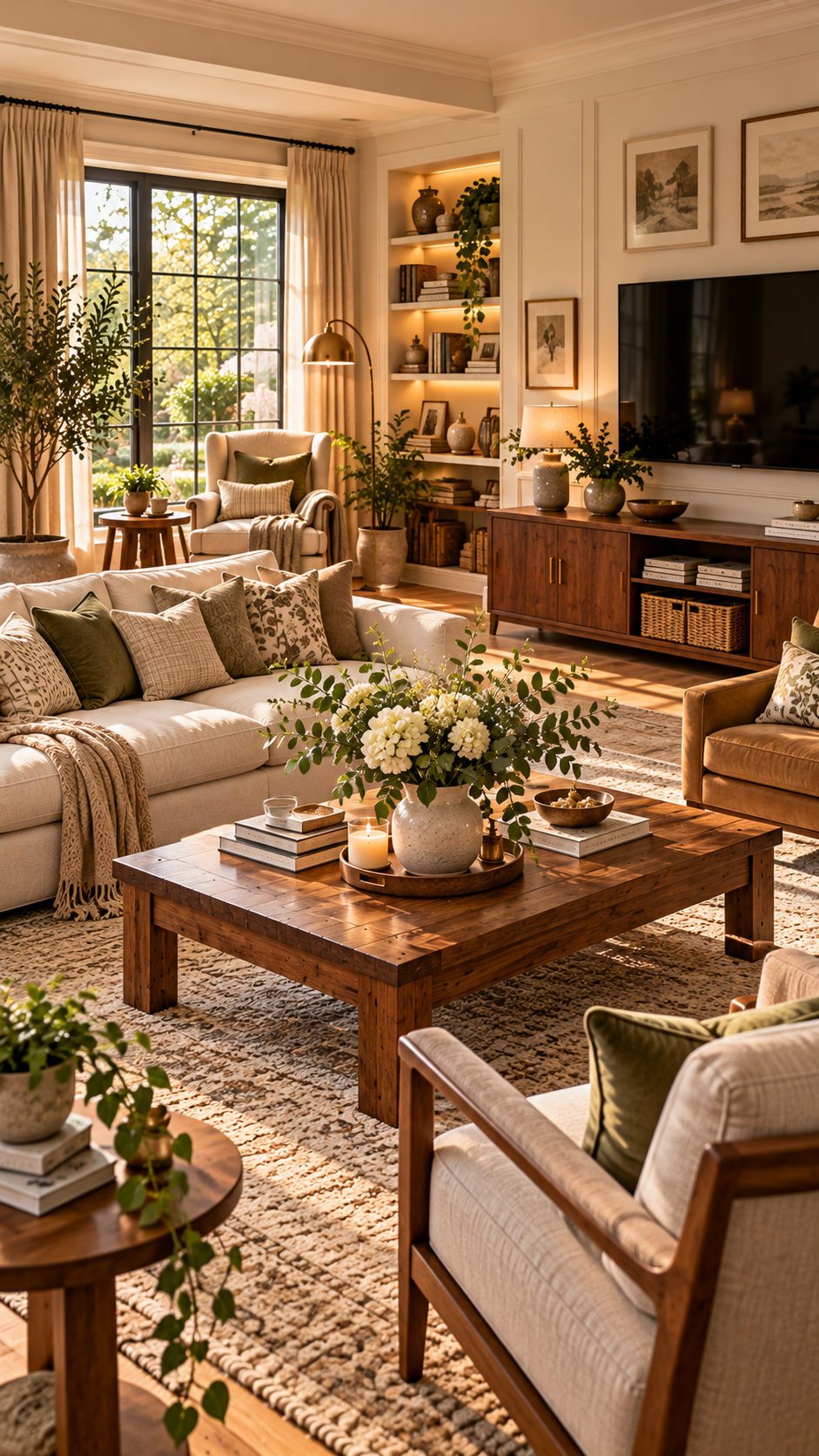
📚 Design a Living Room That Encourages Everyday Reading
Imagine having a comfortable place to read without needing a completely separate home library.
A reading area can begin with a chair you already own.
Choose a location that benefits from useful daylight without excessive glare or heat.
Position the chair where a nearby surface can hold a book, reading glasses, or a drink.
If necessary, relocate an existing lamp to provide comfortable evening illumination.
Keep frequently read books in a nearby cabinet or small storage basket.
The goal is to create a practical destination for reading rather than merely a decorative vignette.
A successful reading space should be comfortable enough that you naturally choose to use it.
If the chair is attractive but uncomfortable, the transformation has not achieved its purpose.
Every detail should support the activity.
This approach can make an overlooked section of the living room suddenly feel meaningful.
🎬 Reimagine the Living Room for Better Movie Nights
If watching movies is a favorite household activity, the seating arrangement should reflect that preference.
Begin by evaluating the distance and angle between the primary seating area and the television.
Reposition existing chairs so viewers do not need to twist uncomfortably.
Consider whether reflections from windows or overhead lighting interfere with the screen.
A simple adjustment to furniture placement or window coverings may improve visibility.
Next, evaluate where people place drinks, snacks, and remote controls.
These everyday details often determine whether a living room is genuinely convenient.
An existing side table can become more useful when placed within comfortable reach.
A storage basket or cabinet compartment can hold blankets, games, or entertainment accessories without leaving them permanently scattered across the room.
Avoid blocking ventilation around electronic equipment, and keep cables organized away from walking paths.
The finished room can still look sophisticated during the day while functioning beautifully for relaxed evenings.
☕ Create a Conversation Friendly Seating Area
A living room designed for conversation should make it easy for people to interact naturally.
Instead of positioning every chair in a straight line, experiment with a slightly curved or angled arrangement.
An armchair turned toward the sofa creates a more inclusive atmosphere.
A coffee table can serve as a shared central surface.
If the room has multiple seating pieces, arrange them so guests can comfortably see one another without excessive distance.
The layout should encourage interaction while preserving clear pathways.
This is particularly helpful in homes where the living room serves as a gathering place for friends and relatives.
Rather than adding extra seating immediately, consider whether existing furniture could be used more efficiently.
A well-positioned chair may contribute more to conversation than several seats placed awkwardly around the perimeter.
🎲 Make Space for Shared Family Activities
Some living rooms function as informal activity centers.
Families gather to play games, build puzzles, enjoy hobbies, or spend time together after school and work.
A refresh can make these activities easier without permanently transforming the room into a dedicated playroom.
Choose a storage location for frequently used items.
Keep board games, puzzles, and hobby supplies organized in existing cabinets or suitable containers.
If the coffee table is used for activities, ensure it has enough clear surface area.
For households with children, choose storage arrangements that allow age-appropriate materials to be accessed safely.
Avoid creating unnecessary obstacles around the central floor area.
An adaptable living room is often more valuable than a perfectly staged room that cannot accommodate everyday life.
The room should be able to change naturally throughout the day.
🌙 Create a Relaxing Evening Routine Through Better Function
Evening comfort depends on more than decorative lighting.
It also depends on how easily the room supports relaxation.
Think about where you usually sit at the end of the day.
Is a blanket nearby? Is the television remote easy to find? Can you reach a drink without standing up? Is the lighting convenient to adjust?
Small inconveniences accumulate.
By solving them, the room can begin to feel dramatically more comfortable.
Consider assigning a specific storage location to everyday essentials.
Reposition existing furniture to improve accessibility.
Check whether lamps are positioned where they are useful rather than merely decorative.
The transformation is successful when the living room begins to accommodate your routines effortlessly.
That sense of ease creates a different kind of luxury.
📊 Comparing the Best 3 Refresh My Living Room Ideas
Each approach offers a different transformation depending on what your living room currently needs.
| Refresh Idea | Main Transformation | Estimated DIY Cost | Best Result |
|---|---|---|---|
| 🥇 Furniture Layout Reset | Rearranges existing furniture and improves circulation | $0–$50 | A room that feels more spacious and organized |
| 🥈 Furniture Restoration and Reinvention | Improves existing finishes, upholstery, and storage | $25–$250 | A room that looks better maintained and more polished |
| 🥉 Lifestyle Inspired Transformation | Reorganizes the room around everyday activities | $0–$150 | A more functional and personalized living space |
These estimates are illustrative rather than fixed prices. Actual costs vary according to furniture condition, materials, labor, and location. Professional restoration or upholstery work can cost considerably more.
The most effective choice depends on the problem you want to solve.
If your living room feels crowded, start with furniture placement.
If the furnishings appear tired, prioritize cleaning, repair, and restoration.
If the room looks fine but never feels convenient, reconsider how it supports your daily life.
You can also combine elements from all three approaches.
However, tackling one major problem at a time makes it easier to evaluate which changes actually improve the room.
💰 How to Refresh My Living Room Without Wasting Money
Budget-conscious living room improvements begin with distinguishing between necessary changes and appealing distractions.
Shopping for decorations can feel productive because new objects create immediate excitement.
However, adding more accessories to a poorly arranged room rarely solves the underlying problem.
The first priority should be understanding what is already working.
A comfortable sofa does not need replacement simply because its color is no longer fashionable.
A functional cabinet may only need better organization.
A room that appears dark might benefit from repositioning existing furnishings rather than purchasing several new lamps.
🛒 Use a Shop Your Home Strategy
Before visiting a store, explore other rooms for items that could serve a useful purpose in the living room.
An unused occasional table might fit perfectly beside the sofa.
A lamp stored in a guest bedroom could provide better lighting near an existing chair.
A storage basket currently sitting in a hallway might become a convenient home for living room essentials.
The key is to avoid moving clutter from one room to another.
Only relocate objects that genuinely improve the intended space.
This strategy allows you to test different arrangements without committing money.
If a change does not work, you can reverse it easily.
🧾 Separate Essential Improvements From Optional Purchases
Once the room has been reassessed, create two categories of potential spending.
Essential improvements include repairs that restore functionality, replacement of unsafe or broken components, and practical items needed to support everyday activities.
Optional purchases include purely decorative additions that do not address a particular problem.
The distinction helps prevent unnecessary spending.
For example, replacing a broken cabinet hinge may be more valuable than purchasing another vase.
Repairing a loose table leg should take priority over selecting new cushions.
A successful living room refresh should create visible results while preserving financial flexibility.
⏳ Give Changes Time Before Buying More
After rearranging furniture or restoring an existing piece, use the room for several days.
Observe how it functions in the morning, afternoon, and evening.
A layout that appears excellent at first might reveal inconvenient pathways during busy family routines.
A newly organized cabinet may need adjustments once people begin using it.
By living with the changes before making additional purchases, you gain a clearer understanding of what the room actually needs.
This approach reduces impulse buying and helps create a more thoughtful final result.
⚠️ Common Mistakes That Can Ruin a Living Room Refresh
Not every change improves a room.
Sometimes an enthusiastic makeover introduces new problems that were not present before.
The most common mistake is attempting to transform too many elements simultaneously.
When furniture, lighting, storage, wall decorations, and accessories all change at once, it becomes difficult to understand which decisions were successful.
A more reliable approach involves making improvements in stages.
Start with the room’s arrangement.
Then address furniture condition.
Finally, reconsider functionality and small practical details.
Another mistake is prioritizing appearance over comfort.
A beautifully positioned chair becomes frustrating if it blocks a doorway.
A minimalist coffee table arrangement fails when there is no room to place everyday essentials.
A carefully organized cabinet is ineffective when important objects are difficult to access.
The goal is not to create a living room that only looks appealing in photographs.
It is to improve an environment where real people spend time.
💡 Important Note: Before replacing expensive furniture, evaluate its condition, comfort, proportions, and usefulness. A room that feels outdated may actually need better furniture placement, minor repairs, or more thoughtful organization rather than a complete makeover. Prioritize changes that solve a real problem and allow the room to function better every day.
🗓️ A Simple Seven Day Refresh My Living Room Plan
A living room transformation does not need to happen all at once.
A seven-day plan makes the process manageable and allows time to evaluate each improvement.
📅 Day 1 Identify What Needs to Change
Begin by observing the room during normal daily activities.
Notice where clutter accumulates, which seats are used most frequently, and which furniture pieces interfere with movement.
Take photographs from different corners to evaluate the overall arrangement more objectively.
Write down three specific problems.
For example, the room may feel crowded, the sofa may look worn, or the reading area may lack sufficient lighting.
These observations will guide the remaining improvements.
📅 Day 2 Remove Unnecessary Objects
Clear visible surfaces and evaluate decorative objects individually.
Remove items that are broken, unused, or no longer meaningful.
Organize everyday belongings according to where they are most frequently needed.
Do not rush to fill empty spaces again.
Allow the room to remain visually simpler while you consider its next arrangement.
📅 Day 3 Experiment With Furniture Placement
Use your room measurements to test a more functional layout.
Move lighter furniture first.
Ask for help with heavy pieces and avoid dragging furniture in ways that could damage flooring.
Evaluate circulation, seating comfort, window access, and sightlines.
Choose the arrangement that performs best during real activities rather than the one that merely looks attractive from the doorway.
📅 Day 4 Clean and Restore Existing Furniture
Inspect wood finishes, upholstery, hardware, and frequently used surfaces.
Complete appropriate cleaning and minor maintenance.
Repair small problems where you can do so safely.
Identify issues that require professional attention.
Even modest improvements can create a stronger impression of quality throughout the room.
📅 Day 5 Improve One Everyday Activity
Choose one activity that deserves better support.
Perhaps your family needs more convenient game storage.
Maybe your favorite chair would benefit from a better position.
You might discover that your entertainment setup needs easier cable management.
Focus on solving one practical problem completely.
This makes the room feel more useful instead of simply rearranged.
📅 Day 6 Reintroduce Only the Details That Matter
Bring selected decorative objects and everyday essentials back into the space.
Consider whether each item improves comfort, function, or personal meaning.
Avoid filling every surface simply because it looks empty.
A thoughtful selection of familiar belongings can make the room feel intentional without requiring new purchases.
📅 Day 7 Enjoy the Room and Make Final Adjustments
Spend time in the refreshed living room.
Read, relax, watch a movie, or invite family members to sit together.
Notice whether the furniture arrangement feels natural.
Check whether commonly used objects are convenient to reach.
Make small adjustments where necessary.
The final stage is not about achieving perfection.
It is about creating a room that feels noticeably better than it did a week earlier.
❓ Frequently Asked Questions About Refreshing a Living Room
Can I Refresh My Living Room Without Buying New Furniture
Absolutely. Furniture rearrangement, careful cleaning, small repairs, and better organization can produce a significant transformation without requiring replacement furniture.
The key is to identify why the room feels unsatisfying.
If the problem involves poor circulation or an inconvenient layout, buying another piece of furniture may actually make matters worse.
Start by making better use of the items you already own.
New purchases should address specific needs that existing furnishings cannot meet.
What Is the Fastest Way to Make a Living Room Feel Different
Changing the furniture arrangement is often one of the fastest ways to create a noticeable difference.
Repositioning an armchair, changing the orientation of the sofa, or removing an unnecessary side table can alter the entire visual structure of the room.
The effect can be immediate because the relationship between objects changes.
For an even quicker improvement, clear crowded tabletops and remove objects that interrupt movement.
A room can feel substantially fresher when its arrangement becomes easier to understand.
How Can I Make an Old Living Room Look Better on a Small Budget
Begin with maintenance and organization.
Clean existing furniture appropriately, repair minor damage, and remove belongings that no longer serve a purpose.
Then evaluate whether a different arrangement could improve the room.
If your budget allows, invest in small practical improvements such as compatible cabinet hardware or professional cleaning for a heavily used item.
Avoid purchasing decorative accessories until you understand what the room genuinely needs.
A small budget is often most effective when spent on solving existing problems.
Should I Paint the Walls When Refreshing My Living Room
Painting can create a dramatic transformation, but it is not always necessary.
If your existing wall finish is in good condition, you may discover that rearranging furniture and improving the room’s functionality already produces the change you want.
Painting becomes more relevant when the current finish is damaged, difficult to maintain, or genuinely incompatible with your long-term plans.
Before committing to a new color, evaluate the room after completing simpler improvements.
You may find that renovation is unnecessary.
How Often Should I Refresh My Living Room
There is no fixed schedule.
A living room refresh becomes useful when the space no longer supports your needs, feels uncomfortable, or contains furniture and storage arrangements that create everyday inconvenience.
Some households enjoy making small adjustments every few months.
Others may keep the same successful layout for years.
The ideal frequency depends on lifestyle changes rather than decorating trends.
A room that remains comfortable, practical, and visually satisfying does not need constant updating.
How Do I Refresh My Living Room Without Making It Look Cluttered
Focus on replacing ineffective arrangements rather than adding more objects.
Every piece of furniture should have a clear purpose.
Every frequently used item should have a convenient storage location.
Decorative objects should complement the room instead of competing for attention.
After making changes, leave some surfaces and floor areas intentionally clear.
This creates visual breathing room while making everyday cleaning and movement easier.
🌟 Final Thoughts on the Best 3 Refresh My Living Room Ideas
A beautiful living room transformation does not always begin with a shopping trip, a renovation budget, or a completely new decorating style.
Sometimes, it begins with seeing familiar surroundings from a different perspective.
The Best 3 refresh my living room ideas demonstrate how thoughtful changes can produce meaningful results without replacing everything that makes a home personal.
🥇 The Furniture Layout Reset is ideal when your living room feels crowded, repetitive, or awkward. Repositioning existing pieces, improving circulation, and creating a clearer focal point can give the room an entirely different atmosphere.
🥈 The Furniture Restoration and Reinvention Approach works beautifully when your furnishings are still useful but have gradually lost their original appeal. Careful maintenance, minor repairs, and creative reuse can restore both beauty and practicality.
🥉 The Lifestyle Inspired Transformation is the perfect solution when your living room no longer reflects how you spend your time. Creating more convenient areas for reading, entertainment, conversation, and family activities can make the room feel genuinely welcoming again.
The most rewarding transformations often combine all three ideas.
First, reconsider the furniture arrangement. Next, restore the pieces worth keeping. Finally, organize the space around the moments that matter most.
Rather than chasing a completely different interior, the objective is to uncover the potential of the home you already have.
An old sofa may find a better position. A forgotten chair might become your favorite reading spot. A neglected cabinet can return to being one of the room’s most beautiful features.
Small, deliberate decisions can build toward a surprisingly dramatic transformation.
And when every improvement makes the room more comfortable, useful, and personal, the result becomes far more valuable than a temporary decorating trend.
The best living room refresh is not the one that changes everything. It is the one that makes everything you already love about your home feel new again.
Related posts:

Top 3 Fall Living Room Inspo Ideas That Make Your Home Look Stunning This Season
Best 3 Budget Friendly Living Room Inspo Ideas That Make Your Home Look Expensive for Less
Best 3 Moody Living Room Inspo Ideas That Make Dark Interiors Look Unbelievably Luxurious
Best 3 Modern Organic Living Room Ideas That Make Any Home Look Effortlessly Luxurious
Best 3 Warm Neutral Living Room Inspo Ideas That Make Any Home Look Effortlessly Luxurious
Best 3 Small Living Room Inspo Ideas That Make Tiny Spaces Look Surprisingly Luxurious