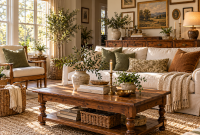
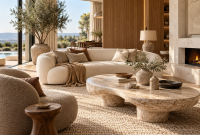
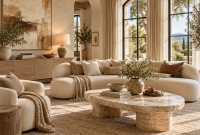
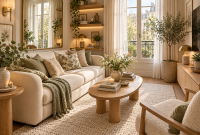
Moody Living Room Inspo Ideas are transforming ordinary living spaces into breathtaking interiors filled with dramatic color, sophisticated shadows, rich textures, and unforgettable personality. Instead of relying on bright white walls and predictable neutral furniture, moody living rooms embrace depth, contrast, and atmospheric lighting to create spaces that feel mysterious, elegant, and surprisingly inviting. 🖤
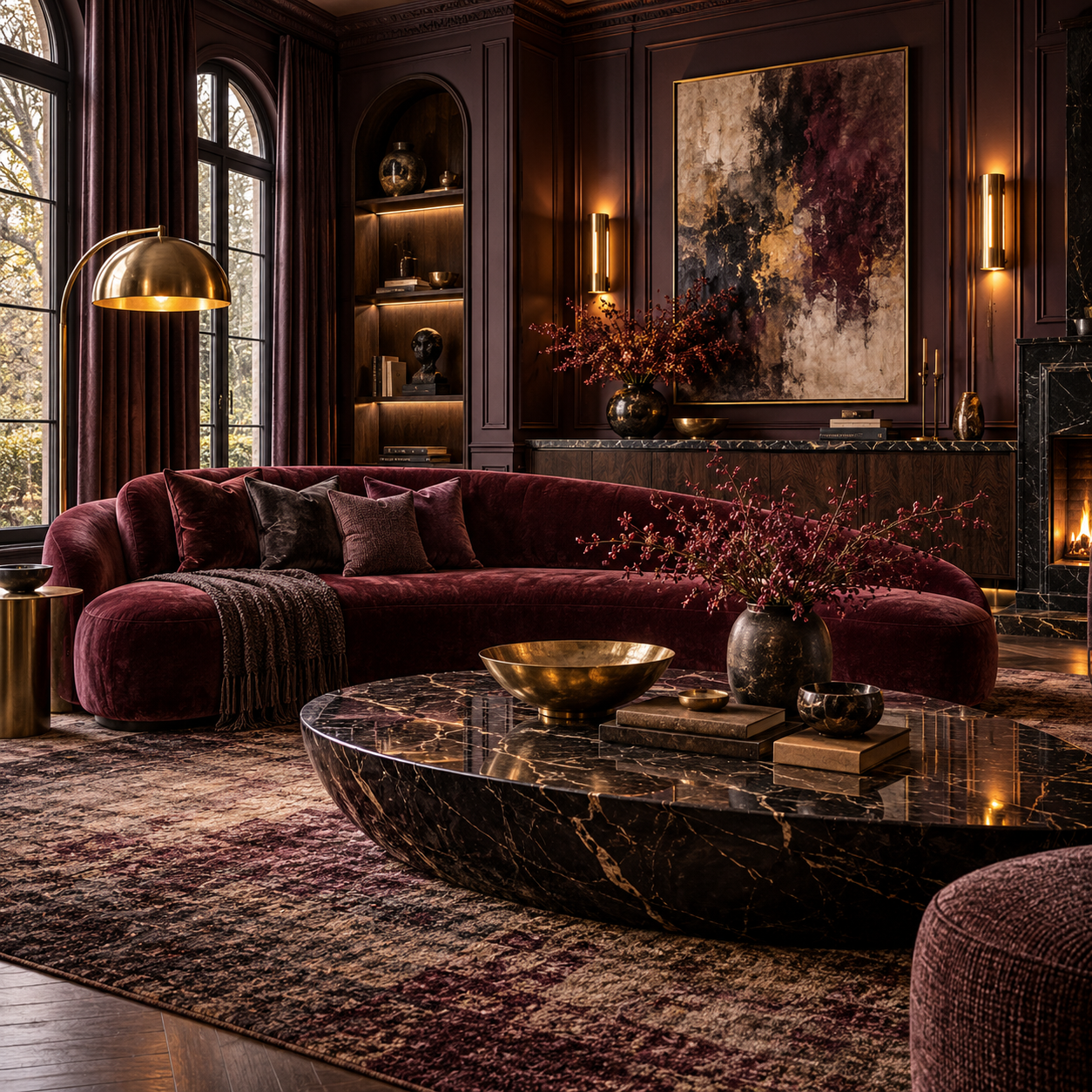
Imagine entering a living room where deep plum walls surround a sculptural velvet sofa, warm brass lamps illuminate beautiful architectural details, and carefully positioned artwork seems to emerge from the shadows. The atmosphere feels intimate yet impressive, like a private members’ club, an exclusive European residence, or a beautifully designed boutique hotel.
The most captivating dark interiors are not simply painted black. They combine carefully selected pigments, tactile materials, controlled illumination, and intentional furniture arrangements to create a layered visual experience.
A smoky aubergine room can feel romantic and theatrical. A charcoal architectural interior can appear modern and sculptural. Meanwhile, a deep midnight teal living room can introduce a completely different kind of atmospheric luxury, bringing together jewel-toned richness and refined contemporary design.
✨ The beauty of moody interior styling is that darkness becomes a design feature rather than something to avoid.
These Best 3 Moody Living Room Inspo Ideas explore three distinctive approaches to dramatic living room design, each with its own color identity, furniture personality, material palette, and lighting strategy.
Rather than repeating conventional cozy living room formulas, these concepts focus on expressive design decisions that make dark interiors memorable, distinctive, and visually extraordinary.
Why Moody Living Room Inspo Ideas Feel So Dramatic and Expensive
Moody living rooms create visual interest through an approach that differs significantly from traditional bright interiors.
In a light-colored room, sunlight often becomes the dominant visual element. Pale surfaces reflect illumination throughout the space, making walls, ceilings, and furniture appear relatively consistent in brightness.
A moody room introduces deliberate variations.
Certain architectural features disappear into darker surroundings, while selected furniture pieces and decorative objects become more prominent under carefully directed light.
The resulting contrast creates dimensionality and makes the interior feel carefully composed.
Dark walls can also change the perception of space. Instead of emphasizing every corner and boundary, deep colors sometimes make those boundaries less visually obvious, especially under controlled evening lighting.
This effect can create a sense of enclosure and intimacy that lighter interiors do not always deliver.
However, darkness alone does not produce luxury.
A sophisticated moody living room needs material variation, balanced proportions, and lighting that reveals details rather than hiding everything.
Rich velvet becomes particularly beautiful when illuminated from the side. Dark timber develops depth beneath warm accent lighting. Antique metal finishes create subtle highlights against matte painted surfaces.
Even a simple ceramic vase can appear sculptural when positioned against a dramatic background.
The difference comes from composition.
🎨 A successful moody interior treats color, lighting, and texture as interconnected architectural elements rather than separate decorating decisions.
The Best 3 Moody Living Room Inspo Ideas Compared
Each of the following concepts creates a distinct atmosphere. The most suitable choice depends on personal style, existing architecture, available daylight, and the level of visual drama desired.
| Design Feature | 🥇 Smoky Aubergine Elegance | 🥈 Charcoal Architectural Drama | 🥉 Midnight Teal Jewel Box |
|---|---|---|---|
| Main color | Smoky aubergine and muted plum | Graphite charcoal and soft black | Midnight teal and petrol blue |
| Primary atmosphere | Romantic and theatrical | Modern and architectural | Artistic and immersive |
| Statement furniture | Deep wine velvet sofa | Sculptural leather seating | Curved teal velvet sofa |
| Dominant material | Dark walnut | Blackened oak and honed stone | Smoked oak and dark marble |
| Metallic accents | Aged bronze | Brushed nickel or dark steel | Antique brass |
| Ideal wall finish | Matte color drenching | Textured mineral paint | Deep saturated matte paint |
| Lighting approach | Picture lights and shaded lamps | Concealed architectural lighting | Decorative lamps and directed spotlights |
| Best suited for | Elegant character-filled homes | Contemporary architectural interiors | Creative and expressive living spaces |
| Visual personality | Sophisticated romance | Sculptural minimal drama | Rich jewel-toned glamour |
These three designs share a love of atmospheric interiors, but they should not be styled interchangeably.
The aubergine concept celebrates softened richness and romantic depth. The charcoal approach emphasizes shape, structure, and shadow. The midnight teal version turns a living room into an immersive color experience.
Choosing one clear design direction helps prevent the room from becoming a collection of unrelated dark furniture and decorative objects.
🥇 Best 1 Moody Living Room Inspo Ideas With Smoky Aubergine Walls and Romantic European Elegance
A smoky aubergine living room offers one of the most distinctive ways to introduce dramatic color without relying on predictable black or gray interiors.
Aubergine sits between deep purple, muted burgundy, and brown. Depending on the exact shade and lighting conditions, it can appear almost chocolate-colored during the day and reveal beautiful violet undertones in the evening.
This subtle transformation makes the color particularly captivating.
Unlike bright purple, smoky aubergine feels mature and architectural. Its muted pigmentation gives the room depth while preserving the sophisticated character associated with historic European interiors.
The most beautiful version combines fully saturated walls, rich wine-colored velvet upholstery, dark walnut furniture, and antique bronze accents.
The overall atmosphere should resemble an elegant private drawing room that has been reinterpreted for contemporary living.
It feels collected rather than decorated, luxurious rather than flashy, and romantic without becoming excessively ornate.
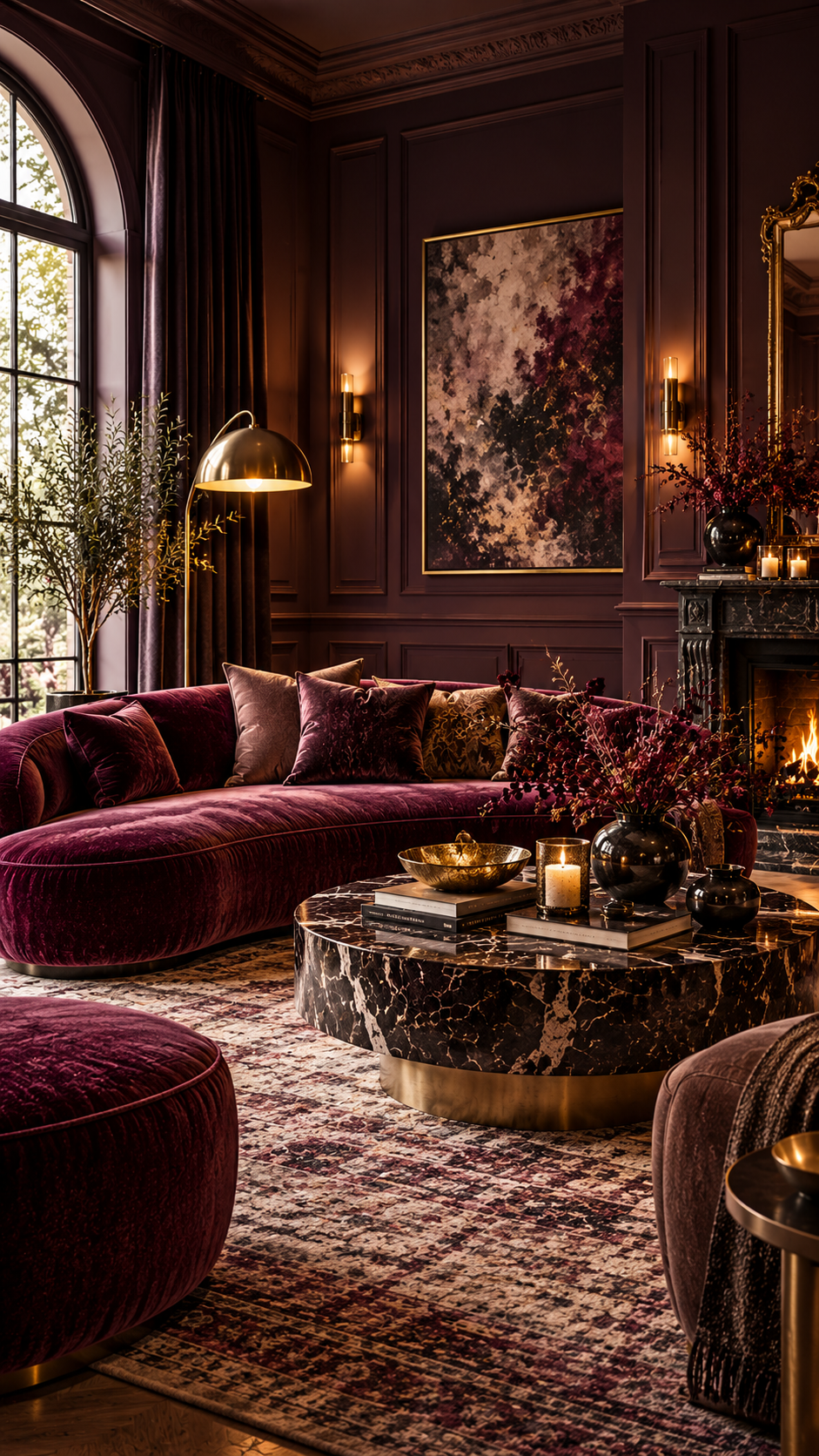
Create a Dramatic Aubergine Color Drenched Living Room
Color drenching involves applying the same color, or closely related shades, across several architectural surfaces.
Rather than painting one accent wall, extend smoky aubergine across the main walls and potentially the skirting boards, doors, and architectural moldings.
This creates a continuous visual envelope.
Traditional white trim can introduce sharp visual interruptions that weaken the immersive atmosphere. Using closely coordinated dark colors allows architectural details to remain visible through variations in light and shadow.
For a particularly dramatic result, consider painting the ceiling in a slightly softened version of the main wall color.
This approach works beautifully in a room with decorative ceiling moldings or substantial architectural proportions.
The ceiling no longer feels like a separate bright surface floating above the room. Instead, the entire interior becomes one cohesive composition.
🎨 Designer detail: Choose a matte or low-sheen wall finish to create a velvety appearance and reduce distracting reflections.
Before painting, test large samples on different walls. Aubergine undertones can look dramatically different under northern daylight, direct afternoon sunlight, and warm electric lighting.
Choose Rich Velvet Furniture With Sculptural Silhouettes
Furniture should reinforce the room’s romantic architectural personality.
A beautifully proportioned velvet sofa becomes the natural centerpiece.
Deep oxblood, muted wine, or dusty blackberry upholstery can create subtle contrast against aubergine walls without introducing an unrelated color.
The distinction between wall and sofa should come from fabric texture and slight tonal variation.
Velvet is particularly effective because its appearance changes with the direction of the pile and the angle of light.
A broad curved sofa can introduce contemporary elegance, while a classic low-backed design with refined arms provides a more traditional interpretation.
Avoid surrounding the sofa with too many heavy upholstered pieces.
Instead, introduce an occasional chair in cognac leather or muted bronze-brown fabric.
A dark walnut coffee table with an interesting grain pattern creates a grounding centerpiece.
The combination of velvet, leather, and wood adds enough material variation to keep the room visually engaging.
Add Antique Bronze and Romantic Directional Lighting
Lighting determines whether this room feels luxurious or simply dark.
Aubergine walls absorb a significant amount of light, so one ceiling fixture may not illuminate the space effectively.
The solution is to create several distinct lighting zones.
Position a pair of antique bronze picture lights above carefully selected artwork. Place shaded table lamps on either side of the sofa. Introduce a floor lamp beside a reading chair.
Each fixture should illuminate a specific area rather than attempting to brighten every corner equally.
Warm white lighting around 2700K can support the intimate atmosphere, provided the bulbs offer good color rendering.
Aged bronze finishes work especially well because their subdued metallic reflections complement plum and wine-colored surroundings.
Decorative glass lamps with amber or smoked finishes can introduce additional depth.
🕯️ The desired effect is a room filled with beautiful pools of warm light, not an interior where every surface is uniformly bright.
For the final decorative layer, use a large antique-inspired painting, an irregular dark-framed mirror, or a single sculptural branch arrangement.
These details add personality without weakening the dominant color story.
🥈 Best 2 Moody Living Room Inspo Ideas With Charcoal Walls and Sculptural Architectural Drama
A charcoal architectural living room takes moody decorating in a distinctly contemporary direction.
Rather than creating romance through luxurious fabric and historical detailing, this concept celebrates bold geometry, sculptural furniture, textured wall finishes, and dramatic contrasts between matte and reflective materials.
The result feels like an exclusive contemporary art residence.
Imagine a spacious living room with mineral-textured graphite walls, a low-profile cognac leather sofa, a monolithic dark stone coffee table, and a striking sculptural floor lamp.
The room contains relatively few objects, yet each piece has a strong architectural presence.
This style demonstrates that dramatic interiors do not necessarily require abundant decoration.
In fact, visual restraint can make the atmosphere feel even more powerful.
When furniture is carefully positioned and each surface has a distinct material quality, shadows become part of the composition.
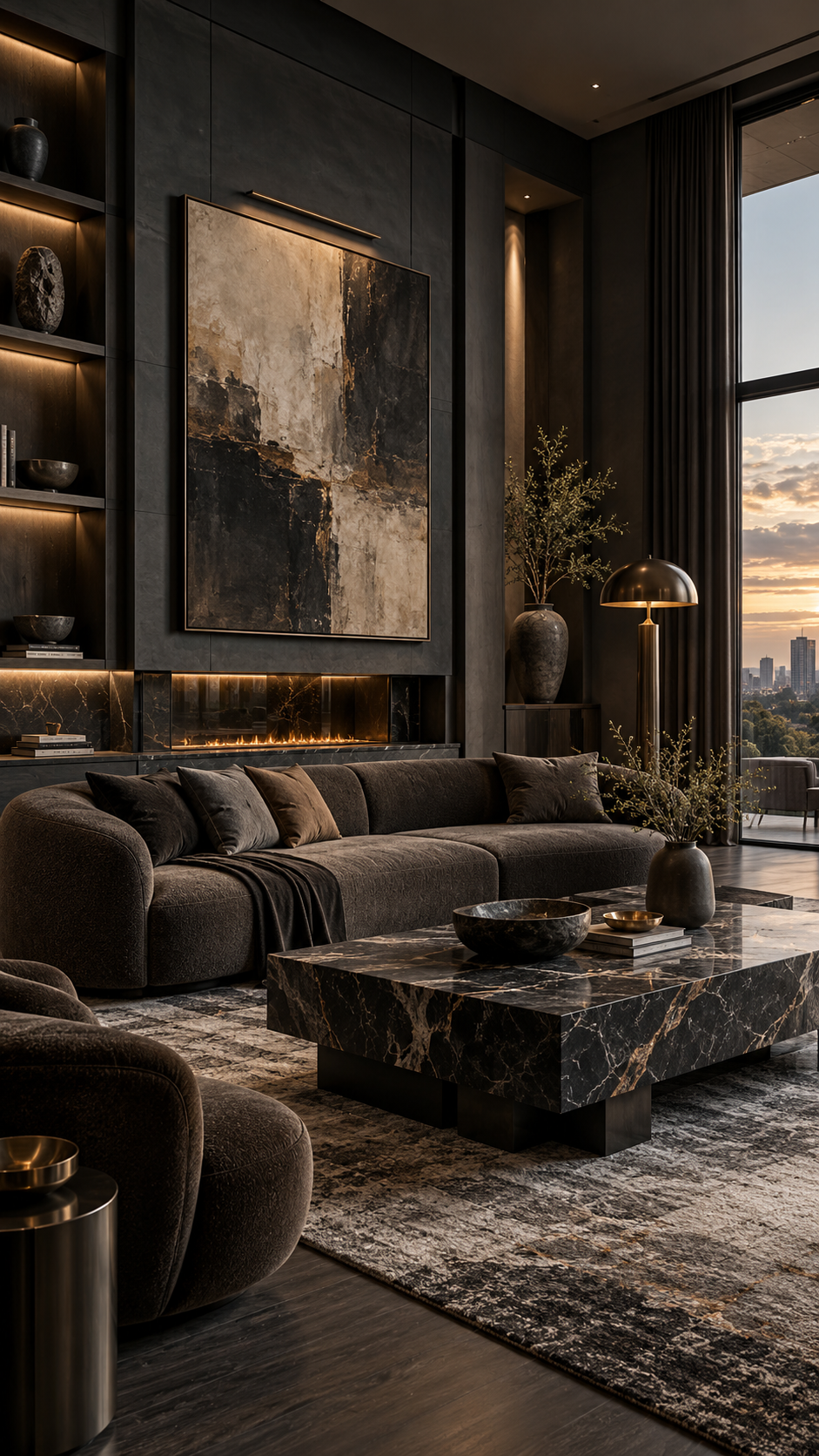
Design Graphite Walls With Beautiful Mineral Texture
Plain charcoal paint can look sophisticated, but a subtly textured mineral finish introduces a richer architectural effect.
Limewash-inspired finishes, mineral paints, or decorative plaster can create soft tonal movement across the walls.
Instead of appearing perfectly flat, the surface reveals gentle variation as daylight moves through the room.
This works especially well in contemporary spaces with large windows, recessed niches, or simple architectural detailing.
The objective is not to create heavily distressed walls.
Excessive texture can make the design feel rustic or unfinished.
A restrained graphite surface with delicate variations of charcoal, slate, and warm gray is often more effective.
For rooms with limited natural light, avoid selecting a paint color purely from an online photograph.
Dark gray shades can contain noticeable blue, green, or brown undertones.
A warm graphite generally pairs more naturally with cognac leather and smoked wood, while cooler charcoal can create a sharper contemporary appearance.
🖤 Architectural styling idea: Use a darker wall finish behind one substantial furniture piece, allowing directional lighting to emphasize its silhouette.
Introduce Sculptural Furniture Instead of Conventional Matching Sets
The furniture arrangement should feel like a gallery composition.
Start with one substantial sofa.
A low-profile cognac leather design adds warmth against charcoal surroundings, while a dark chocolate sofa produces a more understated effect.
Choose an occasional chair with an unusual architectural silhouette.
It might have a curved wooden frame, a rounded leather seat, or a carefully balanced cantilevered structure.
The contrast between the sofa and chair prevents the furniture arrangement from feeling overly coordinated.
A monolithic coffee table provides the strongest visual anchor.
Honed basalt-inspired stone, dark marble, or blackened oak can create the impression of an architectural sculpture.
The table should look substantial without overpowering the seating arrangement.
Choose forms with visual integrity rather than complicated decorative detailing.
A single large artwork positioned above the sofa often makes a stronger statement than a gallery wall filled with smaller pieces.
The artwork might feature oversized abstract shapes, dramatic monochromatic photography, or subtle warm highlights against a dark background.
This restraint creates breathing room and makes each design feature feel significant.
Create Cinematic Lighting With Hidden Architectural Details
Lighting in a charcoal living room should reveal surfaces selectively.
Consider concealed LED lighting inside architectural recesses, beneath floating shelves, or behind a wall-mounted feature.
These hidden sources can create soft illumination without drawing attention to the light fixture itself.
Use directional spotlights to highlight textured walls or statement artwork.
A slim sculptural floor lamp can provide another layer of illumination beside the sofa.
The most compelling effect comes from contrast.
A softly illuminated graphite wall looks more dramatic when the adjacent corner remains darker.
Likewise, a stone coffee table can become a focal point when light catches its edges while the surrounding floor remains subdued.
Avoid extremely cool lighting that makes the room feel commercial.
Warm-neutral lighting can preserve the natural character of leather, wood, and stone while supporting a sophisticated contemporary atmosphere.
💡 Dimmers are particularly valuable because they allow the living room to shift between practical daytime use, intimate evening conversations, and cinematic entertainment.
A functional dark interior should always provide sufficient lighting for reading, cleaning, and everyday movement, even when its decorative lighting is intentionally low.
🥉 Best 3 Moody Living Room Inspo Ideas With Midnight Teal and Jewel Box Luxury
Midnight teal introduces a more expressive interpretation of moody living room design.
Combining the depth of dark blue with the natural richness of green, midnight teal creates an atmosphere that feels mysterious, artistic, and richly saturated.
It is especially beautiful in homes where the living room serves as a space for entertaining, conversation, music, or displaying treasured objects.
Unlike the restrained charcoal concept, this room welcomes bold decorative personality.
The inspiration comes from the idea of a jewel box: an intimate interior where beautiful colors, luminous materials, and carefully curated decorative pieces create a sense of richness.
A midnight teal living room might feature dramatic blue-green walls, a curved petrol velvet sofa, dark marble surfaces, smoked glass lighting, and a small collection of bronze or brass objects.
The room should feel immersive without becoming excessively ornate.
The key is controlling where visual richness appears.
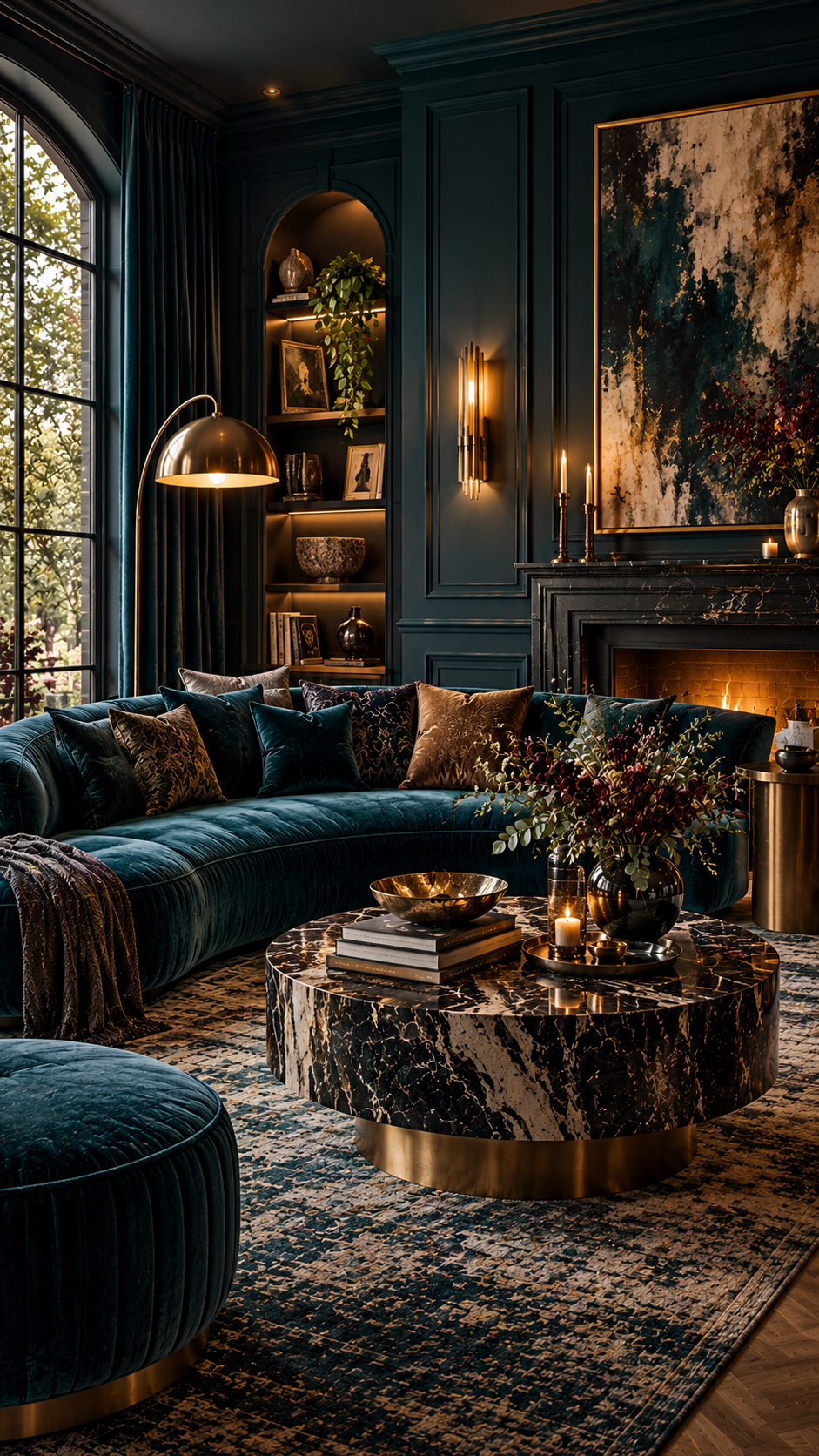
Wrap the Living Room in Deep Midnight Teal
The success of this concept begins with choosing the right shade.
Bright turquoise will create an entirely different atmosphere, while conventional navy blue may feel more traditional.
Midnight teal requires a carefully balanced combination of blue and green with enough depth to appear nearly black in shadow.
Under daylight, the green undertones become more visible.
At night, the room often takes on a deeper, more mysterious blue appearance.
This changing quality gives the room a distinctive personality throughout the day.
Painting the walls in a saturated matte teal creates a strong foundation.
For an immersive design, extend the color across built-in cabinetry, door frames, and selected architectural features.
Alternatively, use a slightly darker ceiling to create a dramatic enclosed effect.
A living room with a fireplace can benefit from painting the fireplace surround in a coordinating deep shade.
This makes the architectural element feel integrated into the overall composition rather than visually isolated.
For a sophisticated result, avoid using several competing jewel colors across every surface.
Allow midnight teal to remain the dominant color and use other tones sparingly.
Pair Jewel Tones With Dark Marble and Smoked Glass
Materials should reinforce the luminous, jewel-like atmosphere.
A curved velvet sofa in petrol blue or a slightly lighter teal becomes a luxurious centerpiece.
The fabric’s reflective pile creates subtle movement against the matte walls.
Dark marble introduces another layer of visual interest.
Choose a coffee table with restrained white, brown, or bronze veining rather than an extremely busy pattern.
The combination of deep color and natural stone feels especially sophisticated when the table has a sculptural silhouette.
Smoked glass can appear in decorative pendant lighting, a display cabinet, or a small side table.
Its translucent quality creates contrast against the heavy appearance of the darker furniture.
Brass adds warmth, but it should remain an accent rather than becoming the main visual feature.
A few carefully selected metallic details will feel more elegant than numerous bright gold accessories.
✨ Luxury styling idea: Place one sculptural brass object on a dark marble coffee table beside a low ceramic bowl and a beautifully bound art book.
The arrangement creates visual richness while preserving clear surfaces.
Make the Space Feel Like an Intimate Artistic Salon
A midnight teal living room benefits from a carefully edited collection of art and decorative objects.
Instead of choosing decorations based solely on matching colors, focus on pieces that contribute personality.
An oversized contemporary painting can introduce rust, muted coral, or bronze highlights.
A vintage-inspired sculptural lamp may add an unexpected historical element.
A dark framed mirror can reflect the warm glow of another decorative fixture.
The room becomes more engaging when the objects appear collected rather than purchased as a matching set.
An artistic interior should still feel comfortable enough for everyday use.
Introduce a generously sized rug with subtle patterning, comfortable seating, and practical side tables.
A muted Persian-inspired rug containing faded teal, wine, and warm brown can be particularly beautiful beneath contemporary furniture.
Its traditional pattern introduces a sense of history that contrasts with the room’s modern forms.
The final result feels like an elegant private salon where modern art, atmospheric lighting, and jewel-toned materials come together naturally.
Essential Design Principles for Moody Living Room Inspo Ideas
Although the three concepts have different visual personalities, several fundamental design principles determine whether any moody living room feels successful.
Dark colors need thoughtful placement. Lighting must support functionality. Furniture proportions must remain comfortable, and materials should provide visual variation.
The goal is not to make the living room as dark as possible.
It is to create a sophisticated environment where darkness helps other elements become more expressive.
Balance Dark Surfaces With Carefully Chosen Contrast
One of the most common mistakes in moody interiors is using nearly identical dark finishes everywhere.
When the walls, furniture, flooring, curtains, and accessories all have the same tone and reflectivity, individual elements can become difficult to distinguish.
The room may feel flat despite its dramatic color.
Contrast solves this problem.
A deep aubergine wall looks beautiful behind wine velvet because the materials interact with light differently.
Charcoal walls become more interesting beside cognac leather.
Midnight teal creates depth when paired with dark stone featuring delicate pale veining.
Contrast does not necessarily require white furniture or bright accent walls.
Subtle differences in value, texture, sheen, and material can create enough separation.
For example, a matte charcoal wall behind a satin-finished black cabinet may produce a beautifully understated distinction.
A dark wood table can stand out against a black rug because its visible grain adds visual movement.
The most sophisticated dark interiors often use restrained contrast rather than dramatic color clashes.
Use Layered Lighting Without Destroying the Atmosphere
Lighting is essential to a successful moody room.
A common misconception is that dramatic interiors should remain dim at all times.
In reality, a beautiful dark living room needs flexibility.
During the day, natural light should support ordinary activities.
In the evening, multiple lighting sources allow the atmosphere to become more intimate.
Combine ambient lighting for general visibility, task lighting for activities, and accent lighting for selected architectural features.
Shaded table lamps provide softness.
Directional spotlights create visual drama.
Wall lights can emphasize architectural rhythm.
Concealed lighting adds depth without introducing visual clutter.
Choose dimmable fixtures where practical and maintain enough illumination for safe movement.
Important Note: Before committing to a dark color scheme, test paint samples under the room’s actual daylight and evening lighting. Deep pigments can change noticeably with light direction, bulb color temperature, and surrounding materials. A successful moody living room should feel atmospheric without sacrificing visibility, comfort, or everyday functionality.
Make Dark Rooms Feel Layered Through Texture
Texture prevents a dark interior from looking visually lifeless.
Matte paint creates a soft background, but it becomes more interesting when combined with other surfaces.
Velvet reflects light differently from leather.
Leather contrasts with textured plaster.
Dark wood introduces natural grain.
Stone brings mineral variation.
Metal creates small reflective highlights.
A beautiful living room typically benefits from several complementary textures rather than numerous competing colors.
Consider pairing a matte wall finish with a soft rug, a substantial wooden coffee table, a luxurious upholstered sofa, and a single metallic lighting fixture.
Each material has a different visual role.
The result is a layered composition where the room remains intriguing even with a limited palette.
How to Create a Moody Living Room Without Replacing Everything
A dramatic transformation does not always require purchasing an entirely new furniture collection.
Existing pieces can often become part of a darker interior when the surrounding finishes change.
A beige sofa, for example, may appear ordinary against white walls but look exceptionally elegant against dark aubergine or charcoal.
A simple wooden coffee table can feel more substantial when placed on a richly textured rug.
An existing mirror may become a dramatic decorative feature when illuminated by a nearby lamp.
The most practical approach begins with identifying which existing elements should remain.
From there, the new design can enhance their colors, shapes, and materials.
Start With a Single Architectural Transformation
Painting is often one of the most effective ways to introduce a moody atmosphere.
For homeowners uncertain about committing to fully saturated walls, begin with a carefully chosen architectural zone.
This might be a recessed alcove, a fireplace wall, or a section containing built-in cabinetry.
Choose a color that relates naturally to existing furniture and flooring.
A deep graphite works beautifully with many modern materials.
Smoky plum can complement dark brown leather and traditional wood.
Midnight teal creates striking contrast against warm timber and bronze accents.
Once the painted area is complete, observe how the room changes at different times of day.
The resulting atmosphere may reveal opportunities for a more comprehensive transformation.
However, avoid treating a dark accent wall as the only solution.
For a truly immersive room, repeating the color across several architectural surfaces often produces a more intentional effect.
Upgrade Lamps and Statement Accessories
Lighting fixtures can dramatically change the personality of an interior without major construction.
Replace overly bright exposed bulbs with shaded lamps, decorative sconces, or dimmable fixtures.
Use a substantial lamp on a console table to create a defined pool of warm light.
Position a floor lamp beside the main seating area.
Add a small picture light above an artwork that deserves attention.
Decorative upgrades should follow the same principle of restraint.
A dark ceramic vase, textured cushion, dramatic painting, or sculptural metal object can introduce more character than a large collection of inexpensive accessories.
Choose pieces that contribute to the room’s specific aesthetic.
Romantic aubergine interiors benefit from aged finishes.
Charcoal architectural spaces respond to clean sculptural forms.
Midnight teal rooms welcome artistic objects and subtle metallic highlights.
Preserve Practical Comfort and Everyday Functionality
A moody living room should remain easy to use.
Dark interiors still need comfortable seating, convenient circulation, and sufficient surfaces for daily activities.
Avoid selecting furniture solely because it looks beautiful in an editorial photograph.
A sculptural chair may appear impressive but should also provide comfortable support.
A dramatic marble table needs appropriate placement and practical maintenance.
Dark rugs and upholstery should be selected with household use in mind.
Homes with pets or children may benefit from performance fabrics and finishes that are easier to clean.
Furniture arrangement should also provide convenient walking space, particularly around coffee tables, doorways, and seating.
The goal is a room that feels exceptional without becoming impractical.
Common Mistakes That Can Ruin Moody Living Room Inspo Ideas
Dark interior design requires careful editing.
Because the palette is naturally intense, mistakes in lighting, furniture proportion, and decorative selection can become particularly noticeable.
Avoiding these problems helps preserve the elegant atmosphere.
Using Only Black and Gray Without Material Variation
Darkness does not automatically create sophistication.
A room containing black walls, black furniture, black curtains, and black accessories can appear monotonous when everything has a similar finish.
Introduce differences in texture, color undertone, and material.
Warm dark wood, leather, rich fabrics, and subtle metallic details can provide visual variety while keeping the palette restrained.
Even one beautiful piece of art can introduce enough contrast to make the composition more engaging.
Choosing Inadequate Lighting
A dark room with insufficient lighting may feel gloomy rather than atmospheric.
The distinction is particularly important for rooms that receive limited natural daylight.
Instead of relying on one decorative fixture, create several lighting zones with independent controls.
Ensure reading areas have dedicated task lighting and walkways remain visible.
Moody styling should enhance the room’s beauty, not make everyday activities difficult.
Filling Every Corner With Decorative Objects
Dark interiors often contain visually substantial furniture and strongly saturated surfaces.
Adding too many accessories can make the space feel crowded.
Choose a small number of distinctive objects and allow space around them.
One oversized artwork can be more effective than numerous small frames.
A single sculptural vase may create a stronger focal point than an entire collection of decorative pieces.
The negative space surrounding an object helps emphasize its shape.
Ignoring the Existing Architecture
A beautiful design concept should respond to the room’s actual proportions, windows, ceiling height, and architectural features.
A contemporary charcoal room may benefit from clean lines and concealed lighting, while an older home with decorative moldings may look extraordinary in smoky aubergine.
Neither approach should be copied without considering the surrounding architecture.
Dark colors can be used in rooms of many sizes, but the effect depends heavily on lighting, furnishings, and the desired atmosphere.
Designing around the room itself produces more convincing results than attempting to replicate an unrelated interior photograph exactly.
How to Choose the Best Moody Living Room Style for Your Home
The most appropriate moody living room style depends on more than preferred colors.
Consider the architectural character of the home, the furniture that will remain, the available natural light, and how the living room is normally used.
For an elegant home with traditional architectural features, smoky aubergine creates a particularly compelling atmosphere.
Its subtle plum undertones, romantic materials, and antique-inspired lighting work beautifully with moldings, fireplaces, and classic furniture silhouettes.
For a contemporary home featuring clean lines and architectural simplicity, graphite charcoal offers a stronger design direction.
It allows sculptural furniture, textured surfaces, and dramatic lighting to become the central features without introducing unnecessary ornamentation.
For a home filled with artistic personality, midnight teal creates a richer decorative opportunity.
It supports bold upholstery, beautiful artwork, dramatic glass objects, and distinctive combinations of contemporary and vintage elements.
Budget also matters.
If existing furniture already complements deep blue-green tones, midnight teal may be easier to introduce.
If the room contains cognac leather seating and dark timber, a charcoal scheme can build upon those materials.
If the home already features traditional walnut furniture, the aubergine concept may feel especially natural.
There is no requirement to follow a particular design style merely because it looks impressive in photographs.
The most successful room is the one where visual atmosphere, personal taste, and everyday practicality work together.
Final Ranking of the Best 3 Moody Living Room Inspo Ideas
Three beautiful design directions demonstrate how atmospheric interiors can achieve strikingly different results.
🥇 Smoky Aubergine With Romantic European Elegance is the strongest choice for homeowners who appreciate expressive colors, luxurious fabrics, and architectural character. Deep plum walls, rich velvet, antique bronze, and dark walnut create a romantic environment that feels sophisticated and memorable.
Its greatest strength is the way color and texture work together to produce a warm, almost theatrical interior without relying on obvious decorative excess.
🥈 Charcoal Architectural Drama is ideal for contemporary spaces where shape, material, and lighting should take center stage. Graphite mineral finishes, sculptural leather furniture, dark stone, and concealed lighting create a sophisticated gallery-inspired atmosphere.
This style is particularly effective when the architecture already features clean lines and well-defined proportions.
🥉 Midnight Teal Jewel Box Luxury offers the richest opportunity for artistic expression. Deep blue-green walls, velvet seating, smoked glass, dark marble, and carefully selected brass accents create an immersive space with unforgettable character.
It is an excellent choice for anyone who wants a living room that feels expressive, dramatic, and highly individual.
Each design proves that beautiful dark interiors are not defined by one particular color or furniture style.
They are created through the careful relationship between surfaces, shadows, lighting, and architectural composition.
Final Thoughts on Moody Living Room Inspo Ideas
The most beautiful Moody Living Room Inspo Ideas demonstrate that a living room does not need to be bright or neutral to feel sophisticated, welcoming, and visually impressive.
Dark interiors offer a completely different approach to home decorating.
They invite attention toward texture, shape, material, and carefully controlled illumination.
Smoky aubergine introduces romantic depth and European elegance. Charcoal emphasizes sculptural modernity and architectural restraint. Midnight teal celebrates jewel-toned richness and artistic personality.
These three styles may look dramatically different, but they share one important principle: intentional design creates more impact than simply filling a room with expensive objects.
A modest living room can become remarkable through the right wall color, a beautifully proportioned sofa, carefully positioned lighting, and a few expressive decorative pieces.
Likewise, a spacious luxury residence can feel ordinary if its materials, proportions, and illumination are poorly coordinated.
The secret is understanding how each design element contributes to the atmosphere.
🖤 Let the walls create depth.
✨ Allow light to reveal beautiful textures.
🛋️ Choose furniture with distinctive forms and practical comfort.
🎨 Use color thoughtfully rather than adding unnecessary decoration.
When these principles come together, the living room becomes more than an attractive place to sit.
It becomes a memorable interior filled with character, elegance, and dramatic beauty.
And sometimes, the most extraordinary transformation begins with a simple decision: allowing a room to embrace the dark.
Related posts:

Best 3 Budget Friendly Living Room Inspo Ideas That Make Your Home Look Expensive for Less
Best 3 Modern Organic Living Room Ideas That Make Any Home Look Effortlessly Luxurious
Best 3 Warm Neutral Living Room Inspo Ideas That Make Any Home Look Effortlessly Luxurious
Best 3 Small Living Room Inspo Ideas That Make Tiny Spaces Look Surprisingly Luxurious
Best 3 Cozy Living Room Inspo Ideas That Will Make Your Home Feel Instantly Warm and Beautiful
Top 3 Boho Living Room Ideas That Make Any Space Look Effortlessly Stylish