A beautiful living room does not need dramatic colors, expensive furniture, or an overwhelming collection of decorations to feel extraordinary. Sometimes, the most inviting interiors are created with the simplest combination of soothing colors, natural materials, comfortable furniture, and carefully considered decorative details. Warm Neutral Living Room Inspo is all about transforming an ordinary living space into a peaceful, sophisticated retreat that feels welcoming, timeless, and effortlessly stylish. 🤎
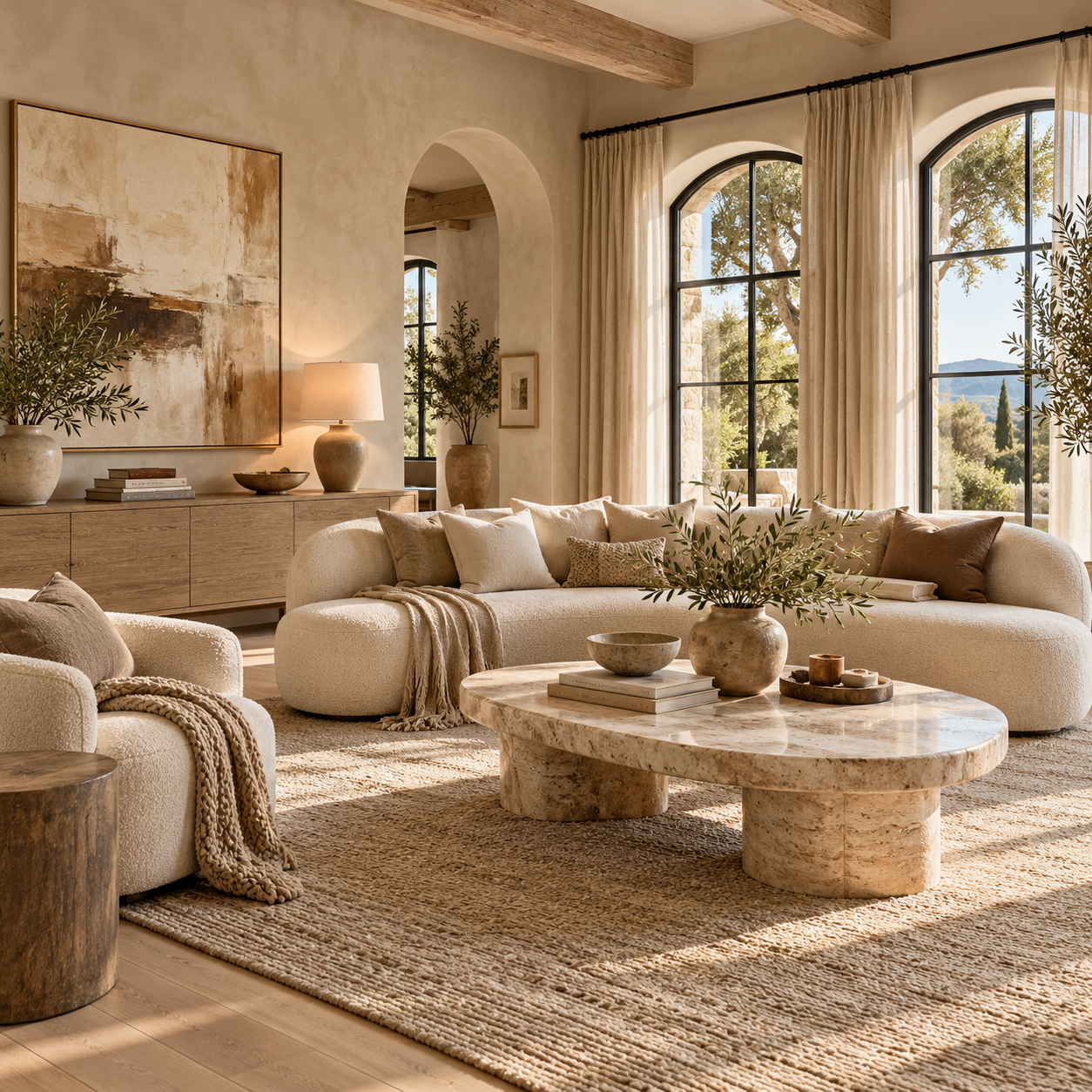
Unlike cold minimalist interiors dominated by stark white walls and hard surfaces, warm neutral living rooms embrace softness, warmth, and subtle visual depth. Shades of creamy ivory, oatmeal, warm beige, mushroom taupe, caramel, greige, and earthy brown work together to create an environment that feels both luxurious and wonderfully comfortable.
The beauty of this decorating approach lies in its flexibility. Whether the home features a spacious open-plan living area, a cozy apartment, a traditional family room, or a contemporary townhouse, warm neutral colors can enhance the atmosphere without making the space feel cluttered or overly decorated.
However, the secret to achieving a truly beautiful neutral living room goes far beyond choosing beige furniture. The most impressive spaces incorporate layered textures, natural materials, thoughtful lighting, carefully balanced proportions, and decorative elements that create personality without disturbing the peaceful color palette.
For anyone searching for a fresh interior transformation, these Best 3 Warm Neutral Living Room Inspo Ideas offer three distinctive decorating approaches. Each idea combines comfort and elegance in a different way, making it possible to find the perfect inspiration for a home that feels both stylish and genuinely lived in.
Why Warm Neutral Living Room Inspo Is Perfect for a Timeless and Cozy Home
Neutral interiors have remained popular for years because they offer a versatile foundation that adapts beautifully to different decorating styles. However, warm neutral living rooms take this concept a step further by introducing a more inviting and emotionally comforting atmosphere.
Instead of relying exclusively on white, gray, or beige, these spaces explore a richer collection of understated colors. Creamy upholstery, pale oak furniture, textured linen, natural stone, warm wood, and subtle earthy accents work together to create depth without overwhelming the room.
One of the biggest advantages of this design direction is its ability to make a living room feel visually cohesive. When furniture, textiles, and accessories share similar undertones, the entire interior feels thoughtfully connected, even when individual pieces come from different collections or decorating periods.
🌿 Natural materials also play an essential role. Wooden furniture, woven baskets, cotton throws, linen curtains, and handcrafted ceramics bring organic variation into the room. These elements prevent the neutral palette from becoming flat or lifeless.
Warm neutral spaces also offer remarkable seasonal flexibility. During spring and summer, lightweight fabrics and greenery create a fresh, airy atmosphere. During autumn and winter, chunky knitted throws, deeper brown cushions, and soft ambient lighting add richness and warmth.
Most importantly, this decorating approach encourages a balance between visual beauty and everyday comfort. A luxurious-looking room should still offer welcoming seating, practical surfaces, accessible storage, and enough open space for comfortable movement.
Best 3 Warm Neutral Living Room Inspo Ideas for an Elegant Interior Makeover
The most beautiful warm neutral living rooms often share a similar foundation, but the final atmosphere can vary considerably depending on the furniture, textures, and decorative details used.
Some interiors embrace the simplicity of Scandinavian design, while others highlight sculptural furniture and organic modern materials. A third approach introduces the romantic charm of a softly layered cottage-inspired living room.
The following three ideas offer different interpretations of warm neutral living room design while maintaining a consistent emphasis on comfort, harmony, and timeless elegance.
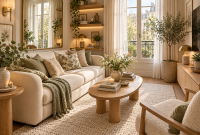
🥇 1 Warm Neutral Living Room Inspo With Soft Scandinavian Elegance
A Scandinavian-inspired warm neutral living room is an excellent choice for anyone who loves bright, uncluttered spaces that still feel cozy and inviting. This design direction combines minimalist furniture, pale natural materials, soft textiles, and warm architectural finishes to create a peaceful environment.
Unlike more traditional Scandinavian interiors that sometimes emphasize cool whites and gray undertones, this warmer interpretation uses creamy neutrals, pale oak, soft beige, warm ivory, and subtle oatmeal shades.
The result is an interior that feels incredibly fresh without appearing cold or empty.
Create a Soft Cream and Oatmeal Color Foundation
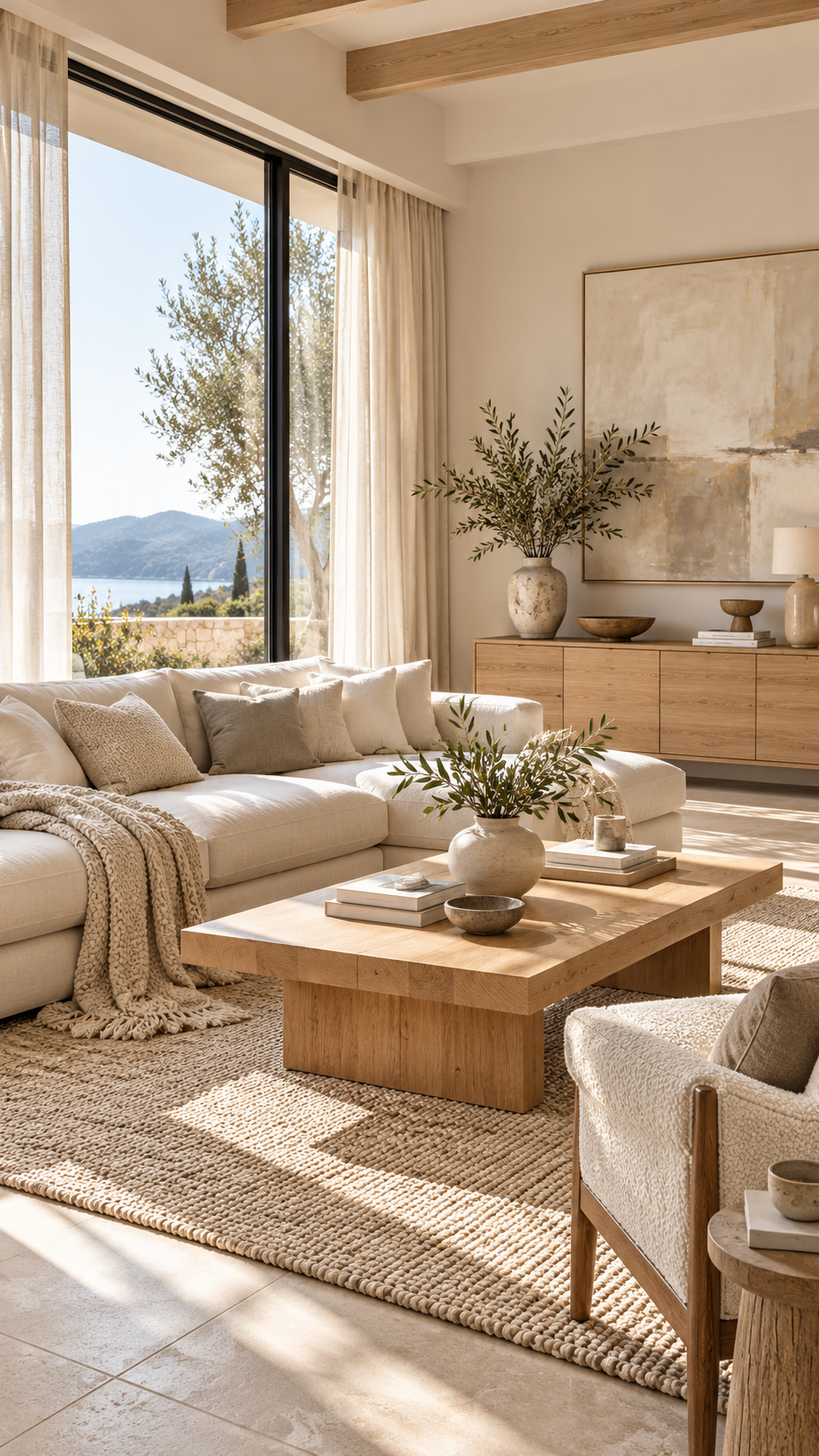
The color palette is the foundation of this living room style. Begin with walls painted in a soft warm white, delicate ivory, or muted cream. These shades reflect natural daylight while providing a gentle background for wooden furniture and textured upholstery.
A large sofa upholstered in oatmeal-colored linen or warm beige performance fabric can become the central feature of the room. Choose a simple silhouette with clean lines, generous cushions, and comfortable proportions.
Instead of matching every item perfectly, introduce subtle differences between the colors of the sofa, curtains, rug, and decorative accessories.
For example, a cream sofa can look beautiful against a slightly deeper greige wall, while ivory curtains and a pale sand-colored rug establish a soft tonal transition.
🤍 The key is to create visual variety through small differences in color temperature and texture rather than introducing dramatic contrasts.
This approach is particularly effective in smaller living rooms because closely related colors allow the eye to move naturally throughout the space without encountering too many visual interruptions.
Choose Pale Oak Furniture With Clean Architectural Lines
Light oak furniture is one of the most recognizable features of Scandinavian interiors. Its natural grain introduces warmth and character while maintaining the airy atmosphere that makes this decorating style so appealing.
A low rectangular coffee table in pale oak can anchor the seating area without becoming visually heavy. Pair it with a simple wooden side table, a streamlined media console, or floating shelves in a complementary finish.
Furniture should feel practical and thoughtfully selected rather than excessively decorative.
Rounded corners, smooth surfaces, slim legs, and gently curved edges can make the space feel softer and more welcoming. A small round coffee table is particularly useful in a compact living room because it allows easier movement around the seating arrangement.
Consider introducing a single accent chair with a natural wooden frame and cream upholstered cushions. This creates an additional seating option while strengthening the connection between the room’s furniture and its neutral color palette.
A restrained selection of wooden pieces is usually more effective than filling every available corner with furniture.
Layer Linen Cotton and Wool for Everyday Comfort
Texture is especially important in a Scandinavian-inspired neutral living room because the color palette is intentionally understated.
Begin with a large woven area rug that extends beneath the front legs of the sofa and nearby seating. A wool-blend rug in ivory, oatmeal, or light taupe can define the seating area while adding softness underfoot.
Next, introduce cushions in complementary natural fabrics. Combine smooth linen, lightly textured cotton, bouclé, and subtle woven patterns to create depth.
A casually draped knitted throw in warm cream or sandy beige makes the sofa feel relaxed and comfortable.
Rather than using several bold patterns, focus on the interaction between different fabric surfaces.
A smooth linen sofa paired with a chunky wool throw, for example, creates an attractive contrast without disturbing the calm appearance of the room.
Even curtains can contribute to the layered effect. Full-length linen curtains in soft ivory filter daylight beautifully and create gentle vertical lines that make the room feel taller.
Finish With Minimal but Meaningful Decor
Scandinavian-inspired interiors look their best when decorative objects have enough space to be appreciated individually.
Choose a ceramic vase with a simple sculptural silhouette, a small stack of carefully selected books, and perhaps a handcrafted wooden bowl for the coffee table.
A single large framed artwork featuring subtle abstract forms or muted landscape colors can provide a focal point above the sofa.
🌿 Add a healthy indoor plant in a neutral ceramic planter to introduce a touch of natural green. The foliage creates a refreshing contrast against the warm cream and beige surroundings.
Lighting should remain equally understated. A floor lamp with a fabric shade, a small ceramic table lamp, and warm ambient lighting can create a comfortable evening atmosphere.
The overall goal is to make the room feel thoughtfully composed without appearing overly staged.
This Scandinavian approach is especially suitable for apartments, compact living rooms, modern family homes, and anyone who prefers a clean, peaceful environment with just enough softness to feel inviting.
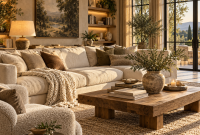
🥈 2 Warm Neutral Living Room Inspo With Organic Modern Luxury
For those who prefer a more sophisticated and architectural interior, organic modern design offers an elegant interpretation of the warm neutral aesthetic.
This approach combines contemporary furniture with natural materials, sculptural shapes, warm earthy tones, and a carefully curated selection of decorative details.
The style feels luxurious without depending on elaborate ornamentation, high-gloss finishes, or dramatic color combinations.
Instead, visual interest comes from natural stone, rich wood grain, rounded furniture, subtle plaster textures, and a harmonious relationship between light and shadow.
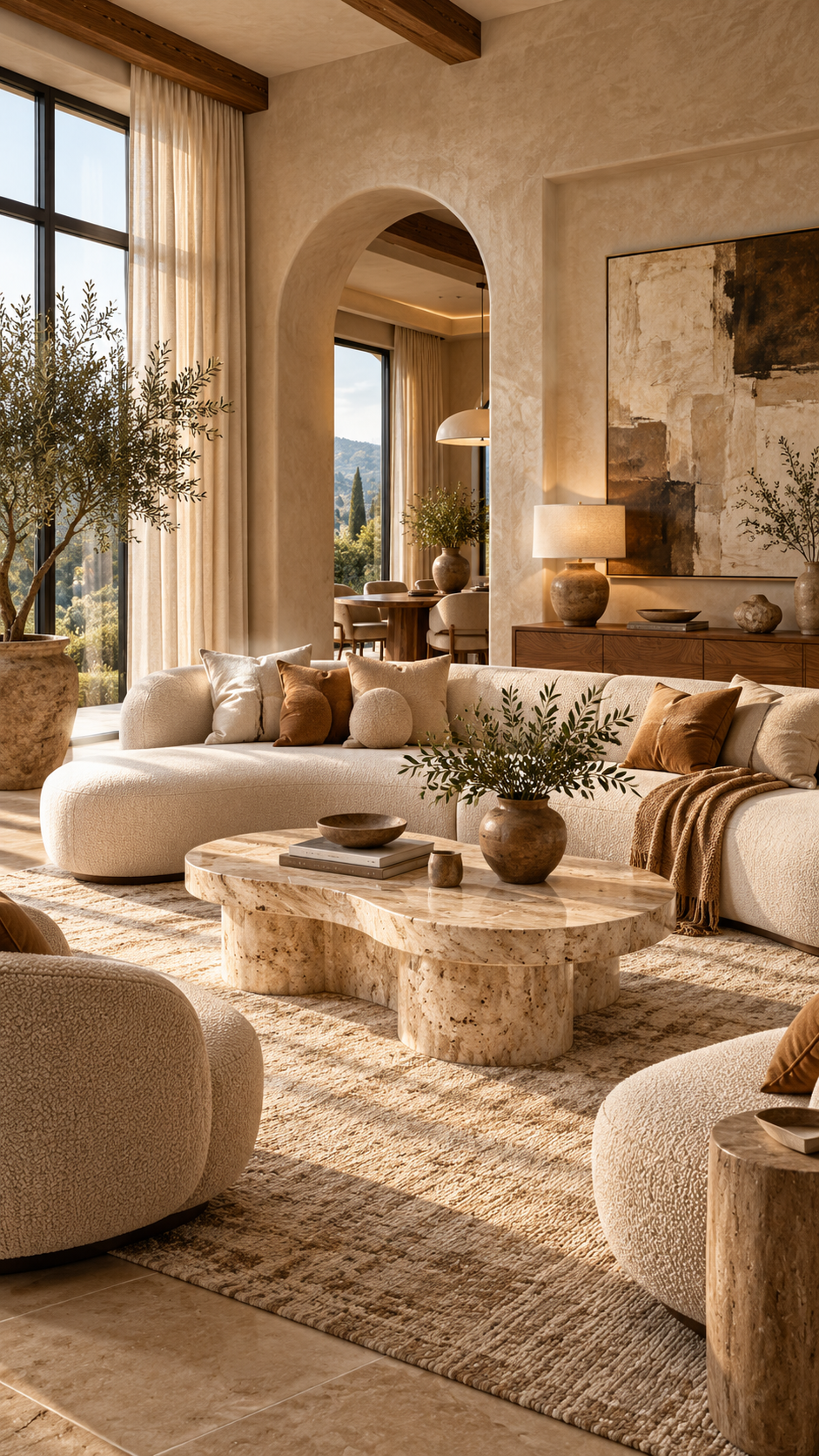
Build a Rich Neutral Palette With Beige Taupe and Caramel
Organic modern interiors often feature a slightly deeper color palette than Scandinavian spaces.
Begin with warm beige or mushroom taupe walls to establish a soft architectural background. Depending on the room’s natural light, subtle shades of greige, clay beige, or muted sand can also work beautifully.
Select a generously proportioned sofa in warm ivory, creamy beige, or light camel upholstery.
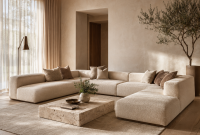
A contemporary curved sofa can make an especially striking centerpiece because its sculptural form adds movement to an otherwise restrained interior.
Introduce deeper neutral accents through caramel-colored cushions, walnut furniture, or a warm brown upholstered chair.
🤎 These darker elements provide visual grounding and prevent the room from feeling overly pale.
A carefully balanced palette might include cream as the dominant color, beige and taupe as supporting shades, and caramel or warm brown as accents.
The colors should flow naturally into one another, creating an atmosphere that feels layered rather than sharply contrasted.
Introduce Sculptural Furniture and Natural Stone
Furniture plays a major role in distinguishing organic modern interiors from other neutral decorating styles.
Instead of choosing exclusively straight lines and rectangular shapes, incorporate gently curved sofas, rounded coffee tables, cylindrical side tables, and sculptural chairs.
A low travertine coffee table can become a beautiful focal point within the seating arrangement. Its natural stone pattern introduces subtle variation while complementing the creamy color palette.
If natural travertine is outside the decorating budget, a high-quality stone-look table or textured ceramic alternative can create a similar visual impression.
Pair the coffee table with a walnut or medium-oak sideboard to introduce deeper wood tones.
The combination of pale stone and rich wood produces a sophisticated contrast that feels naturally balanced.
A rounded accent chair upholstered in bouclé or a tightly woven neutral fabric can complete the seating arrangement.
The most successful organic modern living rooms avoid using too many statement pieces at once. One beautiful sculptural coffee table and one distinctive chair are often enough to establish the desired atmosphere.
Use Textured Walls to Add Architectural Depth
A warm neutral living room can feel particularly luxurious when the walls contribute to the overall design.
Subtle plaster-inspired finishes, mineral paints, and gently textured wall treatments can introduce visual movement without requiring additional colors.
Limewash-style finishes are especially appealing because their soft variations create depth as daylight moves across the wall. Suitable application techniques and surface preparation depend on the chosen product and existing wall material.
For a simpler transformation, a high-quality matte paint in a carefully selected warm neutral tone can also create a beautiful background.
Consider adding understated architectural details such as a shallow wall niche, a broad picture ledge, or simple wood paneling.
These details should complement the architecture rather than compete with the furniture.
A restrained fireplace surround in pale stone or warm-toned plaster can also create a strong focal point where the room’s layout allows it.
The objective is to make the architecture feel integrated into the decorating concept.
Balance Luxurious Materials With Soft Everyday Textures
Organic modern living rooms are often associated with elegant stone tables and sculptural furniture, but they should never feel uncomfortable or overly formal.
Soft textiles are essential for balancing harder materials.
A generous wool rug in warm beige can soften the area around a stone coffee table, while linen cushions and a plush throw make the sofa more inviting.
Consider combining matte ceramic, lightly brushed wood, textured upholstery, and natural stone.
Each material should contribute something different without creating visual competition.
For example, the smooth surface of a travertine table looks especially beautiful beside a textured bouclé chair and a woven wool rug.
This interplay between materials creates a subtle sense of luxury that does not rely on expensive decorative accessories.
Avoid introducing too many metallic finishes. If metal details are desired, brushed bronze or muted brass usually complements the warm palette more gently than highly reflective chrome.
Add Oversized Art and Statement Lighting
An organic modern living room often benefits from one or two carefully chosen statement pieces.
A large abstract artwork in earthy tones can create a sophisticated focal point above the sofa. Look for compositions featuring muted beige, warm brown, soft charcoal, cream, and subtle clay-inspired colors.
Oversized artwork can sometimes look more cohesive than several small frames because it establishes a clear visual anchor.
Lighting offers another opportunity to introduce sculptural forms.
A large floor lamp with a curved profile, a ceramic table lamp with an organic silhouette, or a simple pendant light can enhance the architectural atmosphere.
Choose warm light that creates a gentle evening glow instead of harsh, cool illumination.
✨ Accent lighting placed near textured walls or decorative objects can emphasize natural materials and introduce a beautiful sense of depth after sunset.
Complete the room with a small number of handmade ceramics, a natural branch arrangement, or a large indoor tree positioned near a window.
The result is a contemporary living room that feels refined, calming, and beautifully connected to nature.
This approach is particularly suitable for contemporary homes, spacious apartments, open-plan interiors, and anyone who appreciates sophisticated furniture with an understated luxury aesthetic.
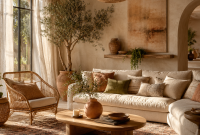
🥉 3 Warm Neutral Living Room Inspo With Cozy Layered Cottage Charm
A cottage-inspired warm neutral living room introduces a softer, more nostalgic interpretation of neutral decorating.
Instead of emphasizing strict minimalism or architectural sophistication, this style celebrates comfortable furniture, charming vintage details, natural fabrics, gentle patterns, and a welcoming atmosphere.
The room should feel personal and thoughtfully collected over time.
Creamy upholstery, antique-inspired wooden furniture, woven baskets, soft floral patterns, warm lighting, and beautifully layered textiles work together to create a living room that feels romantic, relaxing, and full of character.
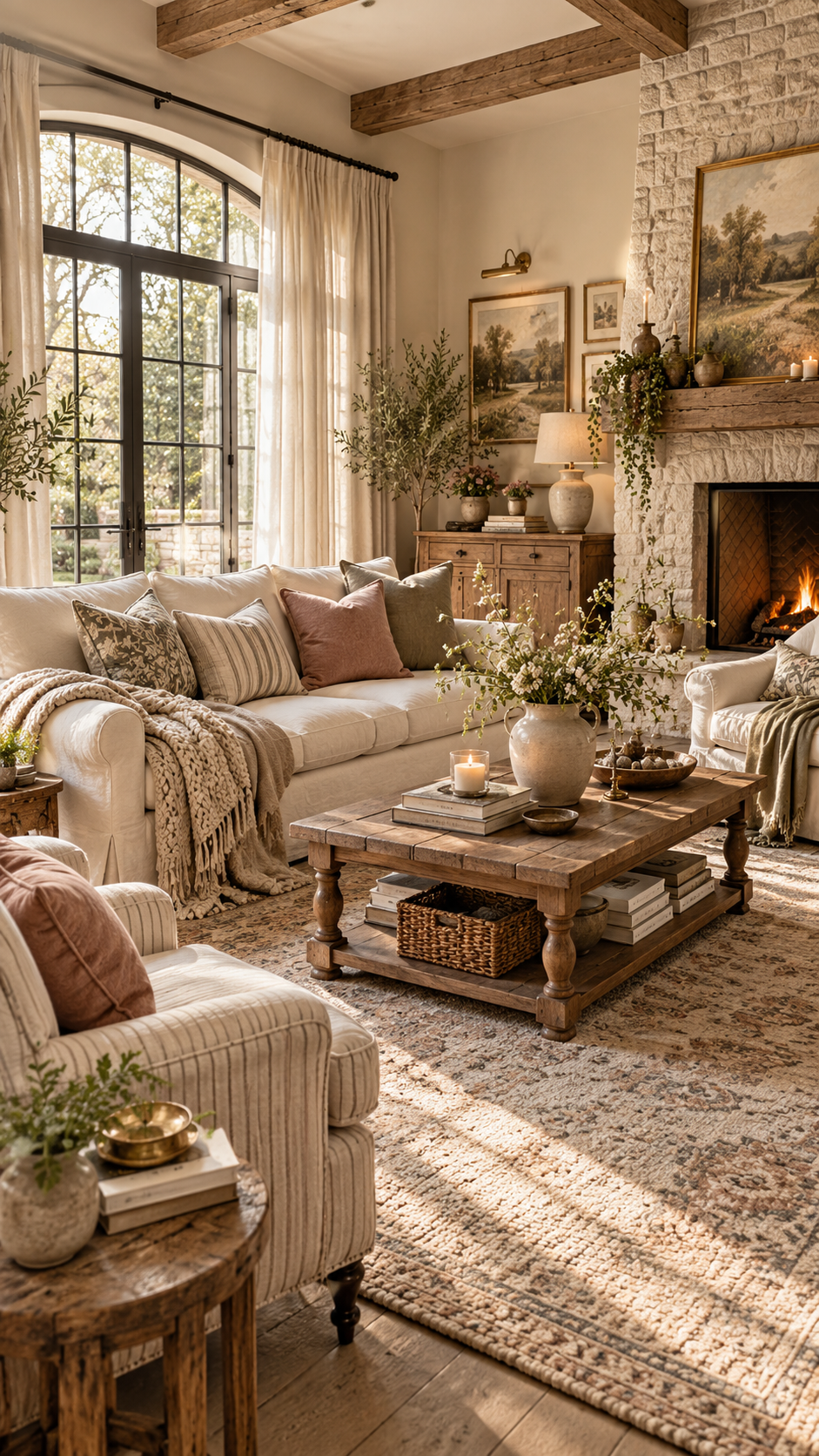
Start With Warm Ivory and Soft Vintage Inspired Colors
The foundation of this decorating style is a warm neutral palette with slightly nostalgic undertones.
Choose creamy ivory, antique white, soft oatmeal, dusty beige, warm taupe, and muted caramel as the primary colors.
These shades offer enough variation to create visual warmth without compromising the peaceful atmosphere.
A traditional-style sofa upholstered in ivory cotton or beige linen can become the centerpiece of the room.
Look for comfortable cushions, gently rounded arms, and a silhouette that feels inviting rather than formal.
A slipcovered sofa is particularly suitable because its relaxed fabric drape complements the cottage aesthetic.
Walls painted in warm cream or a soft beige-white establish a comforting backdrop.
A slightly deeper neutral shade on a fireplace wall or architectural feature can add subtle definition.
Unlike a strictly minimalist room, a cottage-inspired space can comfortably incorporate a few gentle accent colors, such as muted sage, dusty rose, or faded terracotta.
These colors should remain secondary so that the overall impression is still distinctly warm and neutral.
Combine Vintage Wooden Furniture With Soft Upholstery
One of the defining features of cottage-inspired interiors is the combination of comfortable upholstery and wooden furniture with traditional character.
A vintage-inspired oak coffee table, a small antique-style side table, or a weathered wooden cabinet can add warmth and history to the room.
Furniture does not need to come from the same collection.
In fact, a carefully balanced mix of different pieces often creates a more authentic atmosphere.
A cream sofa might sit beside a lightly distressed wooden side table, while a comfortable upholstered armchair adds another layer of softness.
Consider adding a small bookshelf or cabinet to display favorite books, decorative ceramics, and meaningful objects.
🪵 Natural wood should remain visible wherever possible. Honey oak, medium walnut, and softly aged timber finishes introduce warmth that complements the neutral upholstery.
Avoid excessively distressed finishes or too many ornate furniture pieces, as they can make the room feel visually busy.
The most attractive cottage-inspired spaces balance collected character with a clear sense of organization.
Create a Comfortable Layered Look With Textiles
Textile layering is the heart of a cozy cottage-inspired living room.
Start with a soft, generously sized rug in warm ivory, oatmeal, or faded beige. A subtle vintage-inspired pattern can introduce visual interest while remaining understated.
Choose cushions with different textures and gentle patterns.
For example, combine a plain linen cushion, a softly striped pillow, a subtle botanical print, and a knitted cushion in complementary shades.
Add a comfortable throw over the sofa and consider placing another folded blanket in a woven basket nearby.
This approach gives the room a lived-in atmosphere without requiring excessive decoration.
Curtains can also contribute to the cottage aesthetic.
Floor-length cotton or linen curtains with a soft drape create a romantic appearance while allowing natural daylight to illuminate the space.
For an especially welcoming atmosphere, choose textiles that look beautiful but are also practical for everyday use.
Washable cushion covers, durable upholstery, and easy-care throws help preserve the room’s inviting appearance.
The goal is to create a home that looks comfortable because it genuinely is comfortable.
Bring in Botanical Details and Handcrafted Decorations
Cottage-inspired living rooms often feature decorative elements that celebrate nature and craftsmanship.
A ceramic vase filled with seasonal flowers, a small arrangement of dried branches, or a collection of botanical prints can add personality.
Consider placing a woven basket beside the sofa or using a rustic wooden tray to organize decorative objects on the coffee table.
Handmade pottery, vintage-inspired candleholders, simple framed illustrations, and small wooden objects can all complement the warm neutral palette.
🌸 Botanical details are especially effective when they remain soft and natural.
Rather than introducing overly bright floral colors, choose greenery, cream flowers, muted blush blooms, and delicate dried arrangements.
A few carefully selected pieces create a more refined effect than covering every shelf and table with accessories.
Personal objects can also become part of the decoration.
Favorite books, framed family photographs, meaningful souvenirs, or a cherished vintage item help distinguish the living room from an impersonal showroom.
Finish With Warm Lighting and a Relaxed Arrangement
Lighting is one of the most important elements in a cottage-inspired neutral living room.
A ceramic table lamp with a linen shade can create a soft pool of light beside the sofa.
A traditional-style floor lamp near an armchair establishes a comfortable reading corner.
Warm accent lighting on shelves or beside a cabinet adds depth during the evening.
Use several gentle light sources rather than relying exclusively on one bright ceiling fixture.
If the room includes a fireplace, the surrounding area can become a natural focal point. Arrange comfortable seating to encourage conversation and relaxation.
If there is no fireplace, a large piece of artwork, an attractive wooden cabinet, or a beautifully styled bookshelf can serve a similar purpose.
The furniture arrangement should feel welcoming and practical.
Leave enough space to move comfortably between seating areas, and ensure that side tables and lighting are positioned within easy reach.
The finished room should feel like a comforting retreat that invites people to read, relax, enjoy conversation, and spend time together.
Warm Neutral Living Room Inspo Style Comparison
Each of these three decorating ideas offers a different atmosphere while sharing the same commitment to a warm, harmonious color palette.
The following comparison can help identify which style best suits a particular home, preferred furniture aesthetic, and decorating priorities.
| Design Element | 🥇 Scandinavian Elegance | 🥈 Organic Modern Luxury | 🥉 Cozy Cottage Charm |
|---|---|---|---|
| Overall atmosphere | Airy, calm, understated | Sophisticated, sculptural, refined | Romantic, comfortable, nostalgic |
| Main colors | Cream, ivory, oatmeal | Beige, taupe, caramel | Warm ivory, sand, soft brown |
| Key furniture | Pale oak and clean-lined sofa | Curved sofa and stone coffee table | Slipcovered sofa and vintage wood |
| Main textures | Linen, cotton, wool | Travertine, bouclé, wood | Knits, linen, woven fabrics |
| Decorative approach | Minimal and functional | Curated statement pieces | Layered and personal |
| Ideal spaces | Small apartments and modern homes | Contemporary and open-plan interiors | Traditional homes and cozy family rooms |
| Primary design feature | Bright simplicity | Architectural elegance | Soft layered comfort |
There is no single style that works best for every living room.
The Scandinavian approach is particularly effective when the objective is to create an airy atmosphere with practical furniture and minimal decoration.
Organic modern interiors offer stronger architectural character and a more luxurious appearance, while cottage-inspired rooms prioritize softness, nostalgic charm, and personal comfort.
It is also possible to combine selected elements from different styles, provided the overall color palette and material choices remain cohesive.
How to Choose the Perfect Warm Neutral Color Palette
Choosing the right neutral colors is one of the most important decisions in any living room transformation.
Although beige, cream, greige, and taupe may appear similar at first glance, each shade can have different undertones that become more noticeable under natural and artificial lighting.
Warm ivory often contains subtle yellow or creamy undertones, while greige combines characteristics of gray and beige.
Taupe can lean toward brown, gray, or even subtle violet undertones, so samples should always be evaluated in the actual room.
A successful palette usually includes one dominant neutral, one supporting neutral, and a smaller collection of deeper accent tones.
For example, creamy walls and a beige sofa can establish the foundation, while a taupe rug and caramel-colored cushions create visual variation.
Use the 60 30 10 Color Principle
The 60 30 10 principle is a useful starting point when planning a balanced living room color palette.
Approximately 60 percent of the visible space can feature a dominant color, such as warm ivory or cream.
Another 30 percent can introduce a supporting shade, such as beige, oatmeal, or soft taupe.
The remaining 10 percent can feature deeper accents, including caramel, walnut brown, or muted terracotta.
These proportions are not strict requirements.
Instead, they offer a practical framework for creating a cohesive interior where individual decorative elements feel connected.
For a particularly subtle neutral space, the three colors can remain close to one another in tone.
This creates a sophisticated tonal effect rather than a high-contrast appearance.
Test Neutral Paint Colors Throughout the Day
Paint color can change considerably depending on the amount of daylight entering a room.
A creamy beige that looks beautiful in a bright showroom may appear darker or more yellow in a room with limited natural light.
Similarly, a soft greige can appear cooler under certain artificial lighting conditions.
Before committing to a paint color, test several samples on the intended wall or on movable sample boards.
Observe them in morning light, afternoon light, and under the lighting typically used during the evening.
Pay particular attention to how the colors interact with flooring, large furniture pieces, and curtains.
📌 Important Note: Warm neutral colors are not automatically interchangeable. Paint, upholstery, flooring, and lighting can reveal very different undertones, even when materials appear nearly identical in photographs. Always compare physical samples in the actual room before making major decorating purchases.
Taking time to coordinate undertones helps avoid a living room that feels accidentally mismatched.
The Best Materials for a Beautiful Warm Neutral Living Room
A successful warm neutral interior depends on more than color. Materials create the tactile richness that gives a room its personality.
Because the palette is restrained, wood grain, woven fibers, ceramic surfaces, and subtle stone patterns become more noticeable.
Combining these elements thoughtfully can produce a luxurious atmosphere without requiring extravagant furniture.
Natural Wood for Warmth and Character
Wood is one of the most effective materials for making a neutral living room feel welcoming.
Pale oak complements Scandinavian interiors, while walnut and medium-toned wood add richness to organic modern spaces.
Cottage-inspired rooms can incorporate slightly aged wooden pieces that bring a sense of history.
It is not necessary for every wooden surface to match exactly.
However, coordinating the undertones of different wood finishes helps maintain visual harmony.
For example, two warm-toned woods can look beautiful together even if one is noticeably lighter.
Linen and Cotton for Soft Natural Texture
Linen and cotton are excellent choices for curtains, cushion covers, throws, and upholstery.
These fabrics offer a relaxed appearance that complements the understated elegance of a neutral palette.
Linen provides natural texture and a gently casual drape, while cotton offers versatility and a wide selection of finishes.
For high-use seating, durability and cleaning requirements are just as important as visual appearance.
Performance upholstery fabrics can be a practical alternative when the household includes children, pets, or frequent guests.
Stone Ceramic and Woven Accessories
Stone and ceramics introduce a different kind of texture.
A travertine coffee table can make an organic modern space feel refined, while handcrafted ceramic vases add subtle decorative character.
Woven baskets, natural-fiber trays, and textured lampshades bring warmth and practical function.
However, natural-fiber rugs such as jute can feel comparatively rough underfoot, so a softer wool or wool-blend option may be more suitable for a seating area designed around barefoot comfort.
The most appealing material combinations balance beauty with how the room will be used every day.
Warm Neutral Living Room Inspo Lighting Ideas for a Cozy Atmosphere
Lighting has the power to transform the mood of a living room even when the furniture and wall colors remain unchanged.
Warm neutral interiors benefit from lighting that enhances their soft color palette and makes individual textures more noticeable.
Rather than relying on a single overhead fixture, introduce a combination of ambient, task, and accent lighting.
Maximize Soft Natural Daylight
Natural daylight helps creamy neutrals feel fresh and highlights the texture of wood, textiles, and stone.
Keep large windows visually open whenever possible, and avoid blocking daylight with unnecessary furniture.
Lightweight curtains can soften direct sunlight while preserving the airy feeling of the room.
Full-length curtains installed near the ceiling can also visually elongate the walls.
In rooms with limited daylight, carefully positioned mirrors can help reflect available light and create a more open appearance.
However, mirrors should be placed where their reflections enhance the room rather than create distracting glare.
Use Warm White Lighting in the Evening
Warm white bulbs generally create a more inviting atmosphere than cool, blue-toned lighting.
For many residential living rooms, bulbs around 2700K to 3000K provide a comfortable warm appearance, although personal preference and surrounding finishes influence the ideal choice.
Table lamps with fabric shades are particularly effective because they diffuse light gently.
A floor lamp beside an armchair provides useful task lighting while contributing to the room’s cozy appearance.
Dimmable fixtures can offer additional flexibility, allowing the atmosphere to shift from brighter daytime activities to softer evening relaxation.
Highlight Natural Textures With Accent Lighting
Accent lighting adds depth by drawing attention to selected features.
A small lamp on a wooden sideboard can highlight ceramic accessories, while discreet shelf lighting can emphasize books and decorative objects.
Soft illumination near a textured wall can also reveal subtle surface variations.
The best results come from restraint.
Instead of illuminating every decorative feature, select a few meaningful areas to highlight.
This creates a layered lighting effect that feels calm and sophisticated.
How to Decorate a Small Living Room With Warm Neutrals
Warm neutral decorating is especially useful in compact living rooms because it can create an atmosphere that feels visually open and harmonious.
However, a small space still requires careful decisions about furniture dimensions, storage, circulation, and decorative accessories.
Simply painting the walls beige will not automatically make the room feel larger.
The arrangement and proportions of the furniture play an equally important role.
Choose Furniture With Balanced Proportions
Start by measuring the available floor space before selecting a sofa or coffee table.
A compact sofa with slim arms can provide generous seating without occupying unnecessary width.
Furniture raised on visible legs may also help the room feel lighter because more floor surface remains visible beneath it.
Choose a coffee table that allows comfortable movement around the seating area.
Round and oval tables can be especially useful in narrow spaces because they reduce sharp corners along circulation paths.
Keep the Color Palette Cohesive
Using closely related neutral colors across walls, curtains, and larger furniture pieces can help reduce visual fragmentation.
For example, warm ivory walls, cream curtains, and a light beige sofa establish a gentle continuous background.
A slightly deeper rug can define the seating area without creating an abrupt contrast.
Introduce visual interest through different textures rather than adding numerous unrelated colors.
A woven rug, linen cushions, and a wooden side table can provide enough detail to make a small room feel complete.
Incorporate Practical Storage Without Visual Clutter
Storage is essential for maintaining a relaxing atmosphere in a compact living room.
Consider a low sideboard with closed cabinets, a storage ottoman, or a coffee table with concealed compartments.
These pieces can keep everyday belongings accessible while reducing visible clutter.
A few open shelves can display decorative objects, but leaving some empty space between items prevents the room from feeling overcrowded.
🌿 A single medium-sized plant can provide more visual impact than several small accessories scattered around the room.
The finished space should feel comfortable, organized, and welcoming rather than excessively minimal.
Affordable Ways to Achieve an Expensive Looking Neutral Living Room
Creating a sophisticated warm neutral living room does not necessarily require purchasing an entirely new furniture collection.
Often, the most effective improvements involve changing textiles, refining the color palette, adjusting lighting, and organizing existing furniture more thoughtfully.
A carefully styled room with affordable furniture can look remarkably polished when its proportions and materials work together.
Upgrade Cushions and Throws First
Replacing cushion covers is one of the simplest ways to refresh a living room.
Choose a collection of complementary fabrics in warm cream, oatmeal, beige, and soft brown.
Mix plain cushions with subtle woven textures rather than using several competing patterns.
A generously sized throw draped casually over the sofa can instantly soften the seating area.
Select fabrics that complement the upholstery while adding visible texture.
This small adjustment can make an ordinary sofa appear more considered and inviting.
Refresh Existing Wooden Furniture
Older wooden furniture can often be incorporated into a warm neutral decorating concept.
A solid wooden side table may simply need cleaning, minor repairs, or an appropriate refinishing treatment.
Changing hardware on a cabinet can also update its appearance without replacing the entire piece.
When refinishing furniture, use products appropriate for the existing finish and follow the manufacturer’s preparation and safety instructions.
Natural wood pieces with warm undertones can often blend beautifully with newly introduced neutral textiles.
Choose One Strong Decorative Focal Point
An attractive living room does not need numerous expensive accessories.
One substantial piece of wall art, a well-proportioned coffee table, or a beautiful statement lamp can establish a strong visual identity.
Choose a focal point that relates naturally to the room’s overall decorating style.
An abstract painting suits organic modern interiors, botanical artwork complements cottage-inspired rooms, and minimal graphic art works beautifully in Scandinavian spaces.
Arrange supporting decorations around the focal point rather than allowing every accessory to compete for attention.
Improve the Furniture Arrangement
Sometimes, the most effective transformation costs nothing.
Moving the sofa away from a narrow circulation route, repositioning an armchair to encourage conversation, or removing unnecessary side tables can dramatically improve the room’s appearance.
A spacious-looking layout feels more intentional and comfortable.
Try arranging the main furniture pieces around a clear focal point and ensuring that each seat has practical access to a table or light source.
The resulting room may feel more luxurious simply because it is easier to use.
Common Warm Neutral Living Room Decorating Mistakes to Avoid
Although neutral interiors often appear effortless, a few decorating decisions can make them feel flat, uncomfortable, or visually inconsistent.
Understanding these common mistakes can help create a more polished result.
Using Too Many Identical Beige Surfaces
A room filled with nearly identical beige furniture, walls, curtains, and accessories may lack visual depth.
The solution is not necessarily to introduce bright colors.
Instead, use several shades of warm neutrals and combine different materials.
A cream sofa beside a walnut table and an oatmeal rug creates more visual interest than three large pieces in exactly the same beige fabric.
Forgetting About Texture
Without texture, a neutral living room can feel unfinished.
Incorporate wool, linen, cotton, wood, ceramics, or stone to add subtle variation.
Texture becomes particularly important when most of the room shares a similar color family.
Even a simple woven rug or knitted cushion can make a noticeable difference.
Choosing Furniture That Is Too Large
Oversized furniture can overpower a compact room and make it difficult to move comfortably.
Measure the room and consider the relationship between seating, tables, doorways, and walkways.
A smaller, well-proportioned sofa often creates a more elegant result than a large sectional that dominates the floor plan.
Decorating Every Available Surface
Warm neutral interiors benefit from a sense of breathing room.
Filling every table, shelf, and cabinet with decorative objects can make the room feel cluttered despite its quiet color palette.
Edit the accessories carefully and allow favorite pieces to stand out.
A few meaningful objects generally create a stronger decorative impression than numerous unrelated items.
Ignoring Practical Comfort
A living room can look beautiful in a photograph but feel inconvenient in everyday life.
Uncomfortable chairs, delicate materials, poor lighting, and inaccessible tables can undermine the purpose of the space.
Choose furniture and finishes that accommodate the household’s daily activities.
Beautiful design should support comfortable living rather than interfere with it.
Styling Warm Neutral Living Rooms Throughout the Seasons
One of the greatest advantages of a warm neutral living room is how easily it can adapt to seasonal changes.
The main furniture, wall colors, and larger accessories can remain consistent throughout the year.
Small adjustments to textiles, greenery, and decorative details are often enough to refresh the atmosphere.
Spring and Summer With Light Natural Layers
During warmer months, emphasize the lighter side of the neutral palette.
Choose breathable cotton or linen throws, airy curtains, and fresh greenery.
Simple ceramic vases filled with seasonal branches or flowers can bring a refreshing natural element into the room.
Keep the arrangement uncluttered and allow daylight to become an important part of the decoration.
Soft cream, sandy beige, and pale wood tones work particularly well during this period.
Autumn With Rich Earthy Accents
Autumn offers an opportunity to introduce deeper neutral shades.
Caramel cushions, chocolate-brown textiles, muted terracotta ceramics, and warm wooden accessories can make the room feel richer.
A textured throw adds comfort as the weather becomes cooler.
🍂 Decorative branches, dried seed heads, and subtle seasonal arrangements can complement the natural materials already present.
Avoid covering the room with excessive seasonal decorations.
A few thoughtful changes can create a cozy autumn atmosphere while preserving the underlying elegance of the interior.
Winter With Soft Layers and Ambient Lighting
During winter, focus on comfort, warmth, and soft illumination.
Add wool blankets, plush cushions, and a thicker textured throw.
Use table lamps and floor lamps to create a welcoming evening atmosphere.
A few ceramic decorations, natural greenery, or simple seasonal branches can add interest without disrupting the neutral palette.
If using candles, keep them away from curtains, dried arrangements, and other combustible materials, or choose flameless alternatives for a similar soft glow.
The result is a peaceful living room that feels especially comforting during colder evenings.
Final Thoughts on the Best 3 Warm Neutral Living Room Inspo Ideas
A warm neutral living room offers much more than a fashionable color scheme. It creates an environment where thoughtful design, natural textures, comfortable furniture, and understated elegance come together.
The 🥇 Soft Scandinavian Elegance approach is ideal for anyone who prefers a bright, airy, and uncluttered atmosphere. Pale oak furniture, creamy upholstery, and natural textiles make this style especially appealing for modern homes and compact living spaces.
The 🥈 Organic Modern Luxury approach introduces a more architectural aesthetic through curved furniture, travertine-inspired surfaces, rich wood tones, and sculptural lighting. It creates a sophisticated interior that feels contemporary without sacrificing warmth.
The 🥉 Cozy Layered Cottage Charm approach offers a softer and more personal atmosphere. Comfortable slipcovered furniture, vintage-inspired wooden pieces, gentle patterns, and layered textiles create a welcoming living room filled with nostalgic character.
Whichever style feels most appealing, the secret lies in combining warm neutral colors with contrasting textures, balanced proportions, practical furnishings, and carefully considered lighting.
With these Best 3 Warm Neutral Living Room Inspo Ideas, even a simple living room can become a beautifully cohesive retreat that feels luxurious, inviting, and timeless throughout every season.
Related posts:

Best 3 Small Living Room Inspo Ideas That Make Tiny Spaces Look Surprisingly Luxurious
Best 3 Cozy Living Room Inspo Ideas That Will Make Your Home Feel Instantly Warm and Beautiful
Top 3 Boho Living Room Ideas That Make Any Space Look Effortlessly Stylish
Top 3 Corner Sofa Designs That Make Any Living Room Look Bigger and More Expensive
Best 3 Fall Living Room Decor Ideas Everyone Will Want to Copy This Season
Best 3 Modern Cozy Living Room Ideas That Make Every Home Feel Like a Luxury Retreat