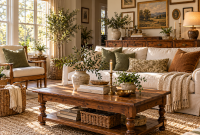
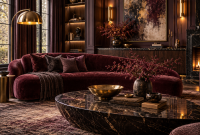
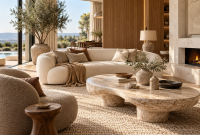
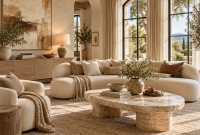
Corner Sofa Designs have become one of the smartest ways to transform a living room because they combine generous seating, efficient space planning, and a strong architectural presence in one piece of furniture. Instead of treating the sofa as something that simply sits against a wall, modern corner sofas can shape the entire layout of a room, define conversation zones, frame a coffee table, and even visually separate an open-plan living area from a kitchen or dining space.
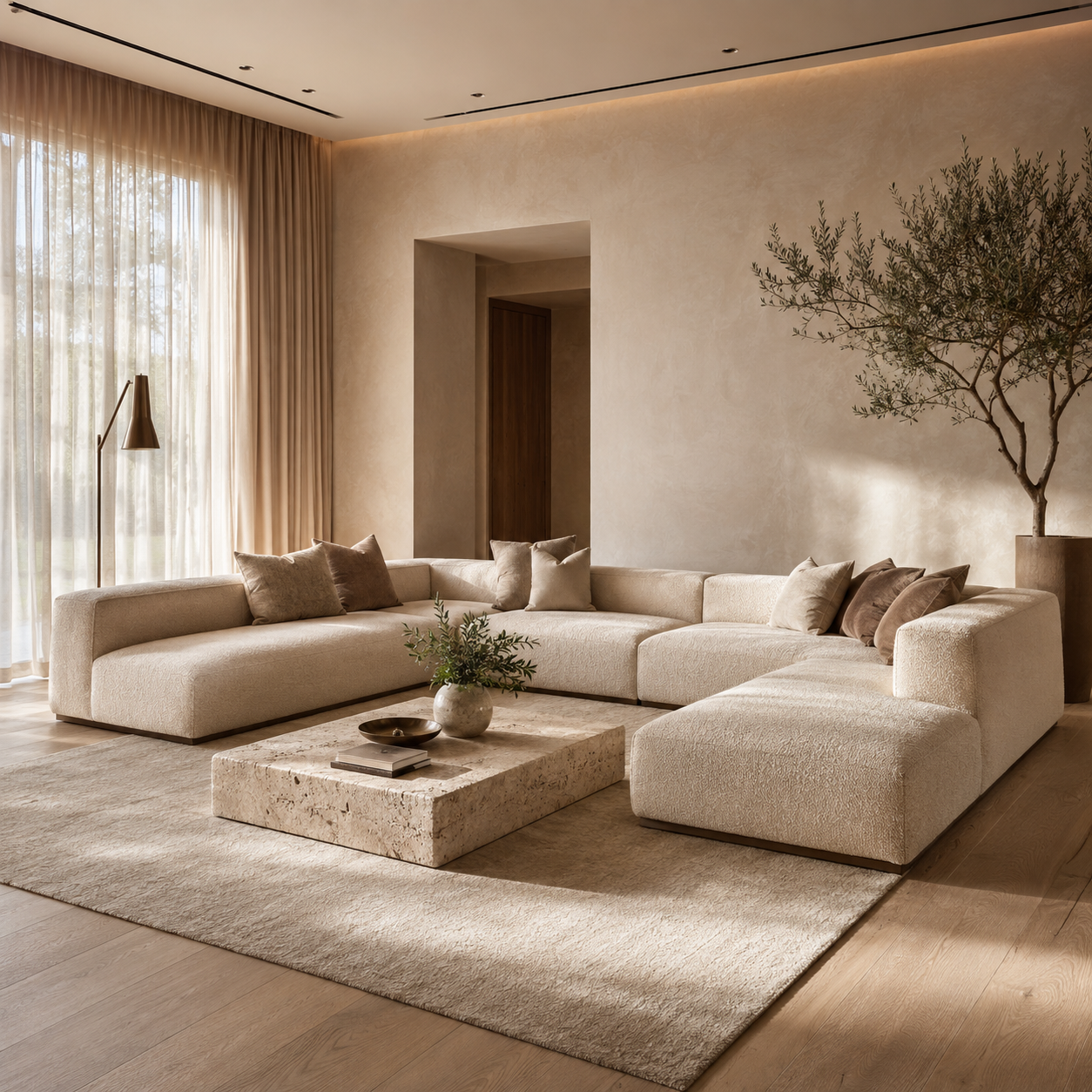
The most appealing designs today are not necessarily the biggest or most dramatic. The real luxury comes from proportion, upholstery, placement, and the way the sofa interacts with surrounding materials. A beautifully designed corner sofa can make a modest living room feel wider, calmer, and more intentional, while the wrong configuration can easily make the same room feel crowded.
From soft sculptural seating that seems to float above the floor to architectural modular layouts and cozy lounge-inspired arrangements, these Top 3 Corner Sofa Designs offer three very different approaches to creating a living room that feels sophisticated, comfortable, and visually memorable.
Why Corner Sofa Designs Can Completely Change a Living Room
A traditional three-seat sofa usually creates a single straight line in a room. A corner sofa creates an entire zone.
That difference may sound simple, but visually it is extremely powerful. The extended section of an L-shaped sofa naturally establishes where the seating area begins and ends. In open-plan interiors, this can reduce the need for extra partitions or furniture because the sofa itself becomes an architectural boundary.
🏡 In smaller homes, a corner sofa can also make better use of floor space. Instead of combining a sofa with several bulky armchairs, one carefully proportioned sectional can provide similar seating capacity with fewer visual interruptions.
The key is choosing a design that matches the scale of the room.
Oversized sofas with extremely deep seats look beautiful in large interiors, but they may overwhelm compact spaces. Conversely, a delicate sofa can appear strangely undersized in a generous open living room.
Color and material also influence how large the sofa appears. Light ivory, oatmeal, stone, mushroom, and soft greige upholstery generally create a visually lighter impression, while charcoal, chocolate brown, forest green, navy, and black can make the sofa feel more grounded and dramatic.
Neither direction is automatically better. The goal is visual balance.
Top 3 Corner Sofa Designs at a Glance
| Design | Best For | Key Materials | Visual Effect | Ideal Room Style |
|---|---|---|---|---|
| 🥇 Sculptural Curved Corner Sofa | Elegant modern living rooms | Bouclé textured linen oak travertine | Soft luxurious and spacious | Warm minimalism organic modern |
| 🥈 Modular Architectural Corner Sofa | Flexible open plan spaces | Linen wool leather wood stone | Structured sophisticated and adaptable | Contemporary modern European |
| 🥉 Deep Lounge Corner Sofa | Cozy family focused interiors | Washed linen chenille cotton velvet | Relaxed inviting and layered | Cozy modern quiet luxury |
Each design has a different personality, but all three can create a living room that feels considerably more sophisticated when supported by the correct layout, lighting, and surrounding furniture.
🥇 Best 1 Sculptural Curved Corner Sofa Designs for Soft Modern Luxury
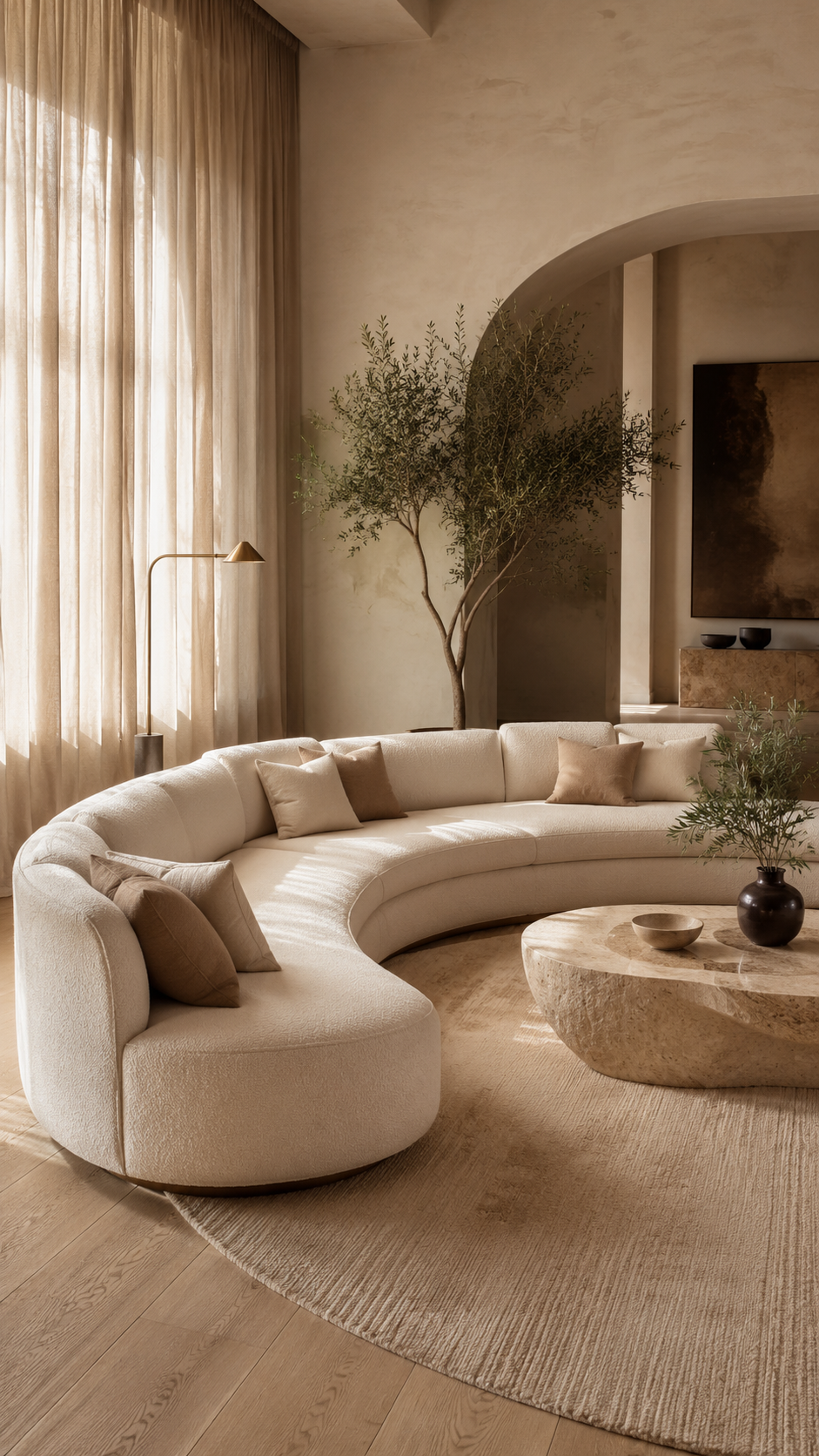
One of the most visually impressive Corner Sofa Designs is the sculptural curved sectional. Instead of using aggressive ninety-degree corners, this style introduces gently rounded transitions, softened edges, and flowing upholstery.
The effect is immediately more relaxed.
A curved corner sofa feels less like a piece of furniture placed inside a room and more like a continuous architectural form designed specifically for the space.
This style works particularly well in warm contemporary interiors where designers want minimalism without creating a cold or sterile atmosphere.
Choose a Low Profile Silhouette
The strongest sculptural corner sofas usually sit relatively low to the floor.
Low backs and wide horizontal proportions emphasize the width of the living area while reducing visual obstruction. This is especially effective in rooms with large windows because the sofa does not compete with outdoor views.
✨ A low silhouette can also make ceilings appear higher.
Look for broad seat cushions, wide armrests, subtle curves, and minimal visible structure. Some designs include hidden or recessed legs, creating the impression that the sofa is floating slightly above the floor.
Others sit almost directly on the ground.
Both approaches can look luxurious when the proportions are carefully controlled.
Use Bouclé or Textured Linen
Texture is extremely important when working with a neutral curved sofa.
A completely flat beige fabric can sometimes look ordinary, particularly across a very large sofa surface. Bouclé, brushed woven fabric, textured linen, and soft wool blends create tiny variations in light and shadow that make neutral upholstery appear richer.
Creamy ivory remains one of the strongest choices for an organic modern interior.
Soft mushroom and warm greige are more practical alternatives when pure cream feels too delicate.
For a warmer atmosphere, subtle oatmeal or sand-colored upholstery can be paired beautifully with honey-toned oak and beige limestone.
Important Note: Always measure the sofa depth as carefully as the width. Deep corner sofas can extend surprisingly far into the center of a room and may reduce the walking space around a coffee table.
Pair the Sofa With a Sculptural Coffee Table
A sculptural sofa deserves furniture that complements rather than interrupts its curves.
Instead of placing a sharp rectangular coffee table directly in front of a rounded sofa, consider a softly irregular stone table, oval travertine table, rounded timber table, or two overlapping organic-shaped tables.
Natural stone works exceptionally well.
Travertine brings subtle movement through its pores and tonal variation, while creamy limestone creates a cleaner and more understated appearance.
A beautiful styling combination might include:
- Ivory bouclé corner sofa
- Honed travertine coffee table
- Pale oak side table
- Warm white textured walls
- Oversized linen curtains
- Bronze or aged brass floor lamp
- One large olive tree or sculptural indoor plant
🌿 This creates an interior that feels minimal without appearing empty.
Keep Cushions Intentional
Sculptural sofas generally look better with fewer cushions than traditional family sectionals.
Too many decorative pillows can hide the beautiful shape of the furniture.
Instead, use perhaps three to five cushions in complementary textures. Combine warm ivory linen with muted taupe, dusty brown, or one darker chocolate accent.
Rather than using identical cushions, vary the dimensions slightly.
One long lumbar cushion can provide visual structure while two softer square cushions create comfort.
A lightweight throw can be casually placed over the chaise or corner section, but it should feel intentional rather than messy.
Create Space Around the Sofa
This design becomes especially impressive when it has breathing room.
If possible, avoid pushing every edge against the wall. Even a narrow gap between the sofa and wall can make the furniture feel more deliberate.
In a larger room, floating the corner sofa completely away from the walls can create an elegant furniture island.
Place a narrow console behind the sofa if additional styling or storage is needed.
This arrangement works beautifully in large open-plan spaces where the back of the sofa can visually separate the living room from a dining area.
Lighting for Sculptural Corner Sofa Designs
Soft architectural lighting works particularly well with curved furniture.
Consider a large paper pendant, sculptural fabric pendant, understated bronze floor lamp, or concealed LED lighting integrated into shelves.
Avoid excessive small decorative lights.
The sofa already provides visual movement, so the surrounding lighting can remain simple.
Warm indirect light grazing across textured upholstery in the evening creates beautiful dimensional shadows and makes the room feel considerably more luxurious.
🥈 Best 2 Modular Corner Sofa Designs for a Flexible Architectural Living Room
The second approach focuses less on softness and more on flexibility.
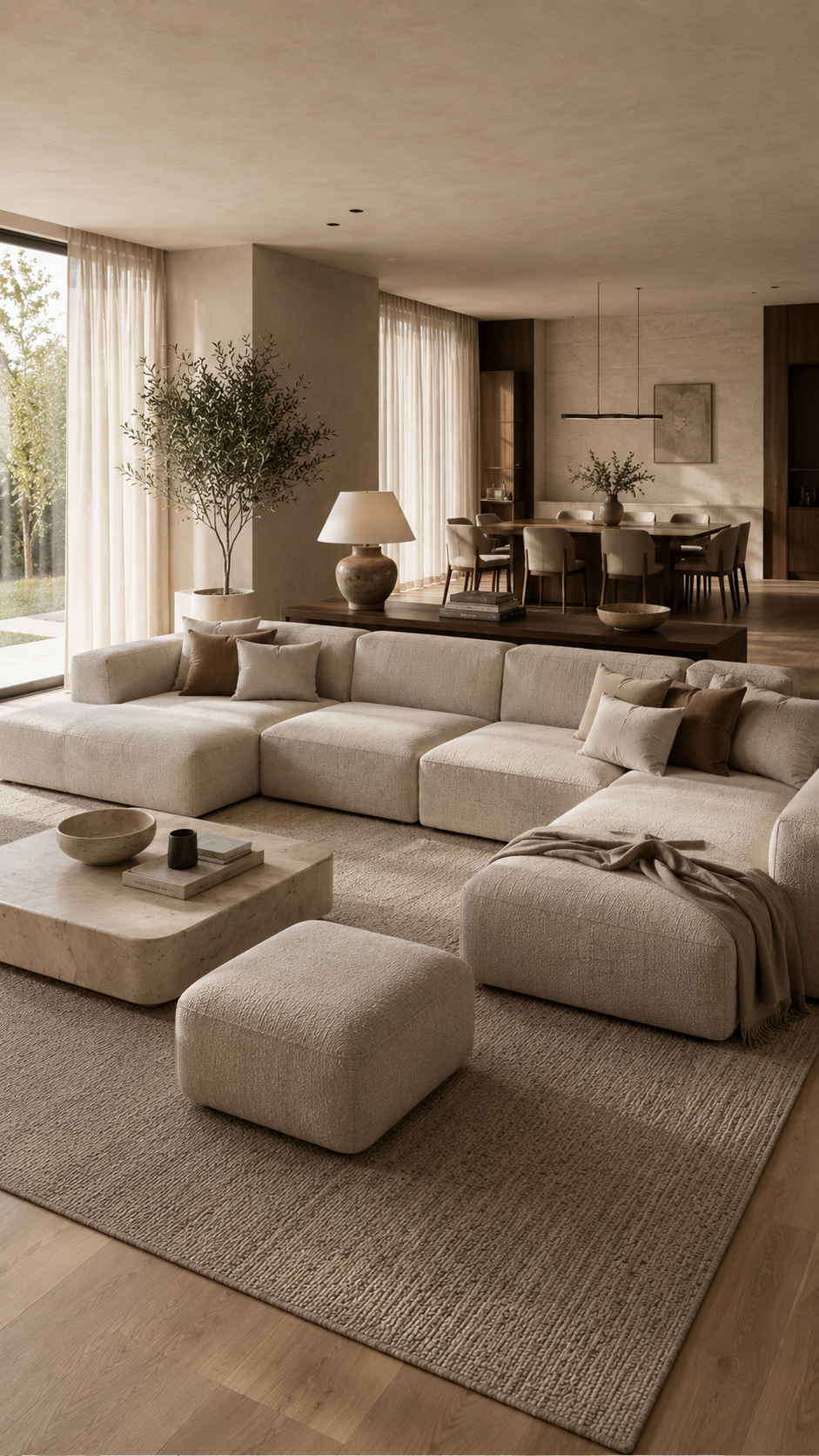
Modern Corner Sofa Designs increasingly use modular sections that can be moved, separated, or reconfigured depending on how the living room is being used.
Instead of purchasing one enormous fixed sofa, a modular system may include several independent seat units, corner pieces, ottomans, chaise modules, and backrest sections.
The result feels almost like a collection of upholstered architecture.
Why Modular Corner Sofas Work So Well
Modern homes need to perform several functions.
One evening the living room may be used for watching movies. The next day it may become a gathering place for friends. During a quiet morning, one corner may function as a reading area.
A modular sofa responds to these changing needs.
The chaise section can sometimes become a separate ottoman.
Two modules can be turned toward each other to create a conversation arrangement.
Individual pieces can also be moved apart to create temporary side tables or walkways.
🔄 Flexibility is the main luxury.
This is particularly valuable for people who move regularly or enjoy changing their interiors because the sofa is not permanently dependent on one room configuration.
Choose Clean Architectural Modules
For a sophisticated appearance, choose modules with strong proportions.
Wide seats, substantial cushions, and consistent geometry tend to look more expensive than complicated designs with many small sections.
A large four-module composition might include:
one long main seating section,
one corner section,
one chaise,
and one movable ottoman.
Together they create an L-shaped arrangement.
Separately they can form several smaller seating zones.
This adaptability is one reason modular sofas work so well in apartments and open-plan homes.
Try Warm Greige Instead of Basic Gray
Gray sofas became extremely common because they were considered safe and neutral.
However, cool blue-gray upholstery can make contemporary interiors feel surprisingly cold.
Warm greige offers much more flexibility.
It pairs beautifully with oak, walnut, travertine, marble, bronze, black metal, and warm white walls.
For an even richer result, explore mushroom, camel, clay beige, olive gray, or chocolate brown.
🤎 Deep brown upholstery can look particularly impressive when combined with pale limestone floors or creamy walls.
The contrast creates depth without introducing bright colors.
Make the Sofa the Divider in an Open Plan Space
One of the strongest modular sofa layouts involves positioning the back of the sofa toward the dining room or kitchen.
This creates a subtle visual boundary.
The living room feels defined without requiring a wall.
A large rug beneath the seating area reinforces the separation.
Choose a rug large enough for at least the front legs of every major sofa module to sit on it. In very large rooms, placing the complete sofa arrangement inside the rug boundary can make the design feel even more substantial.
An undersized rug can weaken the entire composition.
Add a Slim Console Behind the Sofa
When the back of a sectional is visible, a narrow console can make the transition between spaces feel more finished.
Choose a console that sits slightly below the sofa back.
Natural oak is ideal for light interiors.
Dark walnut introduces richer contrast.
Stone consoles create an architectural feeling.
Minimal black metal can work in more industrial or contemporary rooms.
Decorate the console sparingly.
A ceramic lamp, one stack of books, and a sculptural bowl may be enough.
The goal is not to create another decorative display but to make the back of the sofa feel integrated into the architecture.
Mix Materials Without Making the Room Busy
A modern modular corner sofa often benefits from contrasting materials.
Imagine a soft oatmeal sectional sitting beside a honed stone coffee table. Behind it stands a walnut console. A black bronze floor lamp introduces a dark vertical line. Linen curtains soften the windows.
These materials are different, but the muted palette keeps the room calm.
The secret is repetition.
If walnut appears in the console, repeat a similar tone in a small side table or decorative object.
If black metal appears in lighting, repeat it subtly in a window frame or shelving detail.
This creates visual continuity.
Consider a Double Facing Layout
Large rooms offer another interesting possibility.
Instead of creating one traditional L shape, modular sections can sometimes be positioned to face multiple directions.
One side may face the fireplace.
Another section can face the television.
A third module may turn toward the window.
This turns the sofa into a central living landscape.
🏠 It is particularly effective in lofts and open-plan homes where people want the center of the room to feel active rather than placing all furniture around the perimeter.
🥉 Best 3 Deep Lounge Corner Sofa Designs for the Ultimate Cozy Living Room
Not every beautiful living room needs to feel like a minimalist showroom.
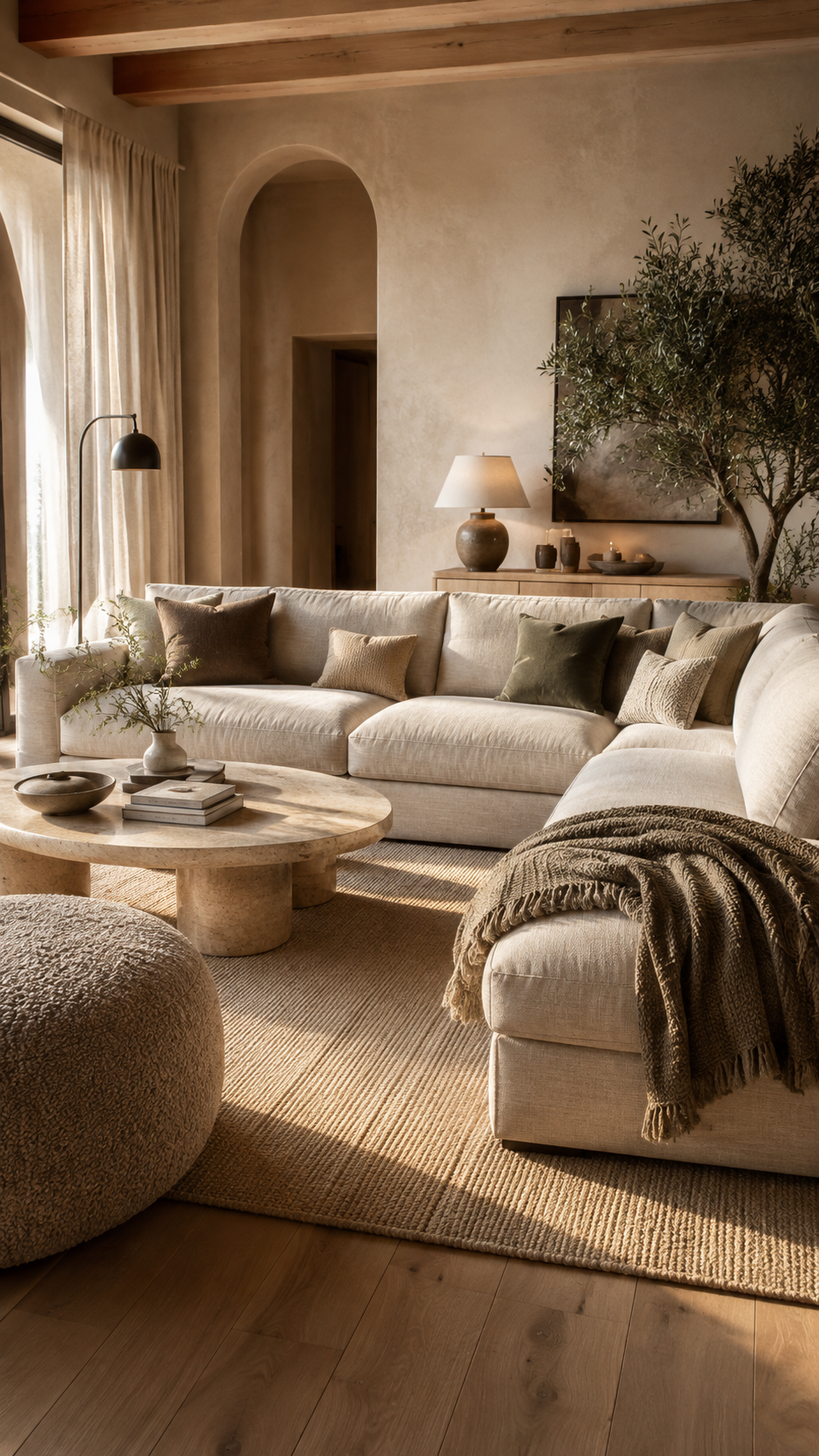
The third of these Corner Sofa Designs prioritizes deep comfort and relaxed luxury.
Think generous cushions, soft upholstery, deep seats, layered textiles, and enough room to stretch out comfortably.
This approach is especially appealing for family homes and anyone who treats the living room as the true heart of the house.
Go Deeper Without Going Bulky
Deep seating can create incredible comfort, but there is a difference between deep and oversized.
A well-designed lounge sofa should still have elegant proportions.
Look for low or medium-height arms, generous cushions, and relatively simple external lines.
Avoid overly complicated arm shapes and excessively thick bases.
The larger the sofa becomes, the more important visual simplicity becomes.
A streamlined silhouette allows the generous scale to feel luxurious instead of heavy.
Choose Soft Linen or Chenille
Fabric changes the personality of this style dramatically.
Washed linen creates a slightly relaxed European atmosphere.
Chenille feels softer and more substantial.
Textured cotton blends create a casual family-friendly appearance.
Velvet can create beautiful luxury but tends to feel more formal.
For a comfortable quiet-luxury interior, warm beige linen or mushroom chenille is extremely versatile.
🛋️ The fabric should invite people to sit down.
Small natural creases are not necessarily a problem. In relaxed interiors, perfectly rigid cushions can actually look less welcoming.
Build the Room Around the Corner
The corner section should become the most desirable seat.
Position it toward the most attractive visual feature whenever possible.
That might be:
a large window,
a fireplace,
a beautiful garden view,
built-in shelving,
or an architectural feature wall.
A corner position naturally encourages lounging because users can lean into two supporting directions.
Adding one larger cushion or a soft throw makes the corner feel even more inviting.
Layer Cushions Carefully
Unlike the sculptural sofa discussed earlier, a lounge-style sectional can handle more cushions.
However, random collections still create clutter.
Choose a controlled palette.
For example, start with warm beige upholstery.
Add ivory linen cushions.
Introduce two taupe cushions.
Finish with one olive or chocolate accent cushion.
Different textures provide variety without requiring multiple strong colors.
A combination of linen, wool, cotton, and boucle can make a completely neutral living room feel richly layered.
Use a Large Soft Rug
A lounge sofa looks particularly comfortable when paired with a substantial rug.
The texture beneath the furniture creates visual softness and helps anchor the seating arrangement.
Wool rugs are ideal for this purpose.
Consider subtle geometric patterns, low-contrast vintage-inspired designs, or thick textured neutral rugs.
Pure white may require more maintenance, while warm beige, oatmeal, taupe, and subtle brown patterns hide everyday wear more effectively.
The rug should extend beyond the coffee table and visually connect the different sofa sections.
Add an Oversized Ottoman
Instead of using only a conventional coffee table, consider including an upholstered ottoman.
This instantly increases the lounge feeling.
An ottoman can function as:
a footrest,
additional seating,
a temporary table,
or a soft centerpiece.
Place a large wooden or stone tray on top when a stable surface is needed for drinks or decorative objects.
Another attractive approach is combining a smaller coffee table with a separate ottoman.
This gives the seating area more flexibility.
Introduce Warm Ambient Lighting
Lighting makes an enormous difference in a cozy corner sofa arrangement.
Avoid relying solely on one ceiling light.
Instead, create several layers.
Use a floor lamp beside the chaise.
Place a small table lamp on a side table.
Add subtle shelf lighting around built-in cabinetry.
If the room includes a pendant, use warm dimmable illumination.
💡 The goal is to create small pools of light rather than flooding the entire room with uniform brightness.
This makes deep seating feel intimate during the evening.
How to Choose the Right Corner Sofa Size
Before falling in love with a particular model, measure the room carefully.
Start with the complete wall dimensions.
Then determine circulation routes.
Doors, windows, fireplaces, radiators, cabinets, and walkways all influence the usable footprint.
Marking the proposed sofa dimensions on the floor with painter’s tape can be extremely helpful.
This provides a much more realistic sense of scale than simply looking at measurements online.
Pay particular attention to chaise length.
A chaise can look compact in product photography but extend far into a room once installed.
Also measure the sofa depth.
Some modern lounge designs can be significantly deeper than traditional sofas.
Leave Comfortable Walking Space
Furniture should not interrupt movement.
Where possible, leave approximately 75 to 90 centimeters of comfortable circulation space around important walkways.
Smaller gaps may work in compact rooms, but major routes should not feel restricted.
The distance between the sofa and coffee table also matters.
Approximately 40 to 50 centimeters usually creates a comfortable balance between accessibility and legroom.
The exact measurement may vary depending on the sofa depth and table shape.
Which Side Should the Corner Sofa Go On
This is one of the most important layout decisions.
The longer extended section usually works best on the side with the least important circulation route.
If the room entrance is on the right, placing a large chaise directly into that pathway may make the room feel blocked.
In that situation, a left-facing chaise may create better flow.
Consider the view as well.
A chaise positioned beside a window can become a beautiful lounging spot.
However, if it blocks access to a balcony door, the layout may quickly become frustrating.
Function should always come before appearance.
Corner Sofa Designs for Small Living Rooms
A corner sofa can absolutely work in a small living room.
In fact, one carefully selected sectional can sometimes use space more efficiently than a sofa plus two armchairs.
The key is reducing visual weight.
Choose raised or slightly recessed legs.
Use a relatively low back.
Select narrow armrests.
Avoid excessively deep seats.
Choose light or medium-neutral upholstery.
These decisions allow more floor and wall area to remain visible.
✨ Visible space makes the room feel larger.
A corner sofa placed neatly against two walls can also maximize the central floor area.
Pair it with a compact round coffee table rather than a large rectangle to improve circulation.
Corner Sofa Designs for Large Living Rooms
Large rooms present the opposite challenge.
Furniture can easily appear too small and disconnected.
An oversized sectional can solve this problem by creating a substantial central anchor.
Instead of pushing it against the wall, float the sofa closer to the center of the room.
Then use the remaining perimeter for consoles, cabinets, reading chairs, or plants.
Large-scale artwork behind the sofa helps balance the furniture.
So do oversized pendants and substantial rugs.
Scale should remain consistent throughout the room.
A huge sofa paired with a tiny coffee table usually looks unbalanced.
Choose a table or combination of tables with enough visual weight to match the seating.
Best Colors for Corner Sofa Designs
Neutral sofas remain popular because they provide decorating flexibility.
However, neutral does not mean choosing only beige.
Consider:
🤍 Warm ivory for soft luxury
🤎 Mushroom for sophisticated neutrality
🌿 Muted olive for organic interiors
☕ Mocha brown for dramatic warmth
🪨 Stone gray for contemporary architecture
🌑 Charcoal for strong contrast
A darker sofa can actually work beautifully in a light room.
For example, chocolate upholstery against cream plaster walls and pale oak flooring creates a luxurious contrast.
Likewise, olive upholstery combined with travertine and walnut can create a beautiful natural palette.
The most successful color usually relates to something else already present in the space.
Mistakes to Avoid With Corner Sofa Designs
The most common mistake is buying a sofa that is simply too large.
A sectional should fill the room confidently without eliminating circulation.
Another mistake is choosing the wrong orientation.
Always verify whether the product is described as left-facing or right-facing from the viewer’s perspective or the seated person’s perspective, because retailers occasionally use different naming systems.
Small rugs are another problem.
A rug floating awkwardly beneath only the coffee table can make a large sectional feel disconnected from the room.
Finally, avoid surrounding a large sofa with too many small decorative objects.
Corner sofas already create a strong visual statement.
Fewer, larger accessories usually look more sophisticated.
How to Make a Corner Sofa Look More Expensive
Luxury rarely depends on the sofa alone.
The surrounding styling completes the effect.
Start with substantial curtains that reach from near the ceiling to the floor.
Introduce one large rug rather than several small ones.
Choose a coffee table made from convincing natural materials such as oak, walnut, travertine, marble, or limestone.
Use fewer decorative objects but increase their scale.
One large ceramic vase will usually appear more elegant than several tiny ornaments.
One oversized branch arrangement can create more drama than many small artificial plants.
Lighting should also feel deliberate.
A sculptural floor lamp beside the sofa instantly elevates the composition.
Finally, maintain space around key objects.
Luxury interiors rarely feel overcrowded.
Final Thoughts on the Top 3 Corner Sofa Designs
The best Corner Sofa Designs do much more than provide extra seating. They create structure, determine movement, establish atmosphere, and often become the visual centerpiece of the entire living room.
🥇 Sculptural Curved Corner Sofa Designs are ideal for homeowners who love warm minimalism, organic shapes, natural stone, and sophisticated neutral interiors. Their flowing silhouettes create a softer alternative to conventional rectangular sectionals.
🥈 Modular Architectural Corner Sofa Designs offer the greatest flexibility. They work especially well in contemporary open-plan homes where seating arrangements may need to change depending on daily activities, entertaining, or future room layouts.
🥉 Deep Lounge Corner Sofa Designs focus on comfort without sacrificing style. Generous cushions, tactile fabrics, oversized rugs, warm lighting, and layered textiles create a living room that feels inviting from the moment someone enters.
Ultimately, the most beautiful corner sofa is not necessarily the most expensive or the largest.
It is the sofa that fits the room perfectly.
When proportion, orientation, upholstery, materials, lighting, and furniture scale work together, even a simple sectional can make the entire living room look more thoughtfully designed, more spacious, and considerably more luxurious.
Related posts:

Best 3 Budget Friendly Living Room Inspo Ideas That Make Your Home Look Expensive for Less
Best 3 Moody Living Room Inspo Ideas That Make Dark Interiors Look Unbelievably Luxurious
Best 3 Modern Organic Living Room Ideas That Make Any Home Look Effortlessly Luxurious
Best 3 Warm Neutral Living Room Inspo Ideas That Make Any Home Look Effortlessly Luxurious
Best 3 Small Living Room Inspo Ideas That Make Tiny Spaces Look Surprisingly Luxurious
Best 3 Cozy Living Room Inspo Ideas That Will Make Your Home Feel Instantly Warm and Beautiful